Whitehot Magazine
October 2026
"The Best Art In The World"
"The Best Art In The World"
October 2026
Children of the Revolution: The Transformative Power of the Past
By ROB STRATI August 9th, 2026
This is the second article in Children of the Revolution, an ongoing series about contemporary artists who draw on historical visual languages to contend with the contemporary world. The intention is not to define a closed group or arrive at a finished theory, but to develop a kind of conversation. The first article, Children of the Revolution: The Return to Visual Languages Built for Change, looked at the work of Francesca DiMattio, Marc Dennis, Kent Monkman, and Noah Becker, alongside my own Fragmented series.
For this installment, I had the opportunity to speak with some of the artists directly and also look closely at Brad Parsons, whose exhibition opens August 7 at Chaos Contemporary Craft in Columbus, Ohio. Parsons creates densely layered collages and ceramic assemblages from inherited objects, damaged books, thrift-store figurines, cast ceramic toys, beach debris, and the remnants of twentieth-century domestic life.
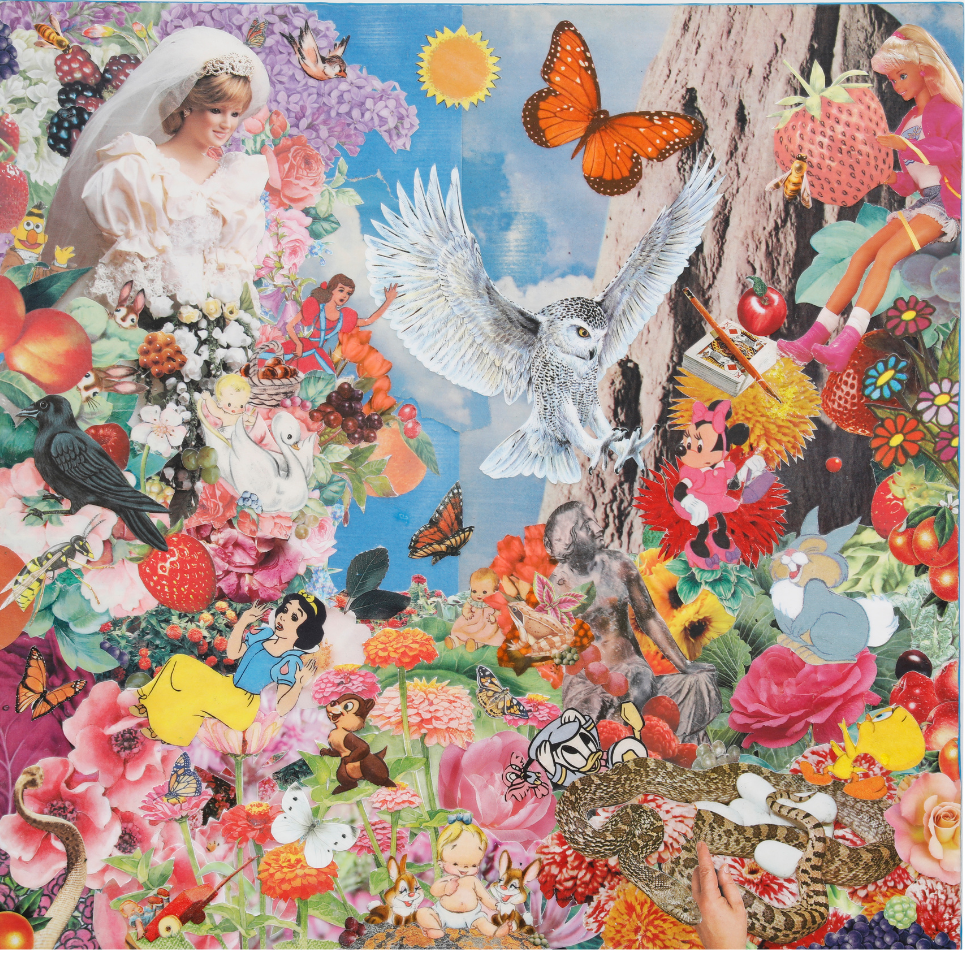 Diana’s Bridal Garden (Lookout Below!), 14” x 14”, Analog collage with found paper media on, wood panel, 2022-2025
The work echoes the visual richness of Rococo painting and porcelain, as well as the ornamental density of Victorian design, from Fragonard’s color and suspended activity and Kaendler’s crowded porcelain groups to the horror vacui of William Morris’s patterned surfaces and Richard Dadd’s The Fairy Feller’s Master-Stroke.
Parsons’s material culture is not that of Versailles. His figures include discarded everyday objects like toy soldiers and illustrations cut from old books. They are things that once occupied ordinary homes and have since been forgotten.
“I was inundated with stuff my whole life,” Parsons told me. One grandmother was an antiques dealer whose home was so crowded with objects that the children were rarely allowed to touch anything. His other grandparents lived in an eighteenth-century house filled with generations of material stored in its attic and basement.
After his grandparents died, these collections became what he called “the next generation’s problem.” During the pandemic, Parsons lived in one of the family homes, surrounded by damaged children’s books and a collection of National Geographic magazines reaching back to the early twentieth century. He began cutting into this inherited archive and making collages in the attic.
Parsons now combines inherited objects with material he accumulates from a variety of sources. He makes molds of toys, casts them in clay, and adds them to his ceramic assemblages. At a New York beach near a breached landfill, he collects fragments of figurines and other objects released by the tides.
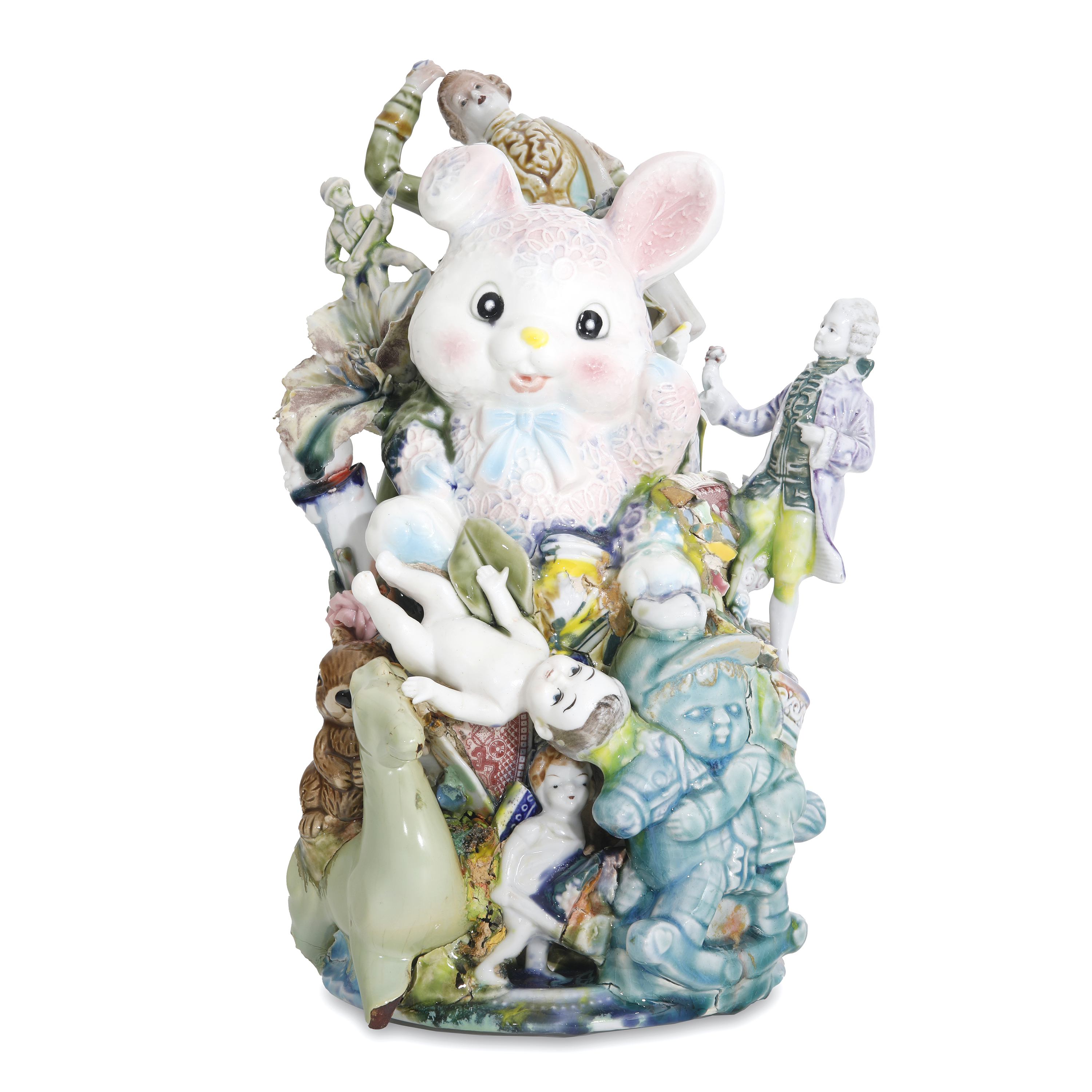
Pink Rabbit Blush (Courting a Crush), 9” x 9” x 12”h, Ceramic, 2026
“There’s a lot of gathering and collecting and then sorting,” he explained, “and then I kind of just respond to what I have.”
His compositions develop intuitively. He may begin with a theme such as a picnic, but he doesn’t determine the final arrangement in advance. He works until every area has been addressed and there is “literally nowhere else for anything to go.”
The abundance initially feels intense with your eye darting back and forth to comprehend what you are looking at, however it quickly produces an almost unexpected experience. It requires the viewer to slow down. Parsons wants people to “sit there with it and explore it and find all the little parts.”
The sensation grows more complex as the viewer explores. From the picnic with frolicking deer and flowers to small cast army men, an otherwise playful composition can unfold into darkness and danger and then back again.
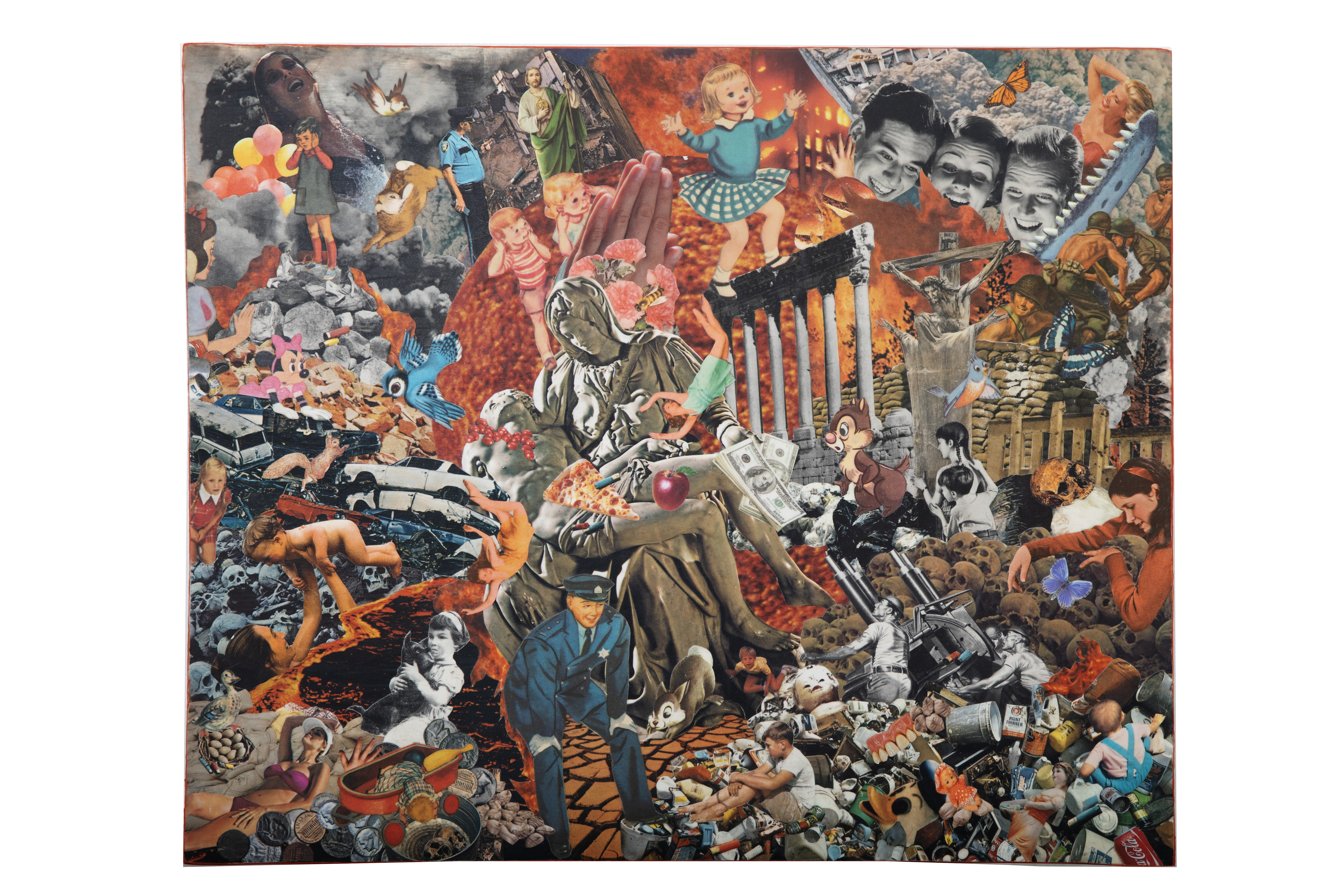 End of the World (Jesus Take the Wheel) 141⁄2” x 173⁄4”, Analog collage with found paper media on wood panel, 2026
Margaret Wunderlich, founder of Chaos Contemporary Craft, describes the collages as filled with “side quests.” Their many characters and fragments draw upon Parsons’s family history as well as what she calls “collective discarded ephemera.” A viewer may recognize a figurine from a grandparent’s home or an image from childhood, creating an entry point into the larger composition.
This accumulation of decorative objects and associations relates closely to what Francesca DiMattio calls “muchness.”
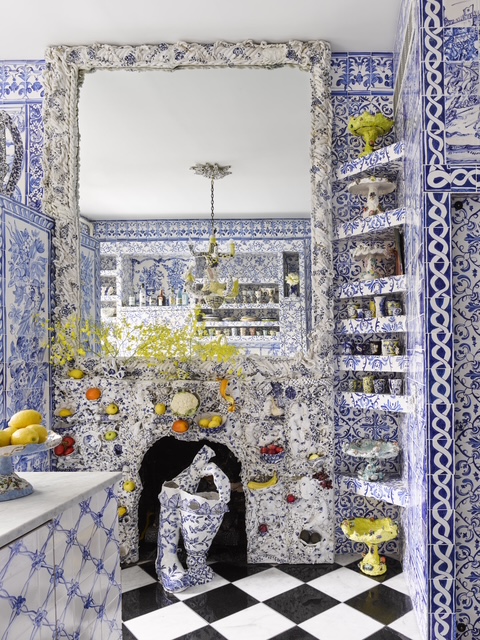 Francesca DiMattio: Francesca DiMattio’s Home, 2026
DiMattio’s own sculptures combine porcelain traditions, floral patterns, bodily forms, furniture, architecture, and references extending across cultures and centuries. Whatever sources she uses, she describes her treatment of the material as fundamentally Baroque.
Her attraction to these languages began with their historical dismissal. Ceramics had long been separated from contemporary art and confined to craft, while decorative and conventionally feminine aesthetics were treated as unserious or lacking rigor.
“I come to it very much as a girl who wanted girl things to be considered just as cool and punk and tough and strong as boy things,” DiMattio said.
That desire does not result in objects that are simply lovely. DiMattio layers femininity until beauty becomes aggressive or uncomfortable. “It’s meant to be lovely, and then it’s not,” she explained. The work can be beautiful, but in what she calls “a more grotesque way.”
DiMattio also sees the return to ceramics and tactile materials as a response to contemporary digital life. Clay preserves the mark of the body. She anticipates a broader return to physical making as people become more distanced from “the real world and dirt.” Such materials react against what she describes as the dissatisfaction of a push-button culture.
Where DiMattio complicates the categories of decoration and femininity, Marc Dennis uses Old Master conventions to create a dialogue between centuries.
Dennis describes his practice as a “four-lane highway,” merging drawing, oil painting, humor, and intensity. He selects from the Western art-historical canon, including Velázquez, Manet, Chardin, and Dutch still-life painters. His goal is not to reproduce the past but “to open up a dialogue between centuries of visual culture from the vantage point of contemporary life.”
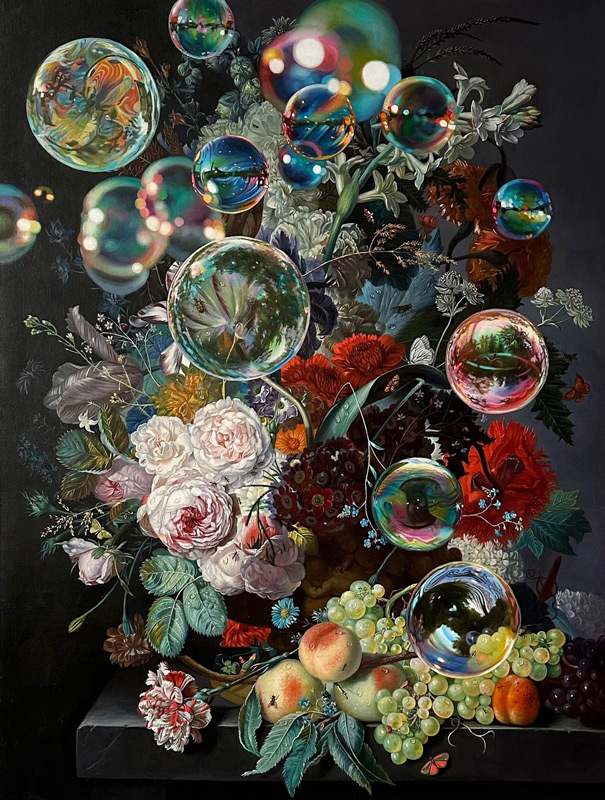 Marc Dennis: Tradition 46” x 35” oil on linen
Dennis recalled Arthur Danto’s belief that effective art should “strike the eye and seduce the mind.” In his recent paintings, which will be in a number of upcoming exhibitions this year, this balance is experienced through his use of pristine Old Master arrangements, crowded with reflective silver and references to the artist himself. Against the restraint of the Old Masters, the viewer is drawn into considering today’s culture of multiplication, self-display, and overindulgence in new ways.
He connects abundance to “excess and decadence” and to contemporary culture. Where a Dutch still life might contain a silver plate, lemon, oysters, and a single vessel, Dennis said, “I went all in.” He creates a cascading mountain of silver vessels. The excess is not just stylistic, it is a reflection of the lives we live now and the cacophony of culture we navigate each day.
Noah Becker approaches history from another direction. His recent paintings combine seventeenth-century figures in elaborate settings with contemporary details such as tinted glasses. He is interested in creating an environment that has “a seventeenth-century feeling” while remaining current.
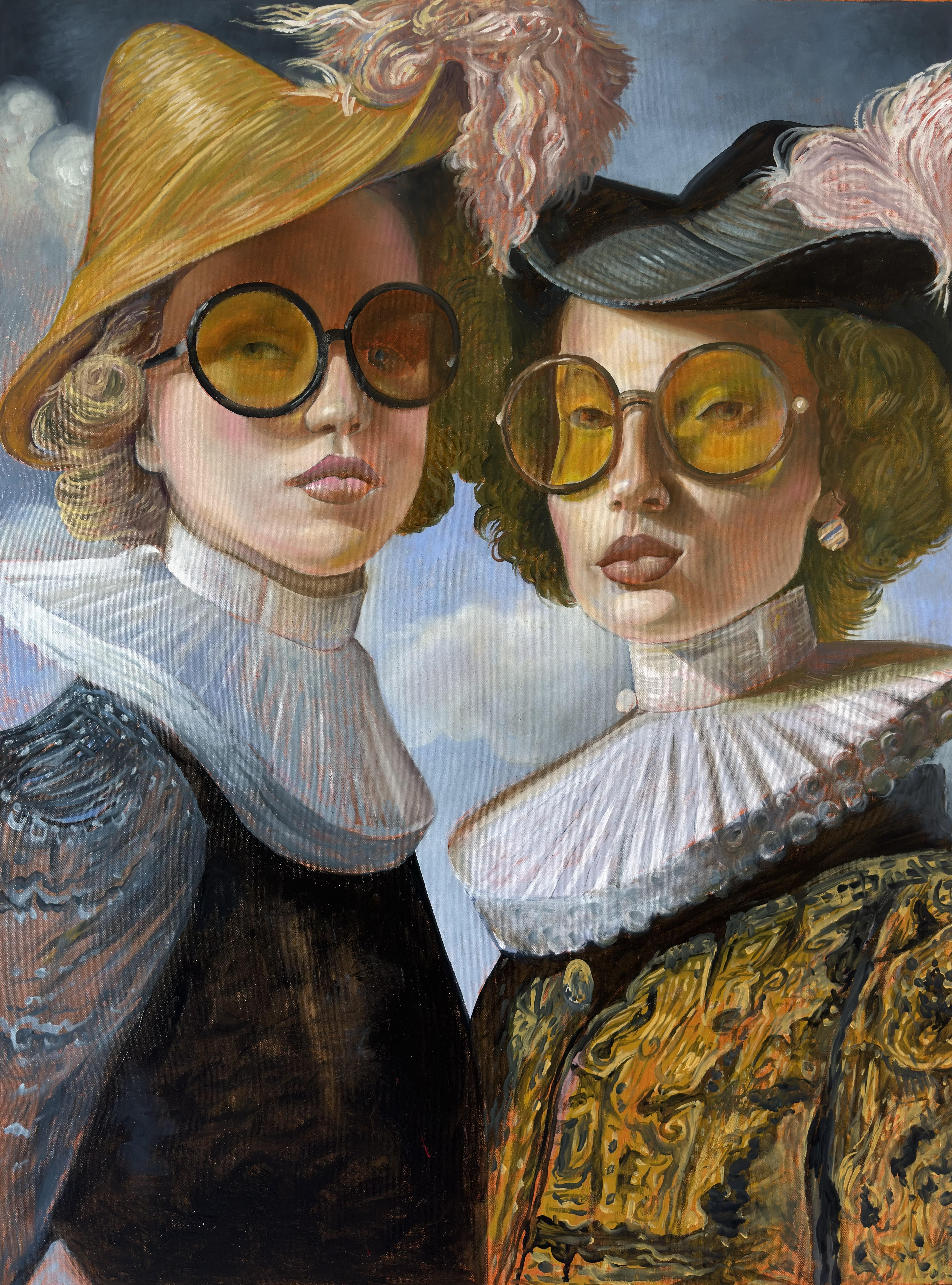 Noah Becker: The Day Watch 40 x 30" oil on canvas 2025
For Becker, the abundance of historical dress and ornament creates painterly possibilities. “If you’re not doing figures that have big gowns and collars,” he explained, “you can’t really get an opportunity to use some of those painterly approaches.” The layers of fabric and intricate detail are therefore not simply references to the past; they give him a richer visual language through which to make contemporary paintings.
But Becker is wary of reverence. He wants to avoid what he calls the “middlebrow academic” trap in which admiration for the Old Masters becomes more important than making contemporary art.
For Becker, art also provides permission to leave reality behind. “Why does everything have to play by the rules of reality?” he asked. Figures need not obey gravity, chronology, or history. Fantasy can coexist with technical discipline, just as Parsons’s physical fragments enter worlds that never existed before.
Parsons takes the inherited and discarded material of domestic life and gives it another existence. DiMattio makes the decorative aggressive. Dennis uses Old Master seduction to reflect contemporary excess. Becker employs historical technique while refusing historical obedience.
Together, these artists suggest that the return to historical language is not merely nostalgic. The past is present in our world and it holds unique powers that can be transformative when reworked with an eye to understanding what is happening now.

Rob Strati
Rob Strati has been a working artist for over 35 years. He holds a BA in History of Art from The Ohio State University. You can see more of his on Instagram @robstrati (https://www.instagram.com/robstrati)
view all articles from this author