Whitehot Magazine
September 2026
"The Best Art In The World"
"The Best Art In The World"
September 2026
Children of the Revolution: The Return to Visual Languages Built for Change
By ROB STRATI June 13th, 2026
A few years ago, I would have been an unlikely supporter of ornamentation in art.
Working for nearly thirty years, I would have defined my art as being in the genre of conceptual, and dealing with ideas of systems and perception. Although I studied Art History and always maintained a deep appreciation for historical art, I never would have thought in a million years that my most meaningful body of work would come from a broken piece of porcelain.
In 2020, my wife, writer Jocelyn Jane Cox, accidentally dropped a Blue Willow plate that we had inherited from her mother. Rather than throwing it away, we left the largest fragment on our kitchen island. It sat there for months. I never really understood what the Blue Willow pattern was. In my mind at the time it was simply a geometry of blue and white shapes. Then one day I noticed something I never had before. When I went to move it, I saw a small bird, a bridge and a monk within the pattern of the plate and a vision of the world beyond the fragment came to me. I knew I had to draw that world and the series began.
What started as an accident, then a gift for my wife, soon became a fully formed series, but what I didn’t expect was where the work would lead me. When I started working with the first broken plates, although they could be easily purchased online for $15 or $20, I understood how they symbolize wealth, lineage and elite levels of society - they are both revered and undervalued. In this way, the act of breaking them feels radical, something I shouldn’t do.
For me, my Fragmented Series functions on many levels. The first piece was a gesture of love for my wife and family. I soon discovered that they serve as objects of fascination and freedom for many people who view them and lessons in how we can make something new from something broken. Additionally, they are an act of resistance to the broken systems from which the plates emerged and which still hold power in our cultures today. In a time where our acts of resistance have been neutralized and having the power to bring down oppression is always put off to the next election cycle, breaking a plate and creating something new is one way of disrupting what we are expected to do.
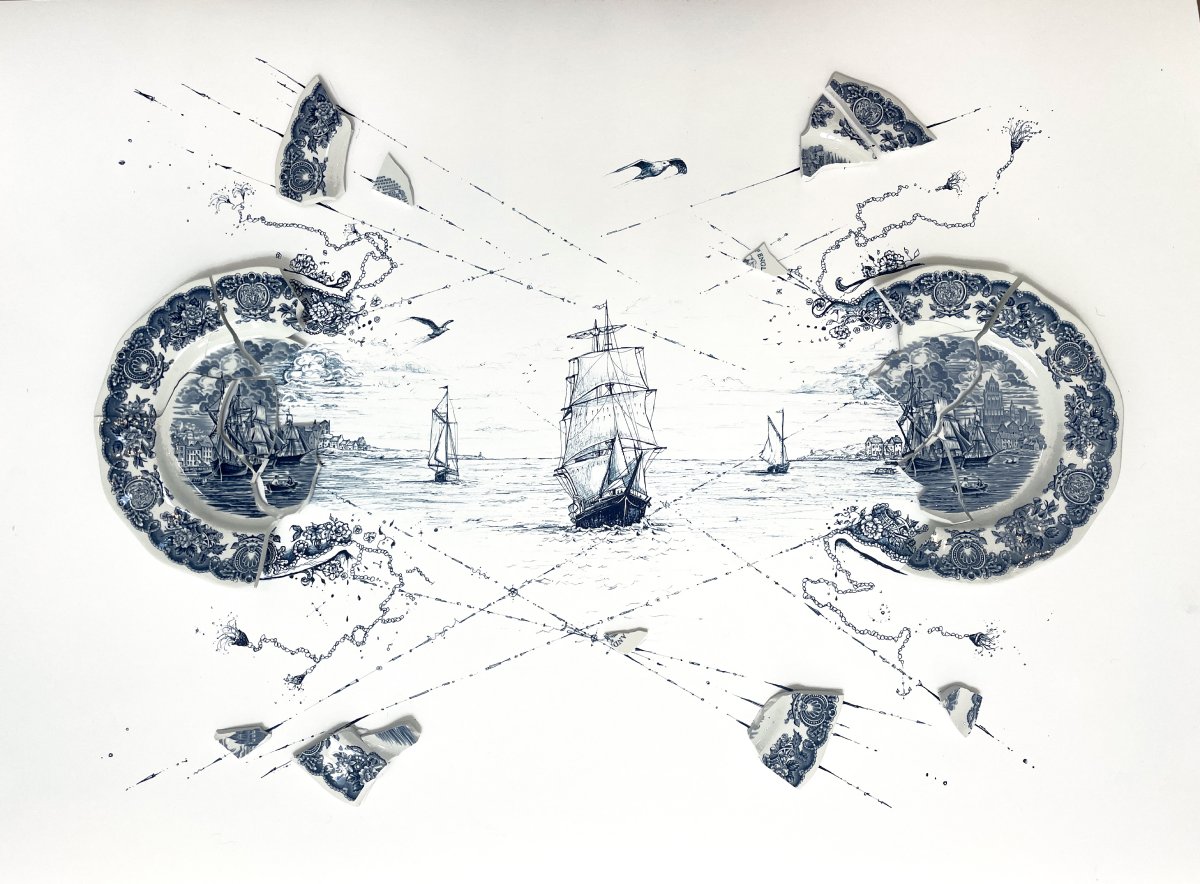 Rob Strati, Sailing Ships and Stories Intersecting (2025) by Rob Strati in Private Collection in Cambridge UK
As the series developed and began finding an audience, I started noticing other art and artists exploring something similar to the ideas I was working with in these plates. I found a number of artists creating work in a contemporary context that uses visual languages generally missing from the contemporary art scene. I began to notice the rise of conventions found in historical Decorative arts, Rococo and Baroque ornamentation and 17th and 18th century still life and Aristocratic portraiture. They are techniques and motifs used as central components of emerging art practices.
Of course I was excited to feel a kind of companionship with these artists exploring what is often looked down on in contemporary circles, but as I continued to see more artists exploring these visual languages, I began to wonder why this was happening now and what was going on.
What I have started to believe is that this all has to do less with the appearance of the work and more to do with the time we are living in and how there are lessons we can use from the past to help us navigate an uncertain future.
The Baroque and Rococo periods emerged during times of transformation. From the 30 years war, the conquests of Louis XIV and expanding global trade networks, political structures and economies were being challenged. Scientific discoveries were changing humanity's understanding of the world. Wealth was concentrating in unprecedented ways. Old systems remained in place, but new realities were emerging beneath them.
The art of those periods reflected these contradictions. It embraced complexity allowing abundance and frailty to exist within the same image or object. For example, François Boucher’s Triumph of Venus, 1740 brings together a vibrant atmosphere of languid nude figures and mythical creatures in celebration of the birth of Venus with swirling waves and silk while at the same time a storm is moving from the right of the canvas. Multiplicity exists in a stylized balance, beautiful and delicately foreboding.
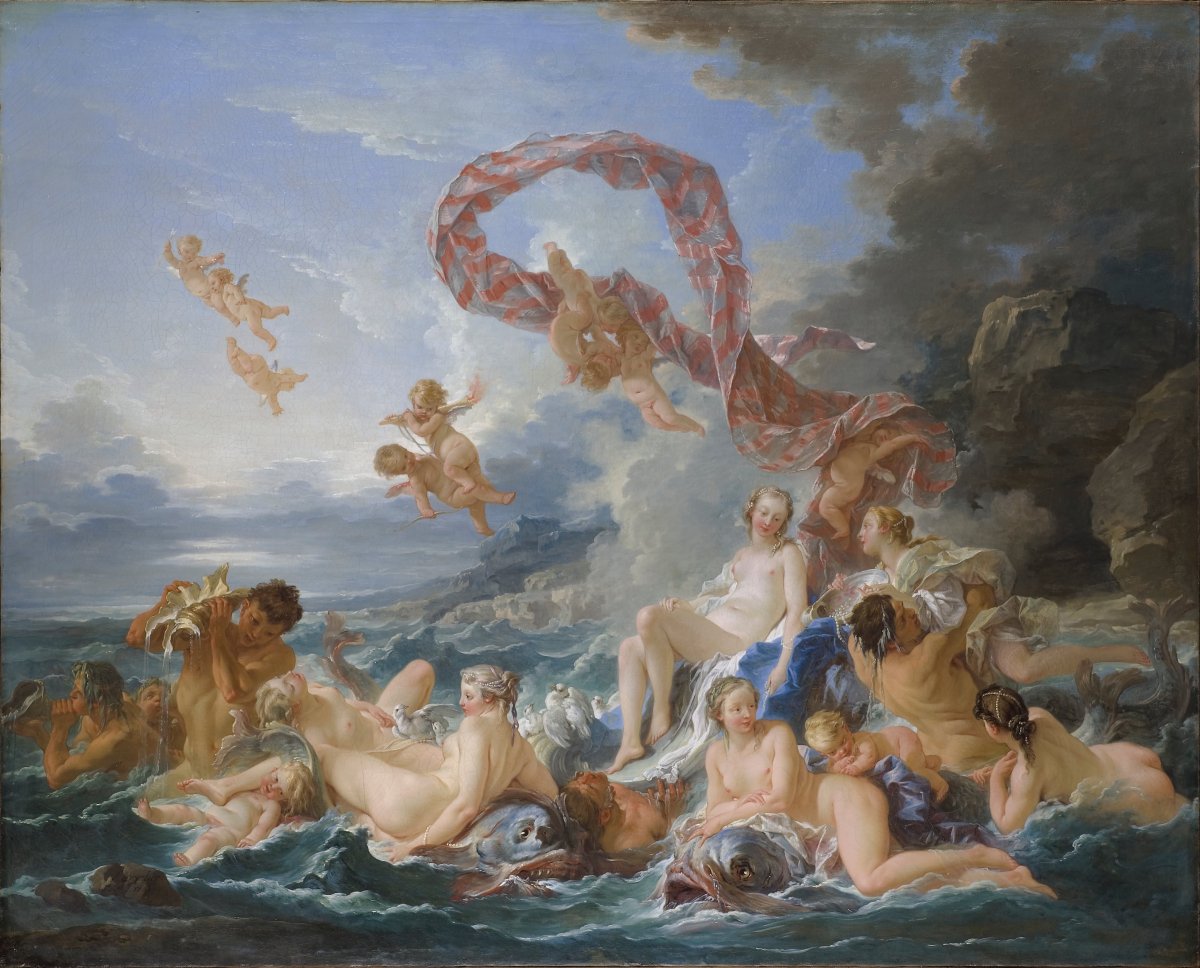 Triumph of Venus, 1740 by François Boucher
Today, we find ourselves in remarkably similar situations where economic and political instability have become an accepted constant. Extended and excessively violent wars are in continuous and upending cycles. Digital platforms and tools have altered the way we create and consume culture. We are living through changes that feel historic and unprecedented. Yet for many, there is a sense that day-to-day life continues as before. However, tomorrow might become something none of us will recognize, a melange of realities swirling in a kind of Baroque constellation.
The challenge facing artists today is not unlike the challenge facing artists three hundred years ago: what is this reality we are living in, what can be meaningfully created in a world - changing faster than people can understand it?
I think what we are seeing in the work of many artists is that Historical visual languages offer an answer.
The artists I increasingly found myself drawn to are not reviving historical styles. They are utilizing them in creative and often brilliant ways to address our contemporary complexity and give it a larger context - we have survived these things before, there is hope.
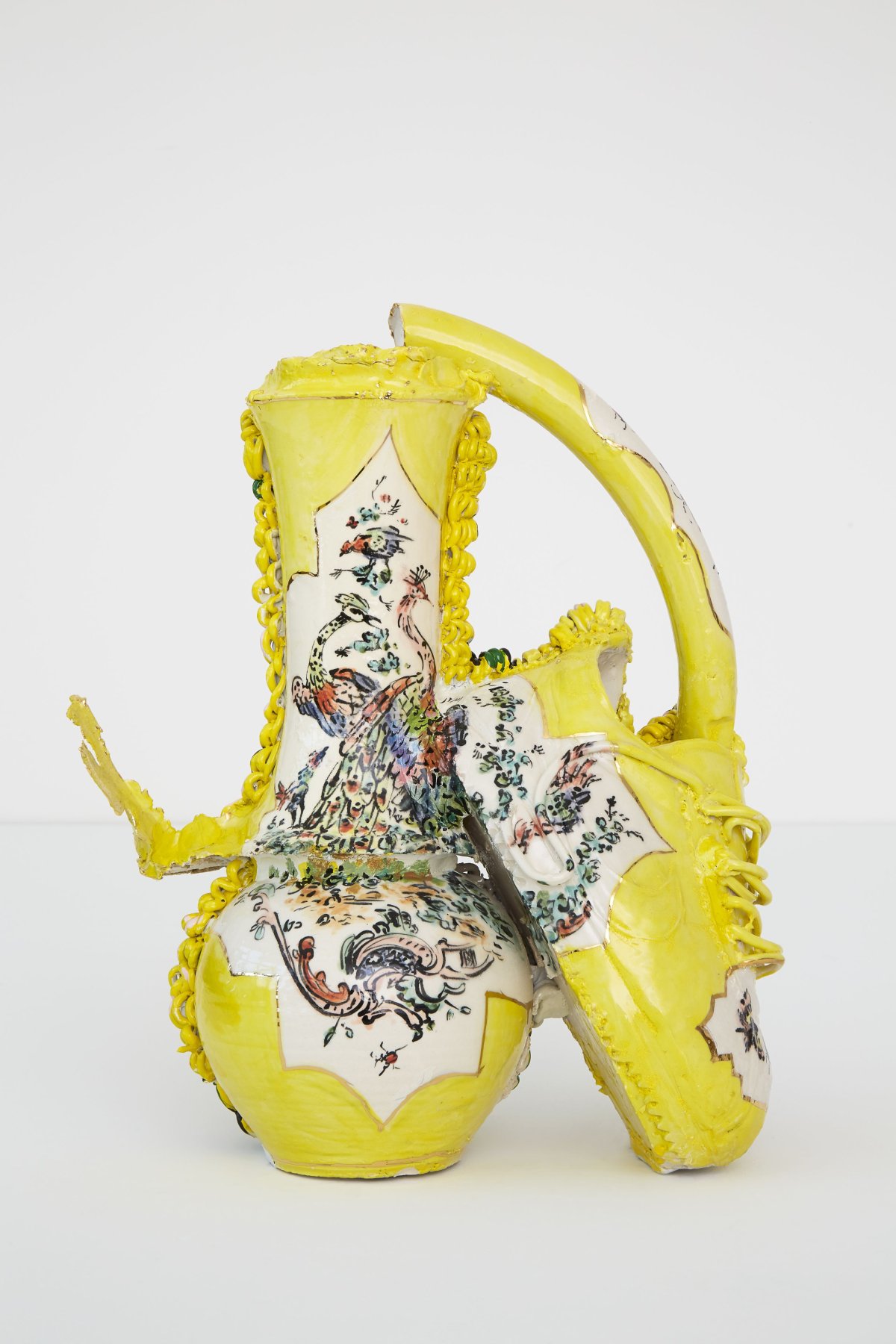 Nike I (2019) by Francesca DiMattio. Image courtesy the artist and Pippy Houldsworth Gallery. Photograph by Karen Pearson
Francesca DiMattio's work demonstrates this beautifully. Drawing upon ceramics, furniture, architecture, and decorative traditions, she creates sculptures that feel simultaneously historical and highly contemporary. Elements from different eras coexist within the same object, suggesting reality is not of a moment, but a confluence of histories all intertwined to create something somewhat known, yet completely unique. Her work reminds us that our identities are assembled from things inherited and those histories are constantly in motion.
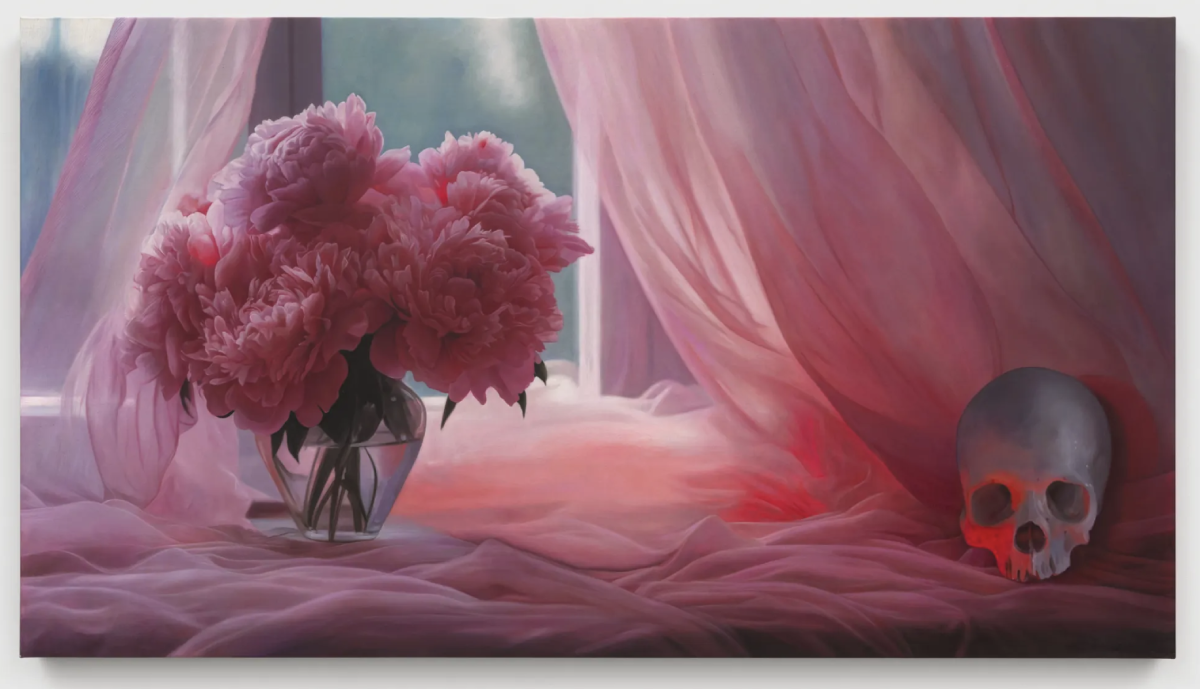 Sweet Things, 2026 by Marc Dennis. Image courtesy of Anat Egbi Gallery
In his recent exhibition Love Letter at Anat Ebgi in Los Angeles, Marc Dennis draws upon Dutch Golden Age painting, European portraiture, and the technical precision of Old Master traditions while integrating contemporary iconography or more subtle sensibilities. In the painting Sweet Things, he blends themes found in both Baroque and Rococo eras into something that speaks to our time when the delicacies of excess exist a swipe away from the persistent awareness of human mortality. He brings something like Caravaggio's St. Jerome Writing (1605-06) into contemporary harmony with the sensibilities of Fragonard's The Swing (1767), echoing the past into a stylized and substantial present.
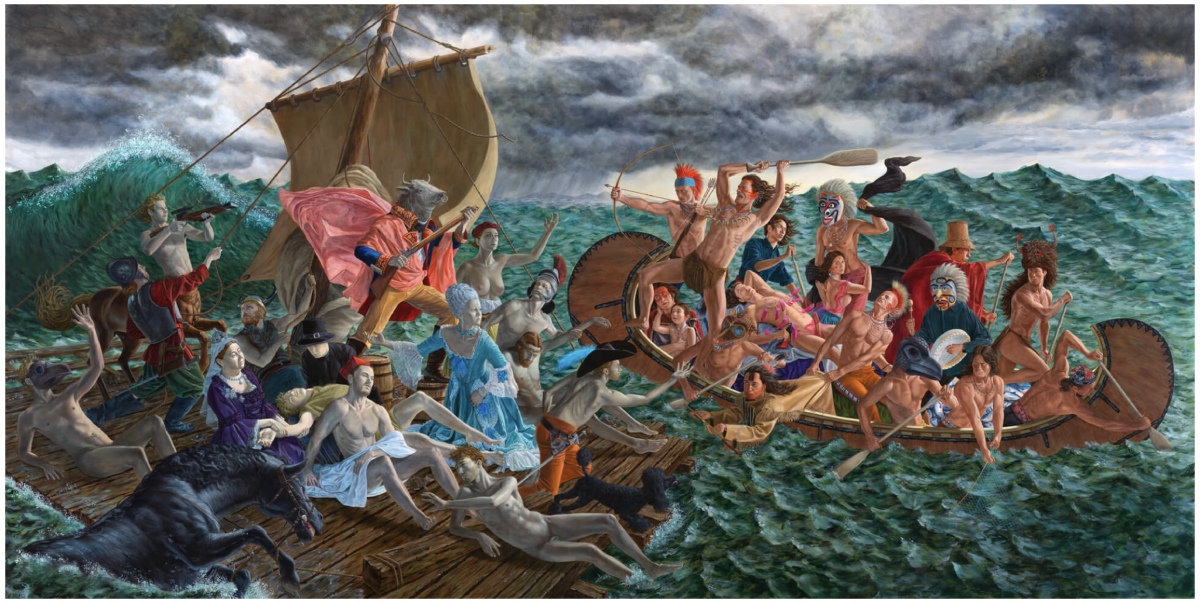 Miss Chief’s Wet Dream, 2018 By Kent Monkman. AGNS Permanent Collection. D.R. Sobey.
Currently on view at the Akron Art Museum and scheduled to appear in the Frick Collection's Cabinet Gallery later this year, Kent Monkman uses the tradition of European history painting and the monumentality of the canvases to evoke the authority of scale. Leveraging conventions historically associated with the 19th Century Academy, Monkman gives voice to Indigenous perspectives, the same techniques that were often used to silence those voices.
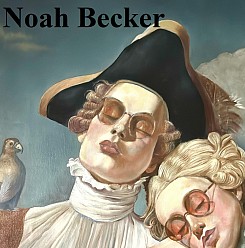
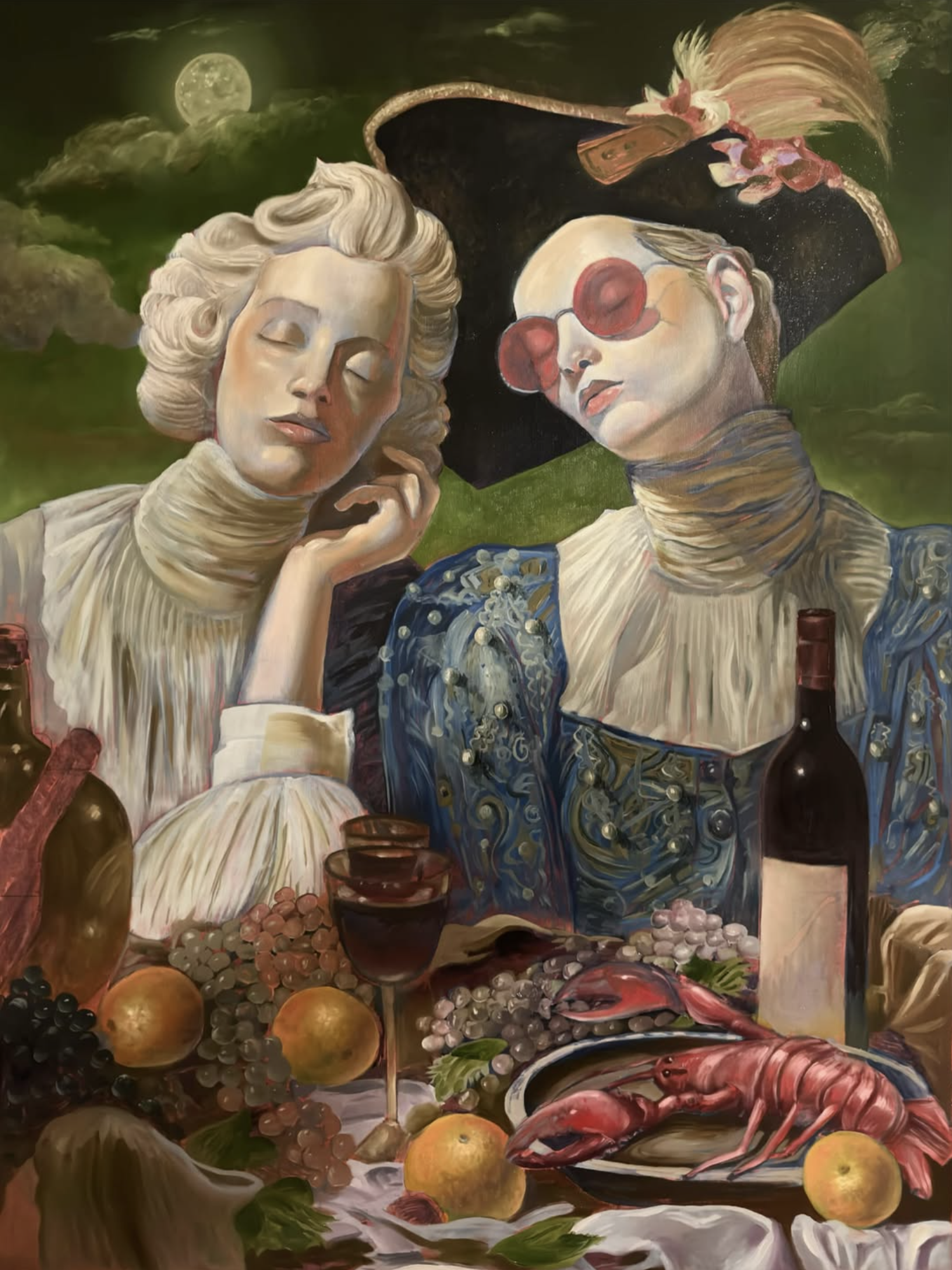 Le Festin des Somnambules (The Feast of the Sleepwalkers), 2026 by Noah Becker
Noah Becker's figurative paintings engage the authority of portraiture and historical composition while remaining rooted in contemporary experience. Known for his figure paintings which seem to exist in a space just outside of specific eras, these new works use the visual language of Aristocratic portraiture of the 17th and 18th centuries. These figures, often in a half dreamlike state amidst a celebratory setting, however, have a subtle contemporary presence, often hinted at in the placement of colored glasses echoing a fashion perhaps more suited for the 1960’s. These compositions resonate with the world we inhabit where abundance is present, but the power to effect change has been transformed into a kind of luxurious slumber and action is translated into delicacy and passive participation.
The museum world has begun recognizing this shift as well and few institutions embody this more immediately than the Frick Collection. Following its reopening, the museum has become an increasingly important site for considering how historical objects continue to generate contemporary meaning. The Frick's Cabinet Gallery installation for the space featured the work of Flora Yukhnovich and the next installation will feature Kent Monkman.
I am interested to see how this movement evolves as a growing group of artists turn toward historical visual languages, not because they are nostalgic for the past, but because they are searching for ways to exist in our shared present. The future may be uncertain, but the visual languages developed during earlier periods of upheaval can remind us that uncertainty itself has a history.
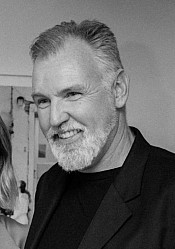
Rob Strati
Rob Strati has been a working artist for over 35 years. He holds a BA in History of Art from The Ohio State University. You can see more of his on Instagram @robstrati (https://www.instagram.com/robstrati)
view all articles from this author