Whitehot Magazine
September 2026
"The Best Art In The World"
"The Best Art In The World"
September 2026
Between Jewelry and Sculpture: The Practice of Yuan Zhou (Elara Chow)
By NOAH BECKER April 29th, 2026
In the development of contemporary jewelry art, the relationship between materials and the body is being redefined again and again. More and more artists are freeing jewelry from its traditional role as decoration, and turning it into an art object with ideas. The work of Yuan Zhou is created in this context. She uses materials like jade, gold, and gemstones, which have cultural and historical meaning. By cutting and rebuilding them, she lets originally whole objects form new structures between breaking and rebirth. In this way, she creates a special artistic language between jewelry and sculpture.
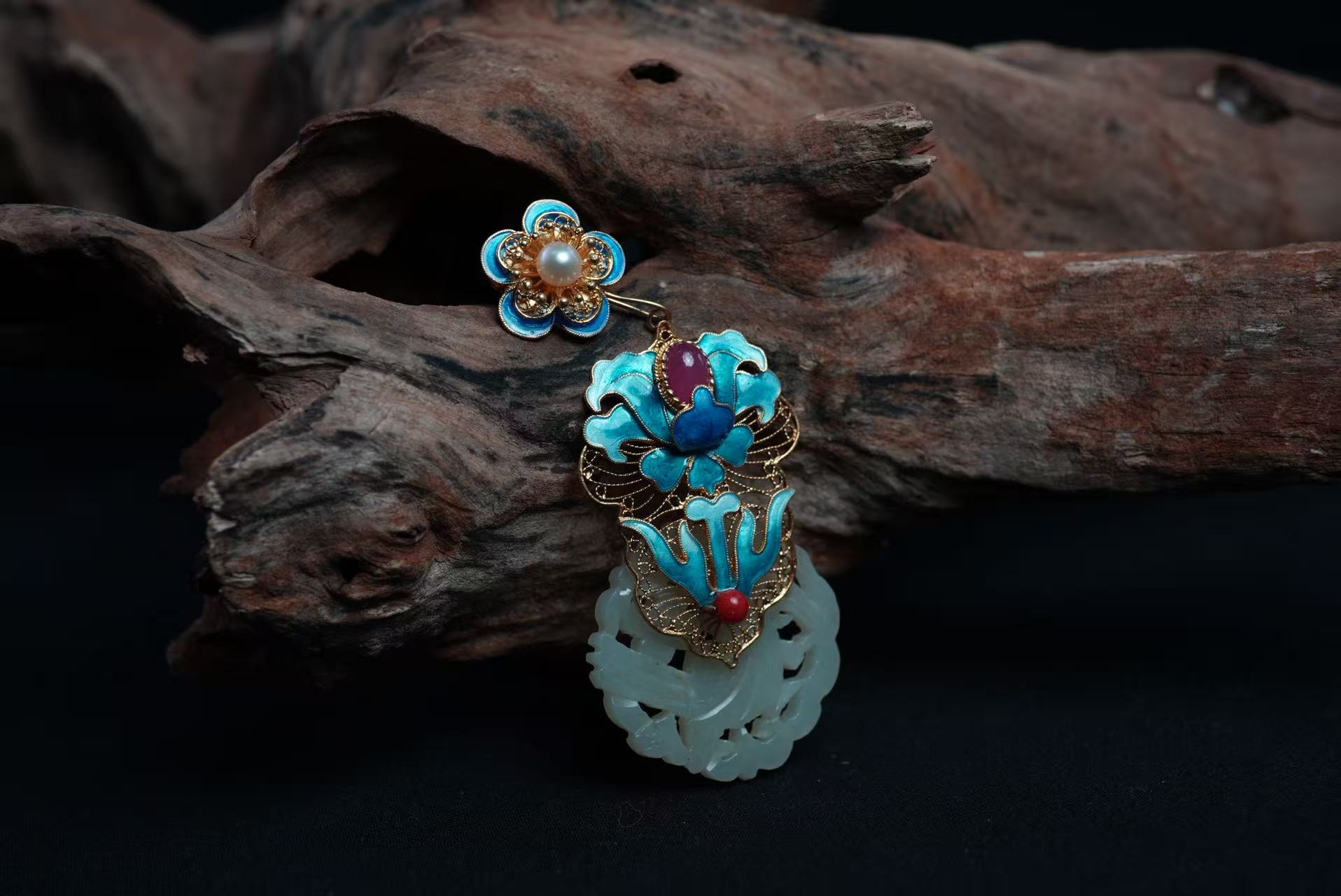 Enamel Bloom Rhapsody. Material: Pure silver, pure gold, cloisonne,
Hetian jade, ruby, pearl, Yellow jade. Images courtesy of the artist
Zhou’s work can be understood from several aspects: concept, form, cultural context, and her position in contemporary jewelry. The core of her work often focuses on ideas such as “impermanence,” “breaking and rebirth,” and “containers of memory or consciousness.” These ideas are clearly influenced by Buddhist thought, such as the concept of Alaya consciousness. In her work, jewelry is seen as a material that carries spiritual experience and traces of time. A key feature of her method is that she can turn philosophical ideas into real physical structures. For example, she cuts and reconnects jade bracelets to show the relationship between breaking and rebirth. In this way, ideas and materials have a clear and direct connection. In the context of contemporary art, she starts from Eastern philosophy and turns traditional cultural experience into a modern artistic language, so her work shows a special spiritual dimension in a cross-cultural context.
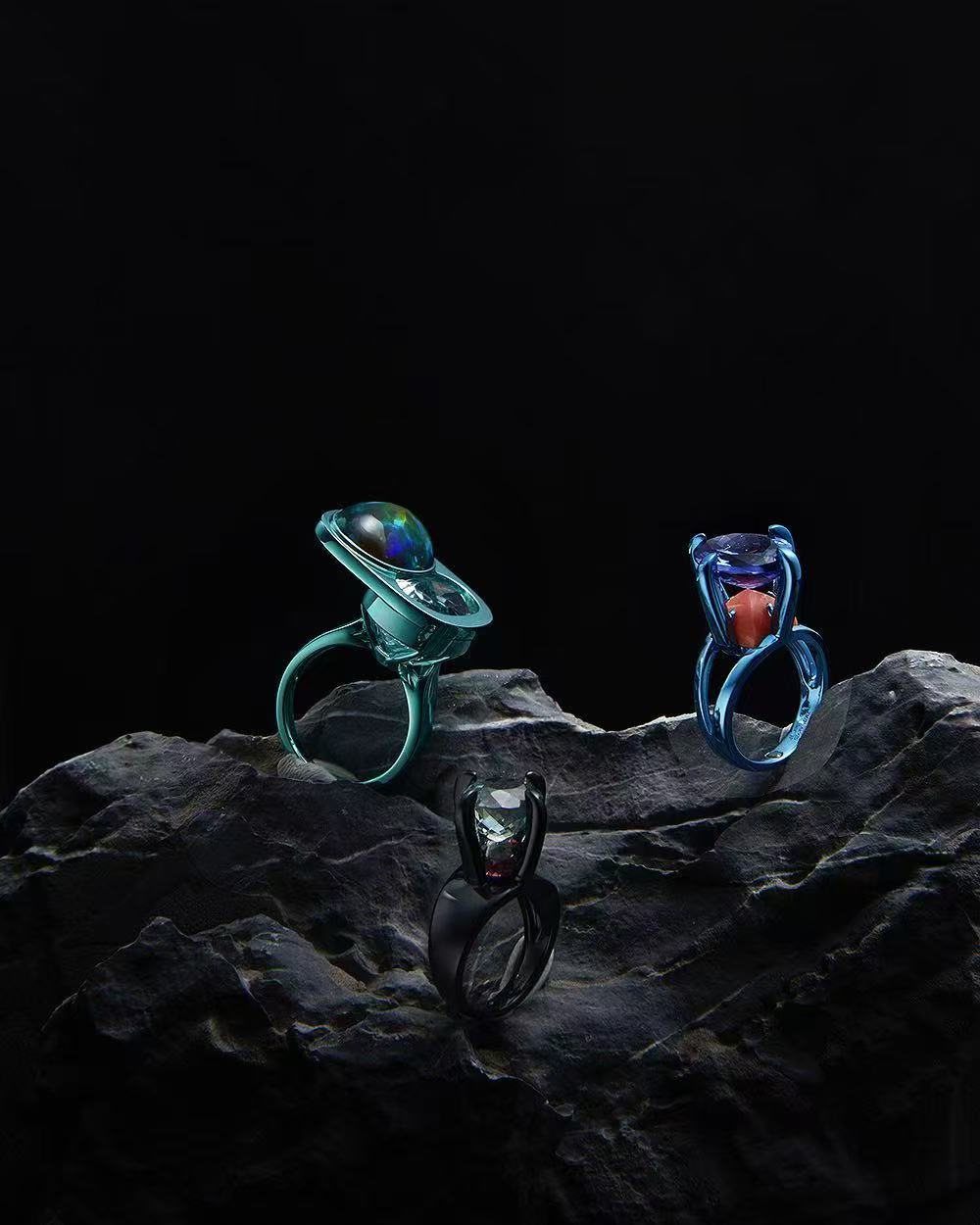 Binary. Material: 925 silver, titanium gold, tourmaline, tanzanite. Images courtesy of the artist
In terms of form, her work is mainly based on a structure: “whole object, cutting, reconnecting.” For example, cut jade bracelets, metal connection structures, or rings that are not fully closed. This visual method can be placed in a wider art tradition, such as Kintsugi, repair aesthetics, and the language of fragmentation in contemporary art. In form, her work builds a clear and unified visual system, and shows strong sculptural qualities. It allows jewelry to keep the scale of the body, while also having the spatial tension of small sculpture. Her continuous exploration of breaking and recombining as a structure has gradually formed a recognizable personal language, and different works are connected as a series in form.
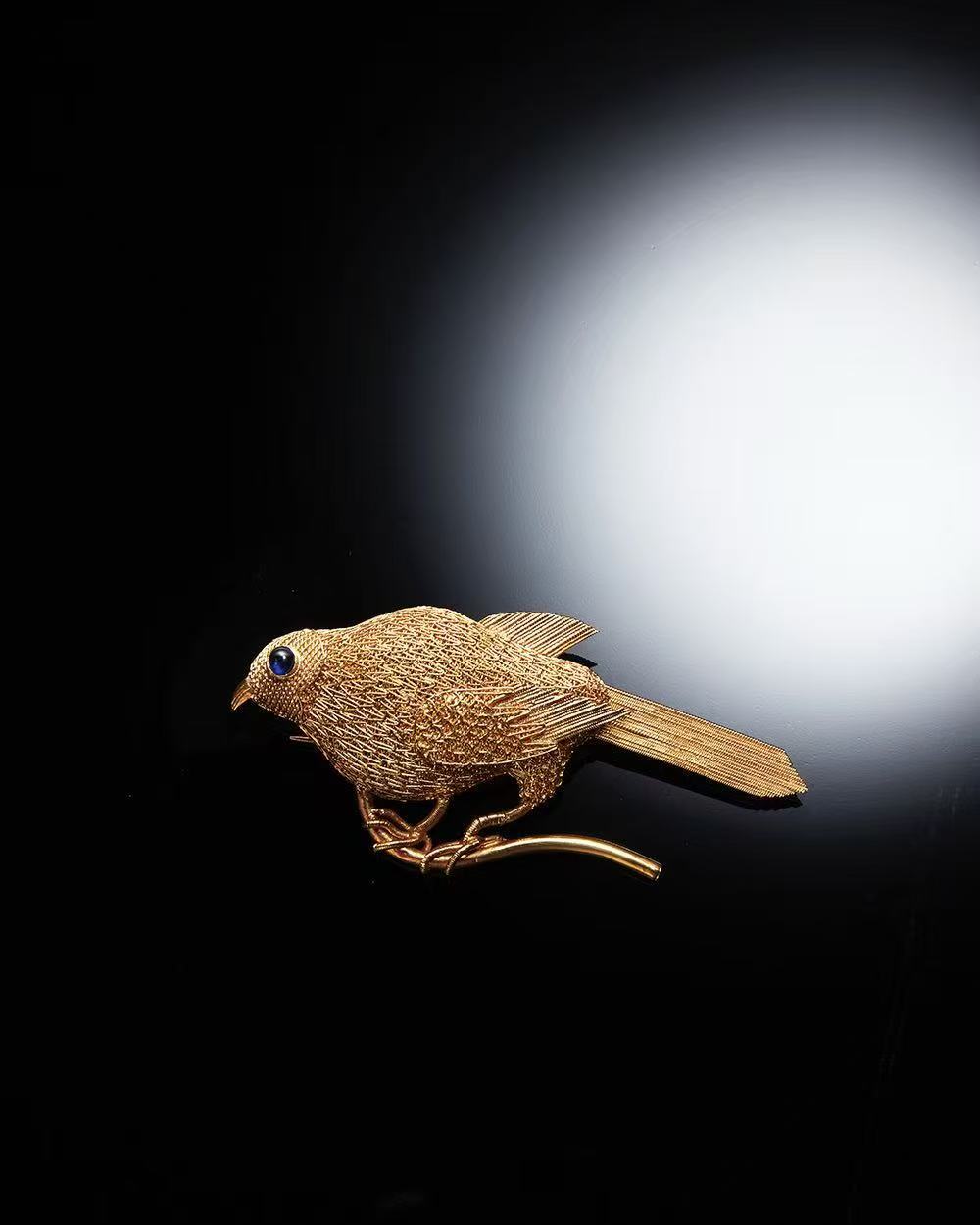 Like the Wind. Material: 18K gold, sapphire. Images courtesy of the artist
In terms of materials, she uses a lot of jade, gold, and gemstones. Jade is especially important, because in East Asian culture it already has meanings of identity, inheritance, and memory of time. By cutting and rebuilding these materials, she brings objects with historical and emotional value into the context of contemporary art, and gives them new narrative structures. From an academic point of view, this is one of the most meaningful and deep parts of her work, because it touches on a larger question: how are traditional objects with cultural and historical meaning re-understood and rebuilt when they enter contemporary art? Her work is, to some extent, an exploration of the transformation between cultural memory and contemporary art.
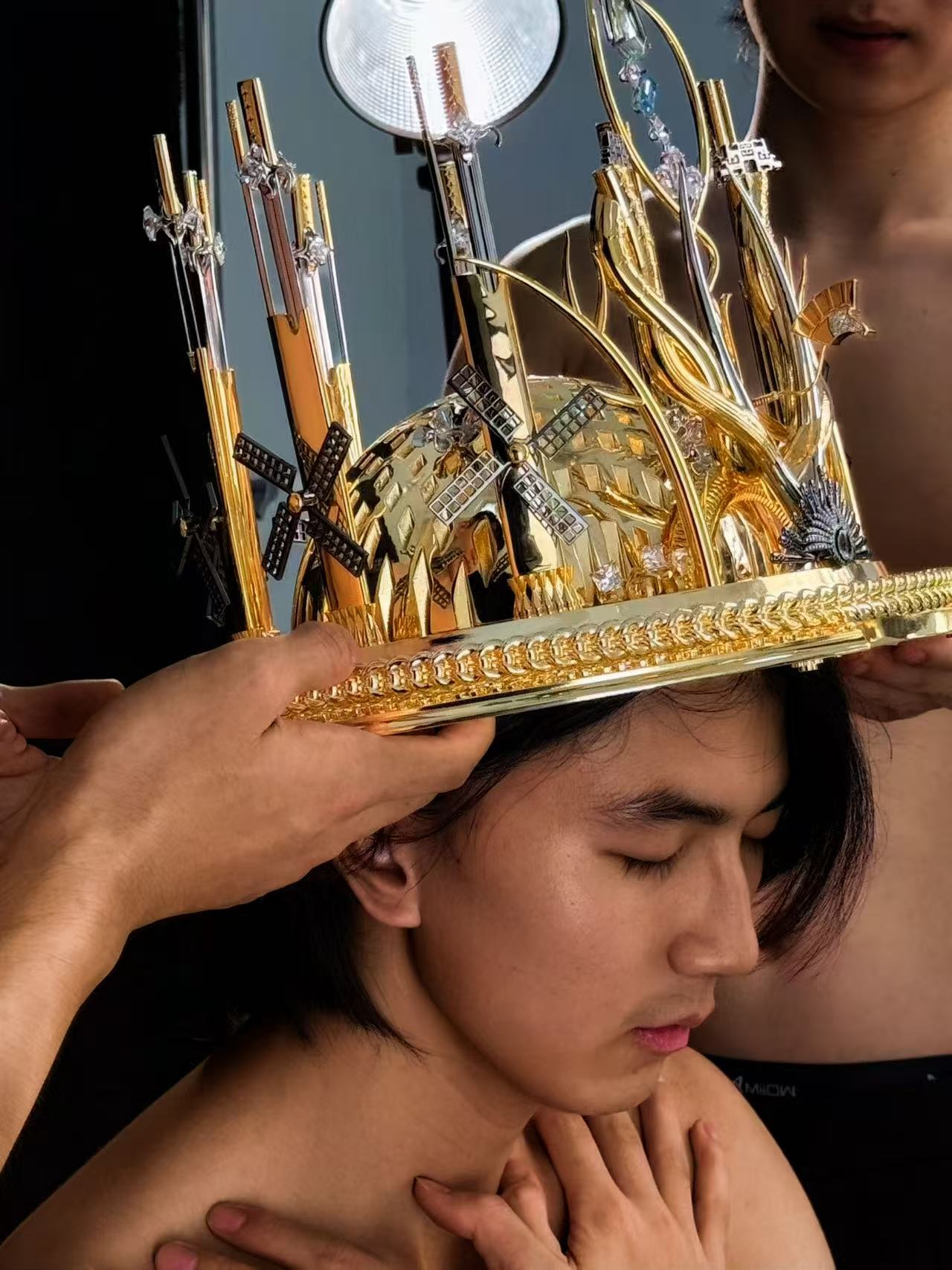 Without a Whisper of Doubt. Material: copper base plated with 18k white and yellow gold, rock crystal, green crystal,zircon, topaz. Images courtesy of the artist
If we look at her work in the context of contemporary jewelry, it clearly belongs to conceptual jewelry. It is related to the path developed by artists like Otto Künzli, Ruudt Peters, and Gijs Bakker, who turn jewelry from decoration into an object with ideas, connected to the body, or into small sculpture. Her special point is that she combines Eastern cultural materials with a Western art education background. This cross-cultural experience allows her work to keep the spiritual meaning of traditional culture, while also showing the expression of contemporary art. In the contemporary jewelry scene in London, she has gradually formed a clear and recognizable direction.
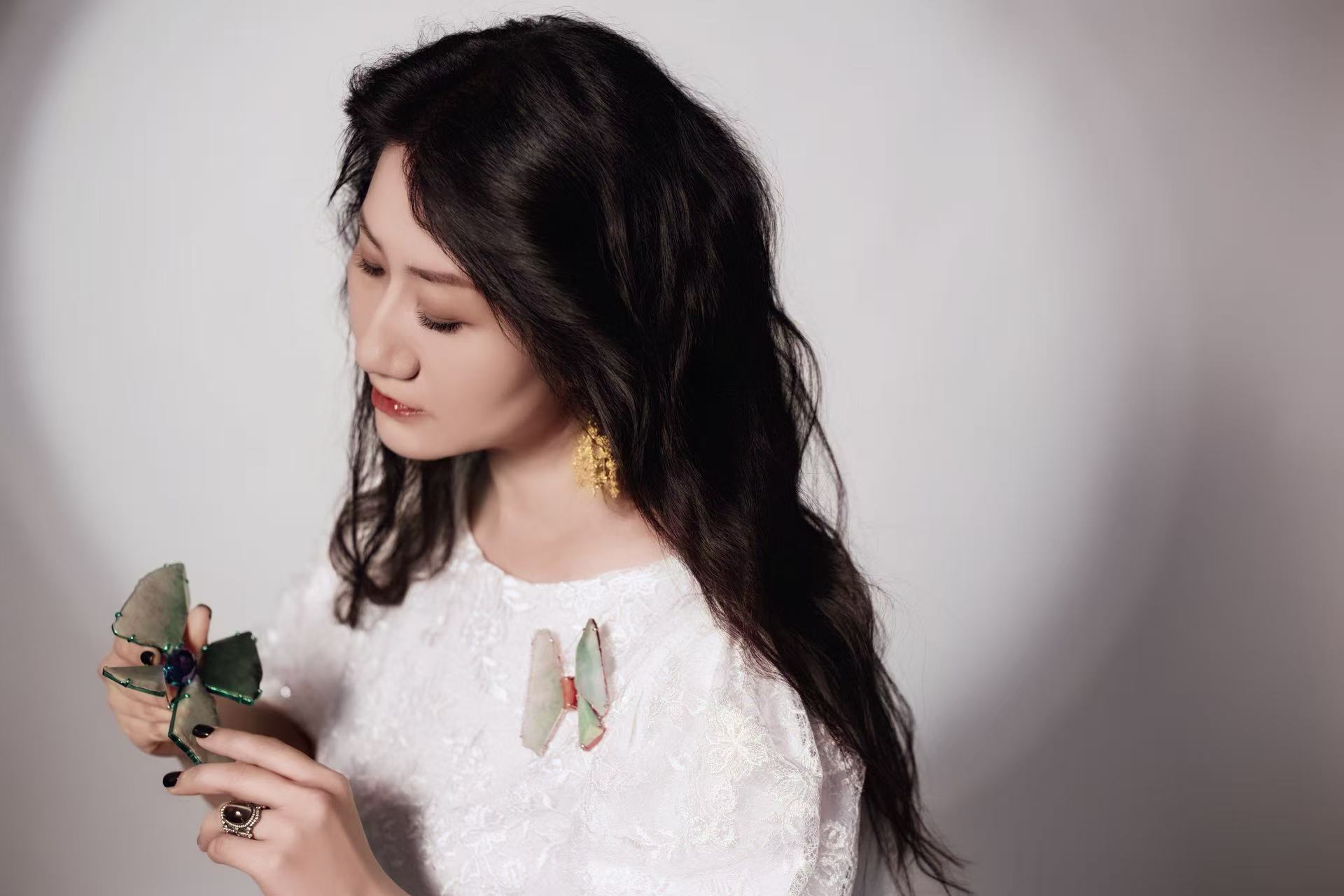 Graceful Flutter. Material: 925 silver, titanium gold, Jade, zircon, amethyst. Images courtesy of the artist
Overall, her work builds a clear and stable relationship between concept and material, and forms a relatively unified visual language. It allows jewelry to enter the discussion of contemporary art in a sculptural way. At the same time, her continued exploration of the cultural meaning of materials and structural forms also provides a wide space for future development. The collection of works demonstrates that Yuan Zhou is a contemporary jewelry artist who has already established a clear direction and continues to deepen her own language. Her practice is gradually expanding the boundary between jewelry and sculpture, and also offers a possible path for contemporary jewelry art that combines cultural memory and philosophical thinking.

WM
Whitehot writes about the best art in the world - founded by artist Noah Becker in 2005.
view all articles from this author