Whitehot Magazine
October 2026
"The Best Art In The World"
"The Best Art In The World"
October 2026
The Rise of the Art(ist’s) Market - Cj Hendry & Jeanne Greenberg Rohatyn, Matisse & Vollard: How Art Worlds Evolve
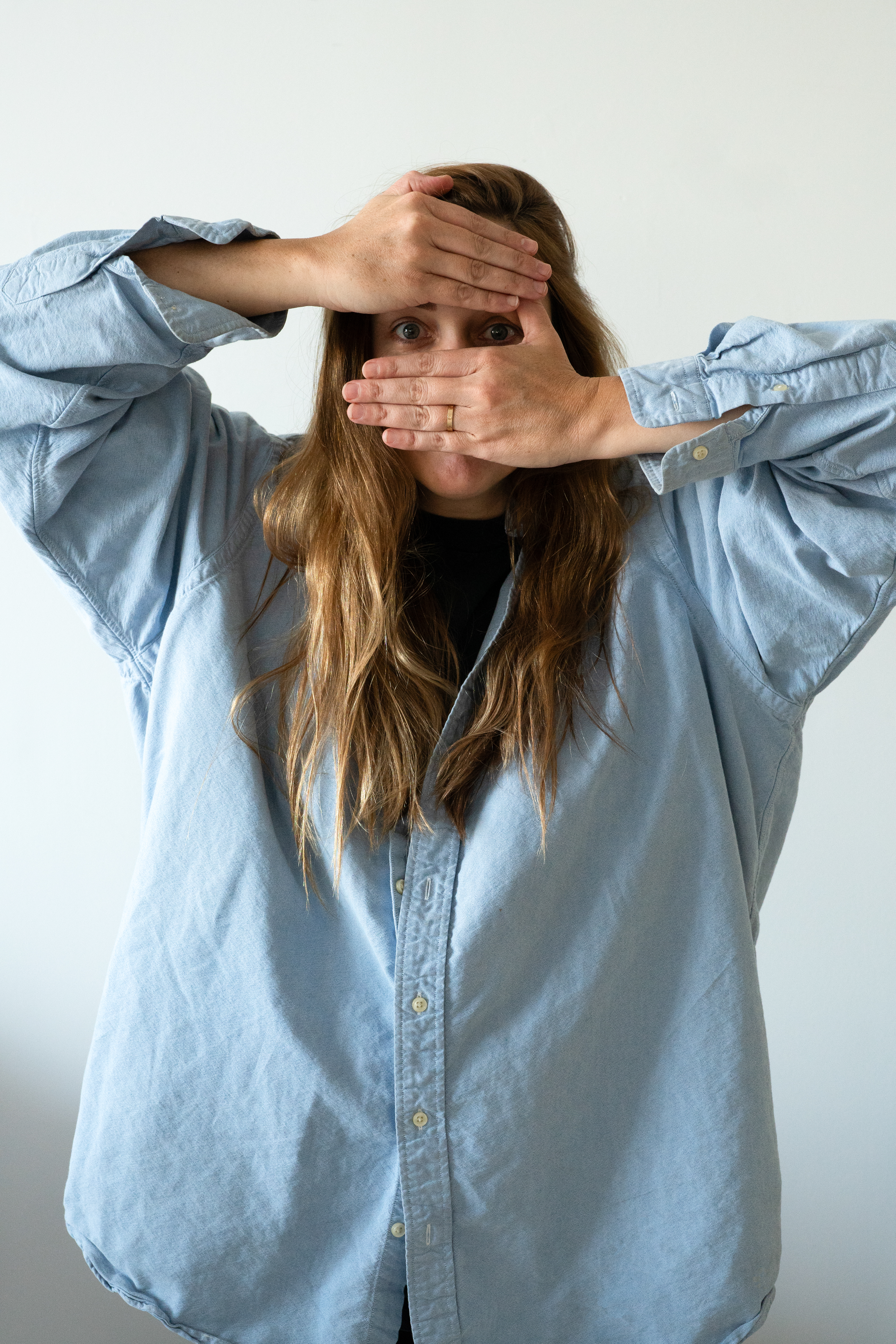 Photo credit: Cj Hendry
By ROB STRATI August 26th, 2026
I first learned about Cj Hendry in June 2024, during a conversation with the art market economist Magnus Resch.
At the time, my own Fragmented series had already been gathering momentum for about a year and a half in a way that felt unlike anything I had experienced in nearly 30 years in the art world. Collectors were discovering the work through Instagram and reaching out directly, while attention was coming from places that once seemed to occupy entirely separate worlds, such as art publications, social media influencers, and international television channels in Dubai and Germany.
When Emmanuel Fremin approached me about doing an exhibition, that momentum was already well underway, but the gallery expanded it in important ways, bringing a new audience, context and the experience of seeing the work together in a physical space. Fragmented went on to sell out at Fremin Gallery in New York. What I found interesting was I saw a new model emerging in which my having direct collector relationships and online attention was creating momentum and a focused event with the gallery was deepening and extending it. Formerly, I was accustomed to working with galleries or, separately, selling and showing work outside of systems, on my own. I was starting to see how, with the help of social media, these two approaches could dovetail/work in tandem.
Something in the system seemed to be changing, but I wasn’t sure of the scope. I had heard Resch talking about the evolving business of art on Jerry Gogosian’s Art Smack podcast and reached out because I wanted a reality check. There weren’t many people I could talk to about what I was experiencing. What interested me was the structure and dynamics of how artists, audiences, collectors, press, galleries and social media were interacting in ways that seemed to scramble the traditional sequence through which an artist was “supposed to” build a career.
Magnus listened and told me there was someone I really needed to look at: Cj Hendry.
A few weeks ago, my wife, son, and I went to Salon 94 to see Pastel, Hendry’s new collaboration with Jeanne Greenberg Rohatyn. It was the first time I had experienced Hendry’s work in person.
At the center of the exhibition was an enormous accumulation of pastel colored beads drawn from Hendry’s visual universe: flowers, smiley faces, pills, characters and other tiny forms. People climbed in and sifted through them, searching for particular beads, comparing discoveries and assembling bracelets, necklaces and charms. Around this participatory center space were Hendry’s drawings, editions and sculptures.
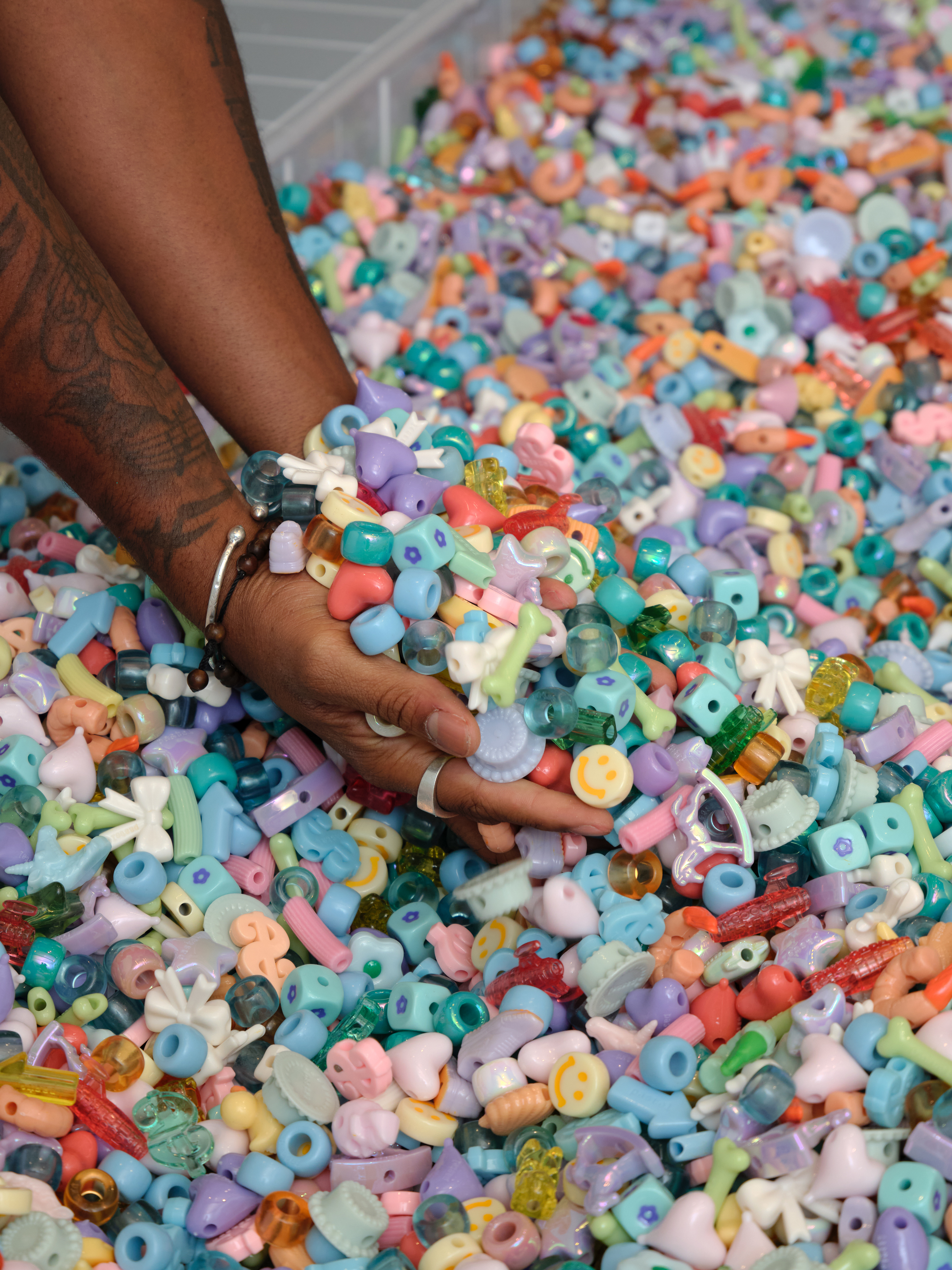
Photo credit: Alexis Salas
My 13-year-old son immediately understood the collecting mechanics of it. My wife noticed something else: the childlike sense of joy.
Greenberg Rohatyn was struck by the same quality. She described what was happening in the bead pit as “very performative,” “very collaborative,” “very community-minded” and “very joyous.” People would search in their own worlds, she said, then suddenly find something and “share that joy” with whoever was sitting beside them.
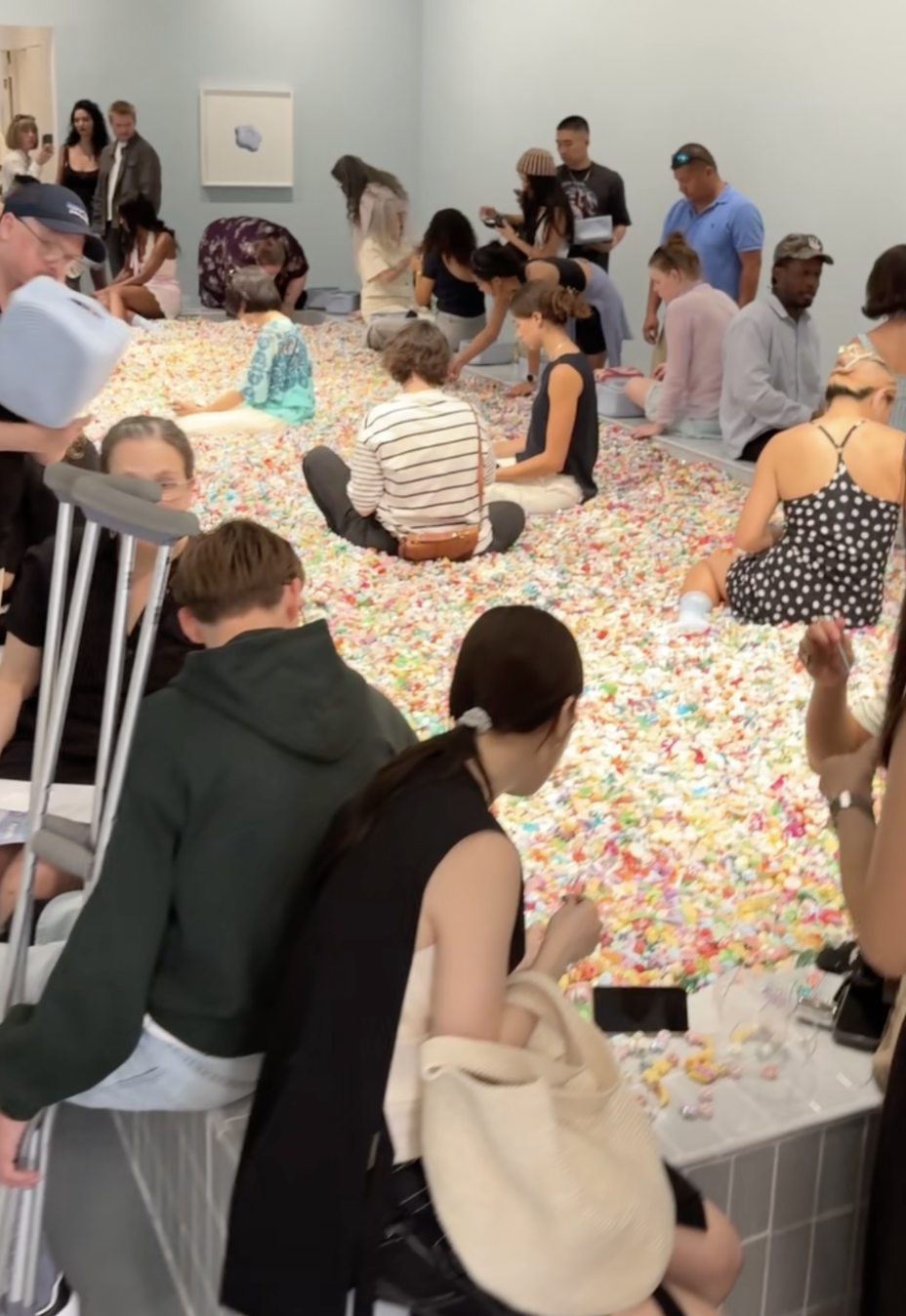 Photo credit: Rob Strati
Heading home with my family, we talked about the exhibition the whole drive home. That night when I was falling asleep, Matisse came to mind.
The connection seemed to be the sense of joy and the use of color, but there was something more. I remembered that Matisse was pivotal in not only the history of art, but also the history of the art market. It was in the early 20th Century in Paris with the art dealer Vollard that Matisse and other artists, critics and dealers had started to establish a new system that broke away from the 19th century Academy and Salon system and began to form what we now recognize as the modern art world with galleries, artists and dealers existing in an interconnected web of hierarchies, but not tied to a centralized Academy and Salon style exhibitions of that earlier era.
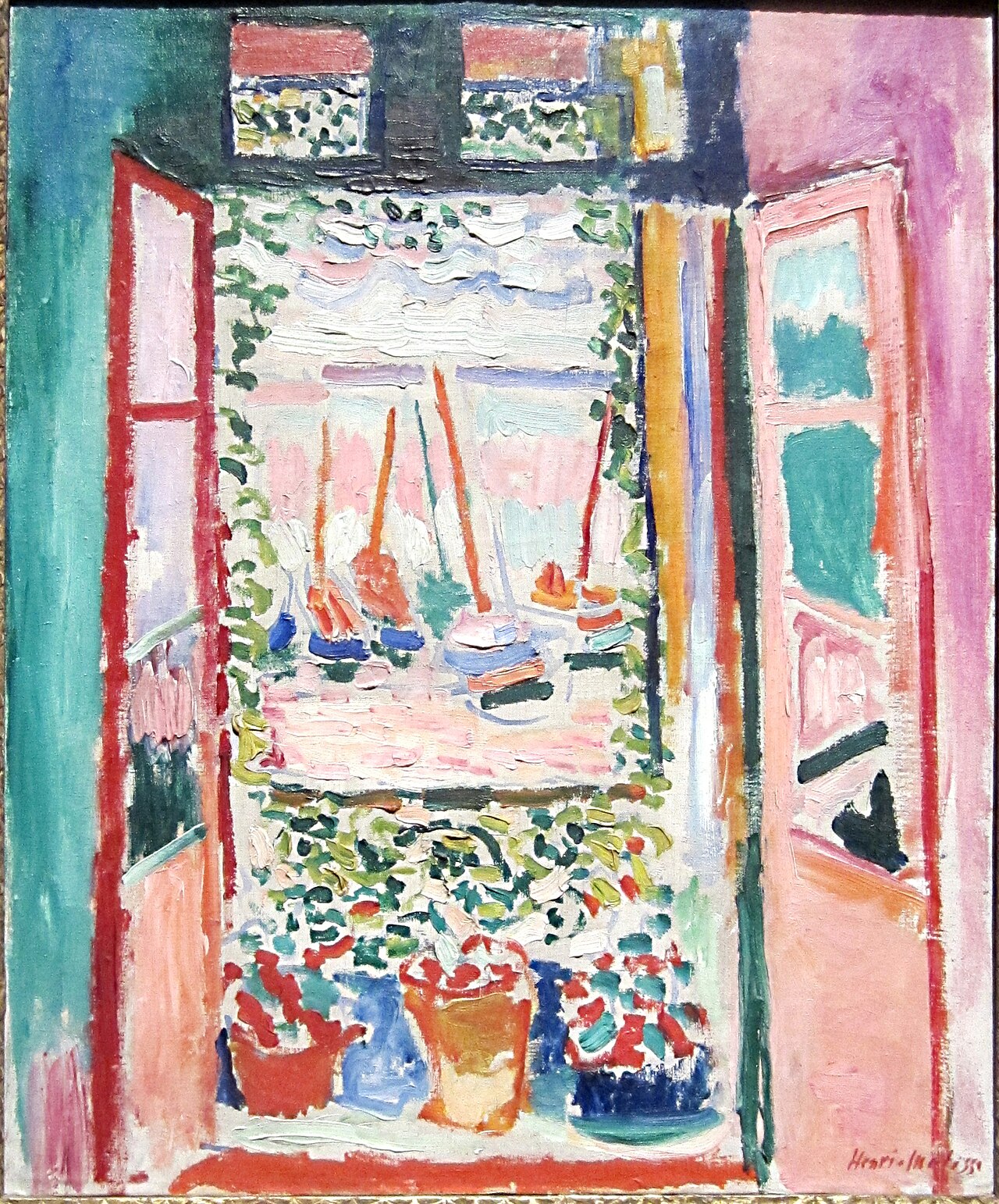
Henri Matisse, Open Window, Collioure, 1905. National Gallery of Art, Washington, D.C. Public domain.
The joy of Pastel had also felt like an antidote to something I had been hearing almost daily: the recent pessimism surrounding the art world. Galleries are closing or downsizing, the system is failing, the sky is falling. Open Instagram or an art publication and there often seems to be another commentator or influencer explaining what is broken.
Pastel, gives focus to what is emerging and where the future of the art world is headed. This exhibition, and more importantly, the partnership between Jeanne and Cj shows us what is possible when something new takes shape. This future model may be one in which artists are building their own audiences and markets and the galleries are able to offer platforms to extend those audiences and create new contexts for the work.
Cj Hendry has been living inside that alternative system for years. “I’ve been making art outside the gallery system for 15 or 16 years,” she told me. Early on, she remembers people being “scathing” about artists making and selling work through social media. Now, she noted, an online presence has become almost unavoidable.
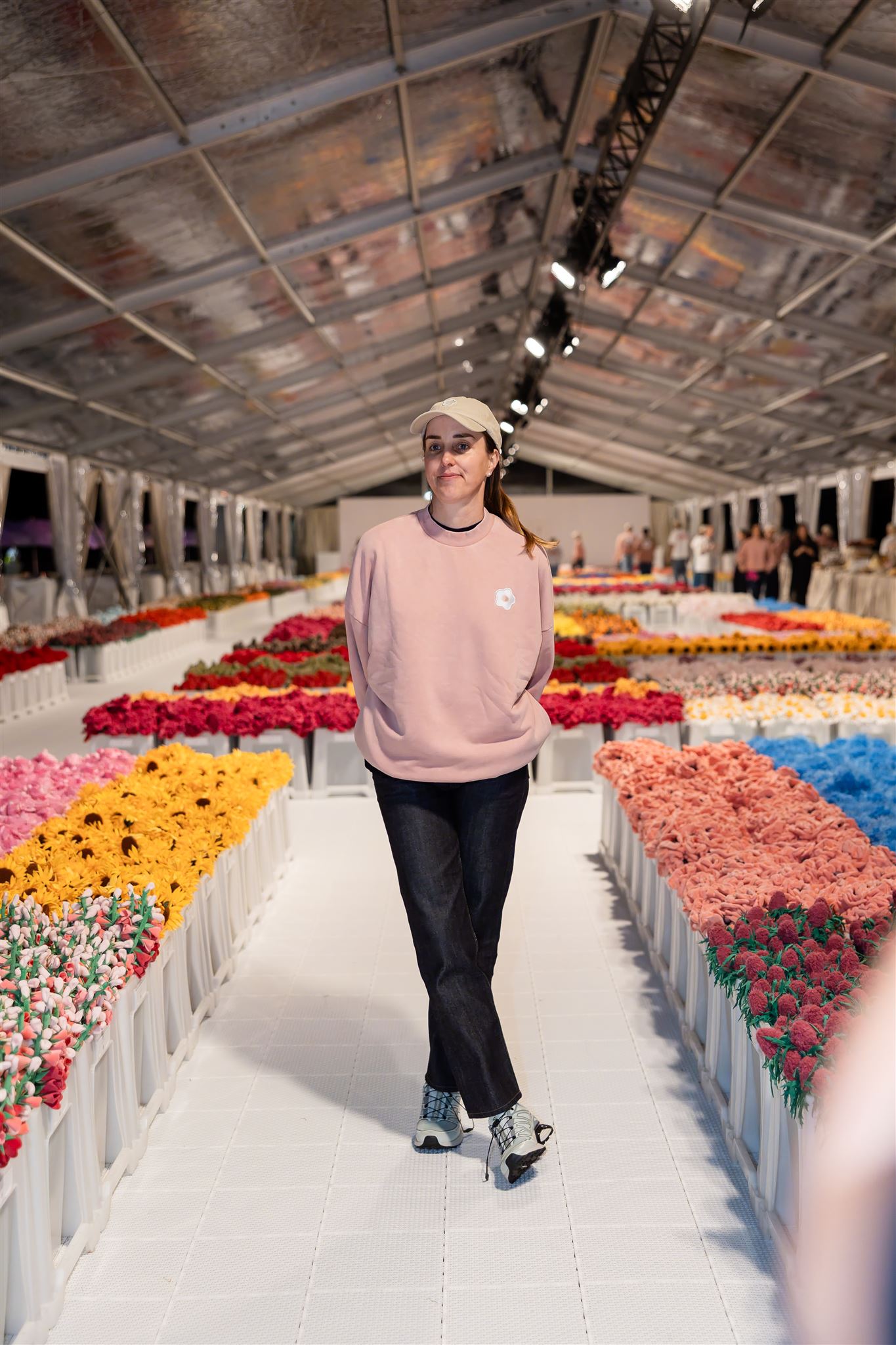
Photo credit: Bobby Hendry
But Hendry’s evolution went well beyond learning how to sell drawings on Instagram. Her original works are hyper realistic drawings on paper and she was incredibly successful building an audience and selling them for high prices. However, over time she began feeling dissatisfied with this kind of creation / exchange process.
“If I’m going to make people come out to see my work,” she told me, “let’s put on a performance.” Rather than ask viewers to travel across a city simply to see something they could view on a phone, she began building increasingly elaborate and participatory exhibitions around the work. For Flower Market, that began with a simple thought: “What if we were able to build something where we had flowers where you could give them away?… Imagine if we could give away flowers to everyone.” The idea eventually became thousands of fabricated flowers that visitors could take home, an ordinary object transformed into an experience. That instinct is everywhere in Pastel.
It is also where Jeanne Greenberg Rohatyn becomes essential to the story.
Magnus introduced Hendry and Greenberg Rohatyn over Zoom more than a year ago. Hendry describes the eventual relationship with unusual clarity: Jeanne “doesn’t have to work with someone like me,” she said, “and on the flip side, we don’t have to do anything with a gallery either.”
That may be exactly why the collaboration matters. Salon 94 has always felt different to me because Greenberg Rohatyn seems to have built it as something fluid, personal, and open to reinvention rather than as a fixed gallery model.
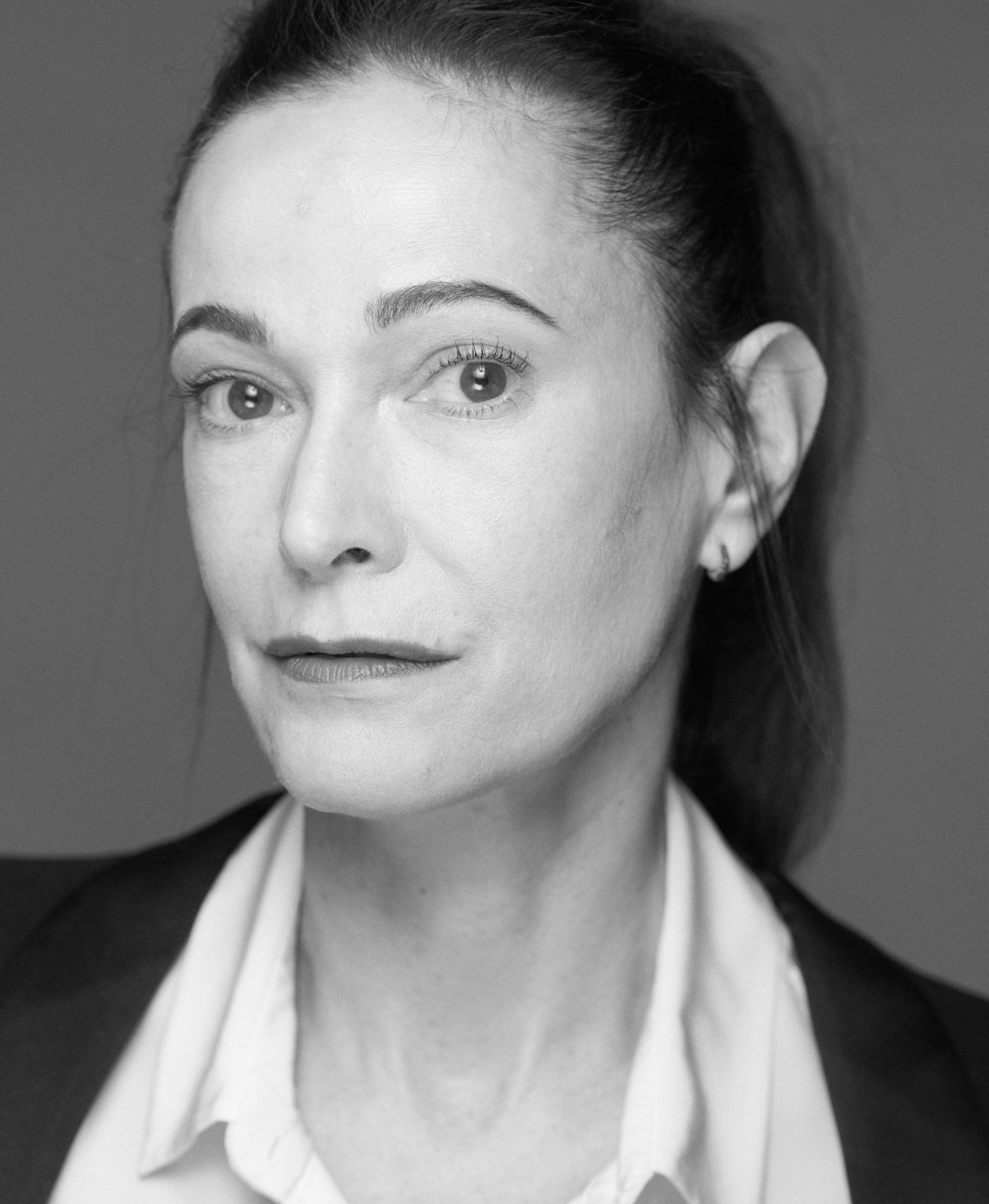
Jeanne Greenberg Rohatyn, Courtesy of Salon 94. Photo: Katy Grannan
She grew up inside the art world, her father was a dealer, but when she came to New York, she quickly understood that simply imitating the successful galleries around her made little sense. “I came to New York and realized that, in order to compete, almost as an outsider, even though I was the ultimate insider, I needed to redefine what the gallery was, but with my own personality,” she told me.
Influenced by Gertrude Stein and Florine Stettheimer, she was drawn to the salon as a place of dialogue and exchange. “I liked the idea of defining the gallery that I would build slightly different,” she continued. “I’m one of these dealers that thinks if I can’t add value to something, then it’s not worth doing.”
That instinct has remained remarkably consistent. “I’m constantly finding slivers that the art world has not really built,” she said, “and I’m building.”
“I started looking at these self-made artists who are amazing,” Greenberg Rohatyn told me, artists who had built huge support systems and followings through a vehicle entirely different from the gallery. “I’m interested to see what happens when we bring it into the art gallery space.” She also sees Hendry as a legitimate art maker who belongs in galleries, calling the collaboration a kind of “perfect storm” in the context of what she has consistently been trying to build.
Again, Pastel feels less like an anointing and more like a partnership. Hendry brings an audience, collectors, a market ,and an elaborate experiential world she built independently. Salon 94 brings physical space, art-historical context, relationships, and another cultural network. Cj begins outside the traditional gallery structure and pushes inward. Jeanne begins inside the art establishment and pushes outward. Pastel is where they meet.
That meeting is what brought me back to Matisse.
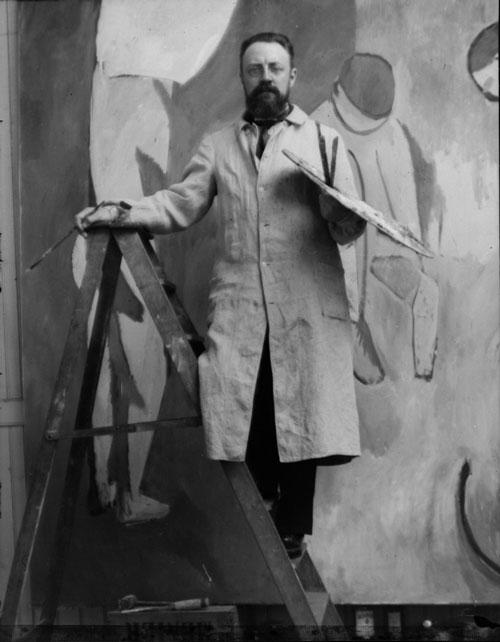
Henri Matisse, Paris, May 13, 1913. Photograph by Alvin Langdon Coburn. Via New York Public Library / Wikimedia Commons.
At the end of the 19th century, artists in France still worked in the shadow of the Academy and official Salon, institutions that exercised enormous influence over who could exhibit and whose work mattered. By Matisse’s generation, however, that monopoly was eroding. Independent exhibitions, private collectors, and entrepreneurial dealers were constructing a new system beside it.
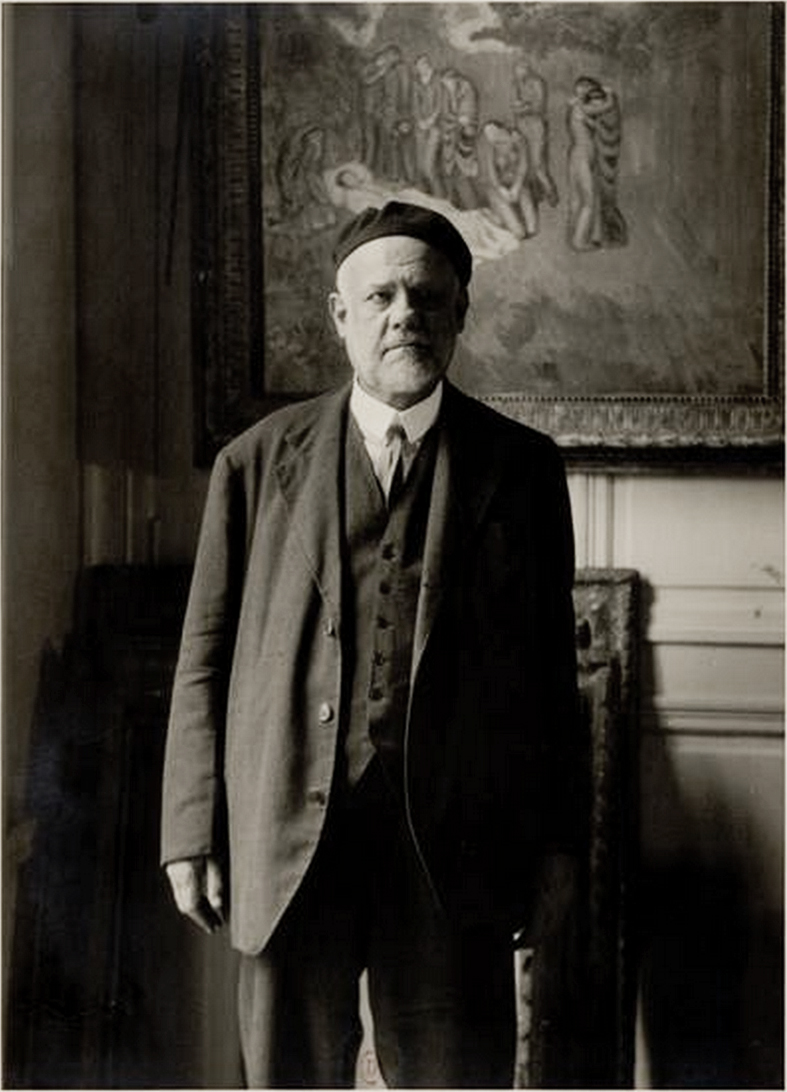
Ambroise Vollard, before 1910. Public domain, via Wikimedia Commons.
Ambroise Vollard became one of the defining figures in the art world at this time. His 1895 Cézanne exhibition helped establish the reputation of an artist still little understood by the Parisian public. Vollard went on to show Gauguin, Van Gogh and Picasso, and in 1904 gave Matisse his first solo exhibition. A year later came the Salon d’Automne, Fauvism and Woman With a Hat. Leo and Gertrude Stein bought the painting and became important supporters of Matisse and the avant-garde.
We remember this period as a revolution in art, but it was also a revolution in the art world. The Academy did not vanish. The Salon did not suddenly close. Instead, new channels of authority developed around them. Dealers championed artists. Collectors validated them. Private homes became cultural meeting places. Independent exhibitions competed with official institutions for attention.
Power shifted until the alternative became the new system.
Matisse emerged as energy was moving toward the dealer and gallery. Hendry has built her career while some of that control has been moving toward the artist.
Pastel also extends the scope and culture of the gallery experience. “I feel like art is not particularly generous,” she told me. She wants people who enter one of her exhibitions to “feel seen.” At Pastel, that sentiment is apparent, a bead can cost a dollar. Hendry could easily have made participation scarce, expensive and exclusive. Instead, she wanted almost anyone to be able to leave with some connection to the work.
Her original drawings, meanwhile, can command extraordinary prices. “Can we do something for $5 or $1 as well as half a million dollars?” she asked me. “Wouldn’t that be lovely?”
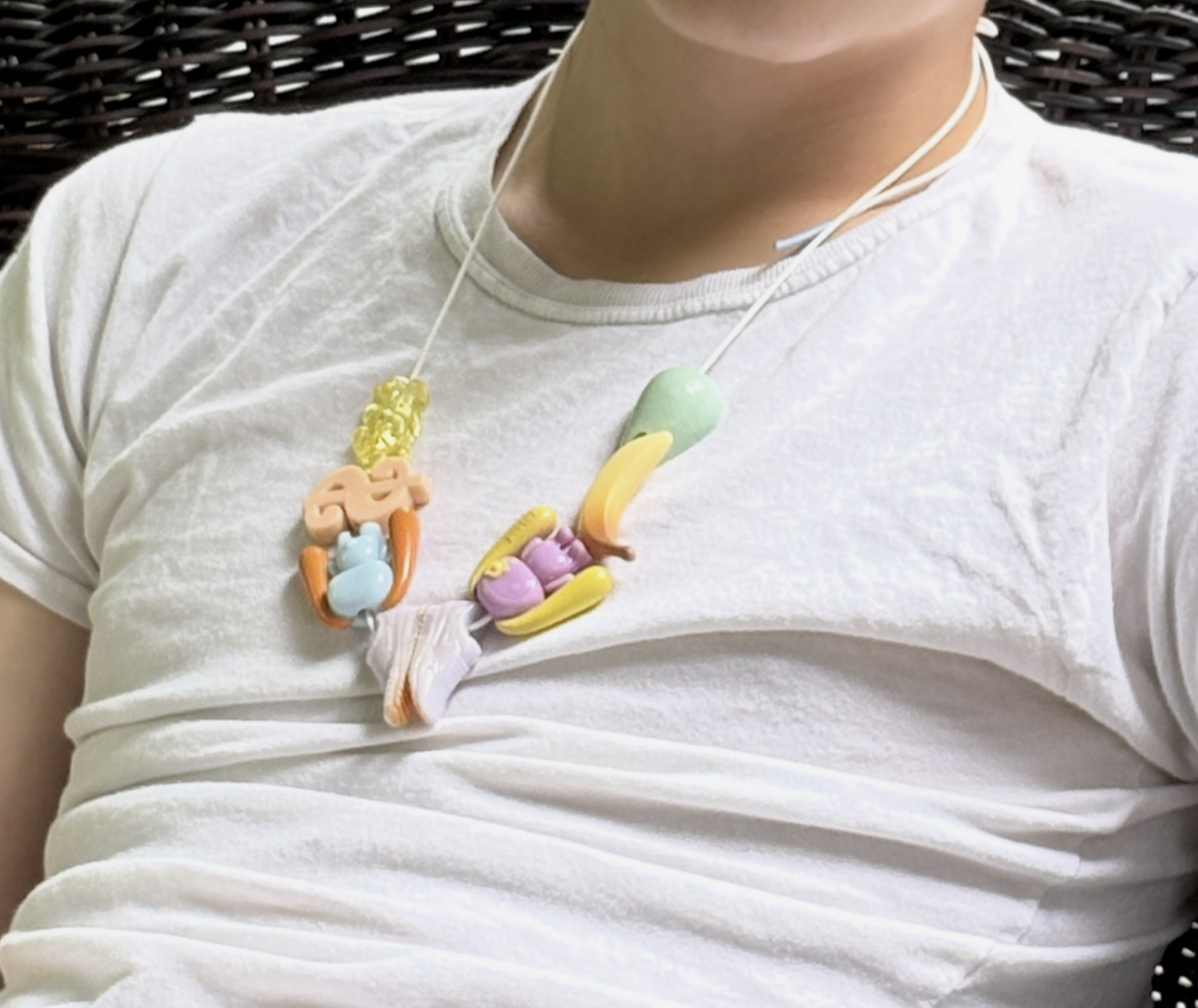
Photo credit: Rob Strati
The question seems larger than pricing. It asks whether an art world can accommodate different kinds of relationships to the same artist without insisting that cultural value depends upon exclusion. It also gets to what I think of as the rise of the Art(ist’s) Market.
For much of the modern gallery era, galleries performed a number of functions: discovering artists, introducing them to collectors, presenting their work, communicating value, generating attention, and helping move careers toward institutional recognition. An artist can now perform many of those functions independently and through other platforms.
That does not make the gallery obsolete any more than Vollard made the Salon obsolete. It changes what a gallery can contribute.
Greenberg Rohatyn put it succinctly. When she considers working with an artist, she said, her first question is not whether that artist fits her program. It is, “Can I add value to their story?”
That may be the most useful way to understand Pastel and perhaps the transition happening around it. A century ago, the art world learned that an Academy and Salon did not have to make an artist important. Today, we may be learning that a gallery does not have to create an artist’s audience or market either.
The point is not that one system replaces another. Art worlds evolve by growing new structures alongside old ones.
And while so much attention is being paid to what the art world may be losing, Pastel offers something far more interesting to look at…an artist and a gallery arriving with different kinds of strength, neither needing the other’s permission, and choosing instead to ask what they might build together.
Cj Hendry: Pastel was on view August 6 through August 16, 2026 at Salon 94 Design, in collaboration with Jeanne Greenberg Rohatyn. WM
Rob Strati
Rob Strati has been a working artist for over 35 years. He holds a BA in History of Art from The Ohio State University. You can see more of his on Instagram @robstrati (https://www.instagram.com/robstrati)
view all articles from this author