Whitehot Magazine
October 2026
"The Best Art In The World"
"The Best Art In The World"
October 2026
Too Close to the Trees: Danielle Mckinney and Psychic Space
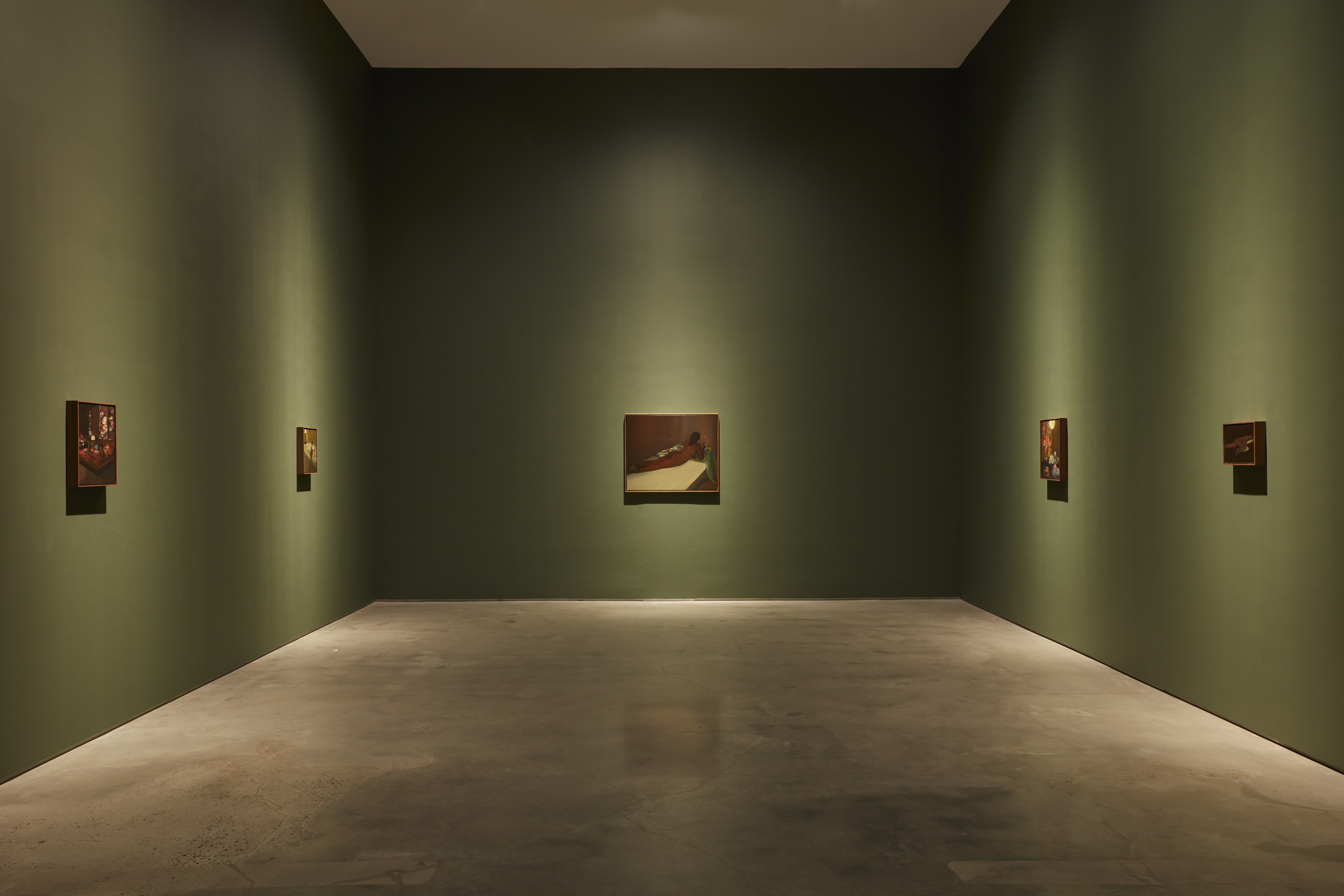 Install view of Forest for the Trees at Boesky Gallery photo by Jason Wyche
By Margherita Artoni June 17th, 2026
Danielle Mckinney's Forest for the Trees, at Marianne Boesky Gallery, is about rest only on the surface. The easy framing of her work as refuge or self-care collapses quickly. The paintings stage interiority as instability, where perception, memory, and affect do not layer into depth but interfere with one another in real time.
The title, drawn from John Heywood's proverb about not seeing the forest for the trees, operates as a structural condition. Nothing holds still. Up close, forms break into brushwork and residue; at distance, they briefly cohere into rooms before loosening again. The image behaves less like depiction than like cognition unable to stabilize its object.
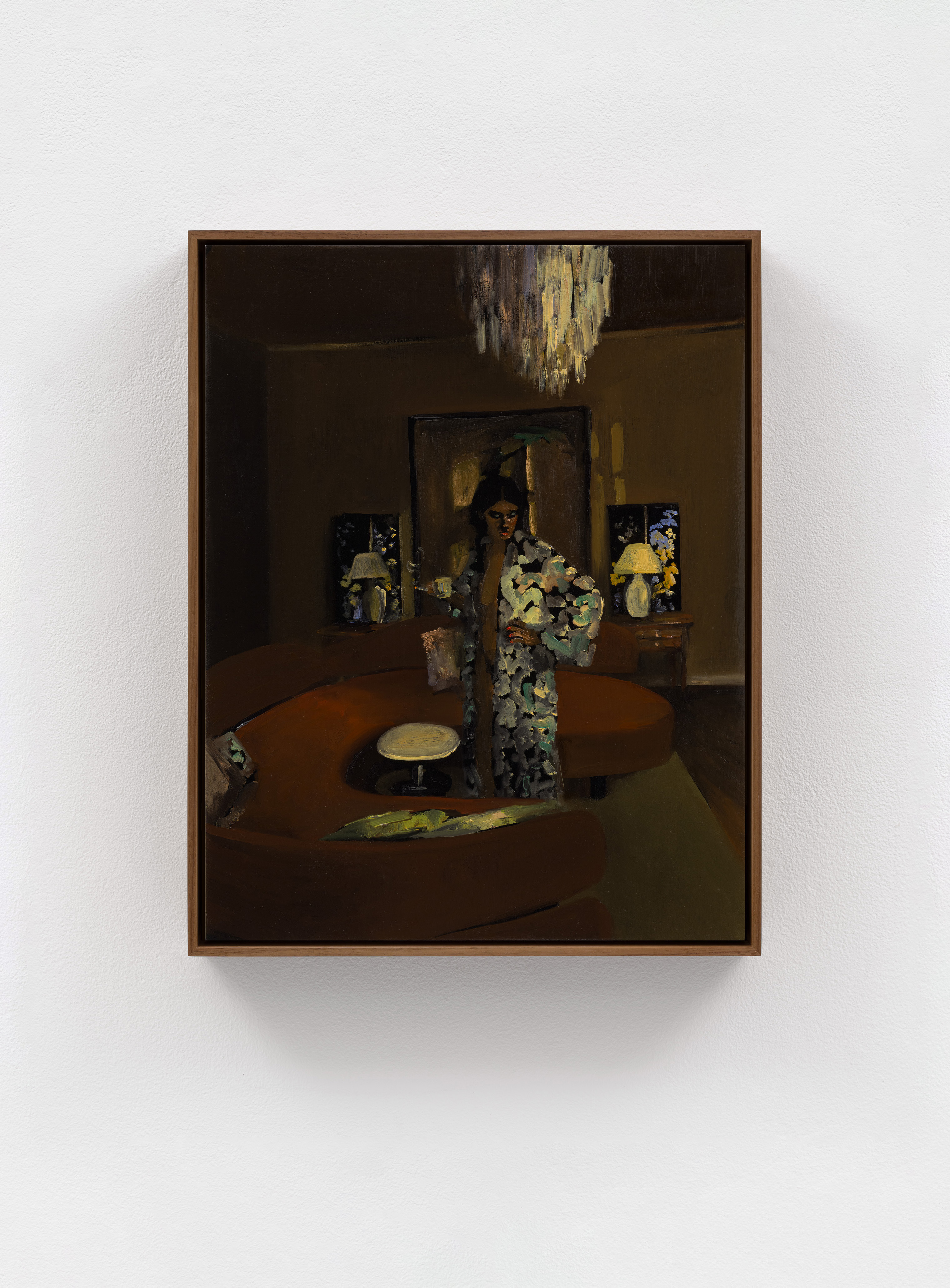 Danielle Mckinney - Forest for the Trees (2026) - Courtesy of the artist, Marianne Boesky Gallery, New York and Aspen, and Galerie Max Hetzler, Berlin, Paris, London, Marfa. Copyright Danielle Mckinney
The figure becomes the most visible site of this instability. Women recline, read, smoke — yet they no longer organize space. They function alongside it as another layer of dispersion, sharing the same visual logic as their surroundings: edges soften, distinctions fail, figure and field become interchangeable.
Interiors stop functioning as context and turn into active pressure systems. Lamps flare like nervous signals, furniture asserts sculptural weight, flowers tilt into prominence with an almost excessive insistence. Nothing remains background, because everything participates in the production of psychic density.
Vuillard and Bonnard provide a clear precedent, though Mckinney pushes beyond their poetics of domestic perception. Their interiors sustain sensory envelopes; hers continually destabilize coherence. The paintings do not describe interior life — they generate conditions in which interiority cannot separate itself from environment.
Hammershøi offers a useful counterpoint. His silence suggests withdrawal; Mckinney's suggests compression. His rooms register emptiness; hers register saturation without exit. Stillness becomes tension held at the limit of release.
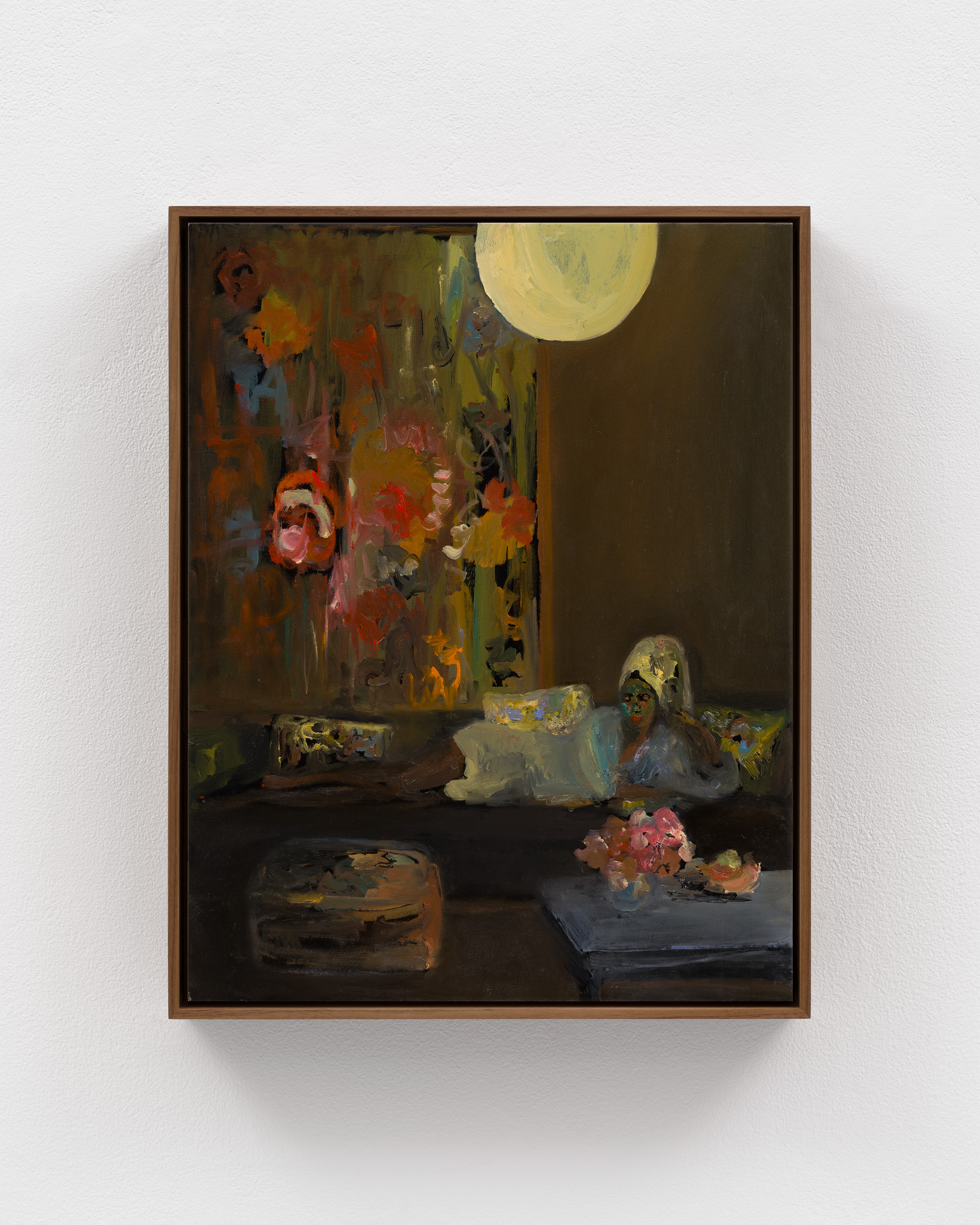 Danielle Mckinney – Recess (2026) - copyright Danielle Mckinney and courtesy of the artist and Marianne Boesky Gallery, New York and Aspen
Bachelard's idea that the house shelters daydreaming reverses here. The house produces psychic life while destabilizing it, until interior and mind contaminate one another and neither retains priority.
The critic and curator Karen Hollis has written about the value of remaining with what is not yet understood — a disposition that maps precisely onto Mckinney's refusal of resolution. The paintings resist stabilization. Uncertainty becomes structural rather than thematic.
The comparison to contemporary painters clarifies the stakes. Lynette Yiadom-Boakye's figures remain sealed within psychological opacity; Jordan Casteel builds relational legibility. Mckinney withdraws both positions. Her figures neither withhold nor communicate, dissolving into environments that function as extensions of perceptual instability.
The reference to Daphne in Ovid — a body that fails to remain separate from nature — describes a structural condition already present in the work. Figure and environment collapse into a single process of becoming.
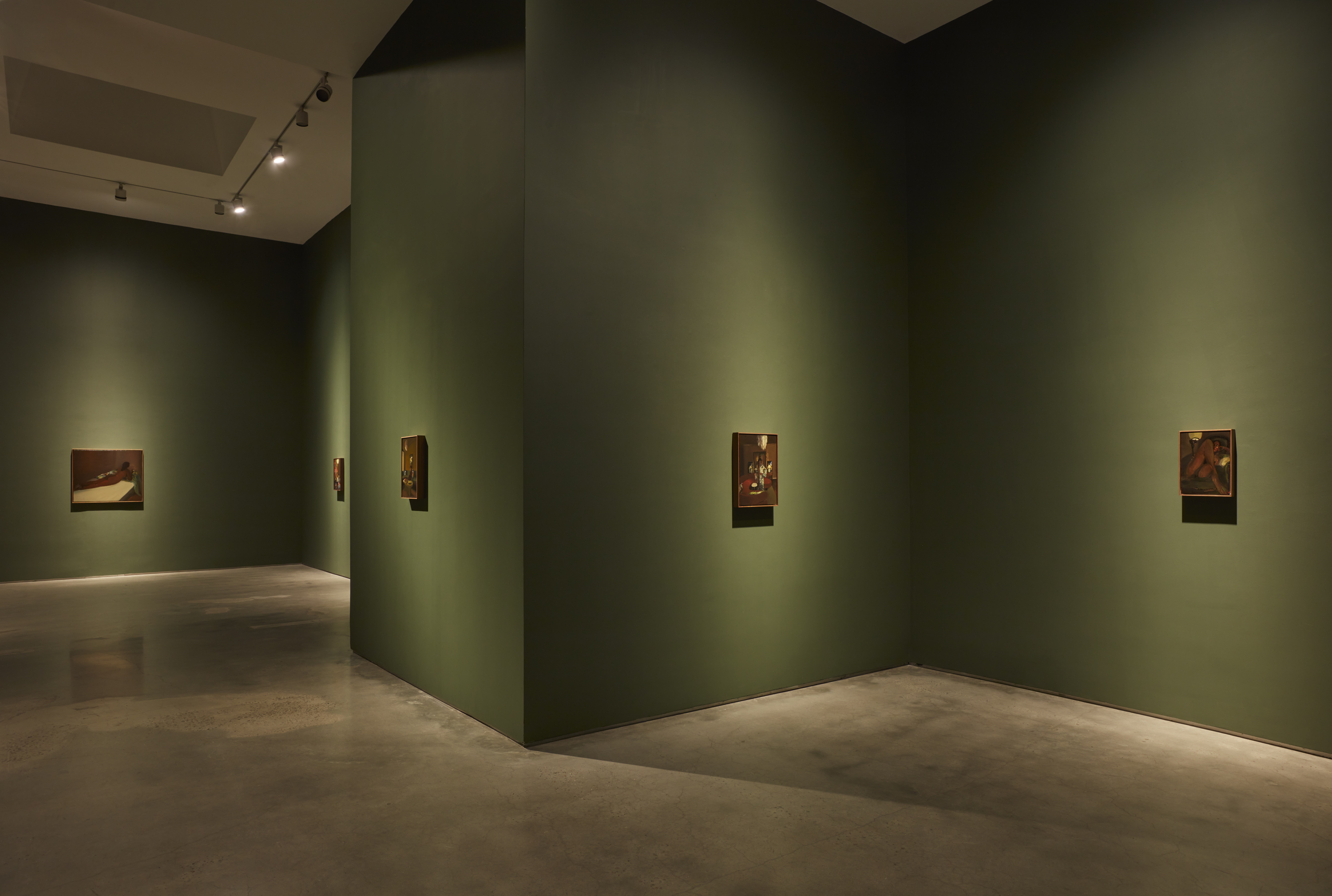 Install view of Forest for the Trees at Boesky Gallery photo by Jason Wyche
This logic becomes legible across individual works.
In Forest for the Trees, the interior reaches maximum pressure. A reclining figure occupies a space that suggests rest while the pictorial field refuses stabilization. Furniture, light, and objects assert equal force, producing a system in which figure and environment compete for dominance without resolution.
In Milk and Honey, the structure tightens into a quieter register. Instability persists within a sealed composition. The figure remains present without anchoring the space, while the interior folds back onto surface rather than extending into depth.
Recess sharpens the condition further. The reclining figure appears suspended within a closed perceptual field, gesture receding in favor of containment. The interior contracts into a space where rest and enclosure become indistinguishable.
The watercolors extend the logic into its most reduced state. With architectural scaffolding removed, the image thins to residual traces — figures as diminished presences rather than absent ones.
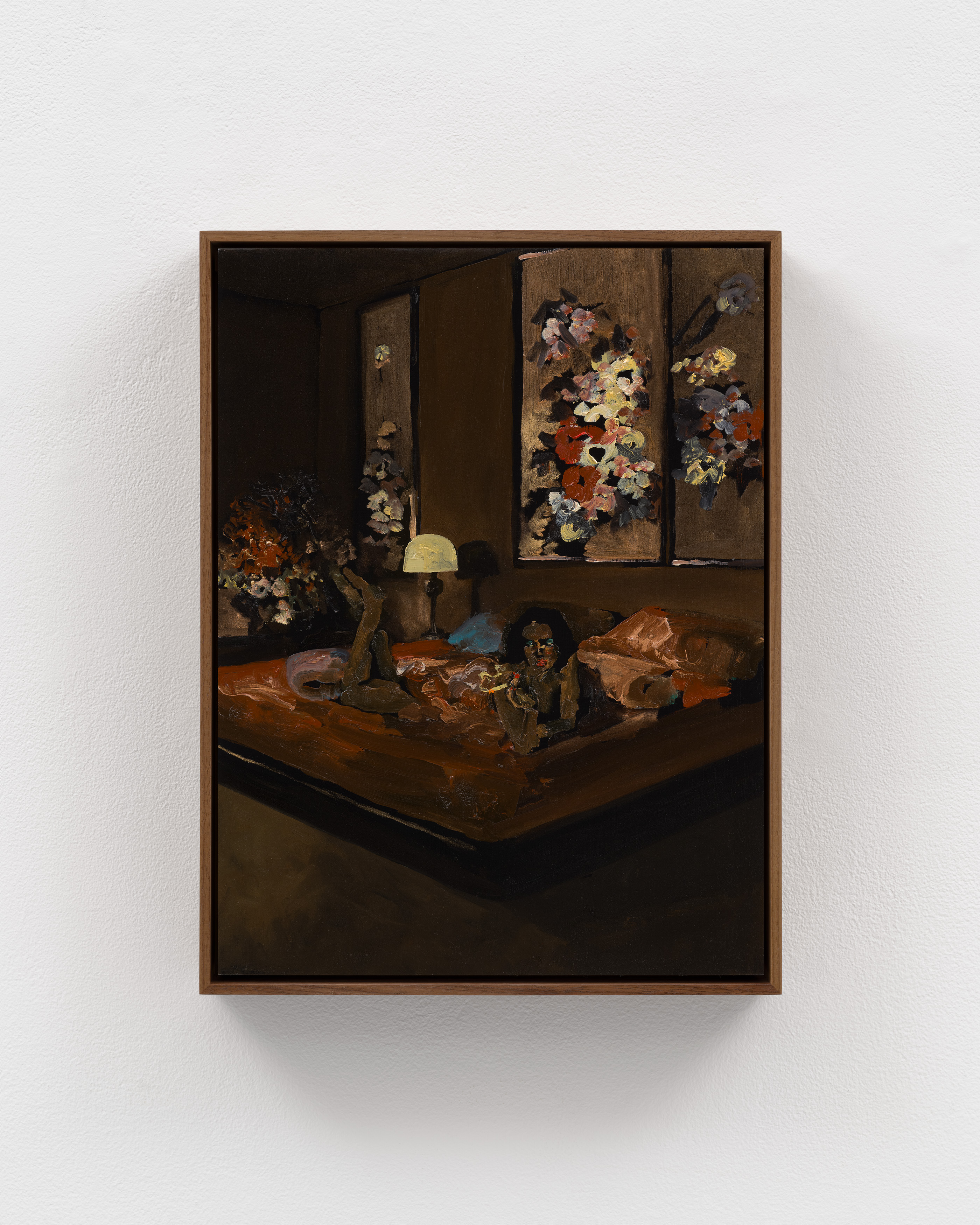 Danielle Mckinney – Milk and Honey (2026) - copyright Danielle Mckinney and courtesy of the artist and Marianne Boesky Gallery, New York and Aspen
At this point in contemporary painting, where identity, clarity, and legibility often operate as default values, Mckinney moves in the opposite direction. Figure and space lose their traditional separation, and what remains is interiority as breakdown: a system that fails to settle into form.
These paintings do not offer access to a psychic interior. They register what it looks like when that interior no longer has a stable place to occur.
Margherita Artoni
Margherita Artoni is a contemporary art critic and curator working between Italy and the United States. She began her career collaborating with Flash Art and currently writes for Segno, Juliet, Artribune, Exibart, Inside Art, ArteIN, part of cult(ure), The Art Fuse, and Whitehot Magazine.
She has directed galleries in Turin — including NEOCHROME and EDGE Art Space — and in New York at TEAM Gallery. Her curatorial work has included exhibition programs with international artists such as Rashid Johnson, Theaster Gates, Ali Banisadr, Angel Otero, Tim Rollins & K.O.S., Laura Owens, and Mika Tajima.