Whitehot Magazine
October 2026
"The Best Art In The World"
"The Best Art In The World"
October 2026
Lauren Quin: Eyelets of Alkaline at PACE – Interiors Suspended Between Light, Memory, and Structure
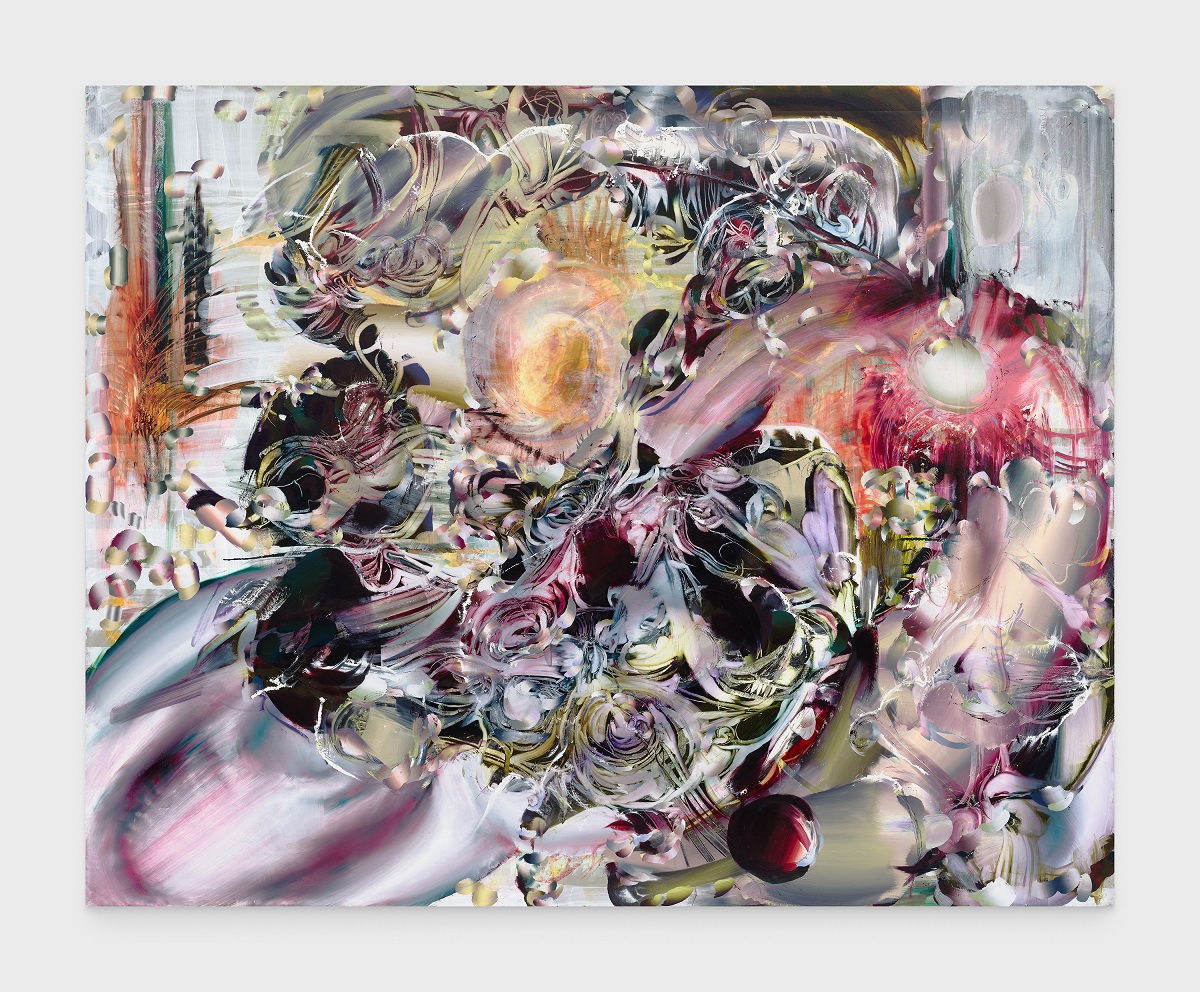 Lauren Quin
Eyelets of Alkaline, 2025
oil on canvas
78-3/4" × 98-1/2" (200 cm × 250.2
cm) © Lauren Quin, courtesy
Pace Gallery
By MARGHERITA ARTONI February 26th, 2026
With Eyelets of Alkaline, Lauren Quin inaugurates a new phase in her artistic trajectory in Los Angeles, marking her first solo exhibition with Pace Gallery following her entry into their program in 2025. The show represents a methodical and conceptual rupture from her previous approach, known for tonal saturation and vibrant forms, and unfolds as a radical exploration of painting as an organism of temporality, memory, and imprint.
The works, produced over the course of eighteen months, attest to a transition from what the artist has termed an “overdose of chromatic intensity” toward a paradigm she calls a “detox of color”: a voluntary limitation of color that does not eliminate it, but transforms it into echo, trace, and sedimented residue within multilayered shades dominated by black and gray.
At first glance, the surfaces may appear nearly monochromatic, yet this is a perceptual illusion: dense veils are enveloped in fleeting halos of color, as if former harmonies were faded fields of extinguished light or sepia, entering and exiting the optical field. Through this reduction, Quin deliberately seeks to neutralize color’s associative and emotional power, redirecting attention to the structural and diachronic qualities of the painting.
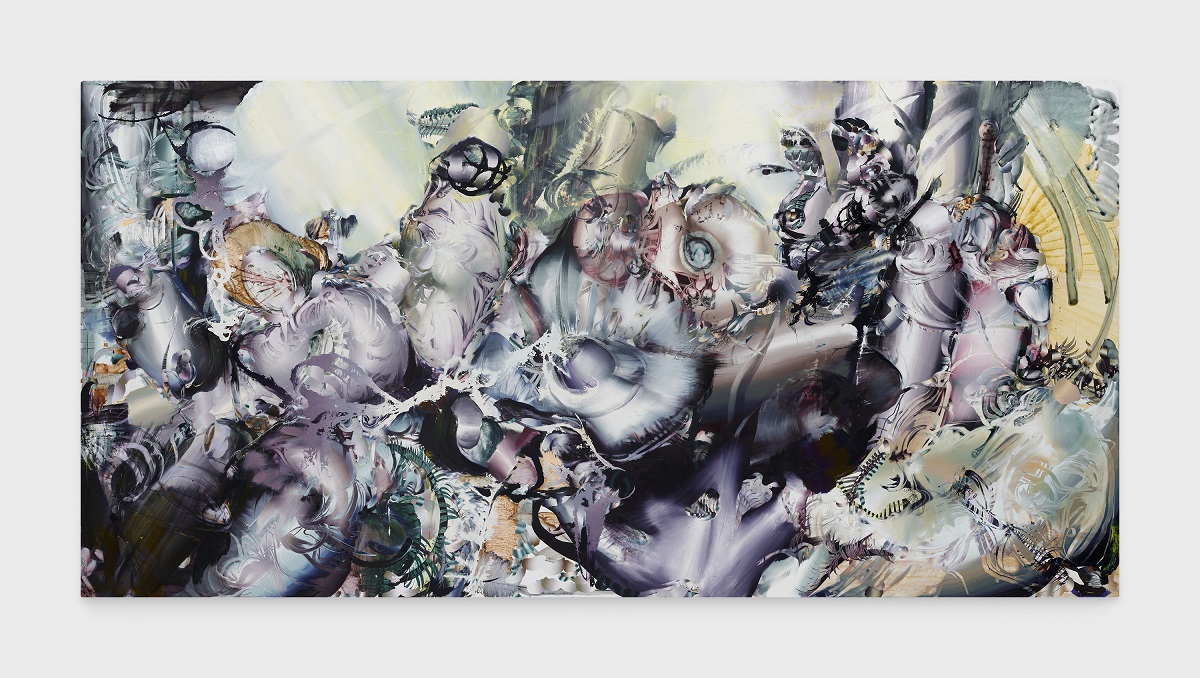 Lauren Quin
The Cold Vein, 2025
oil on canvas
78" × 156" (198.1 cm × 396.2 cm)
© Lauren Quin, courtesy
Pace Gallery
Working by subtraction is as crucial as addition: the canvases manifest a rigorous cycle of layering, scraping, and resurfacing of material. Quin begins each composition with an underlayer she describes as “sumptuous tunnels of light”, patterns and profiles that expand the topography of vision before being questioned, scarified, and reexamined. The resulting textures bear visible traces of revision, which do not conceal but reveal the history of choices and reconsiderations, documenting the rhythm of advance and retreat that governs the entire series.
Quin defines her practice through the term “superstitious abstraction”: a strategy seeking moments of synchronicity and serendipity in which painting, both formally and intuitively, suggests the next stage of the process. In this system, time and space are neither linear nor sequential but circular and combinatory: recurring motifs, symbols, and patterns are disarticulated and recomposed, orchestrating relationships that appear as temporal assemblages suspended between stability and collapse.
The spatiality of the works is centrifugal and entropic: tubular volumes appear cracked, as if the interior of the canvas itself yields outward. This movement is not mere plastic sublimation but proposes an organic architectural logic, in which the painting opens like an unfinished organism, oscillating between interiority and exteriority.
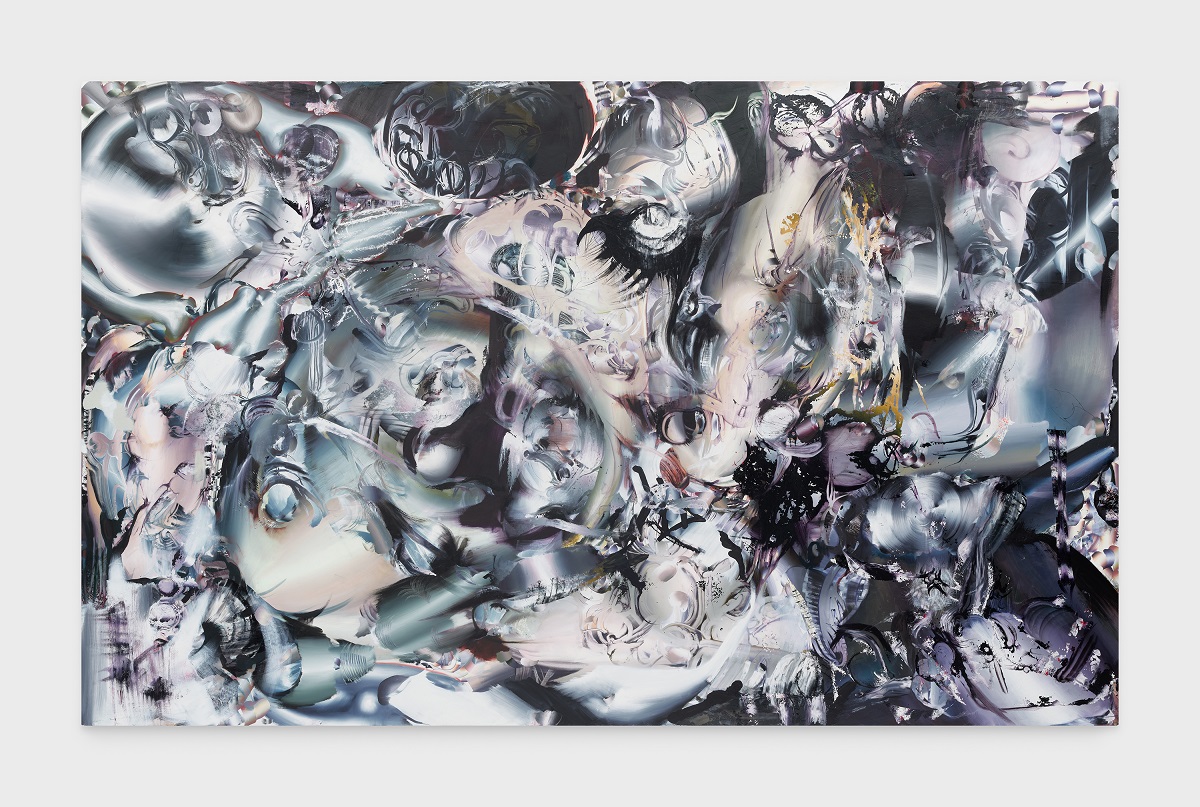 Lauren Quin
Grizelj, 2025
oil on canvas
90” x 144” (228.6 cm x 365.8 cm)
© Lauren Quin, courtesy
Pace Gallery
References to the body are indirect but persistent: they are not anatomical representations, but minimal sensations—like the reflection of an eye or the glimmer of a fragment—that act as micro-nodes of visual and cognitive experience. In this sense, every element, however small, can become the generative seed of an unprecedented pictorial development.
Compositional energy in Eyelets of Alkaline eschews the prevailing timbral spectacle in favor of a more meditative, yet intensely present visual energy. Here, the canvas becomes a device of internal resistance: not merely a support, but a battlefield where each mark preserves and reconfigures perception.
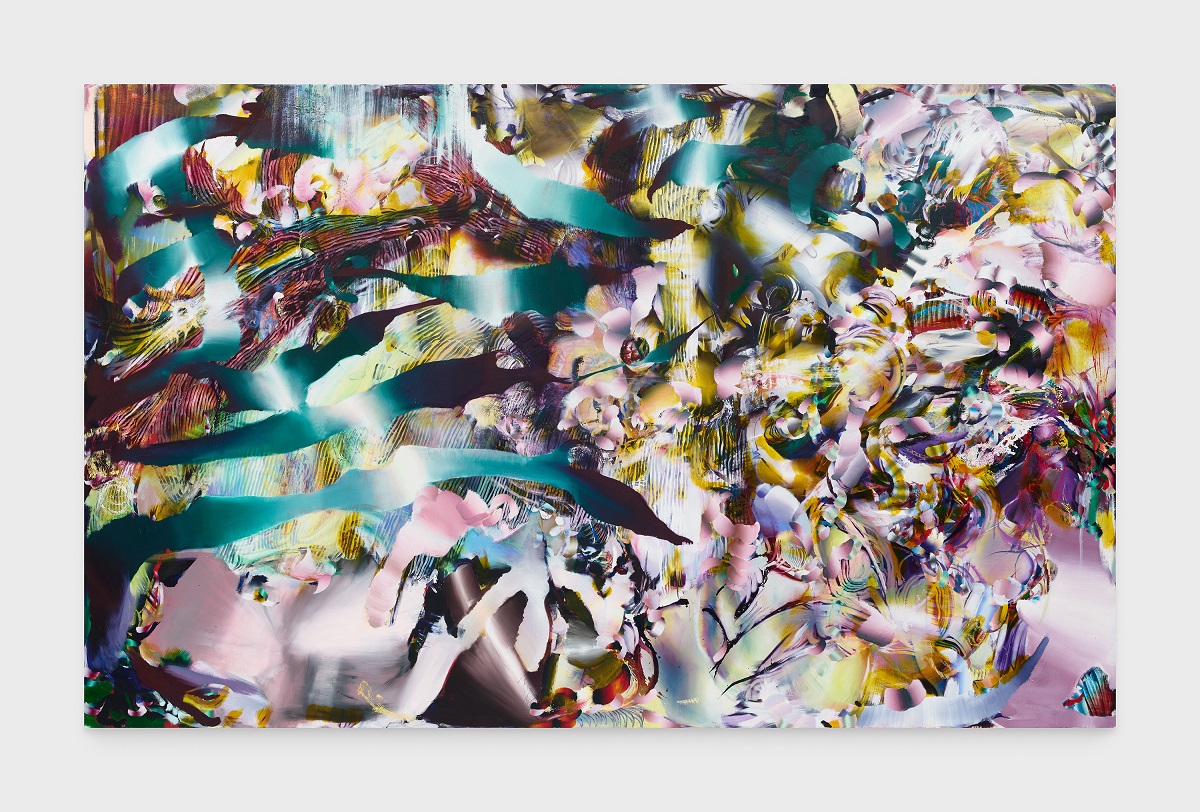 Quin, Lauren
The Silk of Release, 2025
oil on canvas
90" × 144" (228.6 cm × 365.8 cm)
© Lauren
Quin, courtesy
Pace Gallery
Within this zone of near-monochromy and controlled instability, Quin redefines her field of action, shifting attention from morphological proliferation to the prolongation of marks, where every residue, every incision, is simultaneously memory and schema, and the canvas becomes an unceasing interrogation of its own temporality.
In this context, Quin’s work enters into a critical dialogue with the recent history of contemporary abstract language, drawing on predecessors the artist herself recognizes as significant. Her oeuvre converses with the gestural energy and pigmentary layering of Joan Mitchell and with the experimental and conceptually free approach of Albert Oehlen, reinterpreting these models as tools to explore time, recording, and sensory reception. In doing so, Quin’s painting not only responds to the object-based tradition but reinvents it as a space of suspension and serendipity, illuminating the tension between presence and residue that defines contemporary modes of seeing.
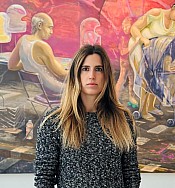
Margherita Artoni
Margherita Artoni is a contemporary art critic and curator working between Italy and the United States. She began her career collaborating with Flash Art and currently writes for Segno, Juliet, Artribune, Exibart, Inside Art, ArteIN, part of cult(ure), The Art Fuse, and Whitehot Magazine.
She has directed galleries in Turin — including NEOCHROME and EDGE Art Space — and in New York at TEAM Gallery. Her curatorial work has included exhibition programs with international artists such as Rashid Johnson, Theaster Gates, Ali Banisadr, Angel Otero, Tim Rollins & K.O.S., Laura Owens, and Mika Tajima.