Whitehot Magazine
October 2026
"The Best Art In The World"
"The Best Art In The World"
October 2026
Spencer Lewis: Straight, No Chaser
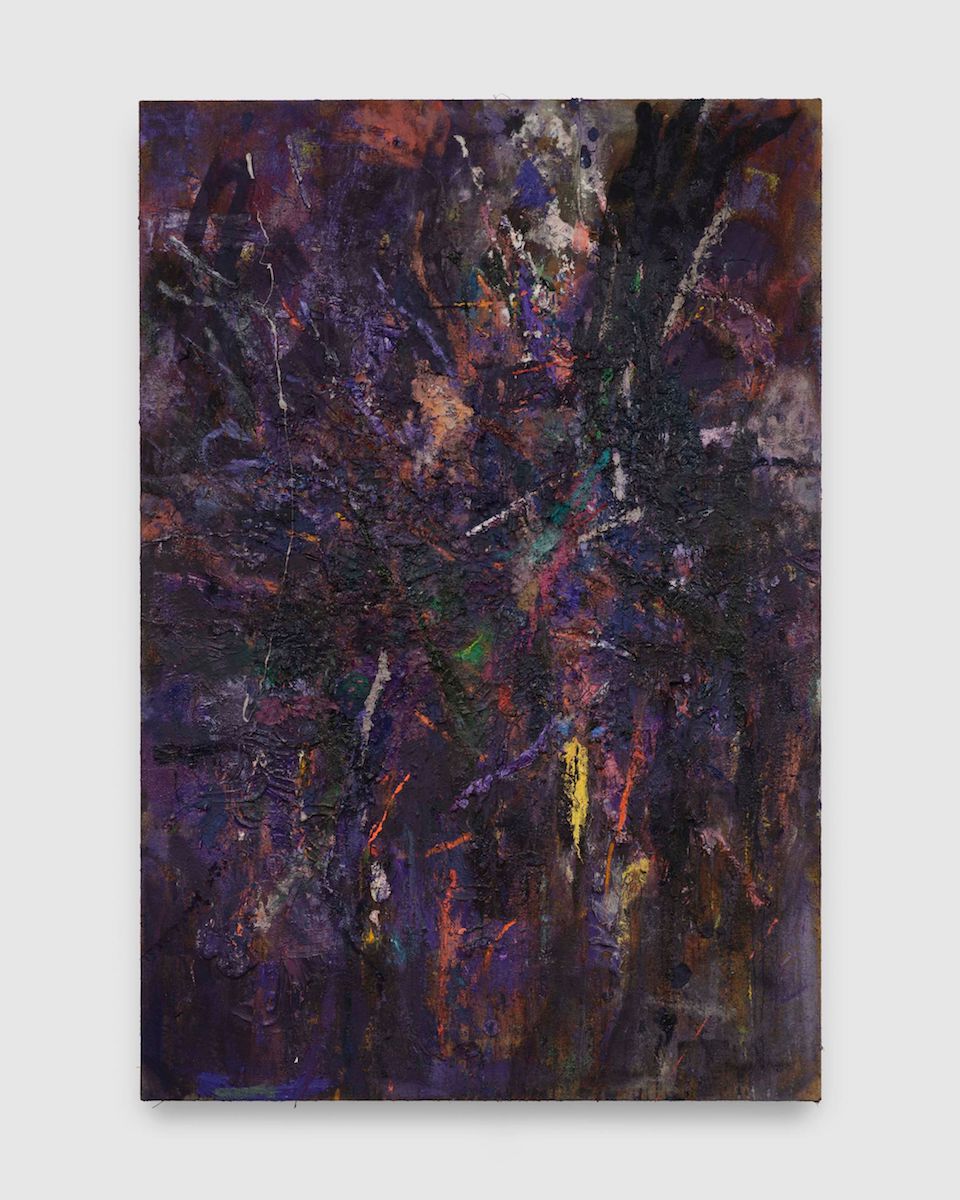 Spencer Lewis, Afterimage (purple self-immolation), 2026, oil, acrylic, paper pulp, ink on jute, 97 x 68 inches
By EDWARD WAISNIS March 11th, 2026
The finesse implied by Spencer Lewis’ stellar academic bonafides (Rhode Island School of Design and the University of California, Los Angeles) provided the foundation for his resonant, intensely concentrated, and energetically direct paintings.
Through repeatedly revisiting a system of mark making–much as Cy Twombly did for the duration of his practice–that is settled, but varied, rich with incident Lewis bathes in the corporality of his slashes that get the stuff (paint on jute) to resolve into blasted heath semblances that hold theoretical concerns just beneath the surfaces.
While Lewis is currently based in Los Angeles, one cannot deny the resonance of the East Coast, where he was born (in Hartford, Connecticut). In one sense Lewis has rolled the clock back to pre-POP, airing an intense indebtedness to early Rauschenberg (a candidate for patron saint of this exhibition) as the locus of generative inspiration and historical legacy that carries weight.
If hard-pressed to point to Cali influences, besides the obvious effects the storied faculty at UCLA may have had, in perhaps a stretch, a current of the spirit of Ed Moses due to a shared sense of the intensity of surface and object hood. More obviously, near-contemporary Mark Bradford labors with a similar strategy to retain, and allow to surface, notes from the African-American diaspora locked within the layers.
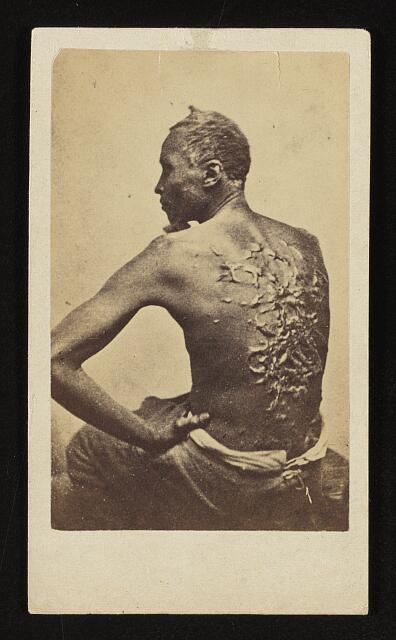 Escaped Slave Gordon, aka ’WhippedPeter’, showing his scarred back at the medical examination, Baton Rouge, Louisiana Photo: McPherson & Ol
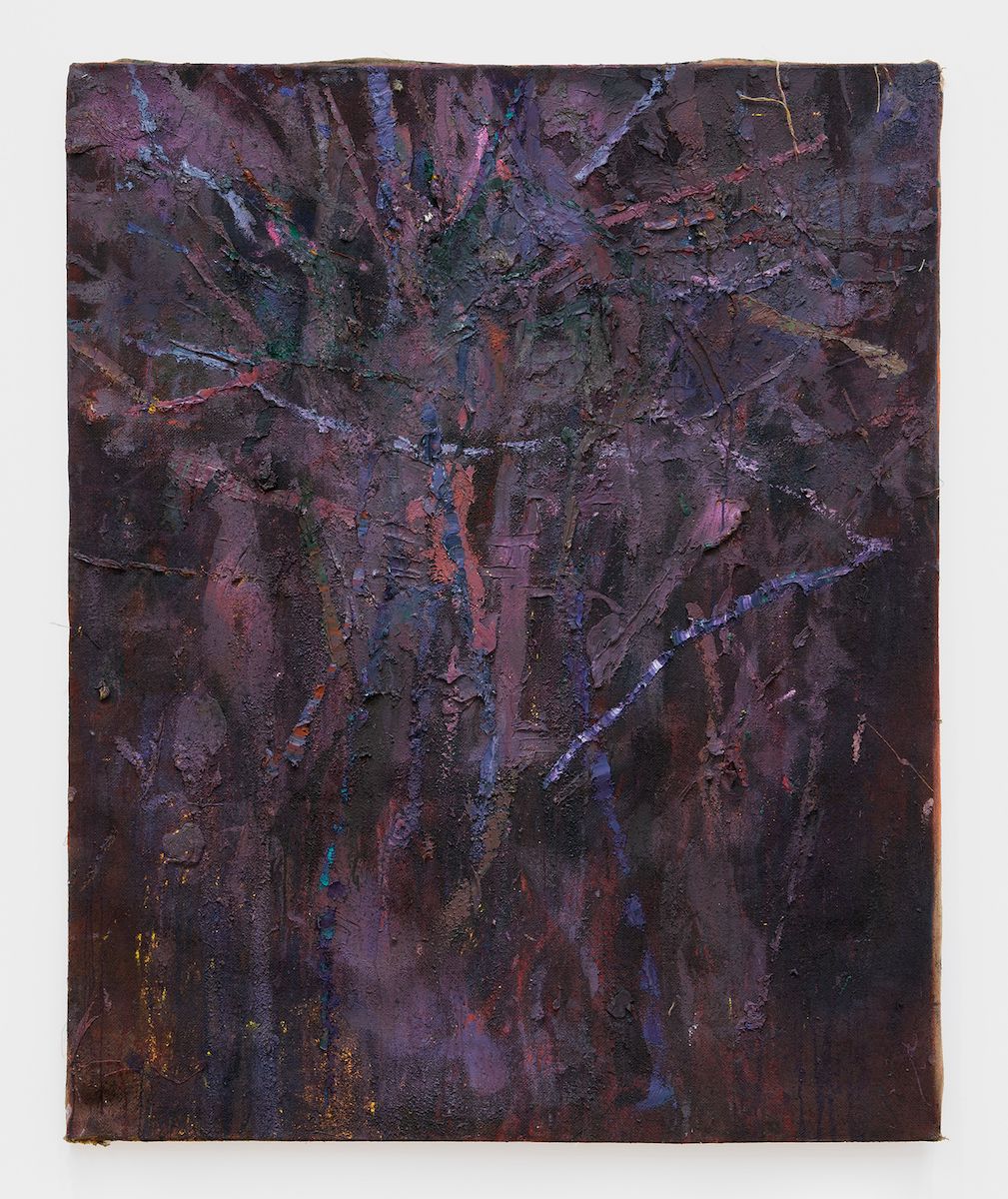 Spencer Lewis, Monolith (dateless gate proscenium for cosmic death), 2026, oil, acrylic, paper pulp, felt and ink on jute, 68 x 56 inches
Orbiting around a delineated, yet submerged, system of muscular bands of thick oil paint, applied with a palette knife, Monolith (dateless gate proscenium for cosmic death), 2026, evokes scarification (as memorably shown in the photograph of anAfrican slaves back with an embossed map of tracks the result of whipping) endowing a sensation of memorialization.
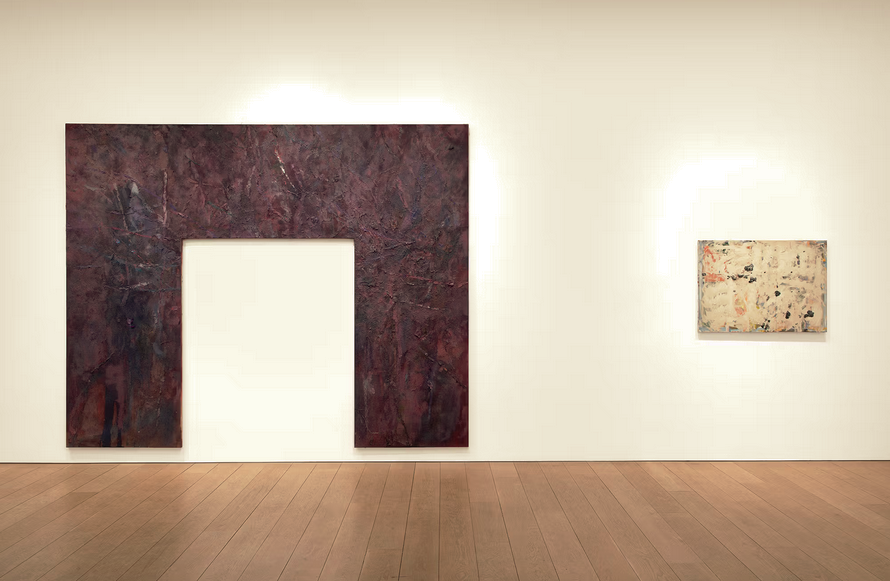 Installation view: Spencer Lewis: Aftterpiece showing (left) Monolith (dateless gate proscenium for cosmic death), 2026, oil, acrylic, paper pulp, spray paint and ink on jute, 105 x 130 1/2 inches, and (right) Wall (afterimage, 2025, oil, acrylic, paper pulp, spray paint and ink on linen, 30 x 42 inches
The shaped canvas Monolith (dateless gate proscenium for cosmic death), 2026, bears easy comparison to the shaped works of Frank Stella an Kenneth Noland, et. al., but I encountered a fireplace surrounding the maw of the ‘furnace’ with a deep sense of memory.
In a sense, Lewis seems to have absorbed the legacy and lessons of the Lower East Side sage Milton Resnick with steadfast commitment and a commensurate palette.
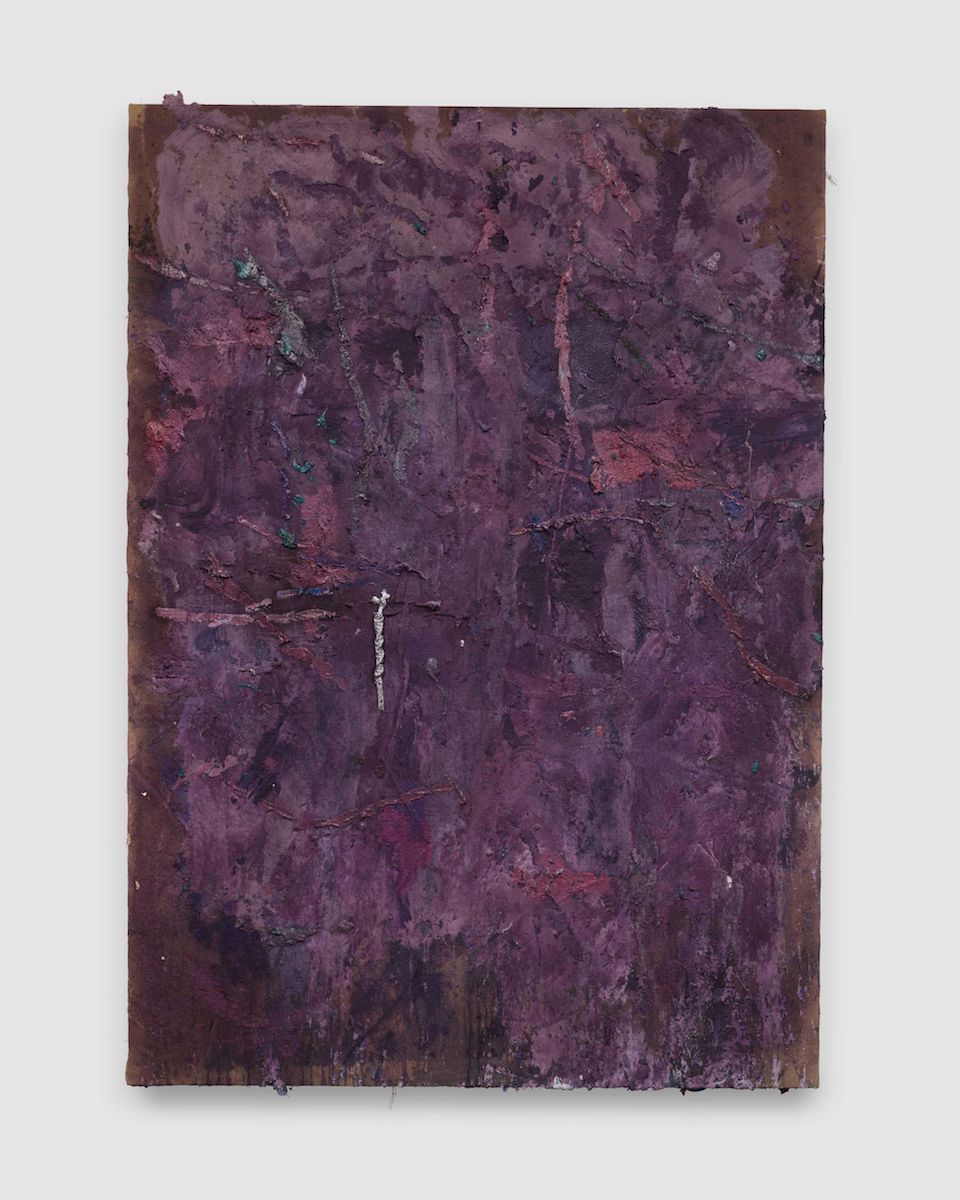 Spencer Lewis, Purple Paper Pulp Painting (with afterpiece), 2026, oil acrylic, paper pulp, aluminum and ink on jute, 96 x 68 inches
A glint of silver appears here and there, including in Purple Paper Pulp Painting (with afterpiece), 2026, a miasma of an overgrown bramble upon which a hovering embellishing brooch. Lewis’ embrace of the notion of the ‘puncture’, as coined by Roland Barthes, that proposes a piercing mark that anchors the chaotic activity beneath it is his motivation in seeking transcendence.
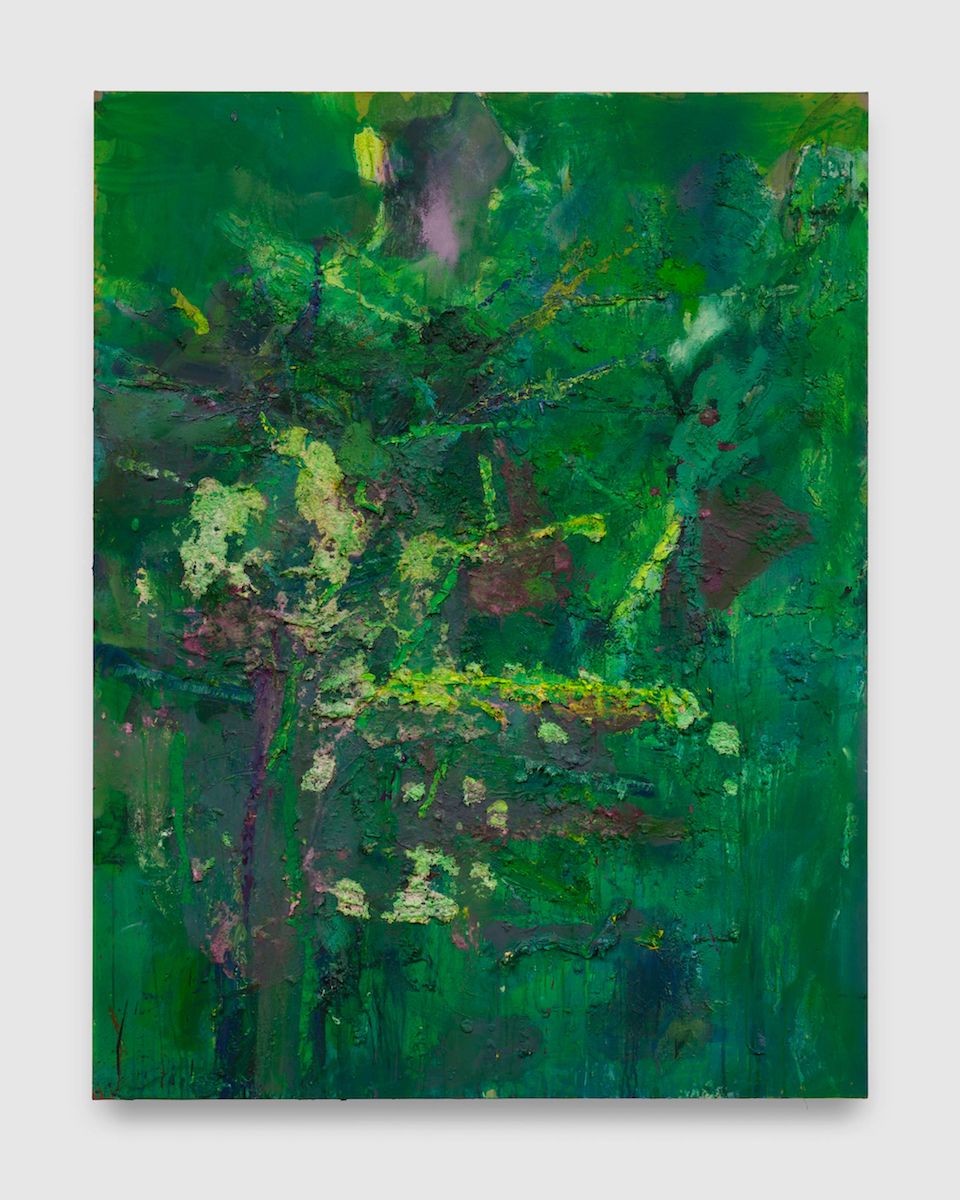 Spencer Lewis, Green Paper Pulp afterimage (With Mary Cassatt mother head), 2026, oil, acrylic, paper pulp, pigment and ink on linen, 78 60 inches
Forging into new terrain, as far as color goes, Lewis makes strides with green, from swampy to luminous, in Green Paper Pulp afterimage (with Mary Cassatt mother head), 2026, where the homage in encased in the title that guides the reverie.
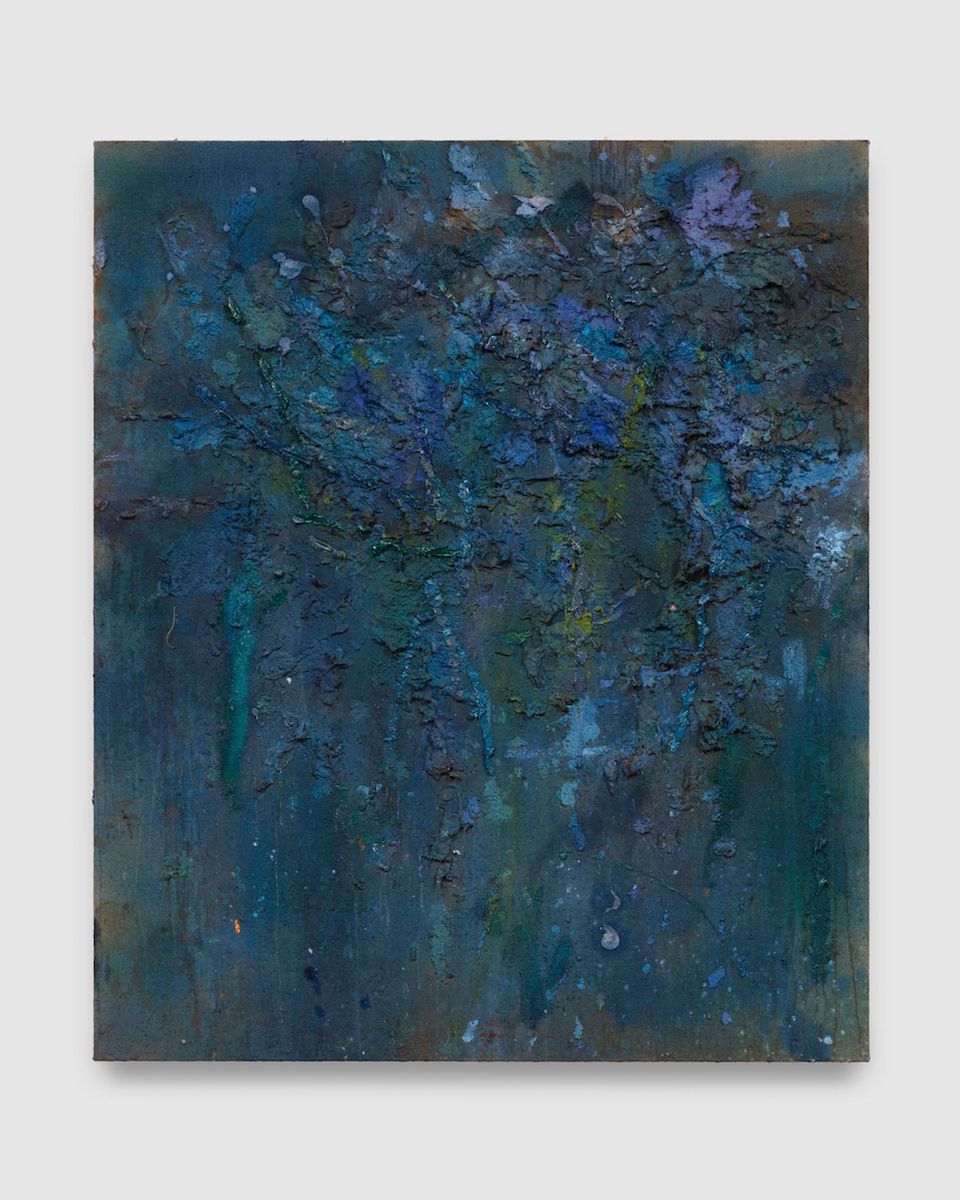 Spencer Lewis, Blue Paper Pulp Painting, 2026, 70 x 59 inches
An equal in chromatic concentration (in this case blues), Blue Paper Pulp Painting, 2026, is just what it professes, a quagmire of indigo and cobalt (and perhaps Prussian?) blues bathing an accretion of waded textures inducing a sense of the cosmos.
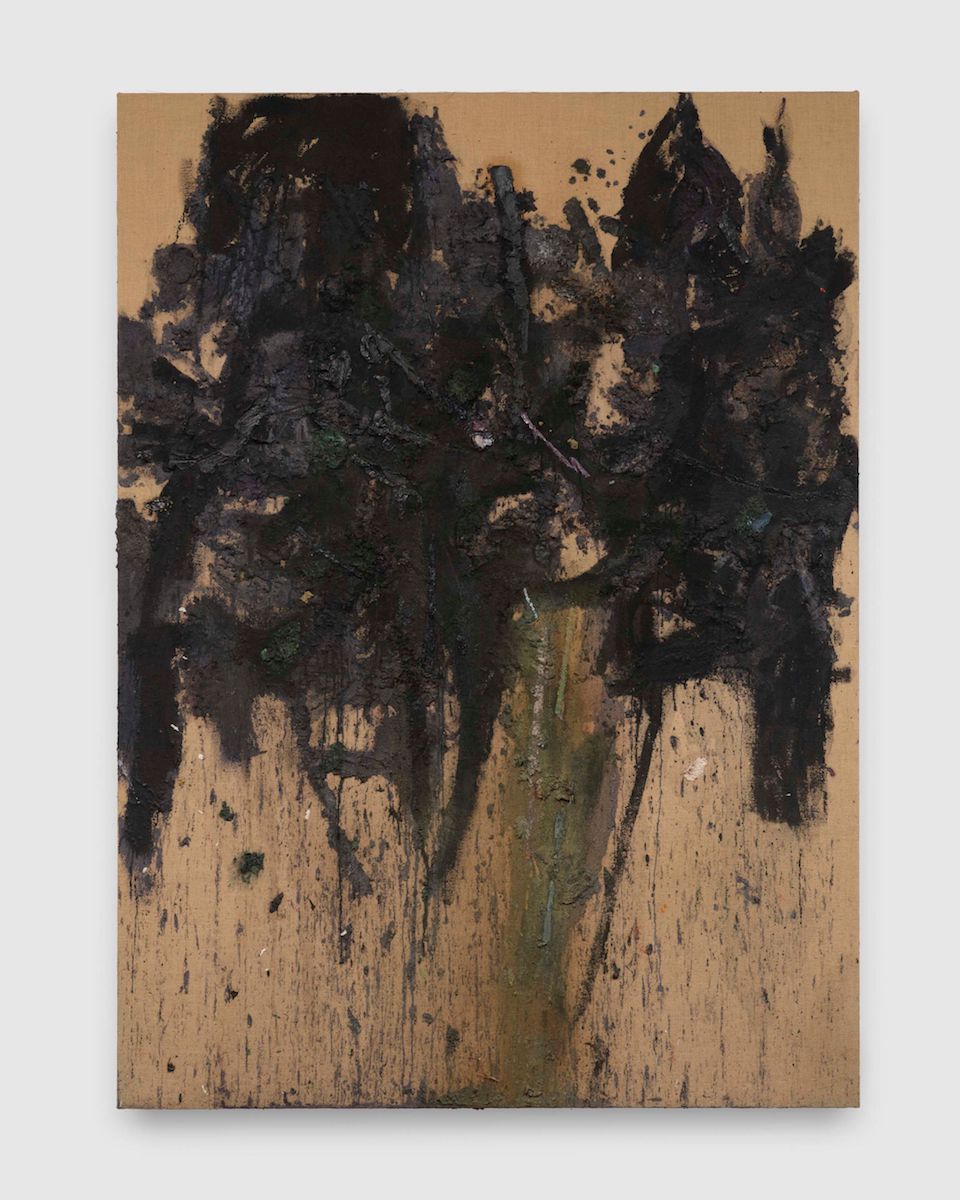 Spencer Lewis, Black Paper Pulp Painting (Immolated and exhumated), 2026, oil, acrylic, spray paint, enamel, paper pulp and ink on jute, 93 x 68 inches
Lewis got me considering a lineage that is inclusive of Jean Fautrier to Henri MIchaux, with Mar Tobey in the wings. However, Alberto Burri is particularly applicable with regards to Black paper Pulp Painting (Immolated and exhumated), 2026, with a preponderance of char the smoldering hovering forms distill a morose landscape that one might encounter after a conflagration.
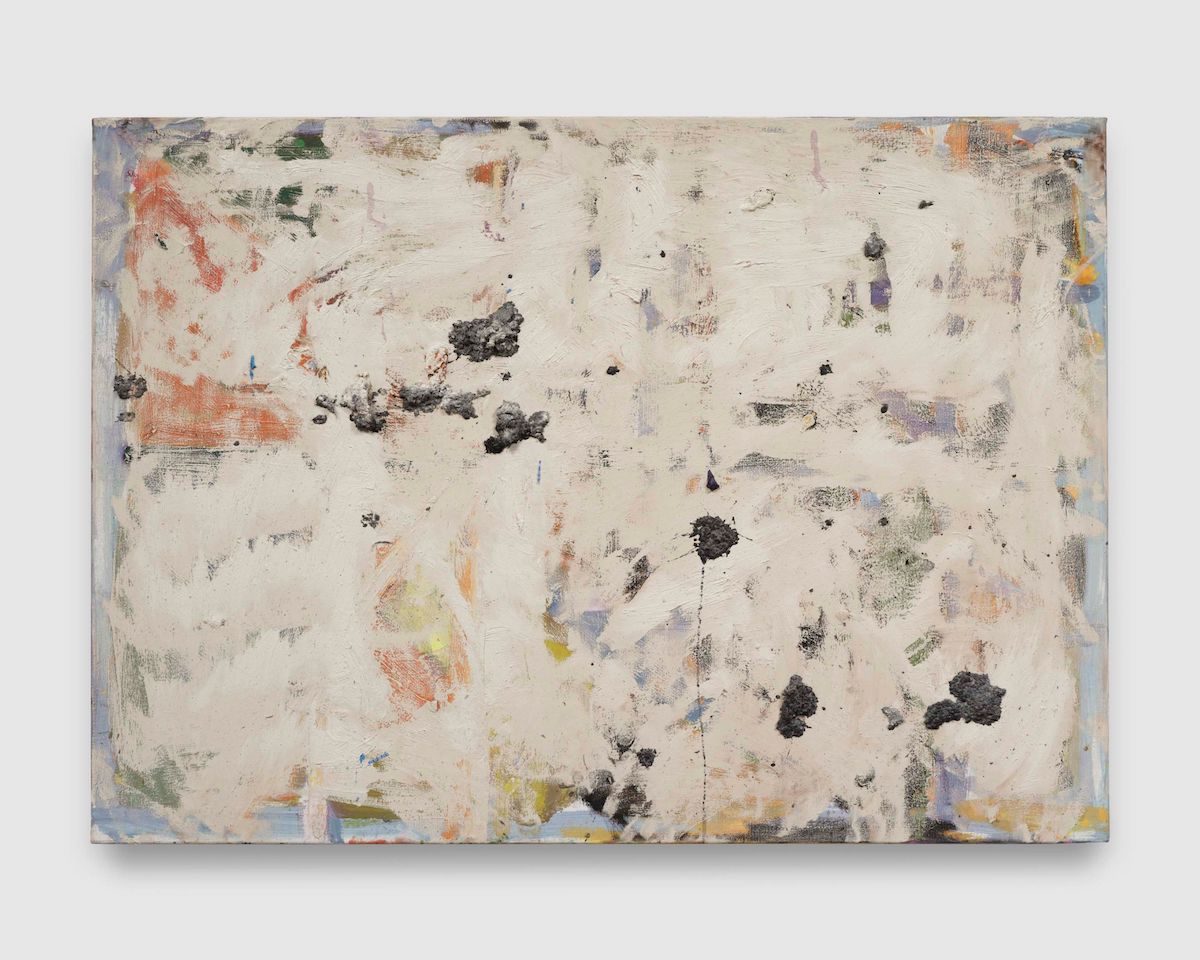 Spencer Lewis, Wall (afterimage), 2025, oil, acrylic, paper pulp, spray paint and ink on linen, 30 x 42 inches
Wall (afterimage), 2025, on a smaller-scale, glows with renderings of a skittish brush, producing a mini-masterwork with an obtuse title promoting a curious mind. A interesting wall of aesthetic accretion discovered while removing wallpaper, or reminiscence of some ancient sacred site of prominence.
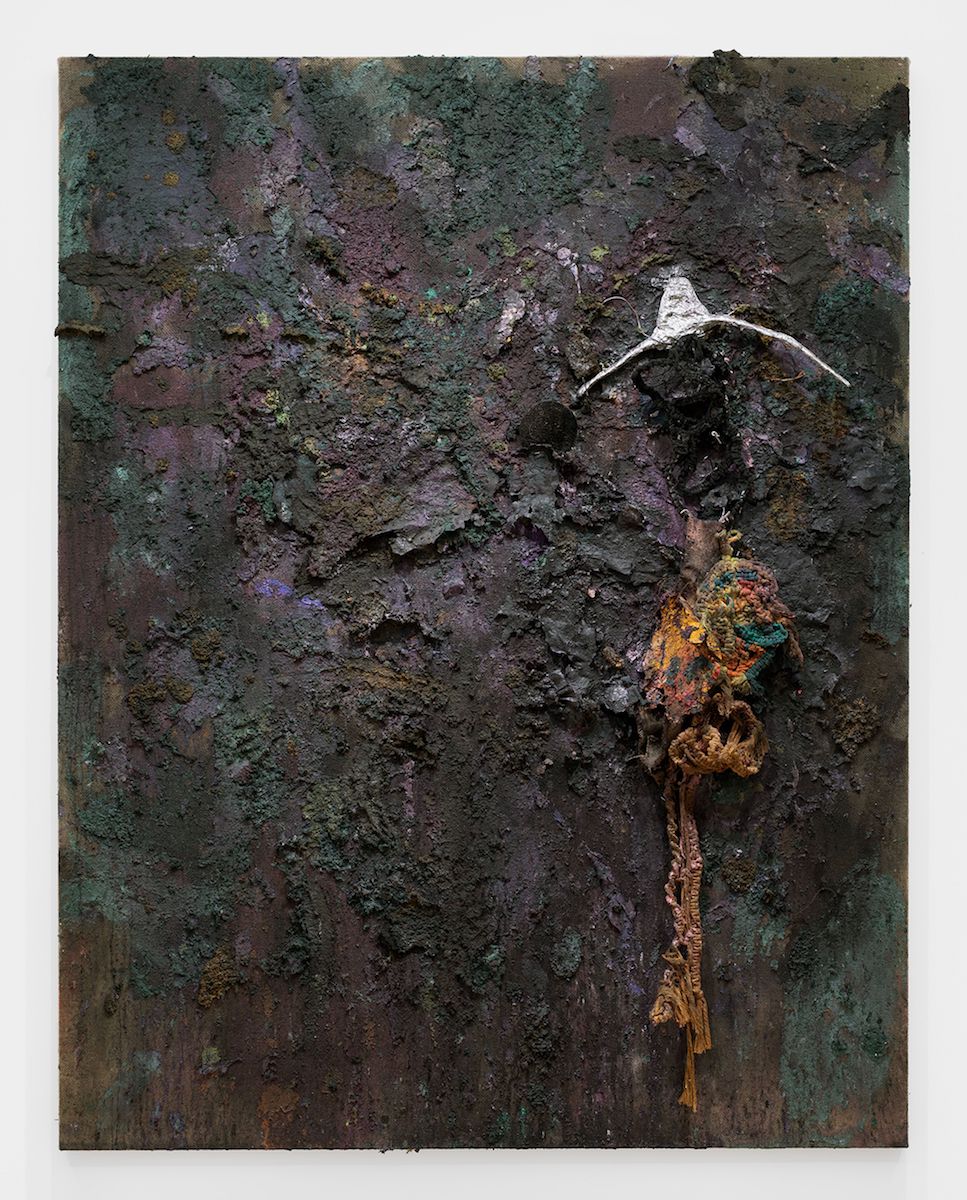 Spencer Lewis, Black Paper Pulp Painting (with afterpiece), 2026, oil, acrylic, paper pulp, cotton cord, wire, aluminum and felt on jute, 81 x 63 inches
The premier hotel room clothes hanger manqué hovering forebodingly in BlackPaper Pulp Painting (with afterpiece), 2026, delivers an existential gut punch of expectation. Has some Death of a Salesman-esque guest, or salaryman who missed the last train, discarded it? Whatever the narrative one can concoct, a dour mood akin to Jasper Johns gray pictures, with attachments, is effectively deployed.
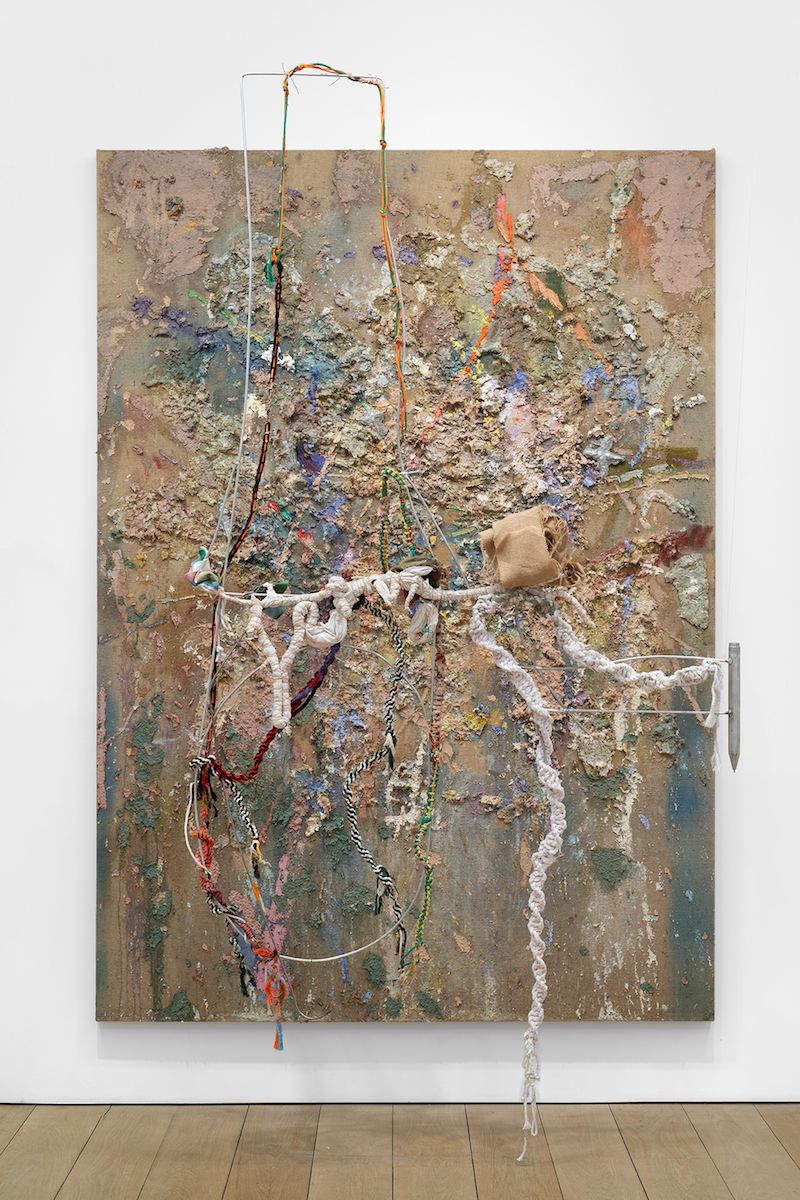 Spencer Lewis, Brown Paper Pulp (afterimage bombed land), 2026, oil, acrylic, paper pulp, cotton cord, wire, cotton fabric, wood, steel and ink on jute, 96 x 68 inches
Amongst a field of audacity, Brown Paper Pulp (afterimage bombed land), 2026, stands out for risk and bravado. Staggering out from the constraints of the wall into the physical space of the gallery is an element hanging before the canvas, cobbled together from a whole array of materials in a skeiny construction, amidst which if an aluminum cast of a mechanical pencil.
The effect is something like an Alan Saret accosted by Paul Thek, unifying the nostalgic Hippie-era culture that glosses the entire exhibition. Rather than obscuring the painting this confabulation harmonizes in a manner displayed when nature is echoed in architecture––apropos mossy weeping willows in a New Orleans churchyard, or sakura trees at a Japanese shrine.
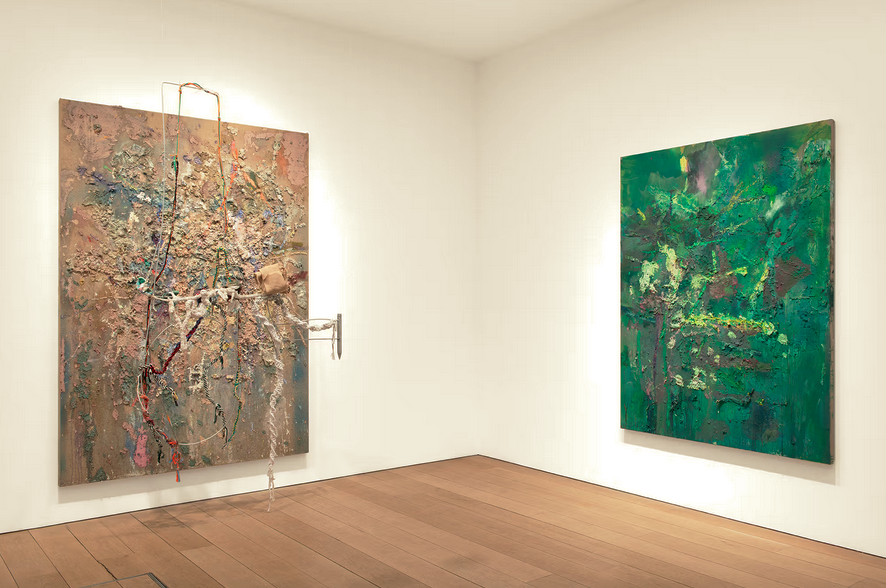 Installation view: Spencer Lewis: Aftterpiece showing (left) Brown Paper Pulp (afterimage bombed land, 2026, oil, acrylic, paper pulp, cotton cord, wire, cotton fabric, wood, steel and ink on jute, 96 x 68 inches, and (right) Green Paper pulp afterimage (with Mary Cassatt mother head), 2026, oil, acrylic, paper pulp, pigment and ink on linen, 78 x 60 inches
At what is essentially mid-career (or, young art star, dependent on you perspective) Lewis achieves the satisfaction of coming upon work by a talented graduate student breaking new ground. I mean this a compliment (if there is any doubt) to the testament of the works freshness that I propose lacks an expiration date.
_________________________
Spencer Lewis: Afterpiece
CANADA (in collaboration with Thomas Erben Gallery)
60 Lispenard Street, New York, NY 10013
February 20–March 28, 2026

Edward Waisnis
Edward Waisnis is an artist and filmmaker. Additionally, he is the Producer of two Quay Brothers films, Through the Weeping Glass and Unmistaken Hands, as well as having overseen the facilitation of their 2012 MoMA retrospective. His writing has appeared in Art New England, COVER, ARTextreme and STROLL.
view all articles from this author