Whitehot Magazine
November 2026
"The Best Art In The World"
"The Best Art In The World"
November 2026
Maureen O’Leary Whitehot Q&A at Cristin Tierney Gallery
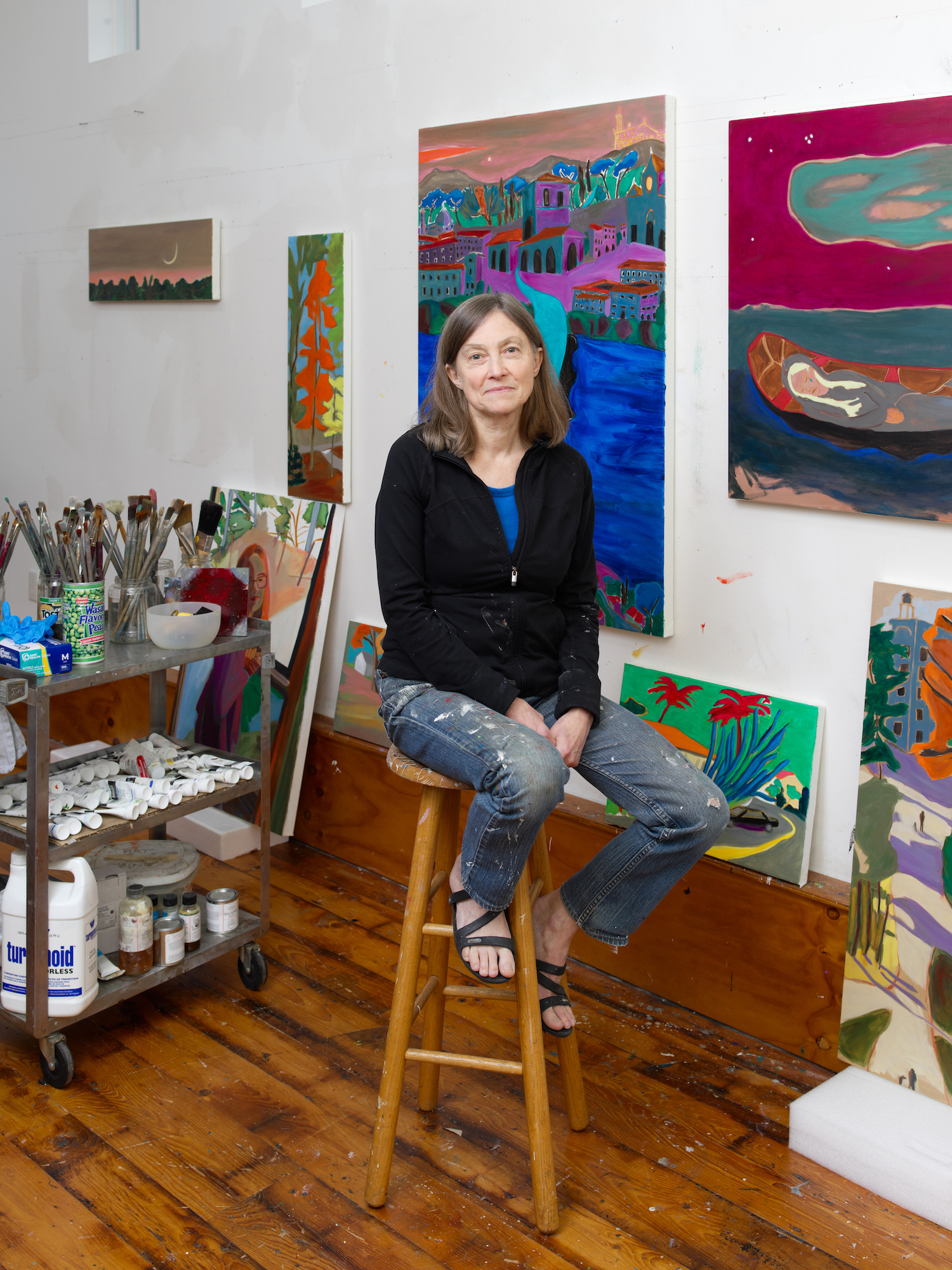 Maureen O’Leary in the studio.
By WM, November 10, 2026
Maureen O’Leary is known for her vibrant paintings that capture fleeting everyday moments through an expressive blend of figuration and abstraction. For her latest exhibition, The Linden Trees, currently on view at Cristin Tierney Gallery, the artist has created a new literature-inspired body of work that dazzles.
The artist’s first narrative painting series, The Linden Trees is based on two characters from 19th-century Russian novels—Natasha from Leo Tolstoy’s War and Peace and Polina from Alexander Pushkin’s Roslavlev. Through a sequence of 34 oil paintings and accompanying texts, O’Leary expands on their stories, following the pair as they pursue their ambitions of becoming creatives, not archetypes.
Featuring folk-like imagery of the Russian countryside, Parisian ballrooms, and Moscow salons, the works are charming and rooted in history, offering a fresh perspective on the agency of women in literature.
It’s a busy November for O’Leary, whose work will also be featured in a solo presentation at the ADAA Fair this week. Additionally, Cristin Tierney Gallery will host a special reception for the artist this Friday, November 13 as part of Art Week NYC. With so much happening across the city, O’Leary is one artist worth keeping on your radar—and your agenda.
The Linden Trees will be on view through December 19, 2026.
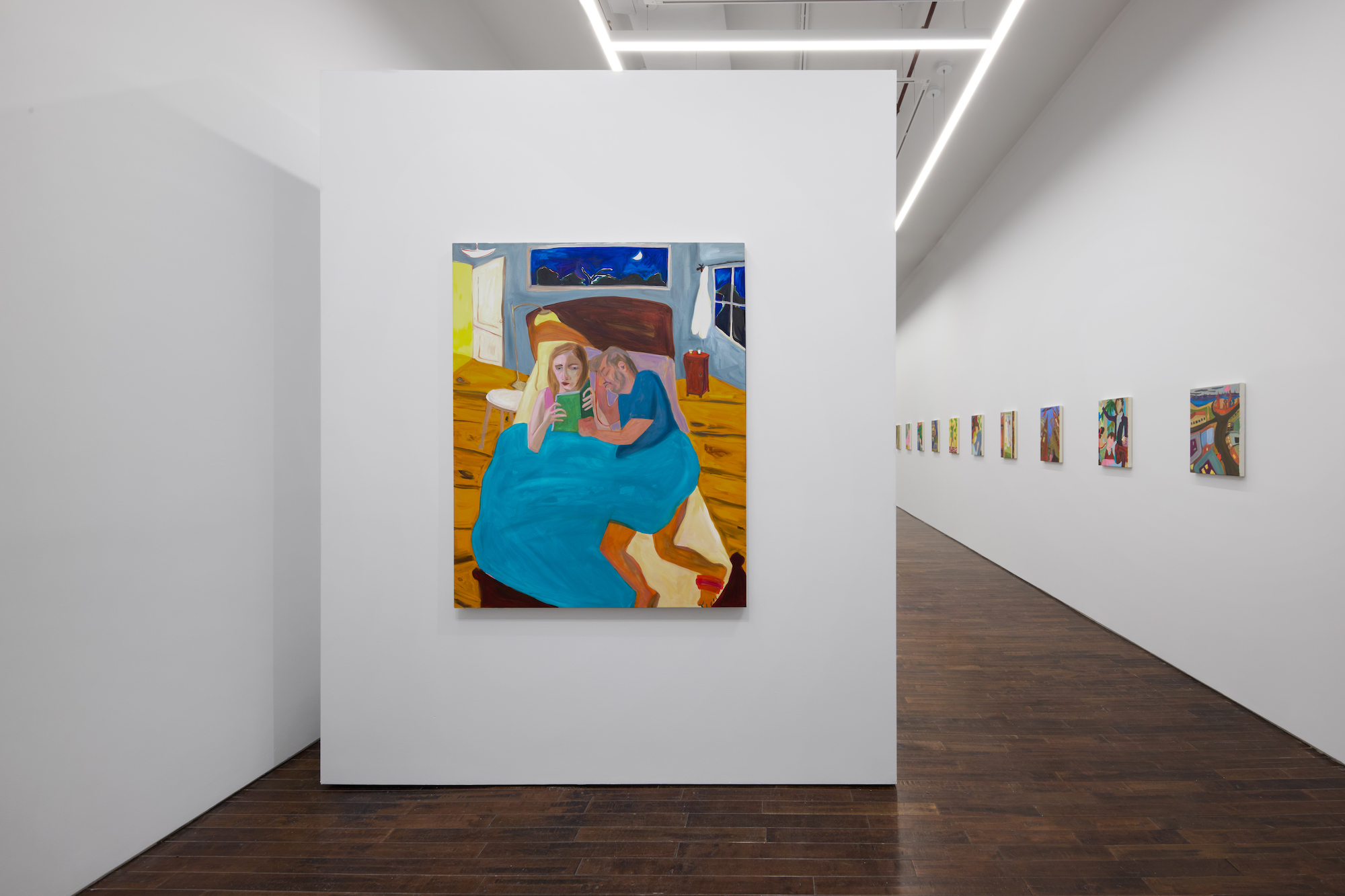 Installation view, Maureen O'Leary, The Linden Trees, Cristin Tierney Gallery, 2026, photo: Mikhail Mishin
WM: You’re known for your stylized paintings that capture the energy of everyday moments. The Linden Trees is your first foray into narrative painting. What inspired you to do this series?
MAUREEN O’LEARY: Many of my paintings have a narrative quality but, yes, this is my first project that is a single work comprised of 34 separate but interrelated paintings combined with text. I have always admired Jacob Lawrence’s Migration Series, which combines paintings with text, and long contemplated doing a piece with that cadence. But the direct inspiration came from the literature itself, which created an overwhelming emotional response. Creating art arises from a feeling or vision that will bother you to death until you put it down, often with a lot of struggle, in whatever artistic form you believe it should take. My works derive from a deep affection for the subject matter even if that subject is awkward or flawed.
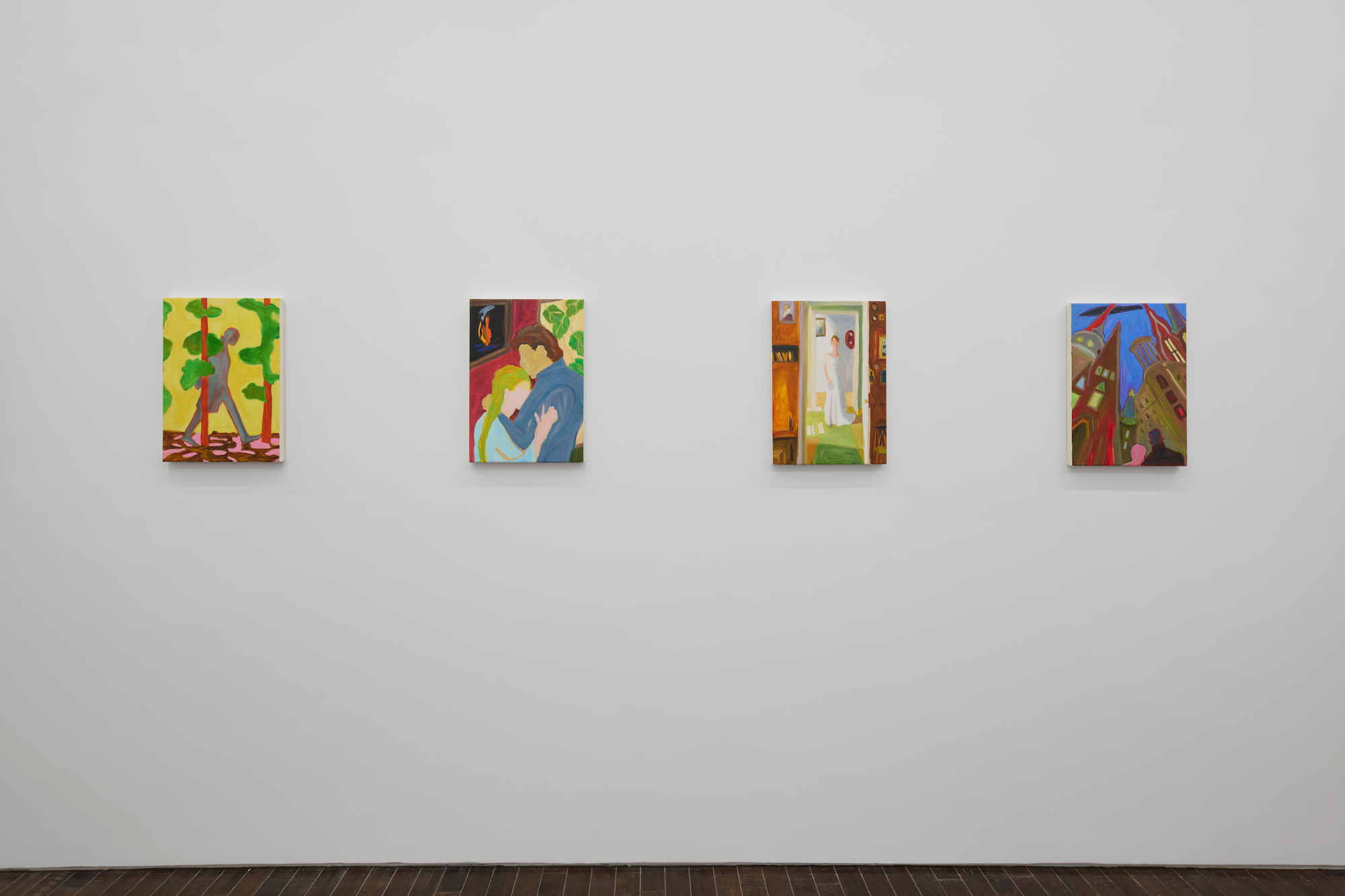 Installation view, Maureen O'Leary, The Linden Trees, Cristin Tierney Gallery, 2026, photo: Mikhail Mishin
WM: The exhibition centers around two 19th-century Russian texts: Tolstoy’s War and Peace and Pushkin’s Roslavlev. What drew you to these novels, particularly the characters of Natasha and Polina?
MO: The idea of Natasha from War and Peace, a novel that I absolutely love and that completely sweeps one up, was the feeling that would not leave me alone. Her story felt truncated, stillborn. I was not convinced by Tolstoy’s epilogue that she was destined to become a housewife. And we all need to be convincing as artists, don’t we? I couldn’t let go of this thought, and she became my raw material. I began to quarry through historical and scholarly works, and to read other 19th-century Russian works of fiction, and discovered Roslavlev, a prose work left unfinished when Pushkin got himself killed in a duel. Polina, the heroine, is unambiguously feminist. What would have become of her had Pushkin lived? In a sense he handed her off to another artist.
WM: What visual or conceptual elements in the series were inspired by Russian or Soviet culture?
MO: The story is gentle—a fairy tale. Folk and fairy tales have a deep history in Russian literature. I wanted to create in a children’s book style because such stories are foundational yet contain joy. It was important to connect the artistic aspirations of the two women characters to joy, if bittersweet at times. Comprehending that joy is the main self-realization of the male character Prince Andrei.
The limited-edition book that accompanies the exhibition intentionally draws on midcentury Soviet design style—blocky fonts and clusters of color, set apart on pages of white—a style historically used in children’s books.
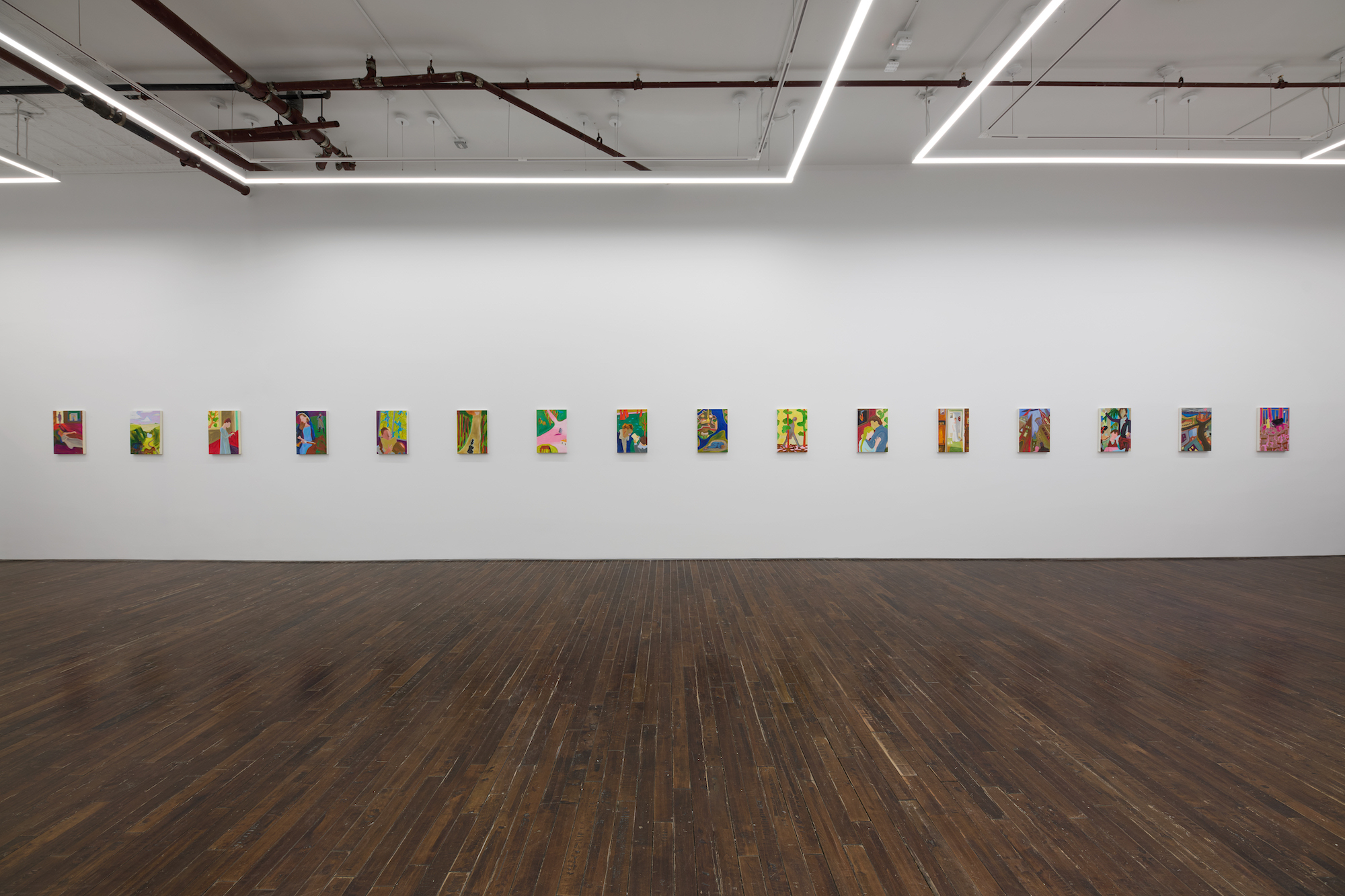 Installation view, Maureen O'Leary, The Linden Trees, Cristin Tierney Gallery, 2026, photo: Mikhail Mishin
WM: In the series, you give Natasha and Polina the chance to rewrite their own stories. Why was this important to you? What were you hoping to accomplish?
MO: The works by Pushkin and Tolstoy are both cast during Napoleon’s 1812 invasion of Russia. My intermingling the lives of Natasha and Polina, two characters from different works of fiction, is a playful rejoinder to Tolstoy’s and Pushkin’s fictionalization of real people like Napoleon and Madame de Staël. What fundamentally appeals to me about Tolstoy’s work is not its mysticism but its earthliness. His characters are exquisitely human, perhaps even more than he would have liked; they almost escape his control.
Compositionally, this series marked an increasing departure from my background as a plein air painter, which has been afoot in my work in fits and starts. Here I was creating scenes I could not see, scenes of collected elements or imagined moments that opened the door to increasing abstraction in my compositions.
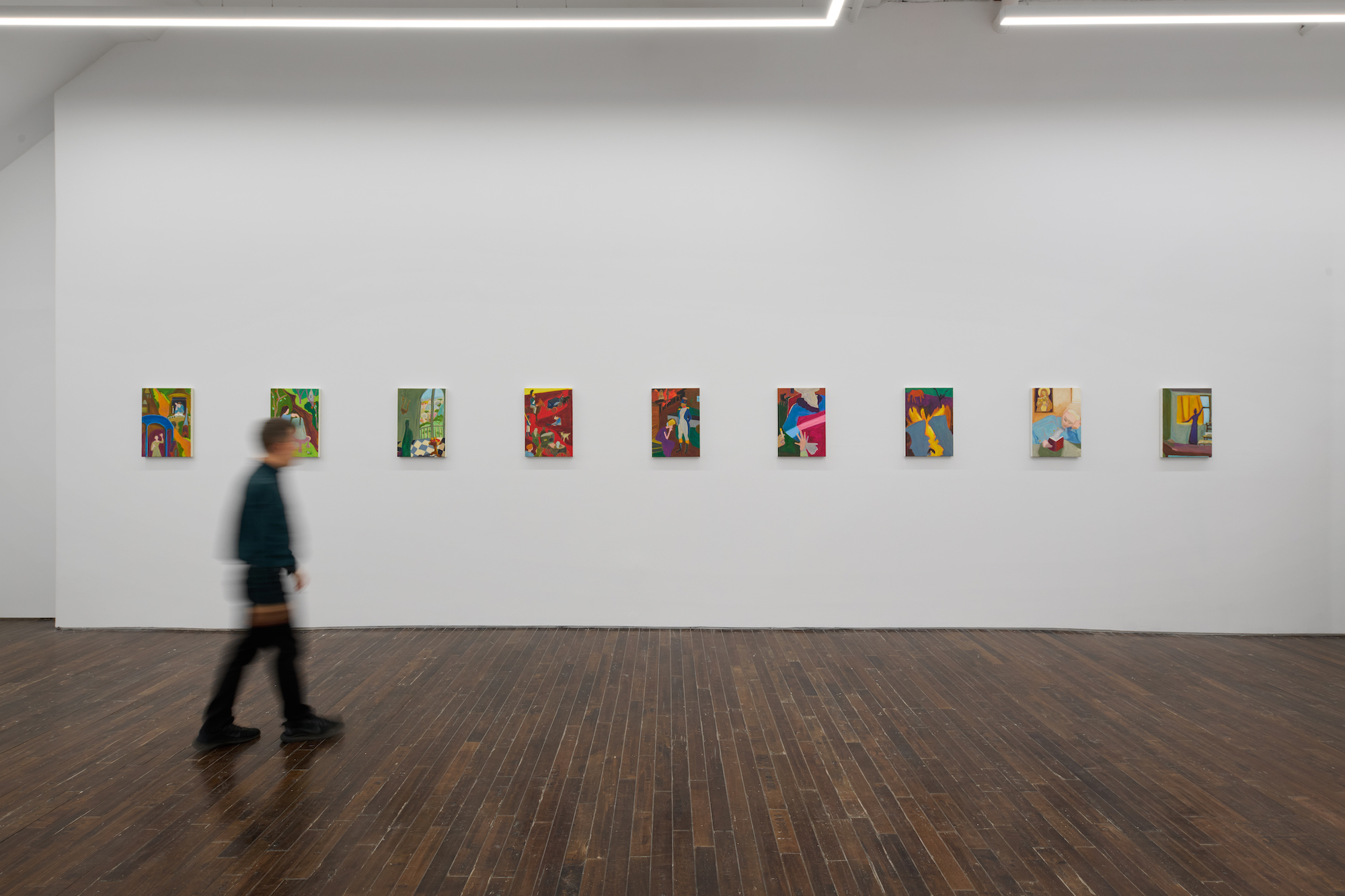 Installation view, Maureen O'Leary, The Linden Trees, Cristin Tierney Gallery, 2026, photo: Mikhail Mishin
WM: Cristin Tierney is also presenting a solo booth of your work at the ADAA Art Show this November, and rumor has it you’ll be showing at Art Basel Miami Beach in December as well. It sounds like you’re having quite a moment in your career. What’s next for you?
MO: I am delighted to have a chance to share my work so widely. It is perhaps a moment to think how The Linden Trees relates to my work as a whole. I often focus on a single painting at a time and in hindsight see bodies of work. The works being shown at ADAA and Art Basel feel to me now to fall under an umbrella that I call Topias, lands and places I feel something about that are recreated through my eyes. Such painting of course means selecting motifs and compositions that distill—certain people, certain shadows, certain color combinations—and recombining them in ways both natural and unnatural but experienced. WM

WM
Whitehot writes about the best art in the world - founded by artist Noah Becker in 2005.
view all articles from this author