Whitehot Magazine
November 2026
"The Best Art In The World"
"The Best Art In The World"
November 2026
Postcard from the Bronx
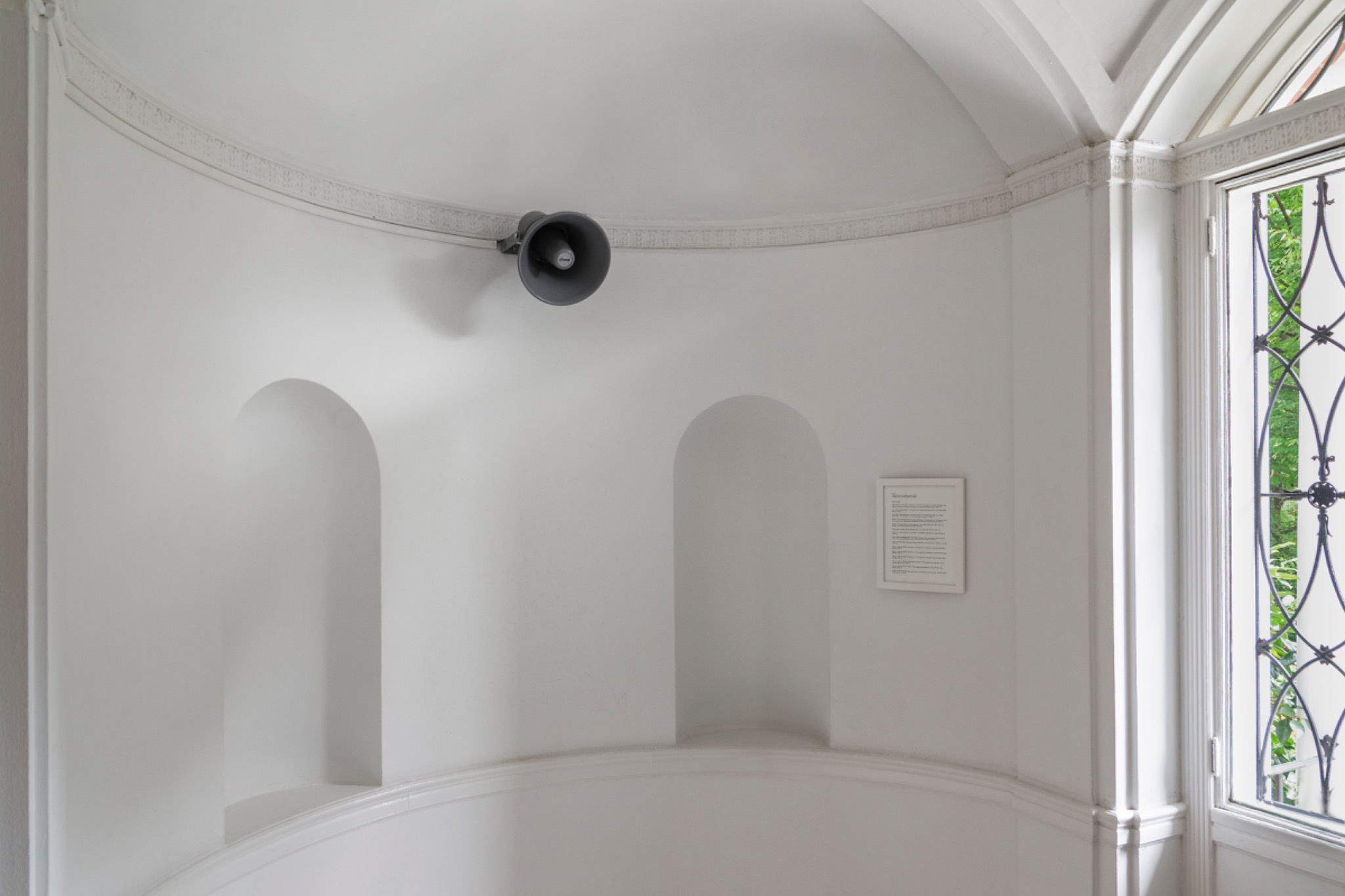 Angel Nevarez & Valerie Tevere, installation view of Parley, 2015, in As far as the ear can hear, 2026. Courtesy of the artists. Photo: Stefan Hagen. Courtesy of Wave Hill, Bronx, NY.
By Nina Chkareuli, November 6, 2026
The Bronx occupies a special place in New York history. On the one hand, it connects to earlier waves of immigration, as evidenced by the historic Little Italy neighborhood around Belmont and Arthur Avenues, where immigrants settled after arriving from Europe in the early 20th century. Across several blocks, artisanal shops and traditional restaurants viscerally connect a visitor to European roots of New York; places here are more authentic and less crowded than similar locales in Manhattan. Meanwhile, the Bronx has the city's largest Hispanic community. Historically, the Bronx Museum has systematically synthesized these diverse strands of the borough’s history, creating thoughtfully curated cultural experiences.
At the same time, the borough reflects the earliest pages of New York City. Edgar Allan Poe’s house, built in 1797, sits on Grand Concourse, a modest wooden structure in black and white. One can look inside and see how small the rooms are and imagine how Poe was creating his mystical stories in the surrounding darkness. Charming two-floored Van Cortlandt House Museum, built between 1748 and 1749, is open to the public, once serving as the residence of the first native-born mayor of the city. George Washington spent a few days here before returning to his campaign in White Plains in 1776. It is funny that, according to historical accounts, it took him one whole day to travel here compared to the 45 minutes it takes today from Columbus Circle on the 1 line.
Wave Hill is another historic mansion just a short walk away from Van Cortlandt Manor. The building known today as Wave Hill House was built on land purchased by William Lewis Morris and his wife, Mary Elizabeth Babcock, in 1836. Initially a summer house for affluent families such as the Appletons, the Roosevelts, and the Twains, the residence became a cultural landmark. Queen Mother Elizabeth visited in 1956, and other notable renters included Bashford Dean, a renowned scholar on armor, and renowned conductor Arturo Toscanini. In 1965, the estate opened to the public as a botanical garden. For residents of the Bronx, Wave Hill provides an oasis where the peacefully flowing Hudson River, woodsy Palisade hills of New Jersey, and 19th-century architecture momentarily let you forget how close you are to the heart of New York. Luscious verdant hills give an opportunity for jaded and hurried New Yorkers to be in a pristine environment where some of the trees have been growing for more than a century. The George Washington Bridge is seen from a distance, adding a gentle reminder that civilization is not that far away. The Wave Hill residency, established in 2010, has long supported artists whose practice is centered on the environment, migration, and critical inquiries into contemporary issues, be it climate change, endangered species, or loss of habitat.
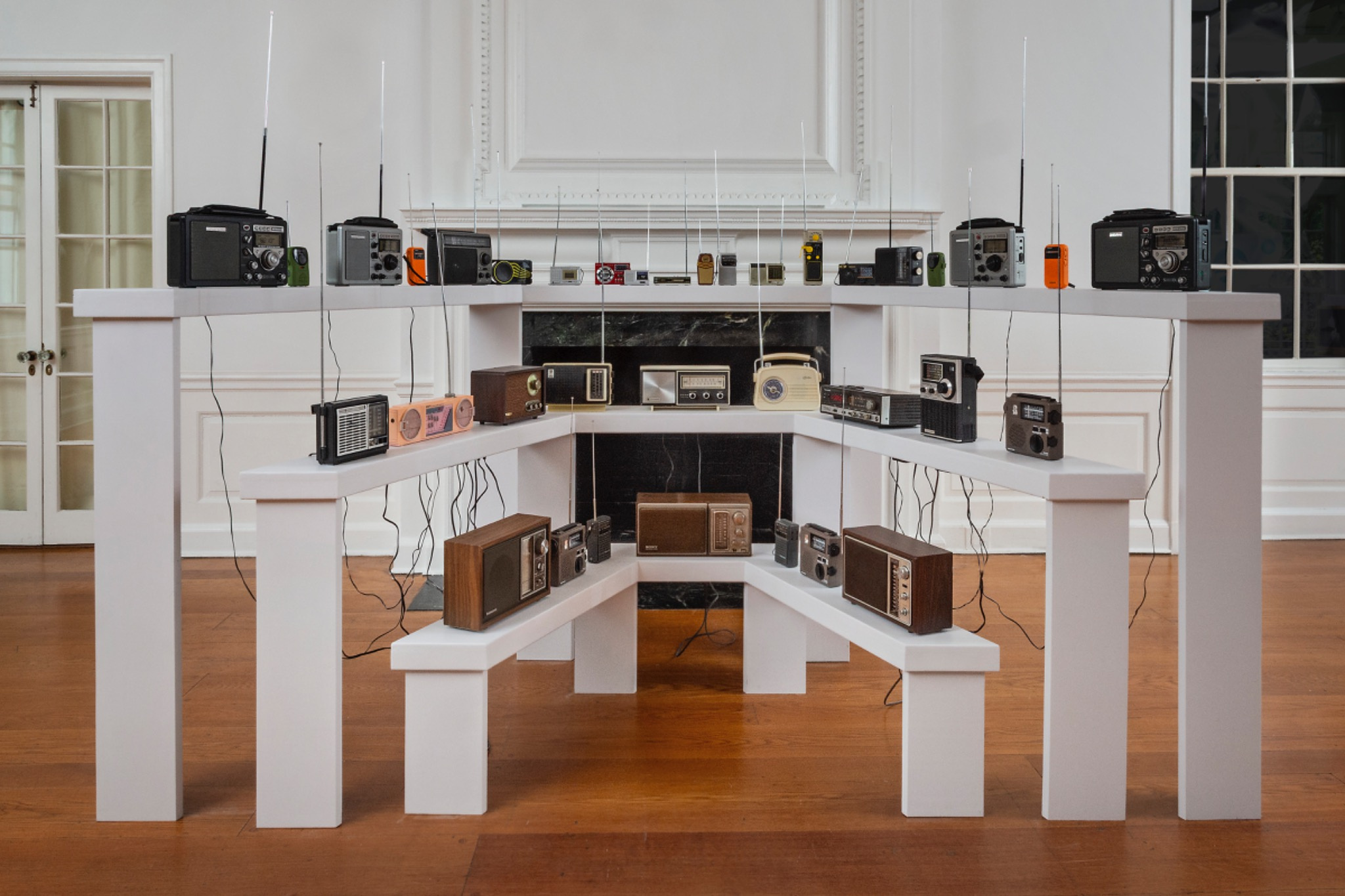
Angel Nevarez & Valerie Tevere, detail of On Toscanini, 2026, in As far as the ear can hear, 2026. Courtesy of the artists. Photo: Stefan Hagen. Courtesy of Wave Hill, Bronx, NY.
When I visited this week, Wave Hill presented several thoughtfully curated exhibitions. In Angel Nevarez & Valerie Tevere’s As far as the ear can hear, the two artists, who have collaborated for a long time, bring a variety of media, including video, installation, photography, music, and performance, to speak about displacement, belonging, and listening across the Bronx, New Orleans, and the Sonoran Desert. One could argue that the main theme of the exhibition is an odyssey starting with the viewer embarking upon entering the building. First, one hears Parley (2015), where a visitor is drawn into a conversation between a caller and a respondent, somewhat resembling a heated hip-hop exchange. The effect is quite destabilizing and yet affirming, mirroring the complex and often confrontational reality of the Bronx borough, where every word leads to a conversation across cultures, backgrounds, and generations. One memorable work in the exhibition is On Toscanini, 2026; the room is lined with large-scale stills of the conductor’s hands that create more than an abstract homage to the demanding art of managing an orchestra. The symbolism is one of power, but also of a prayer and of a bird. Austere black-and-white imagery puts a viewer into a very specific mental spot where one is left face to face with the emptiness of the symbol while looking at a curated and sophisticated setup of radio sets from different eras carefully placed in the middle of the room. The metaphor of the hands conducting a silent symphony transmitted to non-functioning sets is a powerful one, reminiscent of a similar work by Filipino composer and ethnomusicologist José Maceda that I saw during the Whitney Biennial earlier this year. Maceda’s work served as an investigation of collective and individual agencies, while Angel Nevarez & Valerie Tevere wrestle with similar questions here, albeit working in tandem.
The culmination of the odyssey brings a viewer back into the communal union of the borough and of the country. The Slow Drop is a multidisciplinary project that brings together twelve photographs of people from New Orleans in the aftermath of Hurricane Katrina. People of various backgrounds and storylines sit on their porches looking at us with a smile. The neighborhood score was produced through musical production and communal collaboration. Faces of photographed musicians speak of pain and of resilience, violence, but also of the opportunity to rebuild. The musical score of The Slow Drop: Musicians’ Village mirrors the one in the entrance, yet here a heated exchange becomes more polyphonic and versatile; cadences rise and fall as though it were some sort of atonal hymn to the borough.
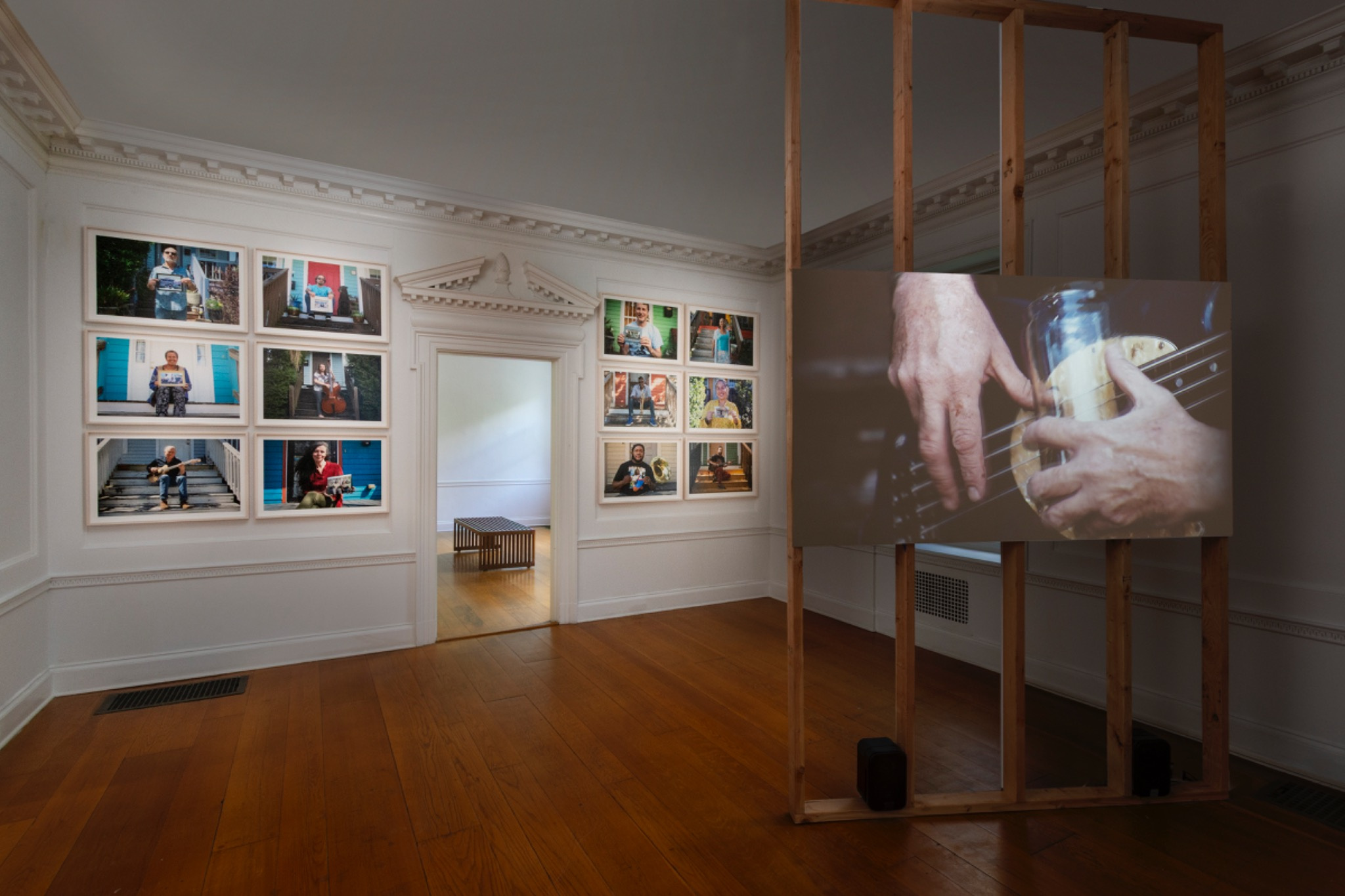
Angel Nevarez & Valerie Tevere, installation view of The Slow Drop, 2026, featuring The Slow Drop (portraits), 2022 (background). Top row from left to right: Thomas McDonald, Gabriel Velasco, Tom Chute, Sula Janet Evans. Middle row from left to right: Margie Perez, Sam Albright, Troy Sawyer, Denise Bonis. Bottom row from left to right: Chip Wilson, Helen Gillet, Edward Lee Jr., Danny Abel. In As far as the ear can hear, 2026. Courtesy of the artists. Photo: Stefan Hagen. Courtesy of Wave Hill, Bronx, NY.

Nina Mdivani
Nina Mdivani is Georgian-born and New York-based independent curator, writer and researcher. Her academic background covers International Relations and Gender Studies from Tbilisi State University, Mount Holyoke College and Museum Studies from City University of New York. Nina's book, King is Female, published in October 2018 in Berlin by Wienand Verlag explores the lives of three Georgian women artists and is the first publication to investigate questions of the feminine identity in the context of the Eastern European historical, social, and cultural transformation of the last twenty years. Nina has contributed articles to Hyperallergic, Flash Art International, The Brooklyn Rail, JANE Magazine Australia, NERO Editions Italy, XIBT Magazine Berlin, Eastern European Film Bulletin, Indigo Magazine, Arte Fuse. As curator and writer Nina is interested in discovering hidden narratives within dominant cultures with focus on minorities and migrations. You can find out more about her work at ninamdivani.com