Whitehot Magazine
October 2026
"The Best Art In The World"
"The Best Art In The World"
October 2026
Sigmar Polke: The Memorialization of Chemistry and Myth
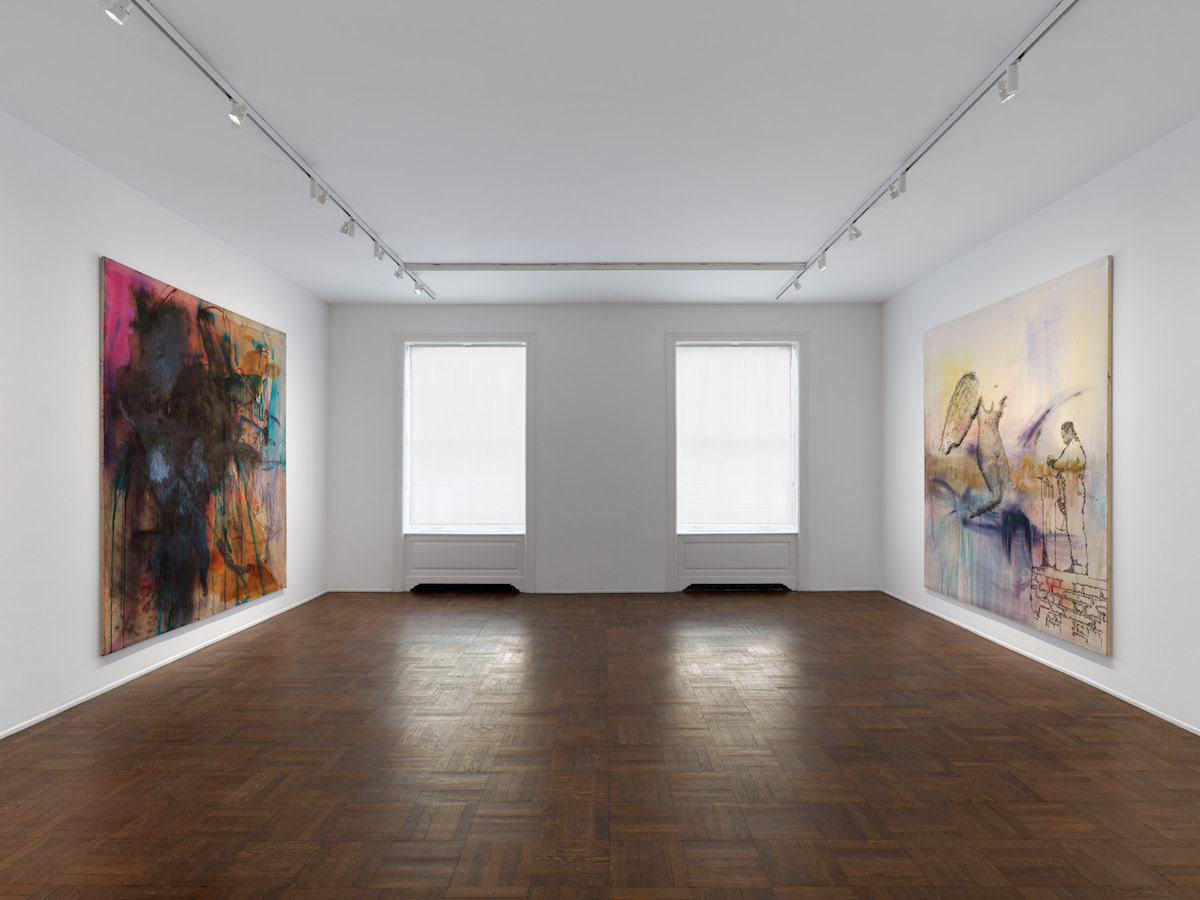
Installation view, Sigmar Polke: The Dream of Menelaus, VeneKlasen, NY
By EDWARD WAISNIS March 28th, 2026
In a hermetic presentation at the former Michael Werner Gallery, now rebranded with the name of Werner co-owner VeneKlasen, one found a time capsule of sorts with the quartet of Sigmar Polke’s The Dream of Memelaus series of towering paintings.
Presented four-square, literally, measuring nearly nine by eight feet each, this quartet of canvases (produced in 1982) bring evocations of sites of memorialization of painting worthy of pilgrimage, from the Rothko Chapel, his Seagram Murals, installed at the Tate, to the chamber housing Cy Twombly’s Fifty Days at Illiam, 1978 cycle at the Philadelphia Museum of Art. The latter an example of broad-ranging, and broad-reaching translative powers that would perfectly fit Polke modus operandi.
Polke’s go-to process is rooted in the notion of alchemy, that slippery embodiment of pseudoscience dating from the dark ages that professed substance altering powers. To this notion of a grounding he brings overlaid, and intertwined, imagery from various attributable sources; an updated riff on the transparencies of Francis Picabia. Something he had engaged with as early as 1970. Where David Salle transposed the innovation to a blend of the opposing trends of fashion and au courant (read: trendy) philosophy, Polke’s variations are weighted with history and myth, bereft of navel-gazing–all while contributing to the critique of photography’s role in/against painting.
To achieve his effects Polke relied on an artist's concoction, favored by German painters in particular, labelled dispersion, an umbrella term for what is essentially pigment and a binder, as well as shellac and various other paint formulations. Plus, to this suite, Polke adds a trio of metals: aluminum, manganese and ferrous mica.
Graffiti too lives in Polke’s oeuvre, embodied in the incorporation of aerosol sifted through stencils.
A significant player in Capitalist Realism, with a Polish origin and subsequent East German lineage, Polke (who died in 2010) led a remarkable existence–from Cold War deprivation, of materials and information–to well beyond the fall of the Berlin Wall.
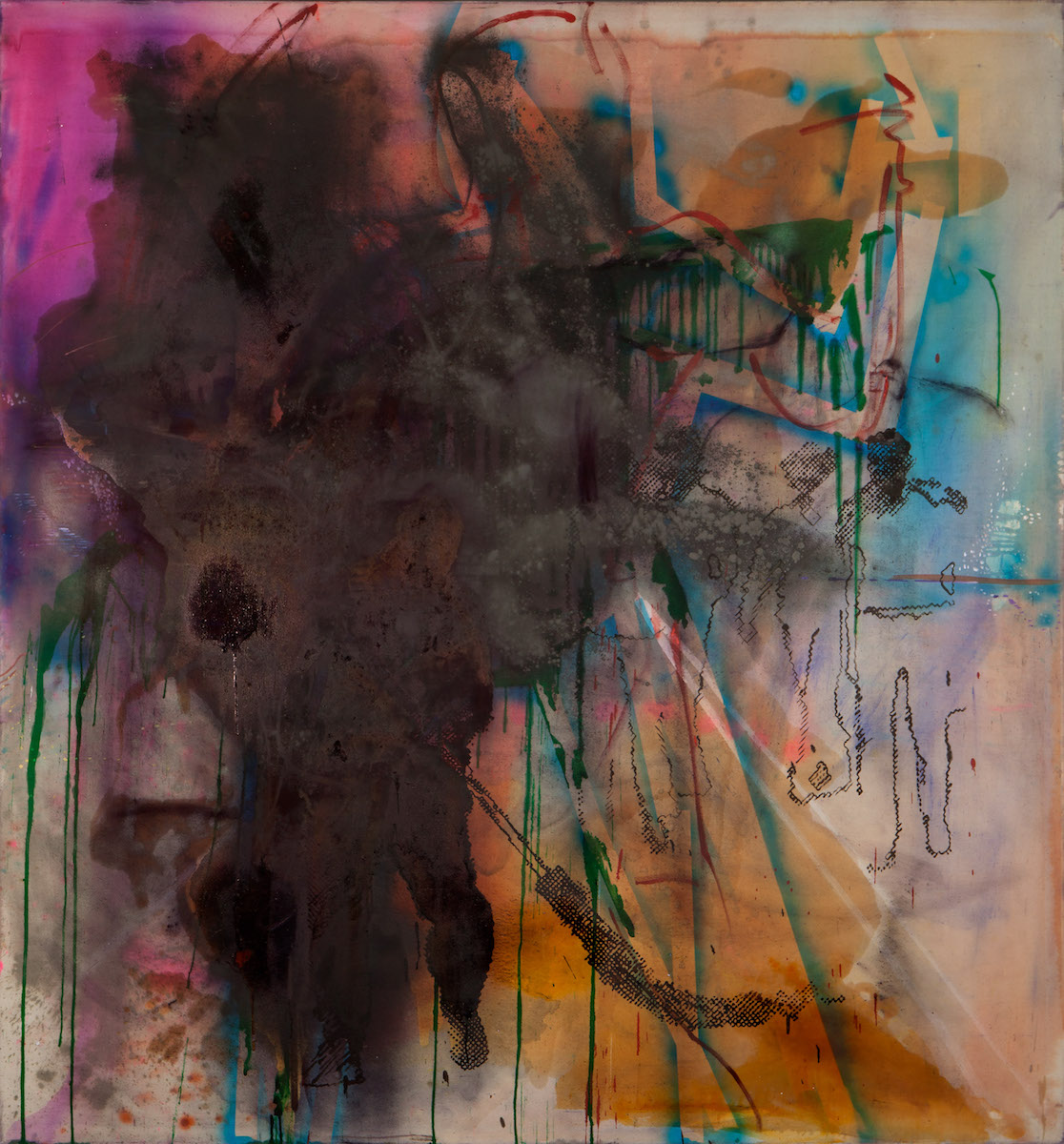 Sigmar Polke, Der Traum des Menelaos I (The Dream of Menelaus I), 1982, dispersion, aluminum, manganese, ferrous mica on canvas, 102 x 94 in. Private Collection. Courtesy VeneKlasen © 2026 The Estate of Sigmar Polke, Cologne / ARS, New York / VG Bild-Kunst, Bonn.
Der Traum des Menelaos II (Kuh und Schaf gehen zusammen aber der Adler steigt allein) (The Dream of Menelaus II [Cow and Sheep Go Together but the Eagle Stands Alone]) offers a perfect distillation of the Polke’s methodology and concerns here. Executed prior to the fall of the Wall, and during the upswell of interest in contemporary painting (i.e. the Zeitgeist), is variously titillated, subsumed and vexed by the engulfing quagmire of a sooty black cloud. One grows to wonder, are the subsumed figures hovering around the edges reacting to a spectacle, a conflagration, or merely commentary on mechanical reproduction (there’s photography again)?
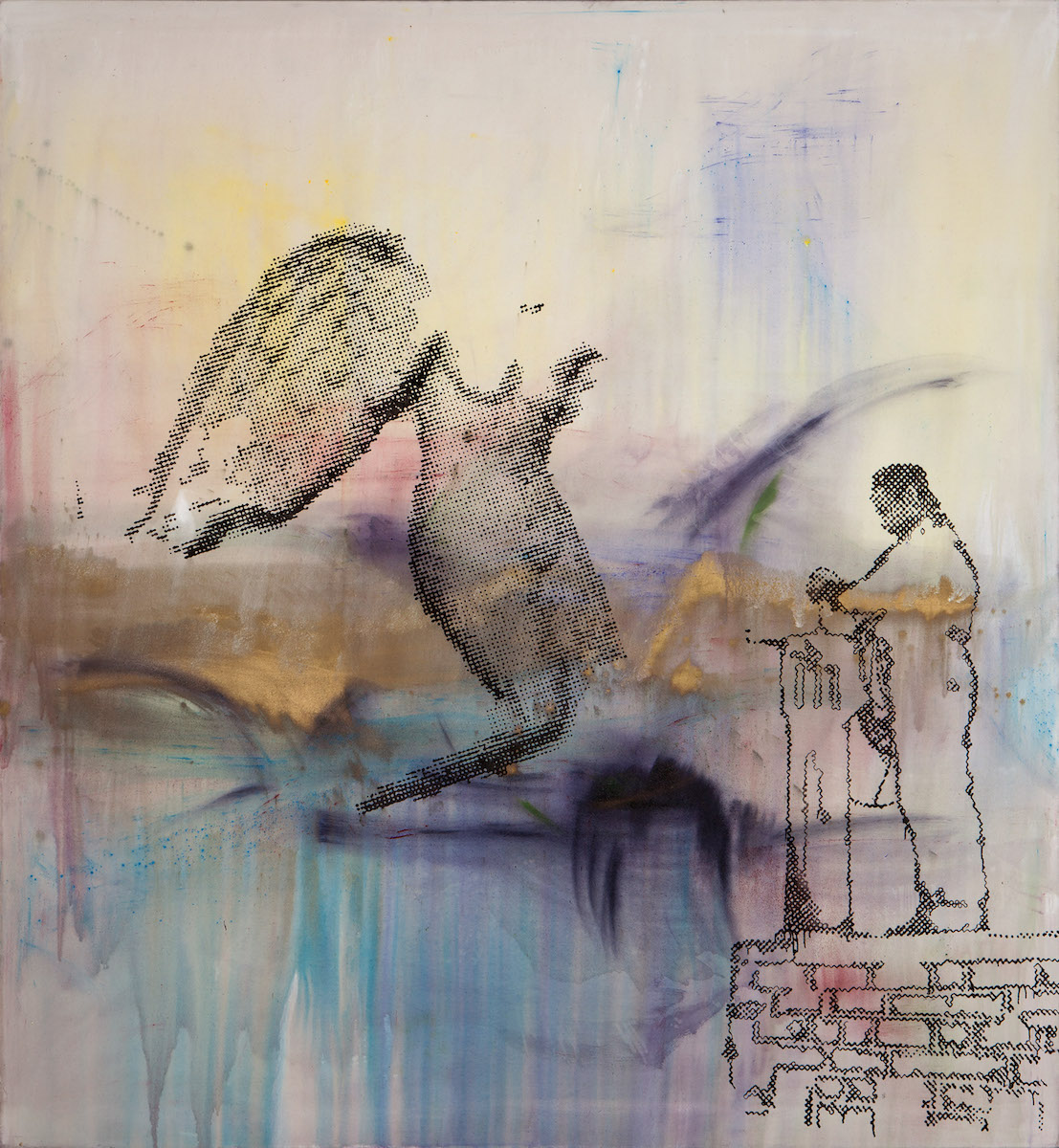 Sigmar Polke, Der Traum des Menelaos I (The Dream of Menelaus I), 1982 Dispersion, aluminum, manganese, ferrous mica on canvas, 102 x 94 in. Private Collection. Courtesy VeneKlasen © 2026 The Estate of Sigmar Polke, Cologne / ARS, New York / VG Bild-Kunst, Bonn.
Der Traum des Menelaos I (The Dream of Menelaus I) delivers the most explicit mythological reference in the form of a Winged Victory of Samotrace confronting a bureaucrat at a podium. Despite the ancient roots of the headless harbinger, I could not help but connect Polke’s version to Yves Klein’s Victore de Samothrace rather than ancient texts. The surrounding environment lacks the heaviness found the other three, diaphanous and watery, full of air and light.
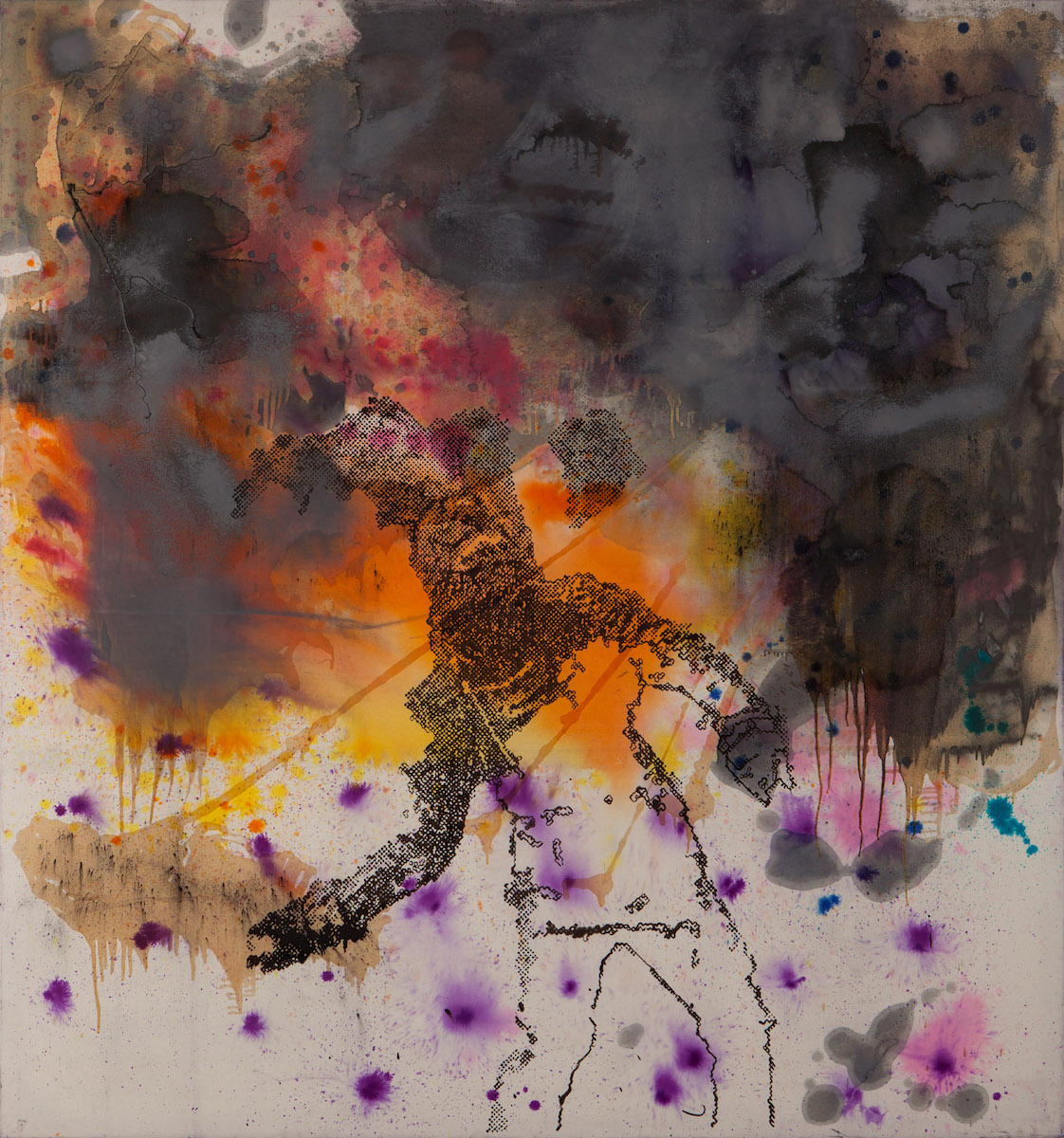 Sigmar Polke, Der Traum des Menelaos II (Kuh und Schaf gehen zusammen aber der Adler steigt allein) (The Dream of Menelaus II [Cow and Sheep Go Together but the Eagle Stands Alone]), 1982 Dispersion, aluminum, manganese, ferrous mica on canvas, 102 x 94 in. Private Collection. Courtesy VeneKlasen © 2026 The Estate of Sigmar Polke, Cologne / ARS, New York / VG Bild-Kunst, Bonn.
The narrative in Der Traum des Menelaos II (Kuh und Schaf gehen zusammen aber der Adler steigt allein) (The Dream of Menelaus II [Cow and Sheep Go Together but the Eagle Stands Alone]) purveys a tale ‘ripped from the headlines’, so to speak. A molotov-throwing masked protestor occupies the lower center, indifferent to the conflagration about that is his wont and desire, a fiery miasma caught in amber. The figure’s resemblance to Banksy’s Flower Thrower is uncanny eliciting the consideration that Banksy (currently in the midst of possible unmasking) was cognizant of this work?
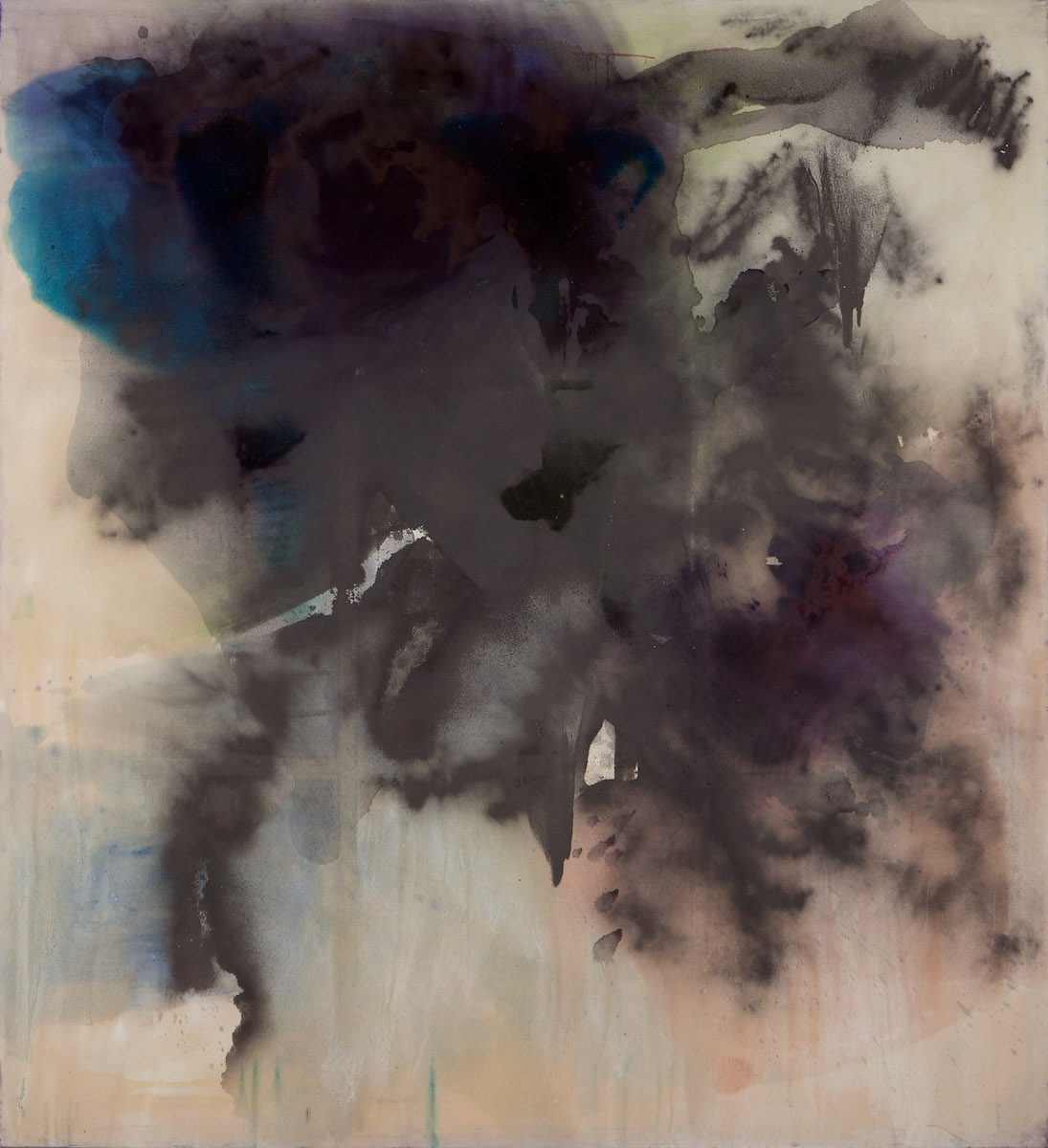 Sigmar Polke, Der Traum des Menelaos III (Wolke) (The Dream of Menelaus III [Cloud]), 1982 Dispersion, aluminum, manganese, ferrous mica on canvas, 102 x 94 in. Private Collection. Courtesy VeneKlasen © 2026 The Estate of Sigmar Polke, Cologne / ARS, New York / VG Bild-Kunst, Bonn.
Der Traum des Menelaos III (Wolke) (The Dream of Menelaus III [Cloud]) shares parity with Surrealist automatic drawing and the phenomenon of finding pareidolia wherein images in cloud forms are perceived (it’s there in the title after all). The overwhelming inky profile, donning either a fuzzy hairdo or a beaver skin cap, in inescapable; lurking, but seemingly benevolent, less forlorn but equally monumental, in scale as well as impact, as Julian Schnabel’s portrait of Antonin Artaud from the previous year, Artaud (Starting to Sing, Part 3), 1981.
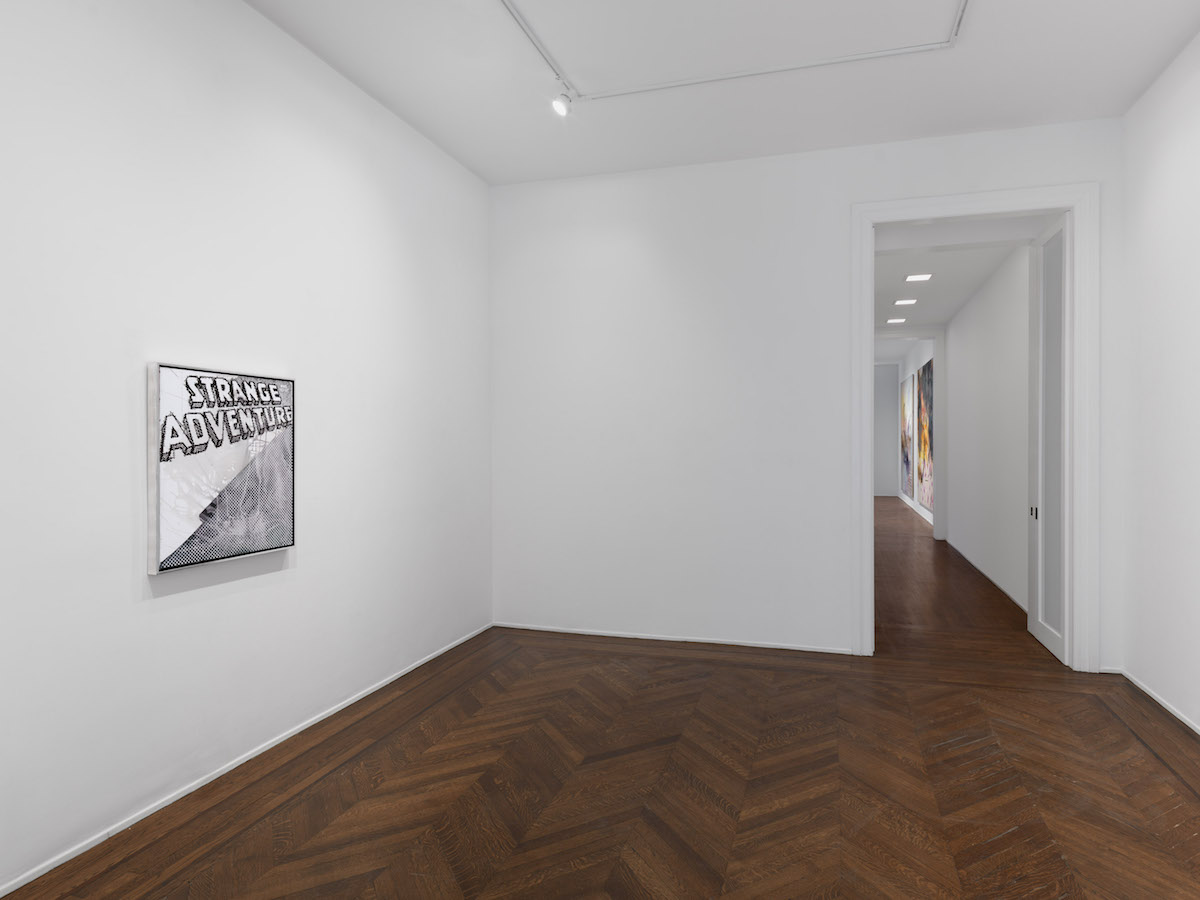 Installation view, Sigmar Polke: The Dream of Menelaus, VeneKlasen, NY showing: Strange adventure, 2004, acrylic on canvas, 31.5 x 27.5 in.
Secreted away in the intimate rear gallery–with the ambience of a private viewing room–one found Strange Adventure, from 2004. With a distinct chilly charm (Warhol hovers), a manageable scale, and a compositional subject that proposes an affinity with that most American purveyor of reads on the landscape, Ed Ruscha. Overall, sensation is one of full on confrontation with our carnival existence. Is the emblazoned legend (and title) a comment on Polke’s reaction/commentary to his own journey(s) to the land that created and disseminated the materials that informed his practice firsthand? Alternately, having been created less than a decade prior to the artist’s demise, perhaps it is a ruminating summation on the approaching end of life; something understandable as characteristic of Polke’s dry probings that seethe with tender mockery.
Polke would go on to expand his range with work that utilized fabric that expanded on Rauschenberg’s own explorations of the 1970s, with all manner of manipulation; resin varnished silkscreens, collaged garments. That cemented his place in the canon of (post)Modern painting as a shaman of the craft.
Created in the time of the birth of the ‘greed is good’ ethos, and (flash forward) now ensconced amongst the bastion of the levers of power, though somewhat distracting, the fact that Polke, the rebel, comes through as loudly now as ever offers a tad satisfaction in these heady and concerning times.
__________________________________
Sigmar Polke: The Dream of Menelaus
VeneKlasen
4 East 77th Street, New York, NY 10075
March 4–No Present End Date, 2026

Edward Waisnis
Edward Waisnis is an artist and filmmaker. Additionally, he is the Producer of two Quay Brothers films, Through the Weeping Glass and Unmistaken Hands, as well as having overseen the facilitation of their 2012 MoMA retrospective. His writing has appeared in Art New England, COVER, ARTextreme and STROLL.
view all articles from this author