Whitehot Magazine
September 2026
"The Best Art In The World"
"The Best Art In The World"
September 2026
Michael De Feo: In, Out, Around and On Top of Fashion
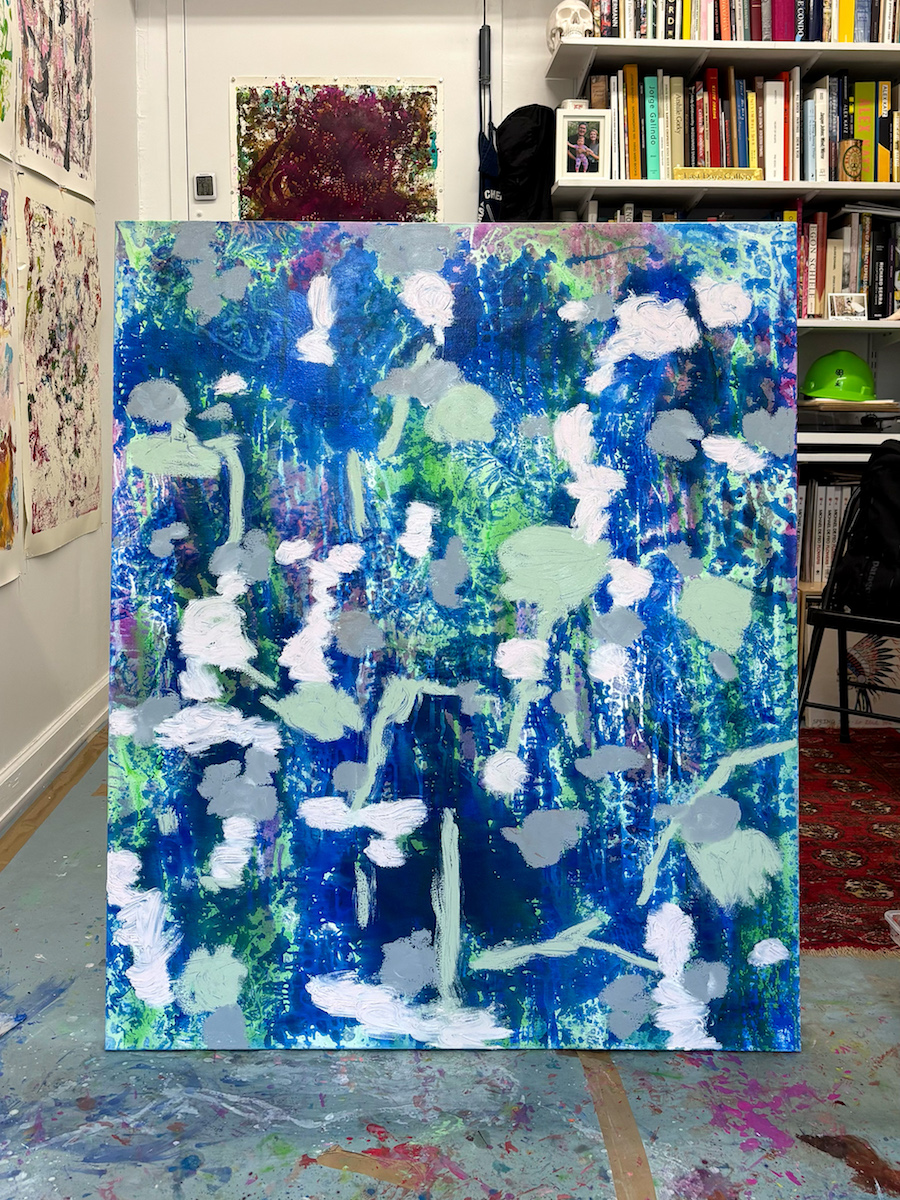 New Painting (in progress) in Michael De Feo’s studio, NYC, July 2026.
By EDWARD WAISNIS July 27th, 2026
As the dog days of summer descend upon us, with the plethora of group shows occupying the galleries prior to their closing for vacation, I decided to change things with this profile piece prompted by a visit to Michael De Feo’s studio.
Hunkered down in said studio, smack-dab in the center of Mad Men territory on Madison Avenue, throwing distance from the Empire State building, * De Feo can be found immersed in the latest phase of his decades long progress. From hop-scotching iconic wheat-paster to advertising vitrine transgressor. All while holding down a decade-and-a-half position as a High School art instructor until 2013. To the career move of straightforward painting on canvas. This trajectory, like his work, carries a lightness of spirit somewhat akin to Andy Warhol’s co-option of advertising, and fashionistas and the liquid asset class.
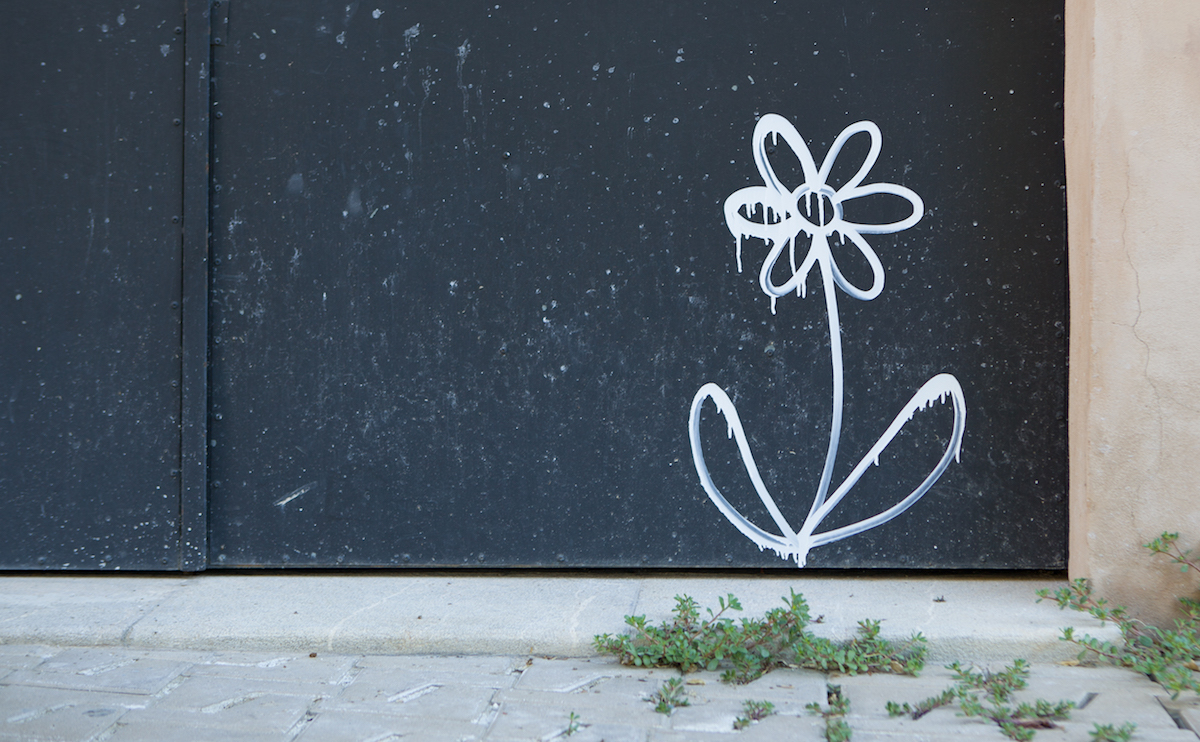 Michael De Feo, “Flower”, 2015, paint on wall, (in situ) Palma, Mallorca, Spain.
Roughly separated by three phases that overlap De Feo first carved a niche that earned him the tag of ‘the flower guy’ with a globe-trotting foray into street art. More often than not, his signature single stemmed bloom came in the form of silk screens put to service as street posters; though, he was given to donning the brush and/or roller on more than one occasion to render a hand-hewn variation.
Running parallel to the ascendency of fashion’s cross-fusion into the high art world, evidenced by the appearance of full page advertisements by fashion houses in art magazines, for instance, commissioning of artists for their designs to be incorporated on handbags, etc., and sponsorships of exhibitions and art fairs. De Feo’s work with bus stop advertising vitrines sits squarely at the center of this phenomenon.
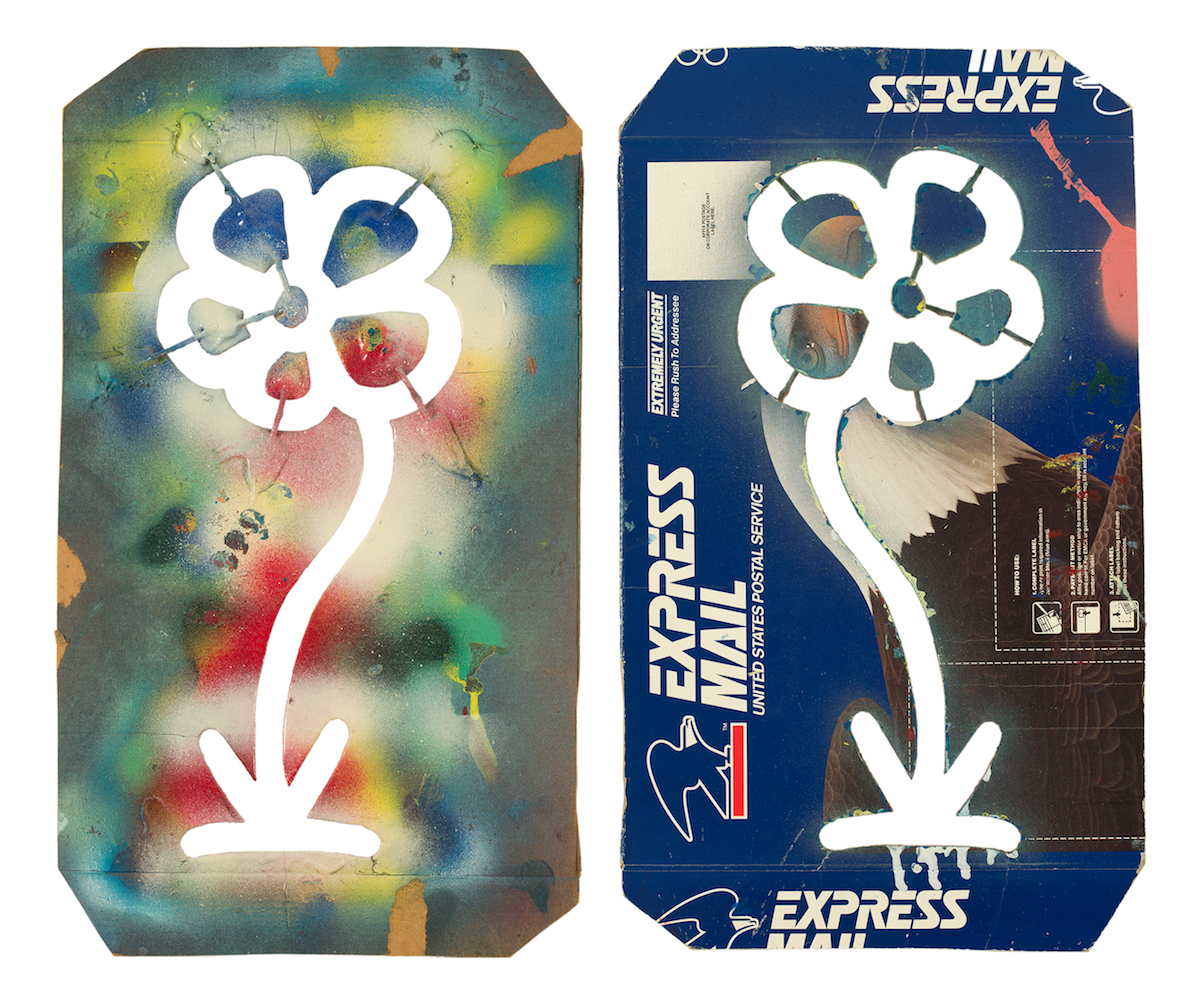
Michael De Feo, “Flower”, c.1994-95, stencil for spray paint (front and back), US Postal Service Express Mail box (cardboard), coat hanger wire, glue, spray paint, approximately 20 x 14 inches.
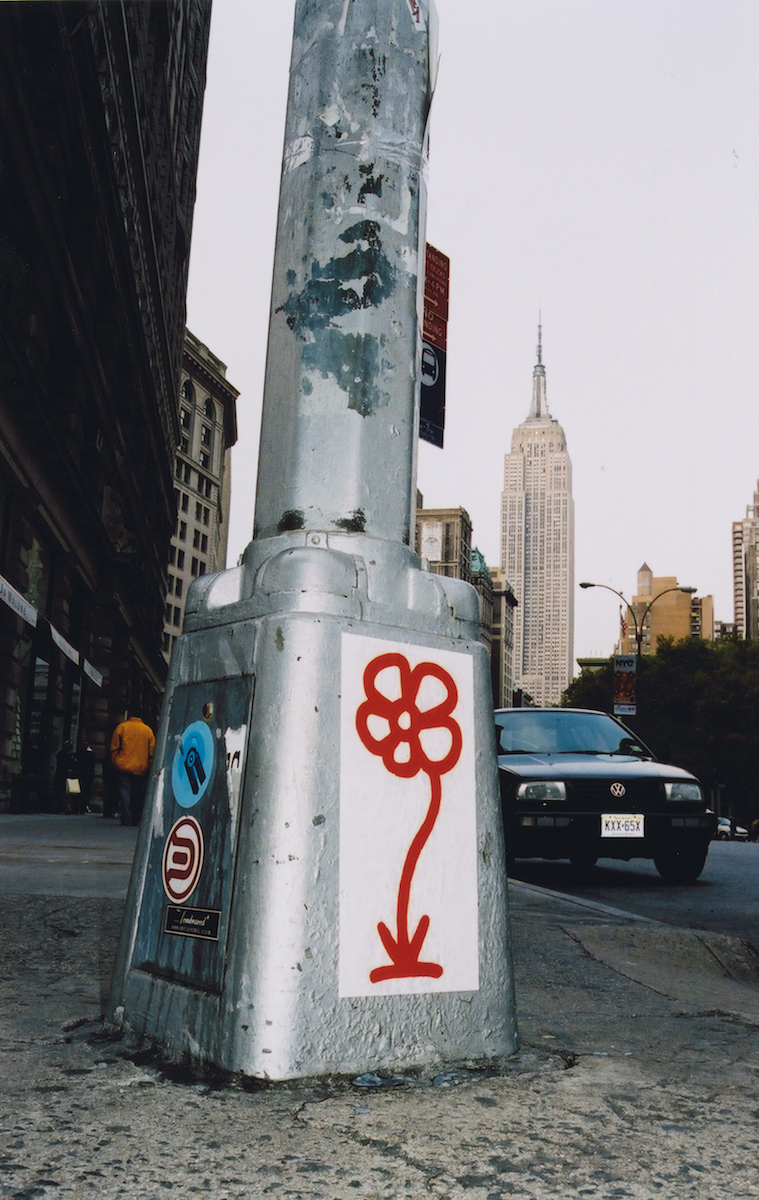 Michael De Feo, “Flower”, 2002, wheat pasted poster, (in situ) NYC.
Beginning in 1993, De Feo’s turn to street art was ignited by his eighth grade introduction to the classic book Subway Art, by Martha Cooper and Henry Chalfant. Followed up by the placement of a cardboard class project piece, made in Peter Dudek’s sculpture course at SVA, at the nexus in front of the Flatiron Building.This led to development of symbols (crescent moon and a minnow) that could be adapted to stencils to use in tagging. Settling on the soon to be ubiquitous flower, that he links back to his Mother’s interest in horticulture in the form of a small, but ample rear garden in the family home, that quickly became the star of a globe-trotting passion.
The first iteration of deployment came out of having produced a run of silkscreen prints that De Feo quickly put to the service of a wheat pasting campaign. The endemic impoverishment of an artist led to De Feo’s reliance on cutting his stencils from repurposed U. S. Postal Service express mail cartons.
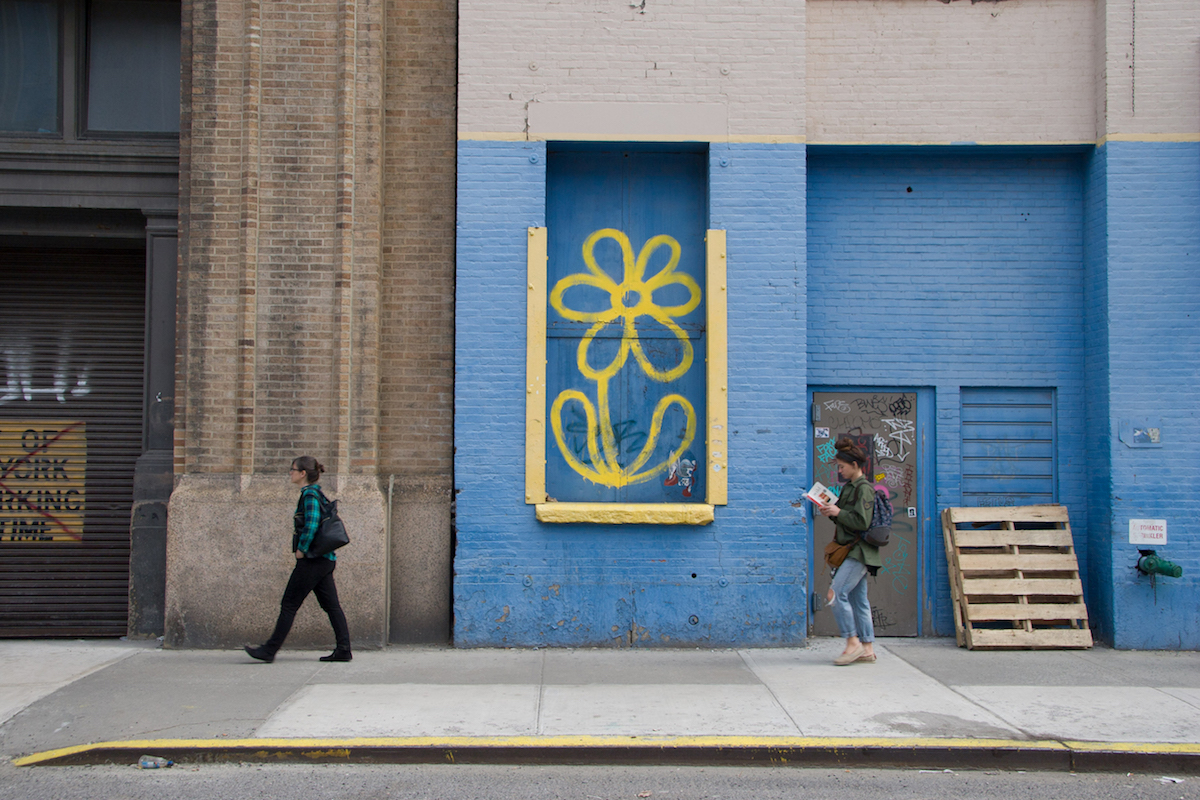 Michael De Feo, “Flower”, 2014, paint on wall, (in situ) Chelsea, NYC.
The reverse engineering bleed between mercantile commerce and the headiness of fine art commenced with the legendary actions of Keith Haring, with his chalk drawing takeover of yet-to-be-rented poster niches that had been papered over black. Never truly a part of the graffiti writer subculture, that was rampant at the time, but an honorary step-sibling.
In the ensuing decades Haring’s angling strategy found it’s way to Richard Hambleton, with his splattered shadow figures on the nondescript doorways, street corners and alleyways of lower Manhattan. Culminating in the morphing figures of Kaws. Like Kaws, a contemporary, De Feo focuses on delivering surprise verging on awe and joy. Leaving the potential of the bite of social consciousness to simmer within the construct rather than broadcasting controversy-inducing agitprop practiced by Banksy.†
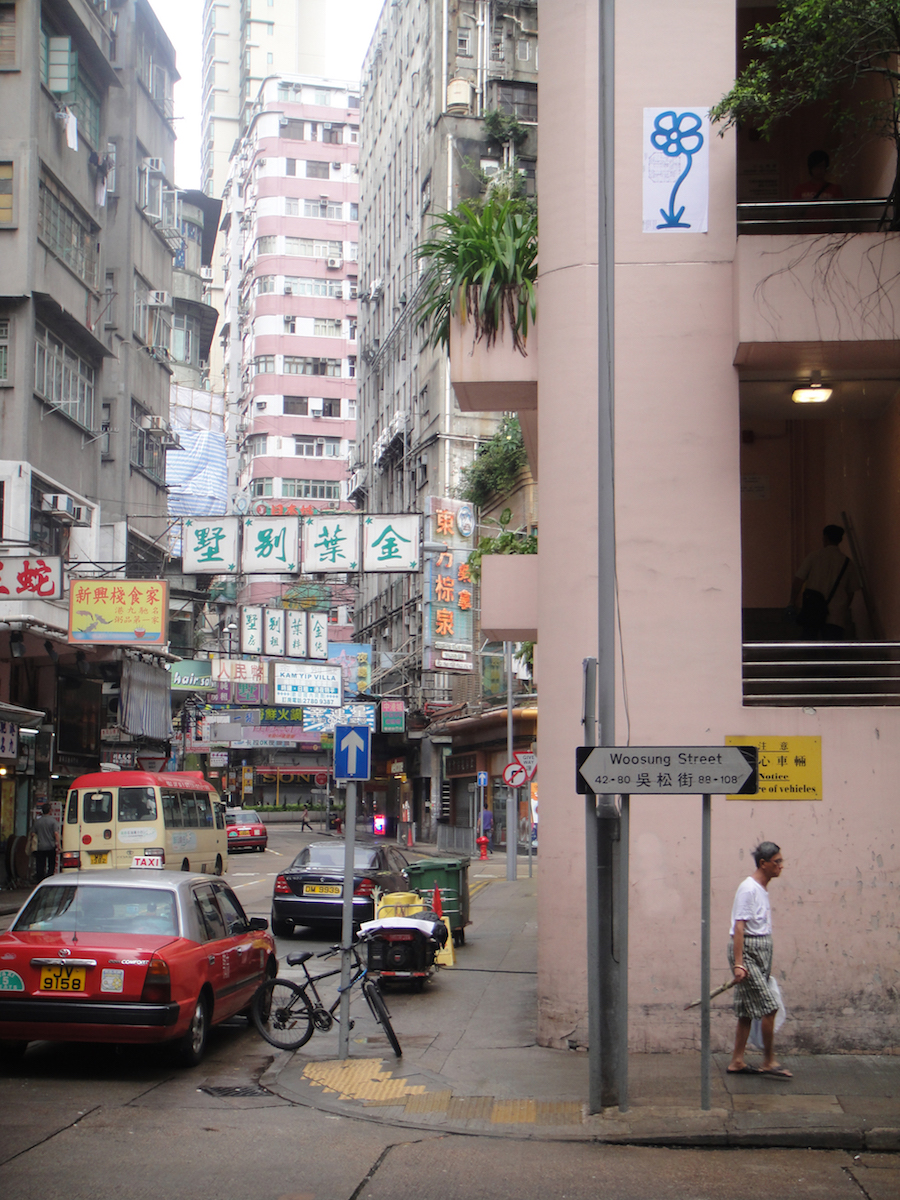 Michael De Feo, “Flower”, 2010, (in situ), Hong Kong.
After covering locations from New York, De Feo ventured from the West Coast to Europe, South America and Hong Kong, to name but a few of the sites where he festooned his now trademark.
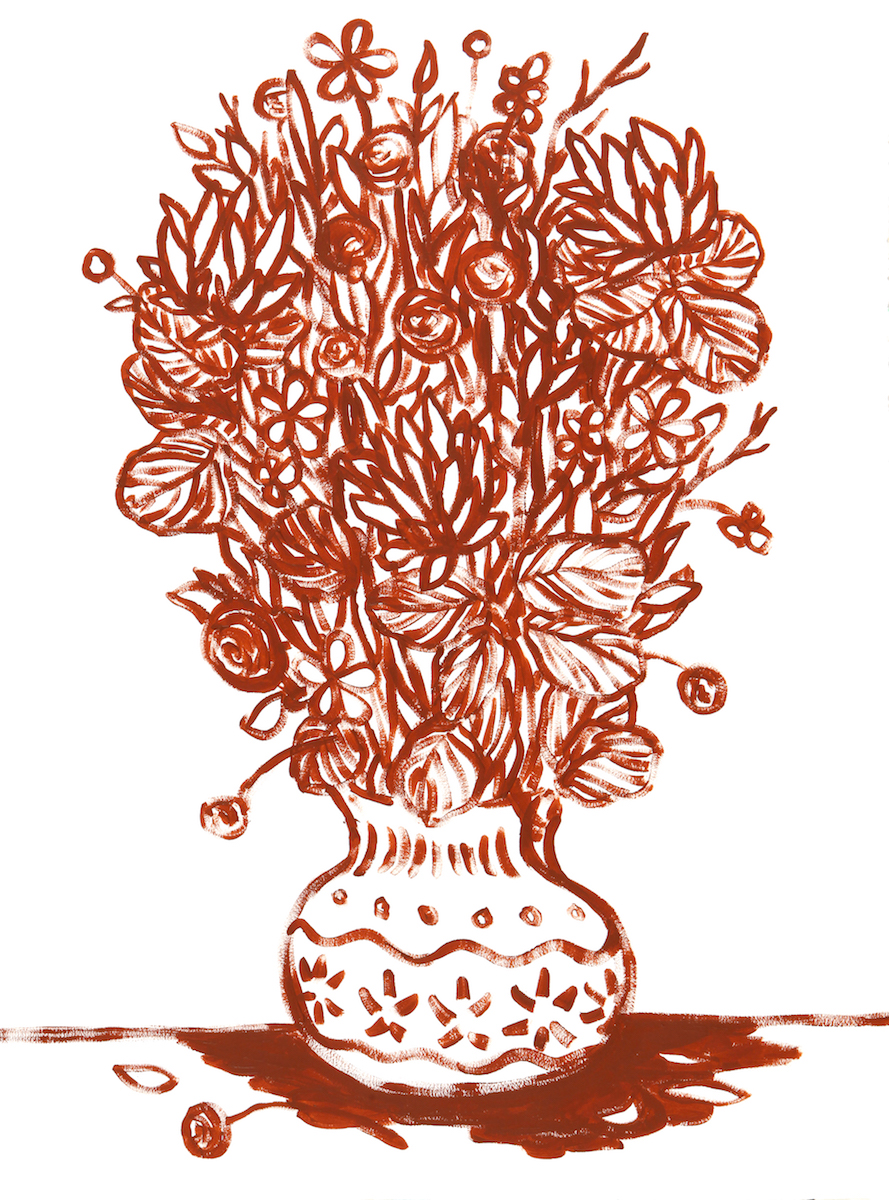 Michael De Feo, Untitled, 2015, acrylic on paper (Rives BFK), 30.25 x 22.5 inches.
Working up from the single stem to a bouquet that has been compared to van Gogh’s take on floral ‡ (that to my mind shares commonality with Odilon Redon’s soothing still lifes, in deference with Vincent’s tortured psyche transmissions) De Feo grew beds of arrangements.
This led to what he refers to as his ‘fashion takeover’ or ‘ad takeover’ work. Made possible by being gifted a custom key to advertising vitrines placed at bus kiosks, crafted by artist Jordan Seiler. This provided De Feo with an exciting new platform to explore.
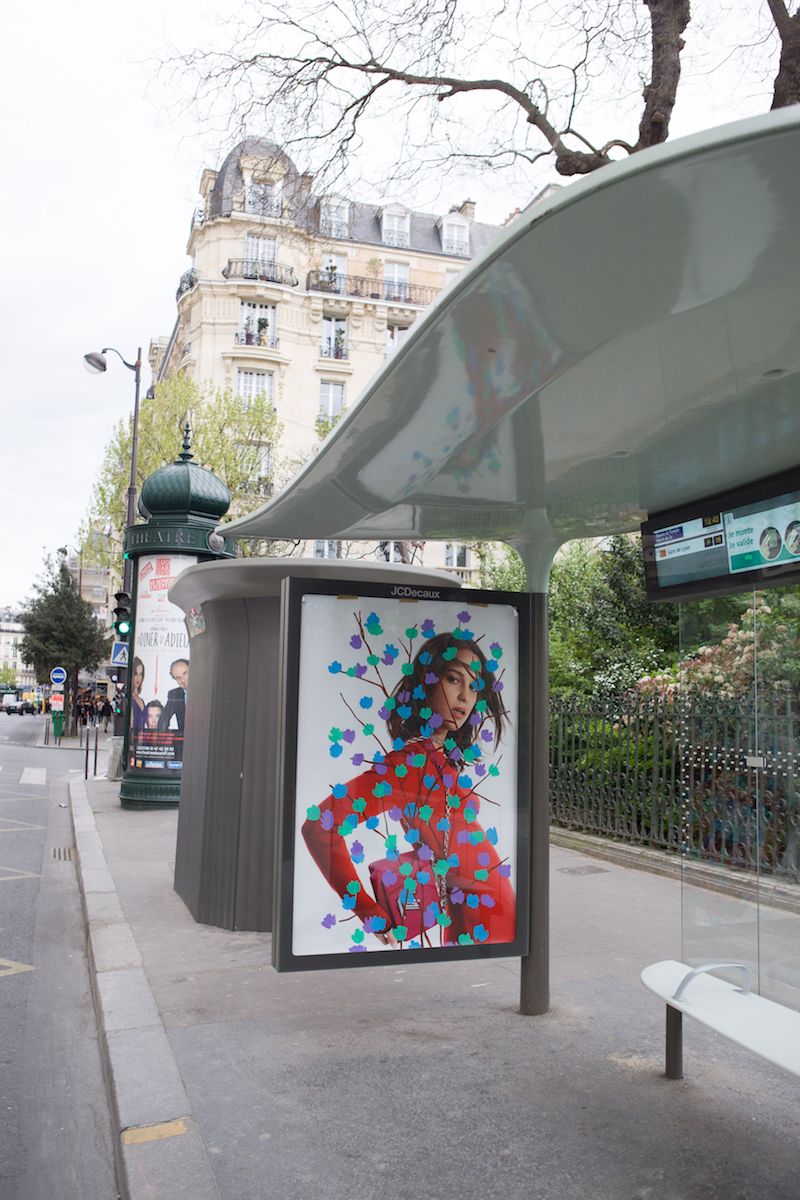 Michael De Feo, 2016, bus stop advertising takeover, Paris, France.
The next development of De Feo’s transgression came as autonomous lush bouquets, in the form of original painting on paper as replacement inserts. Followed by next logical step of embellishing the advertisements that he replaced and amassed; documented in the tome produced by Poster House, NY: Michael De Feo: Out of Fashion.
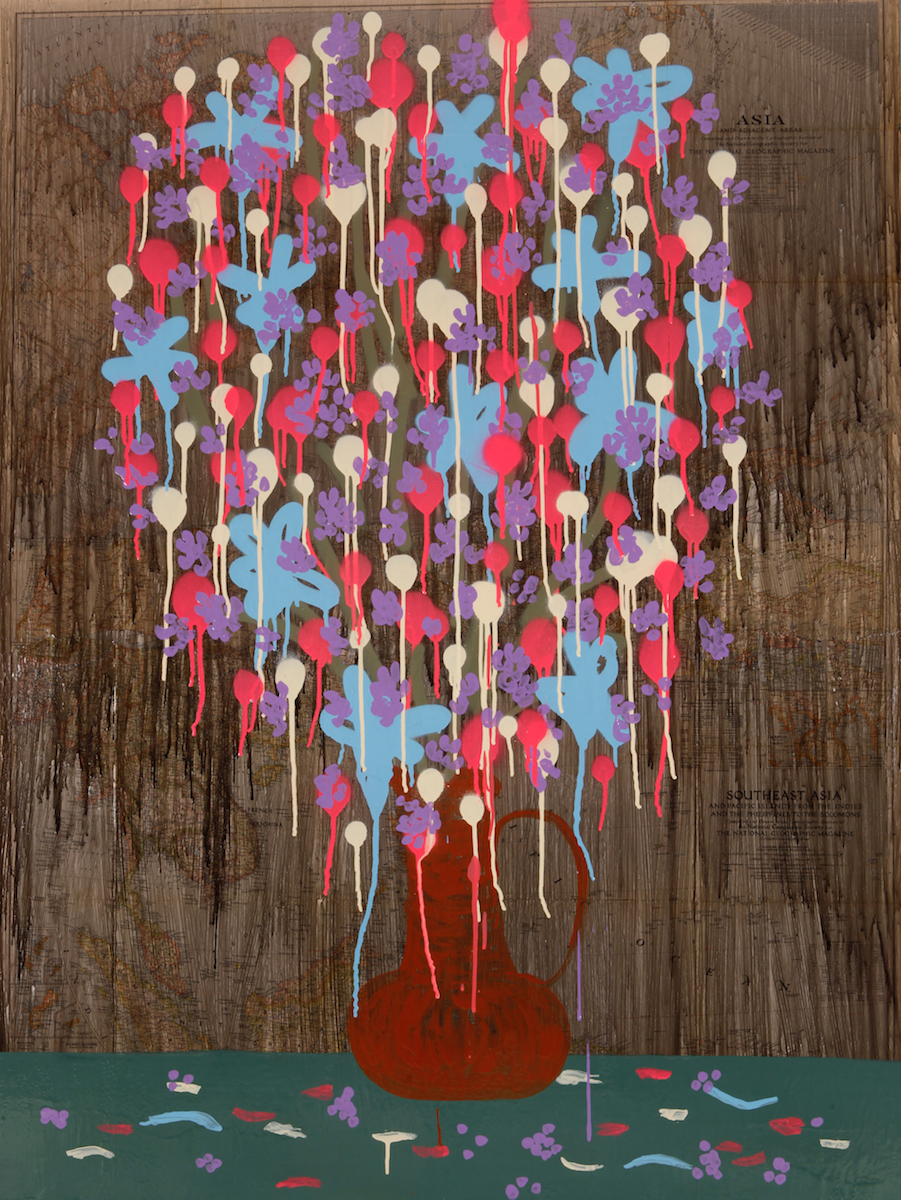 Michael De Feo, “Oh so very berry bloemen”, 2014, acrylic, urethane, spray paint, and maps on canvas, 53.5 x 40 inches.
In a twist on the myth of the subliminal–rumored to have been utilized by the ad industry as an under-the-radar tool of subversive hawking–De Feo’s substitutions, as with all of his work, emanate a peaceful counter to the self-awareness of commerce in the form of an idyl transposed to the cacophony of the metropolis.
Having stockpiled the posters he replaced, De Feo soon arrived at the revelation that led to bending the material of commerce to the joie de vivre proposed by Capitalism cloaked in Modernist art history by turning them into his substrates. The meandering sinewy patterns evoke gardens overtaking the images of coiffed and made-up models, actresses and celebrities, put to service in the interest of product, who peek out between the overgrowth.
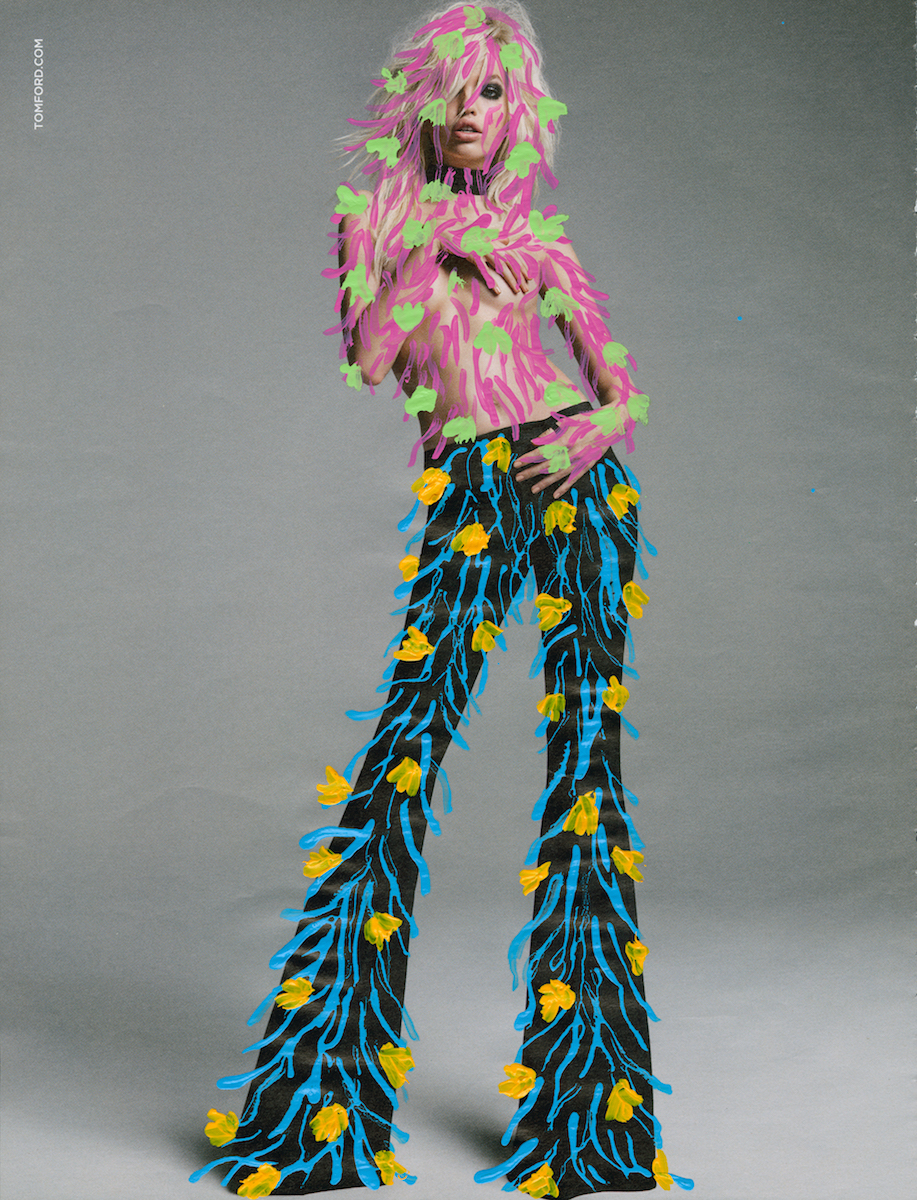 Michael De Feo, Untitled, 2015, acrylic on magazine page (Daphne Greneveld by Inez and Vinoodh for Tom Ford), 13 x 10 inches.
A favored personage, who appears numerous times, is Natalie Portman. Whether the result of preference, trending (the particular timing of a campaign), or sheer availability, posits the ineffability of this star, whose career is shrouded by cautious exposure, perhaps a bit more than average. Curiously, word has it, this would seem to be and aspect that will be addressed/exposed in Rachel Cusk’s thinly-veiled upcoming fictional new book Life of M.In something of an ironic twist, given the scofflaw aspect of this work, led to collaborations with brands (Guerlain, JCrew, Christian Louboutin), earned De Feo a Cleo Award for his catalog cover for Neiman Marcus' The Book. §
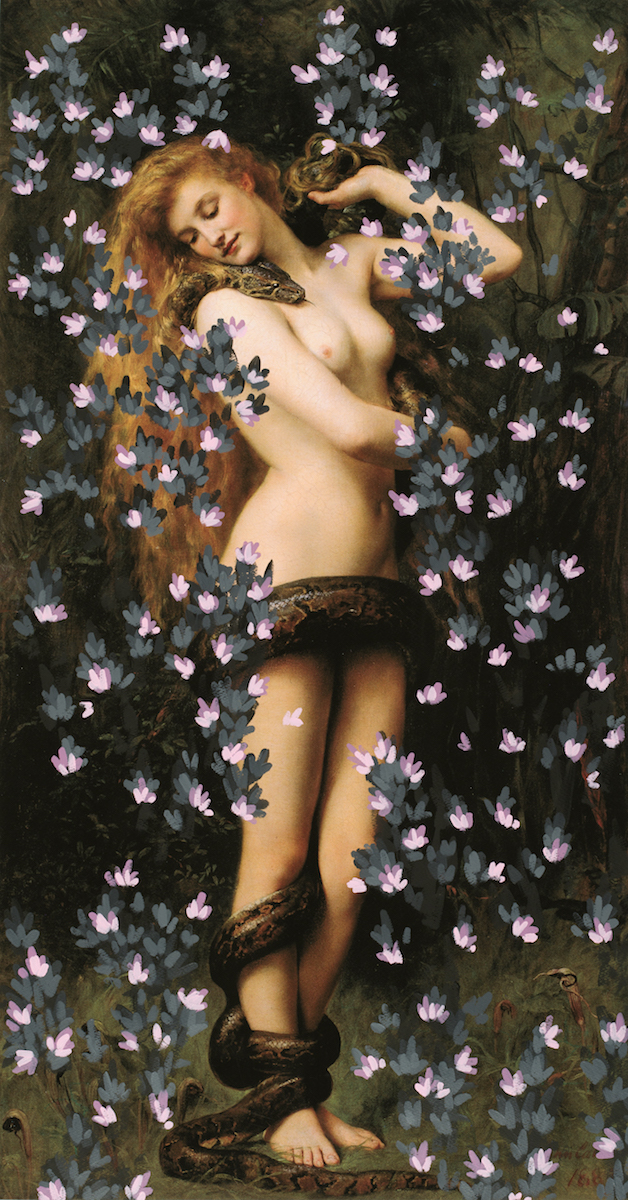 Michael De Feo, 2017, Untitled (Lilith), by John Collier, 1887, acrylic and giclée on paper, 36.5 x 19.25 inches.
Leading up to his current direction, De Feo completed a body of work that relied on augmenting–rather than strictly intervening–Pre-Raphaelite masterpieces, giclée reproductions printed on paper. In her essay on this work, Anya Firestone makes the convincing point that unlike Robert Rauschenberg’s sanctioned effacement of a deKooning drawing and the Chapman Brothers defacement of eighty purchased Goya prints, that De Feo’s actions align more closely with Marcel Duchamp’s doodling over a reproduction of Da Vinci’s Mona Lisa, in that they are similarly carried out upon reproductions. ¶
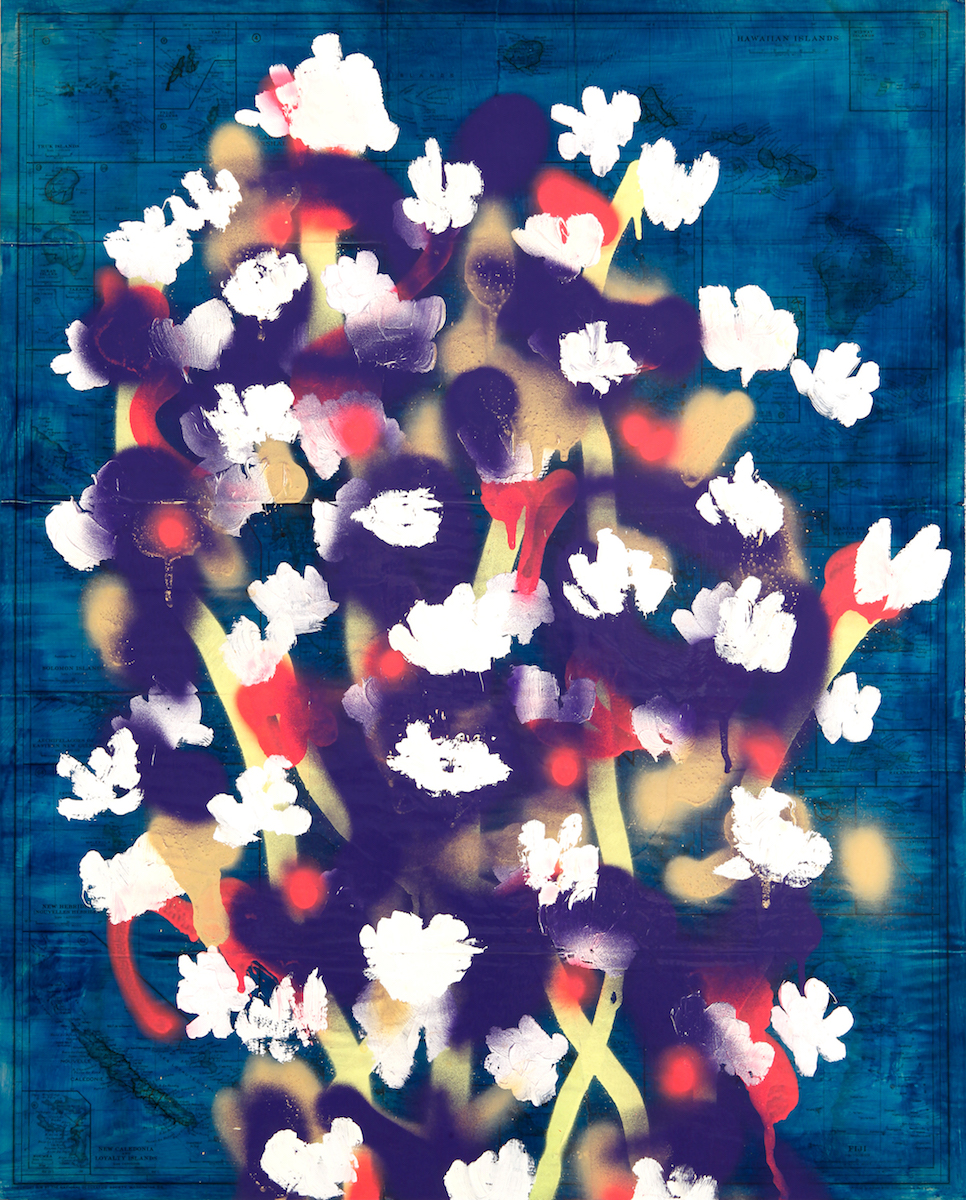 Michael De Feo, “Flowers Over the Pacific”, 2014, acrylic, urethane, spray paint, and maps on board, 30 x 24 inches.
The confidence, and competence, building that resulted from these far-flung, and driven, actions fueled De Feo’s move to studio-bound work. A nod to the years of geo-spanning work resides in paintings that incorporated maps, a in Flowers Over the Pacific, 2014, as underlying grid.
His full-throated embrace of pure abstraction, in his oils on canvas, rifle through a wide assortment of influences. From Monet and Mitchell, van Gogh to Baechler, Warhol, Hockney and Hodgkin–devolving to fields of patterns, not too distant from Damien Hirst’s overwrought dot contagions–that have coalesced to a nuanced near-Pointillist fusion by a painter who toils to escape his previous pigeonholing. (https://mdefeo.com - www.instagram.com/theflowerguy/)
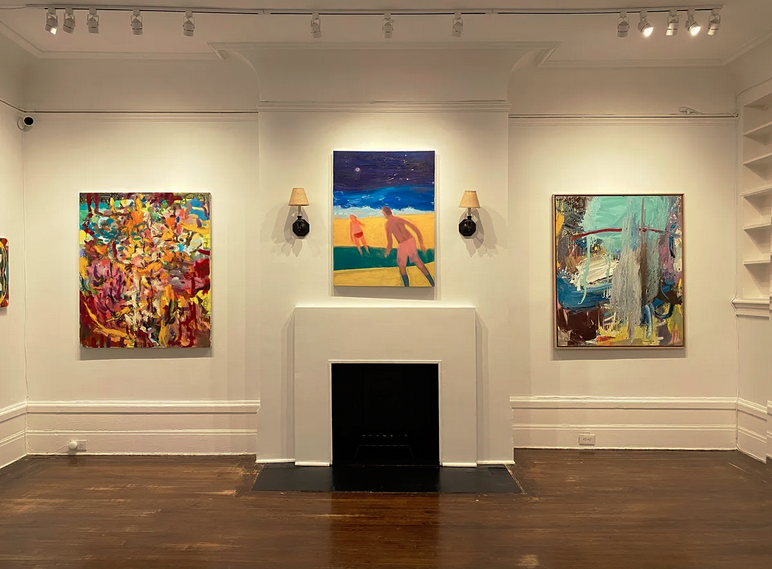 Installation view: “Jut a Song Before I Go”, Curated by Michael De Feo, January 22–February 22, 2025, Last Days Gallery, NYC.
I would be remiss in excluding De Feo’s curatorial undertakings. Upon vacating his much loved Upper East Side townhouse studio, De Feo transformed the space into a gallery (gutting and painting the space, installing lighting and security). Invited a circle of friends, acquaintances, and New York established painters to contribute work to be mounted as a celebratory parting gesture exhibition under the banner of Last Days Gallery, which has continued nomadically to the present. #
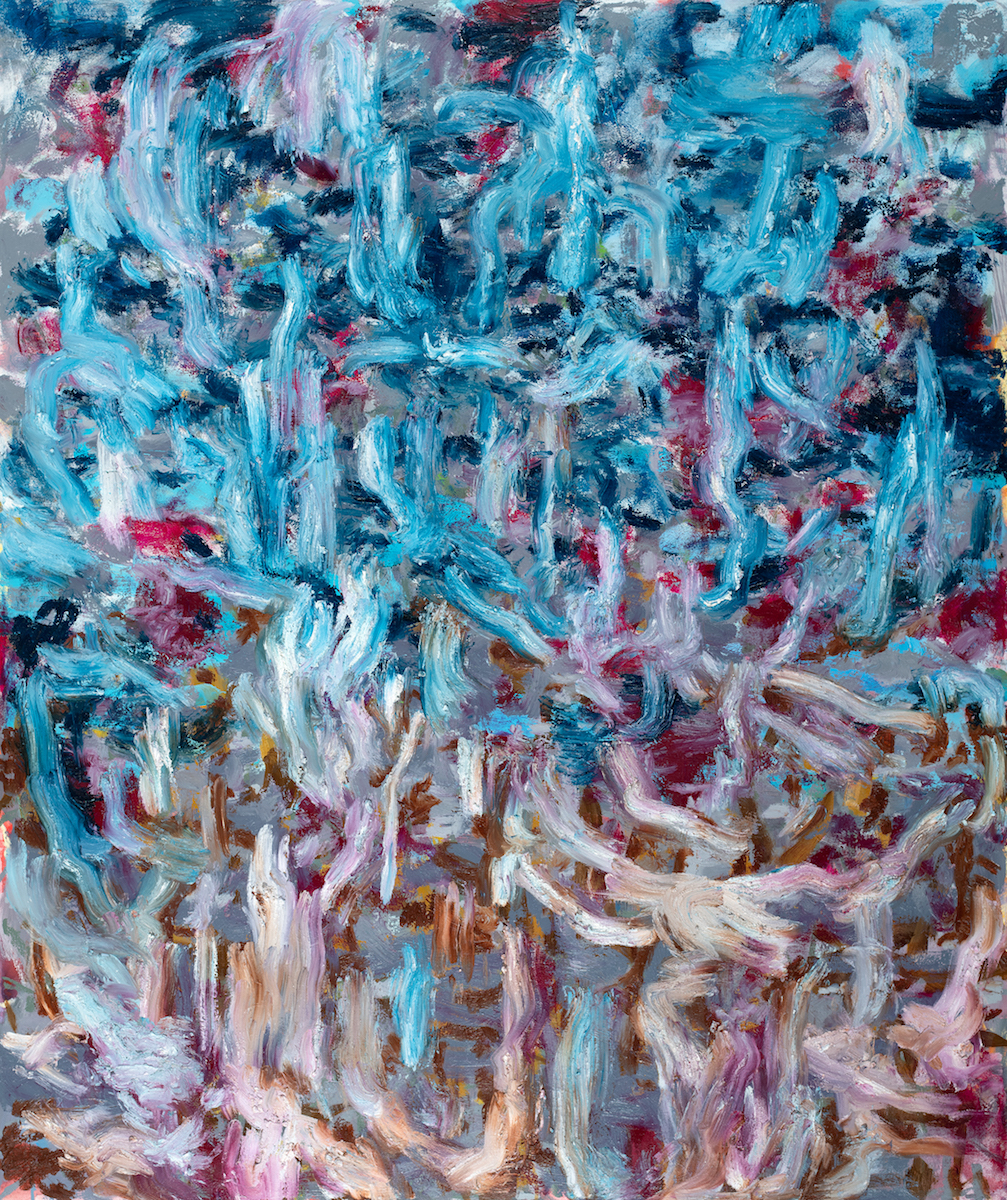 Michael De Feo, “El Greco Ganja”, 2024, acrylic, oil and oil stick on canvas, 48 x 40 inches.
______________________________
* It is interesting to note that De Feo, who grew up in a suburb north of NYC, carried the wish…
† Incidentally, De Feo makes a brief appearance in the Banksy hybrid documentary Exit Through the Gift Shop (2010).
‡ An aside: besides the sunflower suite, and his other pictures that featured flora, it has been documented that van Gogh’s favorite plant was, in fact, ivy. Which his sister in law, Johanna "Jo" van Gogh-Bonger (she, responsible for establishing the reputation his work now accords) made a point of planting as covering over his and Theo’s joint grave.
§ Additionally as an early supporter of the Friends of the High Line De Feo contributed philanthropic work. As well as supporting, with gifts of donated paintings, the Children's Museum of the Arts in NYC and LongHouse Reserve in East Hampton. And, designed a new logo for New Yorkers for Parks' Daffodil Project.
¶ In the monograph Michael De Feo: Flowers, Abrams, NY, 2019, pp. 169-173.
# With inclusion in this September’s U-Haul Art Fair, in which Last Days Gallery will be presenting a to be announced two-person exhibition housed in a U-Haul truck. https://lastdaysgallery.com/

Edward Waisnis
Edward Waisnis is an artist and filmmaker. Additionally, he is the Producer of two Quay Brothers films, Through the Weeping Glass and Unmistaken Hands, as well as having overseen the facilitation of their 2012 MoMA retrospective. His writing has appeared in Art New England, COVER, ARTextreme and STROLL.
view all articles from this author