Whitehot Magazine
October 2026
"The Best Art In The World"
"The Best Art In The World"
October 2026
Debbi Kenote: No place out of the wind - on view at Cristin Tierney
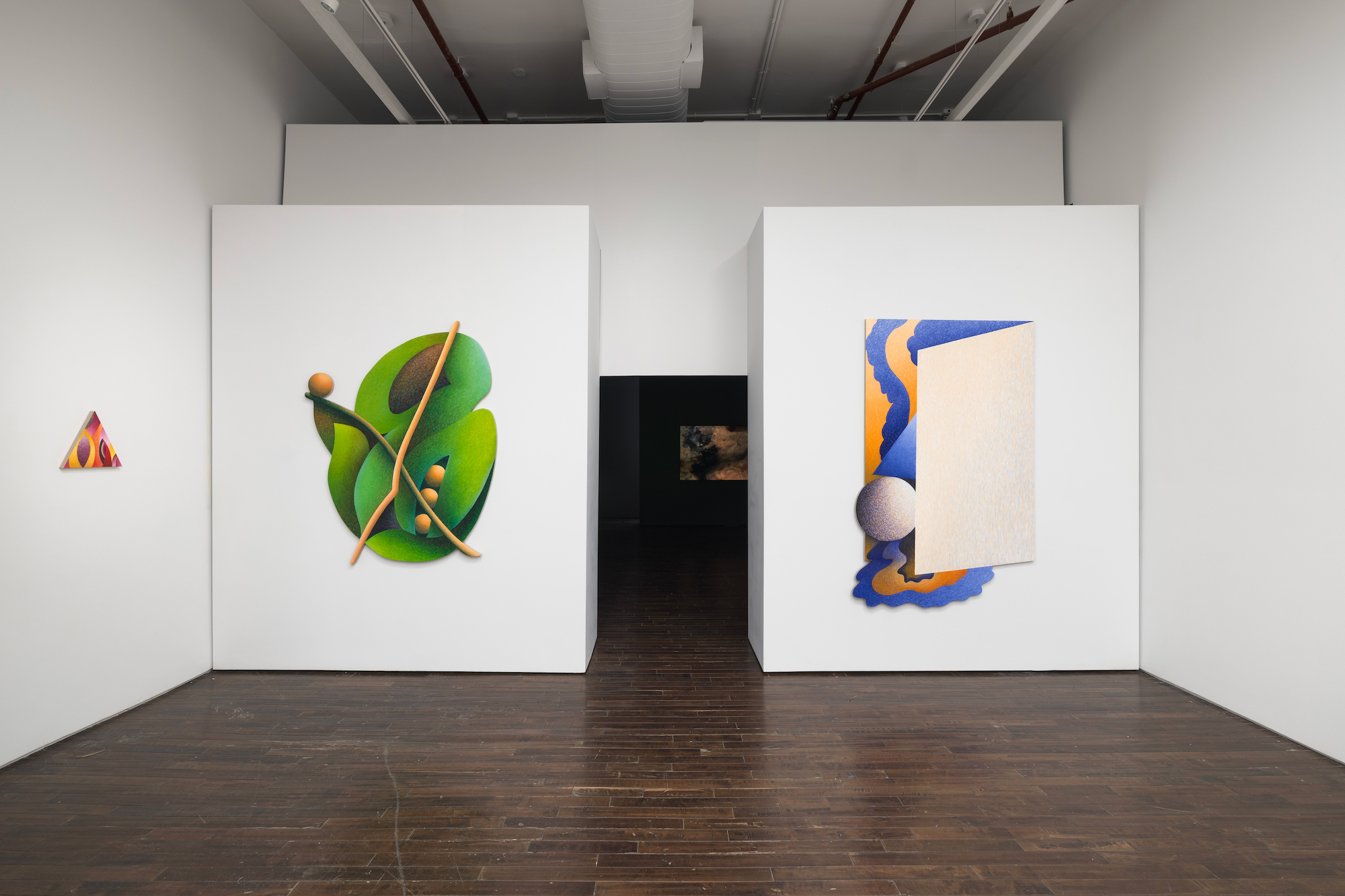 Installation view, Debbi Kenote, No place out of the wind, Cristin Tierney Gallery 2026, JSP Art Photography
By WM May 5th, 2026
Debbi Kenote has a fascinating backstory. Spend a moment looking into it, and you’ll find references to her upbringing on Fidalgo Island, a small island off the coast of Washington State—a kind of rural utopia shaped by making, where she grew up surrounded by seamstresses, quilters, and woodworkers. That lived sensibility—and an innate sensitivity—is on display in the artist’s current exhibition, No place out of the wind, on view at Cristin Tierney Gallery.
On the occasion of the show, Kenote reflects on the evolution of her practice—from immersive installations to the intricately constructed shaped canvases she makes today. Rooted in poetry, abstraction, and sculpture, her paintings resist a singular narrative, instead inviting you to experience the lived impressions embedded in her work. They tell a story of home—of a sense of place, a moody dreamland, and spiritual encounters with nature, all filtered through an amalgamation of memories.
Here, she discusses her process, the role of craft and construction in her work, and the literary and artistic influences that continue to shape her thinking.
No place out of the wind will be on view through May 9, 2026.
What were your early works like, and how have your works evolved over time?
I completed a BFA in Painting, followed by an MFA in Sculpture. At times I have felt misaligned with the rigid, male-centric history of painting, which has led me to explore other experimental avenues of the medium. During my MFA I made installations that visitors could physically enter, which I envisioned as three-dimensional painting worlds. When I graduated in 2016, I began experimenting with sculptural surfaces I could paint on, starting first with cubes, then jigsawed panels. Around 2021 I began crafting shaped canvases and joining multiple pieces together with brackets. This current work has really expanded from this direction.
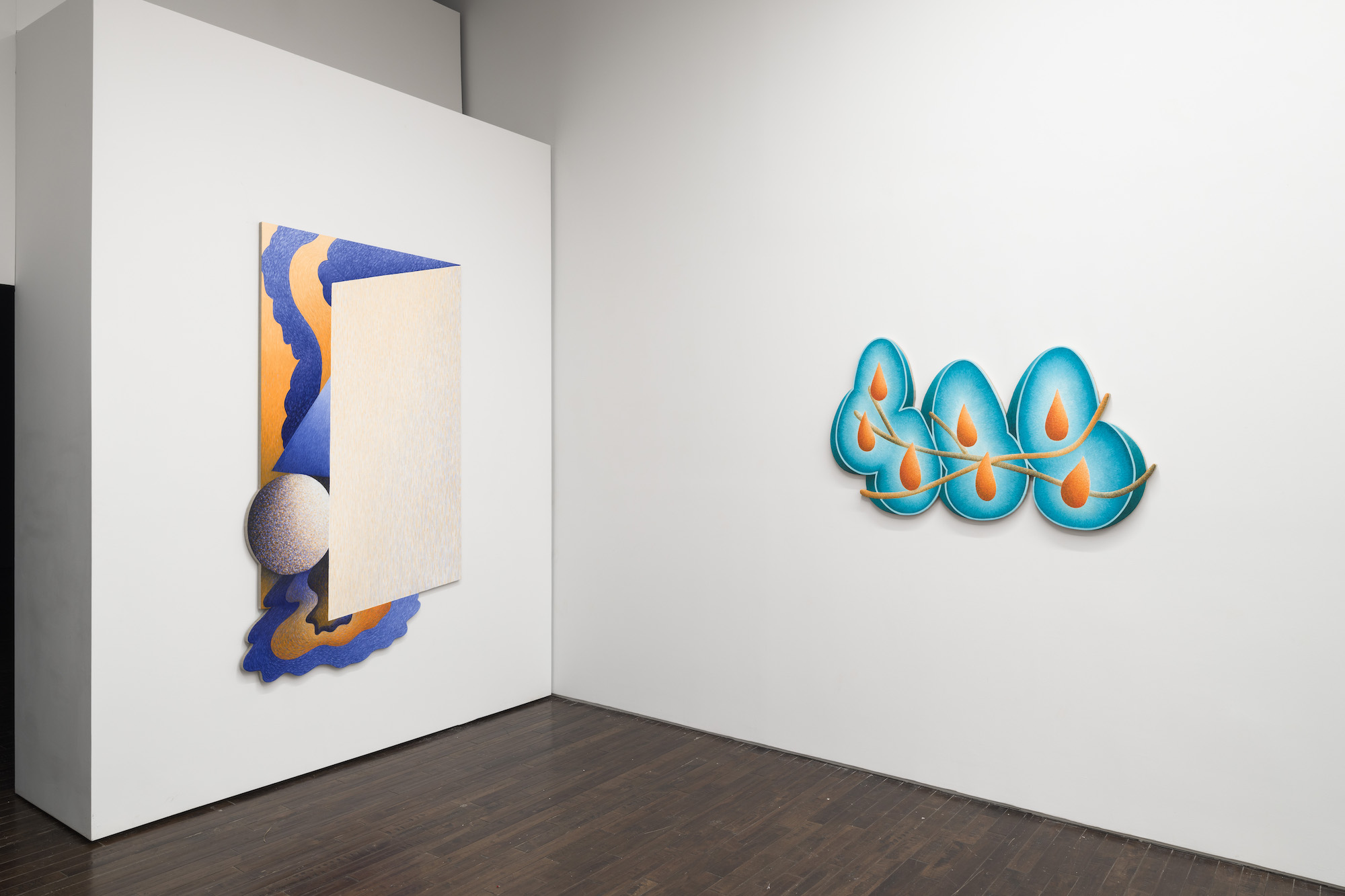 Installation view, Debbi Kenote, No place out of the wind, Cristin Tierney Gallery 2026, JSP Art Photography
What does your process look like from start to finish?
My process begins with poetry and ends with shaped painting. When I begin a new painting series, I start by interpreting a selection of my poems into drawings. I then experiment with cutting the paper into unusual shapes, as I brainstorm what the final shaped canvas will be. From this point I begin to build the strainers, using a mixture of CNC and hand-tooling. Once I’ve stretched the linen, I begin working on the surface in oil paint. The brushwork in the paintings both reflect and expand upon the mark making in the drawing.
I understand handmade components are part of your practice and give the paintings a sense of objecthood. Which elements are handmade, and how do they factor into the works in your current show?
Until very recently, I made all of my shaped strainers with traditional woodworking techniques. In No place out of the wind, I wanted to push the work into more complicated and whimsical territory. To achieve this, I settled on a blend of CNC routing for the complex curves and more traditional woodworking methods for the rectilinear forms, which I then stretched linen over. I am very interested in preserving the scissored gesture of the initial cut paper shape, and I was able to digitally build this quality into any machining I did. I’m really pleased with the final result.
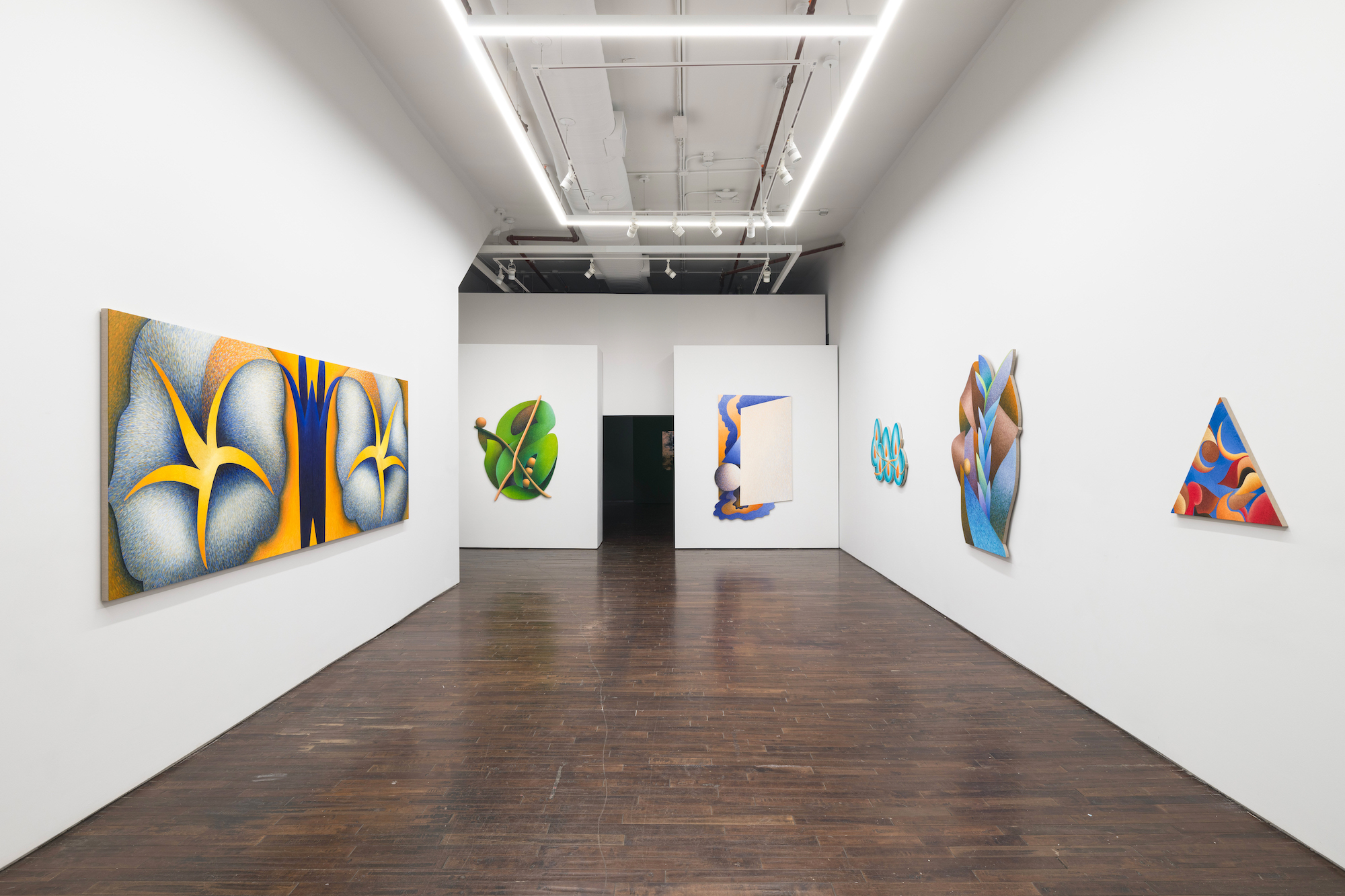 Installation view, Debbi Kenote, No place out of the wind, Cristin Tierney Gallery 2026, JSP Art Photography
Your use of color in No place out of the wind is striking and appears to have a highly controlled application. How do you approach color in your practice, and what role does it play in shaping the work?
Thank you! I am certainly a bit of a color nerd. In general, I’m drawn to cooler-palettes, which I attribute to growing up in the Pacific Northwest. The northern latitude produces a cooler light, especially in the winter months. I am particularly fond of vibrant, natural palettes. I visit my family in Washington State twice a year, and each trip I am struck anew by a bright fern in the woods or a sparkling frost at dawn. There’s a moodiness to this landscape that I think pairs well with my poetry, and I try to capture it with paint.
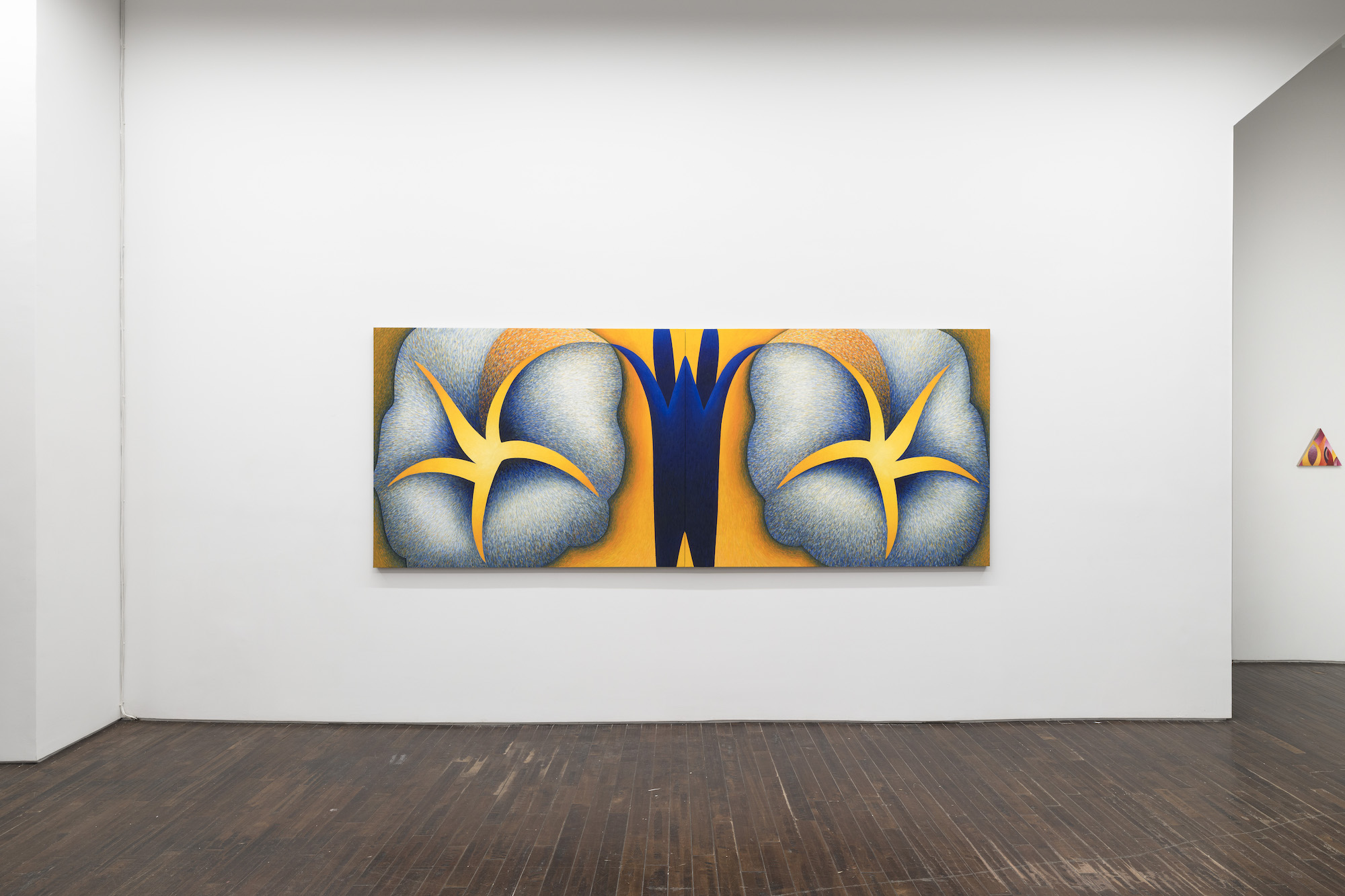 Installation view, Debbi Kenote, No place out of the wind, Cristin Tierney Gallery 2026, JSP Art Photography
What references or source materials inform the works on view in the CTG exhibition?
No place out of the wind is an exhibition of works I created while meditating on the importance of shelter. The last three years have been filled with upheaval in both my personal life and the world. These paintings reference the raw, vulnerable facets of a journey through the elements. The title is excerpted from an Annie Dillard essay, where she shares a parallel experience of exposure and reflection. The writing of Dillard, along with Garth Greenwell and Lidia Yuknavitch, were foundational references for me as I translated my own personal experience through the lens of abstraction and natural metaphor.
Which, if any, artists or poets inspire your work?
I’m sure it is no surprise that I am deeply moved by Elizabeth Murray’s legacy. As I’ve ventured deeper into shaped painting, I’ve continued to find new inspiration in her practice and story. Other makers who explore non-traditional wall based works that are important to me include Sam Gilliam, Alan Shields, and Judy Pfaff. With poetry, I keep coming back to Naomi Shihab Nye in particular. While making this work I also read two long-form poems: The Narrow Door, by Paul Lisicky and Gabriel, by Edward Hirsch. Both these writers articulate their journeys with grief in a potent, visual way.

WM
Whitehot writes about the best art in the world - founded by artist Noah Becker in 2005.
view all articles from this author