Whitehot Magazine
October 2026
"The Best Art In The World"
"The Best Art In The World"
October 2026
Collector Jeff Magid in conversation with Margherita Artoni. The Art of Looking.
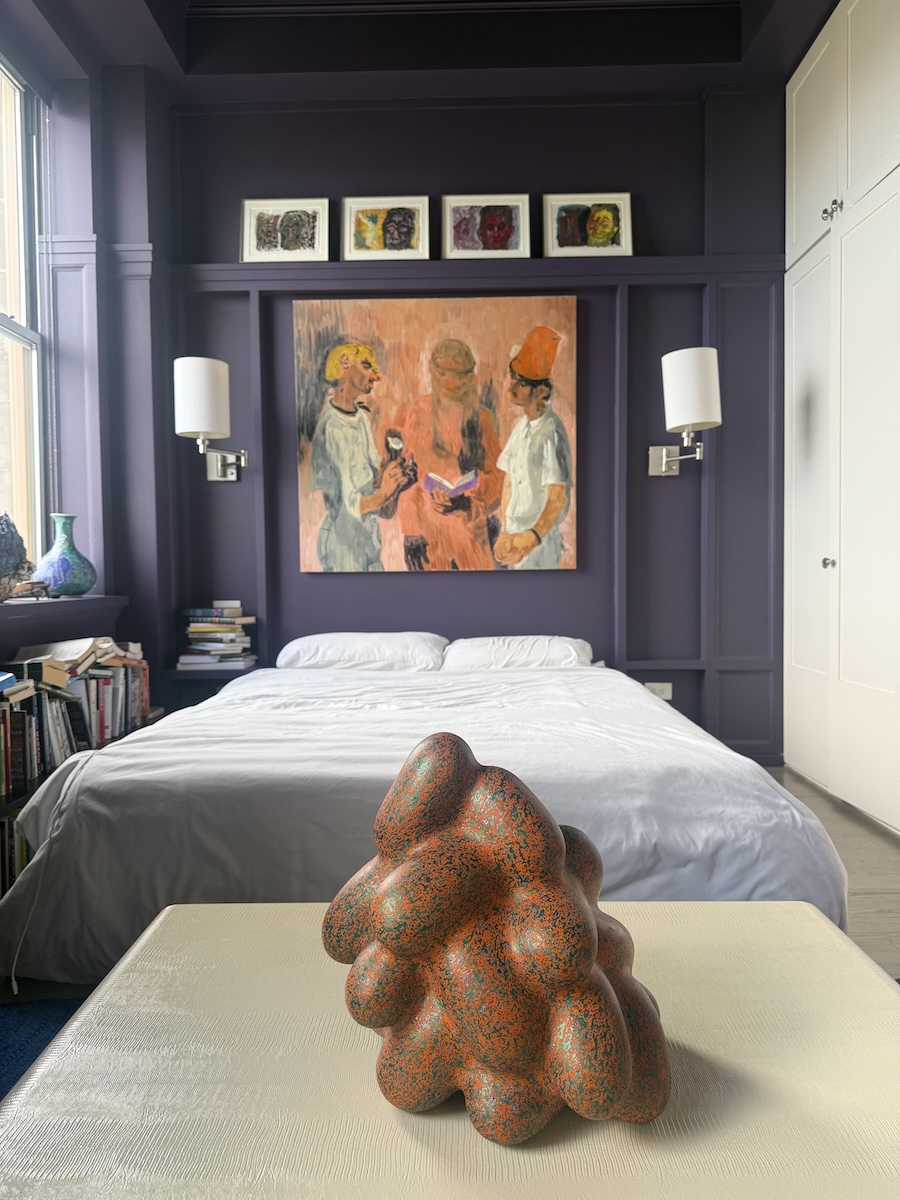 Photo courtesy ®Jeffrey Magid
By MARGHERITA ARTONI October 2, 2026
Collecting art is a way of developing a personal language of looking. A first encounter can evolve into a constellation of artists, images, memories, and intuitions. Over time, the relationships between works reveal affinities, recurring gestures, unexpected connections, and ideas that cross generations.
Jeff Magid’s collection brings together contemporary artists and works from earlier periods. These different moments in art history create unexpected resonances, allowing gestures, sensibilities, and visual ideas to travel across time. The act of collecting also becomes part of everyday life. Works enter a personal environment and acquire new associations through repeated encounters. A collection can become a record of the ways a person has learned to see.
Magid’s work as a musician adds another dimension to his relationship with visual art. Rhythm, atmosphere, physicality, and memory operate across sound and image. His experience unfolds within a cultural landscape where art, music, fashion, and moving image increasingly intersect.
In this conversation, Magid reflects on the origins of his collection, his relationships with artists, the dialogue between different periods of art history, the physical experience of artworks, and the connections between sound and image. The conversation closes with a question of time and inheritance.
Margherita Artoni (MA): Every collection has a first encounter. What was the first artwork you acquired that made you understand you wanted to become a collector? Looking back, what does that choice reveal about the way you collect today?
Jeffrey Magid (JM): The first artwork I bought was by Slater Bradley, who was kind enough to invite me to an artist's poker game, his studio and my first art opening. I still live with it and love it. But at that time I still couldn't have imagined being a "collector." I just felt fortunate to be included at all.
The first painting from a gallery was by Henry Taylor. Even then I didn't imagine continuing, I just felt lucky to be living with art.
One early artwork where I realized I was going to go deeper was when I bought a piece by Sterling Ruby. It was one of the first artworks that was by an artist I hadn't yet met, I just admired. I spent time looking at his shows online and reading interviews about the different aspects of his work. Finding art that I learned about for no other reason than my curiosity, that was when I realized something was different.
MA: Over time, a collection begins to tell a story about the person who built it. What do you think your collection says about you?
JM: It’d feel self-aggrandizing to ascribe any big attribute to myself. An art collection speaks for itself and tells its own story. Not only in the vision of the artists and the meaning of the artworks, but in the stories of how they were collected.
It's one thing I like about having a public home for it at Cuernavaca 3. I'm not that into chest thumping, but sometimes the conventions of the art world ask for it: "What's in your collection?" "Why is it important?" Early on in collecting I remember being asked these often.
Instead of having to say "I was an early collector of __ in the year___" and "I made a great decision to buy a ___ before she was appreciated by museums," I'd rather just say: come see the collection, it's all right there. The collection is public, and every decision, every show or sale each work comes from is public too. So you can decide.
Otherwise if I had to guess what it says about me is: I'm curious.
MA: When you encounter a work for the first time, what makes you feel that you need to live with it? What happens in the space between what the artwork reveals and what remains unsaid, and how much of that space is filled by the person looking at it?
JM: It’s a visceral reaction that's hard to put into words, a feeling that jars you. But that feeling is informed by everything you've seen before, everything you've read and been told and thought about. It's partly why I go see so much art. The more I see and think about, the more I know how I feel when I see it. That's why I recommend to people the best way to learn is to both go see a lot of art, and constantly be asking yourself what you think of it-what makes something great to you.
So much of the meaning of an artwork is made by the viewer, and I think that meaning can change. It's one of the great things about actually owning and living with art. It gives you the chance to have a relationship with a static visual artwork that evolves over time. That might be why I'm drawn to artworks that leave room not only for interpretation in the moment, but also continued interest and deepening understanding. My favorite artworks (and books, and songs!) are the ones that I keep coming back to and finding something new.
MA: How important is your relationship with the artists themselves when you acquire a work? How does knowing the person behind the work shape your experience of it over time?
JM: It was artists who got me into the art world and showed me the way. So for the first part of my time collecting I only collected art by people I knew. My recommenders and advisors were artists referring other artists. I've loved getting to know the artists I've met from then until now, and learned so much from each of them as people.
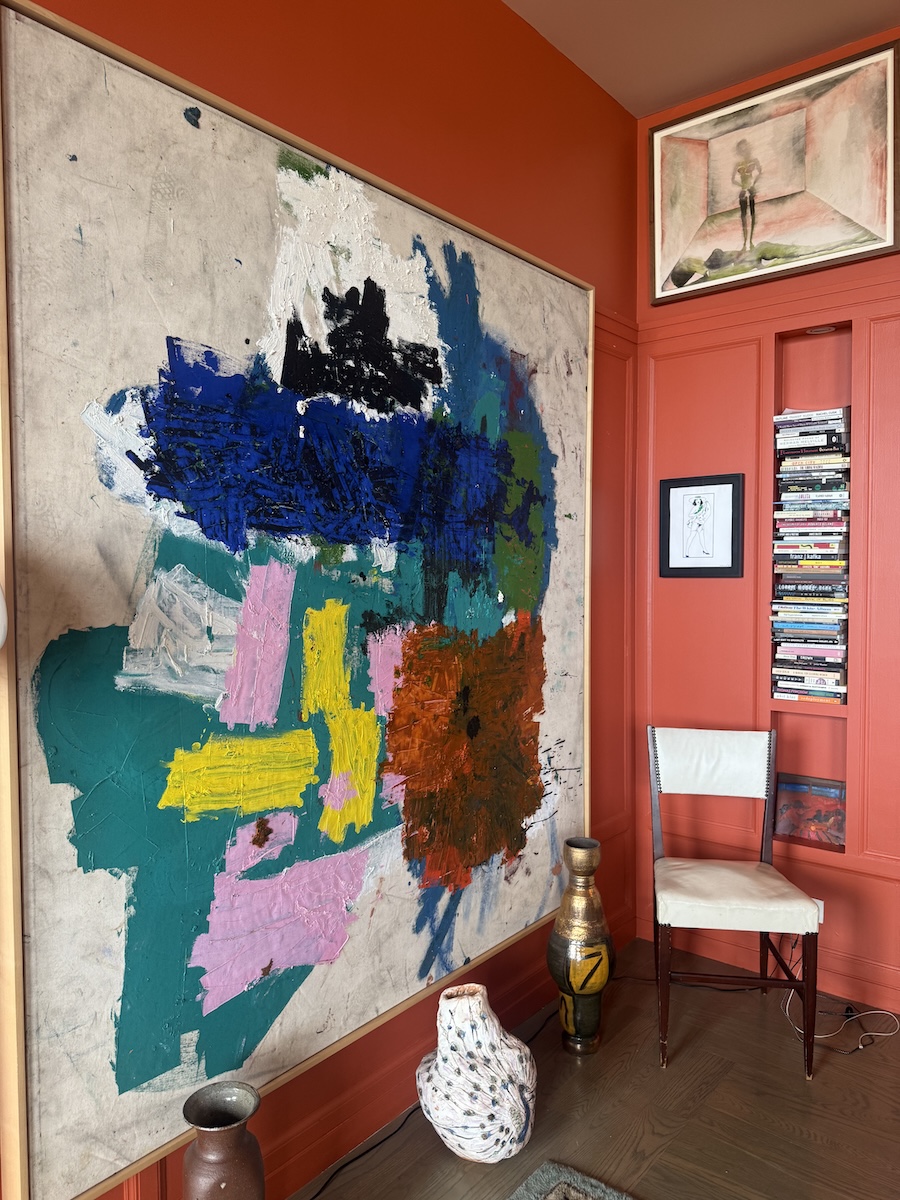 Photo courtesy ®Jeffrey Magid
That said, I'm also glad to buy art by people I've never met, even ones who were dead long before I was even born. Whether it's a good friend who I go have a beer with, or a painter from the 1600s, my relationship with the art in my home is really with the artworks themselves.
MA: Contemporary artists and Old Masters coexist in your collection. What kind of dialogue emerges between works separated by centuries? Are there gestures or sensibilities that you recognize as part of a shared visual history?
JM: I want to show that Old Masters and contemporary art can live well together. But before I started doing it, even I wasn't sure. In the past there weren't many people who were truly into both, and of those few they mostly had things separated: "this is our Old masters study, the new art is in the living room"
But once I started it felt so natural that I wondered how I ever doubted it. Partly that's because artists themselves aren't time-rigid in their thinking. Salman Toor's painting from 2023 looks cool next to Hendrick Avercamp's painting from 1625 because Toor isn't just inspired by today's images, he also looks at Dutch Masters. And in turn it shows how Avercamp's scene of daily life still feels contemporary.
Jennifer Packer's painting from 2025 hangs well next to Edouard Vuillard's from 1890 because French 19th-century painting is also part of Packer's lexicon. The artists wouldn't be categorized in the same way, but the paintings themselves have a lot in common: two geniuses of painting figures bathed in light.
MA: What has looking closely at Old Masters opened up for you as a collector? Has it changed the questions you bring to contemporary art?
JM: So many things. An appreciation of technique and craft, passed on from master to apprentice.
A recognition of what lasts. How something can continue to be visually interesting even beyond the time and context in which it was made.
And also the possibilities out there for collecting. Right when I started to really get the hang of contemporary art, I threw myself into a new field that I had no knowledge of at all and started learning. It's a reminder that there are always more chances to be a beginner. For me the joy is in the learning process and the discovery.
So it has changed what I bring to contemporary art in a lot of ways. Asking what will last, what is truly well made, what speaks about its time and beyond.
It also makes me ask what's possible at each price point, because Old Masters are still affordable overall when compared with hot contemporary art. There have been moments where gallery prices for very unproven artists got totally out of hand. I questioned it and was told: "that's the way it is now, you just have to buy in and accept it." Knowing now about old masters I thought: "You know what, I don't have to just accept it. I'm going to buy an amazing old master painting for the same amount." And I did.
MA: At a time when almost any artwork can be experienced through a screen, what does it mean to physically own an artwork? What does its material presence make possible?
JM: I think for this reason that I'm more and more drawn to artworks that are especially physical and textural and human. I love ceramics and the forms and shapes of small-scale sculpture. And painting that has gesture and paint impasto and the imperfections of the artist's hand. To appreciate these things you really have to be there.
Paintings and drawings like that really do have aura. And ceramic sculpture, like Ken Price or Magdalena Frimkess (two of my favorites) you have to see in person to understand the surface and dimensionality. I think in an age where more and more things are on screens and AI-generated slop, these intensely physical and human encounters with art will be even more appealing.
MA: You are a musician as well as a collector. How does the way you listen influence the way you look at art? How does your experience with visual art enter into the way you make music?
JM: I’m just going with what moves me. In music sometimes it's not about talent or technique, it's something you just feel, the translation of emotion. Reading interviews about this with Francis Bacon shaped the way I think about writing and music.
I've learned through making music, writing, and speaking that making and responding are totally different things. Now with music and art I've been on both ends. As a maker you're not in control of the response. I just do my best, make what I believe in, then put it out in the world. People will respond how they respond. I've learned through music and public speaking how to be vulnerable in my creative work while having thick enough skin to take what people throw back.
As a responder it's the same thing, I've learned in songs, novels, or paintings, the meaning isn't just up to the maker. It might have been something else to me when I wrote it, but now it's a love song to someone listening to it in their car. It's the same as I share and talk about art. The meaning is also what we all make it.
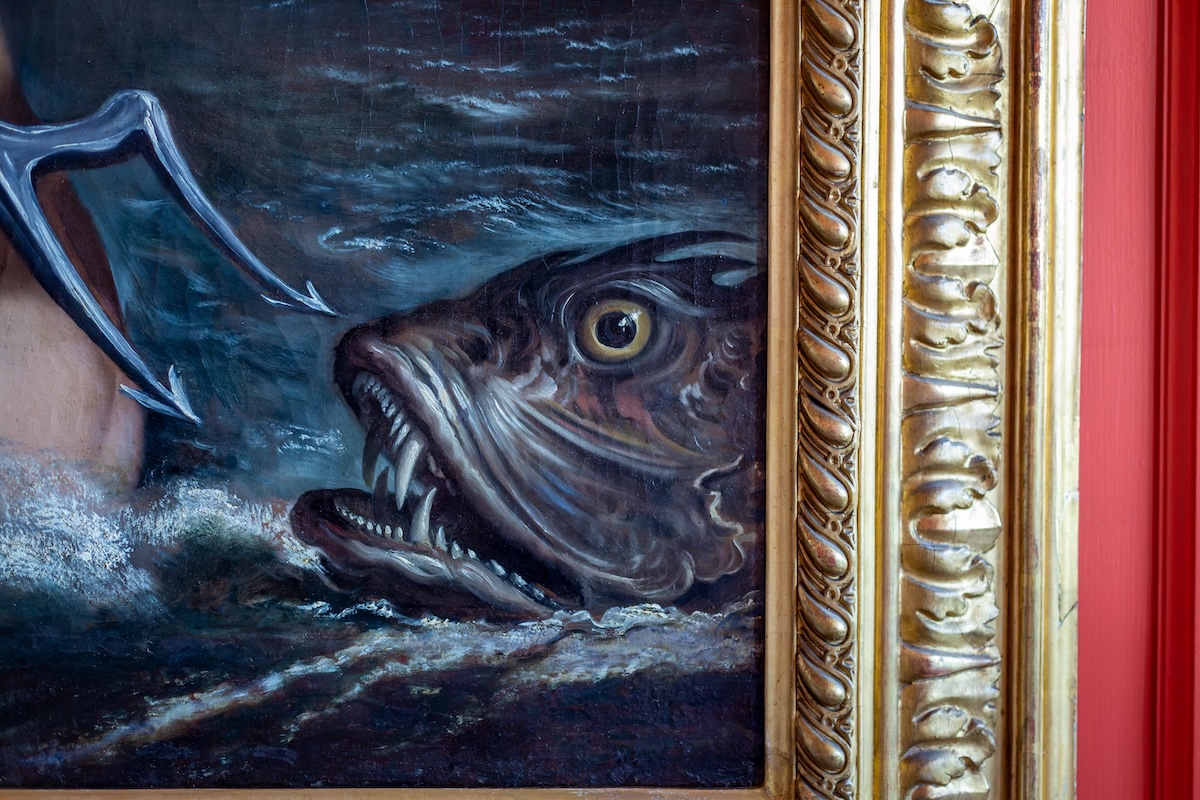 Photo courtesy ®Jeffrey Magid
MA: Art fairs are places of constant movement and stimulation. Can you slow down within that environment and give a single artwork your full attention? What allows a genuine encounter with a work to happen there?
JM: Movement and stimulation can be great if you have a plan. Often I go in planning to see a specific set of things and remind myself to really look at them. Along the way I try to shut everything else out so I can focus.
Then I also take some time where my plan is to have no plan. Just wander, look, take it all in and see what stands out to me. I see art fairs as a great place to learn just because there is so much art of so many kinds.
But the truth is most of the encounters I have at art fairs are with people. I run into people I know, say hi, catch up for a moment. It's hard to avoid small talk without being rude, so they aren't always the most "genuine encounters." But art is as much about people as anything else. I love learning from friends and sharing ideas. So if I've managed to see a few things I planned, strolled aimlessly, avoided endless air kisses and had a few conversations about art... that's a good fair to me.
MA: Do you feel a responsibility in owning something that will outlive you? What does it mean to live with works that may continue their lives long after yours?
JM: One of my mottos is "great art for everyone." Part of that is doing whatever I can to make sure the art I believe in can be seen by the public. So each year I continue to give artworks to the Met, MOCA LA, ICA Miami, LACMA and other institutions.
Even if the art will outlive me, I don't plan to hoard it all untill I die. By then I hope to have put it on view to the public at Cuernavaca 3 and given it away to other museums.
I do think it's moving to live with art that has had a long life and been places before me that I've never been. Provenance is fascinating, and I feel lucky to be a stop along the way for artworks that have been around 500 years. They've had many lives before me, and will have more once I'm gone. I do my best to be the last stop before they belong to everybody. WM
Margherita Artoni
Margherita Artoni is a contemporary art critic and curator working between Italy and the United States. She began her career collaborating with Flash Art and currently writes for Segno, Juliet, Artribune, Exibart, Inside Art, ArteIN, part of cult(ure), The Art Fuse, and Whitehot Magazine.
She has directed galleries in Turin — including NEOCHROME and EDGE Art Space — and in New York at TEAM Gallery. Her curatorial work has included exhibition programs with international artists such as Rashid Johnson, Theaster Gates, Ali Banisadr, Angel Otero, Tim Rollins & K.O.S., Laura Owens, and Mika Tajima.