Whitehot Magazine
October 2026
"The Best Art In The World"
"The Best Art In The World"
October 2026
The Psychological Spaces: Mitchell Johnson and the Strange Reality of Truro
By Luke Biskupski September 4th, 2026
Some places seem suspiciously willing to become paintings. And it's not necessarily because of their pure aesthetic beauty, but because they can offer a deeper look into the human psyche than a portrait sometimes could.
Of course, they still have all the elements that make up a view worthy of a painting. But what's more important is that they can reveal a truth about people, rather than simply about the scenery.
For the remainder of this essay, I'm going to call them Psychological Spaces.
By design, they depict a place or environment that, by itself, evokes feelings and reveals a specific, subjective worldview without the need for unnecessary objects or human expressions. They're basically mirrors of our subconscious desires, longings and memories.
If you think about the phrase you become who you surround yourself with, something similar happens with the places where you spend your time. When you travel somewhere foreign, you basically meet someone new. Some places give you comfort and peace; others give you anxiety. You build a relationship with a place much like you do with another person. That's why visiting your childhood home can feel like travelling back in time, almost like meeting an old friend. Because as we change, the places change too.
I recently came back from Venice, a city especially close to my heart, and as soon as I arrived, I remembered a very particular feeling. It felt as if the world had stopped spinning, and I was the only one who hadn't. Once you leave the crowded alleys and walk a few streets deeper, you begin to see nothing but traces of people. The smell of laundry hanging from one window to another. A single plastic chair standing beside a flowerpot. A rusty door handle.
And as I walked down the alleys leading into empty piazzas, I didn't see anyone. Still, I felt as though I was in conversation with thousands of people at once.
This conversation with a place is exactly what we find in the paintings of Mitchell Johnson, an artist who has been painting the landscapes of Truro since he first arrived there in 2005. Much has been written about the comparisons between Mitchell and Edward Hopper, but here I think a more revealing comparison can be made with the great Italian painter Giorgio de Chirico. Both share an interest in spaces that are void of people, yet somehow crowded with their absent presence.
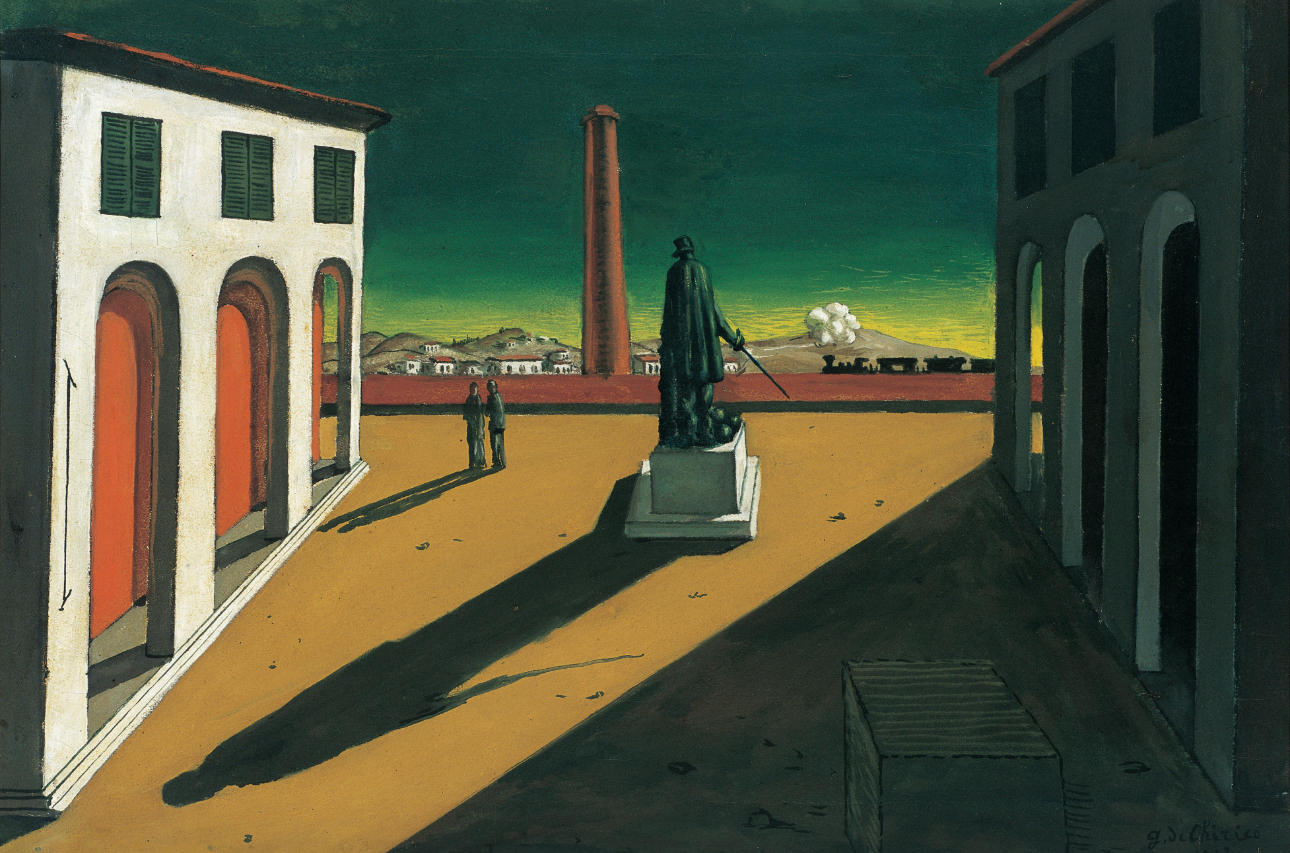 Giorgio De Chirico “Piazza,” 1913 20x30 inches, oil/canvas © 2026 Artists Rights Society (ARS), New York
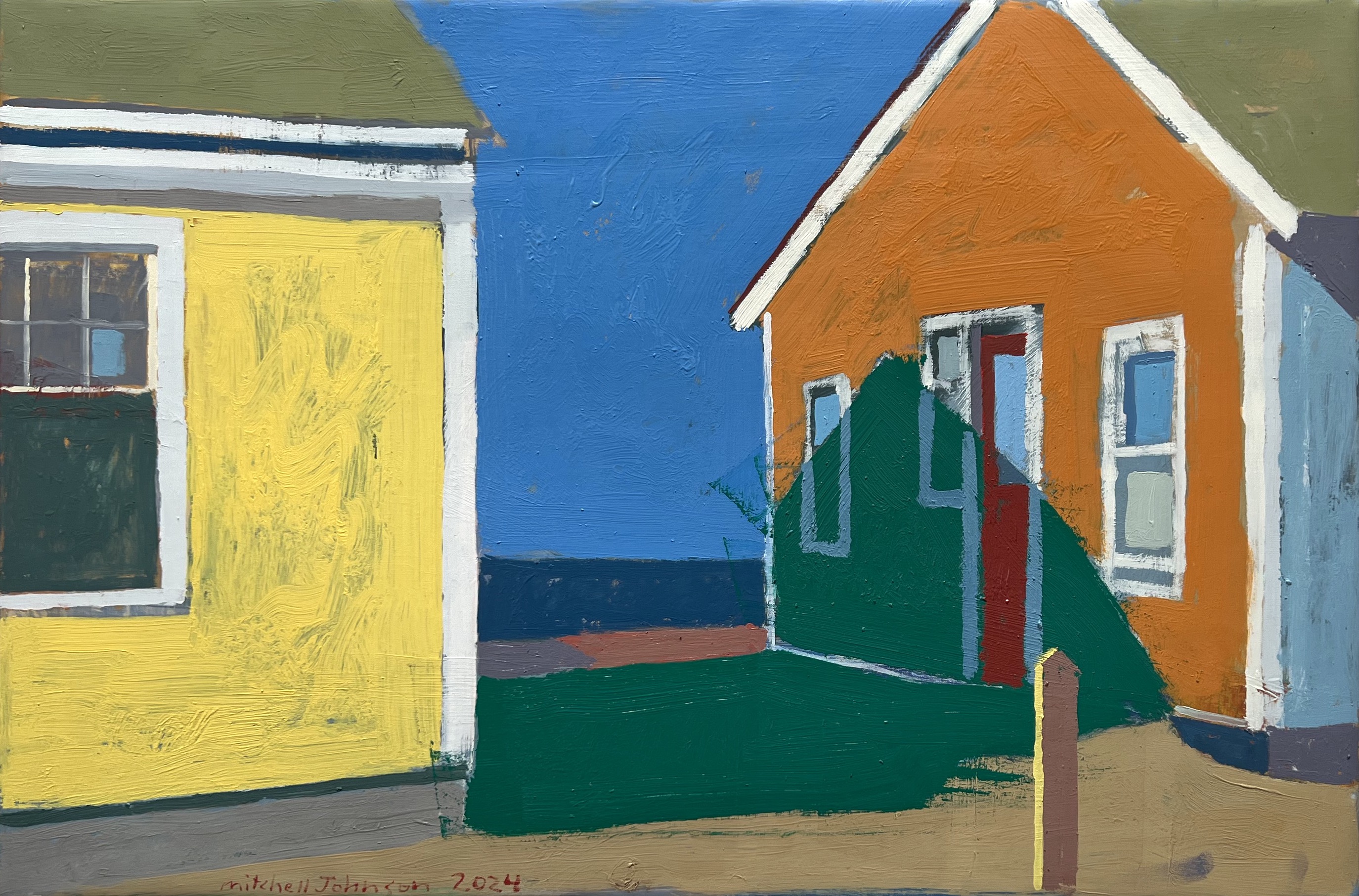 Wind and Wave (Red Door), 2024 20x30 inches oil/linen. Private Collection. © 2026 Mitchell Johnson.
It's not necessarily a deliberate choice for Mitchell to paint this way. He told me himself that he never thought he would create psychological paintings. But the special thing about art is that its meaning is not always entirely up to the artist's intentions.
De Chirico's work would later become foundational to Surrealism, a movement that made great efforts to move beyond consciousness and logic in search of something deeper. The Surrealists believed that by doing so, meanings could emerge that rational thought alone could never produce.
This matters because the intellect can play tricks on us. What's beautiful about the paintings made in Truro is that they offer an honest, subjective depiction of an environment rather than an objective one.
If you think about it, an objective painting may not really be possible at all. There are always parts of a painting that an artist prefers to work on more than others. Certain shapes receive more attention. Certain colors become more important. Certain details disappear altogether. Put these decisions together and they begin to form a subjective worldview.
In the case of Mitchell's Truro paintings, they form a register of twenty one years of looking.
Look at some 2003 works from Bornholm painted before the Truro trips began. You'll find children playing on the beach and people resting. Mitchell's interest in simple shapes and striking color is already visible, but as the years pass, fewer and fewer people appear in his work. Instead, his attention shifts toward shapes, the play of light and shadow, and his signature merging of reality with abstraction.
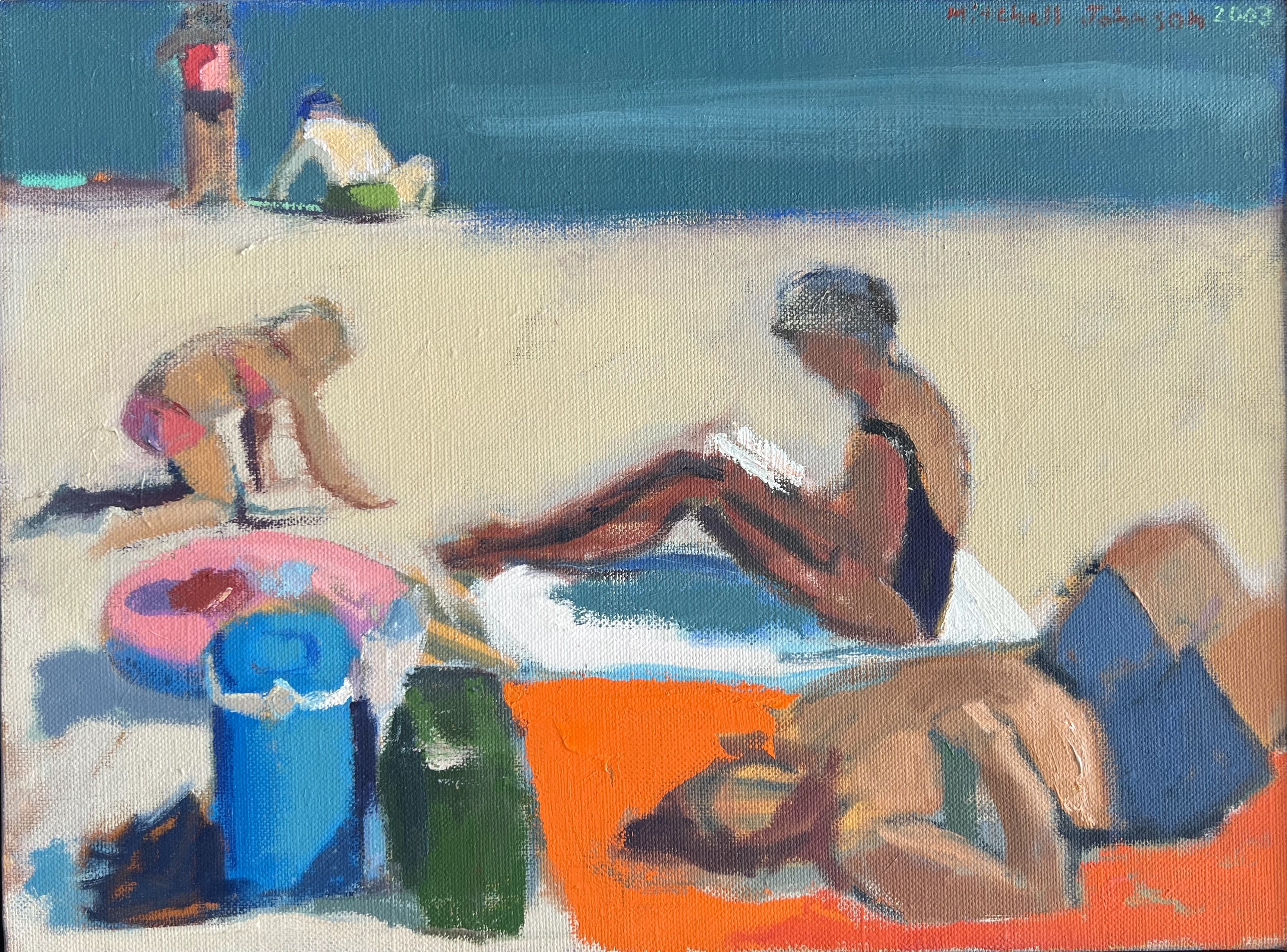 Family (Cooler), 2003 12x16 inches oil/linen. Collection Bornholms Kunstmuseum. © 2026 Mitchell Johnson.
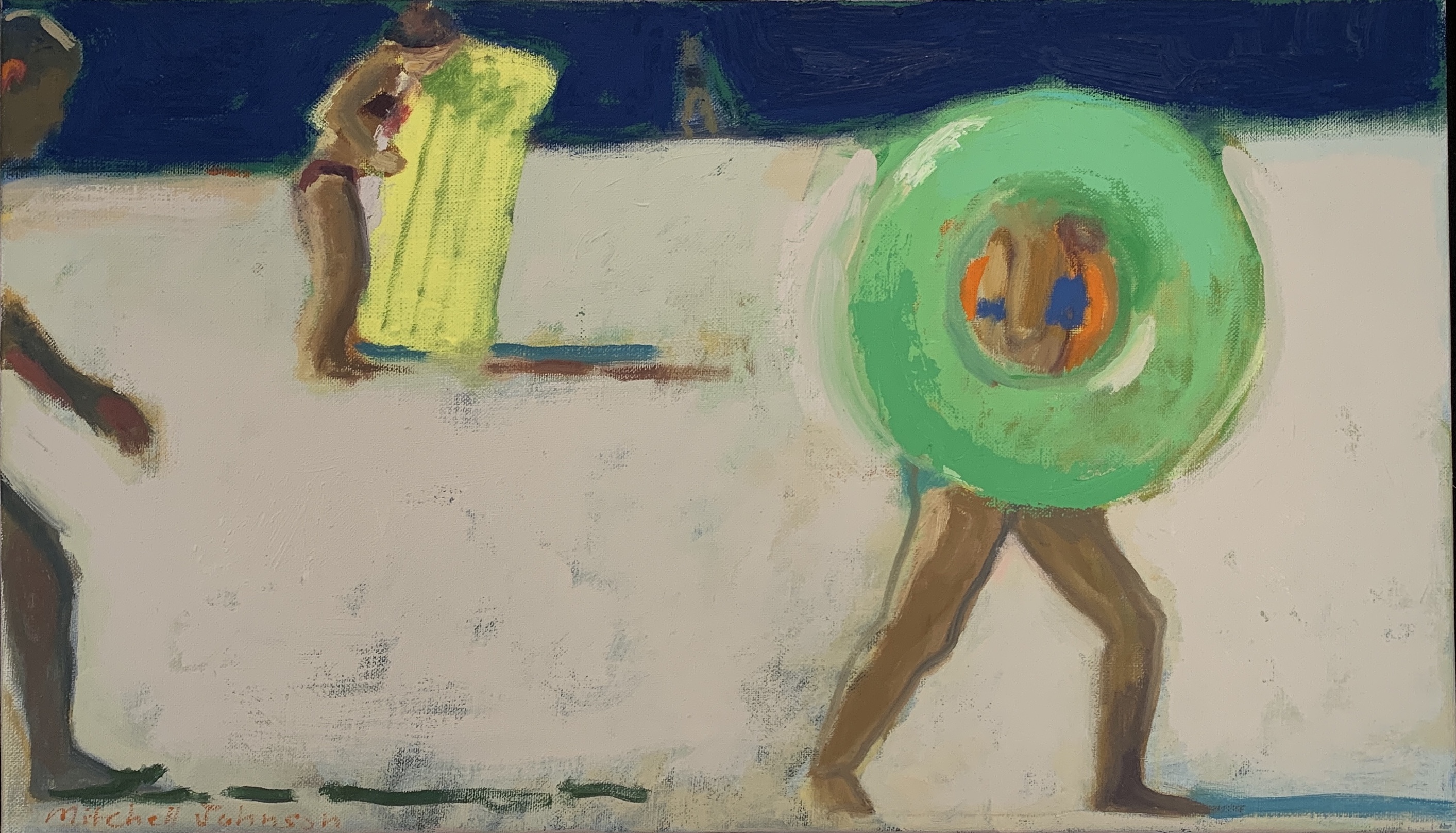 Bornholm (Yellow Raft), 2003 16x26 inches oil/linen. Private Collection. © 2026 Mitchell Johnson.
That brings up another interesting question: what happens when abstraction begins to feel more real than reality?
If you go back a couple of thousand years, all the way to cave paintings, you could argue that primitive art offers one of our earliest examples of abstraction. These artists didn't attempt to depict people or their faces realistically. Figures served as symbols that could be understood without the need for greater detail.
Detail, in itself, doesn't necessarily bring us closer to the truth. It gives us room for more intellectual symbols and context, as we can see in Dutch painting of the 17th century, but it can also strip away the purity of form.
It's no coincidence that Mitchell took inspiration from another Italian master, Giorgio Morandi. Morandi's simple shapes emerged from an intense study of form, color relationships and composition, leaving us with something close to the purest interpretation of the object.
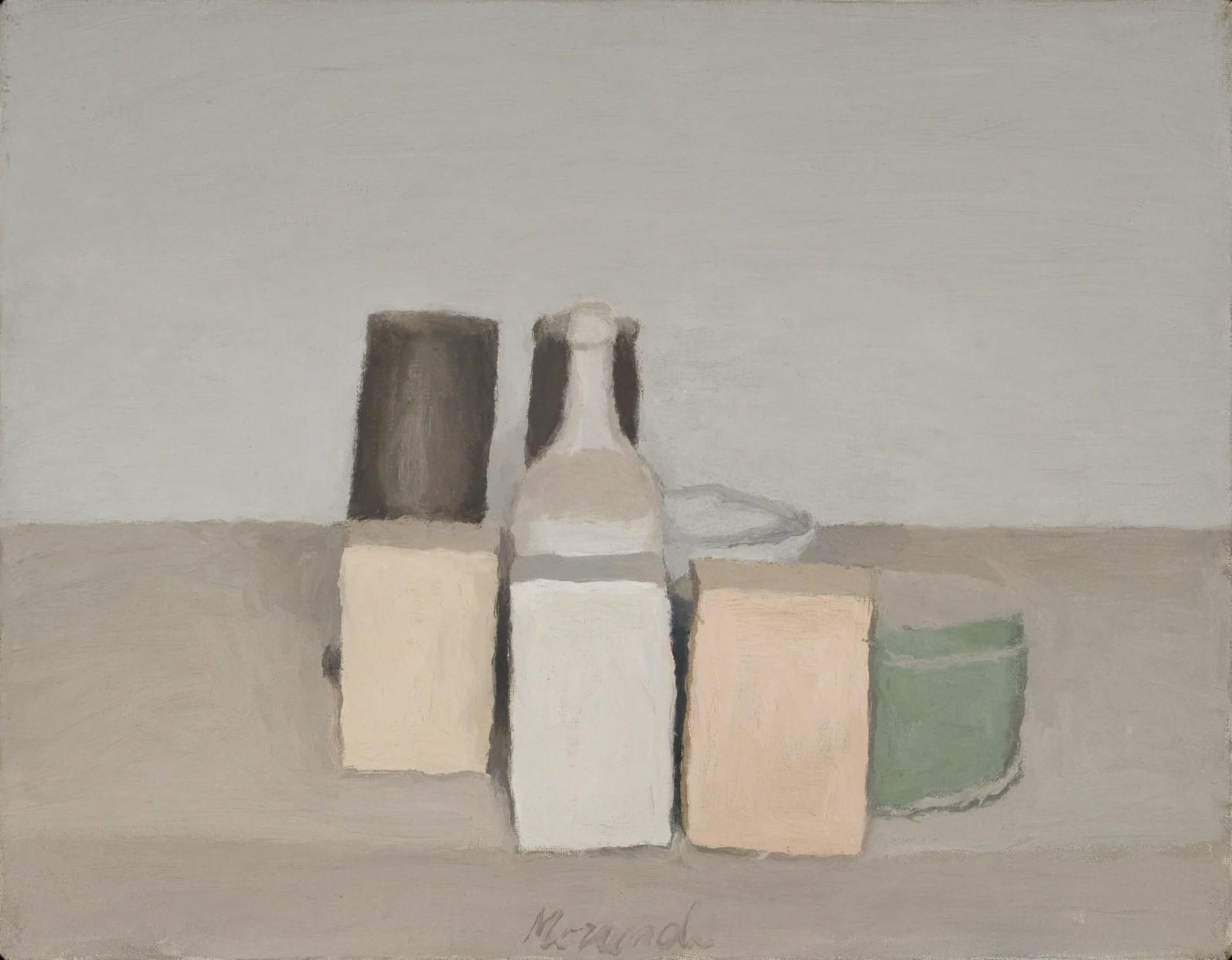 Giorgio Morandi “Natura Morta,” 1956 14x18 inches, oil/canvas © 2026 Artists Rights Society (ARS), New York
This simple, abstract approach gives us another important idea: it forces us to see what the artist saw.
If someone asked us to imagine a composition of bottles on a table, we'd all picture something different, but each image would probably remain a vague representation of the scene. One bottle might be a little taller, another might have a label. The real challenge would be to imagine the composition in a simplified way, because then it becomes a truly one of a kind image. Our focus shifts from depicting to feeling.
Something so simple can demand the highest level of mastery.
This is also why repetition becomes so important. Mitchell's work, much like Morandi's or Monet's, is the result of decades of observation. While a photograph gives us information and a traditional landscape painting can give us a convincing likeness, Johnson seems interested in something slightly different: the sensation of being somewhere. The way light changes the temperature of a wall, shifting our perception of every colour around it. Or the way sea and sky blend together, creating the illusion of infinite space.
Monet repeatedly painted the façade of Rouen Cathedral under changing conditions; Morandi returned again and again to the same modest bottles and boxes. In both cases, repetition was not redundant. It was a method of seeing.
Johnson seems to have found something similar in Truro. The same landscape can keep producing new paintings because our perception of the subject keeps changing.
This is where his paintings begin to acquire a strange psychological quality.
Some of the more recent Truro paintings - including Wind and Wave, North Truro (Red & Yellow) and Corn Hill - bring to mind the spaces of Giorgio de Chirico. Like de Chirico, Johnson takes an ordinary, recognisable environment and gives it an uncanny sense of stillness. Architecture, objects and empty stretches of space begin to feel less like elements of a landscape and more like actors on a stage - carefully arranged, strangely isolated and charged with psychological presence.
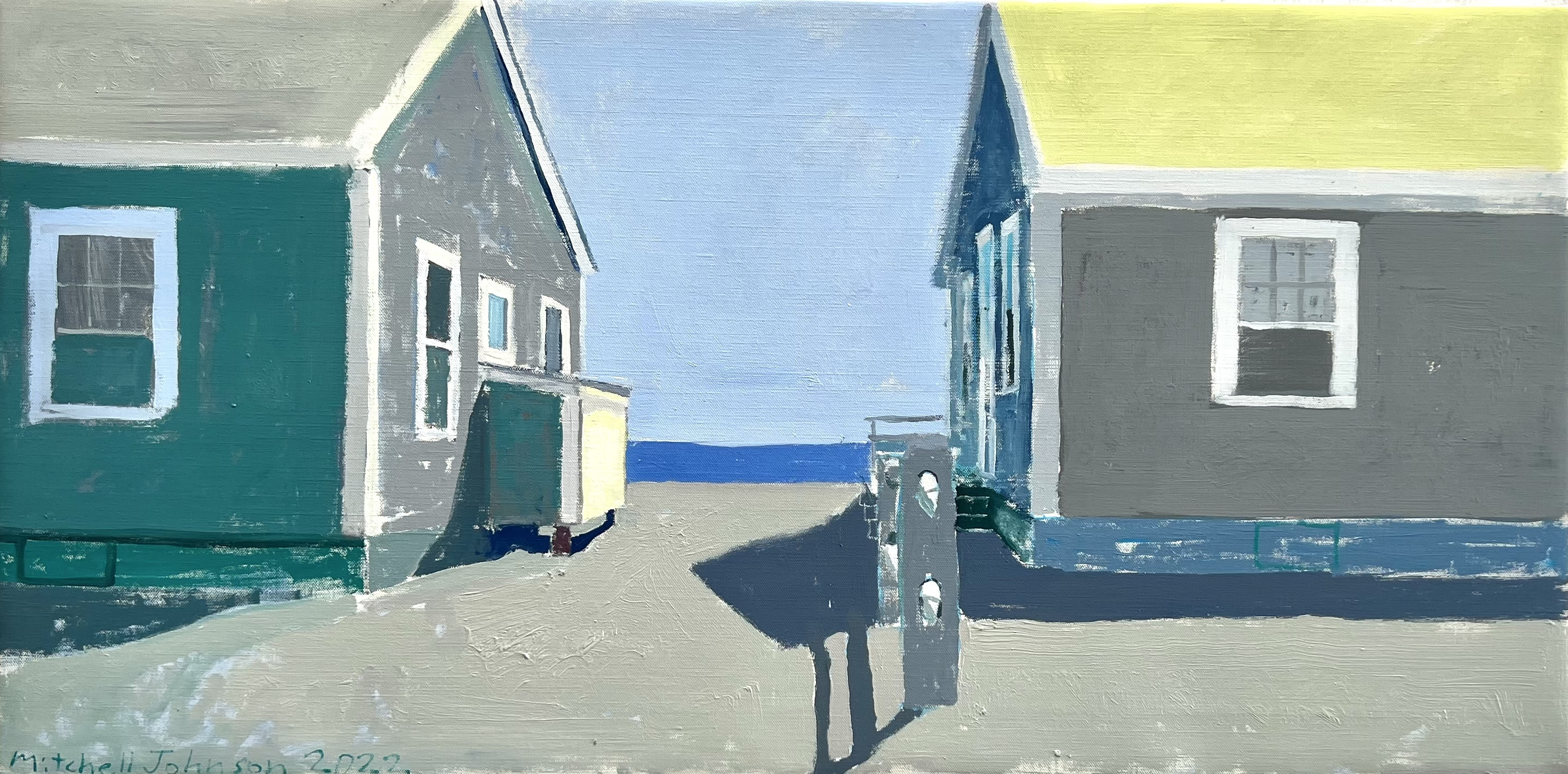 Wind and Wave, 2022 18x36 inches, oil/linen. Private Collection. © 2026 Mitchell Johnson.
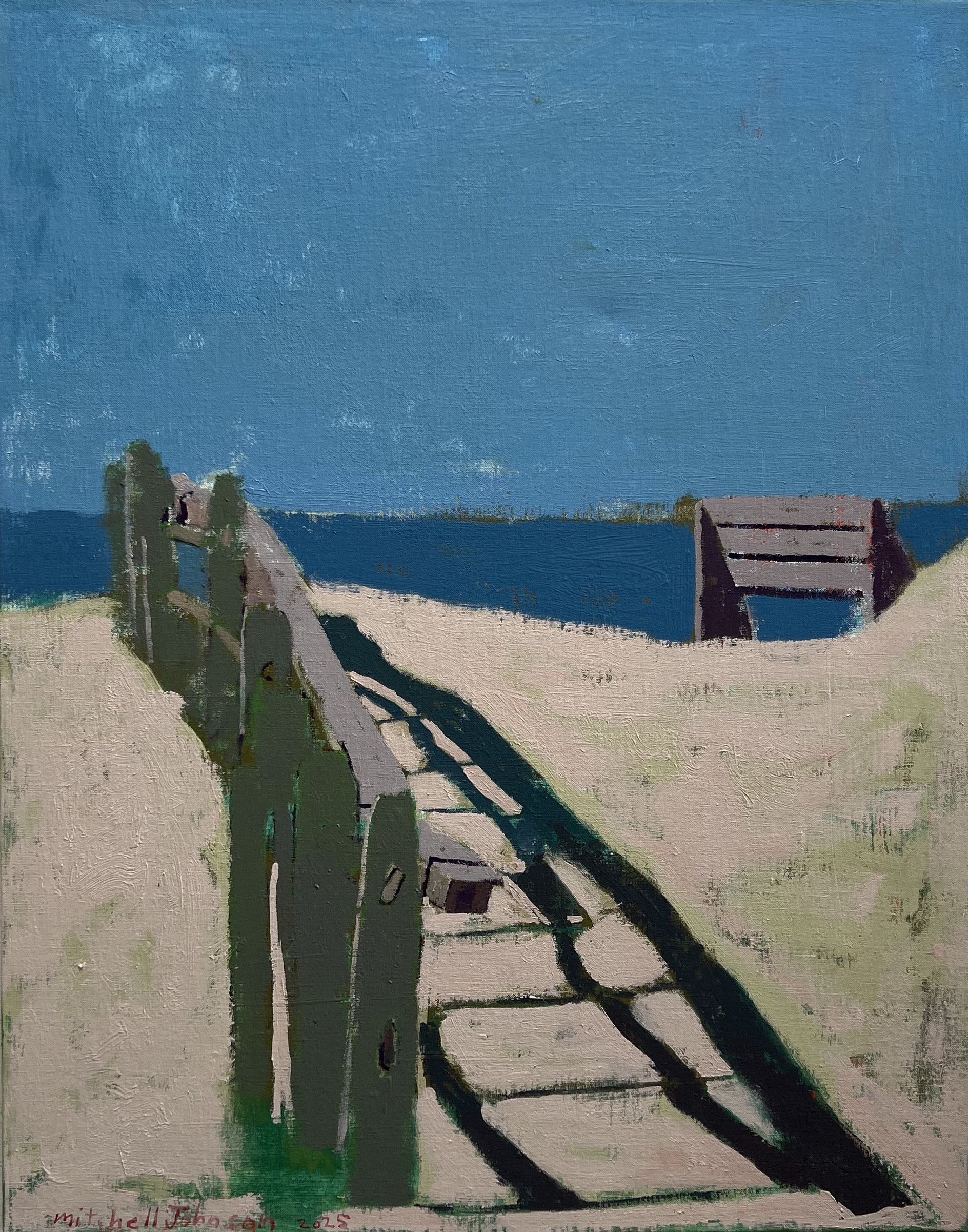 Corn Hill (Albers), 2025 38x30 inches, oil/linen. Private Collection. © 2026 Mitchell Johnson.
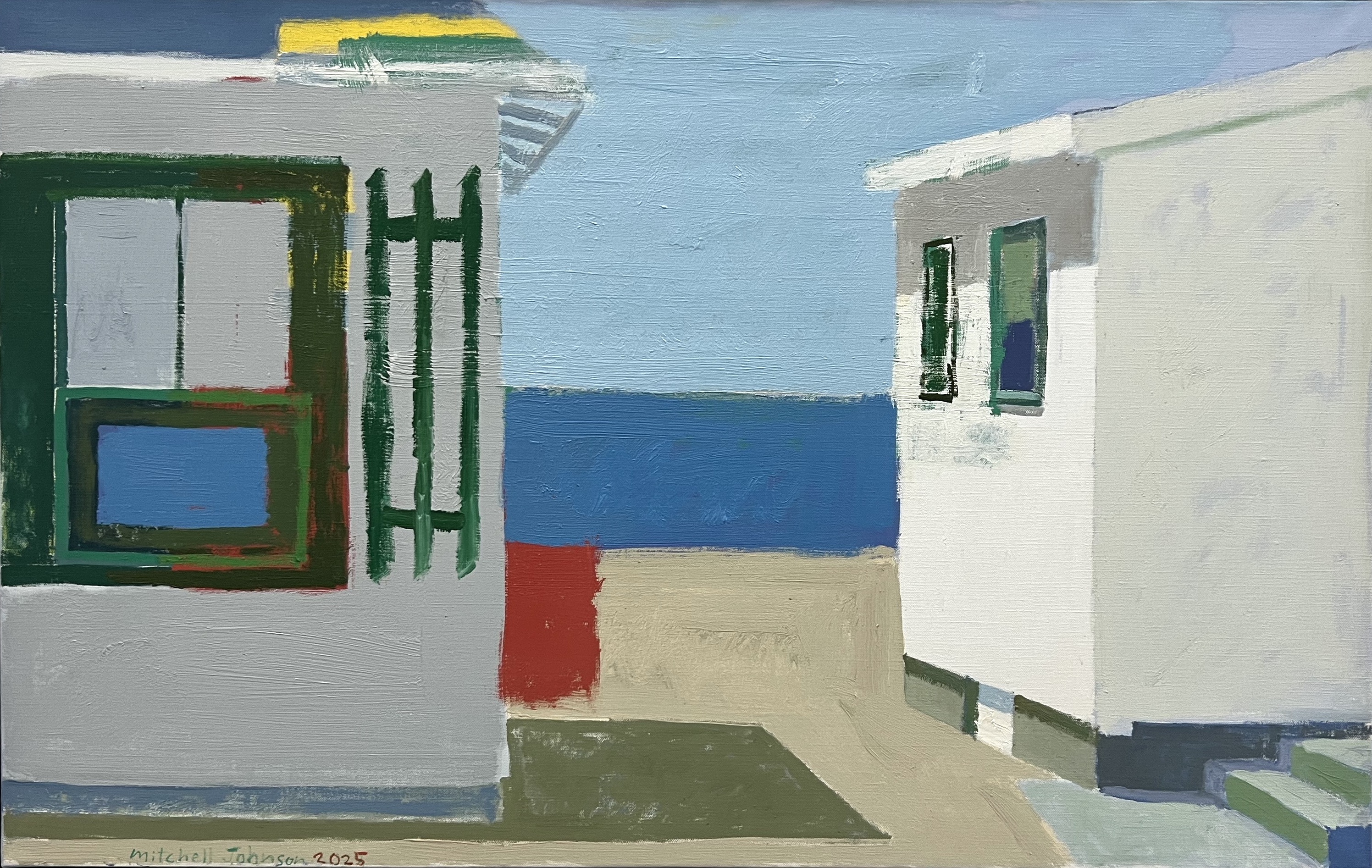 North Truro (Red & Yellow), 2025 24x38 inches oil/linen. Private Collection. © 2026 Mitchell Johnson.
De Chirico's piazzas are recognisable spaces, yet they rarely feel inhabited. Architecture becomes a stage set. Objects are stripped of their ordinary context. Perspective becomes strangely rigid. The familiar transforms into something mysterious.
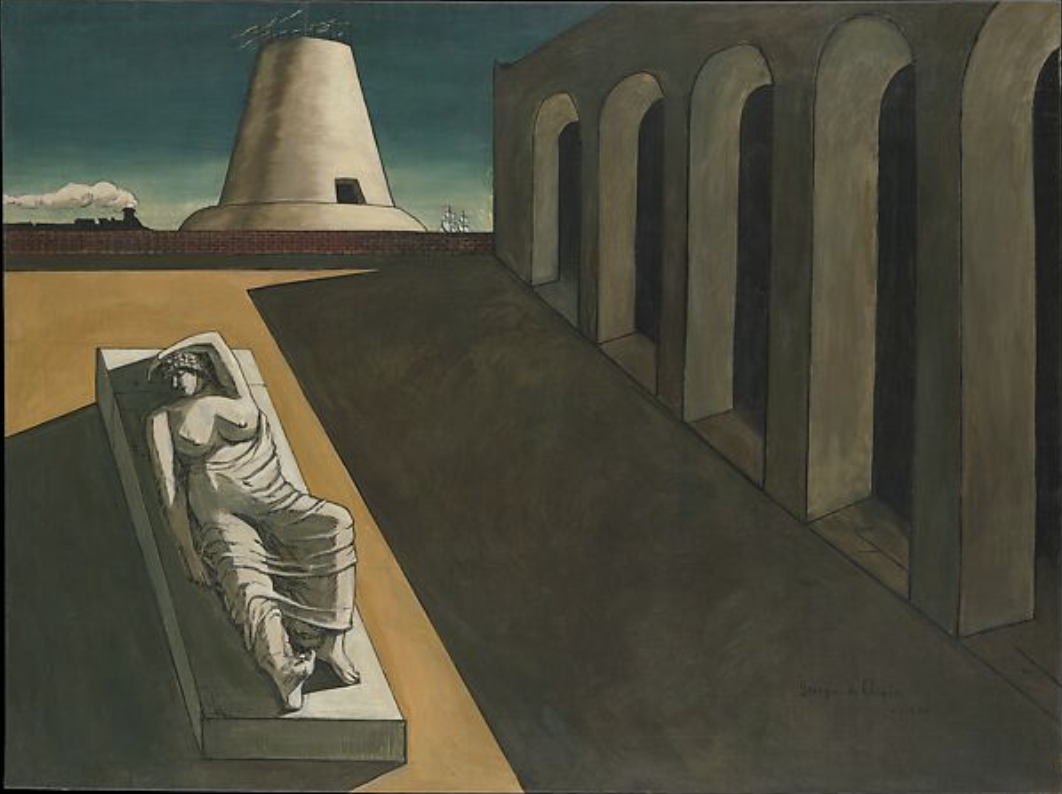 Giorgio De Chirico “Ariadne,” 1913 53x71 inches, oil/graphite/canvas © 2026 Artists Rights Society (ARS), New York
Johnson's Truro can evoke a similar sense of unease. Empty chairs sit beside quiet houses, boats appear momentarily abandoned, and people are conspicuously absent. Vast stretches of sky and sand leave the scene feeling almost suspended in time. Nothing in itself is unusual, yet the arrangement of these familiar elements suggests that something has happened - or is just about to.
Jesse Nathan wrote about this quality in relation to Johnson's work, connecting its emptiness to Edward Hopper while describing a world populated by vacant chairs, empty tables and barely visible human presence. What matters is not simply that people are absent, but that their absence becomes so noticeable.
That is why de Chirico may be more useful here than the more obvious comparisons to Hopper. Those comparisons help locate Johnson within an American tradition of landscape painting, and Johnson certainly has a deep connection to that tradition. But his European inheritance complicates the picture. Morandi and now de Chirico point toward an artist who is less interested in reproducing a landscape than in showing us his personal version of it.
Perhaps this is what twenty one years of returning to the same place looks like. Johnson is no longer simply painting Truro as it appears, but the accumulated experience of seeing it - shaped by memory, perception, colour, repetition and absence. Over time, that experience has become a visual language.
And that language leads to a surprisingly contemporary question: what does it mean to pay attention?
We live surrounded by images and trained to move through them quickly. A landscape can be reduced to a photograph, a photograph to a post, and a post to a few seconds of attention before the next image arrives.
Johnson's paintings move in the opposite direction. Much like Morandi's work, they ask us to remain in the same place a little longer.
—
Mitchell Johnson: Twenty-One Years in Truro (Selected Paintings 1988–2026) will be on view at the Truro Center for the Arts at Castle Hill from September 8–20, 2026. The exhibition brings together recent paintings with previously unseen early Truro works, alongside Johnson's first New England painting from 1988 and selected works from New York, Europe and California.
An artist reception will take place on September 10 from 4:00–6:00 PM, followed by an artist talk on September 11 from 3:00–3:30 PM. The gallery is located at 10 Meetinghouse Road in Truro and is open Monday–Friday from 9:00 AM–5:00 PM and Saturday–Sunday from 12:00–4:00 PM. Private exhibition previews are also available by appointment on September 6 and 7.
The exhibition is accompanied by a new book, Mitchell Johnson: Twenty-One Years in Truro, which looks back at more than two decades of Johnson's relationship with the Outer Cape and the development of the paintings gathered around this period of his work.
Additional info available at www.mitchelljohnson.com

WM
Whitehot writes about the best art in the world - founded by artist Noah Becker in 2005.
view all articles from this author