Whitehot Magazine
August 2026
"The Best Art In The World"
"The Best Art In The World"
August 2026
Cao Fei's Prophecy - Kunstmuseum Basel
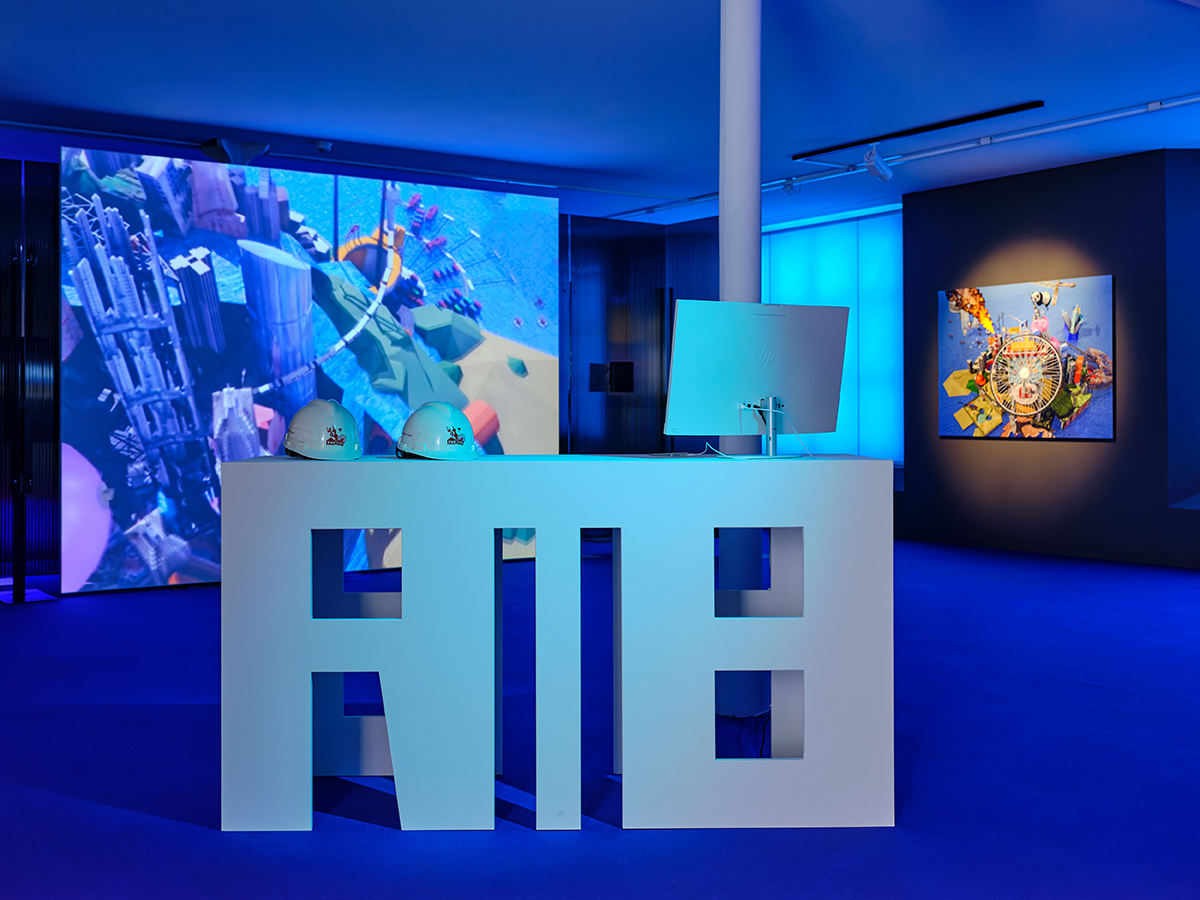 Cao Fei Installation view Kunstmuseum Basel | Gegenwart Courtesy of the artist, Vitamin Creative Space, and Sprüth Magers Photo Credit: Samuel Bramley
By MARGHERITA ARTONI August 10th, 2026
In 2007, Cao Fei created RMB City within Second Life—a virtual metropolis of impossible architecture and floating structures. Sixteen years later, we inhabit a metaverse. In 2018, she filmed Asia One inside an automated distribution centre, capturing a world governed by algorithms and machines with minimal human intervention. That world is now. What does it mean when an artist's speculative visions become, within years, the actual conditions of our existence?
Cao Fei predicted the present we now inhabit. Her reputation as a pioneer of digital art emphasizes technical sophistication. Her true power lies elsewhere: in excavating the psychological structures that drive technological acceleration, in showing how dreams of the future become embedded in material systems, and how those systems eventually consume the very human longings that imagined them.
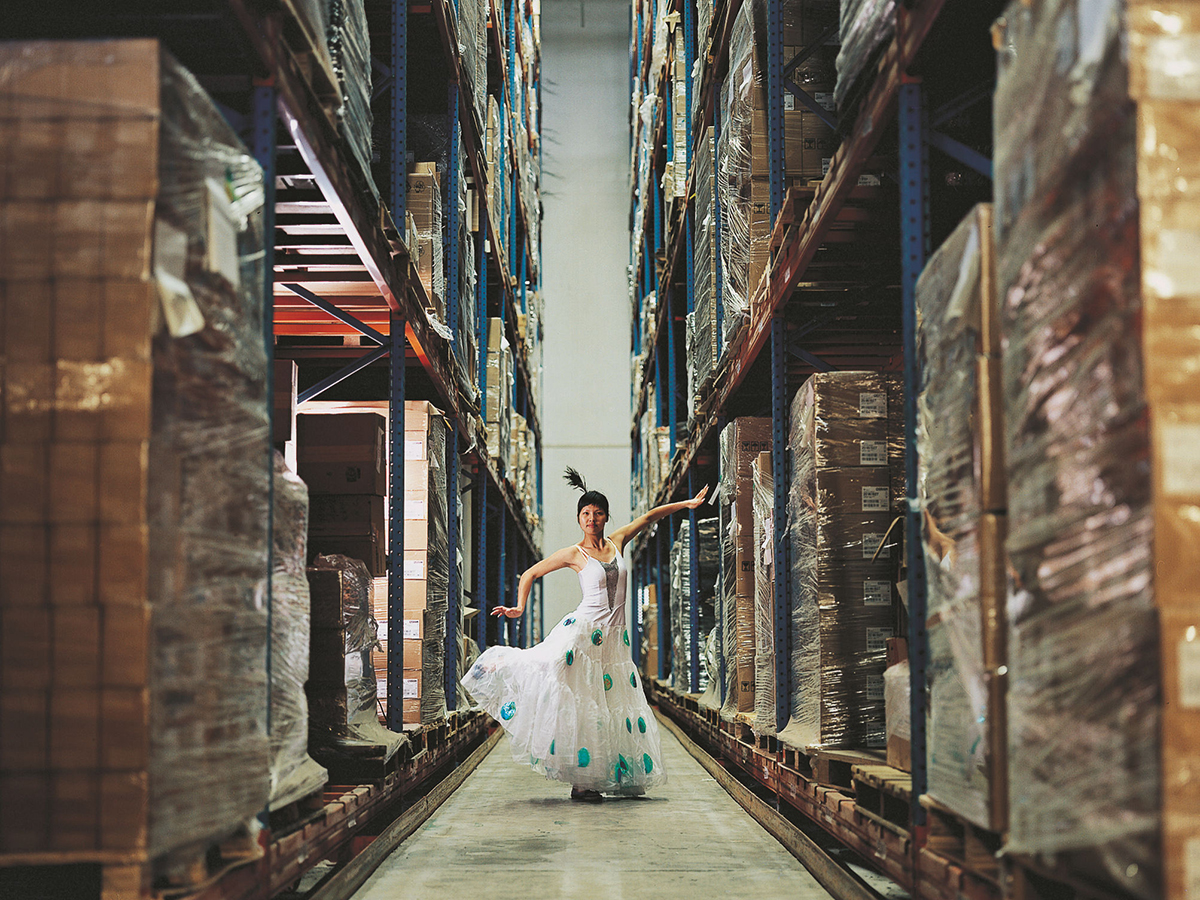 Cao Fei, Whose Utopia, Courtesy of the artist, Creative Vitamin Space, and Sprüth MagersCommissioned by Siemens Art Program
Born in Guangzhou in 1978, Cao Fei emerged from the extraordinary transformation of China's Pearl River Delta—a territory that became the world's factory, where millions of migrant workers produced goods for global consumption at unprecedented speed. She witnessed a society in which the future arrived so rapidly that the present had no time to consolidate into memory. Her work captures the psychological consequences of this acceleration: how it feels to live inside historical change as it happens, to inhabit a world moving faster than consciousness can follow.
In Whose Utopia (2006), Cao Fei enters a lighting factory in southern China. The video begins with repetitive rhythms of production: workers assemble objects, perform mechanical gestures, inhabit disciplined industrial labor. Gradually, another dimension appears. Workers dance, create performances, express forms of individuality that exceed their assigned roles. The factory becomes a space where imagination persists within systems designed for efficiency—yet how fragile that survival ultimately proves.
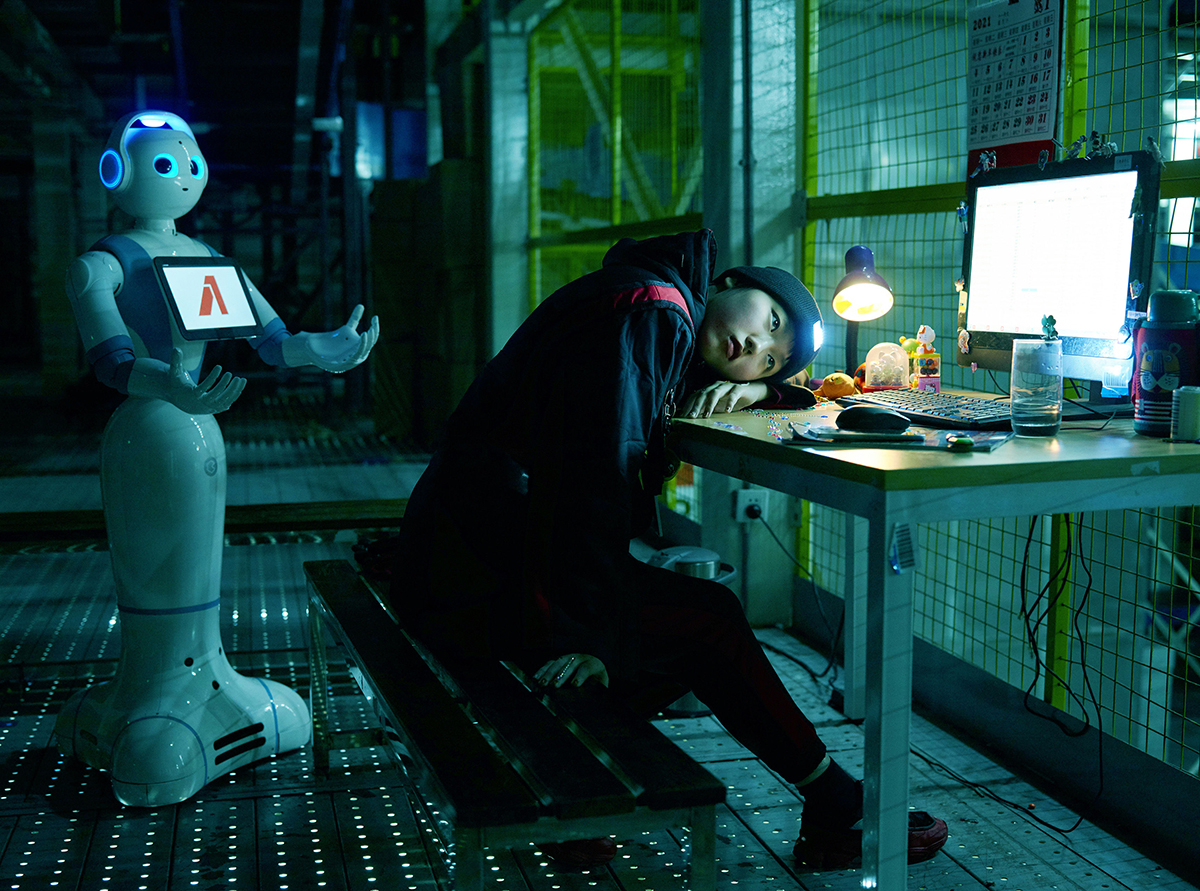 Cao Fei, Asia One, Courtesy of the artist, Vitamin Creative Space, and Sprüth MagersCommissioned by the Solomon R. Guggenheim Museum, New York for The Robert H. N. Ho Family Foundation Chinese Initiative
Created within Second Life, RMB City (2007–) remains Cao Fei's defining work. Its impossible architecture and floating structures create a city of unlimited expansion. Yet beneath spectacle lies fragility. The work feels like a memory of a vision already aging. Here Cao Fei approaches what Mark Fisher later described as the "slow cancellation of the future": societies continue producing images of tomorrow while struggling to imagine alternatives to the present. This virtual realm transforms such tensions into a visual landscape shaped by aspiration and contradiction. Today's metaverse platforms inherit these same conditions: the promise of liberation alongside new forms of capture and control.
In Asia One (2018), Cao Fei moves from the virtual metropolis to one of China's largest automated distribution centres. The film presents a landscape where algorithms, machines, and logistical systems operate with minimal human intervention. The work explores a question that has become impossible to avoid: how does human identity change when traditional structures of meaning, especially labor, begin to disappear? The automated warehouse becomes an almost metaphysical environment. Its silence and precision reveal a world defined by extraordinary efficiency alongside unresolved questions about purpose and belonging.
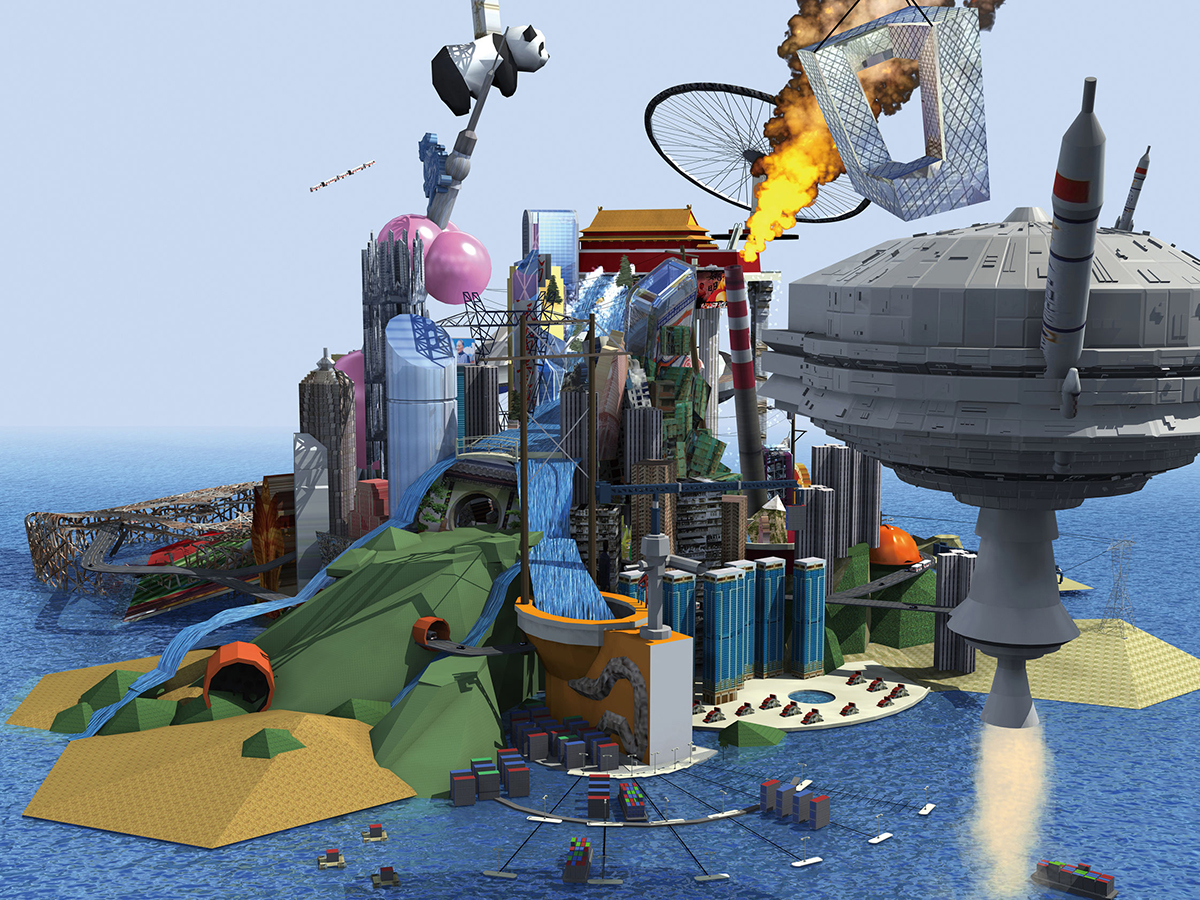 Cao Fei, RMB City a Second Life city, planning Courtesy of the artist, Creative Vitamin Space, and Sprüth Magers
Cao Fei's prophetic power lies in her understanding of the emotional structures that drive technological change. She grasped that societies embrace new systems through hope—the promise of resolution to existing anxieties and desires. She demonstrated consistently how those systems eventually reproduce and amplify the very contradictions they were designed to solve.
Cao Fei: Testimonies to the Near Future at Kunstmuseum Basel | Gegenwart (30 May – 11 October 2026) presents three decades of artistic production as a single immersive environment. The exhibition transforms the museum into a speculative city where physical and digital realities overlap, where documentary observation and fiction become inseparable.
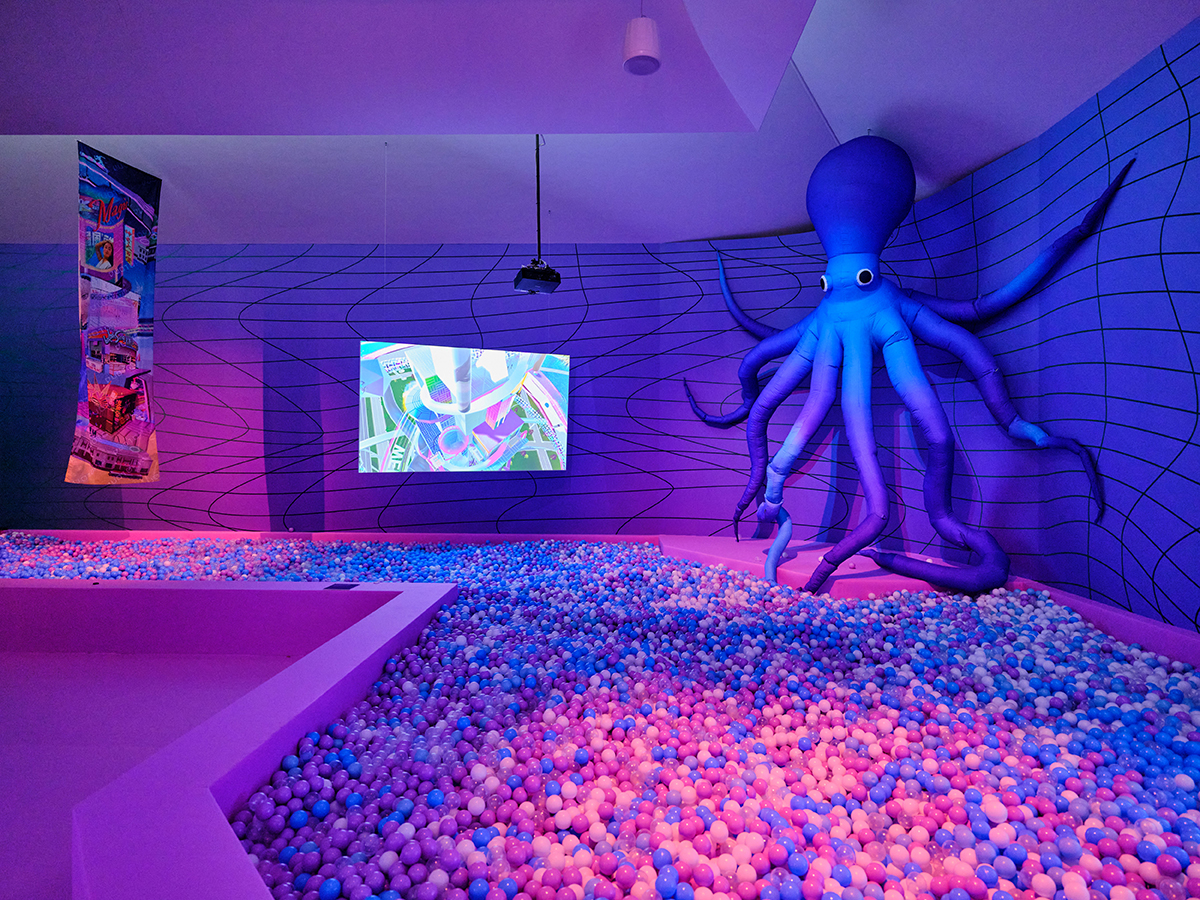 Cao Fei Installation view Kunstmuseum Basel | Gegenwart Courtesy of the artist, Vitamin Creative Space, and Sprüth Magers; Duotopia commissioned by Meta City; Screen Autobiography commissioned by Fondazione Prada Photo Credit: Samuel Bramley
At a moment when artificial intelligence is renewing fantasies of technological transformation, Cao Fei's historical perspective becomes essential. Every new system inherits the desires and disappointments of those that came before it. We are living inside her prophecy through the underlying logic of how human longing becomes infrastructure.
She excavates the space where anticipation becomes history, where visions become infrastructure, where human longing transforms into algorithmic systems that no longer require human presence. The future is not what awaits us. It has arrived, and we inhabit it now.
Margherita Artoni
Margherita Artoni is a contemporary art critic and curator working between Italy and the United States. She began her career collaborating with Flash Art and currently writes for Segno, Juliet, Artribune, Exibart, Inside Art, ArteIN, part of cult(ure), The Art Fuse, and Whitehot Magazine.
She has directed galleries in Turin — including NEOCHROME and EDGE Art Space — and in New York at TEAM Gallery. Her curatorial work has included exhibition programs with international artists such as Rashid Johnson, Theaster Gates, Ali Banisadr, Angel Otero, Tim Rollins & K.O.S., Laura Owens, and Mika Tajima.