Whitehot Magazine
October 2026
"The Best Art In The World"
"The Best Art In The World"
October 2026
In Minor Keys: Art as a Sensory Ecosystem at the 61st Venice Biennale
By MARGHERITA ARTONI April 3rd 2026
The 61st Venice Biennale, curated by Koyo Kouoh, presents a trajectory that redefines traditional investigative practice, reconfiguring structures into mutable arrangements where forms, materials, and dynamics coalesce. Interpretation relies on internal coherence and on the analysis of the varied approaches of the participating artists.
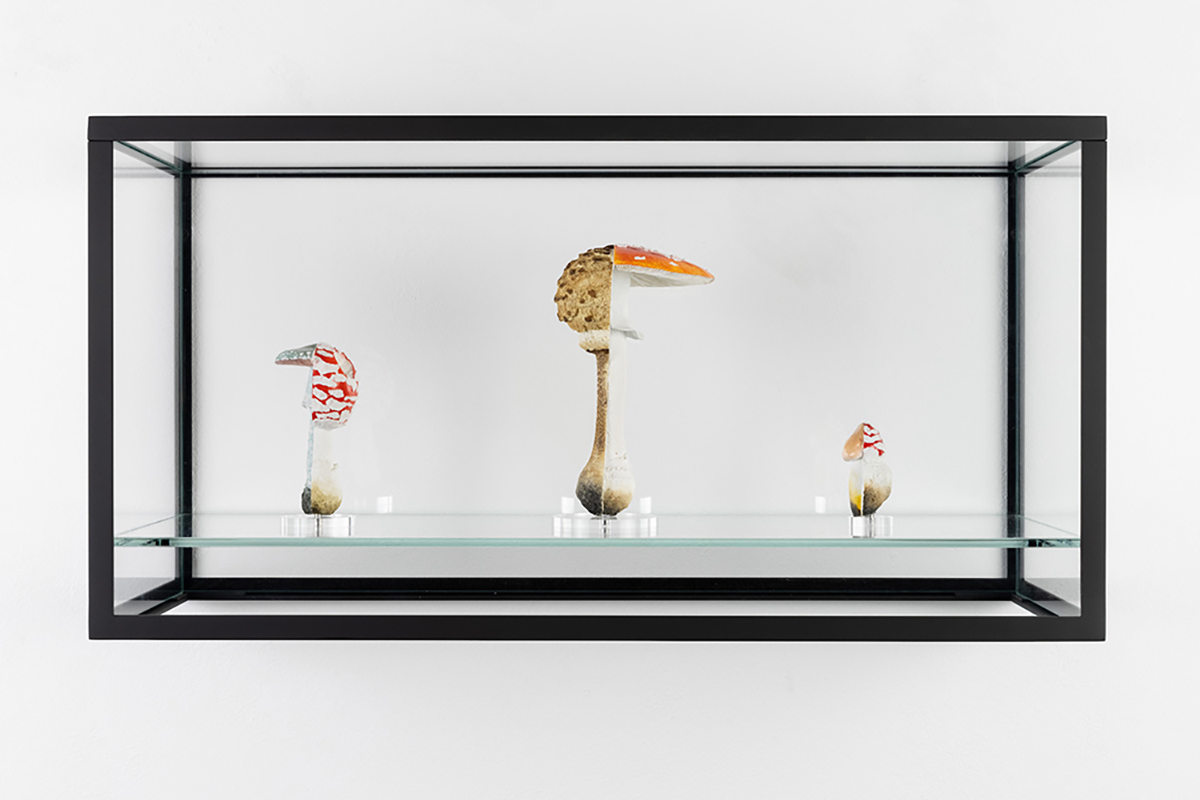 Carsten Höller Double Mushroom Vitrine (Threefold), 2021 Cast polyurethane mushroom replicas in various sizes, acrylic paint, glass discs, metal pins, vitrine glass, powder-coated metal framework 12 × 23 5/8 × 10 inches Photo courtesy MASSIMODECARLO Gallery
In Minor Keys represents one of the most mature and radical contributions on the international stage. Conceived as Kouoh’s final curatorial project, the exhibition was realized posthumously in May 2025, thanks to the support of her family and the team she selected. The event spans the Giardini, the Arsenale, and various dispersed locations throughout Venice, bringing together 111 artists, ensembles, and independent platforms chosen less for fame or geographic origin than for their capacity to weave resonances and mutual synergies.
The title In Minor Keys articulates the guiding philosophy of the exhibition: low frequencies, heightened sensory acuity, and marginal modes of observation that favor immediate engagement. The installation encourages total contemplation, where memory, gesture, and concentration function as interpretive levers to reveal the nexus between artwork, space, and participant. The environments operate as interactive organisms in which projects, practitioners, and visitors engage in continuous exchange.
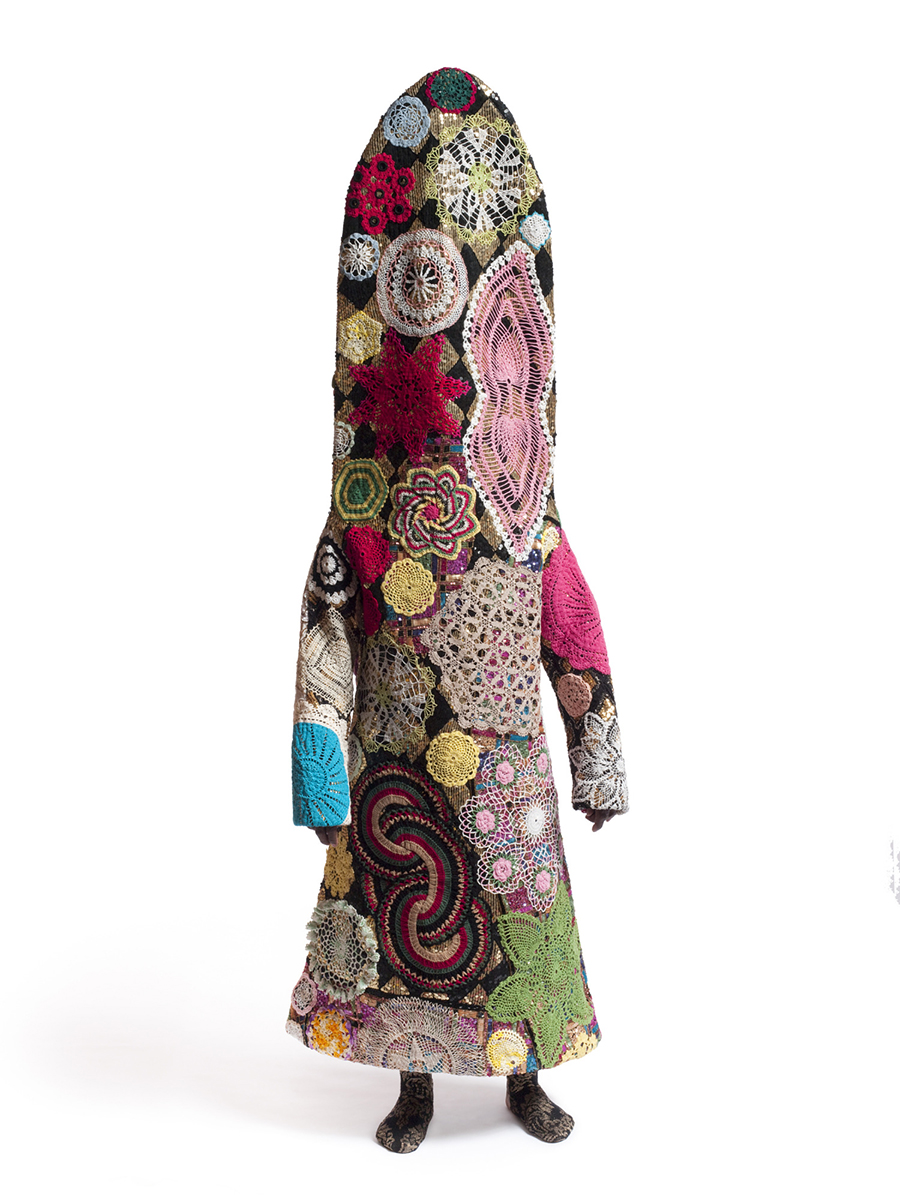 Nick Cave Soundsuit_2009 mixed media © 2009 Nick Cave Courtesy of the artist and Jack Shainman Gallery New York. Photo by James Prinz Photography
Four artists exemplify this orientation paradigmatically:
Alvaro Barrington layers pigments and found materials, generating surfaces that record individual and intergenerational memory, converting painting into a co-constitution of time, topographical space, and diachrony.
Wangechi Mutu, through sculpture, video, and scenographic strategies, fuses myth, decolonial archives, and physicality, creating ceremonial and speculative architectures in which history, identity, and imagination unfold through the co-creative attentive experience of the interlocutor.
Nick Cave employs the body as a medium: his Soundsuits integrate kinetics, sound, and costume, eliciting phenomenological dispositions in which the agent contributes to poietic definition, expanding the boundaries between performance and installation.
Carsten Höller, through immersive and situational interventions, explores sensitive thresholds and somatic limits, inviting participants to reconsider their relation to affective-cognitive dimensions and making the implicit processes of awareness and mnemonic traces visible.
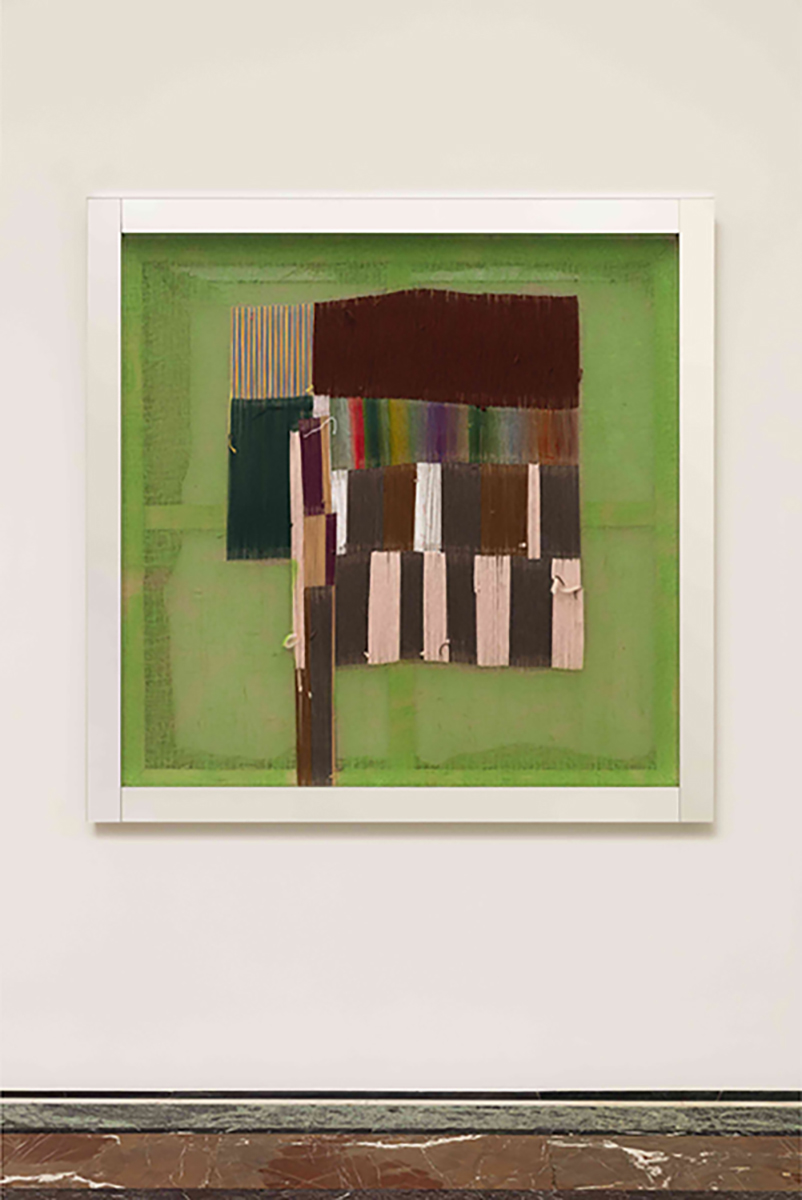 Alvaro Barrington Sky's the Limit Figure, Medium Courtesy MASSIMODECARLO Gallery
Despite working with different media and components, these artists reflect a common intention: each engages subject, essence, and discernment in complementary ways. Barrington weaves historical reminiscence and painterly gestures, Mutu interlaces rituality and postcolonial mythology, Cave transforms movement into sonic space, and Höller fosters sensorial experimentation.
Compared to recent editions—take, for instance, Okwui Enwezor’s 2015 Biennale, centered on geopolitical tensions and postcoloniality, or Ralph Rugoff’s 2019 edition, focused on the relationship between actors and milieu—In Minor Keys marks a theoretical leap: the exhibition constitutes a perceptual and relational field, in which composition, approach, and absorption generate shared meaning and epistemic cohesion.
Attention to the connection between artist, realization, and perceiver reveals Kouoh’s conception of the context not as a container but as a co-constitutive apparatus. Barrington, Mutu, Cave, and Höller embody this vision, interweaving materials, actions, and perceptions into a fabric that traverses geographies, generations, and cultures. The 61st Biennale confirms art as a critical network and a space of co-creation, highlighting the influence of contemporary curatorship on a global scale. WM
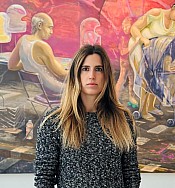
Margherita Artoni
Margherita Artoni is a contemporary art critic and curator working between Italy and the United States. She began her career collaborating with Flash Art and currently writes for Segno, Juliet, Artribune, Exibart, Inside Art, ArteIN, part of cult(ure), The Art Fuse, and Whitehot Magazine.
She has directed galleries in Turin — including NEOCHROME and EDGE Art Space — and in New York at TEAM Gallery. Her curatorial work has included exhibition programs with international artists such as Rashid Johnson, Theaster Gates, Ali Banisadr, Angel Otero, Tim Rollins & K.O.S., Laura Owens, and Mika Tajima.