Whitehot Magazine
October 2026
"The Best Art In The World"
"The Best Art In The World"
October 2026
Generations of Painting: Steve DiBenedetto / Jo Messer / Rob Ober
By EDWARD WAISNIS April 16th, 2026
While that genius of the impulse that elevated the intellectual at the expense of the sensual, as the forward grade of art, Marcel Duchamp’s retrospective holds court at MoMA I ventured south, to galleries in TriBeCa and the Lower East Side, for a current offering of contemporary painting. Confirming that pluralism, first coined in the aftermath of postmodernism, is established the riches are aplenty. With three exhibitions coalescing into a trinity of touchstones I would like to explore.
All three of the painters I have chosen to pack together in this piece deal with the age old traditions of the craft, melding long-gestation with the physical act of mud slinging–whether dignified by glazes and fine hair brushes rather than left the rawer, less finessed, that state that releases an inner demon from the bottle.
Call me naive, but my stimulus in this formatting comes from a desire, in these divisive times, to foment community amongst those who are essentially solitary creatures toiling in private and out-of-sight who produce work seeking a spotlight.
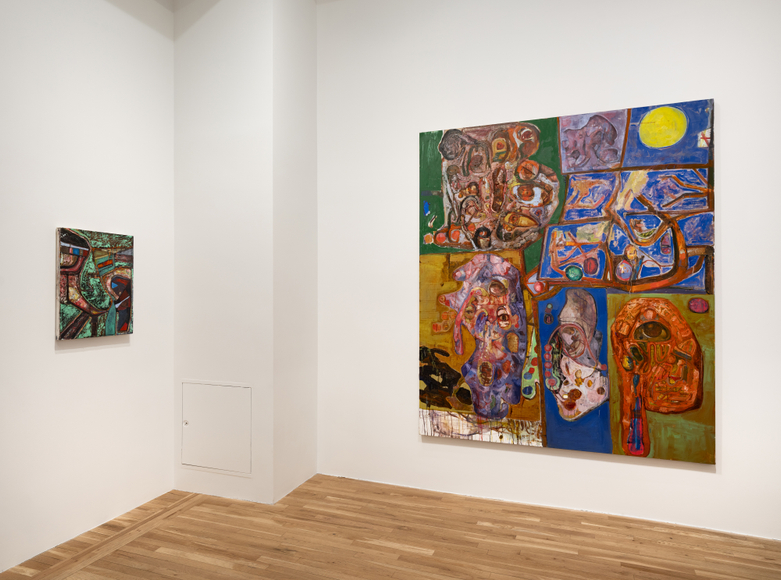 Installation view: “Steve DiBenedetto: Spiral Architect”, Derek Eller Gallery, NY, showing: “VaganRobot” 2002-26, oil on linen, 26 x 20 inches -and- “QuipGland” 2025-26, oil on canvas, 88 x 74 inches
Carrying the rich legacy of Brooklyn painters (those who emerged and established foothold in and around Williamsburg in the late twentieth century, including Chris Martin, Bill Saylor and the sage of the scene Bill Jensen) Steve DiBenedetto presents a panoply of signature motifs in this latest outing from a revered painter’s painter.
In choosing the form of a film treatment that lays out a hallucinogenic passages depicting DiBenedetto bathing in influences coming in from disparate sources of reference for the press release, DiBenedetto shows his hand at an adroitness when it comes to contemporary film culture. By hanging the synopsis on a foundation of duly cited mind-bending masterpieces the tell is how seriously DiBedenetto has set the stakes for a go-for-broke exhibition of emblematic paintings.
DiBenedetto’s agenda is nothing short of expanding and spreading spirituality with an amalgam of signs–runes and other fanciful iconography–in his richly constructed hybrid pictures. This compunction can be traced through the invention of abstraction that Wassily Kandinsky set alight, succeeded by a lineage that includes Archile Gorky, Adolph Gottlieb and Jackson Pollock, who transcended his own archaic motifs into disintegration that distilled the mystical iconography to the vapor of it’s essence; of course, I would be remiss if I did not acknowledge Joan Miro and the polar opposite twin stars Paul Klee and Joaquin Torres-García individualist contributions to the story.
Much as Terry Winters, DiBenedetto delves into nature as a source, in particular structures gleaned from the crustaceans and fungi, as acknowledged by the exhibition title that pays homage to a key form and the organizational structuring it affords.
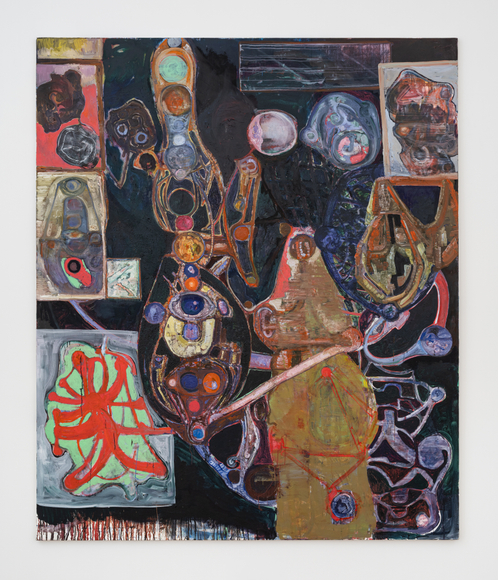 Steve DiBenedetto,”The Octopus Paradox”, 2025-26, oil on canvas, 96 x 80 inches
An organic form DiBenedetto works at making his own is that of the octopus. The Octopus Paradox, 20025-26, magisterially incorporates this fixation in a magisterial scape of chockablock cells interconnect, and emanating from, an alien obelisk.
“Helicopter rotors become a repeated visual motif sometimes literal, sometimes drawn in the air by his hand."* DiBenedetto pays respect to the whirling invigoration implied by the propeller-driven aircraft, that he often makes reference to, with another variation on multiple points of attention that have something of planning of pre-Renaissance fresco, with The Helicopter Never Lands, 2025-26.
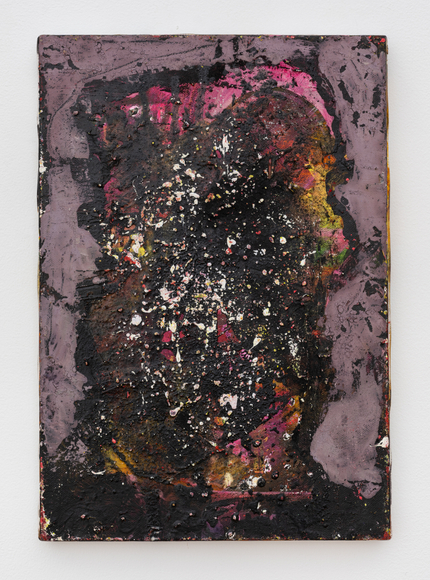
Steve DiBenedetto, “Interstellar Antifreeze”, 2022-26, oil on canvas, 13.8125 x 9.5 inches
Interstellar Antifreeze, 2022-26, tells a story of accretion. One of those works that hung around the studio for years, as indicated by the spread of the dates, that garnered periodic attention earning a swipe, or splatter, from a brush; building until the day it coalesces into not necessarily one sustained vision, but rather a churning that becomes fixed.
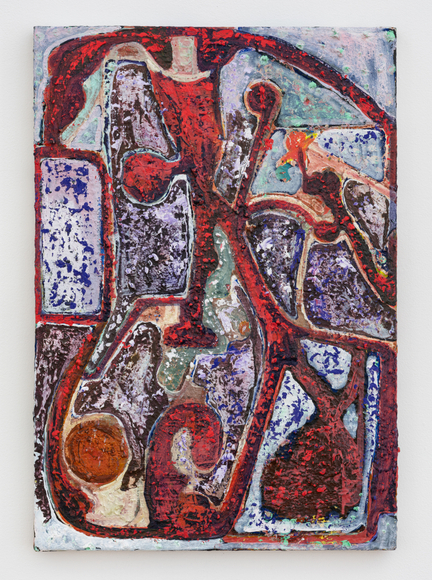 Steve DiBenedetto, “Stalker”, 2026, oil on canvas, 21.625 x 15 inches
Things change-up in the easel-sized pictures. DiBenedetto toys with structure, gesture and surface to great effect as in Stalker, 2026, that can be read variably as a burnt-out microchip circuit, or a rune carved into beautifully patinated stone.
DiBenedetto’s contribution is a full-throated embrace of the creed of bohemia that has bestowed a place as a standard-bearer for high modernism, preferably uninfected by reductive formalism.
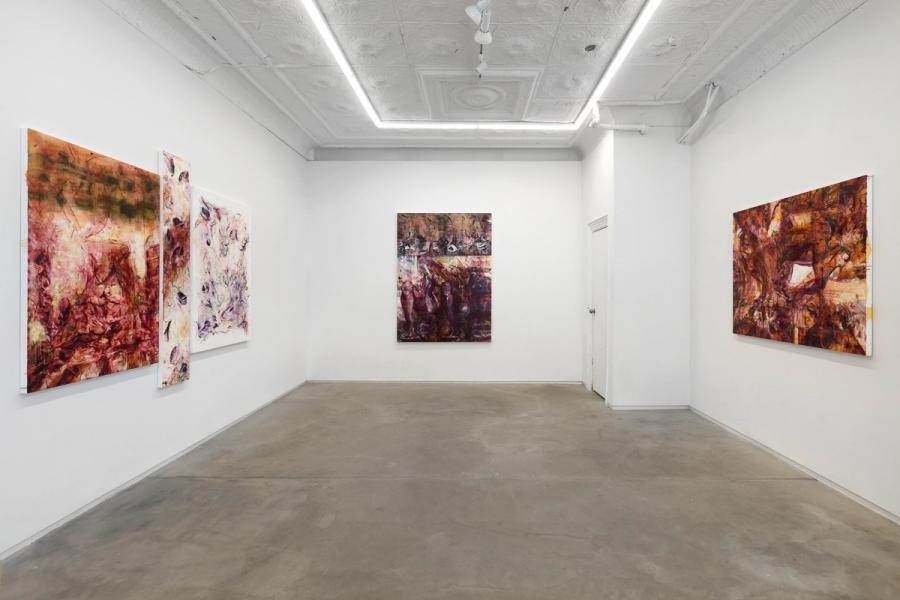 Installation view: “Jo Messer: Speed Stick”, 105 Henry, NY
Then, there is the parvenu Jo Messer with her cut-bait elusive figuration conveying echoes of landscape in a vein echoing Andrew Wyeth earthbound grittiness with a glint of the conjuring found in the affront of body horror.
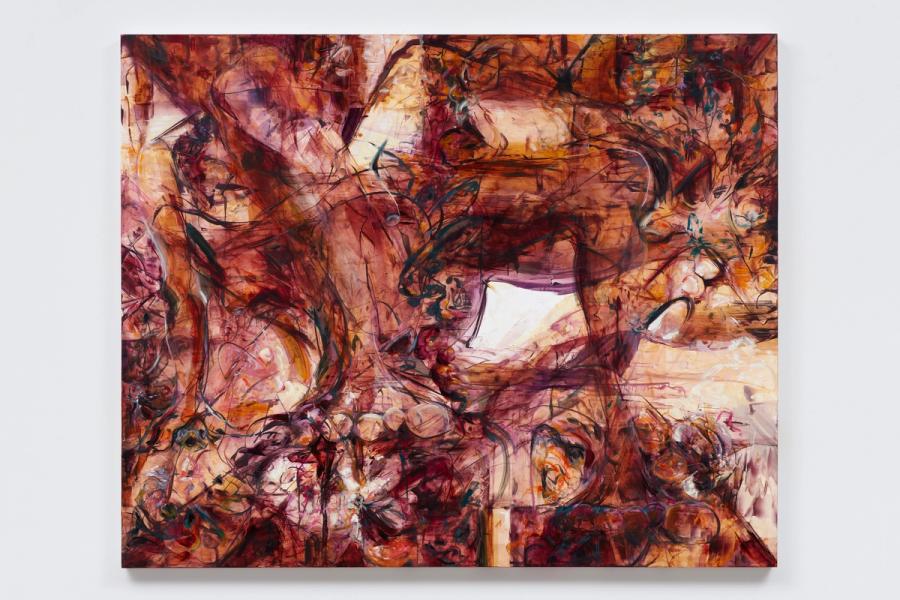 Jo Messer, “Speed stick” 2026, oil on panel, 43 x 53 inches
John Alexander’s slippery paintings of the 1970s centered on the beauty in the visceral ooze of gutted fish hold currency in Messer’s project, with the artist’s probings of darting, swimming anamniotes; self-attributing the interest to historical still life tradition David Reed brought transparent layers of cropped swirls to new fashion at the height of the 90s. These two have relevance in Messer’s surfaces and handling. While her skeins of never settling compositions bring up Julie Mehretu.
Messer uses panel surfaces (rather than canvas) that propel glazes that skate and slide in balletic arabesques, with allusions to figuration, in tones that lean to grisaille, all browns, grays, dried-blood alizarins, that are confluent with the shell of the substrates. The end result envelops one in an elegant hermeticism, bringing a sense of containment to Messer’s free-wheeling compendiums.
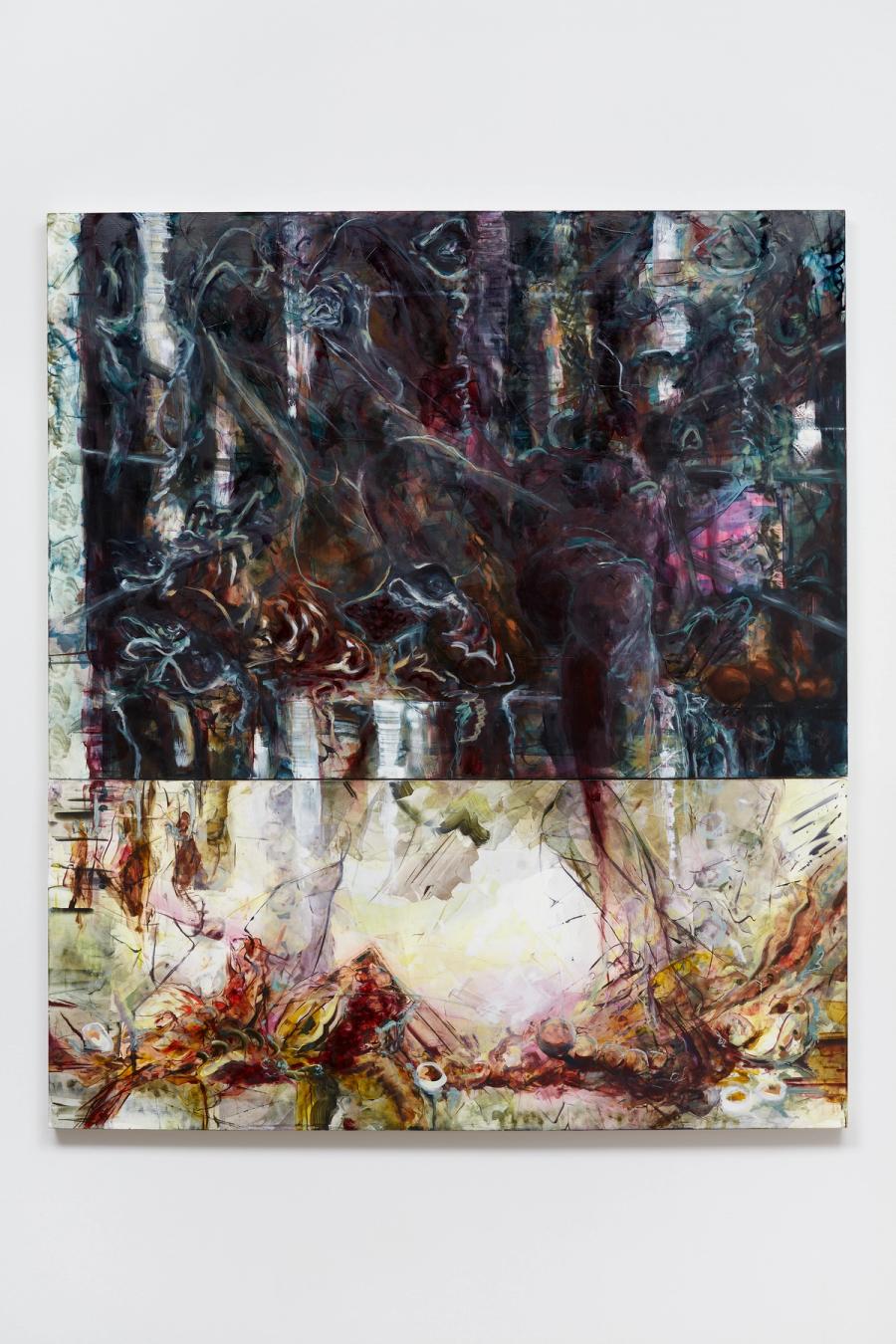 Jo Messer, “Deep dive“, 2026, oil on panel, 63 x 53 inches
Deep dive, all works 2026, revives the bisection favored by the likes of Mark Rothko and Brice Marden with a strictly defined dark upper quadrant weighing heavily on a light-emitting lower section over which Messer lays her meandering schematics to surreal effect. Despite the sense of order, there is an air of the mysticism of symbolist Gustave Moureau.
Elsewhere, as in Bait me in, Messer takes to enlisting multiple panels of varied heights that satisfy in their jostling contrasts and variations.
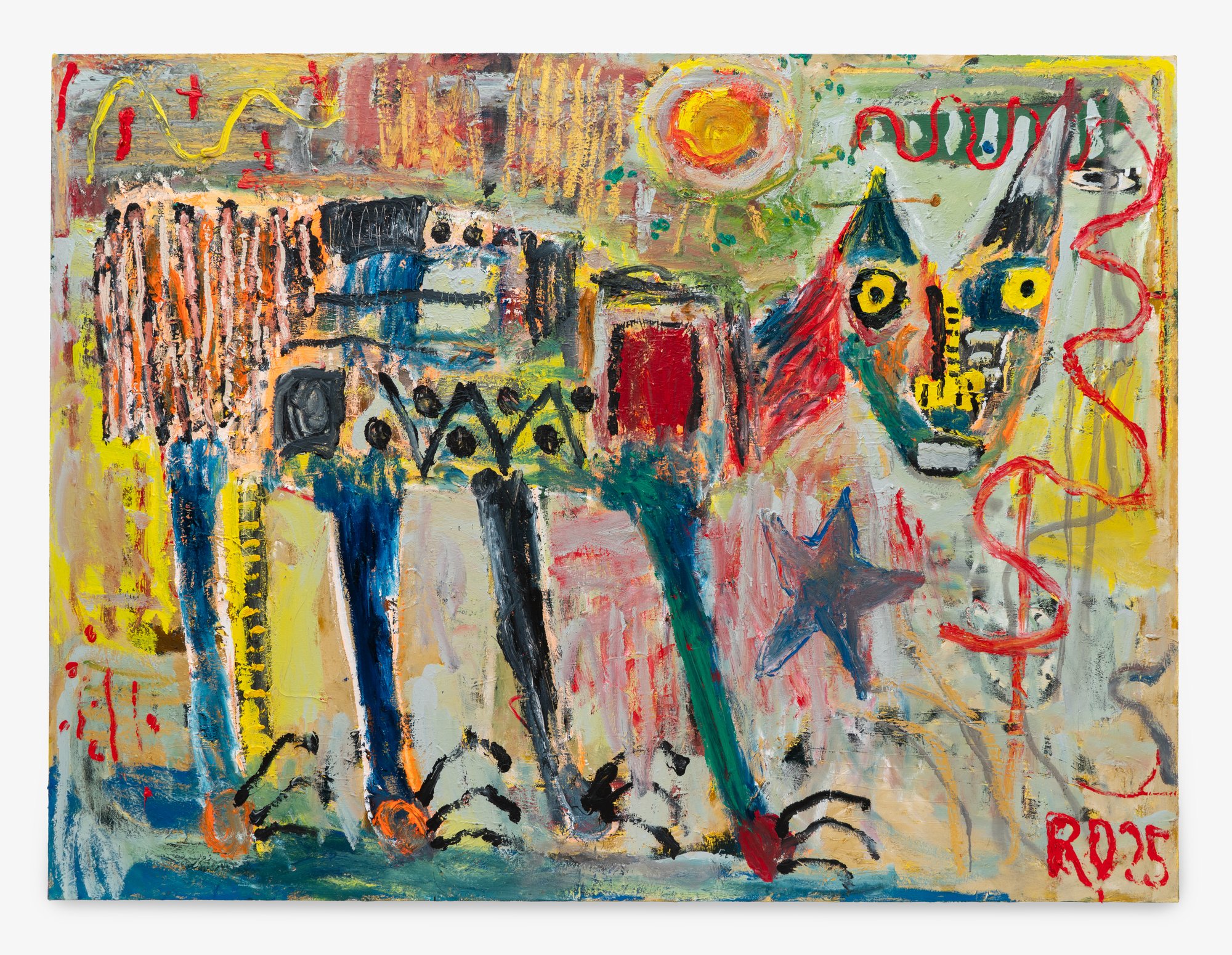 Rob Ober, “Spock”, 2025, oil on canvas, 72 x 96 inches
There is a deep sense of religiosity in Rob Ober’s oeuvre. Absorbed, one suspects, from his early years as the son of a globe-trotting diplomat. Followed by a stint as a teacher of (Soviet) Art History, collecting art, and running a gallery, in rural Connecticut. Ober spent formative years in Russia, hired snake charmers in Delhi, and played tennis. In short, an exemplary unconventional life leading to this moment.
Mangy and battered felines dominate the work, presented full frontal. Reminiscent of the Lupa Capitolina of ancient times with the spark of mid-twentieth century rawness–think: Jean Dubuffet, Pierre Alechinsky, Frank Auerbach, et. al.–and release of color, as found in COBRA. Ober has included the under-appreciated Dutch painter who worked under the banner, Eugene Brands.
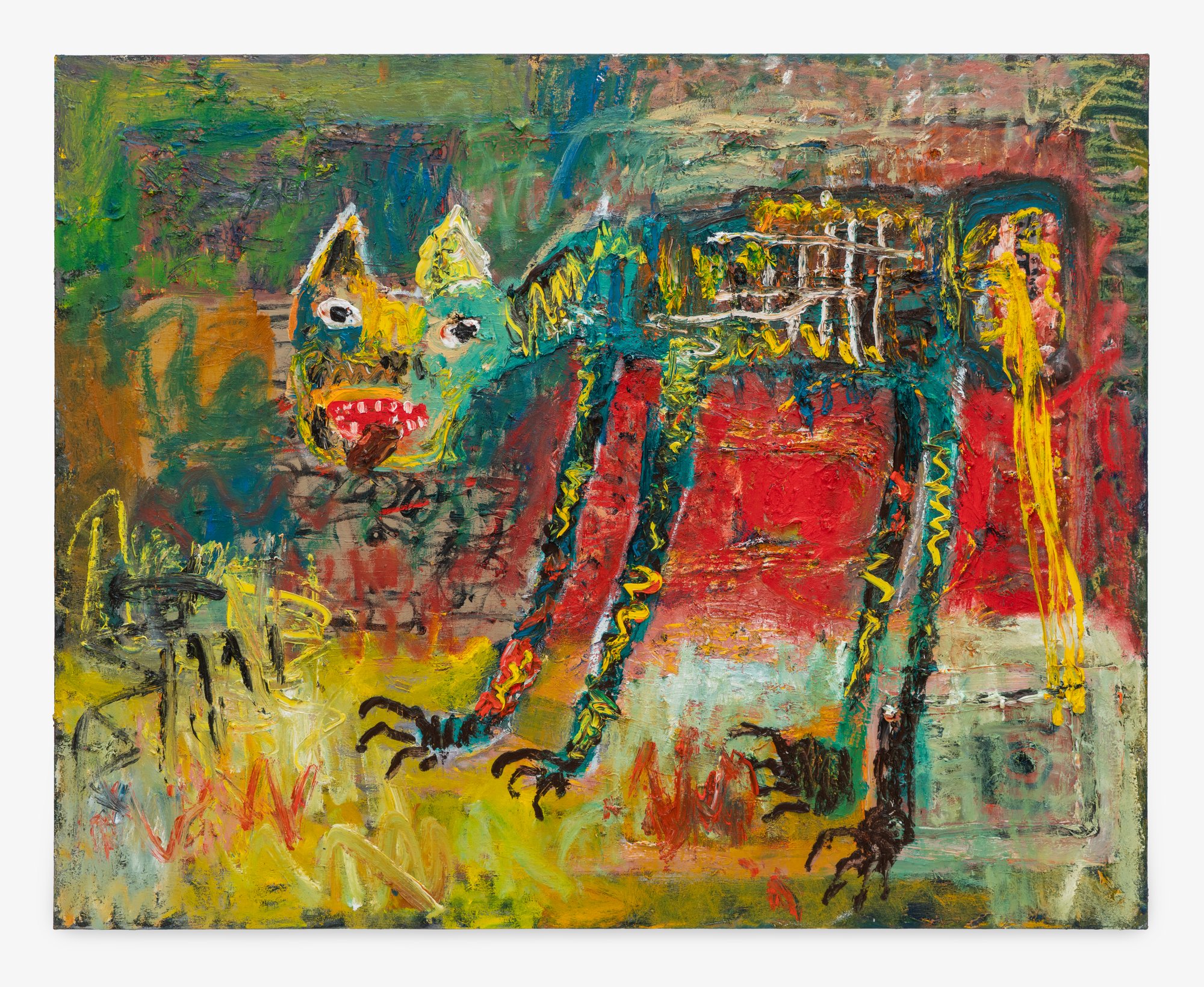 Rob Ober, “Lithuania”, 2025, oil on canvas 48 x 60 inches
The gallery publicity touches on the topical notion that a socio-economic concern, having to do with wild beastiality endangered of losing their habitat, that I missed. Taking it further, the releases reference the issue of our globes glut of plastics, while though-provoking, to my mind introduces, obtusely, the information that Ober has switched to oils recently (i.e. relinquishing the plastic artificiality of acrylic). Whether there is an appreciable change, given Ober’s gut-wrenching method of attack in getting the pigment on the canvas, is neglectable, but I suppose the organic grit melds convincingly with the method/subject mix.
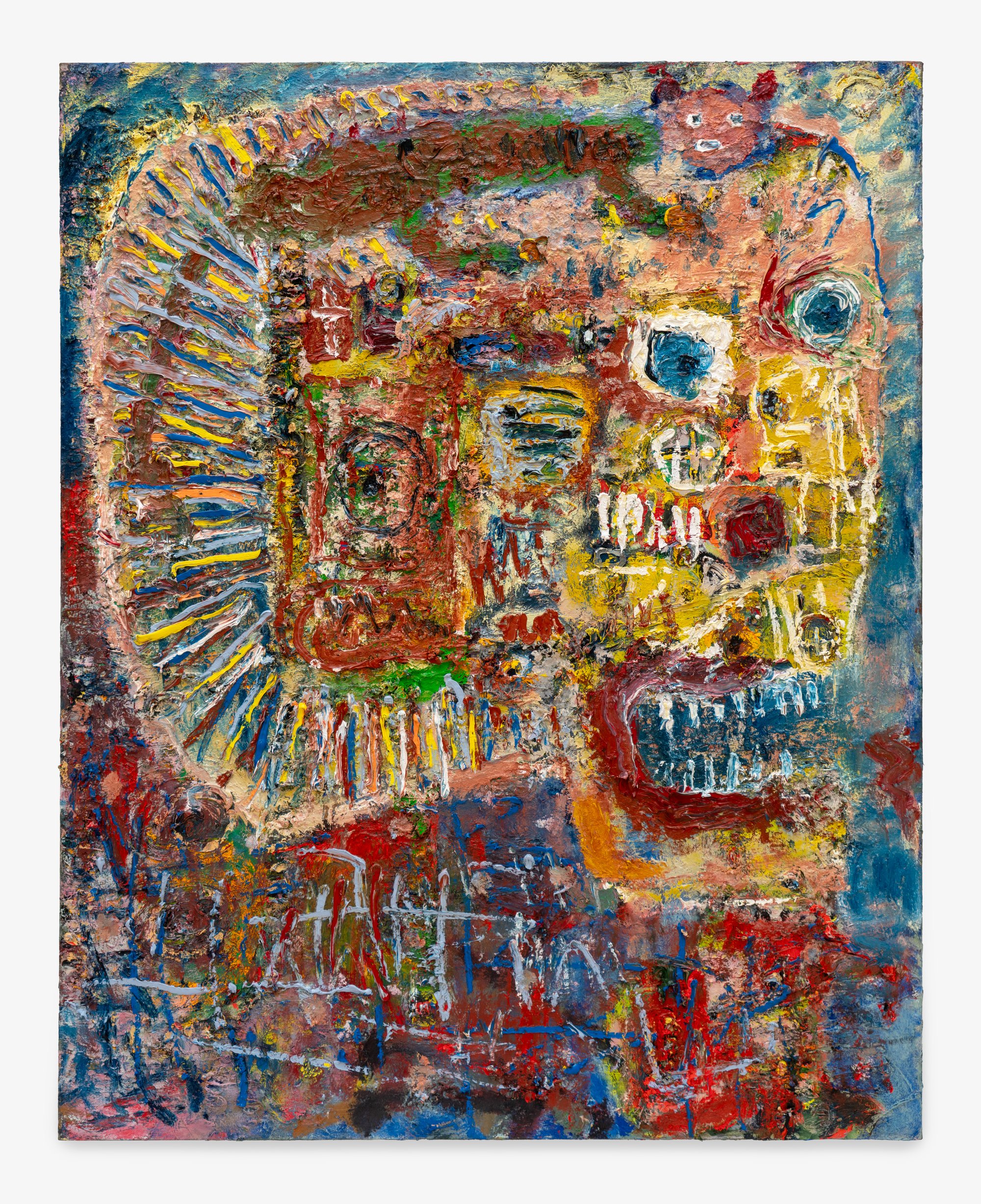 Rob Ober, “Walking on the Sun” 2026, oil on canvas, 60 x 48 inches
Walking on the Sun, 2026, involves a devouring skull profile, seeming lifted from the repertoire of both Dubuffet and Jean-Michel Basquiat with more grizzle and compulsive handling.
Elvis, 2026, brought me in close contact with a concrete embodiment of the paintings found in one of my all time favorite films, The Horse’s Mouth, the masterpiece, directed by Ronald Neame, written by and starring Alec Guinness, as Gulley Jimson a colorful artist who paints a large tiger head while quoting Blake: Tyger, tyger, burning bright, in the forests of the night; What immortal hand or eye could frame thy fearful symmetry? And, the title did not lead me to ‘the king’, but rather to ruminate on Elvis Mitchell–shows where my head it at!
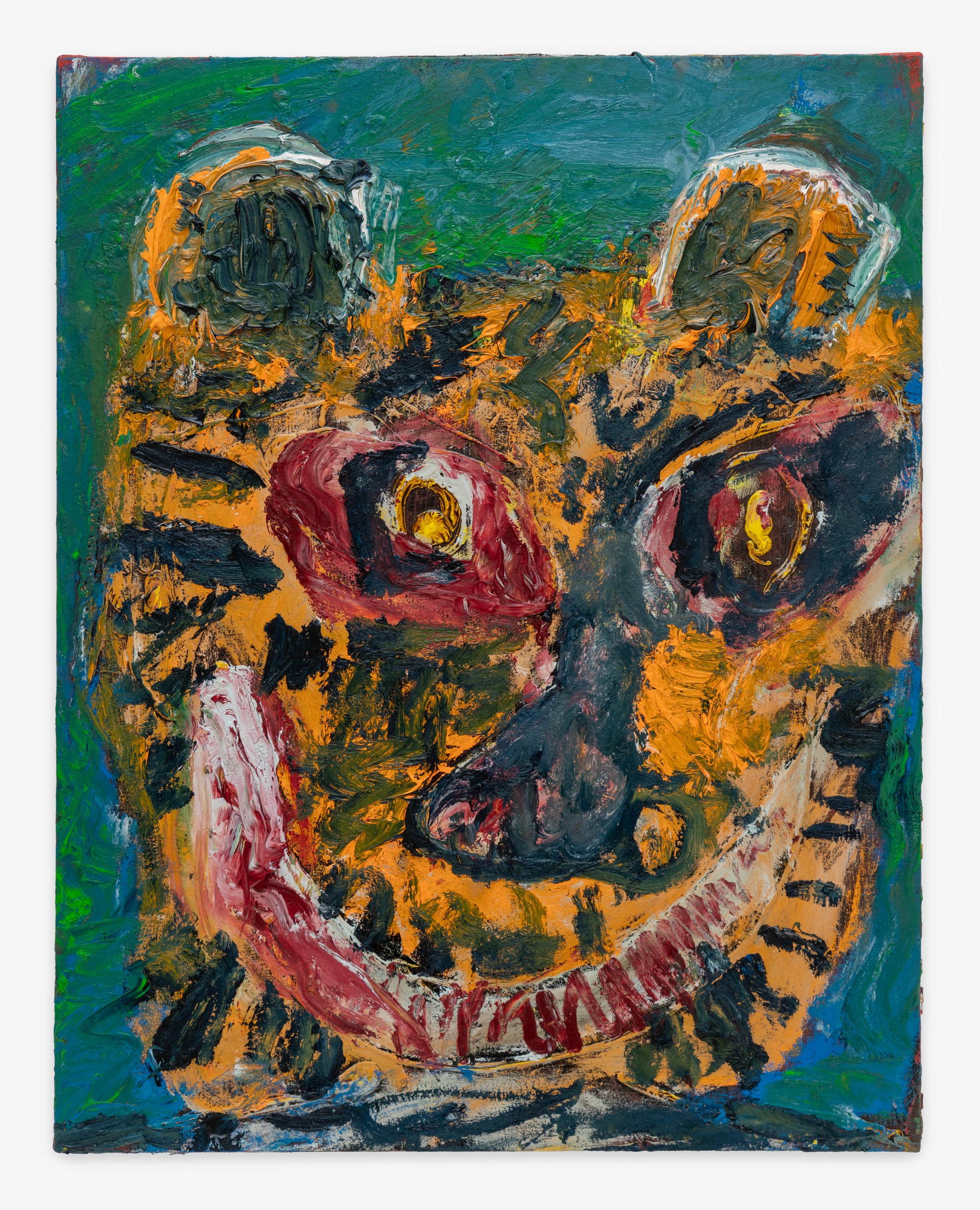 Rob Ober, “Elvis”, 2026, oil on canvas, 34 x 26 inches
Continuing the high stakes engagement with intense color, Lithuania, 2026, riffs on the striated combination associated with the Baltic nations flag. I point this work out with, a bit selfishly, given the admission that my father's family emigrated from Vilnius. Ober's homage lays testament to his wide-ranging interests, favoring the least familiar corners.
Speaking of COBRA, a bit of happenstance has landed an exhibition of Karel Appel, in a two-man show with Gerasimos Floratos, across the street at the Almine Rech Gallery, allowing an interesting contrast and comparison opportunity.
Stepping out of the lane of painting, I feel compelled to give Sally Saul’s concise display, Over the River and Through the Woods, installed in the adjoining rear gallery a notice. It offers 3D harmony of pairing with Ober’s paintings. Whimsy abounds in these warmly endearing clay pieces. Huddled on a low-rise island pedestal, the various characters have formed a charming community.
• “Steve DiBenedetto: Spiral Architect”, Press Release, Derek Eller Gallery.
† Artnet, “The Art Detective: A 54-Year-Old History Teacher in Connecticut Just Became One of the Art Market’s Fastest-Rising Stars”, by Katya Kazakina, August 4, 2022.
__________________________________
Steve DiBenedetto: Spiral Architect
Derek Eller Gallery
38 Walker Street, New York, NY 10013
March 27–April 25, 2026
Jo Messer: Speed Stick
56 Henry
56 and 105 Henry Street, New York, NY 10002
March19–May 17, 2026
Rob Ober: Stray
SHRINE
38 Walker Street, New York, NY 10013
March 27–May 9, 2026

Edward Waisnis
Edward Waisnis is an artist and filmmaker. Additionally, he is the Producer of two Quay Brothers films, Through the Weeping Glass and Unmistaken Hands, as well as having overseen the facilitation of their 2012 MoMA retrospective. His writing has appeared in Art New England, COVER, ARTextreme and STROLL.
view all articles from this author