
Whitehot Magazine
October 2026
"The Best Art In The World"
"The Best Art In The World"
October 2026
Kerry James Marshall: The Right to Appear in History - at the Musée d’Art Moderne de Paris
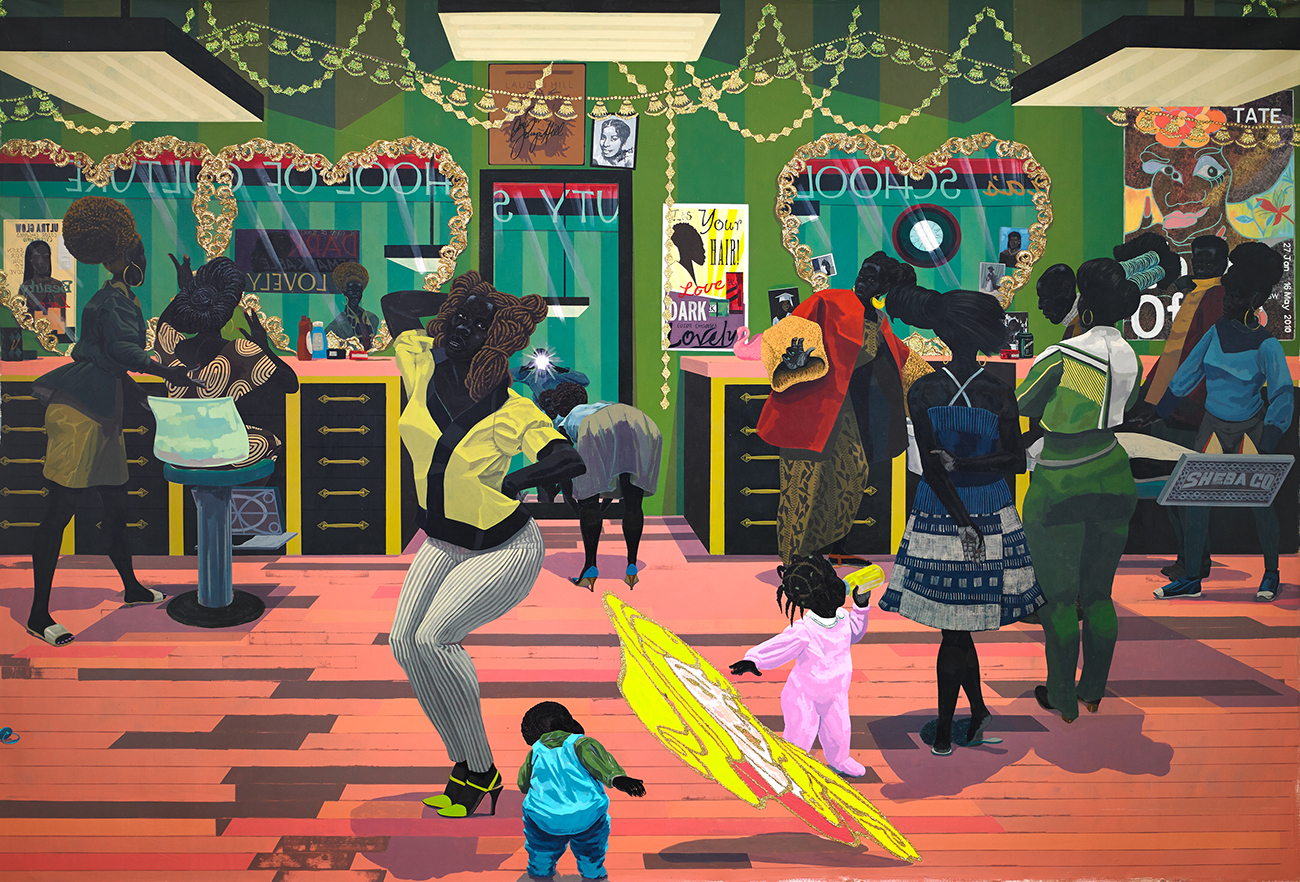 Kerry James Marshall, School of Beauty, School of Culture, 2012, Acrylique et paillettes sur toile libre avec œillets métalliques, 274.3 x 401.3 cm, Birmingham Museum of Art, Alabama, acquis, grâce aux fonds octroyés par Elizabeth (Bibby) Smith, Collectors Circle for Contemporary Art, Jane Comer Sankofa Society et des fonds régionaux, © Kerry James Marshall, Courtesy of the artist and Jack Shainman Gallery, New York, Photo : M. Sean Pathasema
By MARGHERITA ARTONI October 6th, 2026
At the Musée d’Art Moderne de Paris, from September 18, 2026, to January 24, 2027, Kerry James Marshall: The Histories brings together seventy works, including eight new paintings, spanning more than four decades of artistic practice. The exhibition poses a fundamental question: who is permitted to occupy the visual field of art history, and under what conditions?
Marshall challenges the hierarchies of Western painting, its genres, and the subjects historically authorized to embody the universal. His work transforms the visual language that has governed the appearance of Black figures, their placement within pictorial space, and their entry into cultural memory.
In Invisible Man (1986), the reference to Ralph Ellison’s novel becomes a problem of vision. Figure and background, immersed in a range of blacks, seem to merge: the body emerges from the darkness even as it remains caught within it. Invisibility appears as a condition imposed by the gaze. Black becomes a complex pictorial substance, capable of holding presence and erasure in tension. The question shifts: what kind of gaze has learned not to see?
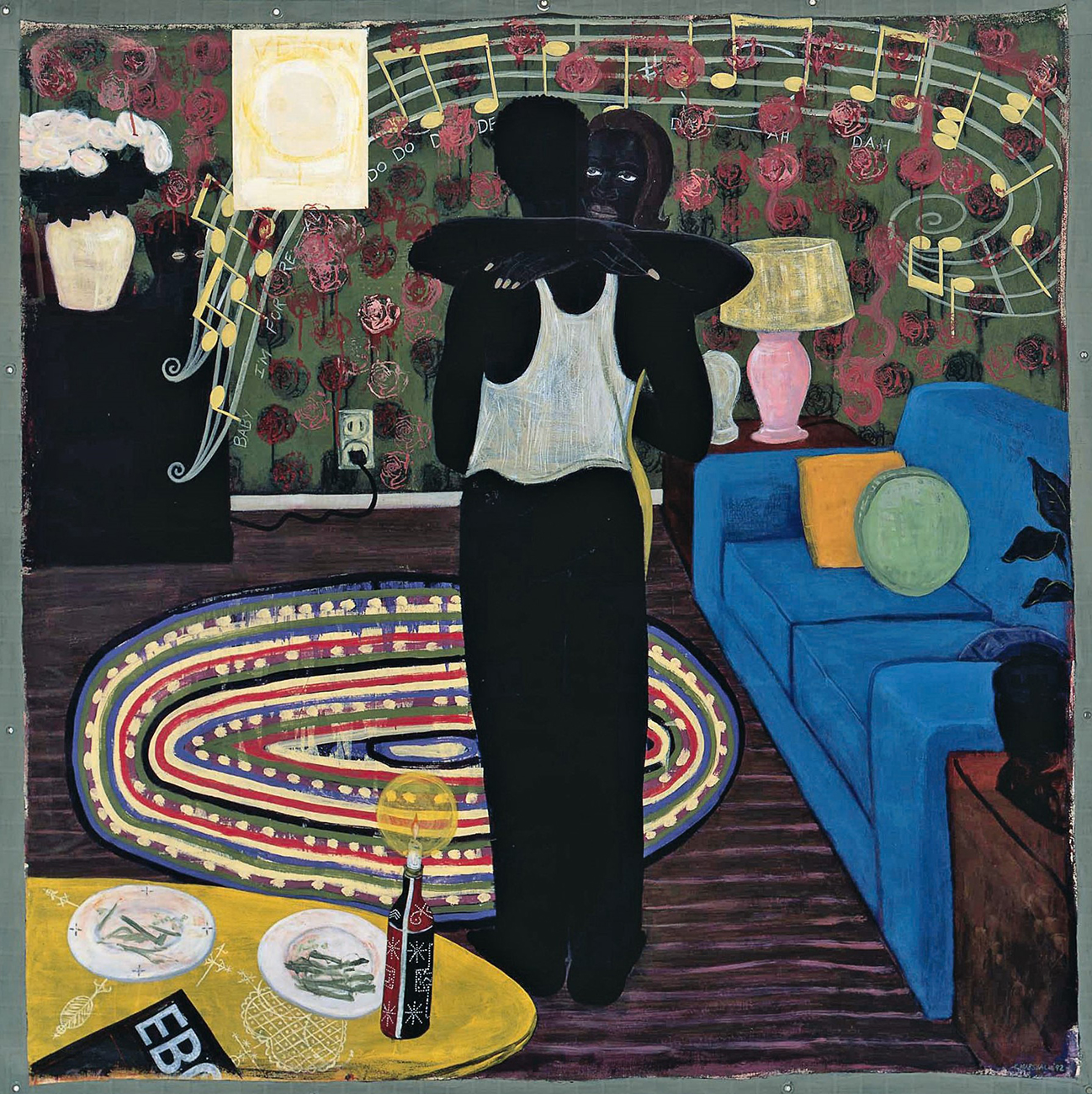 Kerry James Marshall, Slow Dance, 1992–93, Technique mixte et acrylique sur toile libre avec œillets métalliques, 191.1 x 188.6 cm, David et Alfred Smart Museum of Art, l'Université de Chicago, acquis grâce au Smart Family Foundation Fund for Contemporary Art et aux fonds octroyés par le Paul and Miriam Kirkley Fund for Acquisition, © Kerry James Marshall, Photo © 2025 courtesy The David and Alfred Smart Museum of Art The University of Chicago
Stuart Hall’s account of representation as a cultural practice through which meaning is produced (Representation: Cultural Representations and Signifying Practices, 1997) offers a useful framework. In Marshall’s work, meaning takes shape through painting’s decisions: subject, scale, and the organization of space. Composition becomes a site of historical revision.
In School of Beauty, School of Culture (2012), the beauty salon expands into a densely populated scene shaped by popular culture and competing codes of beauty. Everyday African American life assumes the ambition and scale of genre painting. Monumentality redistributes cultural prestige, granting ordinary experience a centrality long reserved for other subjects. Black culture becomes a measure through which the pictorial tradition itself can be reconsidered.
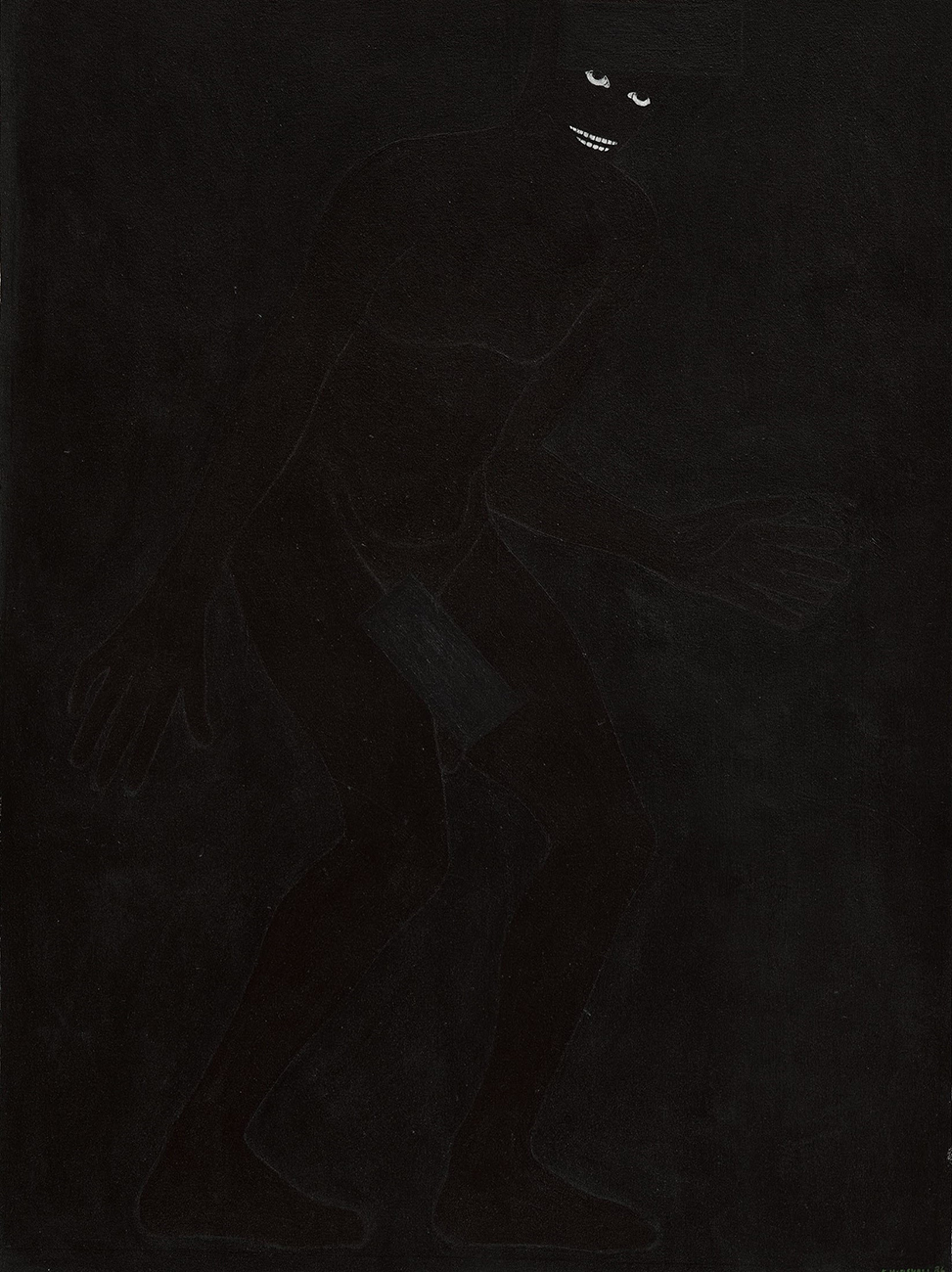 Kerry James Marshall, Invisible Man, 1986, Acrylique sur toile et sur bois, 127.3 x 95.6 cm, Collection Liz et Eric Lefkofsky, © Kerry James Marshall, Courtesy de l’artiste et David Zwirner, London, Photo : Jack Hems
A similar tension animates The Academy (2012), in which a male model poses with his fist raised in the Black Power salute. The political gesture enters the space of the academy, an institution that helped establish the criteria of artistic legitimacy. The Black body assumes the model’s position while challenging the conventions that have historically governed its representation.
Marshall’s practice enters into dialogue with Faith Ringgold, Betye Saar, and Romare Bearden, whose work has reimagined African American memory, identity, and visual tradition. His distinctive intervention lies in his sustained engagement with Western painting: he reactivates its genres and monumental scale while exposing their exclusions. To challenge the canon through its own visual language is to confront an authority that remains operative.
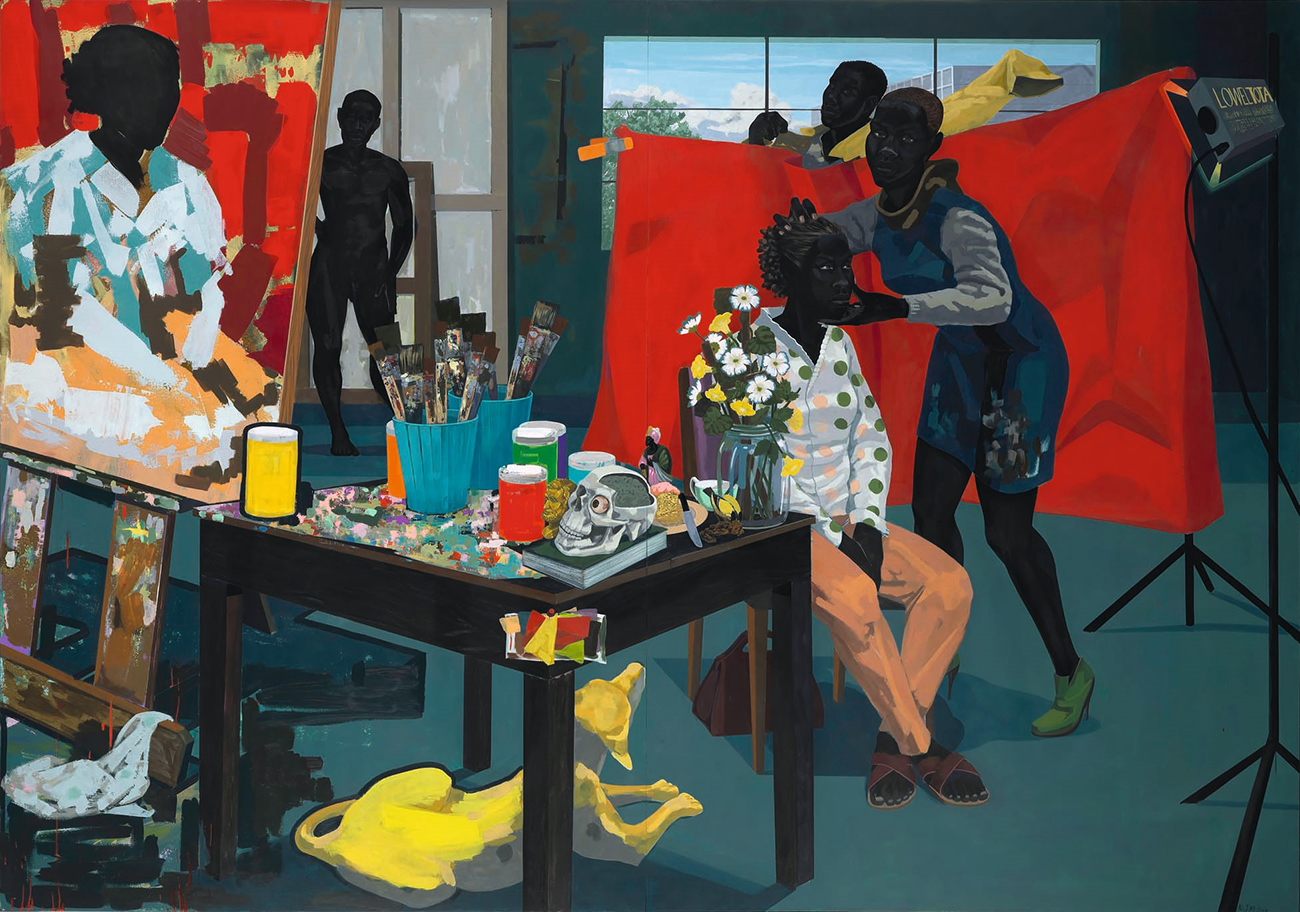 Kerry James Marshall, Untitled (Studio), 2014, Acrylique sur panneau de PVC, 211.6 × 302.9 cm, Lent by The Metropolitan Museum of Art, New York. Purchase, The Jacques and Natasha Gelman Foundation Gift, Acquisitions Fund and The Metropolitan Museum of Art Multicultural Audience Development Initiative Gift, 2015, © Kerry James Marshall, Courtesy David Zwirner, London, Photo : Matthew Hollow
The exhibition brings the histories of slavery and the Middle Passage into conversation with the intimate register of the Souvenirs and Vignettes series. In Wake (2003), an evolving work augmented with medallions across successive exhibitions, commemoration takes the form of an open archive, continually incorporating new presences.
The imagined portraits of Scipio Moorhead and Harriet Tubman address the gaps in historical documentation. Saidiya Hartman’s concept of critical fabulation offers a compelling point of reference: imagination can interrogate incomplete archives while preserving an awareness of their silences. Marshall restores the possibility of appearance to figures left at the margins of fragmented historical records, sustaining the tension between invention and testimony.
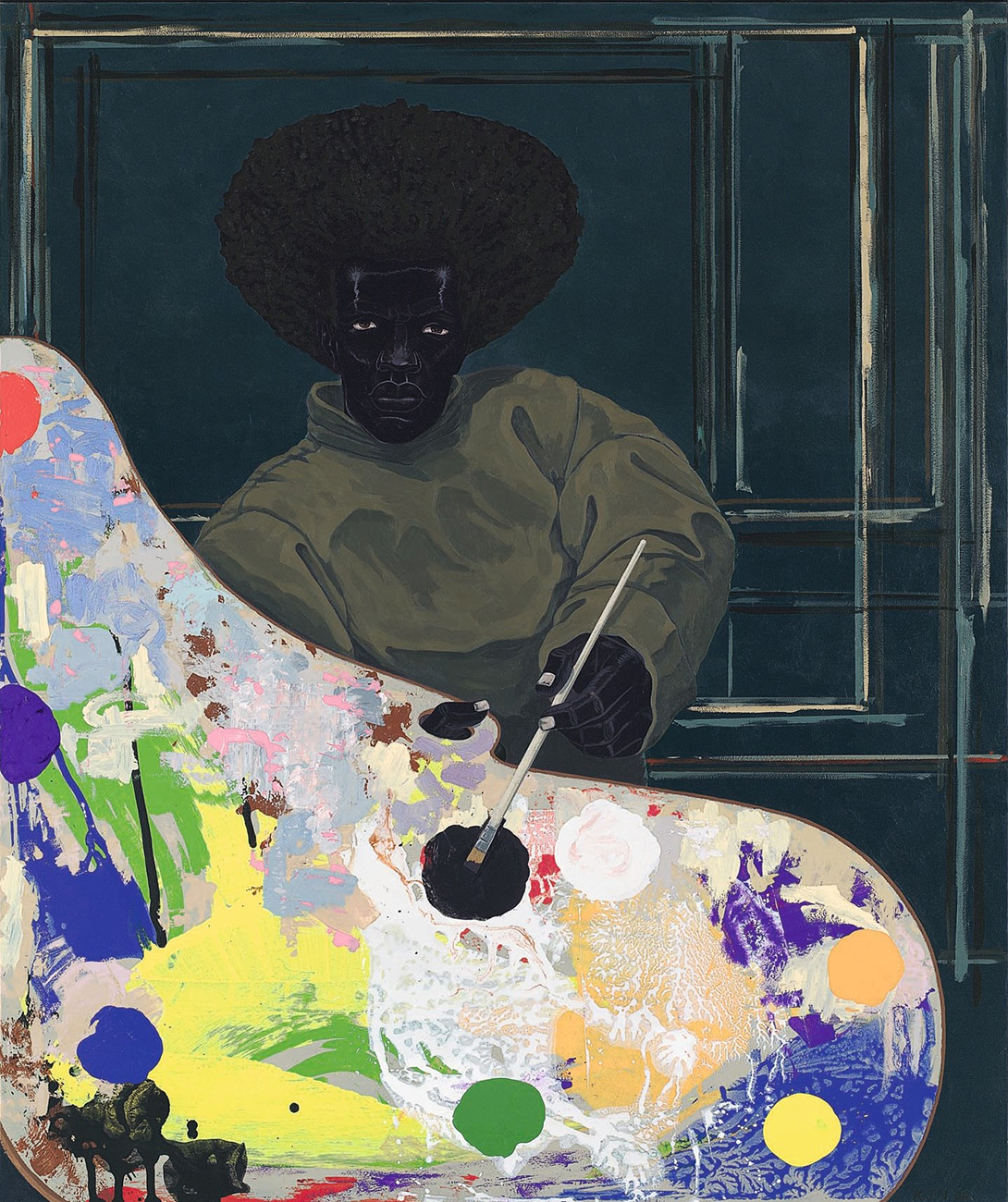 Kerry James Marshall, Untitled, 2008, Acrylique sur panneau de PVC, 184.8 × 155.6 cm, Harvard Art Museums/Fogg Museum, Cambridge, MA. Richard Norton, Memorial Fund, acquis grâce à la générosité de Nancy B. Tieken, © Kerry James Marshall, Photo © President and Fellows of Harvard College
New works devoted to lesser-known episodes in African history and to African participation in the transatlantic slave trade further complicate the historical field, bringing forward responsibilities and contradictions that resist a singular narrative.
The plural in The Histories evokes the constructed and contested nature of historical narrative. Marshall interrogates the criteria that have determined who deserves to be painted, remembered, and recognized. His paintings transform the canon from within, redefining what can attain monumentality and enter the record of art history.
Margherita Artoni
Margherita Artoni is a contemporary art critic and curator working between Italy and the United States. She began her career collaborating with Flash Art and currently writes for Segno, Juliet, Artribune, Exibart, Inside Art, ArteIN, part of cult(ure), The Art Fuse, and Whitehot Magazine.
She has directed galleries in Turin — including NEOCHROME and EDGE Art Space — and in New York at TEAM Gallery. Her curatorial work has included exhibition programs with international artists such as Rashid Johnson, Theaster Gates, Ali Banisadr, Angel Otero, Tim Rollins & K.O.S., Laura Owens, and Mika Tajima.



