Whitehot Magazine
October 2026
"The Best Art In The World"
"The Best Art In The World"
October 2026
Serpentine Sibyls is a three-part installation by California-born artist Daniel Rothbart
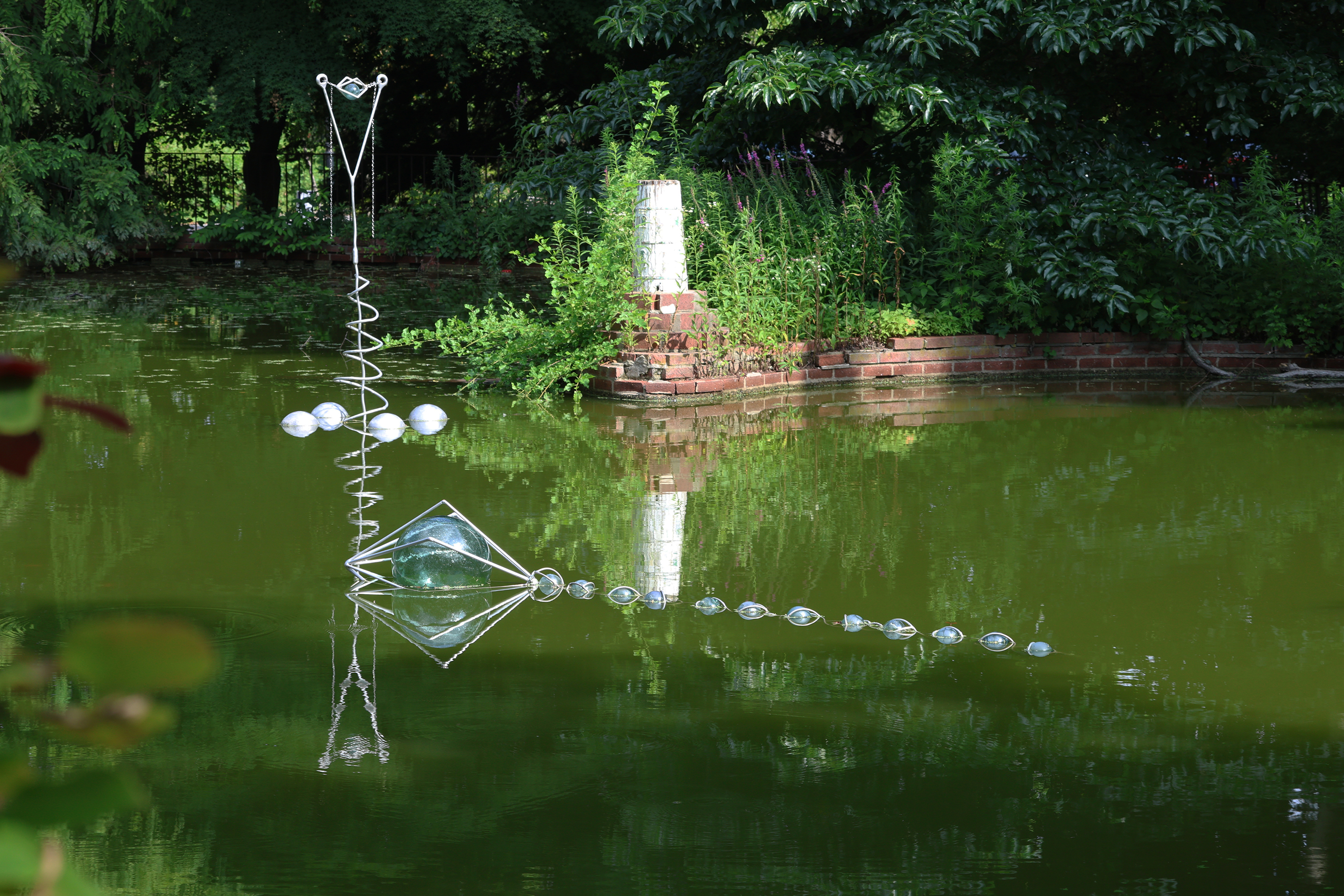 Daniel Rothbart, Serpentine Sibyls, courtesy of the Newhouse Center for Contemporary Art
at Snug Harbor Cultural Center & Botanical Garden, Staten Island
By ORNOV GANGULY and ANNA DESAN, October 16th, 2026
Serpentine Sibyls is a three-part installation by California-born artist Daniel Rothbart, curated by Melissa West and presented by the Newhouse Center for Contemporary Art at Snug Harbor Cultural Center & Botanical Garden, Staten Island. The installation joins Dario Mohr’s Acacia UniPod and other public artworks installed throughout the campus to celebrate Snug Harbor’s 50th anniversary as a cultural center.
Serpentine Sibyls extends beyond the Newhouse’s interior into the surrounding natural landscape. The sculptures emerge from the Pond Garden and from adjacent reflecting pools. This shared space allows audiences to discover the installation without the traditional formalities of a museum. In the summer, the metallic tendrils appear among lily pads, forming a languid environment. Within the semi-industrial North Shore, the installation forms an oasis akin to Snug Harbor itself—an unexpectedly bucolic campus whose character remains inseparable from its historic and geographic context.
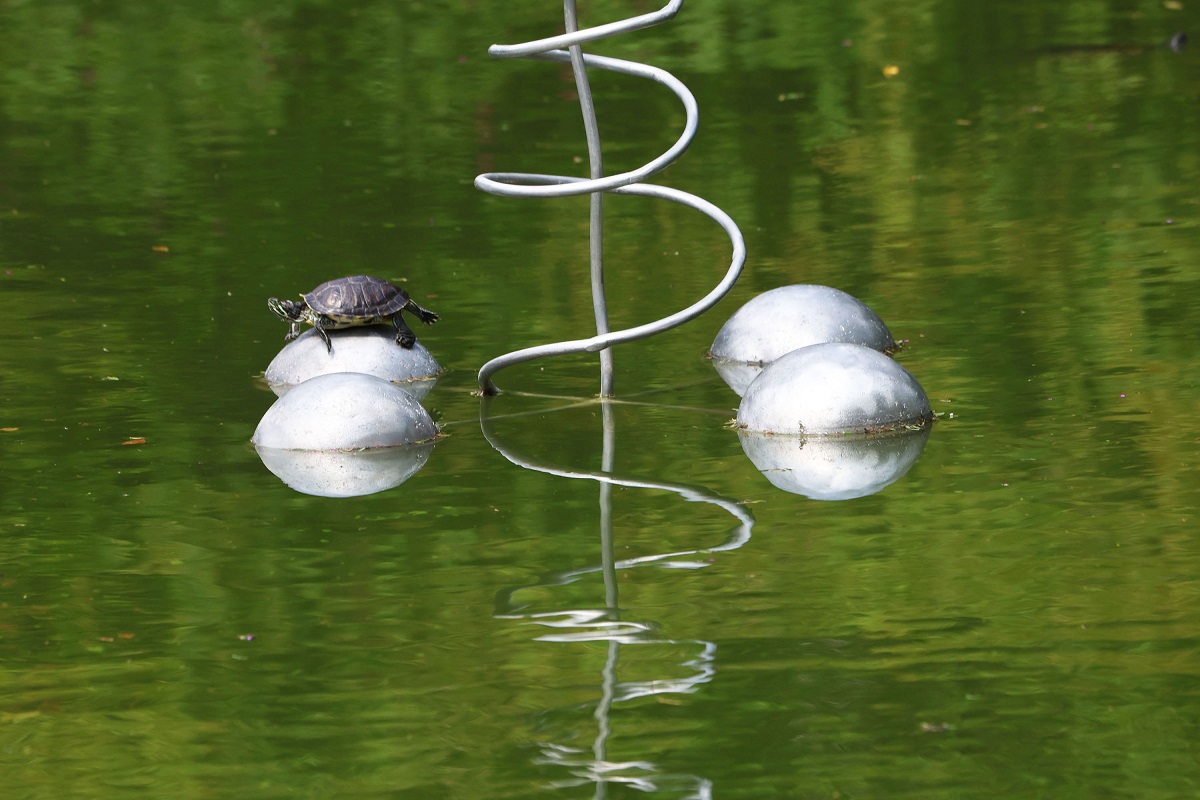 Daniel Rothbart, Serpentine Sibyls, courtesy of the Newhouse Center for Contemporary Art
at Snug Harbor Cultural Center & Botanical Garden, Staten Island
The sculptures appear to claw their way through the pond floor in long, looping gestures, as though written in metal with a sprawling cursive hand. The heavy yet buoyant pieces float in an early-19th-century man-made pond. The forms within the water evoke the Sibyls—female prophets in classical antiquity, one of whom inhabited a cave near the mouth of Lake Avernus in Cumae.
Throughout the day, the shifting light continually alters the installation. At midday, when the sunlight falls directly on one end of the pond, the glint of the glass and aluminum is almost blindingly intense. But between the shade and the light, the pond’s natural inhabitants move about. Turtles make their homes on the sculptural surface, coexisting with the art that now occupies their habitat. In that lazy pond, where retired sailors once raced the wooden boats they crafted at Snug Harbor, the Sibyls seemingly coexist with an ecology in continual flux, continually renewing itself over time.
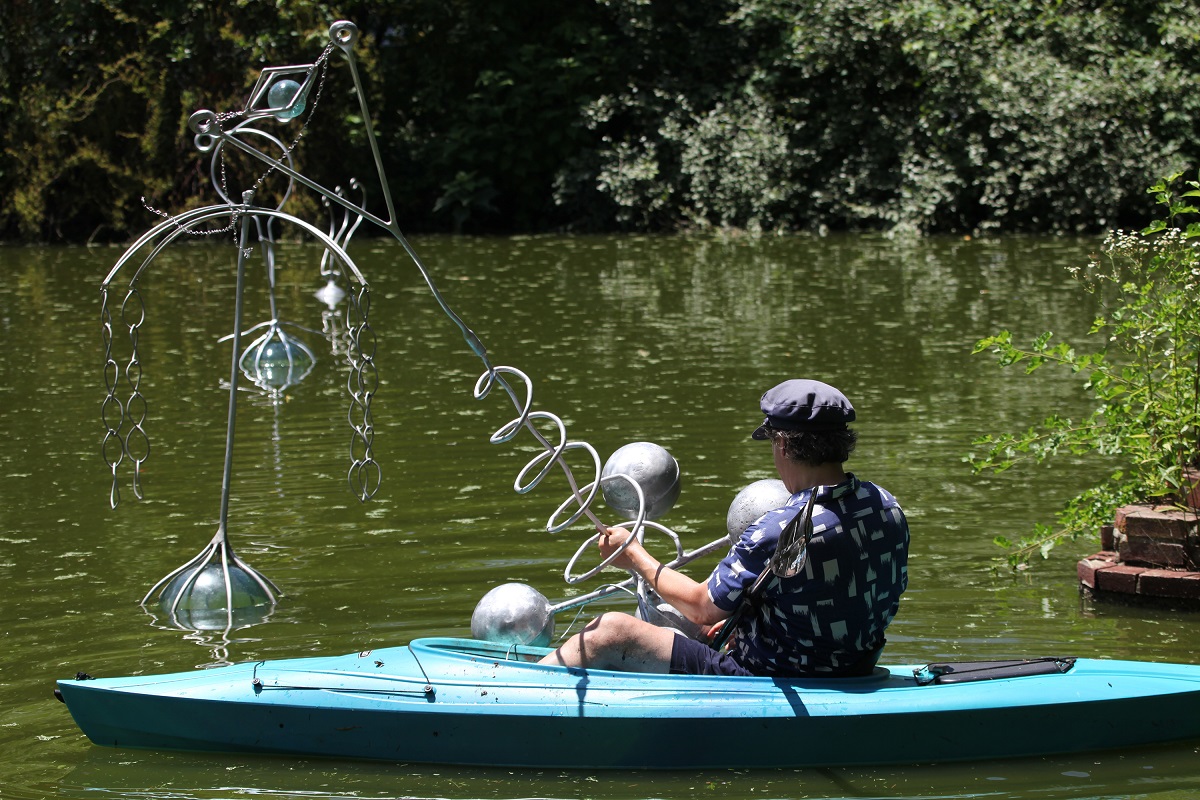 Daniel Rothbart, Serpentine Sibyls, courtesy of the Newhouse Center for Contemporary Art
at Snug Harbor Cultural Center & Botanical Garden, Staten Island
The site itself is as iterative as the natural world. Established through the 1801 bequest of Captain Robert Richard Randall, Sailors’ Snug Harbor opened on Staten Island in 1833 as a charitable haven for retired and indigent sailors. Over time, it grew into a sprawling complex of historic buildings, gardens, and waterfront grounds. By the 1970s, however, the institution faced abandonment and the threat of demolition. Jacqueline Kennedy Onassis joined local efforts led by Alice Diamond, Eleanor Proske, and Lynne Steinman. Her now-famous ferry ride to the island garnered public attention for the campaign to protect the complex. In 1985, as Snug Harbor entered a new life as a public cultural center, John Perreault became its first professional curator, bringing a contemporary vision for art into a historic place deeply entwined with New York’s maritime past and fostering what Vivien Raynor called a “golden age for Staten Island’s art scene.”
In the communal imagination, the retired sailors of Snug Harbor have become something akin to Odysseus’s crew, finally returned home to Ithaca, as the site marks 50 years as a public place for Staten Island. The Noble Maritime Museum, a sister institution of the Newhouse Center, houses artifacts of that era. Tales of their lives survive in the traces left behind in the architectural marginalia and recorded histories that give these halls their voice and dignity. Visitors—whether artists, employees, flâneurs, or tourists—experience the former home of the aged, landlocked sailors as a place belonging to another time, in surreal ways. According to some, ghosts leer out from the Matron’s House and the Main Hall’s second-floor unrenovated rooms.
The Newhouse Center’s exhibition history has repeatedly engaged with Staten Island through the themes of water, migration, memory, and music. John Perreault’s 1991 exhibition Bedrooms explored Snug Harbor’s residual past—not through the studied facts contained in local historian Barnett Shepherd’s volumes, nor through the feeling of a bygone nautical era. Perreault’s exhibition combined anthropological warmth and coldness in an analytical approach to a place whose living history as a sailors’ home had been pushed into the past tense when the city purchased the 80 acres of land. The idea to explore off-limits portions of the campus, so long uninhabited and decaying, came to Perreault during his “indulgences” in fusing art with abandoned space. He likened the dynamic of decay, so close to high art, to an “unintentional surrealism.” That is, the ghosts of our past collide with states of varying erosion to come back and haunt us.
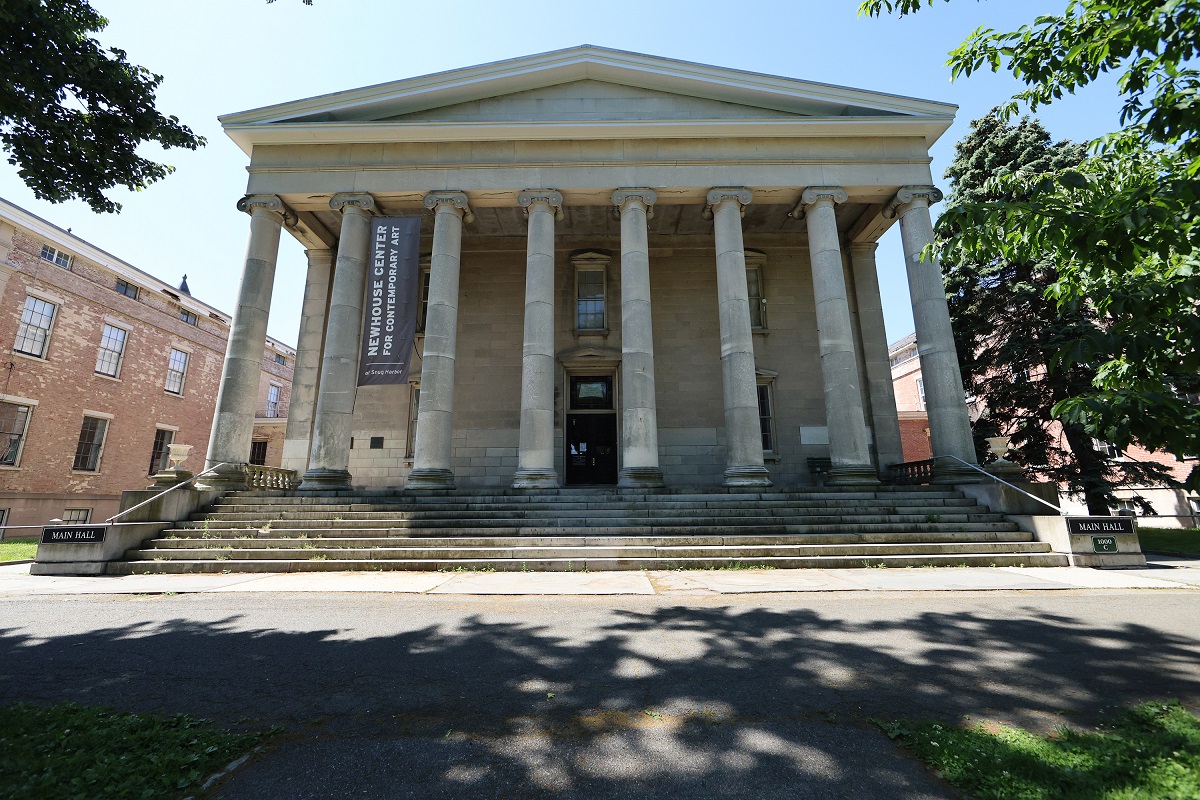 The Newhouse Center for Contemporary Art at Snug Harbor Cultural Center & Botanical Garden, Staten Island
Rothbart took inspiration from the Cumaean Sibyl in Virgil’s Aeneid, who encouraged Aeneas to pluck a golden bough from a sacred tree. The bough served as a necessary passport for entering and journeying safely through the underworld. In Greek mythology, the sibyls were female prophets often sought in times of need, usually by proud men seeking vainglory. But the sibyls were not merely prophets on command. One sibyl wrote her prophecies on oak leaves and laid them at the mouth of her cave. If the wind scattered these leaves, she would not return them to their original order. In another tale, the Cumaean Sibyl offered Tarquin Superbus, King of Rome, the Sibylline Books for a price that he initially refused to pay, leading her to burn two-thirds of the prophecies. Only afterward was Superbus compelled to buy the remaining volumes for the original price.
The sibyls of Snug Harbor arrive at our collective moment of dire need. Climate change has made the future increasingly uncertain. Rising seas, intensifying storms, escalating heat, and spreading wildfires are accelerating the loss of ecosystems and species. Snug Harbor, like Staten Island as a whole, bears witness to these catastrophes, including the recent memory of Hurricane Sandy’s devastation. In this moment, the ancient figure of the sibyl—the prophetess consulted in times of crisis—takes on renewed urgency. The Sibyls’ presence reminds us that the future is neither distant nor abstract but something we live through. The stories we tell, the histories we preserve, and the choices we make now will shape what remains for those who come after us.
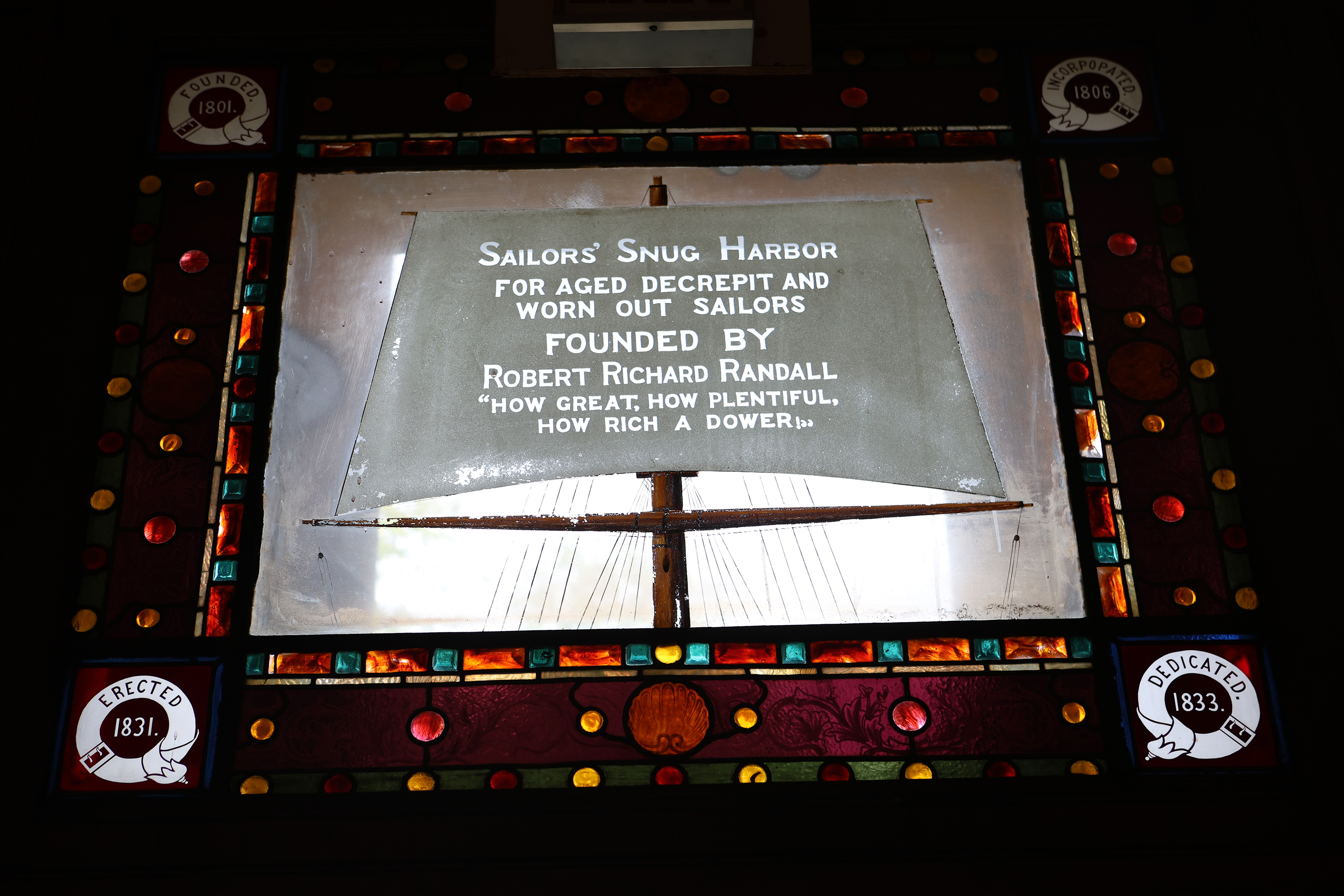 Plaque (detail)
The Sibyls’ appearance at Snug Harbor not only reflects the precarity of the present moment but also the complex’s profound relationship to history. So often, committing history to memory begins with the seemingly modest act of writing something down. Yet without the further work of preserving, contextualizing, and transmitting these records, history can disappear with surprising alacrity. On this 50th anniversary, we endeavor to do justice to Snug Harbor’s story by crafting an archive that keeps the past alive, giving us a way to imagine and navigate an unforeseen future.
There is no perfect way to tie the knots of history, and the work offers no clear-cut prophecy. Instead, eras chafe against one another when the present calls upon us to remember. Snug Harbor is a place where the dense histories of sailors, ships, art, preservation, and renewal have become intricately entwined. Rothbart’s Serpentine Sibyls enter this story as figures that inhabit that same uncertain passage between what has been and what is yet to come. Both history and the works must be read through reflections, fragments, and traces. The past is as difficult to comprehend as the future. Perhaps we need a sibyl, not to predict what lies ahead, but to help us through the crosscurrents of our time. Reflections offer us a glimpse into our place in eternity.

WM
Whitehot writes about the best art in the world - founded by artist Noah Becker in 2005.
view all articles from this author