Whitehot Magazine
October 2026
"The Best Art In The World"
"The Best Art In The World"
October 2026
Why Artists Making Space for Art Making Builds Community in the Best Way
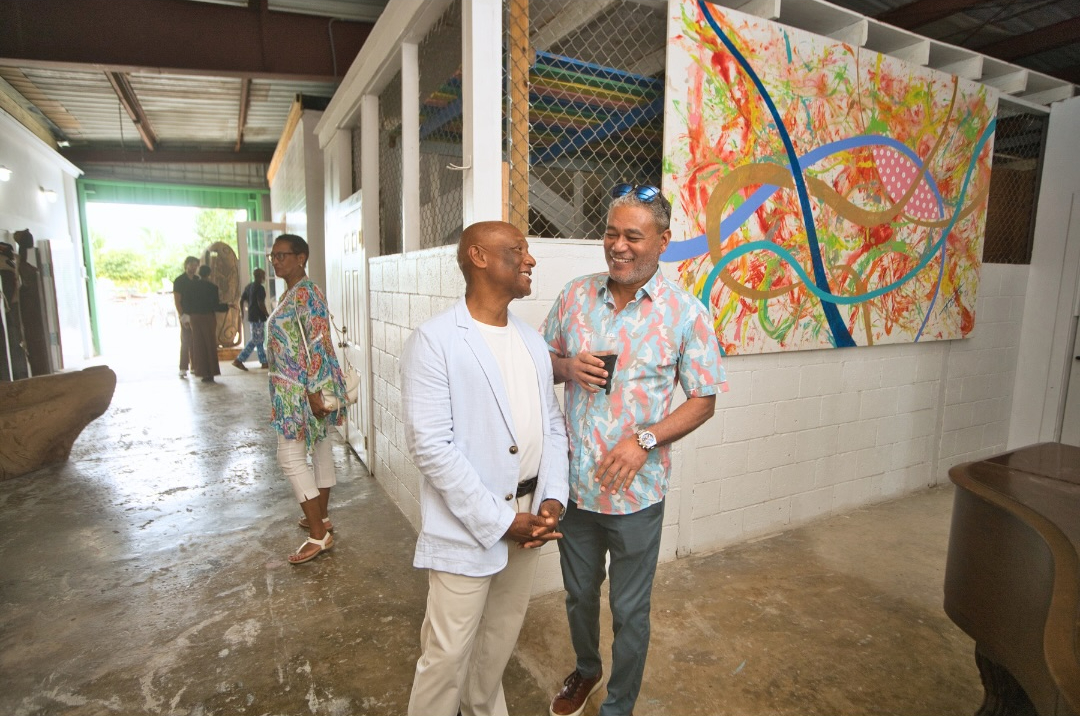 Antonius Roberts at the Incubator for Collaborative Expression | Courtesy Chappell Whyms
By BYRON ARMSTRONG May 5th, 2026
Rajni Perera is what you could call an artist on the rise; the international artworld ‘who’s who’ who will get the chance to bask in the glow of the Sri Lankan-Canadian artist’s work at the 2026 Venice Biennale. That’s a gargantuan peacock-plumed feather in her cap, and is the sort of accolade artists in the zeitgeist are happy to rest on. However, like the futurist world building for displaced people represented in her practice, Perera has opened up a new world of possibilities for Toronto’s artists displaced by skyhigh rents and a dearth of live/workspaces. Capsule Artist Resources is a registered non-profit corporation that provides subsidized studio space to artists and curators in Toronto and the surrounding area for art making and exhibitions. Rents are kept relatively low in comparison to the market. Perera is both founder and acting Executive Director of the space, which is a job she recognizes is going to get harder to do as her art star rises.
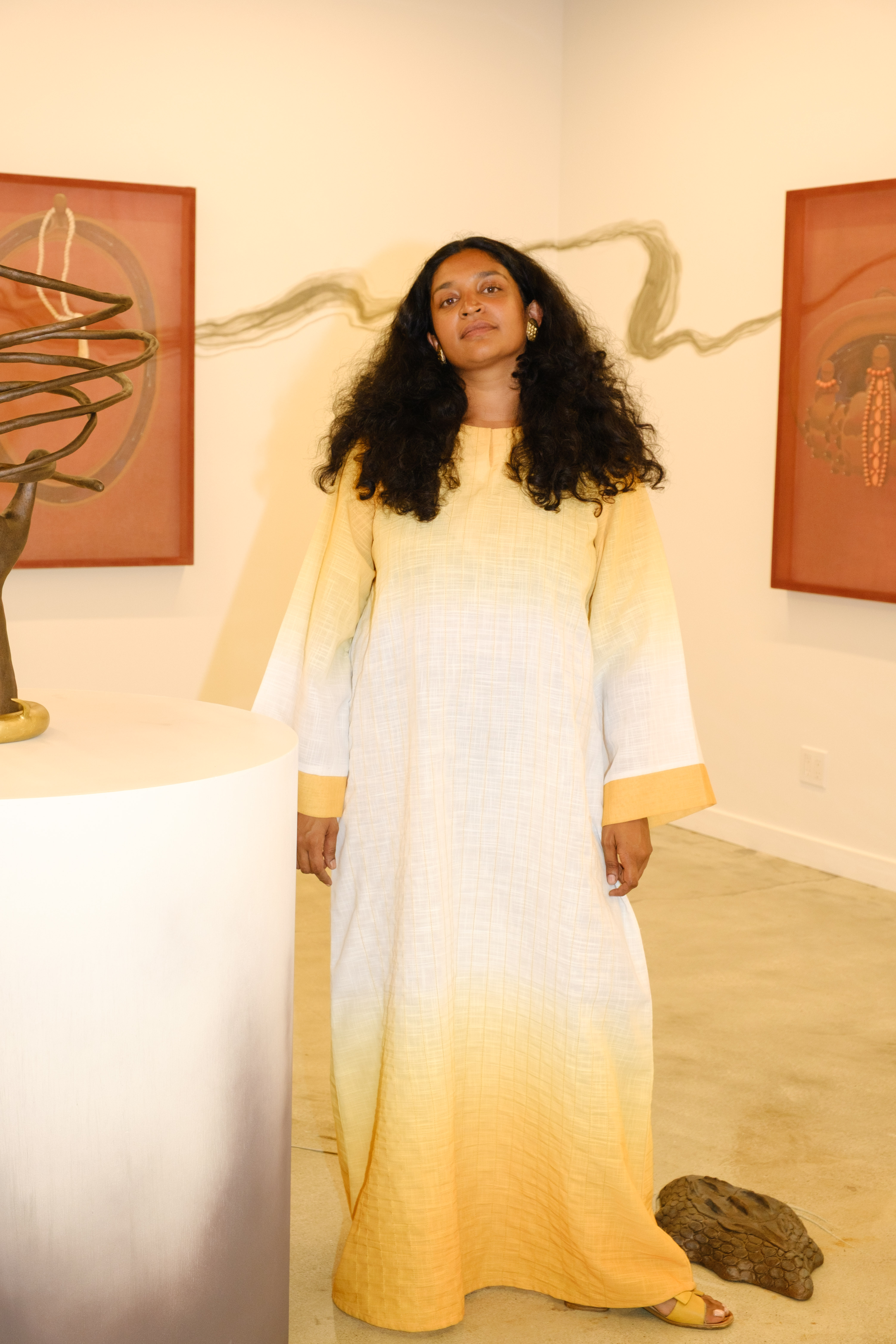 Rajni Perera. Courtesy Simran Malik
“Really looking forward to hiring someone to do that in the future, when I can get a salary together for them.”
This labour of love has been planned for two years, finally launching on January 1st, 2026. By March, there was just one remaining studio cubicle left. Open during artists hours (which is to say, 7 days a week), the rental of a cubicle also includes access to a common shared workspace for collaborative projects. The ‘Fab Commons’ as the common work area is named, is a fabrication studio that comes with a studio assistant (Shannon Sandwell) courtesy of OCAD University’s fabrication studio, and the addition of a tool library. The tools were donated by the art school and Perera herself.
“We've had the closures of big studio providers, because those models were unfortunately quite bloated and extremely bureaucratic,” Perera says. “That means they need a lot of money to run something that has a diminishing value in the minds of people. Perera points to top-down government cuts to the arts as proof. “That signals a devaluation of the role that the arts plays in upholding a society that's healthy because it’s able to critically think and engage, speculate about the future or past, and to just enjoy their lives,” Perera adds. “If you want to say that the arts aren't worth the money, you're gonna see the effects of that in 5 years or more.
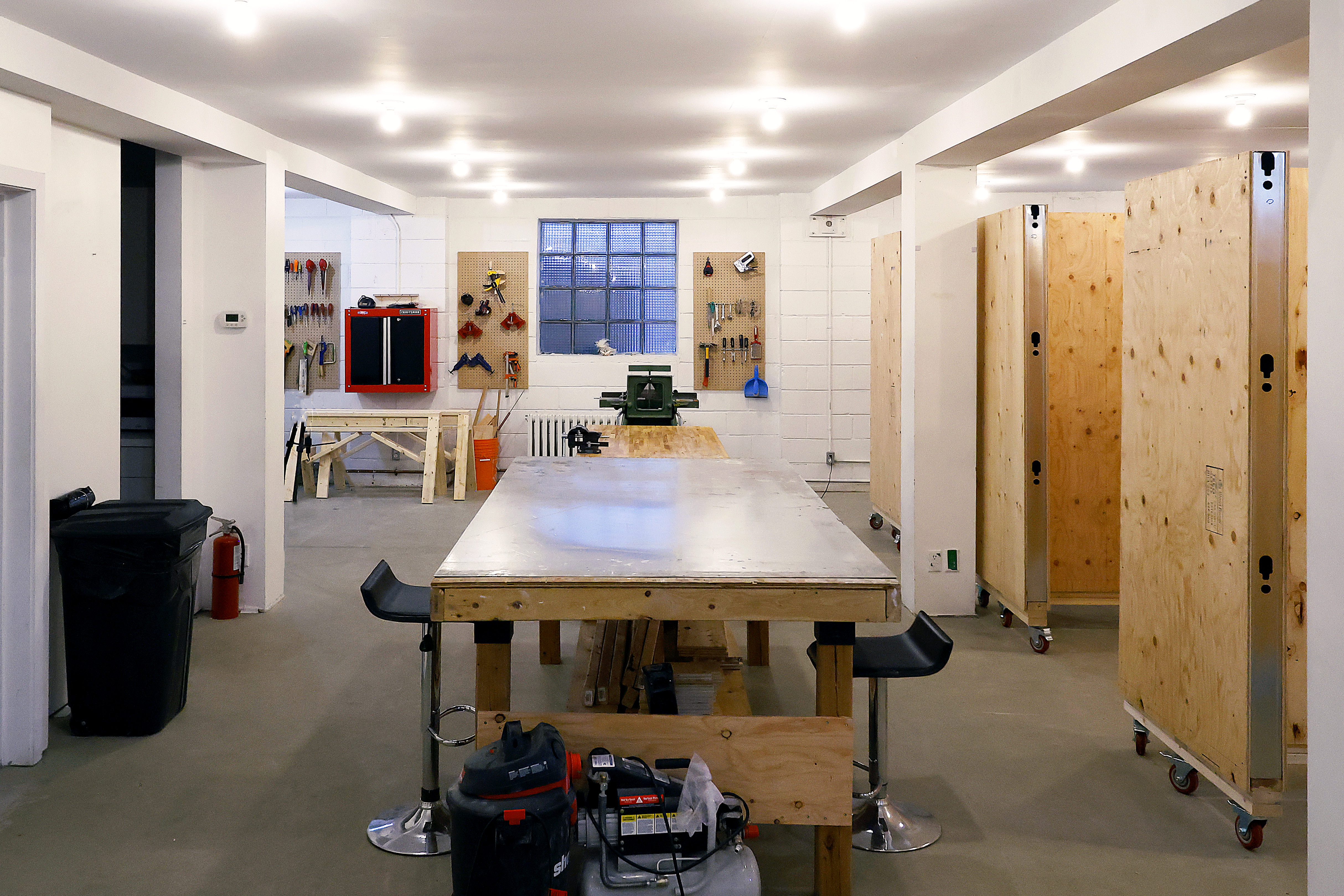 Capsule Artist Resources | Studio spaces | Courtesy Ernesto Cabral
Cultureless, boring, boorish societies aside, it also makes sense from an economic perspective. According to a report from the Canadian Chamber of Commerce, arts and culture accounted for $62 billion in a country of around 40 million people in 2024. As per the Principal Economist at the Canadian Chamber of Commerce, that’s $29 in economic activity for every dollar in federal investment. In 2022, according to the Toronto Arts Council, Toronto accounted for $11.4 billion of the city’s GDP. From every perspective, culturally, intellectually, and financially, forcing your artists to leave for greener pastures abroad is breathtakingly stupid.
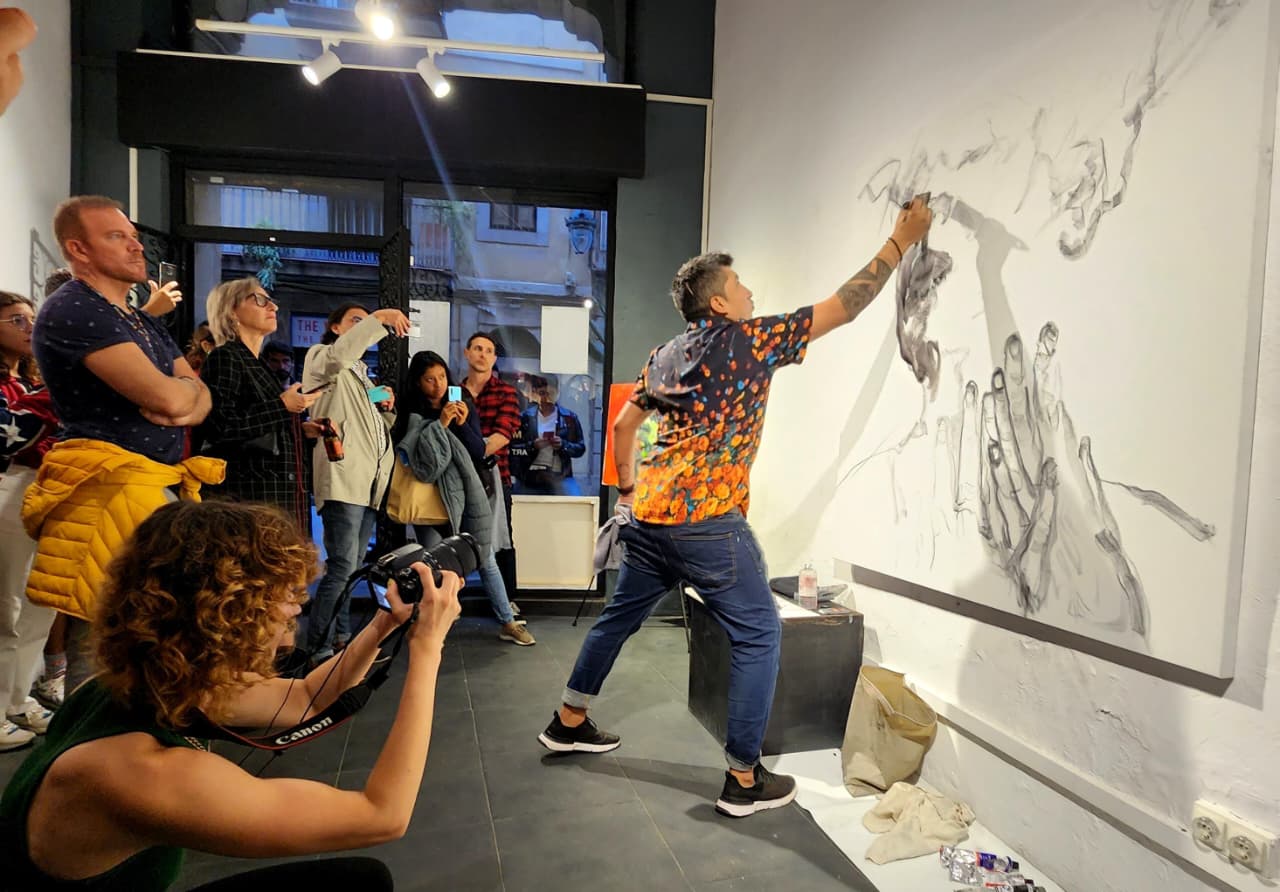 Carlos Delgado working on a live painting while on tour | Courtesy Diana Vivas
Almost 3,000 miles south, painter Carlos Delgado returned home to Colombia after leaving Toronto about 3 years ago. His return is a continuing indictment of the cost of living in the aforementioned Toronto. “I really loved Canada, but it was complicated and very expensive to stay,” Delgado says, speaking virtually from his studio in Colombia. “I moved back to Colombia because of cheaper rents and lifestyle, the beautiful landscape, healthy food, and to be closer to my parents.” Within a year of returning to his small town of 57,000 people, Delgado was working out of his own studio. His lifestyle is one dreamed of by most creatives; one paid for by a widening pool of collectors around the world introduced to his work through social media and exhibitions that have spun out of that exposure. His return to his community brought local aspiring artists to his door, one of whom was 7 years old at the time. “It was really impressive art, so I couldn't say no,” he says, reflecting on his own childhood. “I knew how difficult it was to access space and materials — quality paint, brushes, everything — and it was at that point that I realized what my purpose was here.”
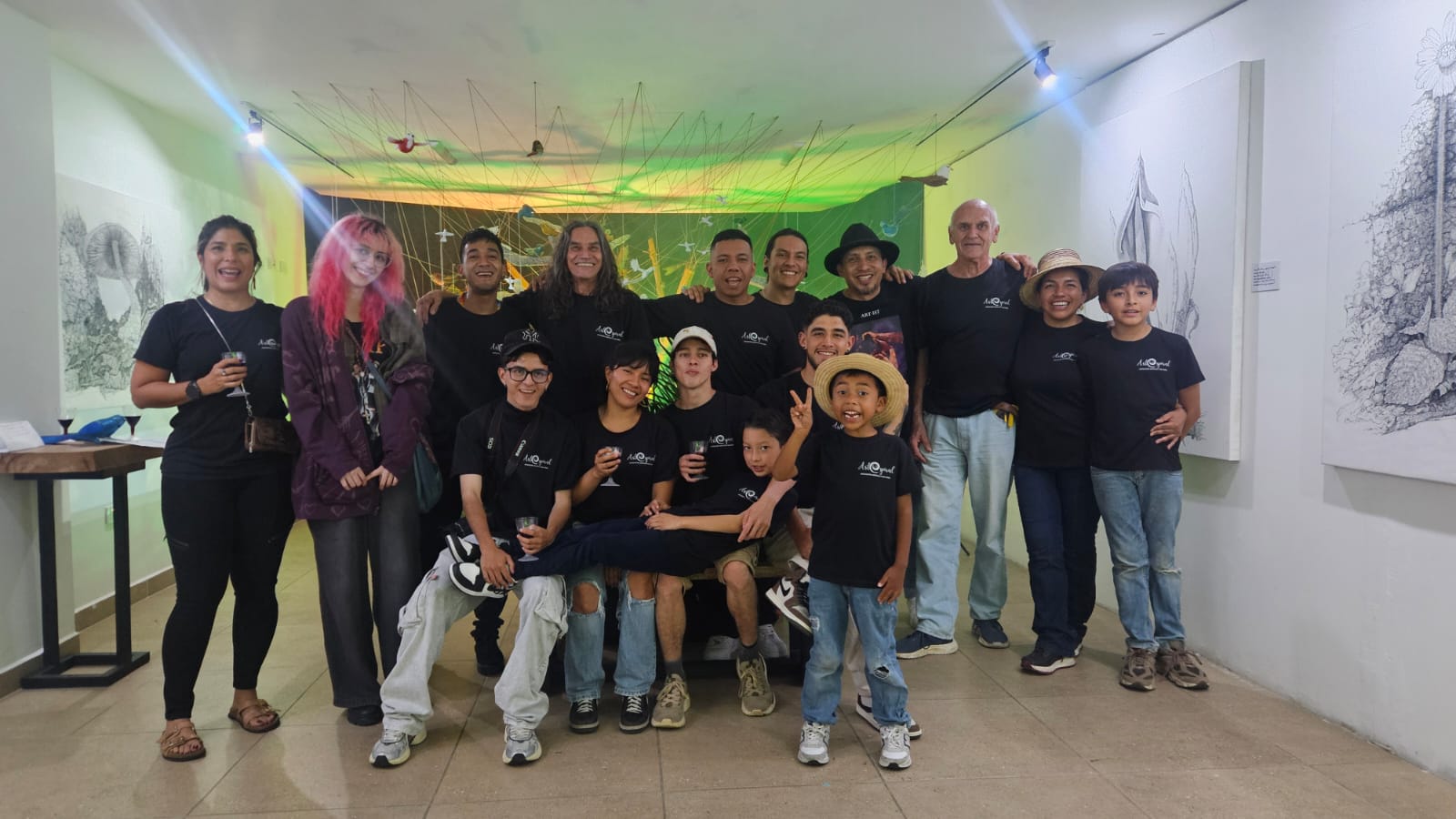 ACD Gallery & Studio | ACD Gallery Collective | Courtesy ACD Gallery Collective
As more artists showed up at his door, Delgado partitioned off space for them to work, guided by his prior experience in Toronto’s (now defunct) Walnut Studios. One of Toronto’s last independent artist studios providing affordable workspace for over 40 artists, Walnut Studios was devastated by a massive fire in 2018 and didn’t return. Three years later, Delgado needed to seek out a new space to make room for all the artists working out of his studio. The new studio is big enough to support a gallery (ACD Gallery and Studio) where nine artists both work and exhibit their work every year. Although no longer living in Toronto, his relationships in the city continue to pay dividends to his Colombian art community. Muse Arts is a Toronto organization that promotes art as a tool for social change and activism. “The Co-founder and Program Director, Paola Gómez, brings international artists to Colombia for an annual themed Community Arts Residency,” Delgado says. “I bring them to my studio in town to make art with them.”
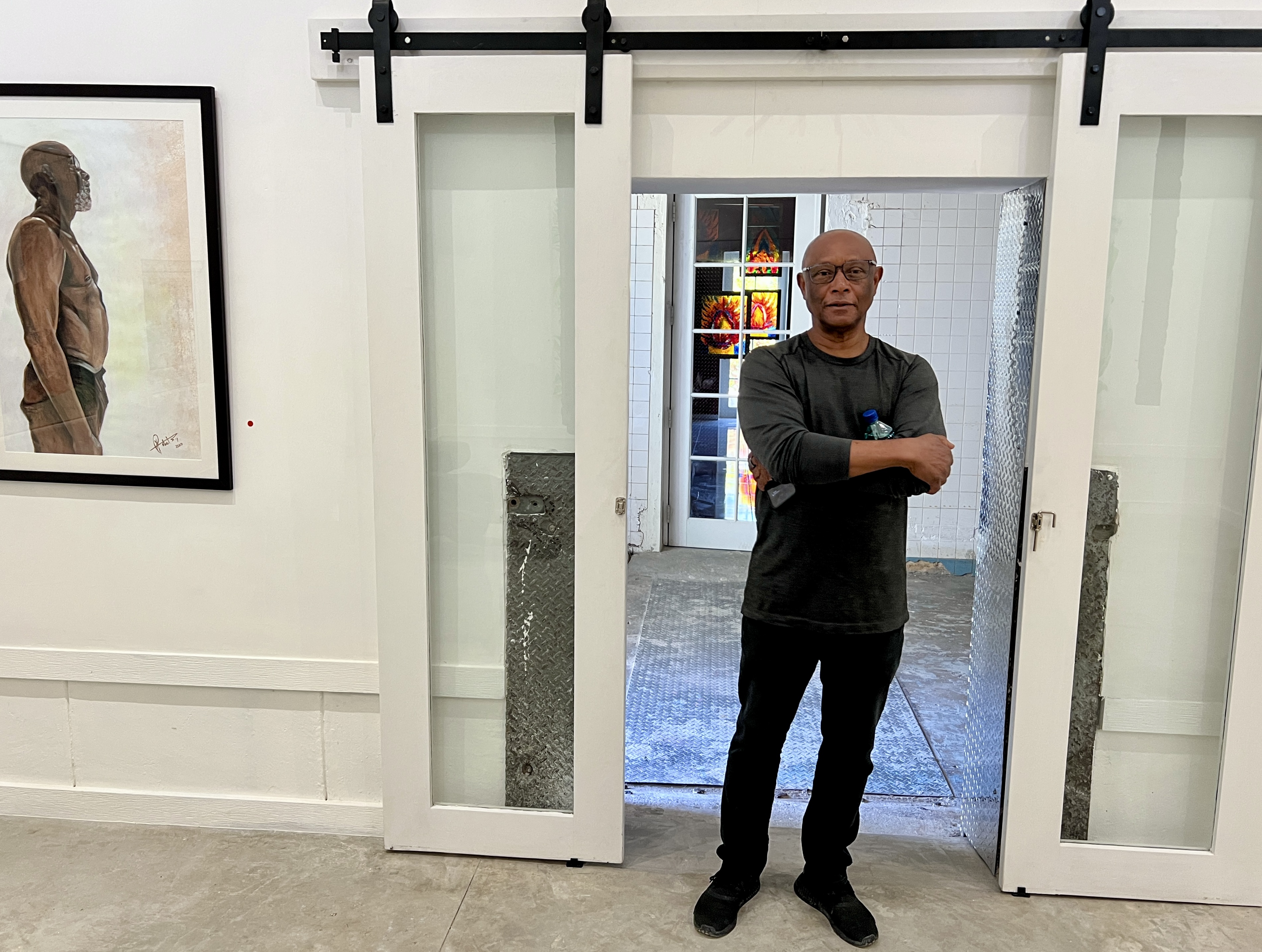 Antonius Roberts at ICE | Courtesy Judith Doyle
Around 1,400 miles northeast of Colombia, Antonius Roberts reflects on the path to launching the Incubator for Cultural Exchange (ICE). The entire concept for ICE began to form for Roberts back in 1983 while running the Central Bank of the Bahamas Annual Art Exhibition and Competition, which spun into his stewarding a revived summer arts workshop (FINCO Summer Art Workshops) where selected students from Bahamian high schools participated in a residency of sorts with mentorship from Roberts and professional artists from the islands like Tavares Strachan. “It was important for me to create opportunities to expose the participants to different forms of art, and they came together every summer for one month, Mondays through Friday, from 9 am to 3 p.m,” Roberts says.
As Roberts' artistic career gained more attention, so did his need for studio space. Commissions from Disney and the offer of materials for projects from the U.S. Embassy in The Bahamas were, of course, welcome, but not without complications. “To expand and develop my practice, and to accommodate these commissions and these involvements with major companies, I needed more space,” he says. “I got a hold of this 10,000 square foot warehouse that was a former ice factory with an acre of property.”
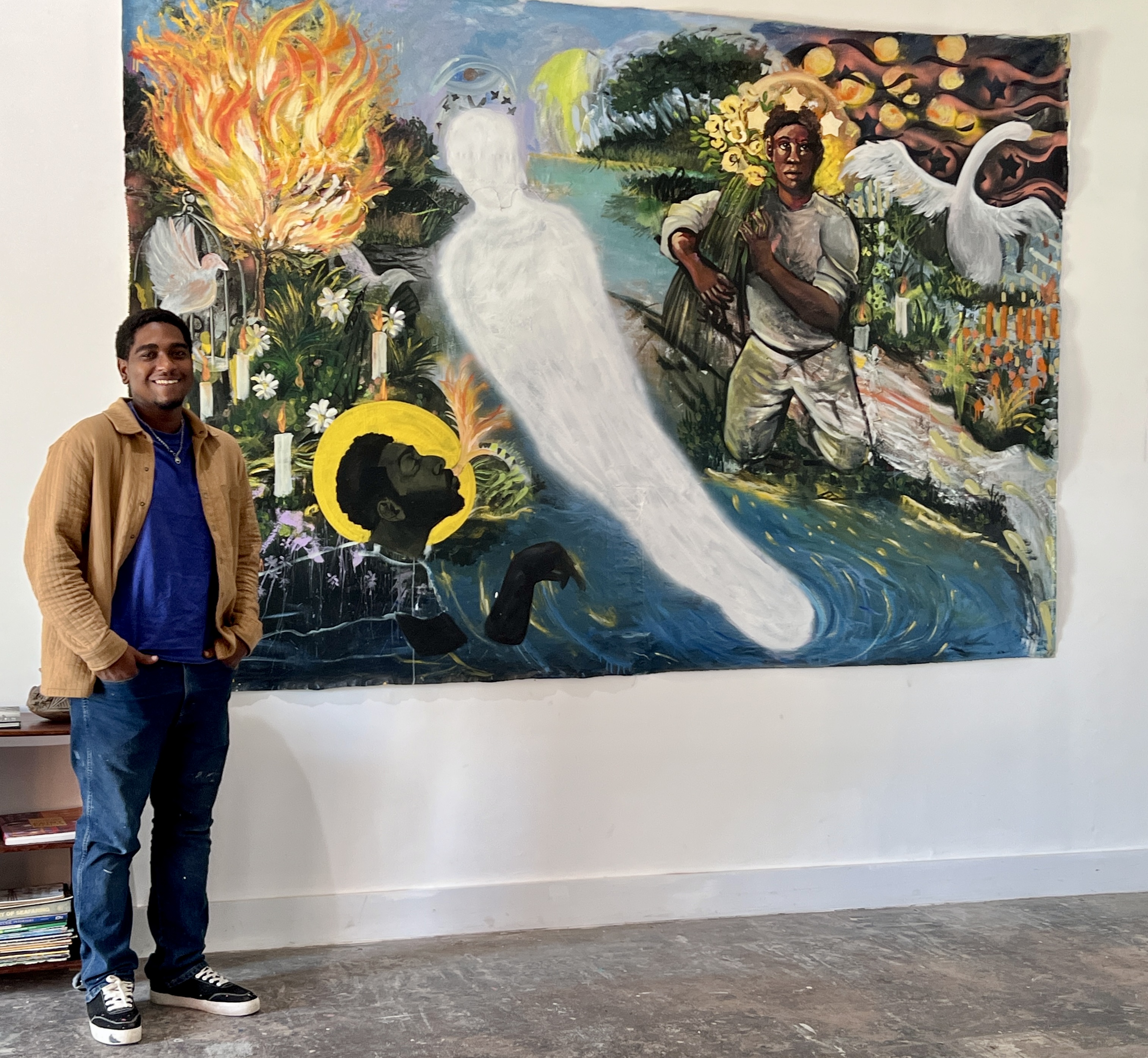 ICE studio artist Eddion Whyms beside his work | Courtesy Judith Doyle
Formerly owned as “Holiday Ice” by businessman Ulrick Fox (the father of Bahamian-Canadian NBA champion Rick Fox), Roberts leaned into the philosophy behind his practice: celebrating history. “I felt it was only fitting for me to allocate some of the space to former students, and to provide some younger artists with an opportunity to have access to a free, safe, supportive environment,” says Roberts. “It also allows them proximity to myself and individuals who would support their practice and come in search of stories about the development of art in our country.” Like Perera and Delgado, the need for more studio space would lead to something that would grow to include the community in a way that became part of a calling beyond individual artistic practice and professional pursuits. “Over the last 7 amazing years, I’ve had artists like Lavar Monroe join in mentoring, which is also great for him because he also wants to have direct contact with these young, emerging artists and feel that energy.”
Where young energy and mentorship is concerned, Delgado, together with his wife, Diana Vivas (who leads communications, content creation, logistics, and general administration), launched the ArteSpiral Cultural Organization. The goal of the organization is to promote “spaces for expression, training and support for emerging artists, children and vulnerable populations” with an understanding of art as “a tool for resistance, healing and collective construction that generates a positive impact on society and better life possibilities for future generations.”
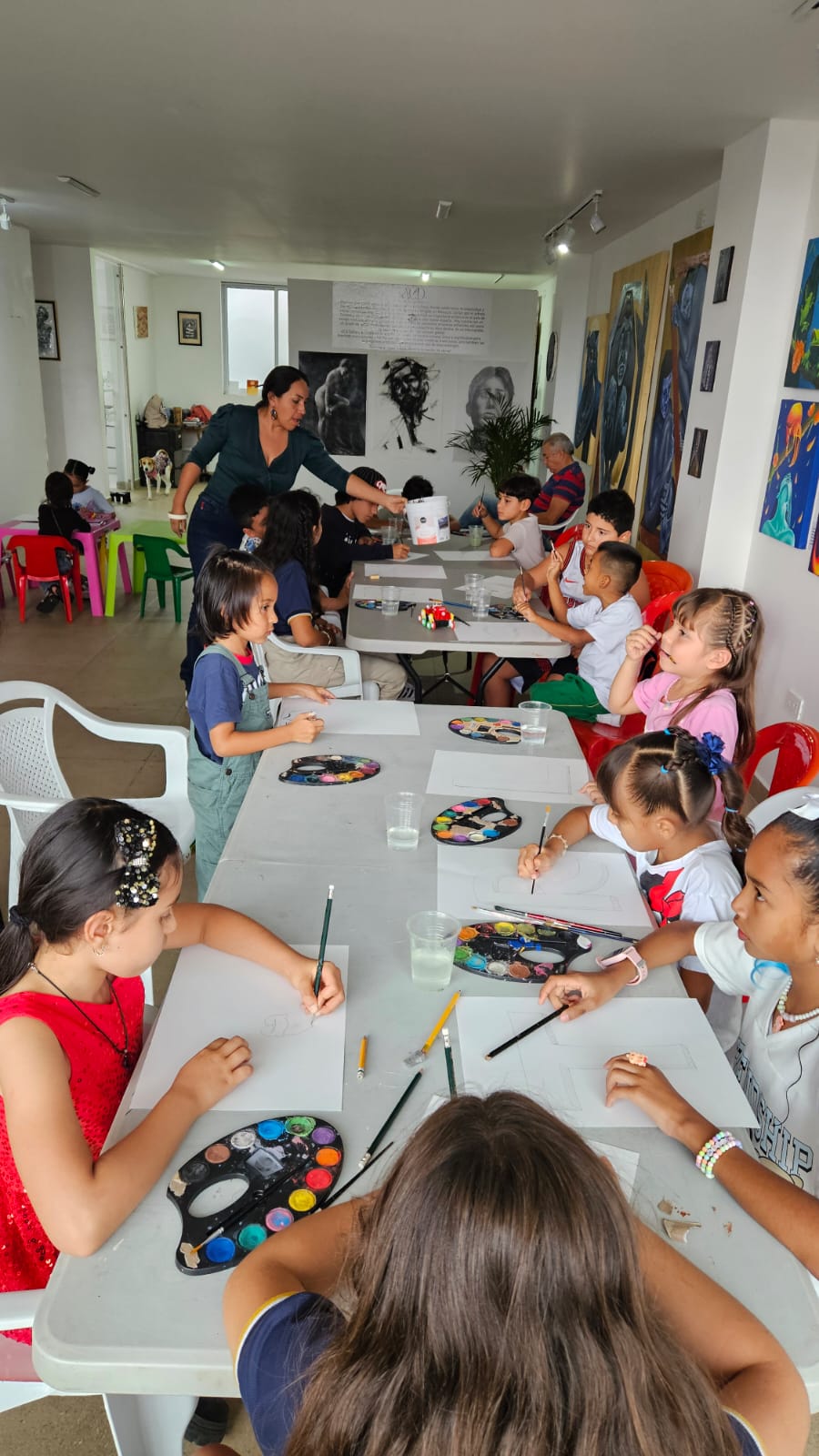 ArteSpiral Children's art workshop | Courtesy ACD Gallery Collective
“We live in this beautiful place in the mountains, with these naturally talented people who are born artists who just need the opportunity to be artists,” Delgado says of the initiative that’s already had major impacts on the community in the last year. “We offer around 90 kids full artistic mentorship and materials, with snacks and around 80 workshops in the last year alone.” Now the focus for the organization is a regular form of donor funding to keep the organization going.
As a social enterprise, Perera’s Capsule provides free programming too, with low-cost workshops as well as a gallery for exhibitions (3 major and 2 solos) where she envisions artists, independent curators, and collectors contributing to building this hub. “When an art buyer comes in and purchases those works at one of our exhibitions, curated by some of the most brilliant curators I know, they support the artists and Capsule,” explains Perera. “You're supporting an individual artist whose artwork you love, but half the sale gives security and stability to the working lives of artists.”
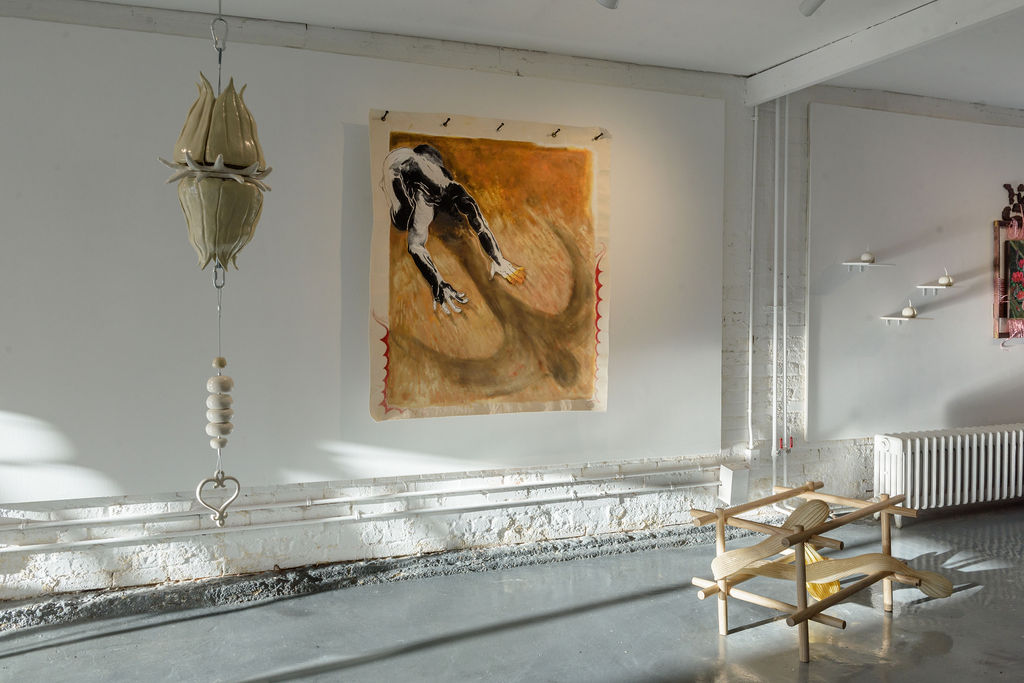 "On Earthing & Petrichor" Exhibition curated by Roya DelSol at Capsule Artist Resources | Foreground l to r: Erica Whyte, 'Sorrel Keychain' (2025), stoneware and porcelain | Oreka James, 'there, a vision of thyself! (2025), oil and acrylic on canvas, 56' x 47"| Kristi Chen, 'A Closed White Swiftlet's Nest (2025 revision), crystal beading thread, rattan, ashwood | Courtesy Roya Delsol
While a partnership with the Central Bank of The Bahamas provides annual funding for ICE, Antonius Roberts provides whatever support remains outstanding. His involvement with Disney and the U.S. Embassy has provided him with enough significant commissions that he’s been able to pour about 20% back into these programs. “I’ve consciously decided that, as opposed to giving commissions to art dealers or art galleries, I give my commissions to myself, then put it back into my studio and ICE,” explains Roberts. “That means that I can do whatever the hell I want to do with my studio space, which also provides me with a sense of purpose by dealing with these young, fresh minds who I learn as much from as they learn from me — this becomes almost like an academy.”
For Perera, the future of Capsule is expansion, with a big idea to build another iteration of Capsule in a diverse suburb of the city, Scarborough, where she is from. “Scarborough is increasingly cut off from the downtown core because of congestion and overpopulation of the highways, and public transit is, I think, falling apart under the frequency of use and the numbers it needs to accommodate,” Perera says. “I hope to build something out there on the subway line that's accessible for artists on the east end of downtown, and a slightly bigger space around 5,000 square feet. Non-profits in the city having to show consistent growth over the years to secure more funding has Perera challenging the definition of “growth.”
“We can show growth by way of sustainability and by way of impact. That's the type of growth I would like to showcase or emphasize, rather than physical,” Perera explains. “Our funding bodies have become used to funding the ‘front of house’ — glittering museums and fancy big builds that look nice — but the back of house is the thing that needs funding, and artists will figure out how to make these places look nice.”
“I don't know what the next 2 or 3 years will be like, but I see ICE in the same way as I see the Metropolitan Museum of Art, the Guggenheim, the Whitney, or the Perez,” says Roberts. “It’s how we perceive, celebrate, and honour this space that provides a sense of being and appreciation for who we are, where we are.”
“All of the artists in the studio used to think that you had to be in New York, Toronto, London, or maybe Miami to have a career as an artist,” says Delgado of the studio collective that includes that aforementioned 7 year-old, who is now the ripe old age of 9. “Now, as a studio collective, selling their own work at local shows and internationally, they now understand that they can be themselves and be creative and recognized within a small Colombian artist community.”

Byron Armstrong
Byron Armstrong is an award-winning freelance journalist and writer who investigates the intersections between arts and culture, lifestyle, and politics. Find him on Instagram @thebyproduct and on Linkedin https://www.linkedin.com/in/byron-armstrong
view all articles from this author