Whitehot Magazine
October 2026
"The Best Art In The World"
"The Best Art In The World"
October 2026
An Interview with Tal R: The Beauty of Not Knowing - at Tim Van Laere Gallery
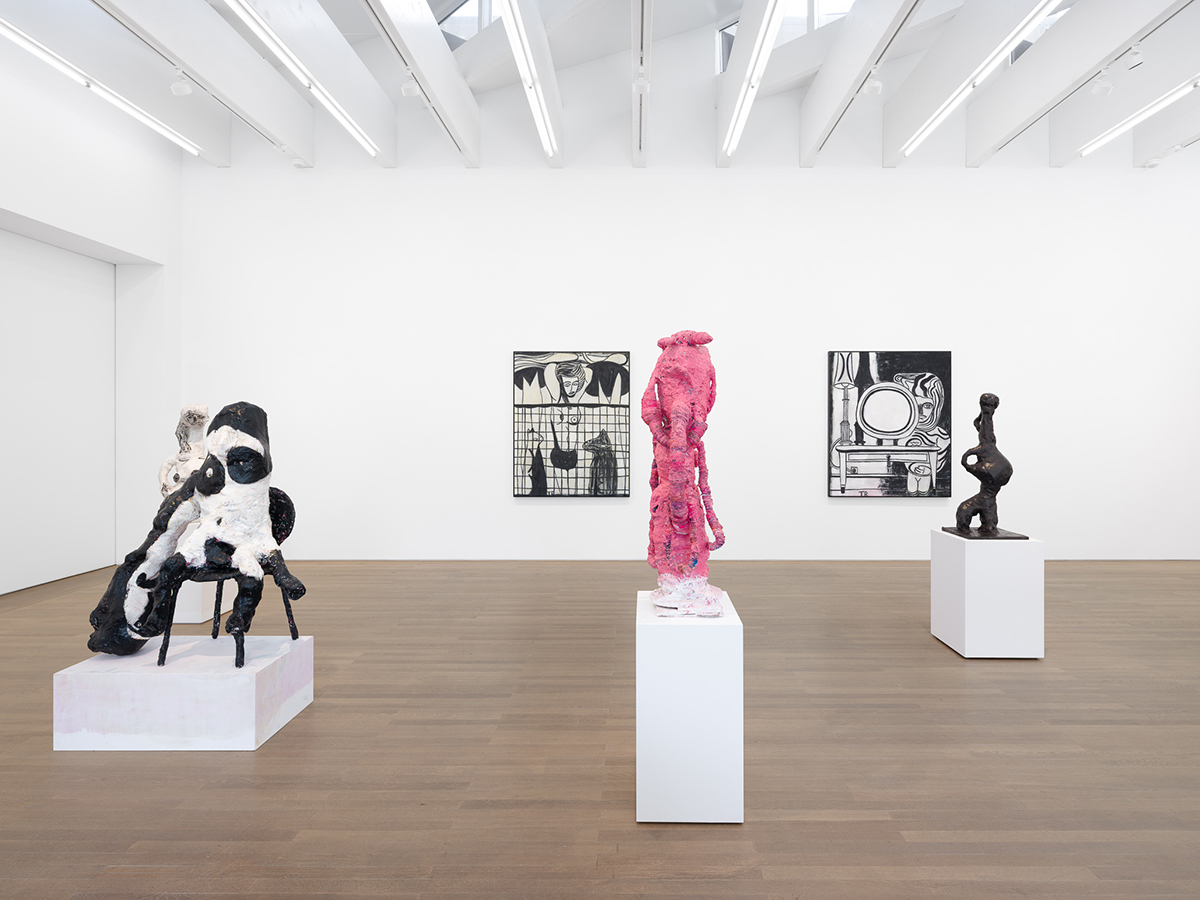 Tal R Installation View Courtesy Tim Van Laere Gallery, Antwerp-Rome.
By MARGHERITA ARTONI October 25, 2026
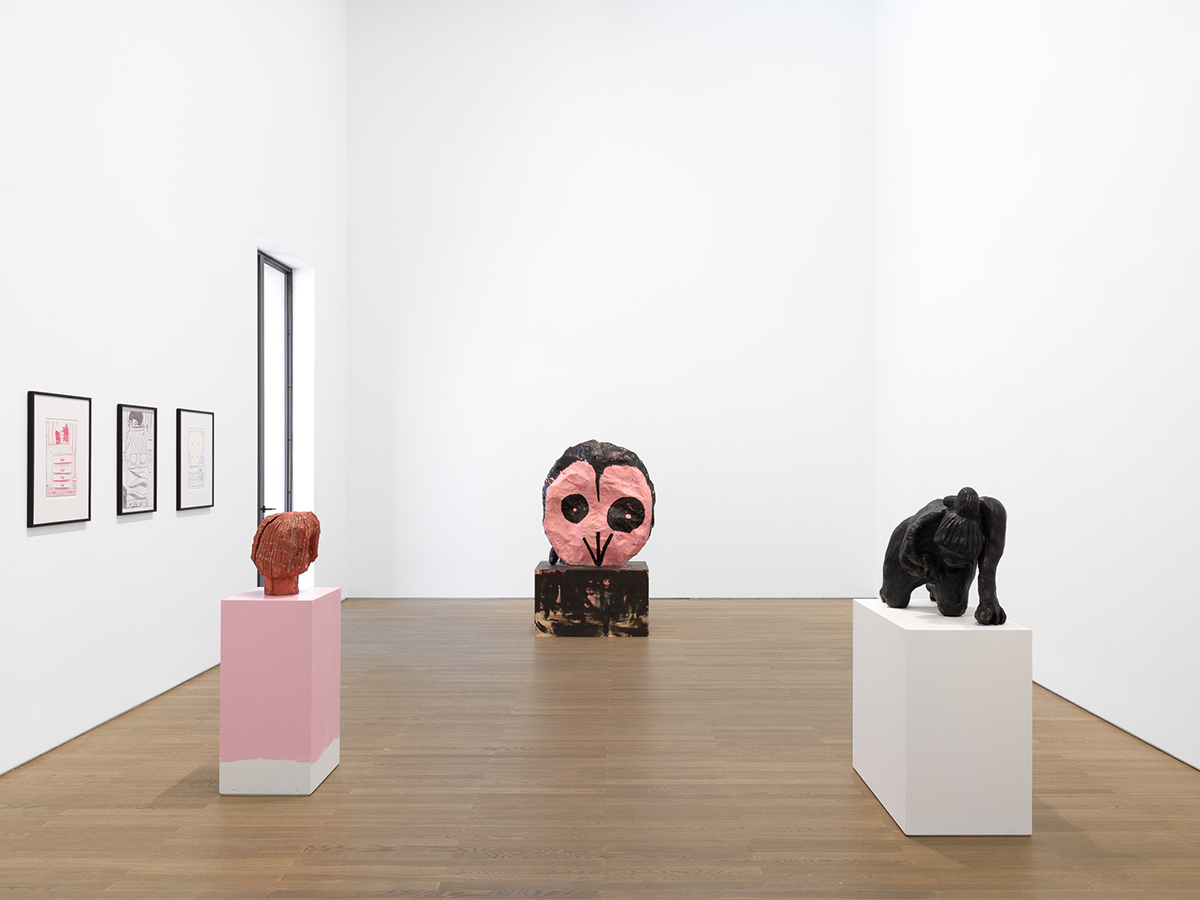
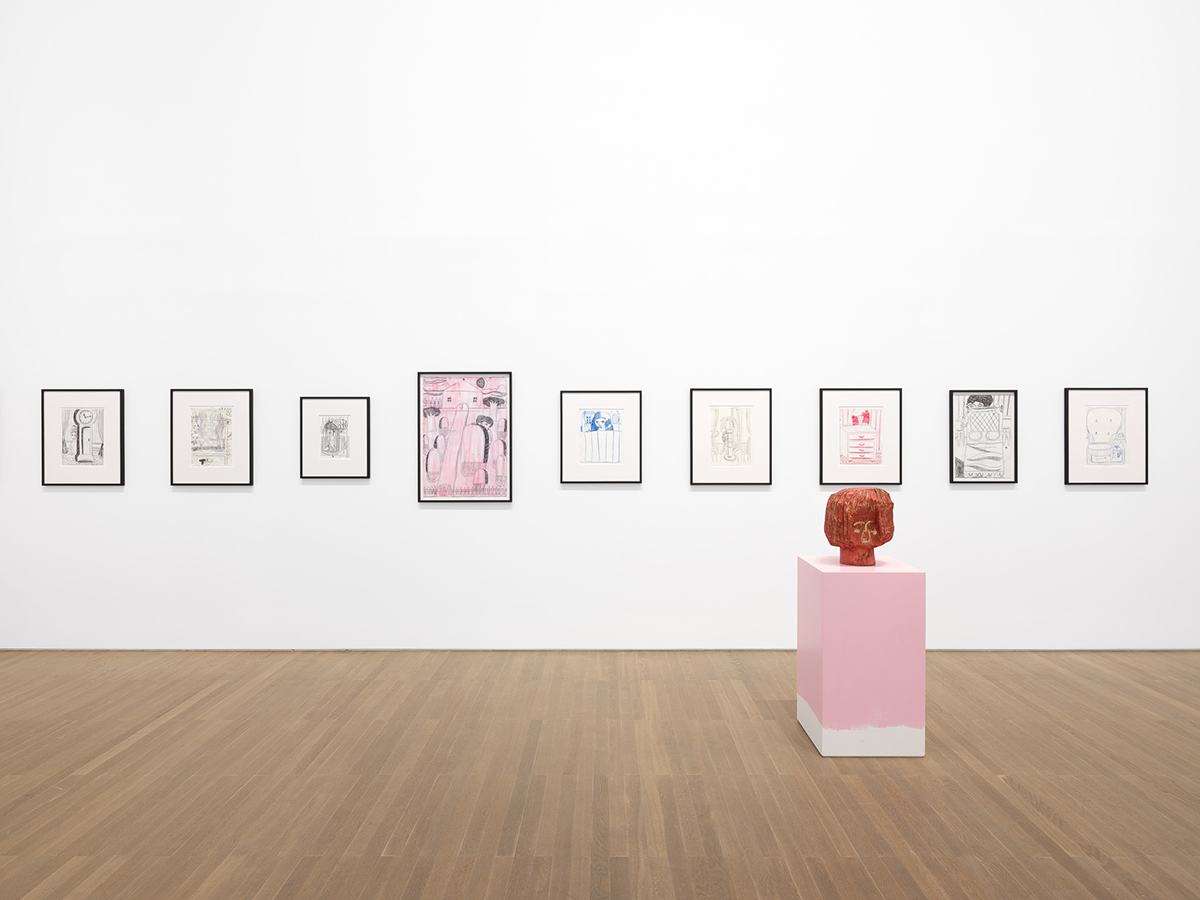
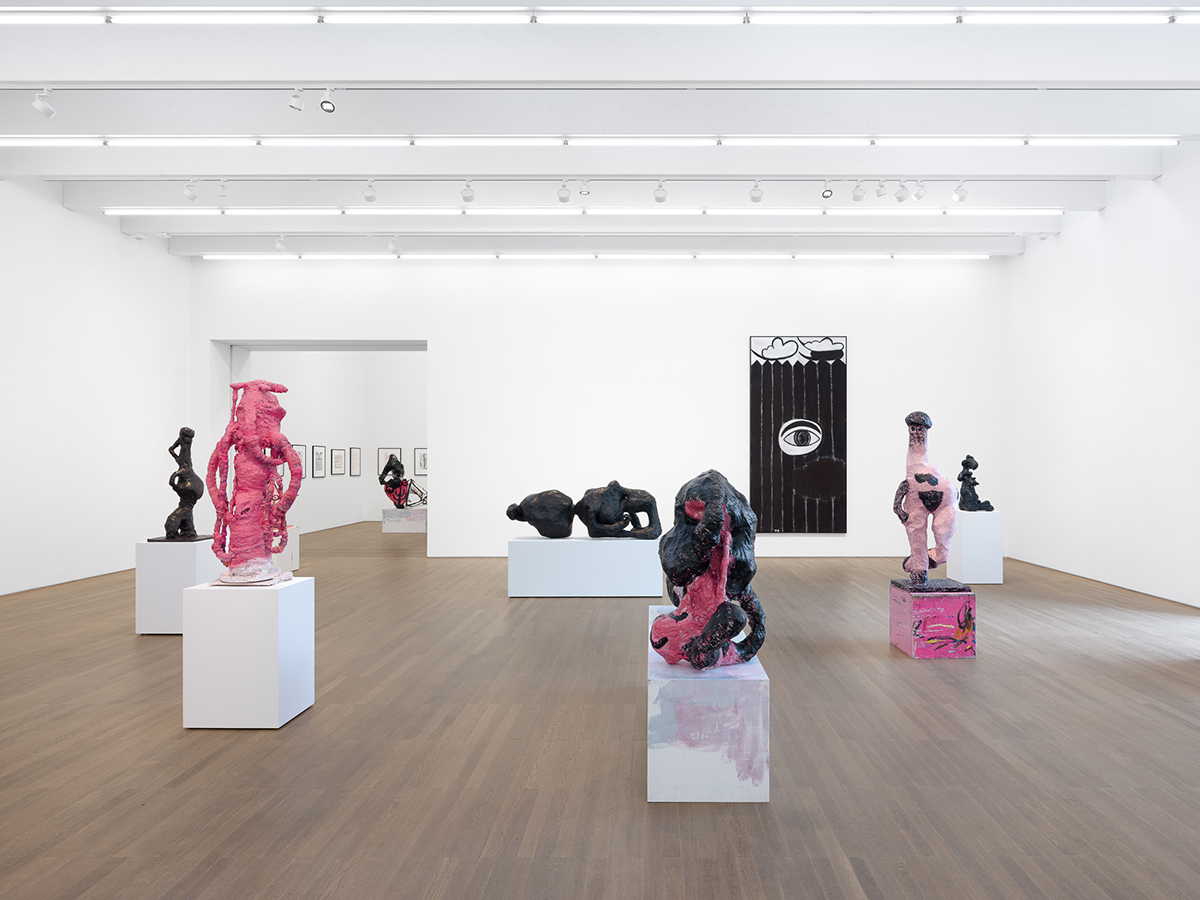
In Woman Behind Fence, his fourth solo exhibition at Tim Van Laere Gallery in Antwerp, Danish artist Tal R presents new sculptures, paintings, and drawings born from an unexpected shift in his creative process. Working with discarded studio materials, he assembled and covered them with tape and papier-mâché, allowing unfamiliar forms to emerge without a predetermined intention. A small pink sculpture, Woman looking over Fence, became the starting point for a series of figures partly concealed behind everyday objects.
Moving between figuration and abstraction, the works explore the tension between what we recognize and what remains unknown. In this interview, Tal R discusses curiosity, material, repetition, and the freedom of following a creative path without knowing where it will lead.
 Tal R Installation View Courtesy Tim Van Laere Gallery, Antwerp-Rome.
Margherita Artoni (MA): For Woman Behind Fence, you moved away from your usual approach, starting with discarded studio materials rather than a clear intention. What prompted this shift, and how did it change your relationship with the work?
Tal R (TR): I suddenly saw a sculpture in front of me that I hadn’t imagined before. As soon as I gave it a name, I was filled with curiosity. I thought: “What is this about?” Even today, I still have no clear idea what it means: a woman behind a fence, a car, an aquarium, or a chair.
When I was younger, especially as a painter in the 1990s, I quickly learned that artists were expected to explain everything. But making art means walking down roads precisely because you don’t know where they lead. The older I get, the less interested I am in explaining everything. Here, I had a name, but no idea where the path would lead. From the sculpture, I started drawing and painting women standing behind different things that divide them from the world.
MA: Woman looking over Fence became a turning point for the exhibition when you recognized a woman looking over a fence in an undefined form. What happened in that moment, and what made you decide to follow the image?
TR: In a way, there is no fence. If you look closely at the sculpture, the triangle that reads as a fence is actually part of the figure’s body. The barrier is imaginary: something between the figure and the world that belongs to the figure itself. Art creates a parallel reality. Even when my sculptures are abstract, they seem to reach toward figuration. I want them to become something I can sense but cannot quite put into words.
My studio is full of discarded things. I find it difficult to throw anything away because even a little piece of wood might be useful. I assembled scraps of material, wrapped them, and added string and tape. Gradually, forms began to appear. Suddenly, I thought: this is a woman behind a fence. The sculpture had given me the sentence and the figure, rather than the other way around.
MA: Your figures appear partly concealed behind cars, sofas, mirrors, and fences. What draws you to these configurations, and what possibilities emerge when a figure is only partly visible?
TR: For me, drawing and painting are about counting: one, two, three; or one, two, three, four, five. Counting is about pulling people in. When you enter a shop in a painting, you can imagine what lies beyond it. That is true of all narratives. When you have a figure behind a fence or a car, there is also a background and something unspoken. There is a reason, but that reason is entirely up to the viewer.
I like to think of every artwork as a mirror. It starts as a question from me, which I pass on to the viewer. Everyone has something they struggle with, something they lie awake thinking about. Bring those questions into your encounter with art.
MA: What changes when an image moves from three-dimensional space to a flat surface? Does each medium reveal something different, or does the image retain its mystery?
TR: Painting and drawing depend on a cultural agreement between the artist and the viewer. We understand that a surface is flat, yet we read it as having a foreground, a middle ground, and a background. Sculpture is different. It has a physical presence, and an idea changes when it moves from a painting into three dimensions.
Painting is closer to language, while sculpture is closer to the body and the imagination. One of my ambitions has been to move beyond the cliché of being a painter who also makes sculptures. I want to make sculptures on their own terms, rather than simply bringing a painter’s approach into another medium.
 Tal R Installation View Courtesy Tim Van Laere Gallery, Antwerp-Rome.
MA: Fences, windows, and keyholes separate us from what lies beyond while offering a partial view. What interests you about the space between the familiar and what falls outside our understanding of normality?
TR: I’m interested in a kind of sandwich situation. The character in the painting is one slice of bread, the viewer is the other, and the object between them is the cheese. We are looking at the work, but the work is also looking back at us.
I remember going to the zoo as a child in winter. The animals were often hiding, and you found yourself searching for them, becoming aware of your own act of looking. A painting can work in the same way. The object creates a kind of democratic space between the viewer and the figure. The car is in front of the figure, but it is also in front of the viewer. We share that obstacle.
MA: Some sculptures appear to bend, collapse, or lose their balance. Can losing stability move a form beyond what is familiar or considered normal, opening up new ways of seeing and being?
TR: When I was thirteen, I saw The Exorcist by chance. It was one of the most frightening experiences of my life. I developed a fever afterward, and when I left the cinema, I felt as if one leg were longer than the other. I walked home feeling physically altered. The film touched a fear that something hidden inside a person could break out.
Later, I came to think about this as the possibility of losing one’s sense of reality. In some of the sculptures, I try to make figures stand upright, simply present in the world. But it is equally important that other figures break apart. They can no longer maintain their familiar form. That instability opens up the possibility of becoming something else.
 Tal R Installation View Courtesy Tim Van Laere Gallery, Antwerp-Rome.
MA: How do you balance the desire to understand an image with the need to leave it unresolved? At what point can interpretation begin to limit the work?
TR: As I get older, I find that I can work more freely. Interpretations can become a kind of false scaffolding. An explanation can offer reassurance without truly explaining why you desire something.
Art is driven by desire: by what you don’t know and what you find fascinating. I prefer to follow a path like a scientist who is not searching for answers, but for more images. I’m interested in going deeper into a fascination, even if I return without an explanation. In fact, I think a viewer’s interpretation can be better than my own. I may be good at making the work and following the strange corridors of my imagination, but I don’t come back with answers. I come back with more images, placed next to other images.
MA: How do the qualities of different materials, and the time they require, shape the development of an idea? What can repetition reveal that the first version cannot?
TR: Material is partly a question of time. Sometimes I want to imagine a figure on Monday and have it in front of me by Tuesday. Papier-mâché is useful for that. It is fragile, but it allows an idea to become tangible quickly. An idea only becomes something when there is something in front of you.
Every material has its own nature and its own sense of time. Ceramic clay, for example, is generous: it tries to follow what you want. But clay is also mud. If a ceramic sculpture doesn’t acknowledge that nature, then, to me, something has gone wrong.
For me, repetition is driven by the desire for what I don’t know. When you repeat an image, it can crystallize, break apart, and become something different. Repetition is not so much about perfection as it is about running after your own tail in a productive way.
 Tal R Installation View Courtesy Tim Van Laere Gallery, Antwerp-Rome.
MA: How do you respond when viewers discover meanings you had not anticipated? Is the distance between your intentions and their experience part of what keeps an artwork open?
TR: I’m rarely involved in discussions about interpretations of my own work, and, to be honest, they don’t interest me very much. The moment an artwork leaves the studio, it belongs to everyone. You can admire an artwork without needing to admire its maker. The work exists beyond the artist, and that is a good thing.
Once a work leaves the studio, anyone can use it as a mirror for their own questions and experiences. If an artwork cannot withstand that freedom, then perhaps it isn’t a very strong work of art.
MA: After decades of working, what questions continue to return, and what still surprises you about making art? What keeps you willing to follow a path without knowing where it will lead?
TR: I like artworks to work in a particular way. When you first look at them, you encounter familiar things that you can name: a tree, a fence, a car, a person, a dog, or a cloud. These recognizable forms draw you into the work. But when you leave the artwork, the familiar world should have become abstract. The things you thought you could name have lost their names.
A great artwork changes the way you see. You might enter through a mountain, but you shouldn’t leave with the same mountain you came in with. Something has shifted in you. I want viewers to enter through something recognizable and leave with something less certain. It takes time to lose the mountain you already know and discover a new one.
Margherita Artoni
Margherita Artoni is a contemporary art critic and curator working between Italy and the United States. She began her career collaborating with Flash Art and currently writes for Segno, Juliet, Artribune, Exibart, Inside Art, ArteIN, part of cult(ure), The Art Fuse, and Whitehot Magazine.
She has directed galleries in Turin — including NEOCHROME and EDGE Art Space — and in New York at TEAM Gallery. Her curatorial work has included exhibition programs with international artists such as Rashid Johnson, Theaster Gates, Ali Banisadr, Angel Otero, Tim Rollins & K.O.S., Laura Owens, and Mika Tajima.