Whitehot Magazine
October 2026
"The Best Art In The World"
"The Best Art In The World"
October 2026
Rita Ackermann: The Letter as Condition at Hauser & Wirth
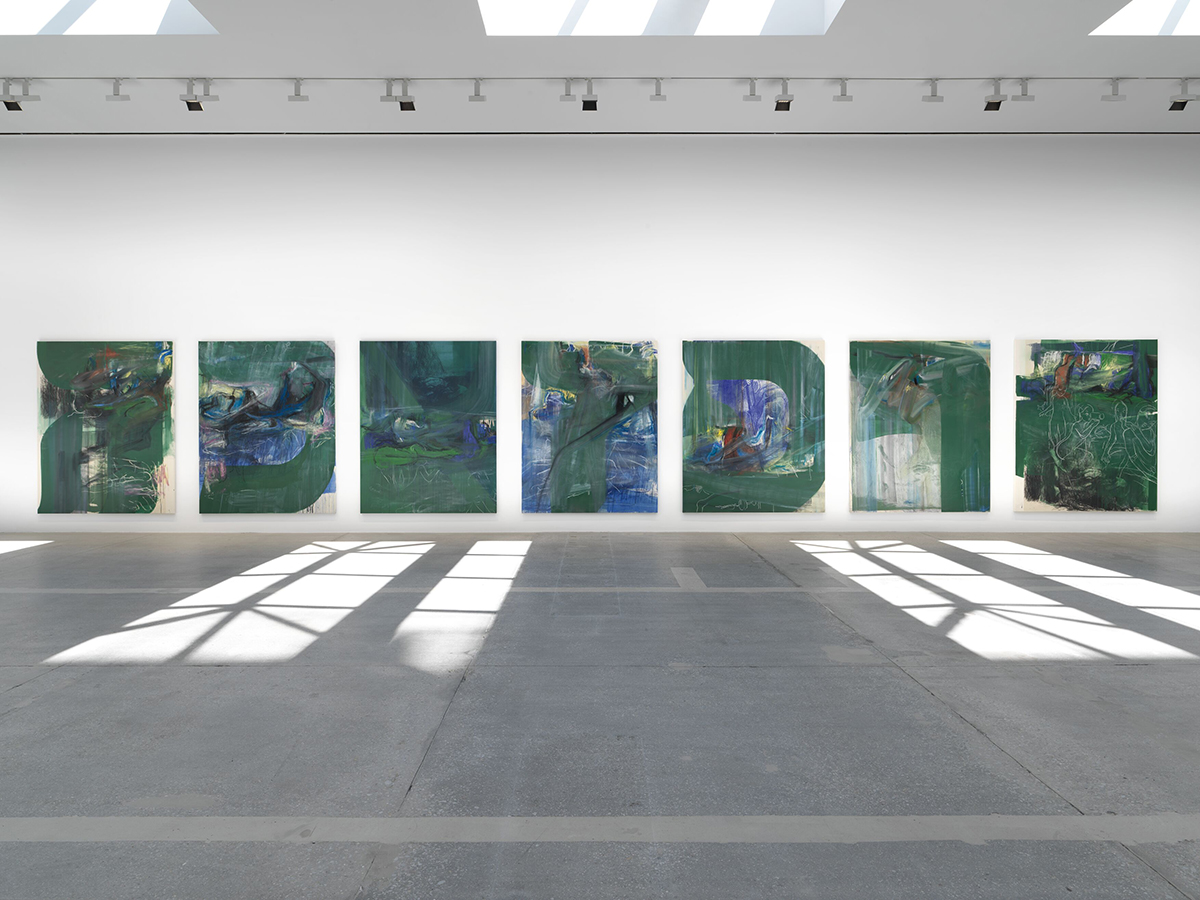 Installation view, ‘Rita Ackermann. The Chemical Alphabet’ at Hauser & Wirth New York, Wooster Street 9 September – 17 October 2026. © Rita Ackermann, Courtesy of the artist and Hauser & Wirth, Photo: Dario Lasagni.
By MARGHERITA ARTONI October 6th, 2026
The Chemical Alphabet, on view at Hauser & Wirth, 134 Wooster Street, New York, from September 9 through October 17, 2026, introduces an alphabet into Rita Ackermann’s practice, long concerned with movement, disappearance and revision. Drawn from a Semitic script, the letters provide each painting with a fixed point from which the image can begin to mutate. Acrylic green chalkboard paint establishes the letter on a canvas prepared with multiple silkscreen impressions; pastel and chalk are then drawn, erased, washed away and redrawn. What emerges is not a sequence of separate states but a surface in which successive moments remain superimposed. The letter persists while the pictorial field around it changes.
Ackermann describes the result with a phrase that could serve as the exhibition’s governing principle: “The remains stay engraved.” The engraved remainder is neither residue nor evidence of a completed process. It is the place where the process continues to exist.
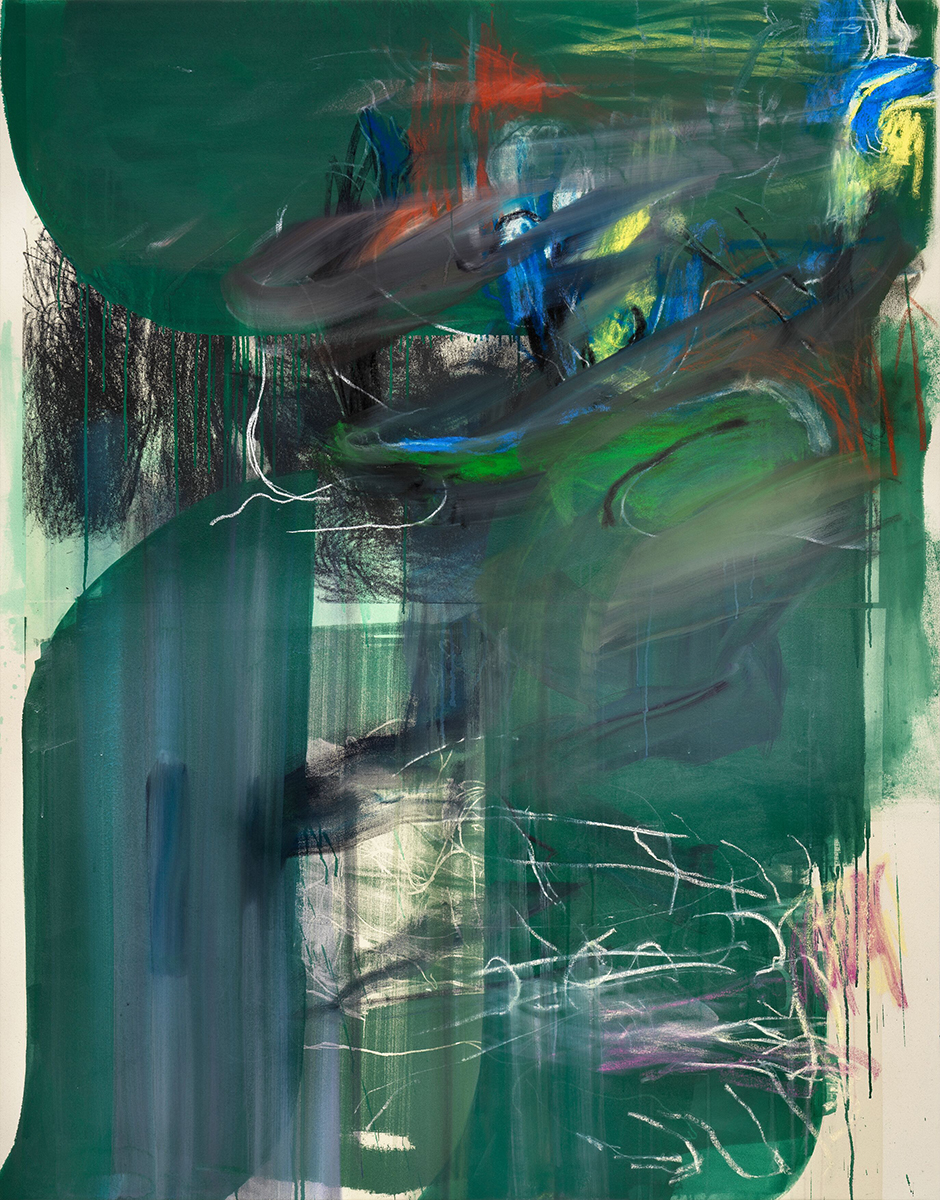 Rita Ackermann, Boy Let Dog Out, 2026, Acrylic, silkscreen print, chalk and soft pastel on canvas, 210.8 x 165.1 cm / 83 x 65 in.
The physical act of removal had already occupied a central position in Ackermann’s chalkboard paintings. In a 2017 conversation with BOMB, she observed that “the physical effort of erasing is recorded.” Erasure therefore acquires a positive pictorial function. It registers duration, pressure and bodily intervention. The surface becomes an archive whose contents are partly visible precisely because they have been subjected to disappearance.
The alphabet intensifies this logic by introducing constraint. A recognizable form establishes resistance within a medium devoted to alteration. The letter gives transformation something against which to register itself. Its role is less linguistic than structural: it makes deviation perceptible.
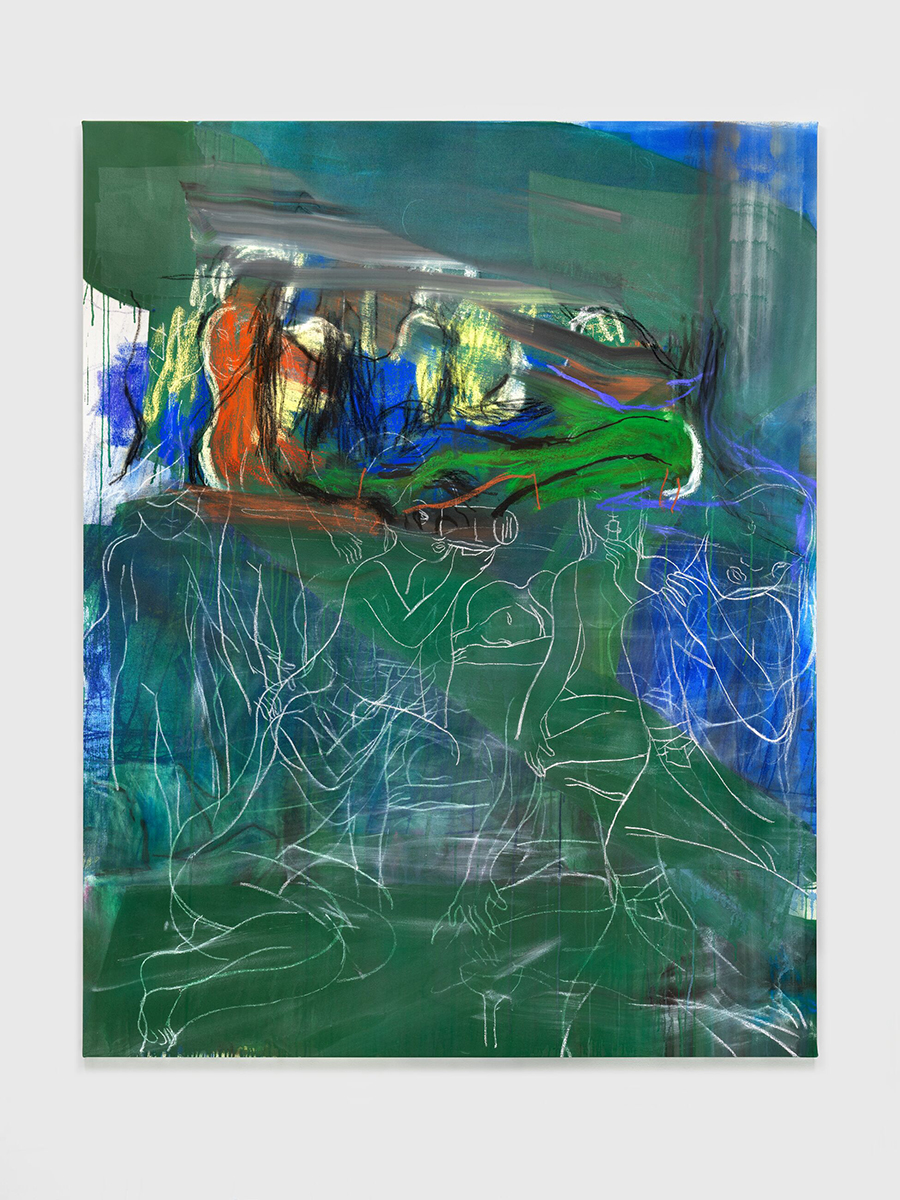 Rita Ackermann, Silent Type, 2025, Acrylic, silkscreen print, chalk and soft pastel on canvas, 210.8 x 165.1 cm / 83 x 65 in.
This is where The Chemical Alphabet opens onto a larger question concerning appearance. The distinction between noumenon and phenomenon offers a useful philosophical analogy, provided it is not treated as a simple opposition between hidden essence and visible surface. Ackermann’s letter cannot be separated from its successive manifestations. It seems to precede them as a structure while becoming accessible only through them. Its identity is therefore inseparable from the conditions under which it appears.
Ackermann is not painting the thing-in-itself. She is painting the problem of its appearance.
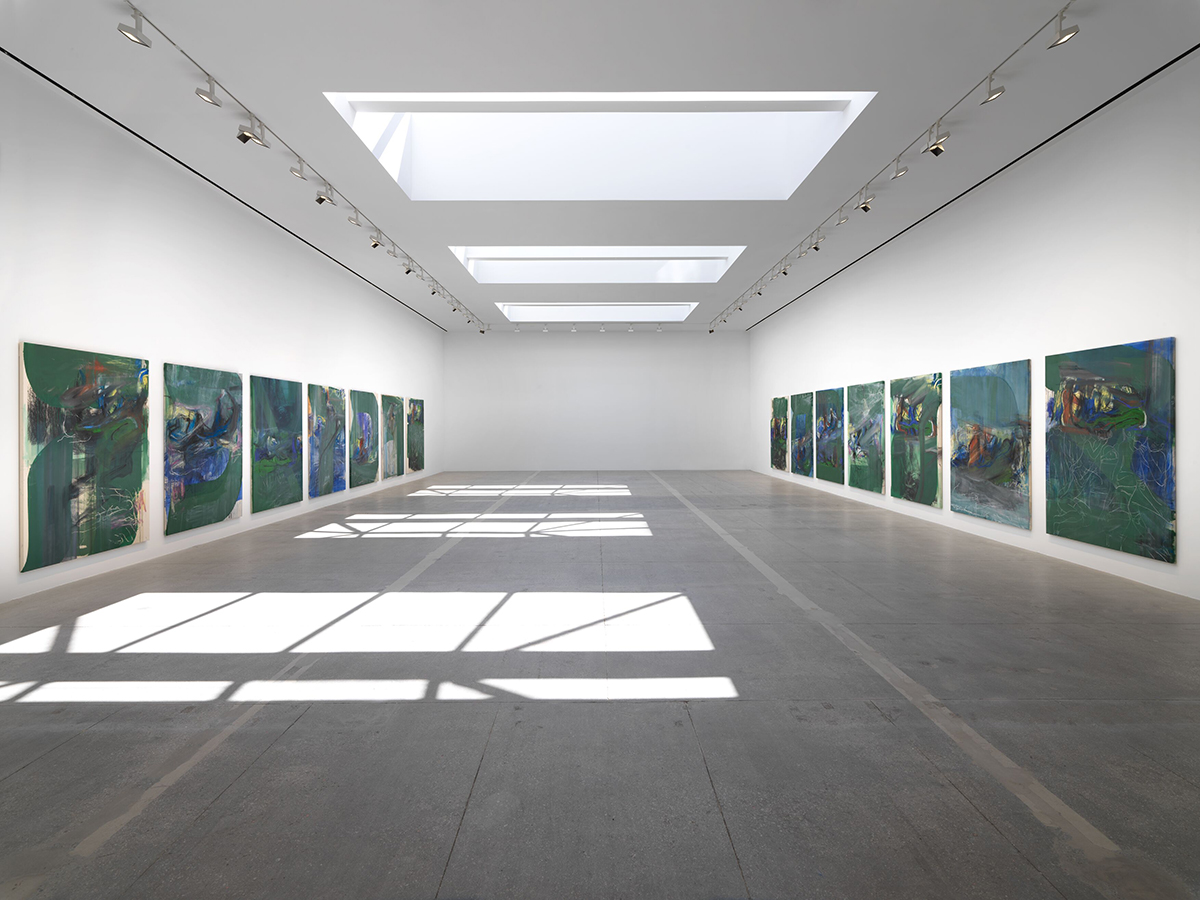 Installation view, ‘Rita Ackermann. The Chemical Alphabet’ at Hauser & Wirth New York, Wooster Street 9 September – 17 October 2026 © Rita Ackermann, Courtesy of the artist and Hauser & Wirth, Photo: Dario Lasagni.
The titles of the works reinforce this temporal and ontological instability. Before the Letters (2025) suggests a condition preceding the alphabetic act, a moment before the sign becomes fully operative. Tangled Up in Blue (2025) places writing inside a pictorial field where linguistic and visual functions begin to overlap. Bullet Proof (2026) introduces the language of resistance into a medium built through revision and abrasion. Boy Let Dog Out (2026) extends this instability into the relation between language and action: its phrase appears to promise a readable statement while remaining suspended between command, fragment and narrative. Silent Type (2025), by contrast, proposes a paradox within the very idea of writing: a type that speaks through its visual presence while withholding conventional linguistic articulation. Together, these titles suggest that language in Ackermann’s paintings is never simply transmitted; it is interrupted, displaced and made material. Across the works, permanence becomes a question rather than a given.
A longer history of modern and postwar painting enters the picture here. Rauschenberg’s Erased de Kooning Drawing (1953) transformed cancellation into production: the erased drawing remained present through the act that removed it. Twombly detached writing from straightforward legibility, allowing script to operate as gesture, rhythm and pressure. On Kawara subjected painting to rigorous systems whose repetition made duration tangible.
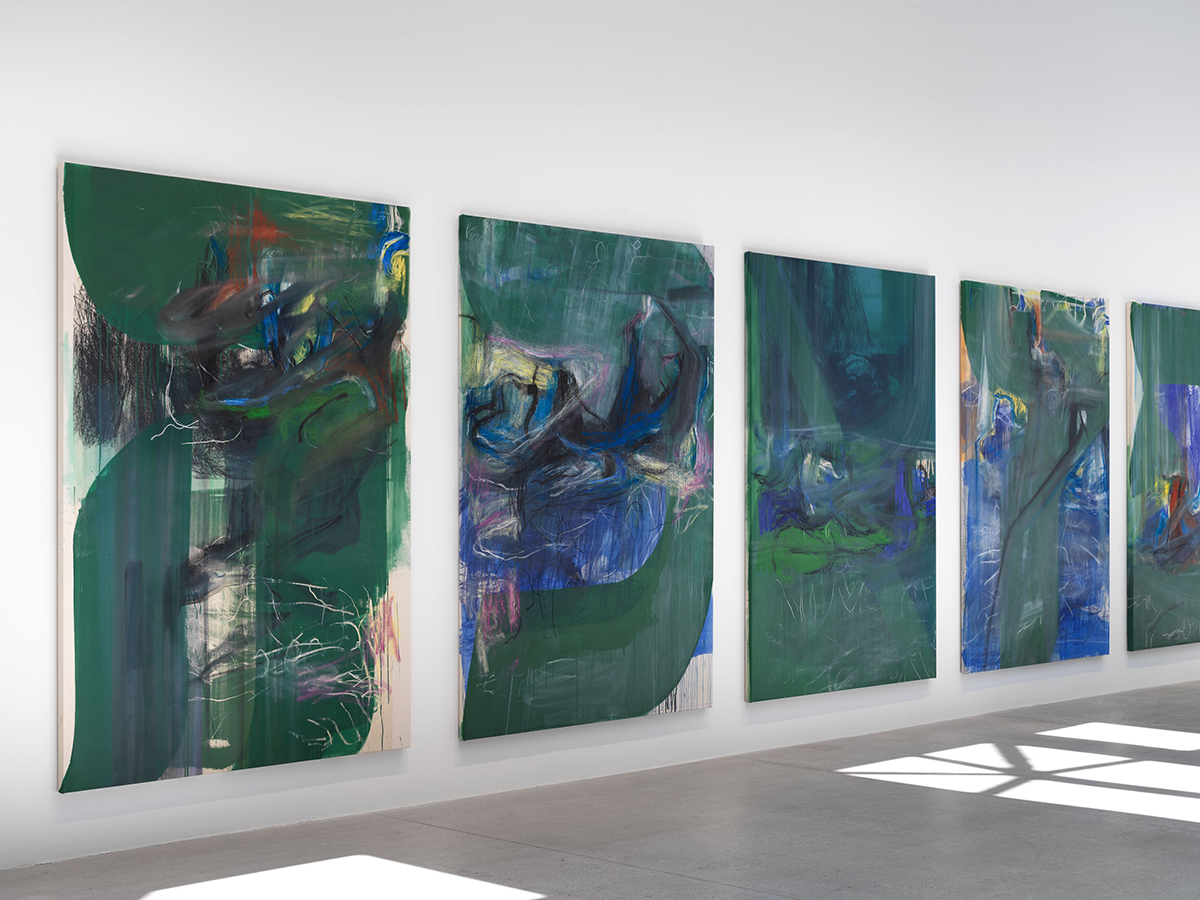 Installation view, ‘Rita Ackermann. The Chemical Alphabet’ at Hauser & Wirth New York, Wooster Street 9 September – 17 October 2026 © Rita Ackermann, Courtesy of the artist and Hauser & Wirth, Photo: Dario Lasagni.
Ackermann reconfigures these precedents through the alphabet. Her sign retains enough identity to resist dissolution, while the surrounding image records continuous alteration. The system becomes a measuring device rather than a means of control.
Pamela Kort, writing on Ackermann’s Splits, located meaning in “the infinitesimal split between what the eye sees and the elusive.” That interval is central to The Chemical Alphabet. The paintings hold recognition and uncertainty in suspension, allowing neither to resolve the other.
The alphabet consequently exceeds language. It becomes a method for registering change.
The letter is not the structure that survives the painting’s instability. It is the condition that makes that instability legible.
Margherita Artoni
Margherita Artoni is a contemporary art critic and curator working between Italy and the United States. She began her career collaborating with Flash Art and currently writes for Segno, Juliet, Artribune, Exibart, Inside Art, ArteIN, part of cult(ure), The Art Fuse, and Whitehot Magazine.
She has directed galleries in Turin — including NEOCHROME and EDGE Art Space — and in New York at TEAM Gallery. Her curatorial work has included exhibition programs with international artists such as Rashid Johnson, Theaster Gates, Ali Banisadr, Angel Otero, Tim Rollins & K.O.S., Laura Owens, and Mika Tajima.