Whitehot Magazine
October 2026
"The Best Art In The World"
"The Best Art In The World"
October 2026
Anke Weyer's Resuscitations
By EDWARD WAISNIS May 2, 2026
I do not anticipate any particular emotion or response. On the contrary, I hope the works leave room for any possible interpretation. Showing a painting is rather like throwing my contribution into a dialogue than stating an aphorism.
–Anke Weyer *
In a sweeping installation of six large canvases (plus one more hanging in the office), that range from smoldering introspectiveness to crayon box stridency, Anke Weyer presented the results of her reworking/finishing of a suite of canvases that she had nearly written off, the negation of rejection cancelled through their revival–hence the clever exhibition title–filling the gallery with tablets of frisson. †
The gallery touts, in a current trending attribution afforded contemporary abstraction, the works “oscillat(ion) between abstraction and suggestion, with fragments of language, cartoonish forms, and symbolic shapes…” ¶ that I must admit I found scant observable evidence of, with the paintings being no less wanting for the lack of.
A level of intrigue hovers over the exhibition Beautiful Rejects given that the seven canvases have been completed over paintings that Weyer had rolled-up and set aside for a decade, offering a history via pentimenti that does little, if nothing to dispel the freshness in the work.
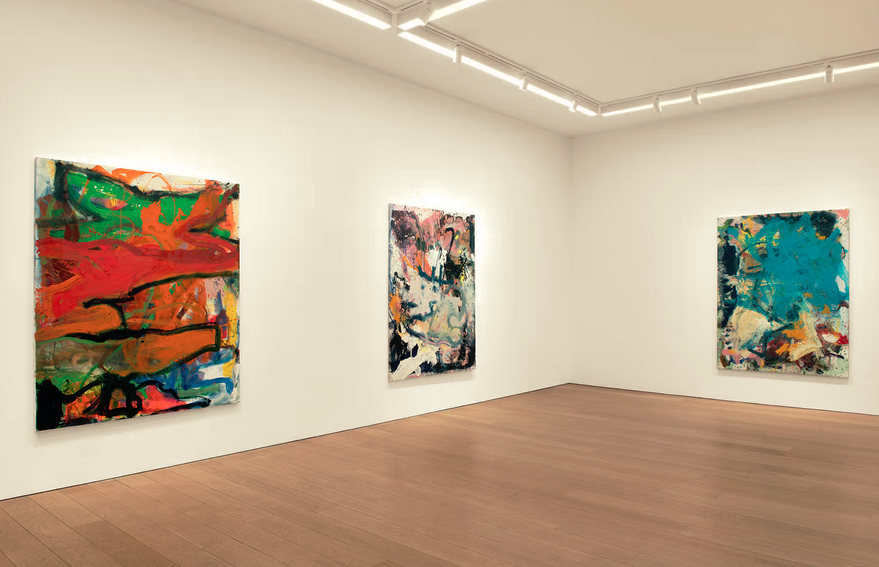 Installation view of Anke Weyer, Beautiful Rejects, CANADA, New York
There is no denying the influence of Per Kirkeby, especially given Weyer’s experience of firsthand mentorship, on Anke Weyer’s practice. While not denying the hold of Willem de Kooning in her visual toolbox.
Willem de Kooning’s decamping to the far-end of Long Island from the hothouse of the city’s art world put him in close contact with sea and land, that became the essence of his subsequent paintings, Weyer has found bucolic refuge upstate, as well as working out of Brooklyn. However, the quietude afforded by the environment–even the relative tranquility of the borough–is not pictorially represented per se, yet there is a reflectiveness, whether afforded by the environment, or to the process of consideration involved in the reworking, is not entirely discernible. While markings recall the geological strata of Kirkeby, it is the pure explosive release found rampant in de Kooning that champions.
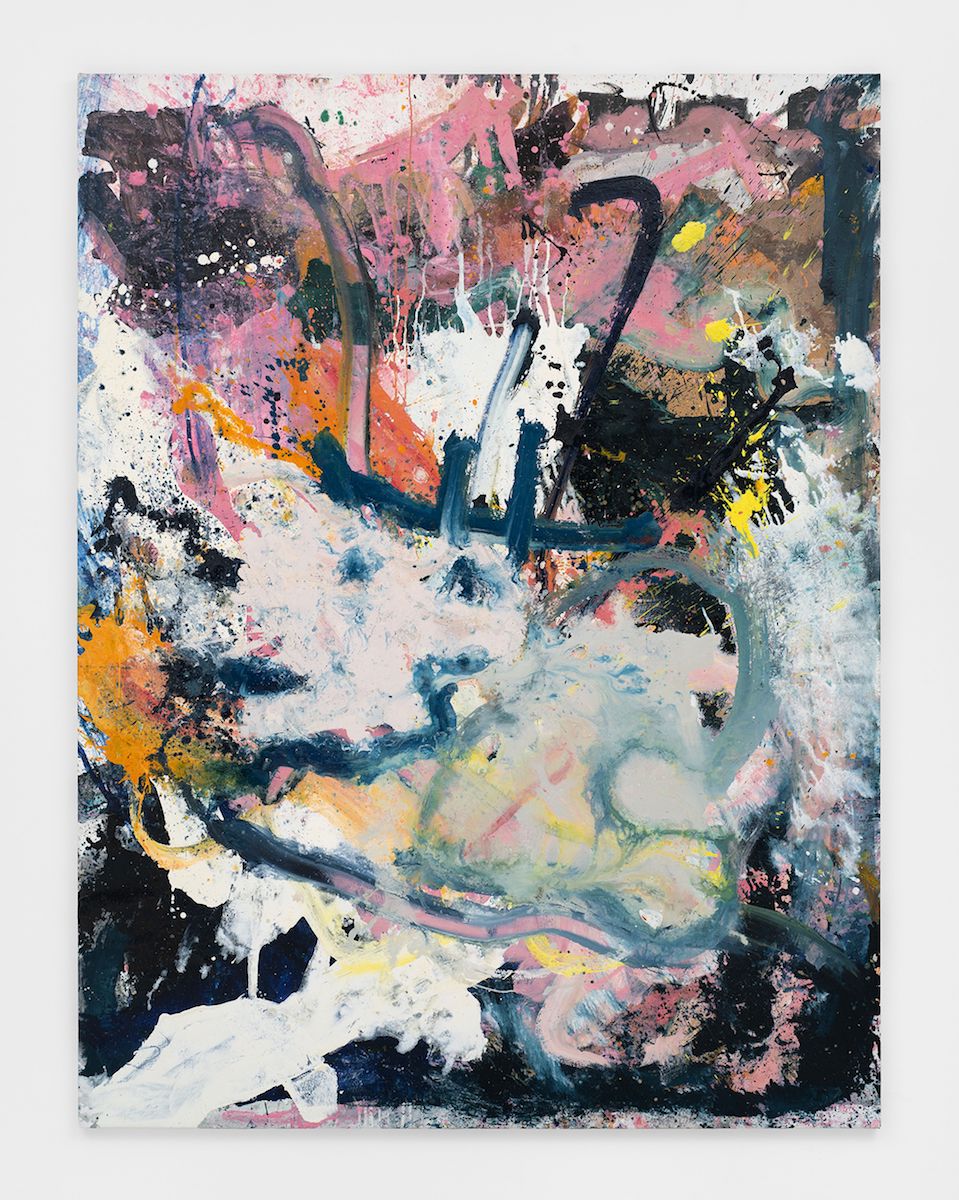 Anke Weyer, “Fly High and Free”, 2025, oil on canvas, 81 x 62 inches
To this strain Weyer brings exuberant color that sidelines de Kooning’s own energized palette, that leaned on the notes of body and land, favoring a range associated with the staining of the Color Field painters active as post-Pop faction that was most associated with the André Emmerich gallery stable.
The pooling (puddling) in Fly High and Free, 2025, owes an obvious nod to one of those Emmerich alumni, Jules Olitski, as well as to Charles Clough, who applied enamels with artist-fabricated implements the results of which were faux marble-like swirls that could just as easily be drawn from constellations, a view of microbes through the lens of a microscope, or the brewing cultures of a Petri dish; alluring passages from a painter’s tarp (or rag) offer other valid options for reference. Weyer’s version showcases a spastic release of a seminal froth that evokes a concoction of sea foam and cake frosting.
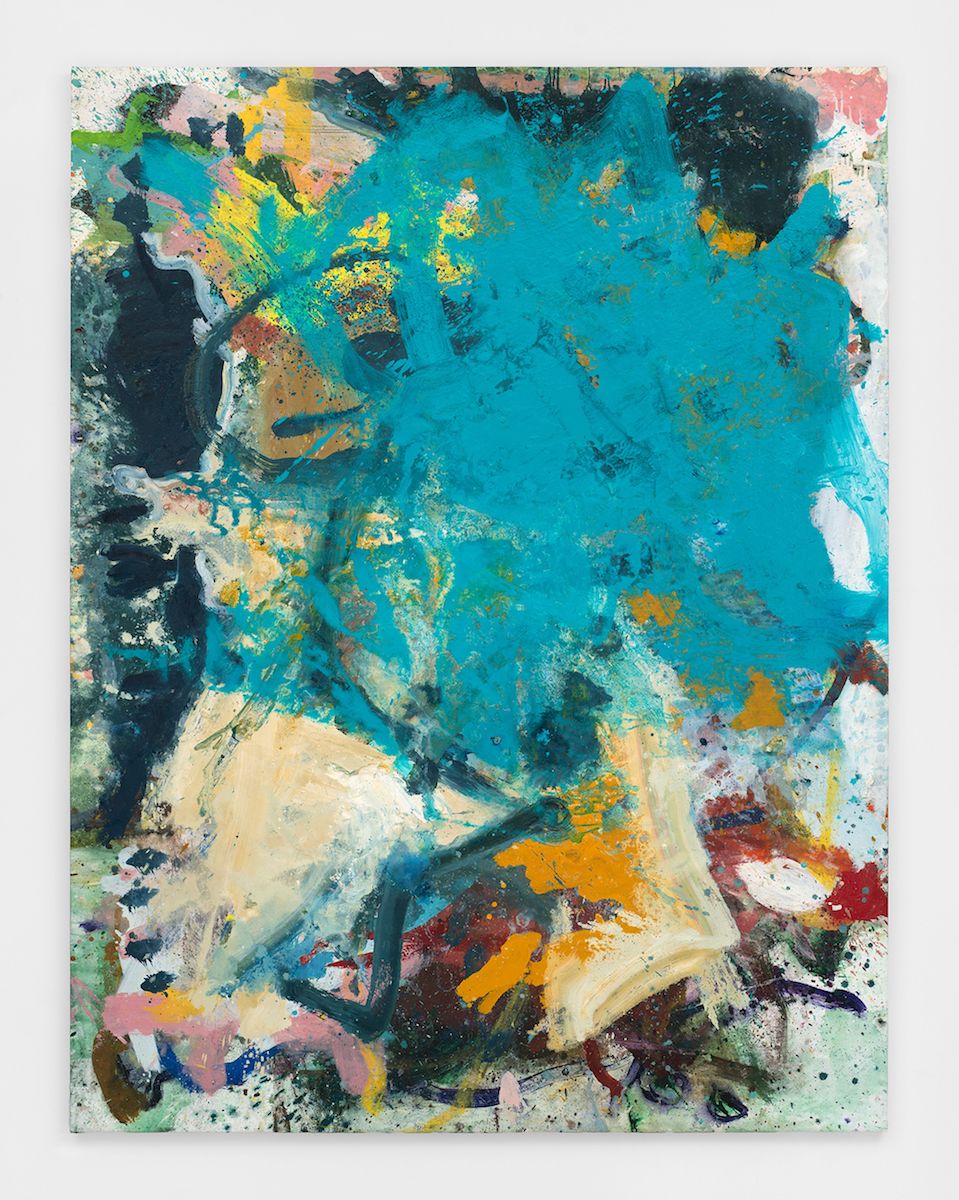 Anke Weyer, “My Shadow”, 2025, oil on canvas, 81 x 62 inches
My Shadow, 2025, builds upon a similar overall milkiness, held fast by inky passages at it’s borders, over which is laid a turquoise cloud, rising and nearly coalesces into a rose (thinking of Cy Twombly, a peony might be a more pointed allusion), akin to Christopher Wool’s denial of literalness.
En Nuit, 2025, (the one hung in the gallery office) migrating from a similar place adds to the action plan with a network of meandering, looping, tracks that aimlessly traverse the blotted ground like a roller-coaster.
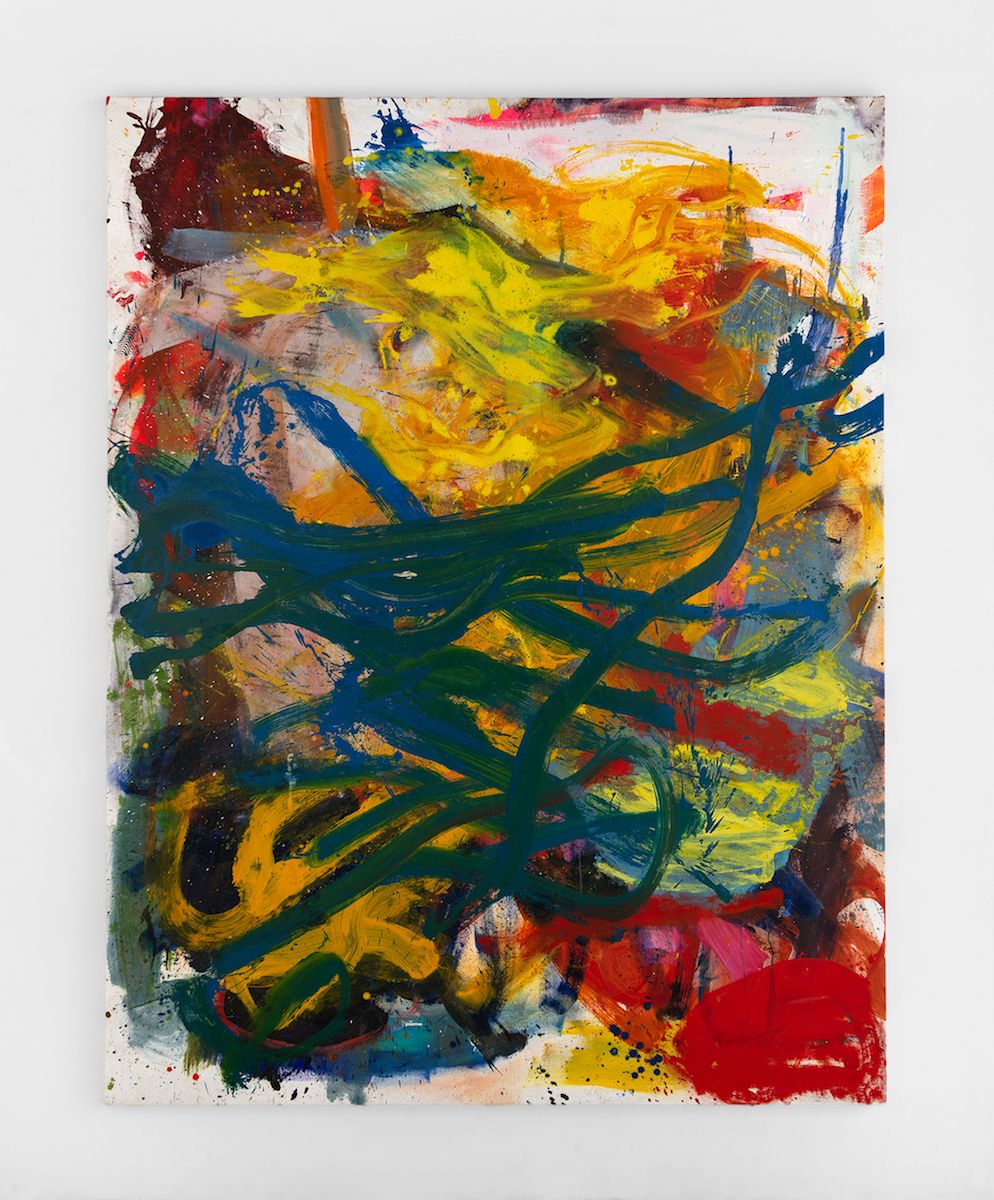 Anke Weyer, “Top of the Set”, 2025, oil and acrylic on canvas, 80 x 62 inches
Top of the Set, 2025, is a case where these two evocations hold join court. Over a searing background of blended, smeared and scumbled primaries a nest of interspersed and noodling brush strokes of cobalt nest in the lower two-thirds of the picture. In addition to references to those previously cited, this one recalls early-Twenty-First century Bill Jensen with laissez-faire loucheness.
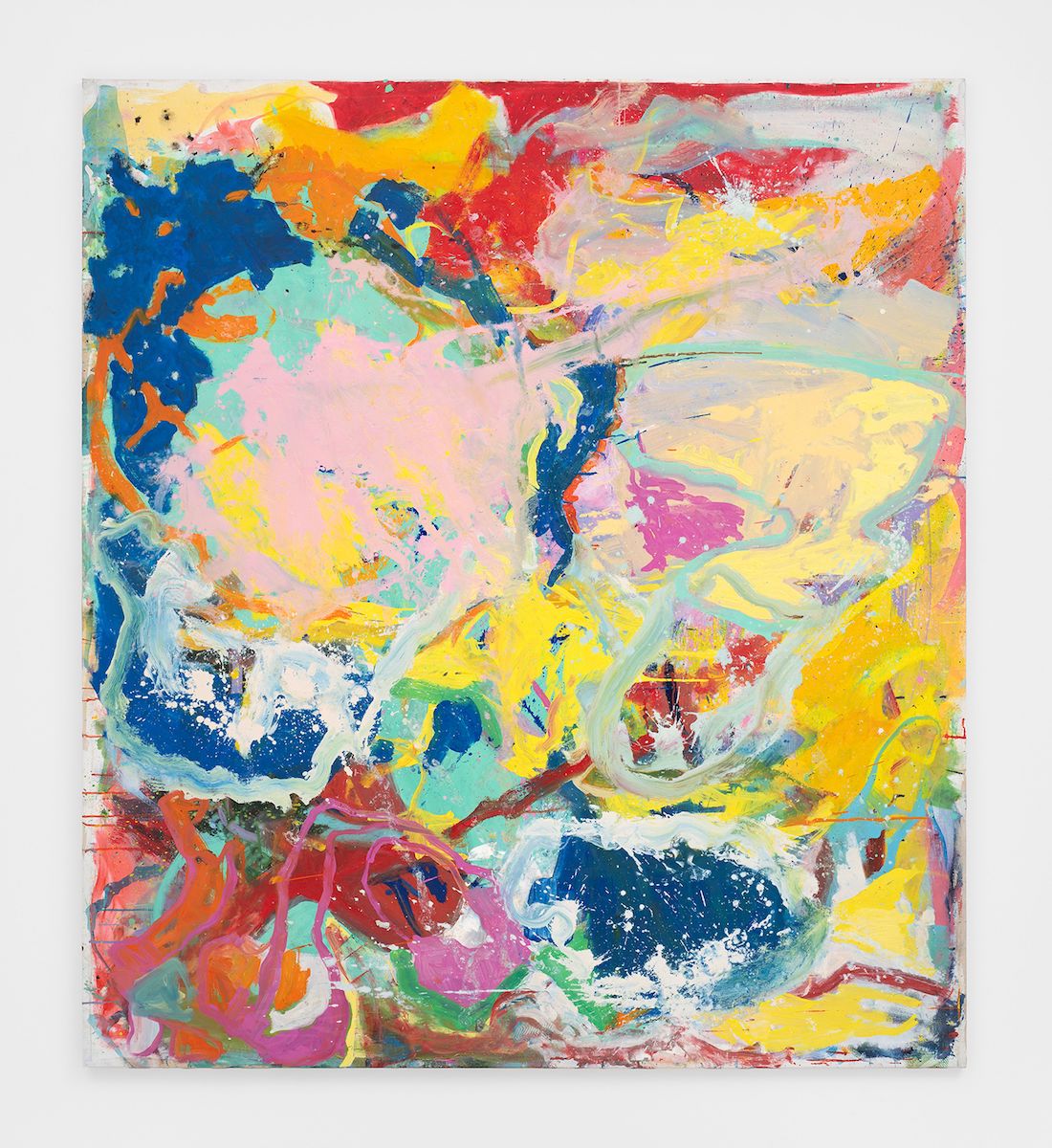 Anke Weyer, “Bright as Day”, 2026, oil and acrylic on canvas, 77 x 69 inches
Bright as Day, 2026 and Sloth, 2025, bring a Sam Francis reminiscent paintbox, setting them apart with stridency; the former a somersault tumble of tertiaries cavorting over the rote primaries worthy of Mardi Gras. The title tells the tale.
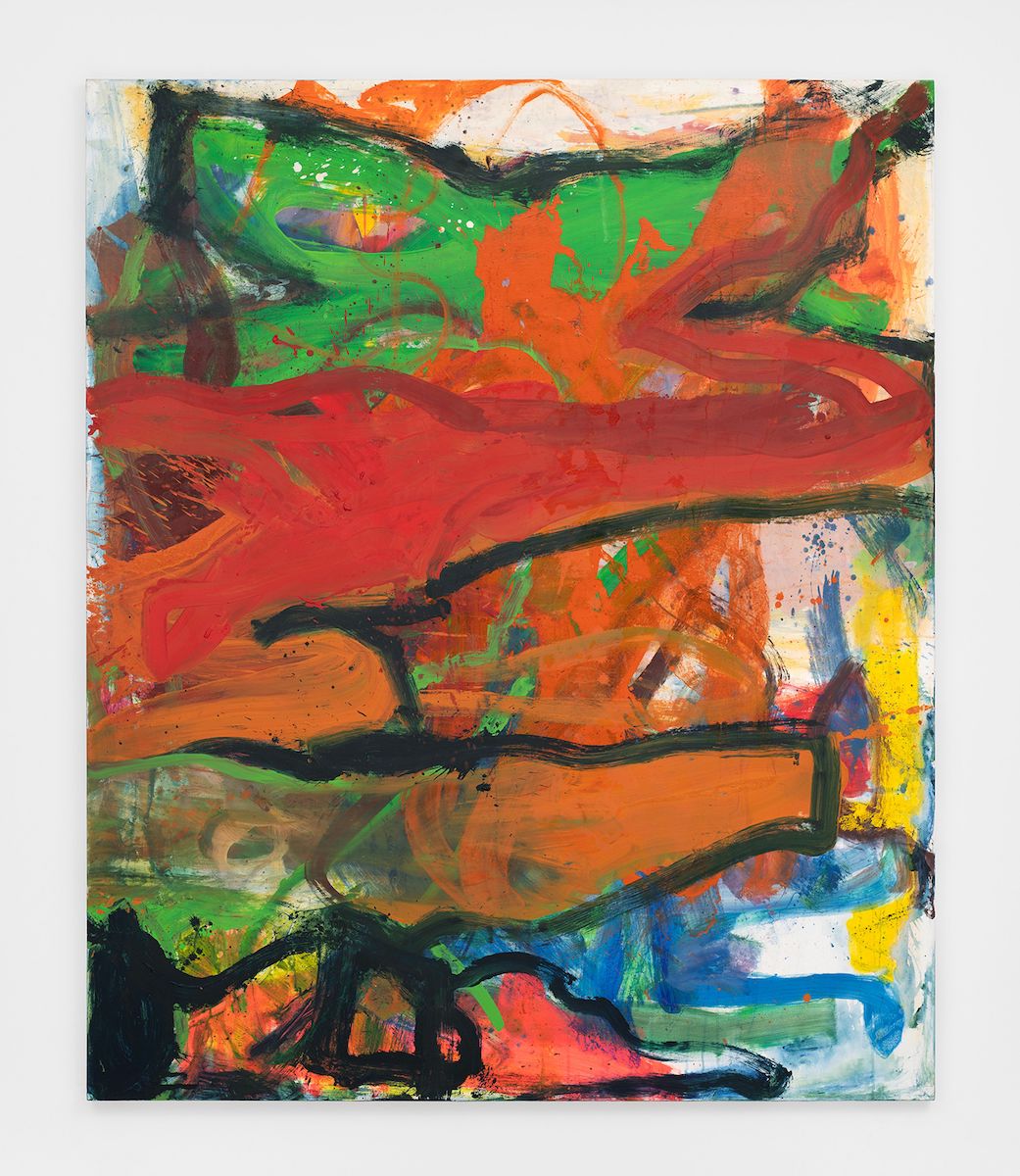 Anke Weyer, “Breather”, 2026, oil and acrylic on canvas, 78 x 65 inches
Weyer has become highly efficient at handling layering (necessitated by woking in build-ups over existing sessions) that overcomes the pitfalls of cavalier construction. Case in point, Breather, 2026, to my mind one of the best in show with a robustly constructed composition of stacked forms, outlined in skittish black that enhance enhances the topical similarity with the landscape of San Francisco’s famous Lombard Street, with a whiff of the architectonic impinging.
For those invested in non-representational painting–myself amongst them–the joie de vivre found in encountering Weyer’s ebullient offerings with stimuli for the eye and balm for the soul. Bringing that most elusive, and precious, of emotions: hope. Chalk it all up to mid-career maturity.
____________________________________________________________
* CANADA website
† From the Press Release: "The title refers to Weyer’s discovery of a trove of unfinished canvasses in her studio last spring. Squirrelled (sic) away for ten years or more, the canvasses weren’t ready to be discarded, but they were never finished either. Weyer unrolled them and created totally new paintings on top of her previous efforts. The long gap between periods of active painting gave Weyer insight into her gradual progress as she noticed forms and colors that were reminiscent of earlier phases of her work."
¶ op. cit.
Anke Weyer: Beautiful Rejects
CANADA
60 Lispenard Street, New York, NY 10013
April 3–May 9, 2026

Edward Waisnis
Edward Waisnis is an artist and filmmaker. Additionally, he is the Producer of two Quay Brothers films, Through the Weeping Glass and Unmistaken Hands, as well as having overseen the facilitation of their 2012 MoMA retrospective. His writing has appeared in Art New England, COVER, ARTextreme and STROLL.
view all articles from this author