Whitehot Magazine
October 2026
"The Best Art In The World"
"The Best Art In The World"
October 2026
How Are We Doing? Top 5 Booths from New York’s Spring Art Week
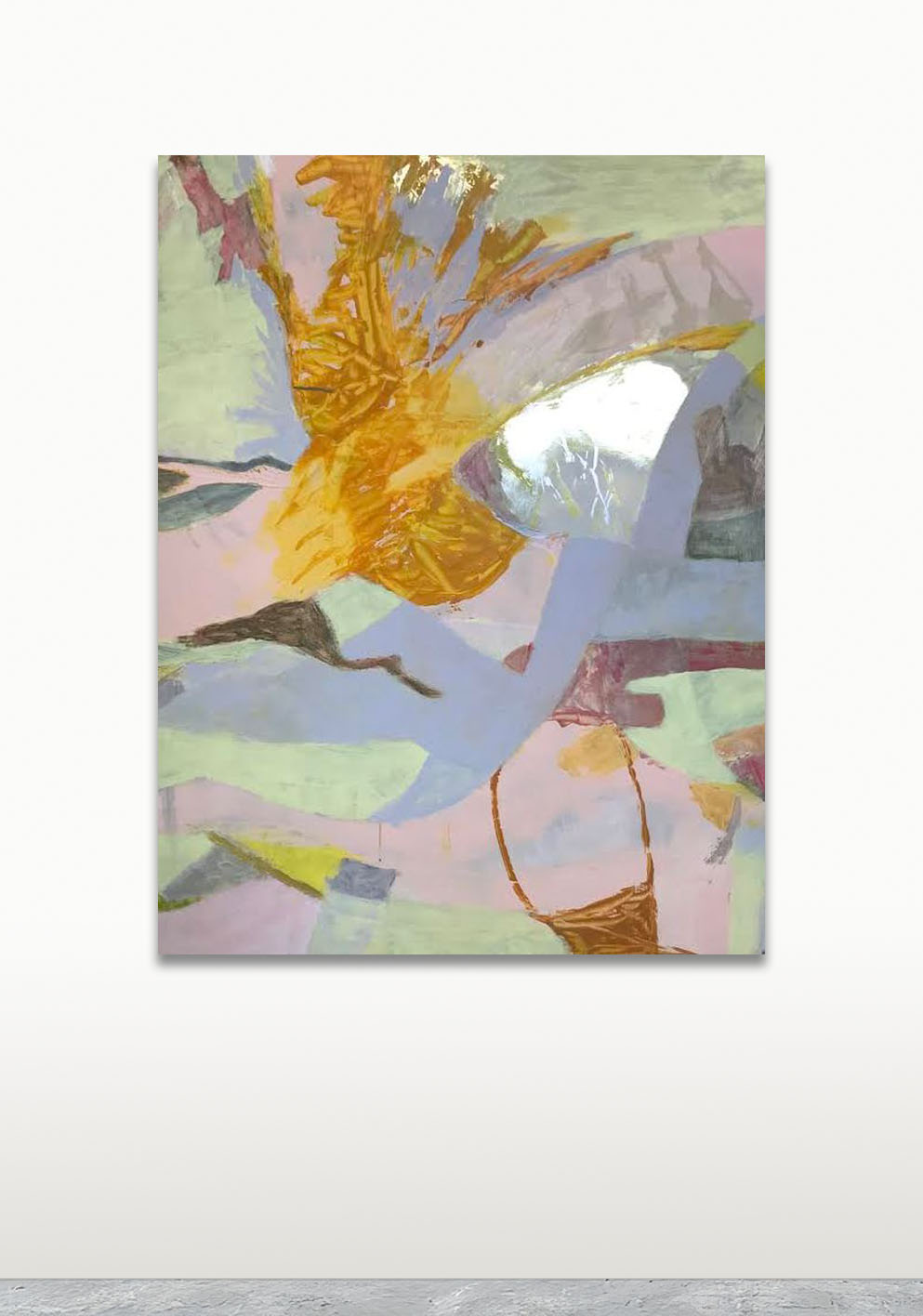 Lesley Bodzy. Bird War, 2024. Flashe on aluminum panel. 60 x 48 inches. Courtesy of CRISS Collaborations, at Future Fair.
By QINGYUAN DENG May 16th, 2026
Overslept but sleep deprived. Throat itches from second hand smoke inhalation, day time champagne, and late-night nonsensical-slash-truly groundbreaking conversations at what feels like a million parties. Did anything make sense? Everything and nothing at all. I think I missed a breakfast, but I will make it to the lunch. The anonymous Instagram account Artnotnet published that they miss the Frieze tent at Randall’s Island because taking a ferry means taking fewer steps. But I’m happy Frieze was at the Shed, a hop and a skip and a subway from what I found to be best at show, across all fairs, namely found at Future Fair, NADA, and Independent.
It’s spring in New York and I am in my element—as a writer, as a curator, and as a thinking, breathing human. Art is my respite. Paint pours, propaganda, fragility, the male physique, East Asian religious imagery, the legacy of minimalism, are on my mind, please enjoy my top five booths.
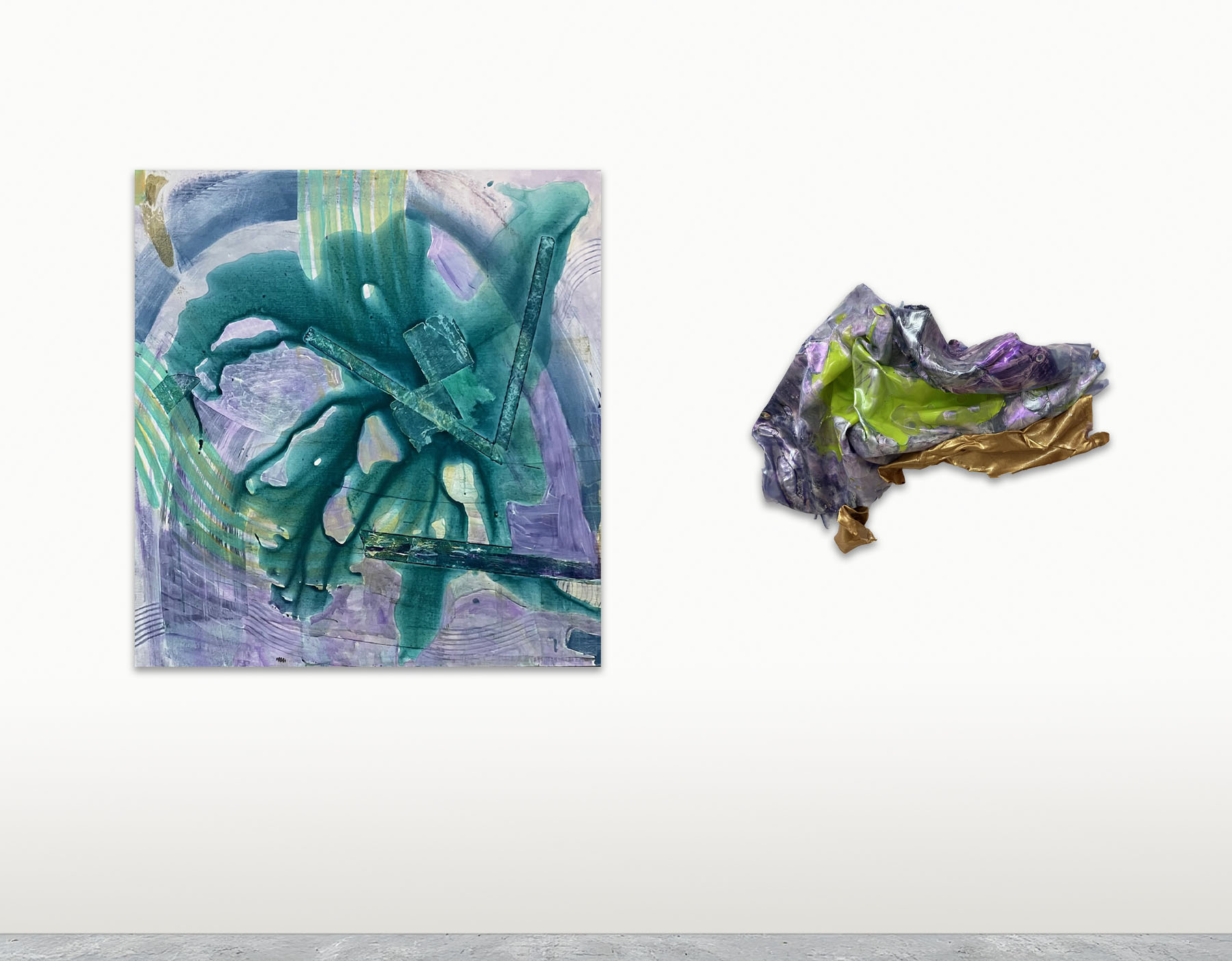 Lesley Bodzy. L: Aqueous Drift, 2026. Acrylic on canvas. 36 x 36 in. R: Acid Veil. Silkscreen fabric, satin, acrylic paint, and resin. 21 x 17 in. Courtesy of CRISS Collaborations, at Future Fair.
CRISS Collaborations | Future Fair Lesley Bodzy
CRISS Collaborations devotes its booth to eleven new acrylic paintings and a single resin sculpture by Lesley Bodzy, organized around the proposition that interior states can be staged as physical events rather than depicted as images. Pours, stains, drag, and brushwork accumulate across pastel washes of green, dusted pink, and ochre, punctuated by more saturated passages of teal, lilac, and metallic gold (the best painting among these excellent studies of formal and affective transformation is arguably the 2024 violently free Bird War); the lone sculpture Acid Veil (2026) extends the investigation into three dimensions, hovering deliberately between image and object. “Drawing from feminist abstraction, Bodzy's mark-making challenges binaries such as soft versus strong and emotional versus formal, presenting vulnerability and authority as interdependent rather than opposed,” explains gallerist Erica Criss. What distinguishes the presentation is its refusal to mistake delicacy for fragility: surfaces that read as yielding turn out to be structurally insistent, built through resistance rather than ease.
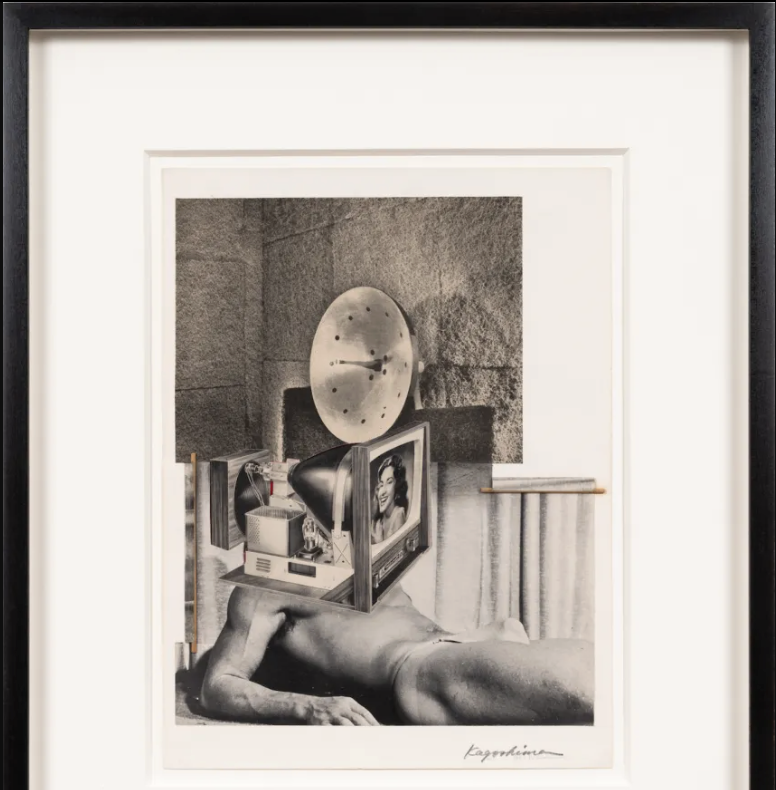 E'wao Kagoshima. Untitled, 1981. Courtesy of Ulterior Gallery, at NADA New York.
Ulterior Gallery | NADA New York, TD Spotlight (curated by Anthony Elms) E’wao Kagoshima
Anthony Elms’ TD Spotlight selection of E’wao Kagoshima at Ulterior arrives as part of an ongoing reappraisal of the Japanese-born artist’s downtown New York output. The booth foregrounds his acidic collage practice. A suite of small mixed-media works on paper from 1981 splices and layers media fragments, such as a male physique pose, a Reagen administration propaganda image of a creeping shadow intruding a young woman’s bedroom, Madonna iconography and a typewritten meditation on art’s expressive power by Leo Tolstoy, into compositions where eroticism, domesticity, and dread contaminate and germinate each other. Two larger 1983 drawings produced for an experimental New Museum show (“DON’T be FLAT!”; “AD!ART”) push toward a graphic, near-punk register and dramatize/satirize the language of nationalism, mobilizing advertising vernacular against itself. Kagoshima’s work refracts American mass culture through a diasporic surrealism with much delight.
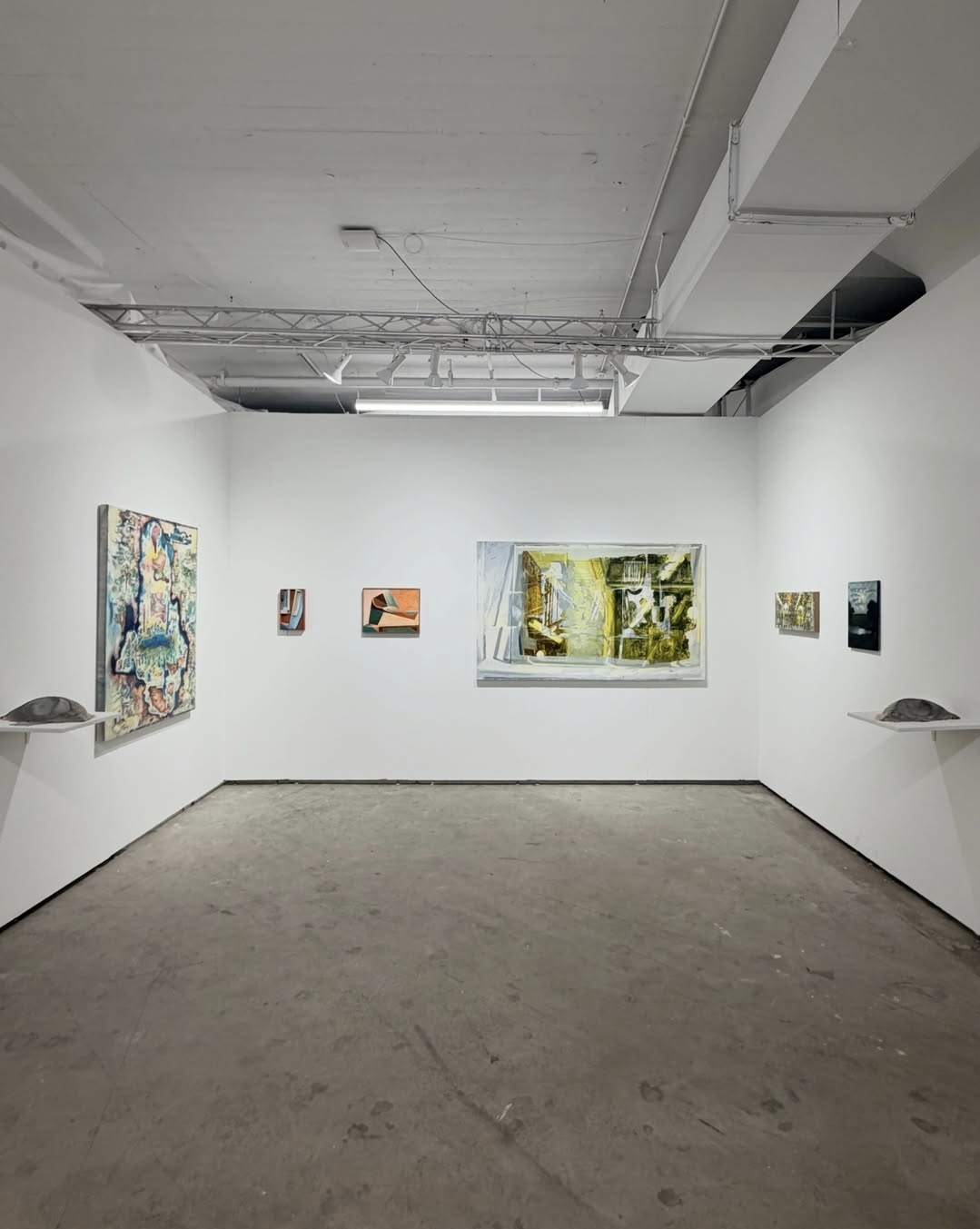
Anna Gregor, John Hee Taek Chae, Logan Grider, and Paz Sher. Courtesy of D.D.D.D., at NADA New York.
D. D. D. D. | NADA New York Anna Gregor, John Hee Taek Chae, Logan Grider, and Paz Sher
D. D. D. D.’s four-artist booth is unified by a shared seriousness about medium. Anna Gregor’s largest works, such as After Botticelli II (2025) and After Newman I (2025), apply an ancient glass-gilding technique to canvases that translate art-historical sources into shimmering, half-legible fields of ochre and rust, where vision is staged as an active process of reconstruction. John Hee Taek Chae’s Death of the Buddha (Spring) reimagines East Asian religious imagery as a stained, dyed cartography of bodies and landscape, while a smaller nocturne, Relying upon a finger, we see the moon (2023) sets the booth’s quieter tonal anchor. Logan Grider’s egg tempera and oil paintings, No. 32 (Otherside) (2025) especially, sculpt light into faceted, near-cubist volumes; his small painted reliefs extend the same logic into shallow space. Paz Sher’s two cast-aluminum Paralyzed sculptures, with silicone pooling around their eyelike basins, ground the booth in corporeal residue. The sum is committed to the slowness of looking.
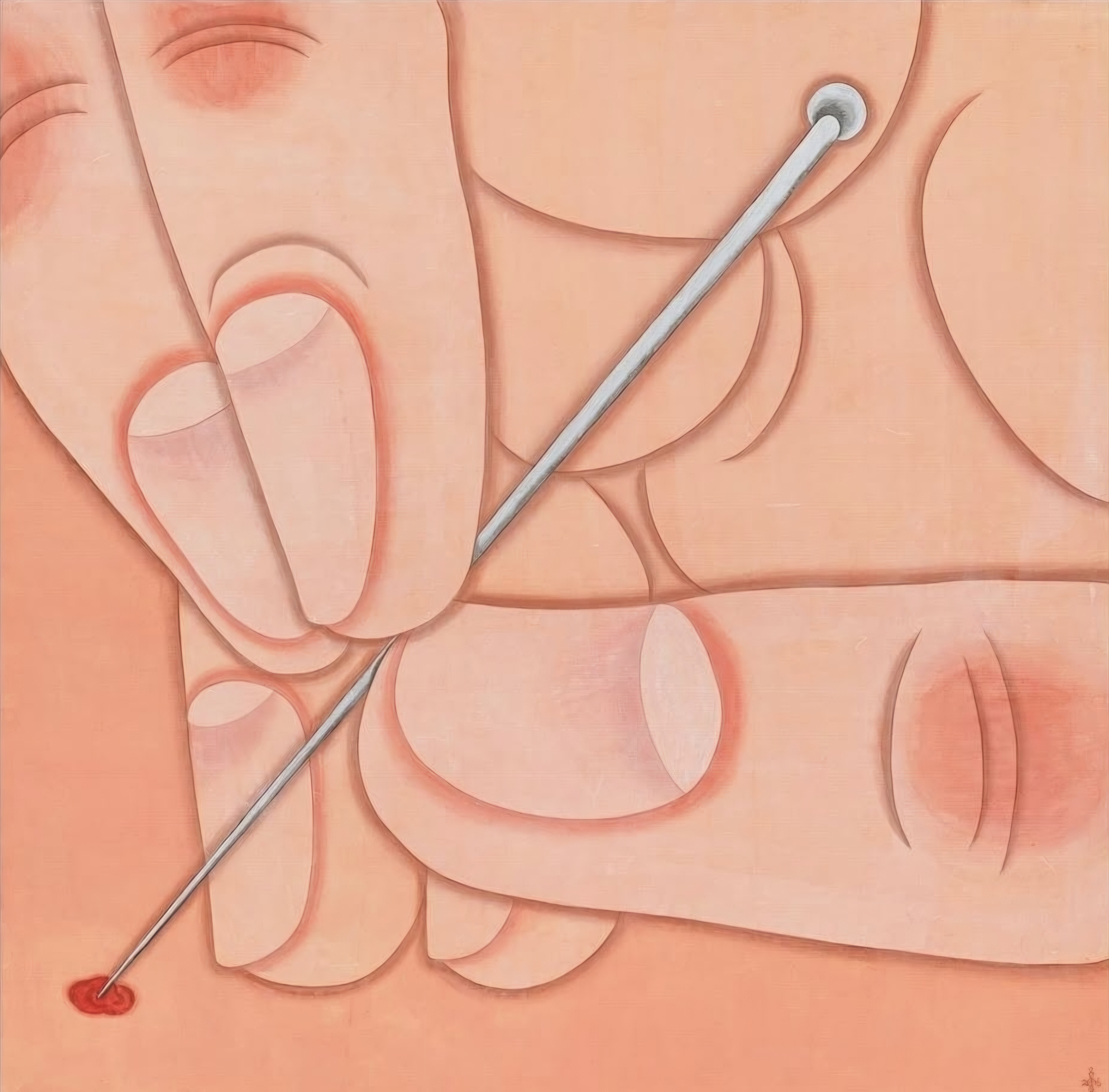
Tseng Chien-Ying. Punctum, 2026. Colors mineral pigments, silver slush on paper, mounted on wood panel. 32 5/8 x 32 5/8 in; 83 x 83.5 in. Courtesy of Kiang Malingue, at Independent New York.
Kiang Malingue | Independent Tseng Chien-Ying
Tseng Chien-Ying’s US debut at Kiang Malingue is part of Independent’s notable concentration of Asian solo presentations this year and stands out for the technical conviction with which it routes contemporary queer subject matter through traditional East Asian materials: ink, color, and mineral pigments on paper. New works developed during the artist’s spring residency at 99 Canal sit alongside paintings produced in Taipei, with the body and its parts, be it clasped hands, a pierced ear in close-up, a flame cupped in interlocking palms, or the napes of two heads, suspiciously phallic looking, enshrined in oval folding-screen panels, replacing the face as the primary site of legibility. For Tseng, limbs are manifestation of desire and will. And the booth bears that out, revealing what intimacy, devotion, and erotic charge might look like when extracted from the iconographic conventions of Buddhist and Daoist painting and retouched through of-the-moment sensibility.
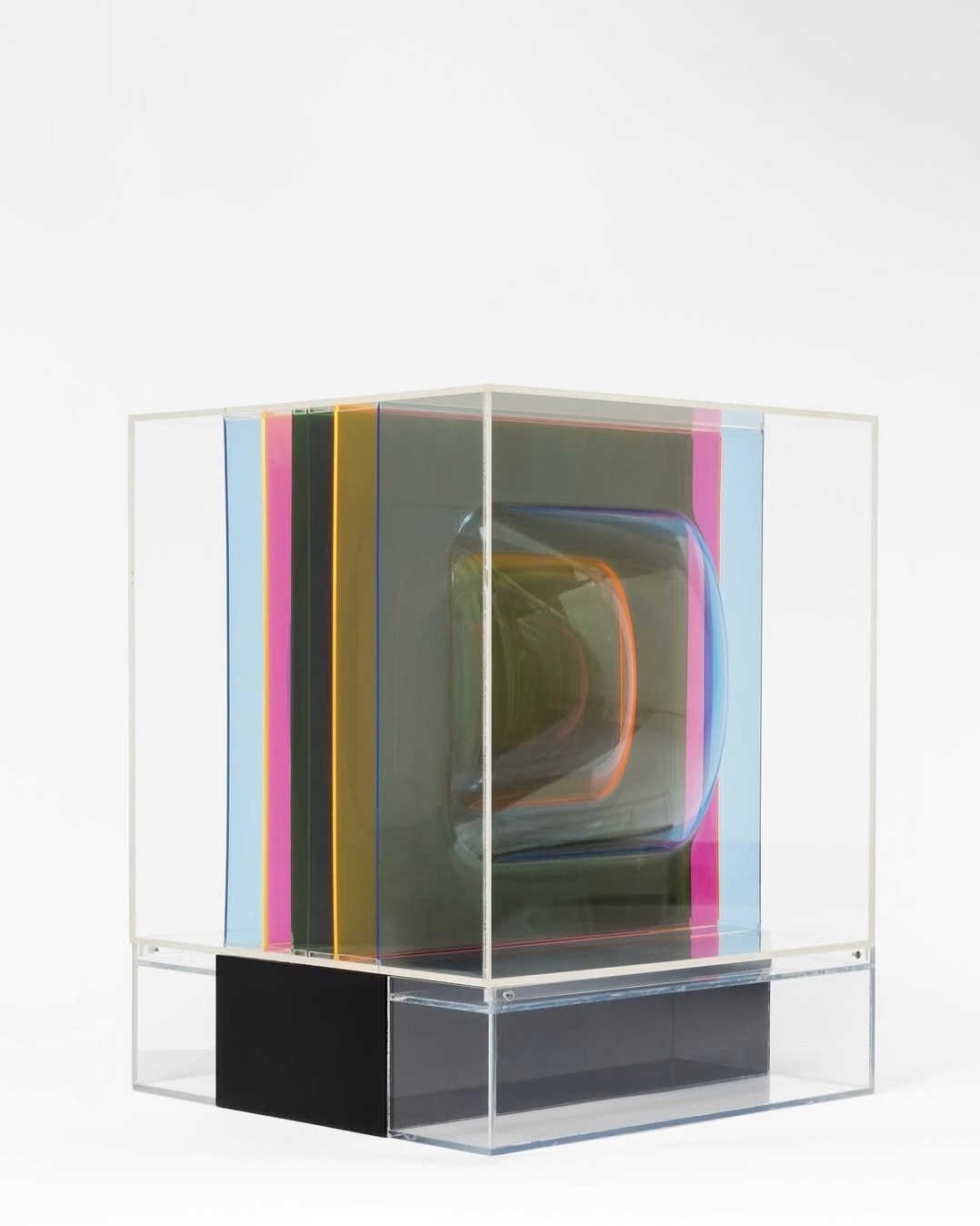 Aaronel deRoy Gruber. Moment in Time, 1968. vacuum formed translucent tinted sheet acrylic, clear and black sheet acrylic, fluroscent lights, hardware. 18.5 x 14.375 x 14.375 in. Photgraphed by Chris Uhren. Courtesy of Romance and april, april, at Independent New York.
Romance, april april | Independent Aaronel deRoy Gruber
A joint presentation by two Pittsburgh galleries makes the case for Aaronel deRoy Gruber (1918–2011) as one of the most consequentially under-recognized sculptors of her generation. Crucially, Gruber is a Midwestern industrial-Pittsburgh counter-position to the austerities of contemporaneous New York Minimalism. Where Judd, Morris, and Andre were stripping sculpture down to the literal object, Gruber, encouraged toward three dimensions by David Smith in 1961, was moving in the opposite direction: toward color, light, optical incident, and the seductive ambient glow of industrial plastic. Having persuaded a local engineering firm to let her work with its vacuum-forming machinery, she produced acrylic vitrines housing fanned arrangements of saturated plexiglass blades—think magenta, orange, lime, cobalt—alongside monochromatic vacuum-formed cubes with smoky domed interiors. The presentation reactivates a mid-century history that the Minimalist canon largely foreclosed.

Qingyuan Deng
Qingyuan Deng is a curator and writer, based between Shanghai and New York City. He is interested in relational aesthetics, experimental filmmaking, and the intersection between literary culture and visual arts.
view all articles from this author