Whitehot Magazine
September 2026
"The Best Art In The World"
"The Best Art In The World"
September 2026
Before Language: An Interview with Song E Yoon at Biennale Arte 2026
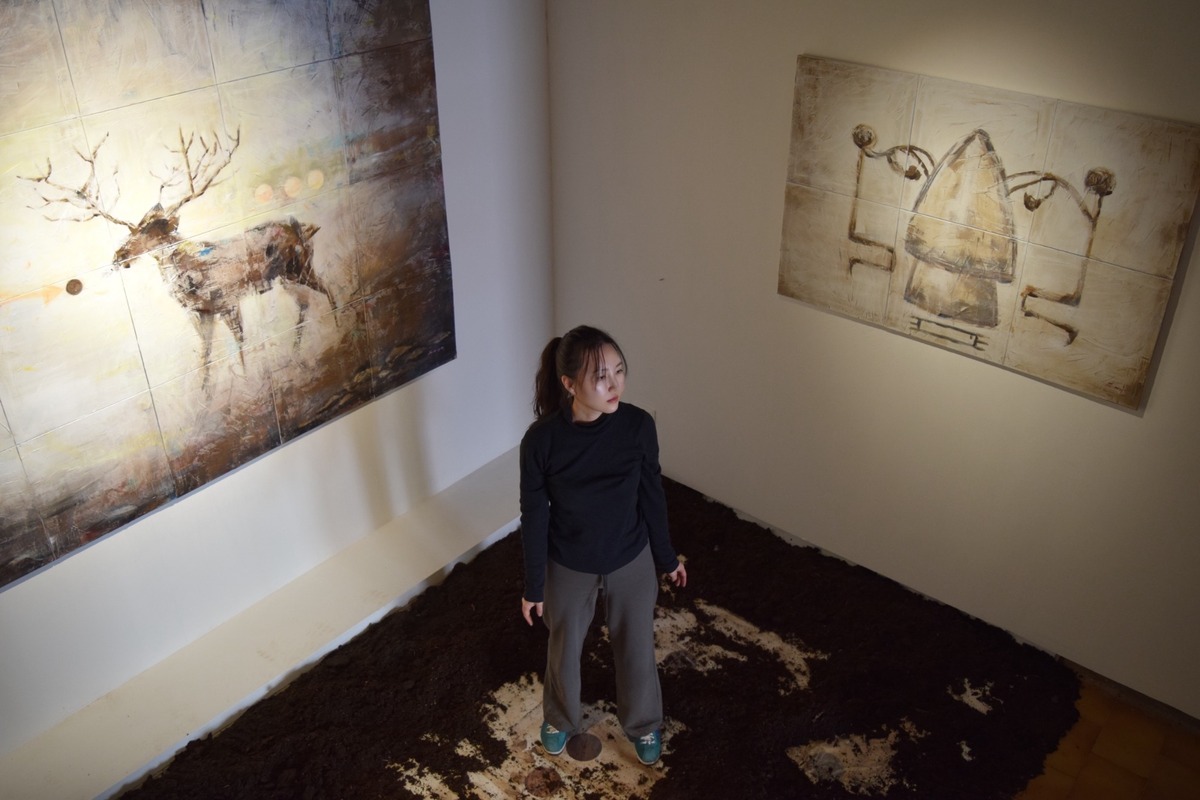 Song E Yoon: Songs Across Time, installation view, Spazio 996/A, Venice, 2026, Photo Shrenik Bambki, Courtesy of the artist ©Song E Yoon
By KUN SOK May 15th, 2026
Presented by The Foundation of ART NYC as a Collateral Event of the 61st International Art Exhibition – La Biennale di Venezia, Song E Yoon: Songs Across Time places Yoon’s Song E Code in dialogue with Frédéric Bruly Bouabré’s Bété alphabet. In this conversation, Yoon discusses dots, intervals, repetition, bodily encounter, misreading, and the possibility of a visual language that begins before language.
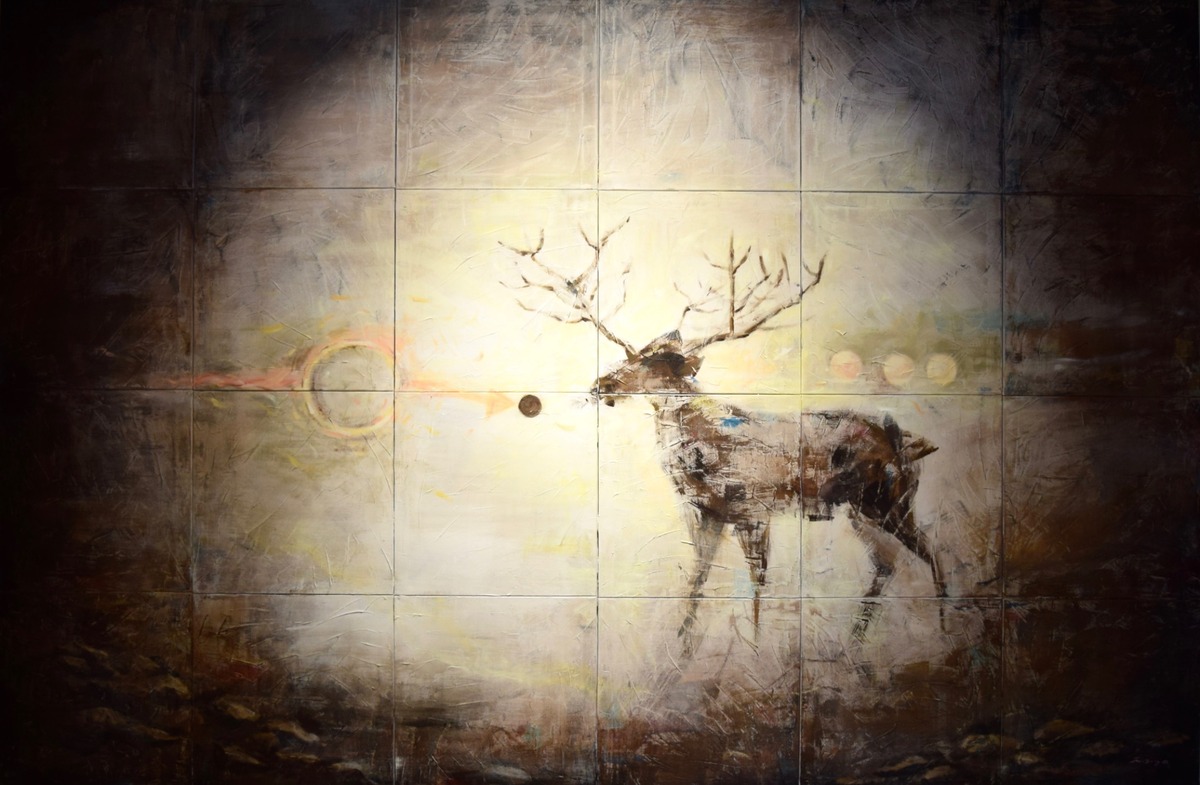 Song E Yoon, ●, 2026, Mixed media on Canvas, 144 x 96cm, Photo Shrenik Bambki, Courtesy of the artist ©Song E Yoon
Kun Sok: Before viewers understand Song E Code, what do you want them to encounter?
Song E Yoon: Before understanding, I would like viewers to meet a sensation. I do not want Song E Code to explain itself too quickly. It begins somewhere before language becomes clear. There is an emotion that feels old to me. It comes from the past, but not as history. It is more like something the body recognizes before the mind names it.
Song E Code has taken shape through many stories from the past. But I do not think it belongs only to me. Viewers may connect the signs in their own way and make another story. That first encounter, before explanation, is important.
Kun Sok: What is the viewer’s first physical encounter with the installation, its space, movement, sound, and visual rhythm?
Song E Yoon: I think of the exhibition as a movement between two states, not simply as two separated spaces.
When viewers enter, they encounter Frédéric Bruly Bouabré’s Bété alphabet and my Song E Code in relation to one another. They are placed near each other, but they do not work in the same way. Before reaching a clear meaning, viewers first feel the tension between the two systems. As they move further into the space, they begin to meet the process through which Song E Code is formed. The movement is not really linear. It begins with something that appears already visible, almost like a system, and then moves back toward the condition of its formation.
There is no voice that explains the work. But rhythm can come from dots, intervals, repetition, distance, and the way the body moves through the room. In that sense, the viewer moves from result to origin, from seeing a language to sensing how a language might begin.
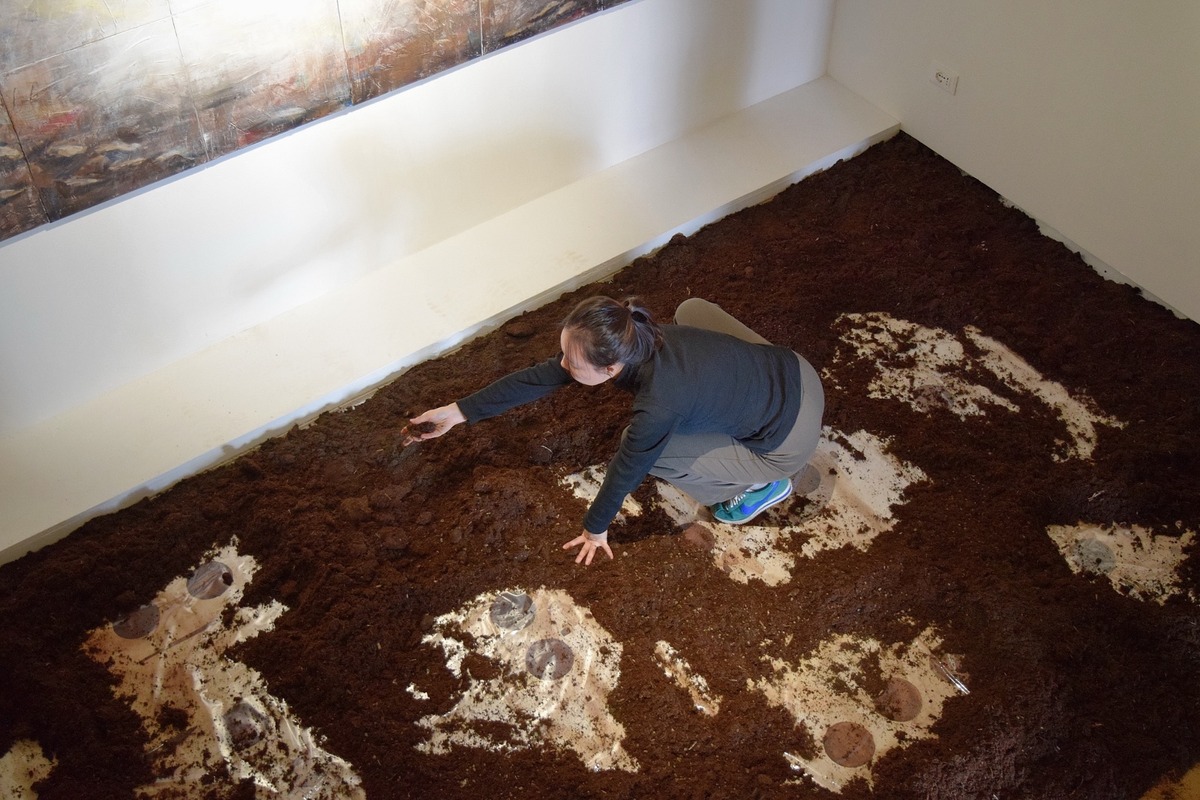 Song E Yoon: Songs Across Time, installation view, Spazio 996/A, Venice, 2026, Photo Shrenik Bambki, Courtesy of the artist ©Song E Yoon
Kun Sok: The work begins with black and white dots. What should we notice before calling them language?
Song E Yoon: The first thing to notice is that they are not immediately language. They may look like pattern, rhythm, image, or movement. I want viewers to stay with that uncertainty for a moment. A single dot does not carry one fixed meaning. An interval, a repetition, a distance, or a connection begins to create a context. The dots exist before language, but they also hold the possibility of language.
I do not want viewers to approach Song E Code only as something to decode correctly. It can be sensed, interpreted, and also reconfigured. I sometimes think of it like drawing constellations. The individual points are there, but the form appears only when someone begins to connect them.
Kun Sok: When did ordinary language stop being enough for what you needed to express?
Song E Yoon: I have often felt that language becomes more precise in order to reduce misunderstanding, but misunderstanding does not disappear. It keeps returning. So for me, misunderstanding is not only a failure of language. It is also part of life.
My work has often returned to the question of origin. In my 2011 work The Universe’s Credit Rating, I was already asking whether the world we stand on, and even the universe itself, could be trusted. Later, that question became less about the universe as an abstract idea and more about where I come from, what I can trust, and how meaning begins.
Song E Code came from imagining a state before sound and linguistic systems were formed. Instead of making language clearer and more precise, I wanted to move in another direction, toward symbol, image, abstraction, and play.
It was not an escape from language. It was a way to stay near what language keeps missing.
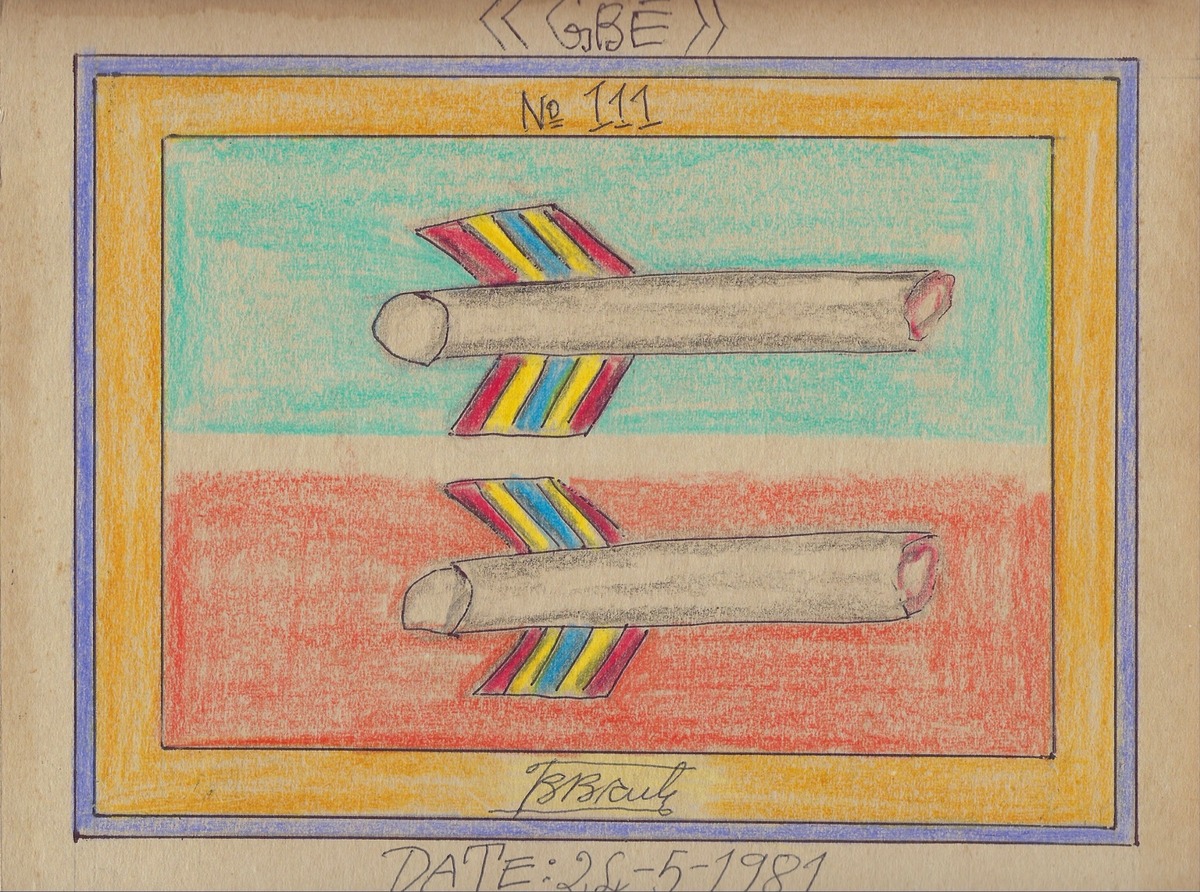 Frédéric Bruly Bouabré, bete A ,mixed media on cardboard, 1981, 21 x 29.7cm, Photo Sherenik Bambki, Courtesy of The Foundation of ART NYC, ©ART NYC
Kun Sok: Bouabré called himself Cheik Nadro, the one who does not forget, and his Bété alphabet gives signs a voice. What kind of memory does Song E Code carry if it refuses voice?
Song E Yoon: Bouabré’s Bété alphabet may look pictographic, but it is a system that moves toward sound. It gives visual signs a route toward pronunciation and speech. His name Cheik Nadro also carries a strong idea of memory, the desire not to let something disappear. Song E Code moves differently. It does not ask signs to become voice. It asks them to stay active as image, relation, and memory.
The memory it carries is not a memory that has to be pronounced. It is closer to a trace, or to something stored in the body before it becomes speech. Sometimes when I try to explain something too directly, it becomes distorted. So I became interested in what can remain before speech, or without speech.
This is not only about silence. It is about a change in perception. When voice is absent, other things become stronger: distance, rhythm, repetition, the way one sign meets another. I think Song E Code carries memory through those conditions.
Kun Sok: If Song E Code is misread, does it fail, or does it begin there?
Song E Yoon: I think it begins there, or at least it can begin there. Song E Code is not built around one fixed meaning, so it does not depend on one correct reading. Of course, it is not completely arbitrary. There is a structure. The work begins from simple conditions such as black and white, presence and absence, material and immaterial. But within that structure, different viewers may connect the signs differently.
In ordinary language, misreading is often something to correct. But I am interested in the moment before correction. A misreading can reveal another path, another relation, another context.
So I do not think misunderstanding has to be removed from the work. It can become a generative space. That is where the code becomes less like a fixed system and more like a living one.
Kun Sok: Was there a point when Song E Code became too clear, too symbolic, or too systematic? What did you have to give up for it to remain open?
Song E Yoon: Yes, and I still think about that danger. Because it has the word code in its name, people may expect that there is a key, and that if they find the key, the work will be solved. But I do not want the work to be solved in that way. If it becomes too clear, it becomes closed. If it is too loose, it becomes only image or pattern. I had to stay between those two conditions. The work needed a structure, but the structure could not become a cage.
What I had to give up was control, or at least the desire to control everything. Black and white, presence and absence, material and immaterial give the work a frame. But they do not decide one final meaning.
That uncertainty is difficult, but it is necessary. It allows the viewer to enter the work without knowing exactly whether they are reading it correctly. I think Song E Code needs that uncertainty in order to remain alive.
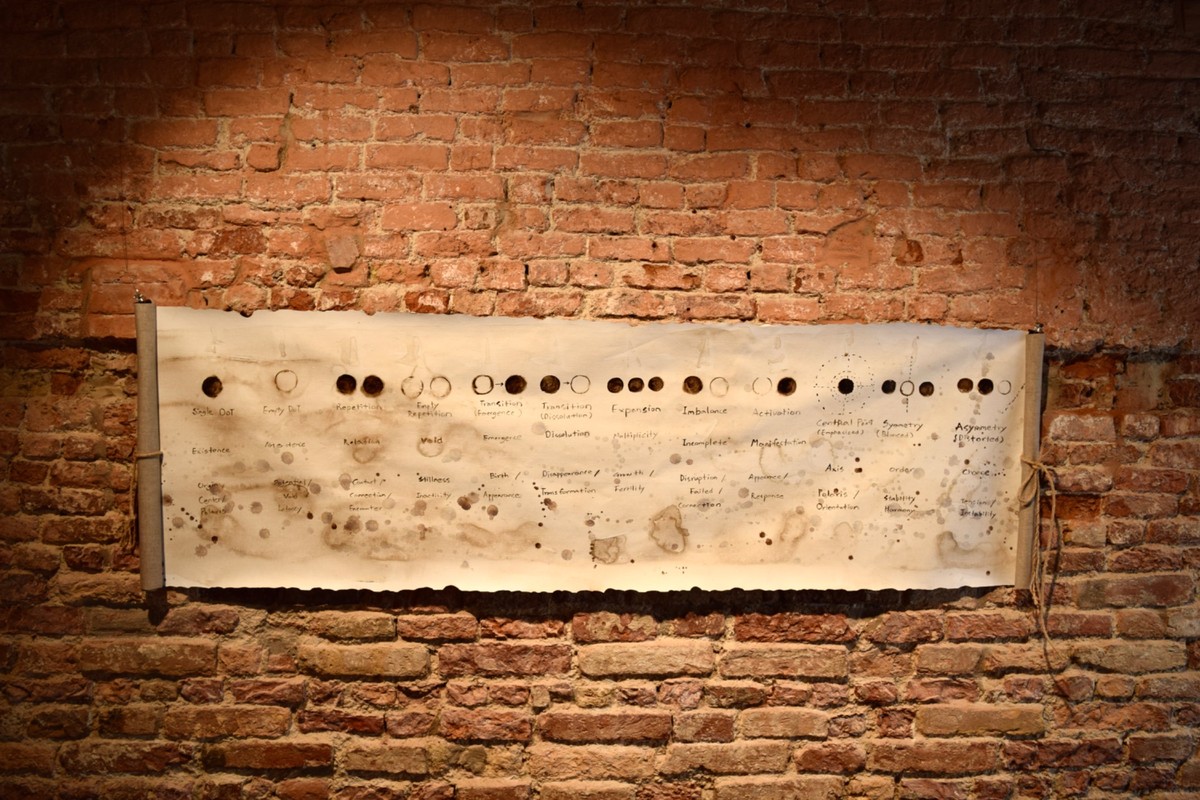 Song E Yoon, ● ○, mixed media on canvas, 2026, 72 x 48 in, Photo Shrenik Bambki, Courtesy of the artist ©Song E Yoon
Kun Sok: In the context of In Minor Keys, what should remain untranslated in Song E Code?
Song E Yoon: I understand In Minor Keys as a way of listening to lower vibrations, quiet forces, and small units that accumulate over time. They may not appear immediately, but they can slowly create a larger current. In Song E Code, what should remain untranslated is the state before language becomes fixed. I do not want every part of the work to become explanation. If everything is translated into ordinary language, the work loses the condition from which it begins.
There is something that should remain sensed rather than clarified. It may be a bodily resonance, a distance, an interval, or the feeling that meaning is forming but has not yet arrived.
That is important to me. It is not secrecy, and it is not a refusal to communicate. It is another kind of communication, one that stays incomplete.
Song E Yoon: Songs Across Time is on view at Spazio 996/A in Venice from May 9 to November 22, 2026.