
Whitehot Magazine
October 2026
"The Best Art In The World"
"The Best Art In The World"
October 2026
Fuck with the Art World: Conversations with Alfredo Martinez
 Late New York artist Alfredo Martinez in his studio
By RYAN MEKENIAN February 11, 2026
I never met Alfredo Martinez in person. Our conversations took place over the phone, me in Los Angeles and him in New York, calling from his hospital room. He was there because of complications with his leg. He did not talk about death. As far as I knew, and as far as he suggested, his illness was something to deal with and move past.
Sometimes there were interruptions — a nurse entering the room, the faint sound of medical equipment. Mostly there was just Alfredo. Clear, funny, focused. He spoke with the confidence of someone who had told these stories before, but not so often that they had gone dull. The calls felt ongoing, provisional. I assumed there would be more of them.
The distance helped. Without seeing him, without the visible weight of illness, the conversations stayed grounded in memory and detail. Alfredo wasn’t reflective in the sentimental sense. He didn’t speak in conclusions. He talked about how things worked. What people did when they thought no one was watching. What they were willing to ignore.
When I asked him about the day he was arrested, he didn’t start with the arrest, but with a feeling.
“I knew something was going to happen for a long time,” he said. “I could feel the walls closing in.”
He said this calmly. Not as fear, but recognition. The system he had been operating inside for years had reached a point where it needed to correct itself. He had been visible for too long. Useful for too many people. Eventually, the balance shifts.
Alfredo told me he was eighteen when he first forged a Jean-Michel Basquiat.
Eighteen. Young enough that most artists are still trying to understand how to look at art, let alone how it circulates. Alfredo already understood that authorship is a shared agreement, not a fixed truth, and that belief does much of the work before anyone looks closely. He wasn’t talking about style or imitation. He was talking about timing. About demand. About knowing what people wanted to see and when they wanted to see it.
 Alfredo Martinez (right) working with Adrien Brody, Photo by Sylvia Plachy
He had attended what would become the last Basquiat exhibition while the artist was still alive. He went with a friend and the friend’s wife. The wife insisted on going. She was bored, annoyed that her husband never took her anywhere interesting. At the opening, Basquiat was signing autographs. At some point, he wrote his phone number on a poster that belonged to her.
They were invited to an after-dinner gathering by the dealer. Alfredo and his friend sat at one end of the table. The wife sat closer to Basquiat. Alfredo remembered the seating clearly, the way proximity arranged itself without needing explanation. Later that night, she disappeared. The husband spent hours looking for them, moving from club to club, demanding Basquiat’s address from the dealer, even climbing fire escapes to try to reach his apartment. Eventually it became clear what had happened. She left dinner with Basquiat. They flew to New Orleans and stayed there together for two weeks.
Alfredo told the story without drama. Not as gossip, not as scandal. More like a description of the environment. An early lesson in how the art world actually functioned.
 Alfredo Martinez, Forgery.
Years later, when I spoke with the artist Jose Castillo, he described meeting Alfredo in the early 2000s at the Greenhouse on Greene Street in Soho. It was a building used by artists, partly by permission and partly by neglect. Alfredo lived there with another artist. Jose moved in while working as an EMT. At one point, the police confiscated the space for illegal squatting and took the guns Alfredo had manufactured.
Jose described Alfredo as an uncle figure. Someone who put a blanket over him the first night he slept there, and someone who would later scream at people without warning. They lived together on and off for years. They fought. They reconciled. “Everyone kicks him out at one point or another,” Jose told me.
Alfredo tried to persuade Jose to sell fake Basquiats. He introduced him to collectors. He helped him get his first show. He taught him carpentry. He was family in the way families often are, inconsistent and demanding.
What struck me was how Alfredo described the forgeries not as ambition, but as exhaustion.
At a certain point, he said, the art world became unbearable. Friends overdosed. The scene hardened. He wanted out. Still, he kept forging, though not consistently. He would sell a Basquiat forgery and then stop for years. Then return. It was never a straight line. More like testing how much pressure the system could absorb before responding.
 Artist and Whitehot Magazine Publisher Noah Becker with artist/actor Adrien Brody and artist Alfredo Martinez
Eventually, he decided there were only two outcomes. Either he would get caught, or he would take enough money to disappear.
“I figured I’d move away with a beauty to the Philippines,” he said. “Never come back.”
He said it plainly, without nostalgia or fantasy. Like logistics. Like a plan that could have worked under slightly different conditions.
When he talked about the forgeries themselves, Alfredo focused less on technique than on behavior. He would tell dealers the drawings had been stolen from Basquiat’s studio.
“That actually helps with the price,” he said.
Illicit provenance has its own appeal. Risk increases value. The story does part of the work. Sometimes a dealer would call and complain that a drawing was fake. Alfredo said these calls were often indignant, offended, almost theatrical. Then, months later, they would call again.
“Is there any way to get more drawings for less money?”
He said this happened eighty or ninety percent of the time. What mattered wasn’t authenticity, but deniability. The art world doesn’t run on truth. It runs on illusions people are willing to maintain together.
After his arrest, the phone stopped ringing.
“Crickets,” he said.
Dealers who had once been eager went silent. Alfredo mentioned Lio Malca by name, an art dealer who, he said, would never admit to buying a fake. Silence, denial, distance. These were not reactions to wrongdoing so much as strategies for preserving belief. The work had already done its job.
Robert Wittman, the FBI agent who founded the art crime bureau and arrested Alfredo later said, “Would anyone know who Alfredo is if I hadn’t arrested him? I guess that makes me his daddy.”
It was less a joke than a claim.
“There’s always a place for a forger,” Alfredo told me. “As long as they’re subtle.”
The arrest itself came through a sting at a hotel. By then, Alfredo wasn’t surprised. He served twenty-one months in prison. He spoke about it without embellishment, without grievance. Prison was simply another structure, another system with its own internal logic.
“I was just trying to fuck with the art world,” he said.
Not destroy it. Not expose it. Just disrupt it enough to see how it reacted when something didn’t behave the way it was supposed to.
When Alfredo was released, Josh Harris of We Live in Public picked him up from prison. They went to a diner and had a proper meal. Alfredo remembered it clearly. Coffee, eggs, fluorescent light. After months of institutional time, the normalcy mattered. The body returning to a pace it recognized.
 Alfredo Martinez, Forgery.
He talked about artists like Tom Sachs, friends with similar interests who committed to building careers. Alfredo recognized the difference.
“I never put the work into that,” he said. “I was distracted.”
Alfredo believed that attention mattered more than institutions, and that proximity to culture could replace permission. He was less interested in stable plans than in momentum. Noah Becker, the founder of Whitehot Magazine, described Alfredo as someone who could convince people that his most improbable ideas were reasonable. Sometimes they were. Sometimes they weren’t.
Alfredo spoke dismissively about his high school art teachers. He talked about his family, his mother Colombian and his father Puerto Rican, and how assimilated they sounded. “About as Hispanic as characters from Clerks,” he joked. Identity, like authorship, was something he treated as flexible, situational, rarely fixed.
Because our conversations were always over the phone, the hospital stayed abstract. Alfredo never spoke as if he were facing an ending. He talked about what came next. About projects. About people he wanted to reconnect with. The calls felt open. I assumed there would be more of them.
His death came as a surprise. The conversations didn’t conclude. They stopped. There was no closing statement, no grand epiphany. Alfredo Martinez didn’t seek redemption because he didn’t believe he had fallen. He simply understood the game better than the people who wrote the rules.
In his world, forgery wasn’t the opposite of art, it was a form of radical attention. It was a way of looking so closely at the world that you eventually saw the seams. He wasn’t summing up a life; he was just talking. And that is why his absence feels loud. The story didn’t end; the signal just cut out. WM
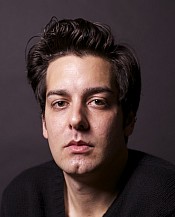
Ryan Mekenian
Ryan Henry Mekenian is an Armenian-American filmmaker and musician. He received the California Arts Council Emerging Artist Fellowship in 2023 in recognition of his creative achievements. His short documentary film Spokespeople, about Los Angeles bicycling communities advocating for road safety, was selected for the Emerging Filmmaker Showcase at the 2022 Cannes Film Festival, won the Jury Award for Best Short Documentary at the 2023 Annapolis Film Festival, and is widely available to stream on Shorts TV.
view all articles from this author



