Whitehot Magazine
October 2026
"The Best Art In The World"
"The Best Art In The World"
October 2026
Raphaël Denis’s Fates of Works at Bienvenu Steinberg & C
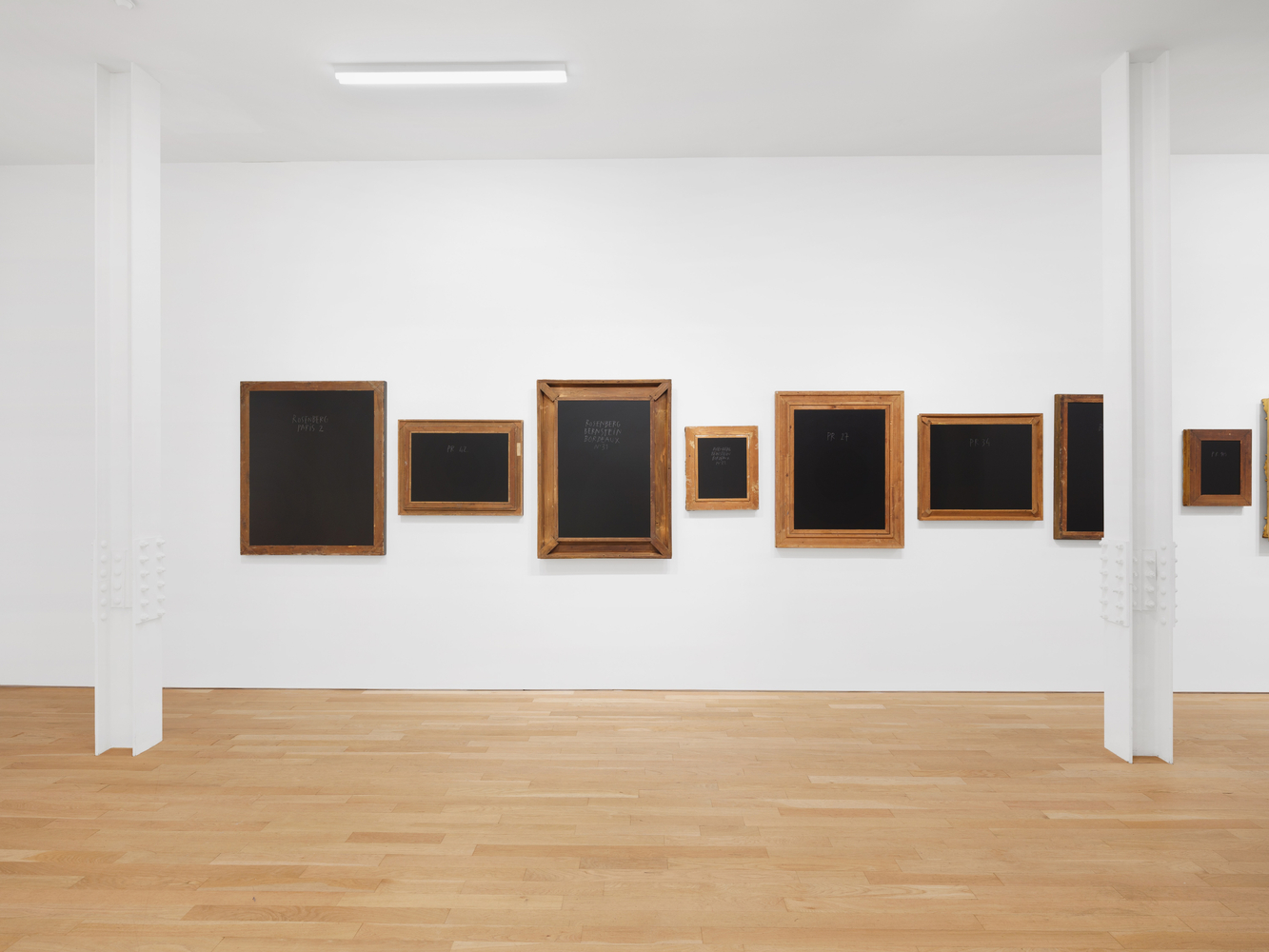 Installation view, 2026, Raphaël Denis Fates of Workspermission of the art artist and Bienvenu Steinberg & C. Photo credit: installshots.art
By BRIAN BLOCK October 29, 2026
Amid the turmoil of the last decade, a cluster of artists have emerged with innovative work probing significant historical events while often expanding notions of historical research, art and historiography. Artists Walid Raad, Jill Magid, Cameron Rowland, Taryn Simon, and Danh Vo, among others, have been making some of the most philosophically complex and challenging work of late. With the sharp survey Fates of Works, Bienvenu Steinberg & C introduces French artist Raphaël Denis to this group within the New York context.
In Fates of Works, Denis engages with an unmasking of a gallery archive that feels less like a tidy historical exhibition and more like a quiet, pointed unfolding of administrative ideology. Denis, operating with great precision as an artist-researcher, has spent over a decade tracing the bureaucratic ink trails of artworks looted from Jewish owners during the Nazi occupation of France—specifically tracking the looted holdings of legendary Parisian dealer Paul Rosenberg.
By the gallery entry is a wall-to-wall photo mural displaying some of the more than 4,000 works which passed through the possession of Rosenberg’s gallery during the years between the two world wars. Of these, Denis’s seemingly obsessive fixation is on the little over 300 that were looted by the Nazis. Anchoring this dense photographic record on a console table in front is Denis’s monumentally thorough five-volume artist’s book, The Paul Rosenberg Fund: The Parisian Years. These five volumes compile virtually all the artworks that passed through Paul Rosenberg’s gallery (on both primary and secondary markets). Binding together over 4,000 pages detailing the provenance, seizure, destruction, and/or erratic recovery histories of the works, the book serves as the intellectual master index for the exhibition. Its strategic use here (and by French authorities after the war) is an elegant move of jiu-jitsu-like redirection: taking the German penchant for accurate record-keeping and later using it to prove and reconsider their crimes with accuracy.
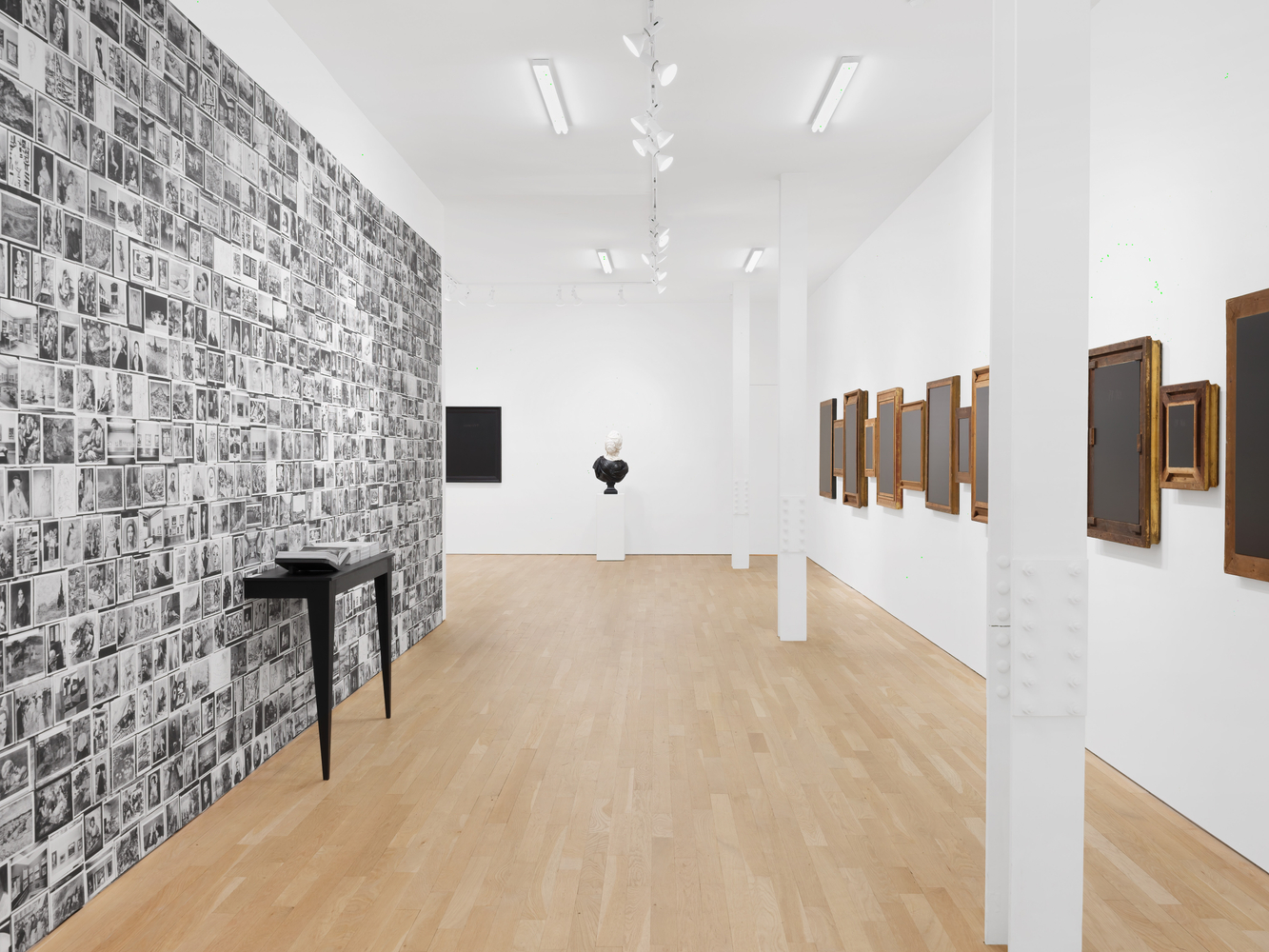 Installation view, 2026, Raphaël Denis Fates of Workspermission of the art artist and Bienvenu Steinberg & C. Photo credit: installshots.art
Two painterly bodies of work involving re-materializations (at full scale) of historical paintings on view here—which Denis developed from his archival research—are of particular interest, and can give rise to some unusual interpretive considerations as one looks upon these spectral works. What is captivating about these is not a lamentation for the absence of these lost masterworks by canonical artists, but their calculated withdrawal and re-materialization as present absences.
First are Denis’s re-materializations of the paintings believed to have been destroyed during a public bonfire of “Degenerate Art” at the Jeu de Paume in Paris in 1943. These works by Denis appear entirely in matte black (including period frames) and read first as gothic ghost “paintings”—sculptures of paintings, for they are not actually created with paint per se. They have charred black period frames surrounding their matte black Valchromat panels in the place where the original painting would be. “Vernichtet,” which Denis has written on the face of these in pencil, is from the archival notation meaning destroyed. This compelling detail allows the object to present a fictional opposite to the historical record. The warmly mute visual tone and scale of these easel-sized works, when considered in light of the history of the Rosenberg Collection, strike somber elegiac tones of absence and loss. They evoke a tragic contemporary gothic tone that feels uncomfortably familiar from current political maneuverings.
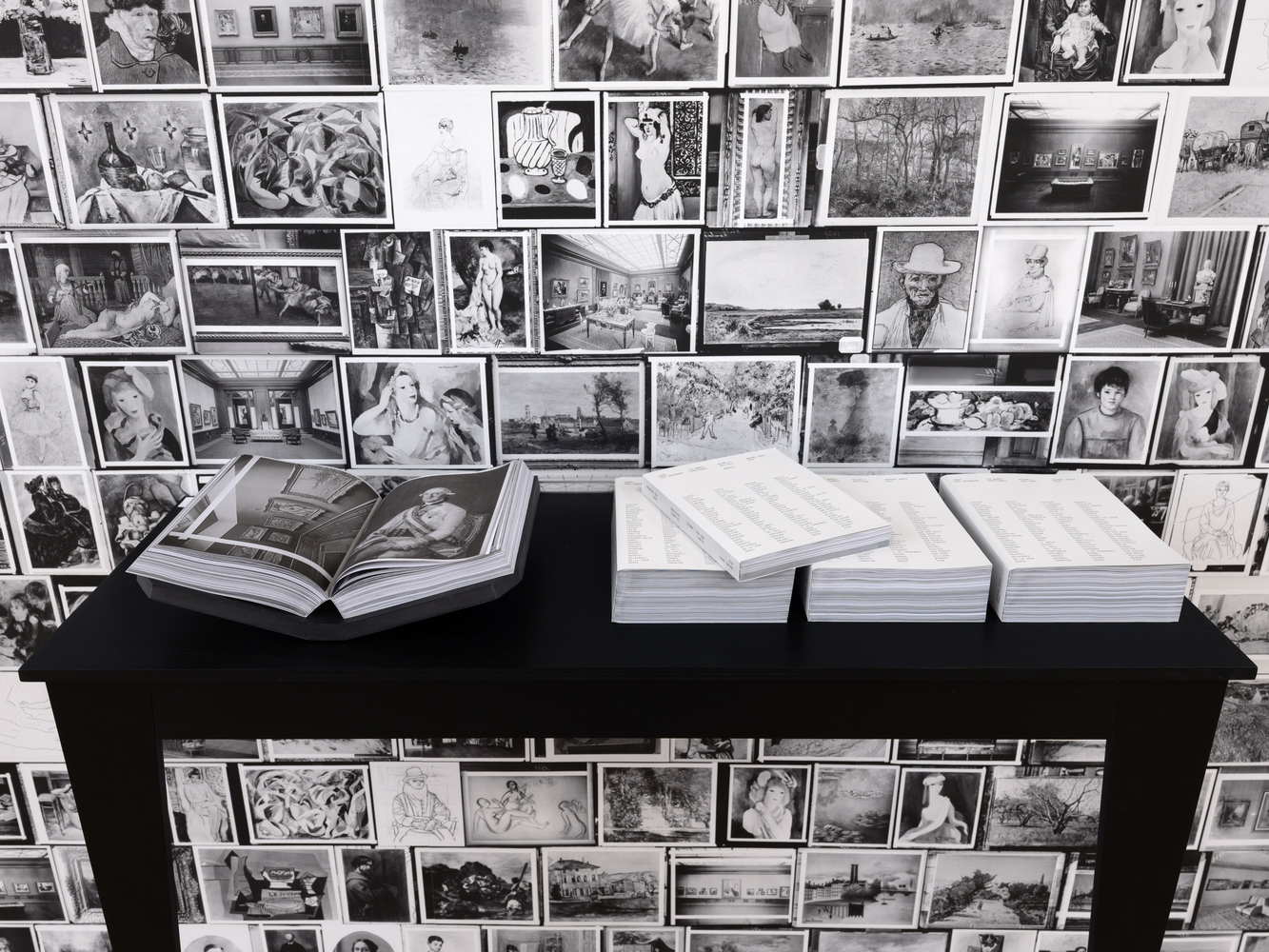 Installation view, 2026, Raphaël Denis Fates of Workspermission of the art artist and Bienvenu Steinberg & C. Photo credit: installshots.art
Nearby hangs a different group of thirteen re-materialized paintings from his series The Normal Law of Errors. Here, Denis—referencing social science in his title—has, in a sense, remade some looted Rosenberg paintings that were later recovered and returned to their original owners. These are also rendered to their exact historical scale, also as Valchromat panels fitted into vintage period frames—although these are not charred. Instead, these are turned around to face the wall. The effect of this hanging is oddly compelling—and an elegant move of negation. And what they negate is for the viewer’s imagination to picture. I was drawn to the typically unseen backstage details of the frames of these “paintings.” The viewer is denied the visual pleasure of the conventional painted surface in a tactful staging of self-exegetic muteness that subverts the abstracting power of the white cube and turns the gallery into a site of forensic accounting. Together, this group of thirteen sculptures of missing paintings forms a compellingly gothic display inviting intricate substitutions and reconsiderations.
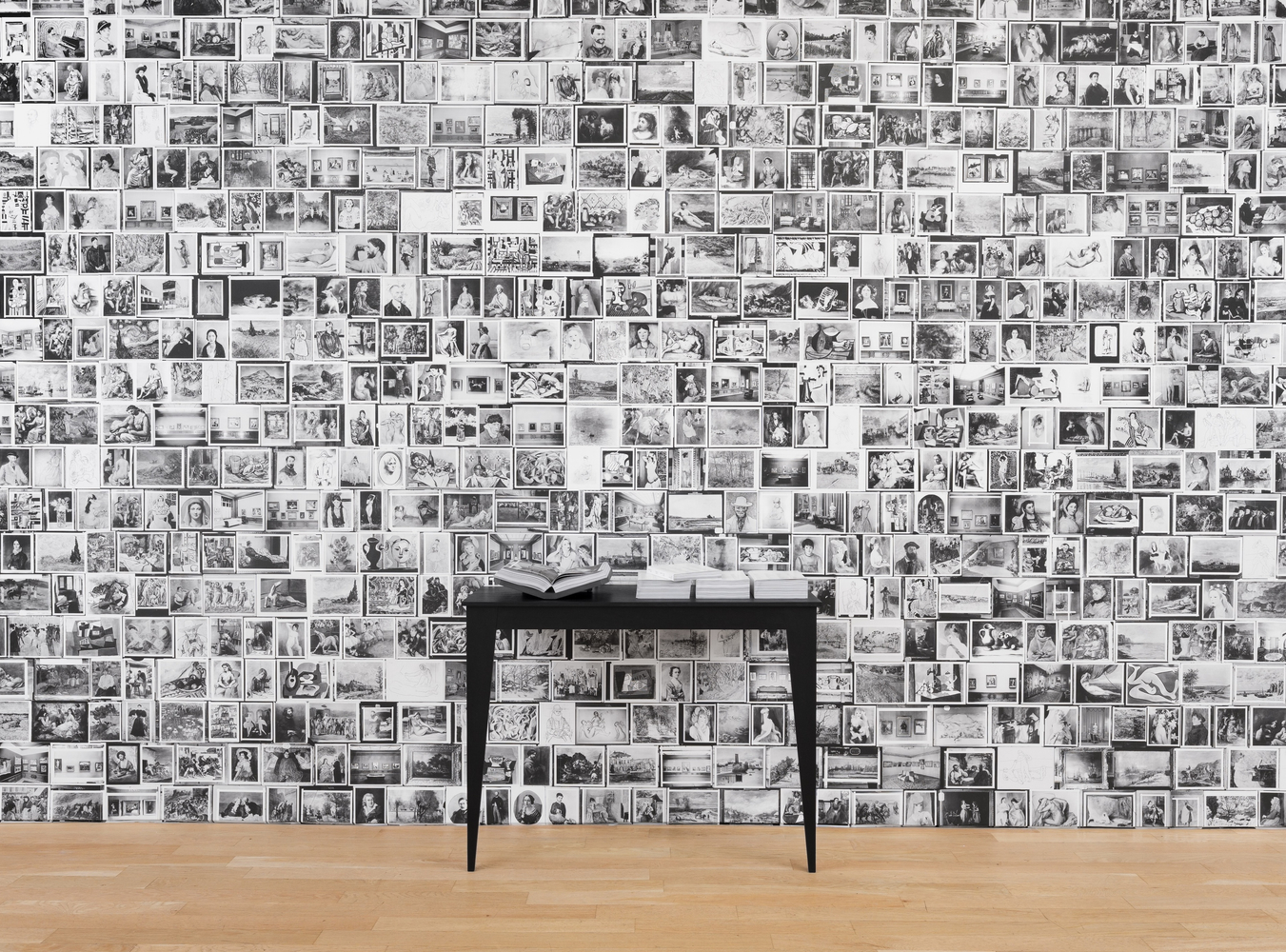 Installation view, 2026, Raphaël Denis Fates of Workspermission of the art artist and Bienvenu Steinberg & C. Photo credit: installshots.art
When the exhibition attempts to expand its thesis beyond the Rosenberg archive, the conceptual tension slackens slightly. Moving into the second room, the standardizing authority of the historical container shifts toward literary censorship via a wider lens. In Fahrenheit, Shelf #16, a scorched wooden bookshelf holding carbonized volumes of book-like forms pays silent homage to Alfred Kantorowicz’s clandestine library of texts condemned to the bonfires of the Third Reich. Nearby, the photographic print Index Librorum Prohibitorum serves as a spectral registration of the Vatican’s centuries-long ledger of prohibited thought. Yet the font is rendered so illegibly small that it denies the viewer any of the textures of titles or authors that were once censored by Vatican authorities.
The empirical rigor of the survey reaches a certain peak in a scale model reconstructing Denis’s recent intervention at the Sprengel Museum, where his meticulous provenance research successfully triggered the restitution of a looted Modigliani.
For the re-examination of suppressed, contested, forgotten, or ignored histories, fine art—with its rich material and fictive capabilities—offers a fertile terrain. Historiographical art has become a genuinely innovative area of new thought and artistic conception, often pushing at the boundaries of what art can be. This first New York exhibition by Denis provides a welcome opportunity to experience his distinctive contribution to this field.

Brian Block
Brian Block is an artist based in New York City. His practice explores relationships between language and perception, looking at ways that thought and perception are co-constitutive. He works in printing, painting, research and writing.
view all articles from this author