Whitehot Magazine
September 2026
"The Best Art In The World"
"The Best Art In The World"
September 2026
A Conversation with Artist Raymond Salvatore Harmon
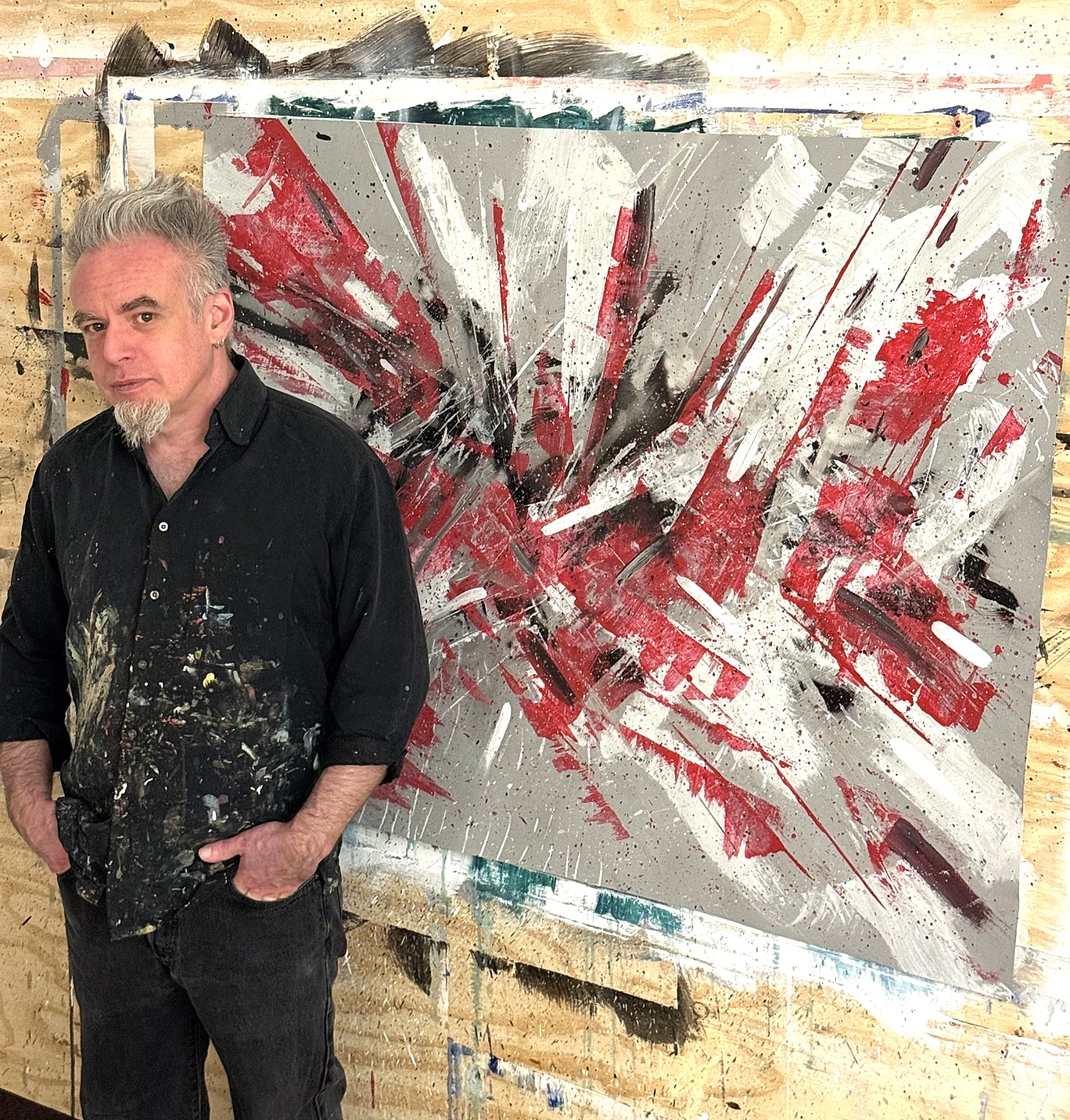 Artist Raymond Salvatore Harmon in his London UK studio
By NOAH BECKER August 6th, 2026
You once suggested that art should not be a lie. In an age of branding, algorithms, and self-mythology, what does honesty in art actually look like to you?
When we talk about art, in its myriad of practices and approaches, we usually discuss the end result. The object or performance that the viewer experiences as it is presented to the public. While there is the inevitable dialog of "tell me about your practice", rare is the artist who exposes themselves under such questioning. We tend to evade and talk about materials, or inspirations. Rarely do we talk about what we are actually doing, never do we ask why we are doing it.
Art is the output of a form of neuro-divergence that has, over the past centuries, coalesced into the cultural role of "artist". We have, as a group, been culturally directed into a specific role in modern society. We make things. Sometimes those "things" are more experience than object. But the vast majority of us make objects in one form or another.
We make these things because we have a compulsion to do so. It is not just craftsmanship, it goes beyond any reasonable rational thinking. In interviews with artists over the past century you will regularly hear them describe being an artist as a "compulsion"(Bourgeois), "sickness"(Mitchell), "neurosis" (Munch.. But I think the "mental illness" framework is outdated in a world where we understand that neuro-divergence is a spectrum of living experience, not an illness.
Each artist has a set of internal rules, these are unspoken and in most cases would be impossible for the artist to actually articulate to anyone. They are, by and far, a set of unspoken "don'ts" that shape what we are doing as we make our art. Many artists are unaware of these internalized boundaries that guide them, experiencing them mostly as an internal cringe that halts action.
So I think "honesty" in this scenario is about making work that isn't a lie to oneself as a creator. About a process of creation that results in work that fits this internal system of self development that each artist has within them. Without external expectation, rooted solely in the need to make that drives us as artists.
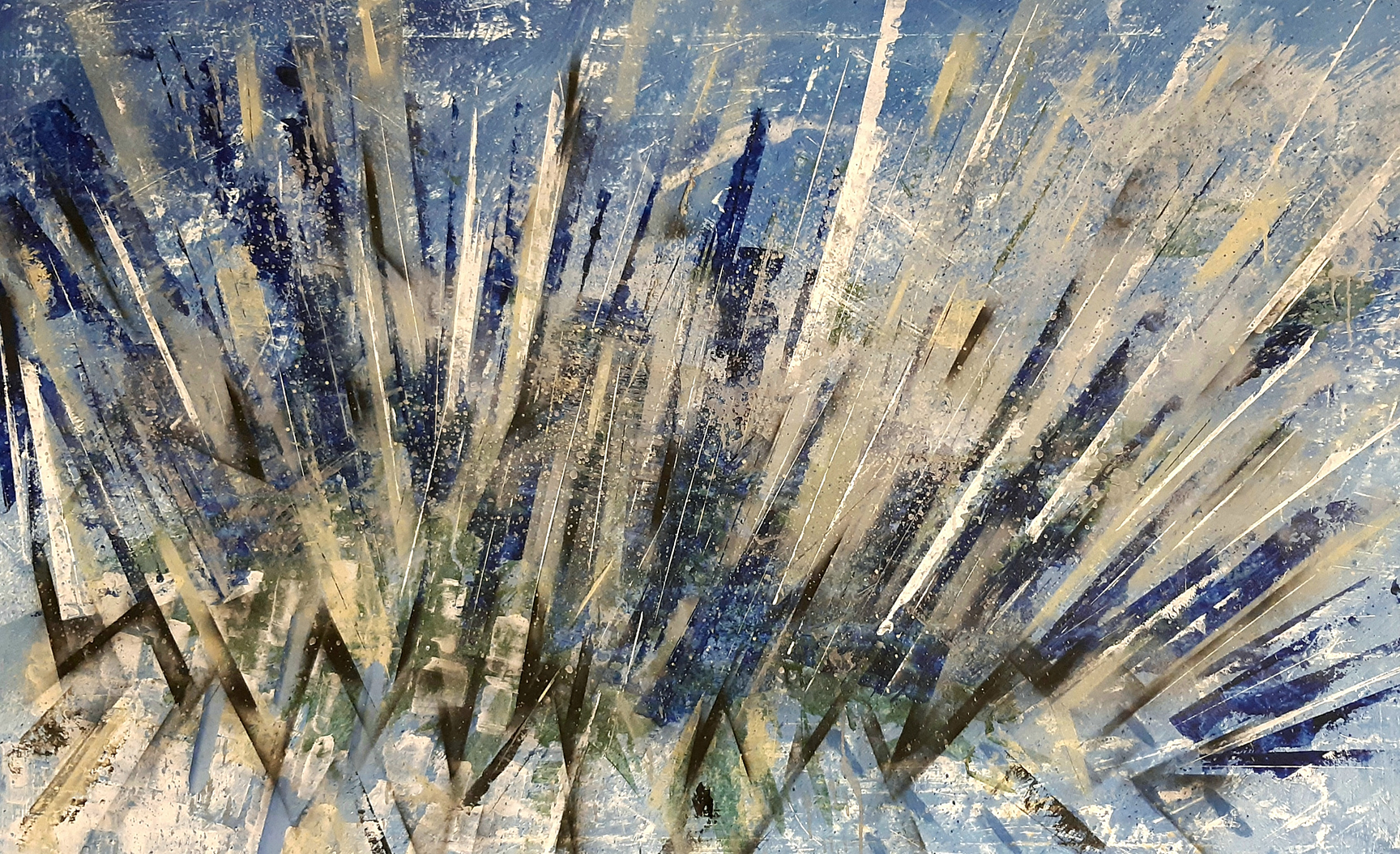 Raymond Salvatore Harmon, Wandering the Sky
Your work often exists somewhere between painting, activism, philosophy, and social intervention. Do you see those as separate disciplines, or are they all manifestations of the same artistic impulse?
For me these are all just facets of a single artistic practice that reflect my own development as an artist over time. All art reflects the time it exists in like a mirror. We take from our surroundings and our social environments and churn that out into the byproduct of our practice.
You've spoken about love, life, and death as interconnected rather than separate ideas. How have those themes evolved in your work as you've gotten older?
What doesn't get talked about enough in the art world narrative is the first person experience of being an artist. The lives we live, the people we love, the cities we inhabit. In particular the studio neighbourhoods we work in having played a role in the experience of being an artist. Our work is a reflection of the life we are living, and our output is dictated by the stability of those environments.
I have always felt strongly that artists need to live expansive lives. To travel and to experience different cultures and ways of thinking about reality. Being an artist gives us access to the world in a way few have. An artist's journey must take place both on the literal canvas and on the path of life. To produce work that is lasting, that carries with it something new and inventive, adding to the language of art history, requires life experience. It is a journey you start young and never really complete before you are gone.
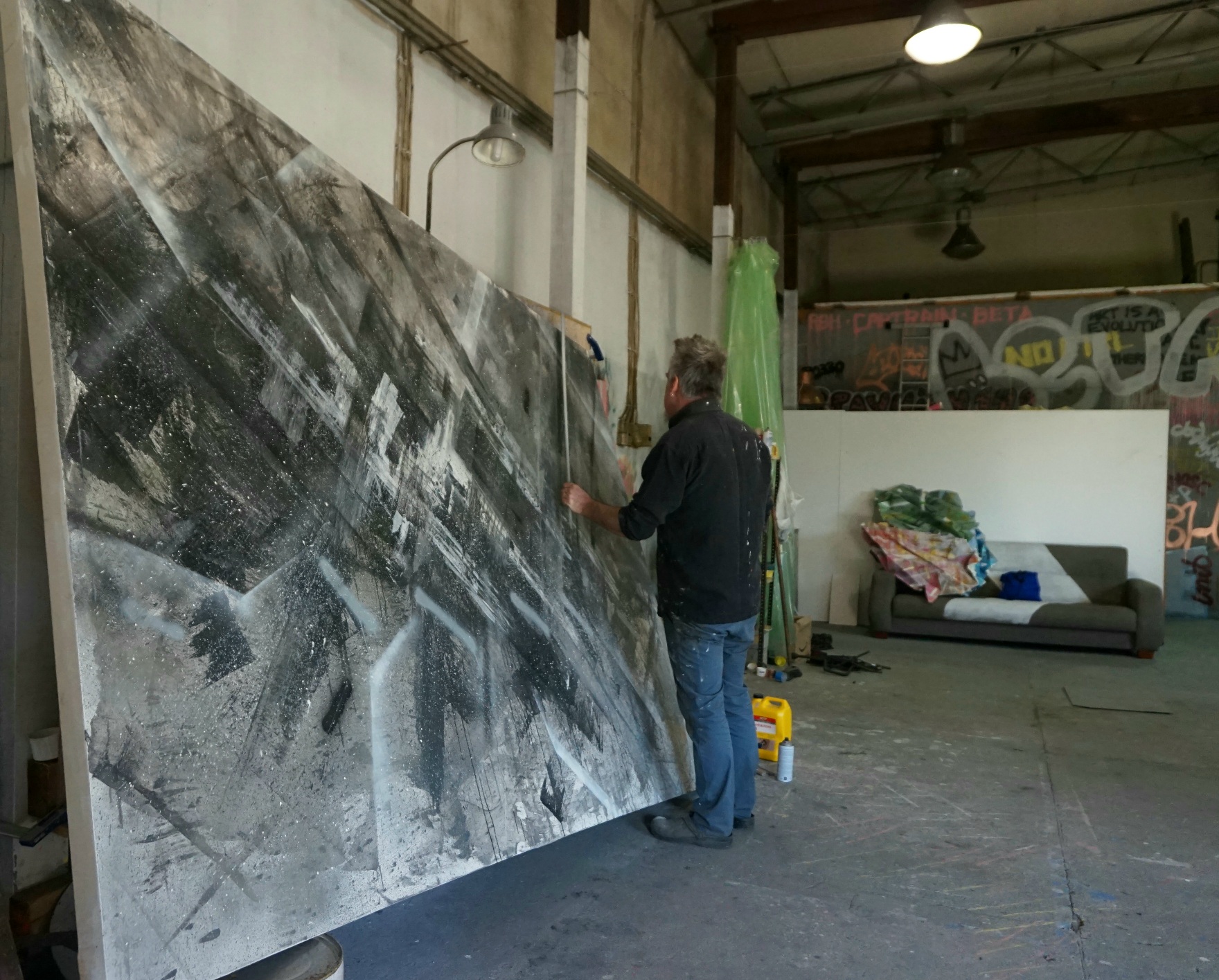 Raymond Salvatore Harmon in his London UK studio
Your projects frequently challenge systems of power rather than simply criticize them. Do you believe art can genuinely alter society, or is its greatest power changing individual consciousness?
Over the years I have changed perspective quite a lot in terms of my outlook on art and the art world. I realize now that there is a kind of singular "mythology of the artist" that we are taught by society and that most of us continue to believe throughout our lives. This mythology has to do with the supposed role of the artist in society, the power/value of an artist's creations, and the perception of art in society itself.
We are led, from our youth through formal education, to believe certain ideas about the artist that are fundamentally false. But these mythologies help to perpetuate an atmosphere of hope in artists, particularly when young. But the longer we perpetuate the "myth of art" the harder it will be for the vast majority of artists to see the forest through the trees.
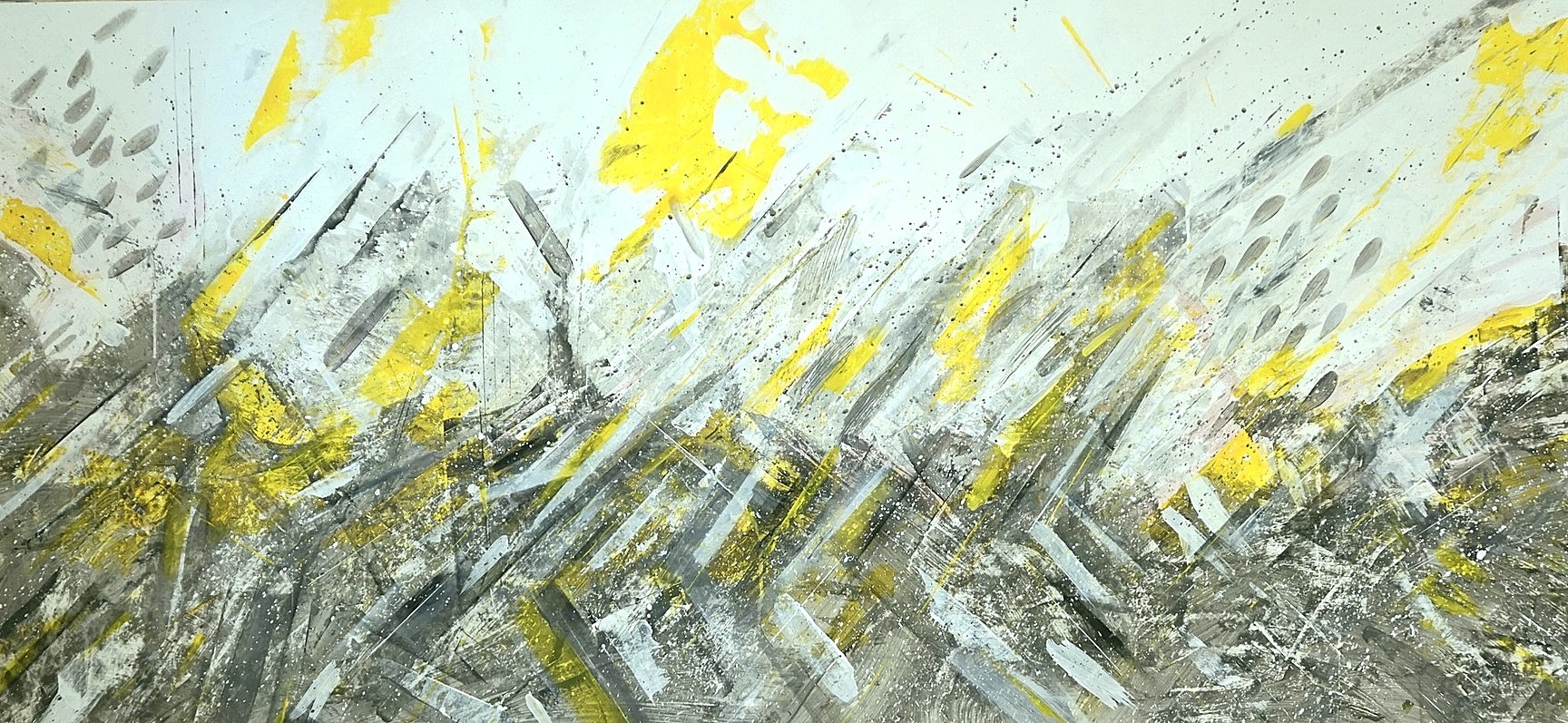 Raymond Salvatore Harmon, Absoloute Spiritual Insurgency
You have worked across public performance, large-scale painting, digital media, and conceptual strategies. How do you decide which medium best serves an idea, and have you ever abandoned a medium because it became too predictable?
Over my career I have found it necessary to shift mediums in order to continue the kind of explorative nature my work has. Some practices stick around for years before I decide to move on. Others reoccur on and off over the years. In some mediums I had simply run the course of what I thought needed to be done.
Much of your work resists becoming a market commodity. Do you see the commercial art world as something to engage with strategically, or as something artists should actively resist?
Making money and making art are two entirely different things. I have a ton of respect for any gallery able to keep the lights on given the cost of rent. Innovative gallerists have given a platform to some of the most exciting artists in the past 50 years or more. But the competition for gallery roster placement is fierce, and the social commitment to maintaining those relationships is massive.
To work in the commercial field, to really break out and make enough money to maintain the lifestyle required in order to make that money, is a ton of fucking effort. The social calendar is packed, and even if you can afford the hideaway secluded studio in the hills you'll spend a lot of time longing to be there as you sit in airports, at dinners, and in taxis in traffic.
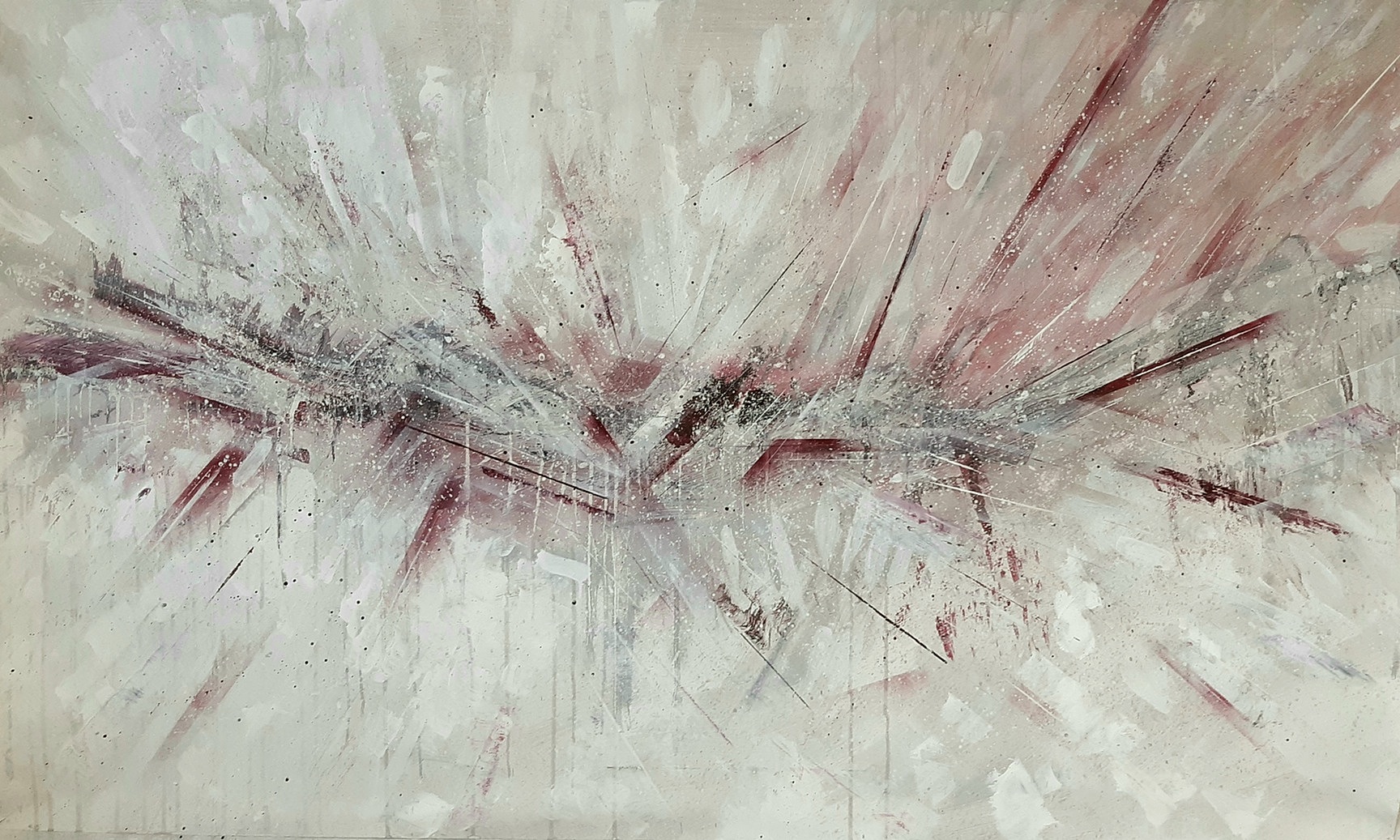 Raymond Salvatore Harmon, The Inveiled Wounds of a Venetian Lover
The world is full of artists, and the vast majority who like everyone else are trapped in capitalism, pine for some level of perceived financial success that would "just let them work in peace." But the reality is that those who are actually in the upper bracket of the art world spend a lot less time making art and a lot more time traveling to talk about making art than the weekend daydreamer in smalltown wherever.
I feel like the current growing consensus is that the stationary art gallery with a long term lease is fading away and the "pop up" gallery, that is able to utilize a broader set of temporary spaces to articulate the expanding needs of art representation, is coming to the fore. I have personally had a successful mix of self produced popup shows and commercial gallery representation over my career. Galleries tend to make you more money, popup shows tend to allow you to do riskier things, less asking for permissions.
I think there is a very common misconception that artists have that one day a curator/collector will stumble through their studio door and make them famous. But that isn't how it works at all. In order to achieve that kind of success one must associate with that world. Know the dealers, the collectors, the other artists and most importantly be aware of and participating in the art world social calendar. It isn't enough that you follow them on instagram and like their posts. You actually have to get into the parties, laugh at their jokes, share your drugs with them. They have to remember your name.
If an artist needs to seek that fame side of artistic practice, proximity to wealth is the key indicator of that kind of success. You need to know the kind of people who can afford to pay what you believe your art is worth. Institutional glory, or whatever you want to call it, comes through sharing patrons with institutions.
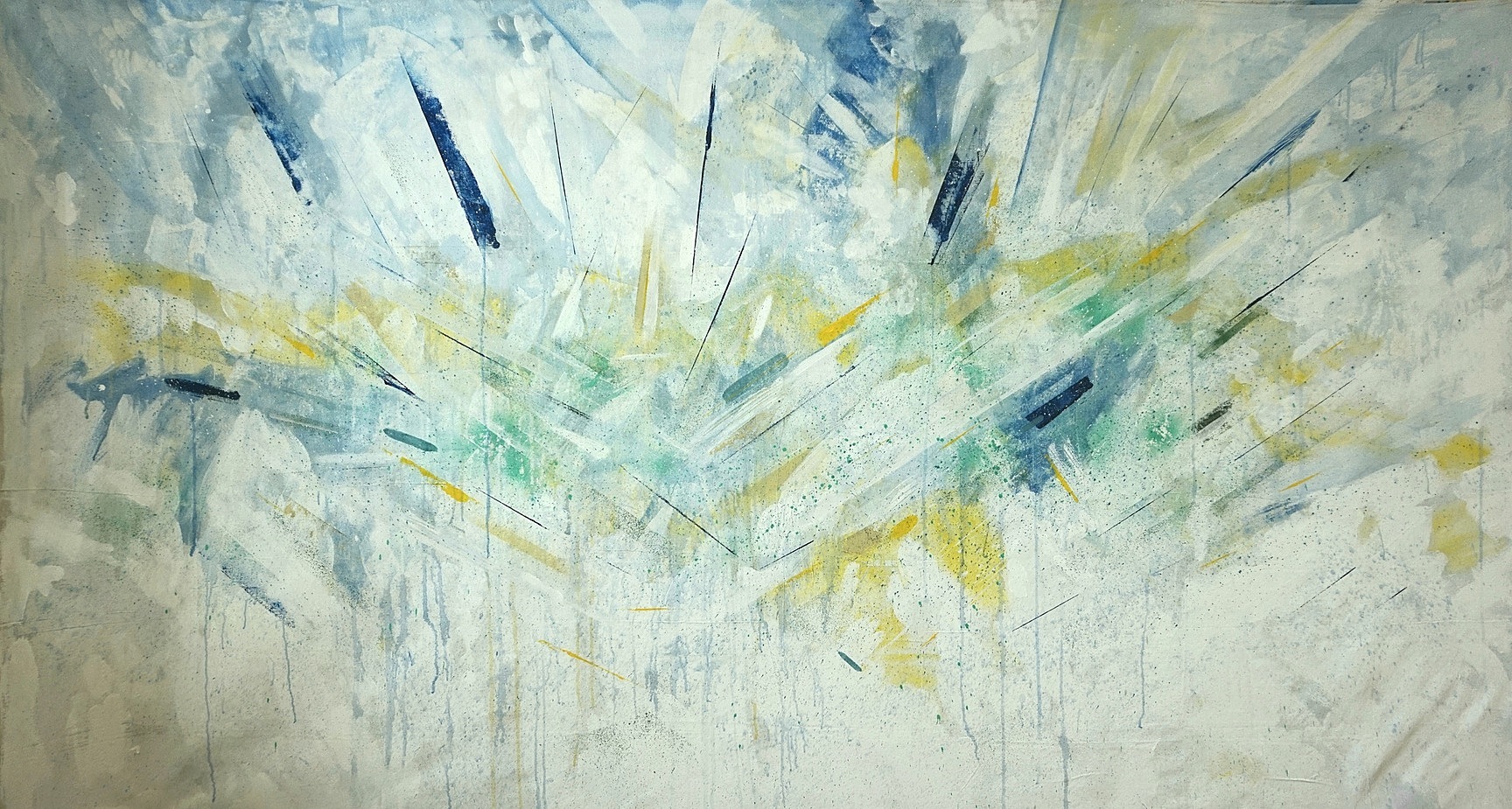 Raymond Salvatore Harmon, The Cloud of Unreason
Detroit and post-industrial America have shaped your imagination. How much of your work is still in conversation with those landscapes, even when the references aren't immediately visible?
I think that I have finally accepted that as far as I have run from the American Empire over the past 20 years of living outside of the United States I will always ultimately be an American. It has to do with the way you look at reality. You can't shake those trauma coping mechanisms.
Many artists spend years developing a recognizable style. Your practice seems more interested in developing a recognizable way of thinking. Is consistency of thought more important than consistency of image?
My work has veered across a template that has to do with personal discovery, against a background of unstable geographic situations. Studio access has played a role in the scope of much of the work I have done. When I have the tools and the time I work differently than when I have had little space or little time to do the making. I have moved around a lot my whole life, that doesn't seem to be letting up as I get older.
I never let not having money get in the way of doing spectacular things. My whole life I had struggled with ideas bigger than budgets and in the face of sometimes real poverty I continued to stage shows, create work, and make things happen.
A common concept that has carried through my entire career is resistance. Pushing back against calcified ideas, working outside of accepted narratives, creating work that speaks to my own inner spiritual needs rather than to an acceptable market of contemporary ideas.
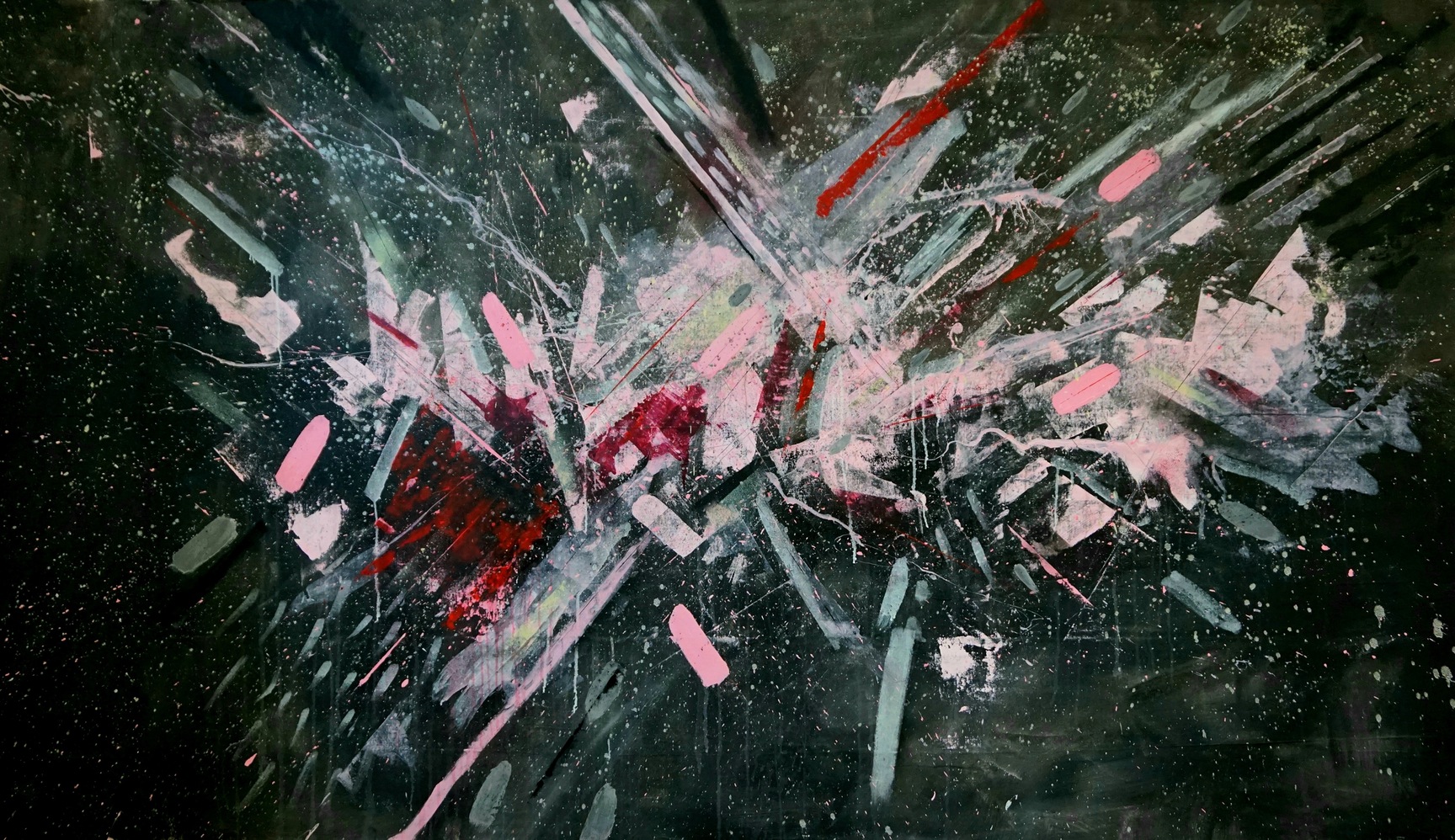 Raymond Salvatore Harmon, Irregular Intervals of Time
If you could erase one misconception people have about contemporary art - and replace it with one new understanding - what would you want audiences to leave the gallery believing?
That there is no such thing as good or bad art. Every person who looks at art experiences something different. Like a rainbow, you and I do not see the same rainbow, because it is created in our eyes. Every piece of art is just like that rainbow, ephemeral and unique to the viewer.
There is no such thing as objectively bad art. Each piece of art fits the mental and emotional puzzle shape of, at the least, its maker. Fulfilling that urge to make that defines being an artist. But its aesthetic shape can fit the needs of others, who become our audience and ultimately our collectors.
What to my eyes or yours may look awful, can appear groundbreaking and beautiful to another. When we begin to look at all art in this light we see less of the commercial narrative around art and more of the individual artist's intentions. This is, to me, key in understanding why so much work we might not like is being shown. Art is like the human experience itself, a vast jumble of ideas and expressions all jumping in every direction at the same time.
Looking back over your career, what idea have you held onto most stubbornly, and what belief about art have you completely changed your mind about?
Making art is non competitive. There are no rules.

Noah Becker
Noah Becker is an artist and the publisher and founding editor of Whitehot Magazine. He shows his paintings internationally at museums and galleries. Becker also plays jazz saxophone. Becker's writing has appeared in The Guardian, VICE, Garage, Art in America, Interview Magazine, Canadian Art and the Huffington Post. He has written texts for major artist monographs published by Rizzoli and Hatje Cantz. Becker directed the New York art documentary New York is Now (2010). Becker's new album of original music "Mode For Noah" was released in 2023.
Becker's 386 page hardcover book "20 Years of Noah Becker's Whitehot Magazine of Contemporary Art" drops Aug 8, 2025 globally on Anthem Press.
Noah Becker on Instagram / Noah Becker Paintings / Noah Becker Music / Email: noah@whitehotmagazine.com
view all articles from this author