Whitehot Magazine
September 2026
"The Best Art In The World"
"The Best Art In The World"
September 2026
An Interview with Artist Dana-Marie Bullock
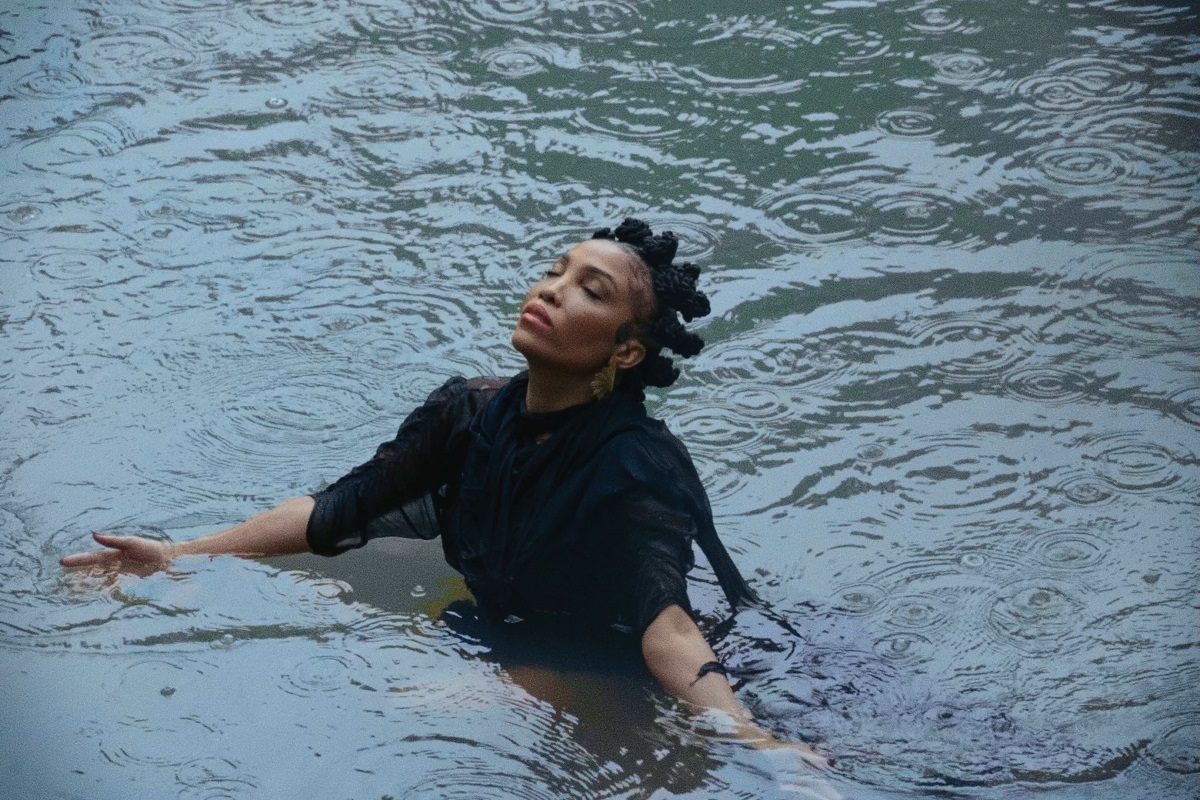 Still from performance film The Unspeaking Woman (2026). Directed by Dana-Marie Bullock, Film shot by: Rraine Hanson
By MARCARSON July 25th, 2026
Marcarson: Your work feels like it has a body of its own - stitched, wounded, repaired, almost breathing. When you’re making a piece, does it feel like you’re building something, healing something, or summoning something?
Dana Marie Bullock: I’ve long considered my works bodies of their own, and at times reflections of mine – bodies that have endured trauma, and fragile bodies all stitched together. I see the process of making as a way for me to understand my materials, how they work together and how they work against each other. This tension keeps me energized and curious. As I work, my material starts to develop its own language, guiding the direction of the piece. So yes, in a way, I am building something; however, while I’m building something physical, the act of making also becomes a cathartic process, one that I experience as deeply healing.
Through these bodies of work, I seek to create an otherworldly spiritual landscape rooted in my Caribbean heritage and its histories. Whether I am working with sculptural paintings, mythical sculptures, or performance, I am interested in evoking a spiritual presence that connects the personal, the ancestral, and the mythological.
You work across painting, sculpture, and performance. Do those forms behave like separate languages for you, or more like different personalities arguing in the same room?
I see my works as differently textured voices having a larger, cohesive conversation; although at times disparate, they are navigating overlapping themes in different forms.
You’ve spoken about a darker side that comes out when you create and perform. Do you see that side as a character, a force, a protection, or just the most honest version of yourself with better lighting?
This is an interesting question because my understanding of performance has really come through The Unspeaking Woman, which I filmed in my hometown of Trelawny, Jamaica. During the first screening, my aunt said to me, “You are summoning the ancestors. I can see them in you.” That stayed with me because it articulated something I hadn’t fully put into words myself.
I don’t think of that presence as a character or a separate persona. It feels more like becoming a portal or vessel for women who are no longer here to speak for themselves. It is through a space in which I move beyond language and into gesture, sound, and embodiment that I feel most connected to my ancestors; I allow their histories, grief, and resilience to move through me.
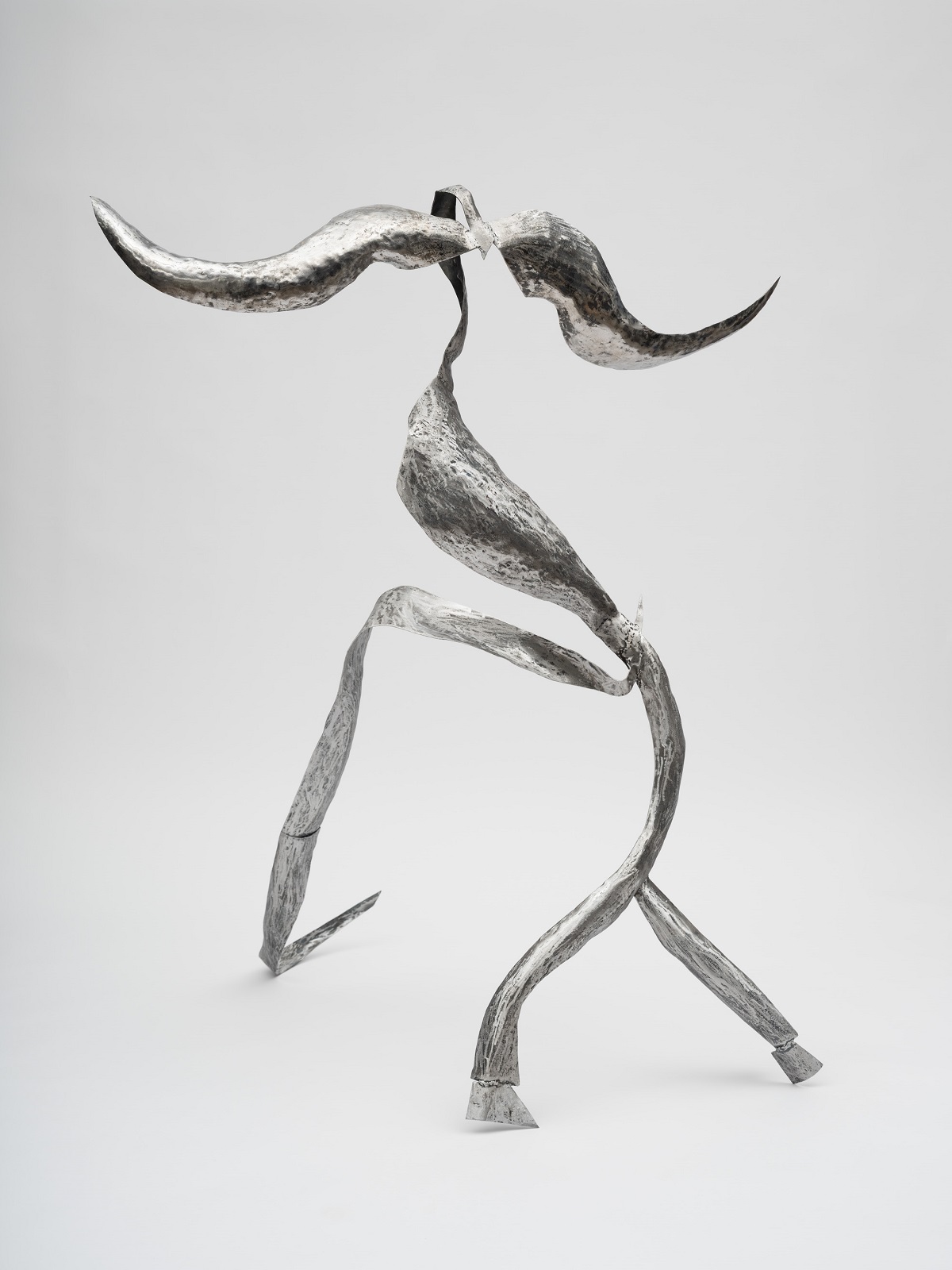 Rolling Calf, 2025 Metal 54 x 54 x 61 inches
Your materials - gauze, silk, organza, found objects, stitching - carry a lot of emotional weight. How do you know when a material is just beautiful, and when it has teeth?
I’m drawn to materials that carry histories, particularly materials that embody care while also holding collective histories of loss, trauma, and healing. Medical gauze is deeply rooted in the body. It is fragile, delicate, and closely associated with women. Some of the gauze I use comes directly from doctor’s appointments, allowing the material to carry traces of my lived experience into the work.
Silk chiffon is another material I return to often. Its fragility, movement, and transparency feel deeply embodied. I see silk chiffon as an extension of my own body, both in the way that it moves and in its ability to hold multiple layers while remaining translucent. I’m interested in how those layers can reveal and conceal simultaneously.
I also work extensively with metal, bringing its rigidity in juxtaposition with the softness of gauze and silk chiffon.
I've also incorporated John Crow beads in my paintings, sculptures, and performances. In Jamaica, these red and black seeds are associated with healing rituals and spiritual protection, but they are also poisonous if not prepared properly. I have always been fascinated by that contradiction. They carry a deep sense of nostalgia and connect me back to my childhood in Jamaica. Their duality, existing between healing and danger, mirrors many of the tensions I explore throughout my work.
There’s a strong sense of repair in your work, but it never feels neat or overly comforting. Are you interested in healing, or in showing the evidence that something survived?
I'm interested in the tension between trauma and repair. My work foregrounds processes of care, repair, and exposure. I try to be attentive to what holds forms together, even when those structures are nearly imperceptible. Often, intricate stitching keeps things together that you can’t really see, whereas across my sculptures, traces of making remain intentionally visible. For example, in my metal works, hammer strikes and burn marks from the forge are left exposed. By refusing to smooth or conceal these surfaces, I allow my materials to register histories of damage, vulnerability, and survival.
Jamaican mythology and memory seem to haunt the work in a very physical way. Are you drawn more to myth as storytelling, warning, inheritance, or mischief?
I'm drawn to Jamaican mythology as a way to preserve my upbringing and the stories passed down to me through generations. It keeps me connected to my familial lineage and grounded in my history and homeland, but also offers a way to reinvent these myths. Storytelling is at the crux of these forms of expression. For example, the Rolling Calf is the unsettled spirit of the dead, reincarnated into a fearsome creature that roams at night. Through my work, I reclaim this figure as one of empathy and continuity. In many ways, I admire the Rolling Calf because of my own history of confronting grief within my family. It becomes a means to think through maternal lineage, ancestral loss, and the persistence of spirits that refuse to fade away.
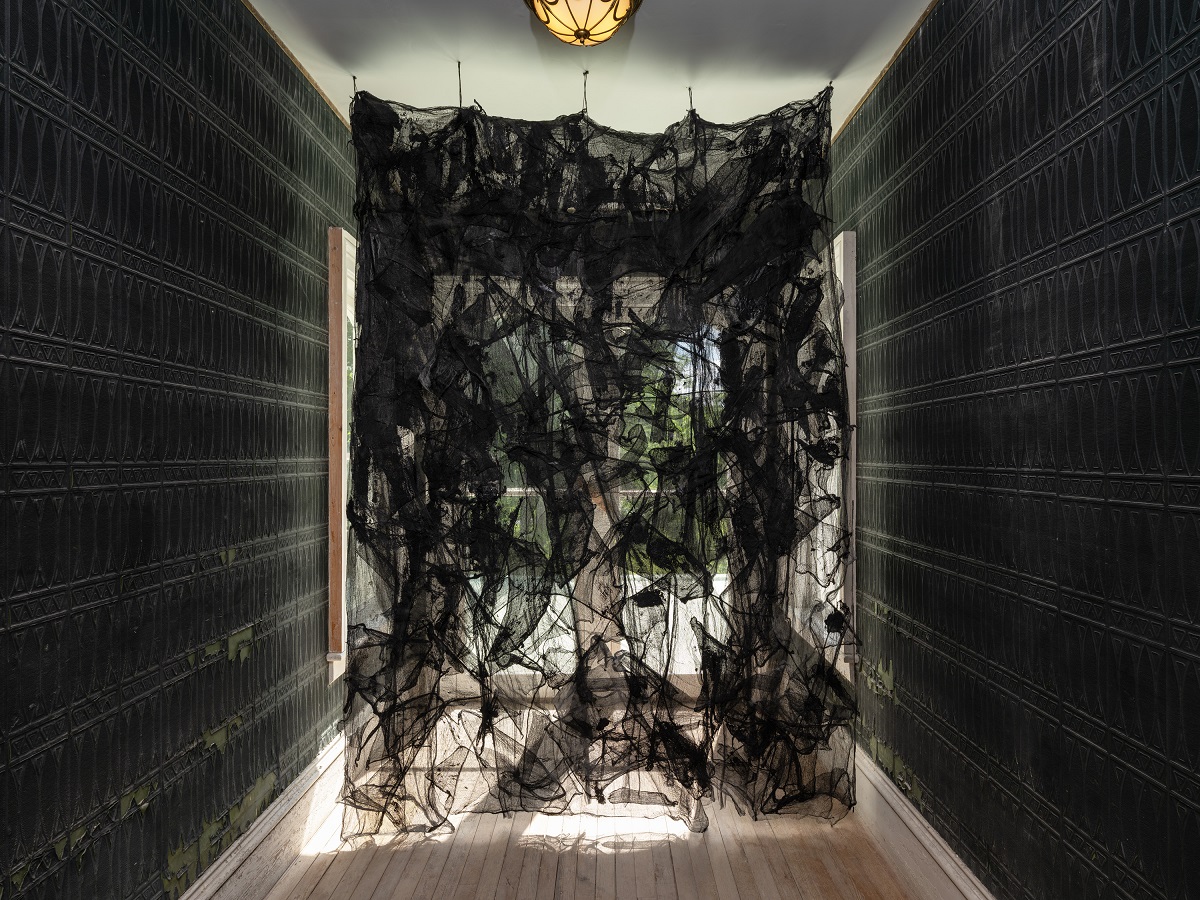 Installation shot Bullet Torn, 2026 All Are Welcome, Shadow Walls Upstate Art Weekend
When you perform, does the audience change the work - or are they more like witnesses to something that would happen whether they were brave enough to watch or not?
The audience doesn't change the overall work; they are more so witnesses to something that would happen whether they were present or not. I do at times interact with my audience when I perform live, but my engagement would happen even if there wasn't an audience. However, having an audience does amplify the energy in the room, creating a dialogue between the performer and the viewer, and intensifying the performance.
Your pieces often blur painting and sculpture, almost refusing to stay flat. Is the canvas too polite for what you’re trying to say?
Maybe the canvas is a little too contained. I’ve never been interested in treating a painting as something confined to a flat surface. My work naturally pushes into sculpture because I’m interested in what happens when a painting begins to occupy space, hold weight, and take on the presence of a body.
Challenging traditional approaches to painting feels like the most authentic way for me to work. It keeps me curious and allows the materials to guide the process, creating space for experimentation, vulnerability, and transformation. Rebelling against a formalized way of making has always been a daunting avenue to take, but a boundless space for me to work in, and I love that!
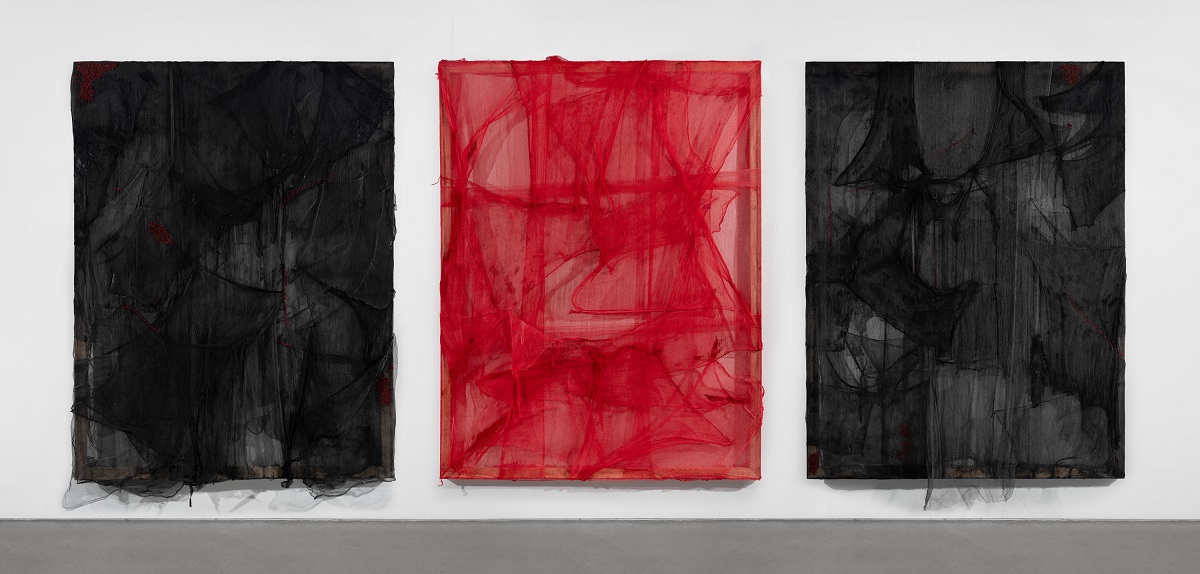 Installation shot L to R: The 9th Night, The Send of II, 2026 The Transition, 2026 The 9th Night, The Send of I, 2026
If one of your works could whisper something to a collector living with it, would it offer comfort, secrets, or a slightly threatening bedtime story?
I think it would offer all the above, actually. I don’t think my work is meant to sit in silence. I want it to ask something of the viewer, to invite them into a space where comfort and discomfort can exist at the same time. The work might offer solace to someone who has experienced grief or loss, but it also carries stories that aren’t always easy to confront.
Looking ahead, do you feel your practice moving toward more intimacy, more scale, or something stranger — where the work starts to feel less like an object and more like an encounter?
I think my practice is moving toward greater intimacy and magic. I’m interested in creating spaces that feel both familiar and unfamiliar, where viewers are drawn in by a sense of comfort but stay because something unfamiliar remains unresolved.

Marcarson
Marcarson is the owner of NOT FOR THEM, an art house/concept gallery in New York City.
view all articles from this author