Whitehot Magazine
November 2026
"The Best Art In The World"
"The Best Art In The World"
November 2026
What We Build & What We Bury
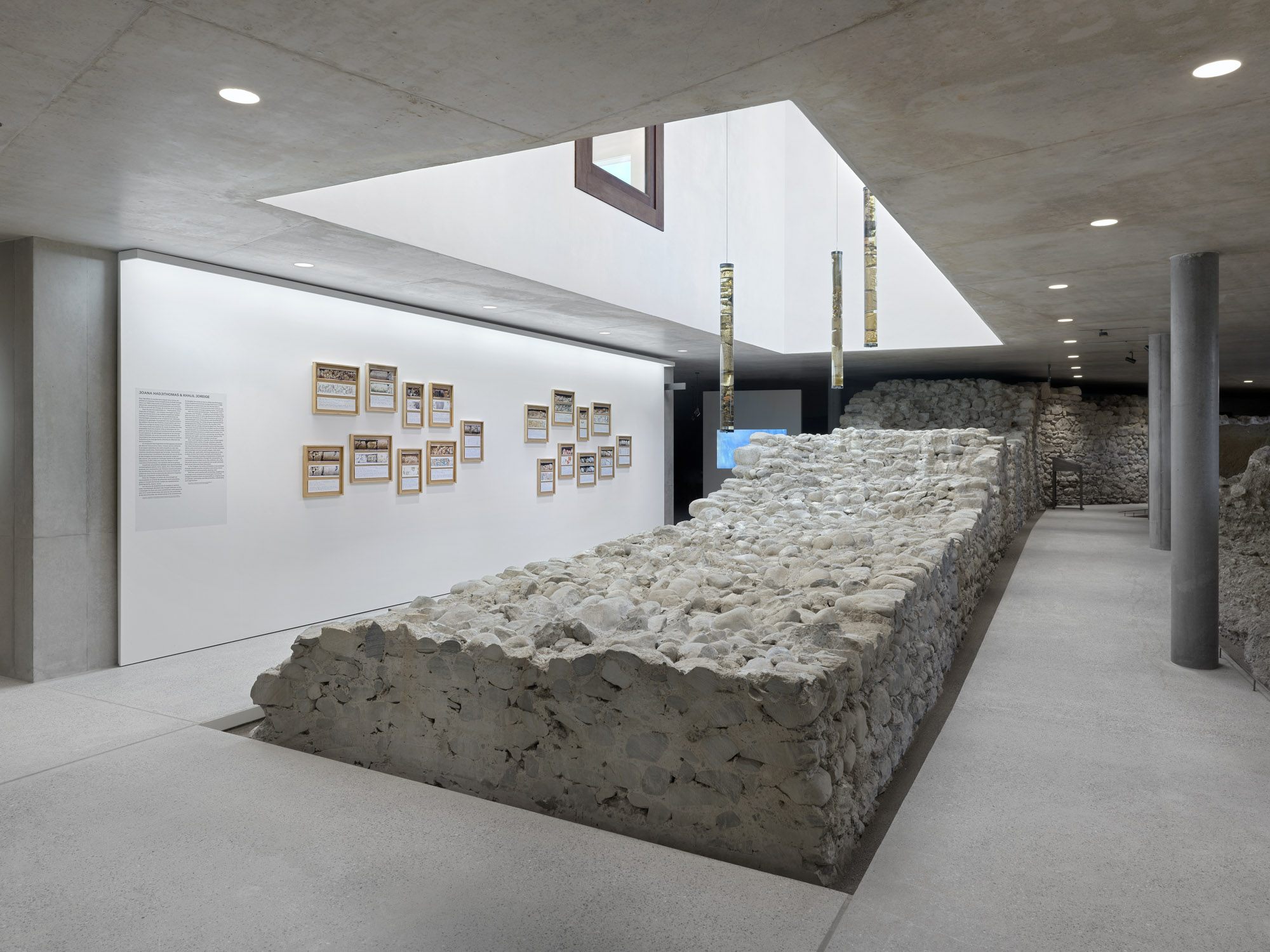 Installation view of Joana Hadjithomas and Khalil Joreige's Palimpsests, Time Capsules and Trilogies, 2026. Photo by Annik Wetter
By CAMILLE MORENO November 1, 2026
On October 28, 2026, Lebanon’s National News Agency reported that Israeli aircraft dropped thermal balloons over southern Lebanon. The Lebanese Army had previously warned that such balloons could contain explosive and incendiary materials, posing a danger to residents.
In Switzerland, a different kind of transformation has taken place beneath the streets of Geneva’s Old Town. At the Site Archéologique Saint-Antoine (SaSA), directly below what is now the Esplanade Théodelinde, Roman buildings were abandoned and the area gradually became a cemetery. A funerary church was subsequently built there, with burials accumulating both inside and around it. After the church was destroyed, a chapel dedicated to Saint-Laurent succeeded it. In 1532, the church and chapel were demolished as Geneva expanded its defensive fortifications and a bastion was constructed on the site in 1537. Each new phase of occupation repurposed the site, leaving a multilevelled record of the city's changing needs: habitation, burial, worship, military fortification, and today, a public square. Surrounding streets offer amenities one might expect from an urban promenade: matcha cafés, an art museum, and a restaurant called Fluffy known for its soufflé pancakes.
To see what puts the geo into geopolitics, look no further than the ground beneath our feet. Under the topsoil lie traces of virtually everything that has ever happened. Layer by layer, our earth resembles a kind of trifle. Instead of ladyfingers, its strata comprise entire civilisations, and instead of pudding, there is the slurry of stuff left behind from successive periods of rupture. In place of jam is a concentrated goo of renewal; in place of whipped cream, the bulky aftermath of growth. Whether these layers are preserved, buried over, or even uncovered at all often depends on what is happening up top.
Every new act of construction begins with decisions about the ground: what to keep, remove, or build. Making space for something new often means dismantling what came before, taking with it traces of earlier lives and ways of inhabiting a place. This is how construction carries its own form of destruction: the loss of memory, the displacement of matter, and the erasure of the material record of the built environment. The making of one landscape entails the unmaking of another.
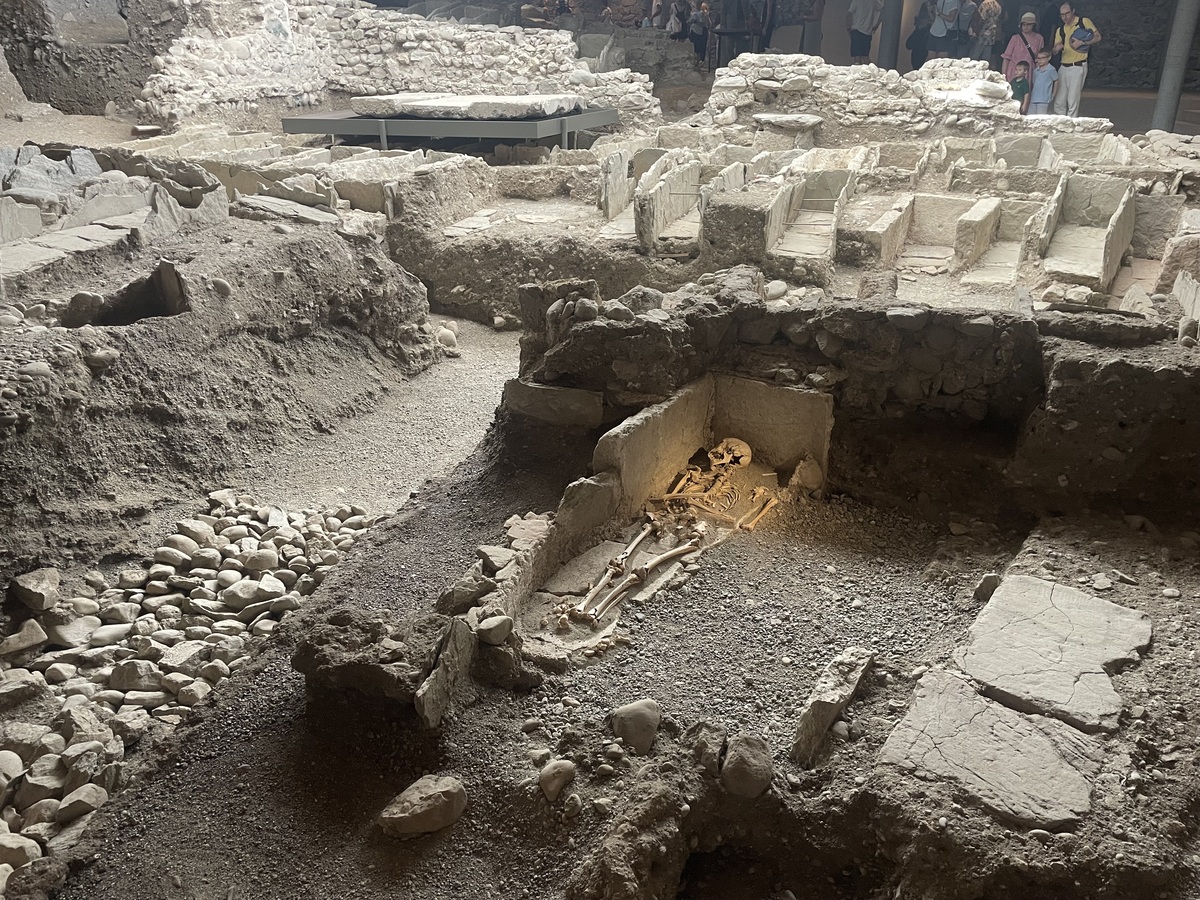 Site Archéologique Saint-Antoine installation view. Photo by Camille Moreno
This tension provides a point of entry into the work of Lebanese artist duo Joana Hadjithomas and Khalil Joreige, whose research-based practice spans film, photography, and installation. Working closely with archaeologists, they examine the protracted process of urban development and the ways in which building projects transform the narrative of history. Their current exhibition inaugurates SaSA. Developed through a collaboration with the Museum of Modern and Contemporary Art (MAMCO Genève), the exhibition follows more than a decade of excavations and construction projects. Curated by MAMCO director Lionel Bovier, the project brings together three interconnected bodies of work: Palimpsests, Time Capsules, and Trilogies, wherein the artists uncover the buried histories beneath contemporary cities.
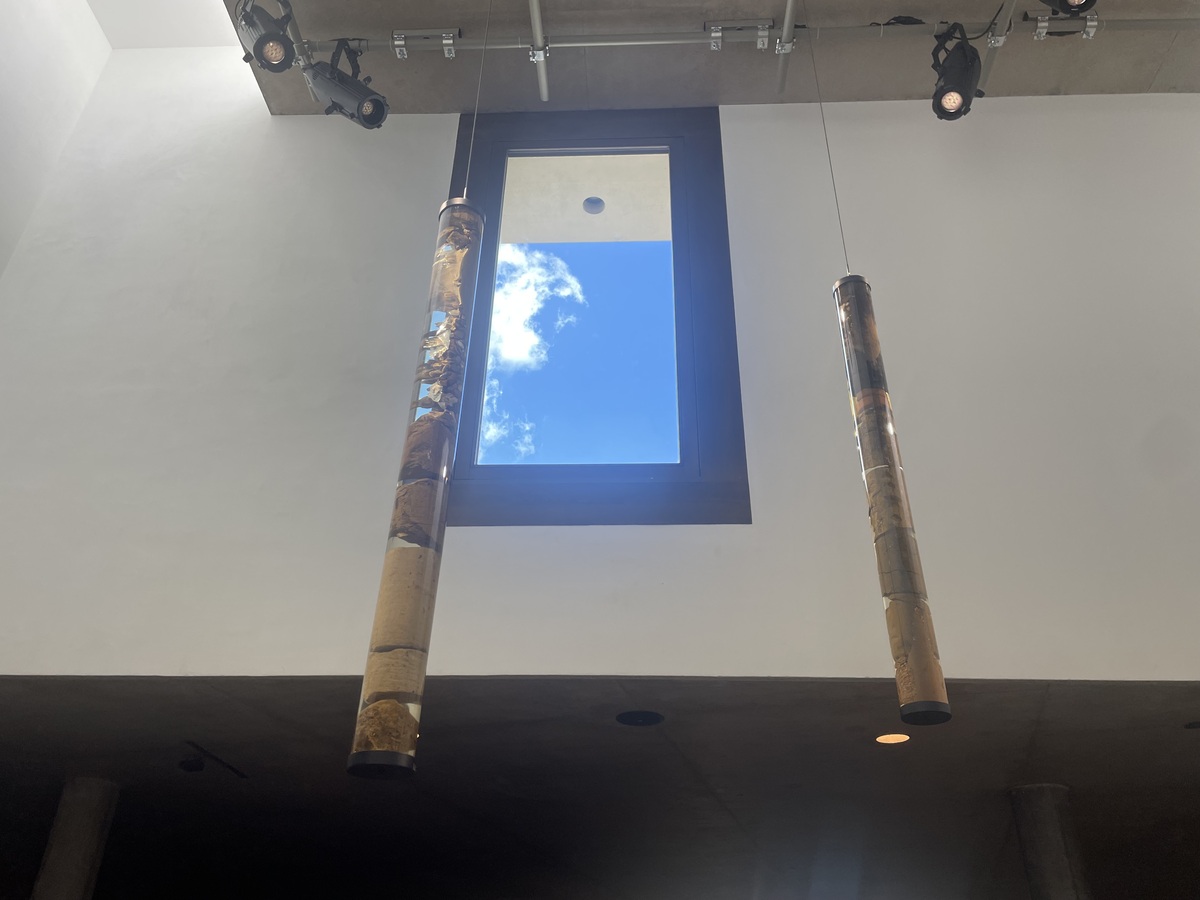 Joana Hadjithomas & Khalil Joreige, installation view of geological core. Photo by Camille Moreno
Hanging from the ceiling of the subterranean space like cylindrical storyboards, a collection of geological cores extracted from construction sites floats above the carefully dusted ruins. These long, thin samples are taken to assess the ground's capacity to support new buildings. Inside each core, one can see the ground’s particular recipe of rock, clay, sediment, mineral deposits, and traces of human activity compressed over thousands or even millions of years. Usually, the cores are discarded, but Hadjithomas and Joreige worked with archaeologists to collect and reconstruct them. The resulting cores are luminous, with all manner of geological material appearing to float inside a translucent gel.
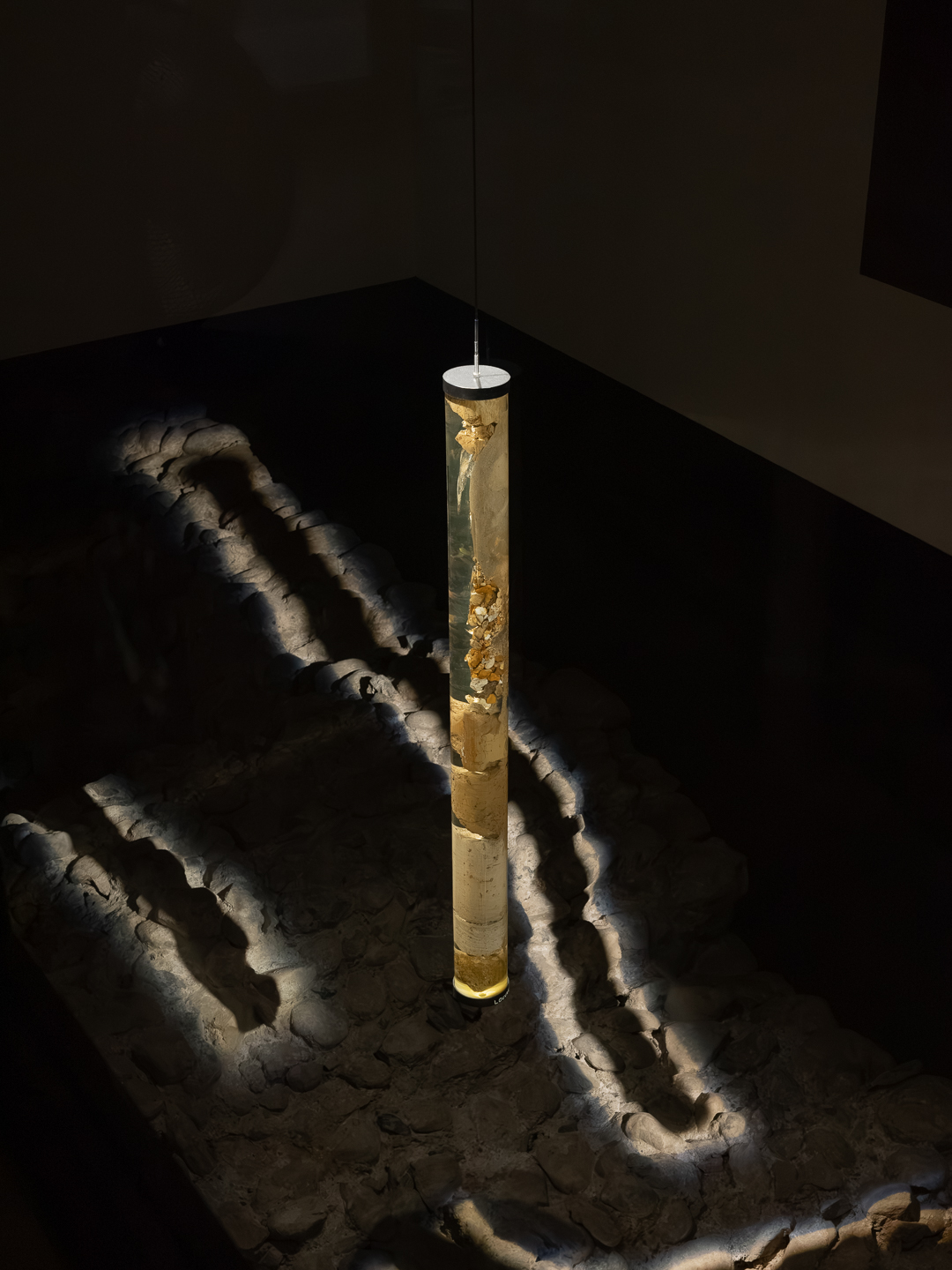 Joana Hadjithomas & Khalil Joreige, installation view of geological core. © Antoni Aeby
Films move between panoramic and microscopic views, shifting the viewer between different scales and temporalities. The artists describe this movement as essential to understanding history: one must be able to look both horizontally and vertically, moving between the broad view as much as the minute detail. History, in their account, does not unfold as a continuous sequence. It is marked by gaps, interruptions, and sudden changes of scale. A fragment of stone can hold a history that stretches beyond its immediate appearance, whilst a seemingly insignificant detail can open onto an entirely new era.
Drawings produced with archaeologists and prehistorians follow the conventions of archaeological recording. This method of drawing translates the stratigraphy of the cores into extended visual documents that allow them to isolate particular events and express what photography cannot. A fragment of bone or a change in sedimentation can be overlooked but hold critical information. One drawing highlights a metal rod embedded within concrete in a style associated with colonial-era building in Lebanon, dating from between 1920 and 1940. Such details might otherwise pass unnoticed, but offer important clues about successive occupations and transformations of a place. As the artists observe, archaeology is shaped by the questions brought to an excavation: what is considered significant depends on what one is looking for. In Lebanon, they point to earlier practices shaped by colonial interests, where the search for particular treasures or celebrated civilisations came at the expense of other histories.
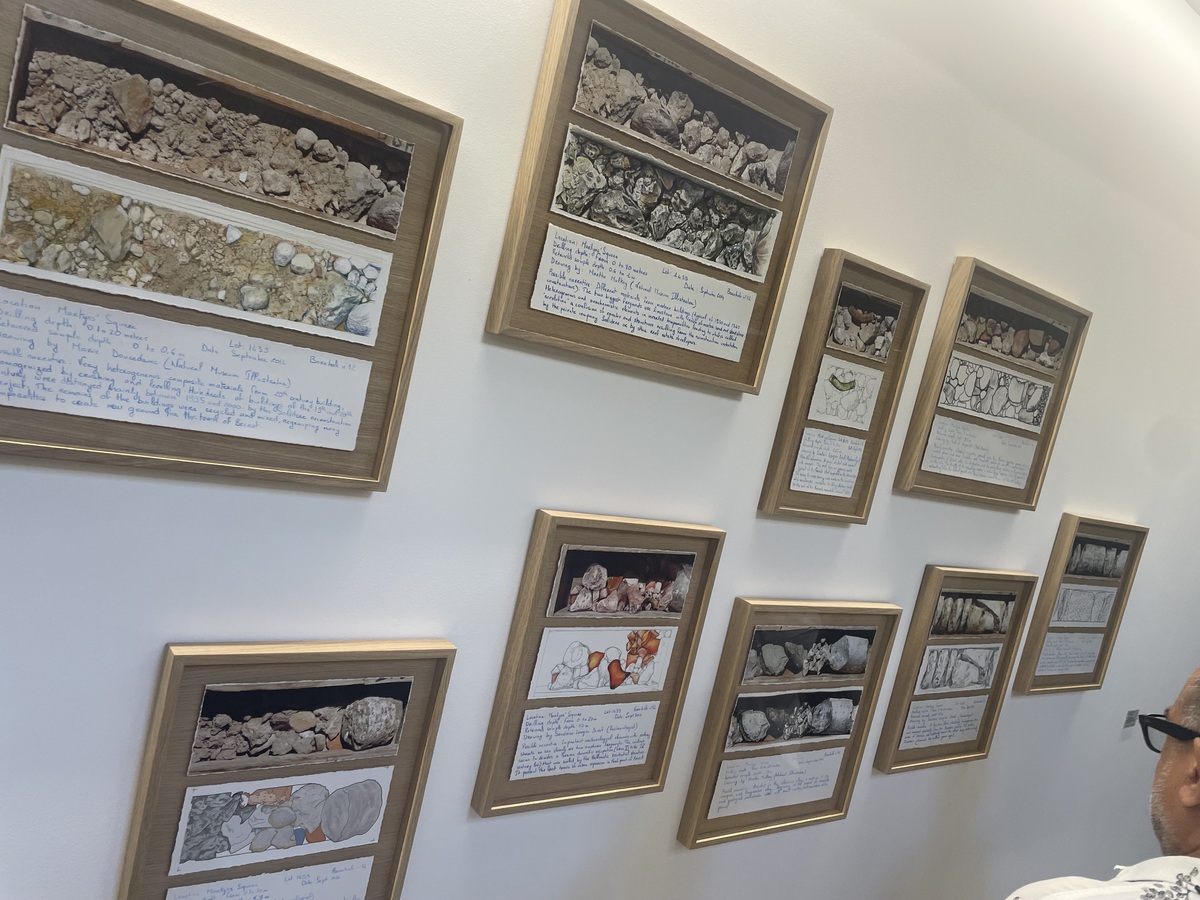 Joana Hadjithomas & Khalil Joreige, Trilogies: Beirut Martyrs' Square, 2018-2021, photos, crayon on paper, MAMCO Collection, gift of Ronald Asmar and Romain Jordan. Photo by Camille Moreno
They recounted the story of Orthosia, an ancient Roman city in southern Lebanon that disappeared following an earthquake and tsunami in 551 CE. Its location remained unknown until archaeological remains were discovered during the destruction of a Palestinian refugee camp by the Lebanese army. The city was subsequently reburied beneath a concrete slab so that the camp could be rebuilt.
However, archaeologists involved left messages behind for future researchers, explaining how the remains might one day be located. Leaving something untouched in the hope that others will return to it with better tools and knowledge is the kind of pace archaeologists work at. Some leave discoveries unexcavated because they lack the resources to investigate them properly, trusting future researchers to continue the work. The exhibition makes this often-invisible labour accessible to wider audiences, also drawing attention to what conventional accounts leave out.
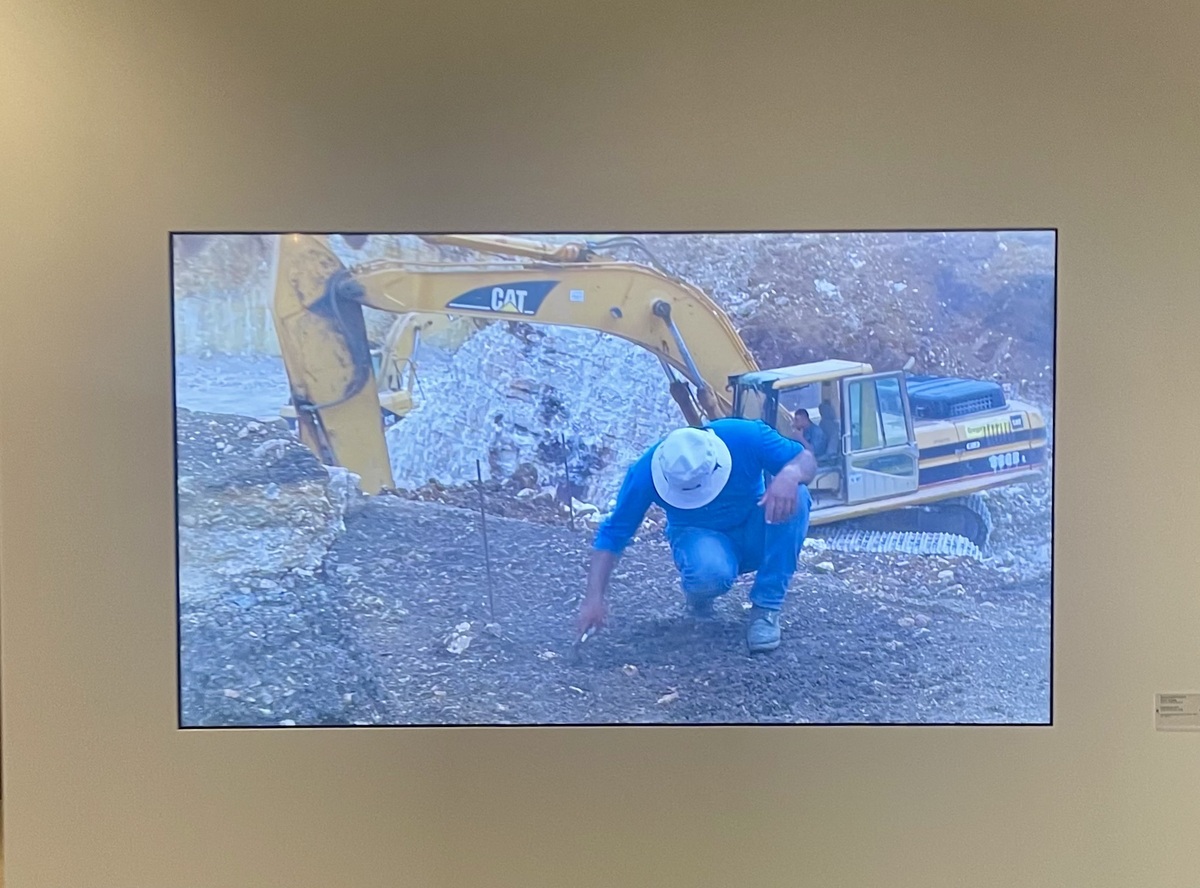 Joana Hadjithomas & Khalil Joreige, Palimpsests, 2017, HD video, colour, 12'40'', MAMCO Collection, gift of Ronald Asmar and Romain Jordan. Photo by Camille Moreno
While Lebanon continues to experience war and destruction, its archaeological matter is placed in conversation with the remains beneath a city known for diplomacy. As Bovier observes, Geneva's past is often presented as a relatively pacified succession of events. Asked whether he feels optimistic about the future, Joreige resists the word. He speaks instead of refusing cynicism and continuing to work towards creating possibilities for understanding, even as the world around us contracts. The ground holds traces of what has happened; what we make of them, and what we leave for those who come after us, remain TBC.
MAMCO x SaSA
Joana Hadjithomas & Khalil Joreige
Palimpsests, Time Capsules, and Trilogies
05.09–15.11.2026
more info here
Camille Moreno
Camille Moreno is a Costa Rican-American writer based in Berlin. Her writing investigates how art operates within social structures, foregrounding accessibility and the everyday as sites of critical and imaginative potential. She has written for cultural publications in Germany, the United States, and the United Kingdom.
view all articles from this author