Whitehot Magazine
August 2026
"The Best Art In The World"
"The Best Art In The World"
August 2026
James Warren's Half-life of a Sign
By ALIZA KATZMAN May 5, 2026
As a part of his solo show Half-life of a Sign, James Warren pulled from a hefty personal archive of records from his recent travels across the United States Southwest. To see the show, one has to descend an unassuming basement in Two Bridges, Manhattan, to the showroom of Service, a member of the curatorial partnership Nine. It feels like entering a bunker to uncover an archive from a time gone by, and the work itself offers just enough information to compel one to investigate further.
Warren’s work, however, excels at retaining an air of mystery. Though Half-life of a Sign is to an extent a collection of records, each piece prioritizes information as much as erosion, alteration, and decontextualization. A half life is, after all, a measure of chemical decay. While Warren’s works gesture at the scientific, they are more so studies in metaphysical longevity than material permanence.
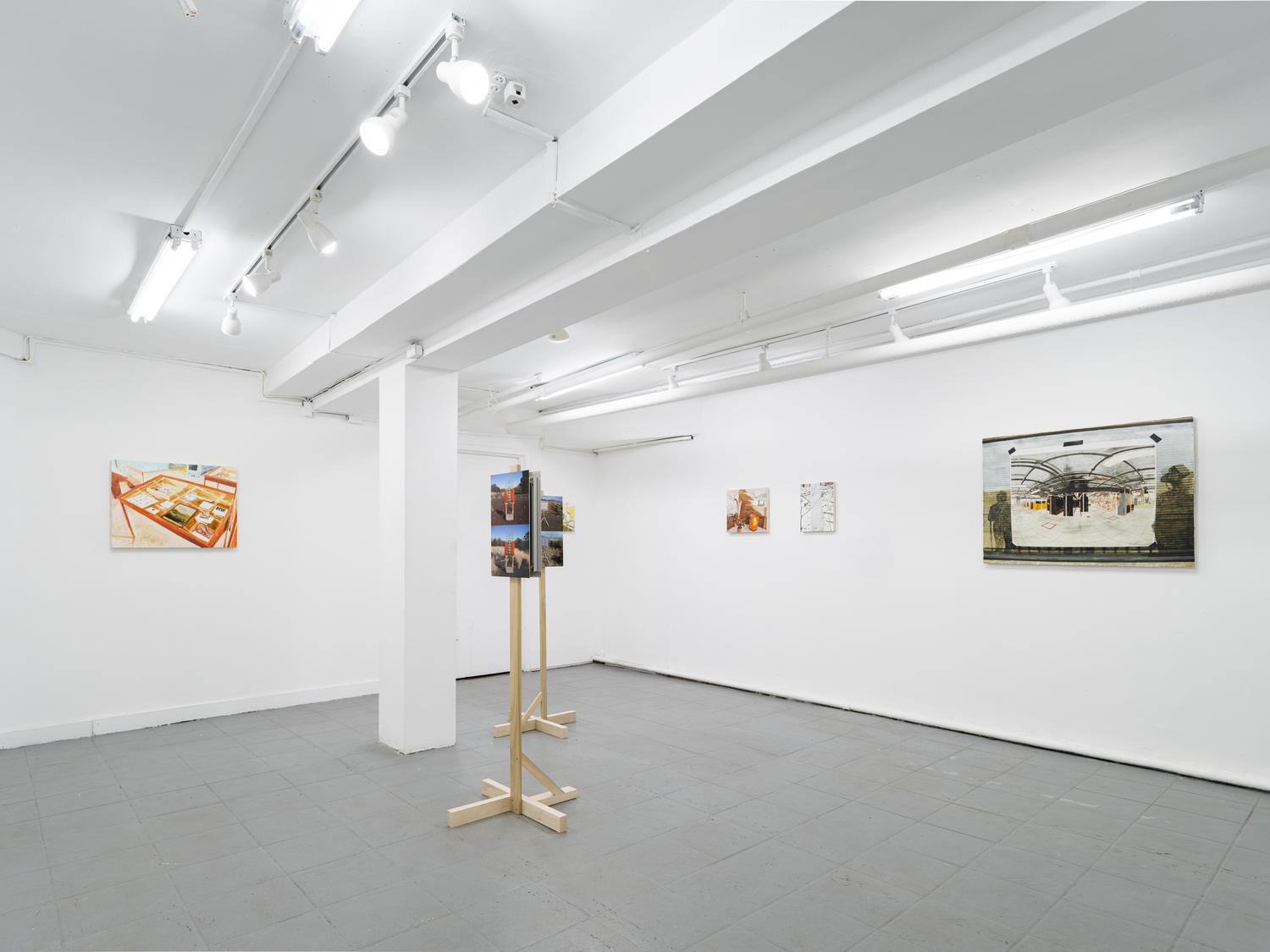 James Warren, “Half-life of a Sign”, Installation View
photo by Farfar studio, courtesy of Site Service
Half-life of a Sign features an assembly of painting, drawing, photography, and sculpture that span chronology and function. The work exists on a sliding scale from naturalistic to the constructed, ranging from depictions of trees in snowbanks to records of other records. By deconstructing the components of history: place, time, and narrative, Warren aims to show his audience “how meaning persists and decays”.
Underlying all of these works, however, is the fact that they are all the product of artistic construction. While Warren’s work is fixated on documentation, even the pieces which appear most objective are infused with some imagination, reframing, or invention. Paintings are carefully composed to reveal something about the site beyond its aesthetic qualities. Photography and carpentry combine to create installations mirroring road signs and educational diagrams, and graphite drawings on toned paper mimic the appearance of the historic while playfully inventing spaces where a doorway to somewhere else can exist in the middle of a freeway. Warren’s artistic choices strip away some details while creating new meaning out of a cache of source material.
Some sites featured in the show are loaded with their own narrative agendas: museums and educational centers, like the American Museum of Natural History, tell curated versions of our political and ecological histories in the United States. Others are sites of active collision (or collusion?) between human and environment: the Very Large Array of New Mexico or the Bonneville Salt Flats in Utah. Yet others represent the purely natural: trees in snowbanks, depicted through simple but striking contrasts of value and line reminiscent of Alex Katz or Lois Dodd.
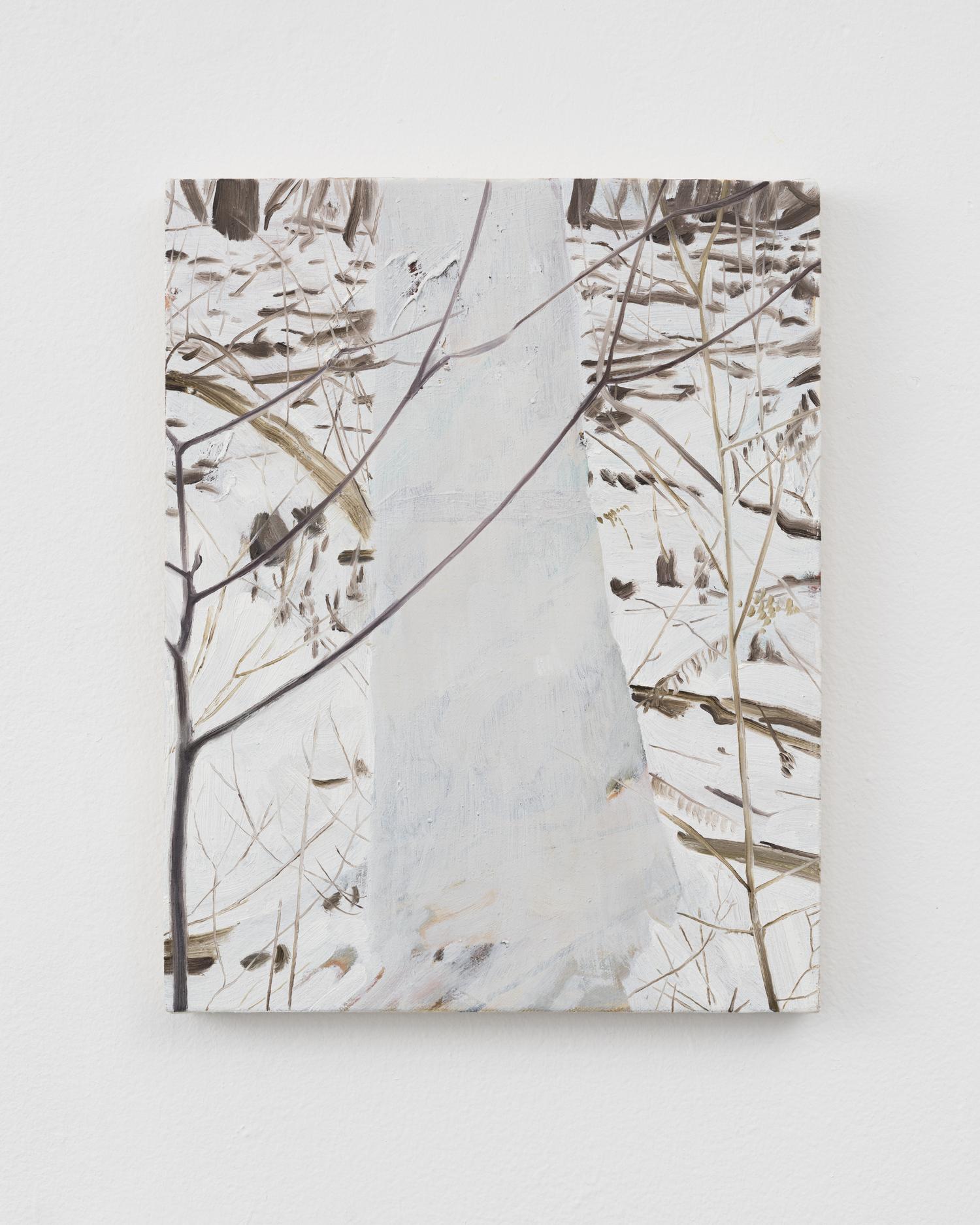 James Warren, Figure-ground, 2025, 11 x 12 inches
photo by Farfar studio, courtesy of Site Service
A standout is Warren’s watercolor Facsimile (Wendover Airfield Museum) depicting a replica of the infamous Fat Man, the nuclear weapon used by the United States to cause untold devastation in Nagasaki, Japan during the second World War. Warren’s interest in the archival, however, is more social than chemical: he focuses on how the sociological and the spatial intersect through record-keeping and interpretation. A man’s arm appears from the left side, holding a photograph of the original bomb; the facsimile is superimposed by a record of the original.
All of the components to create an image are assembled, but something is off. Iron, plastic, skin, wood, and glass are all portrayed with an equal watery looseness within the constraints of well defined lines. Space bends as color and light take over. As someone with astigmatism, it’s a familiar feeling: trying to stare as your vision refuses to focus. Some things are hard to look at clearly. After all, how is one supposed to feel, standing face to face with a facsimile of humanity’s deadliest weapon? While the title most obviously references the facsimile of the bomb depicted in the painting, I view the painting itself as a facsimile for experience, collapsing information, feeling, and temporality into a single image.
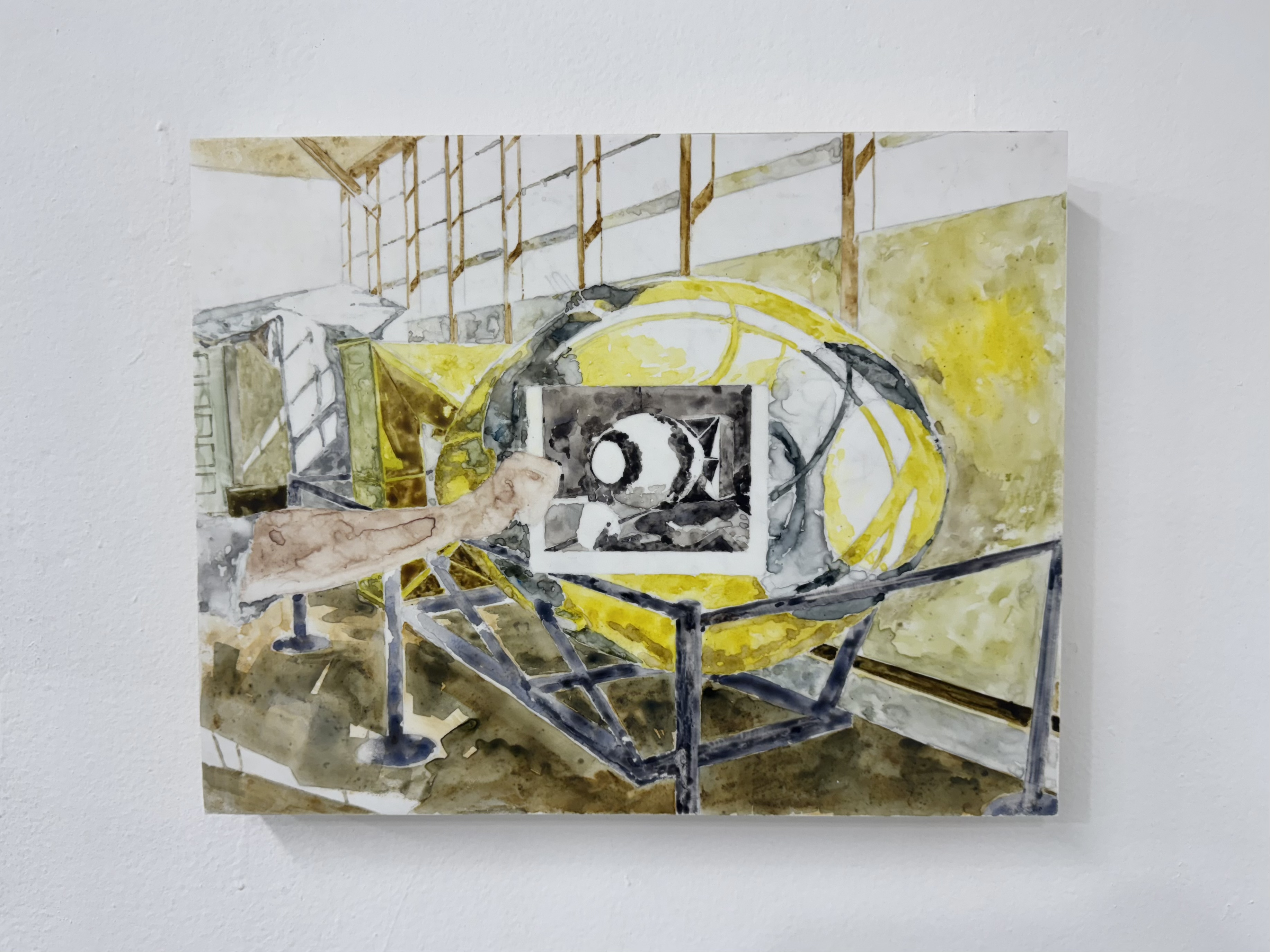
James Warren, Facsimile (Wendover Airfield Museum), 2026, Watercolor on polypropylene mounted to panel 14 x 11 inches
A key concept of the exhibition is the “non-site”. A term originally borrowed from artist Robert Smithson, Warren explains it as a phenomenon where “the image does not stand in for elsewhere, but becomes a site in its own right.” In this exhibition the “non-site” develops further meaning as an object where past and present, data and interpretation converge into what can best be described as an artwork. Perhaps what makes Facsimile a “non-site” is also what makes it an ideal painting: it does not merely relay information, but transforms it and reinvents its purpose in the process of sharing it.
In his depictions of the American Museum of Natural History, for example, we see a series of displays - distinct biomes curated by the museum. The emphasis is not on the information contained within the displays, but the oddness of a space constructed by accumulating interpretations of other spaces.
His gauzy washes of color and expressive brushstrokes creates the impression of soil and stone out of the ceiling and floor of the museum, blurring containment of the “natural” in these curated spaces. The floor of American Museum of Natural History II in particular is strongly reminiscent of the red sedimentary rock formations of the United States Southwest, which Warren recently toured as a part of the Land Arts Residency.
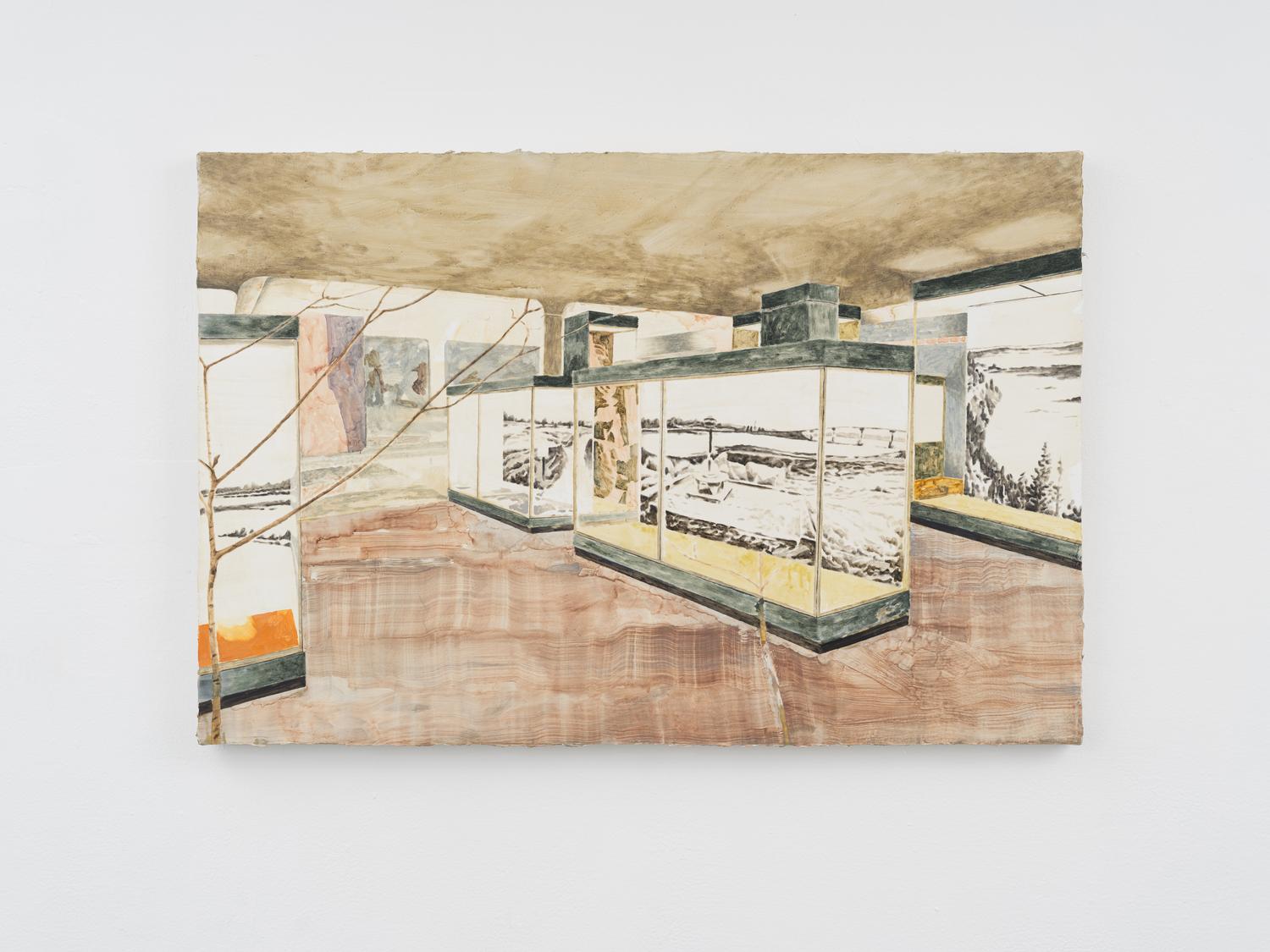
James Warren, American Museum of Natural History lI, 2025, Oil on canvas 36 x 24 inches
photo by Farfar studio, courtesy of Site Service
Placed diagonally from each other in the center of the gallery, two sculptures stand like traffic guards. They offer information in the form of beautifully done dye-sublimation aluminum prints, featuring landscapes that Warren traversed during his residency. Materially and visually, their signpost-like appearance seems to be the most direct invocation of the “sign” in the show, along with an installation in the back room that reads like a museum display.
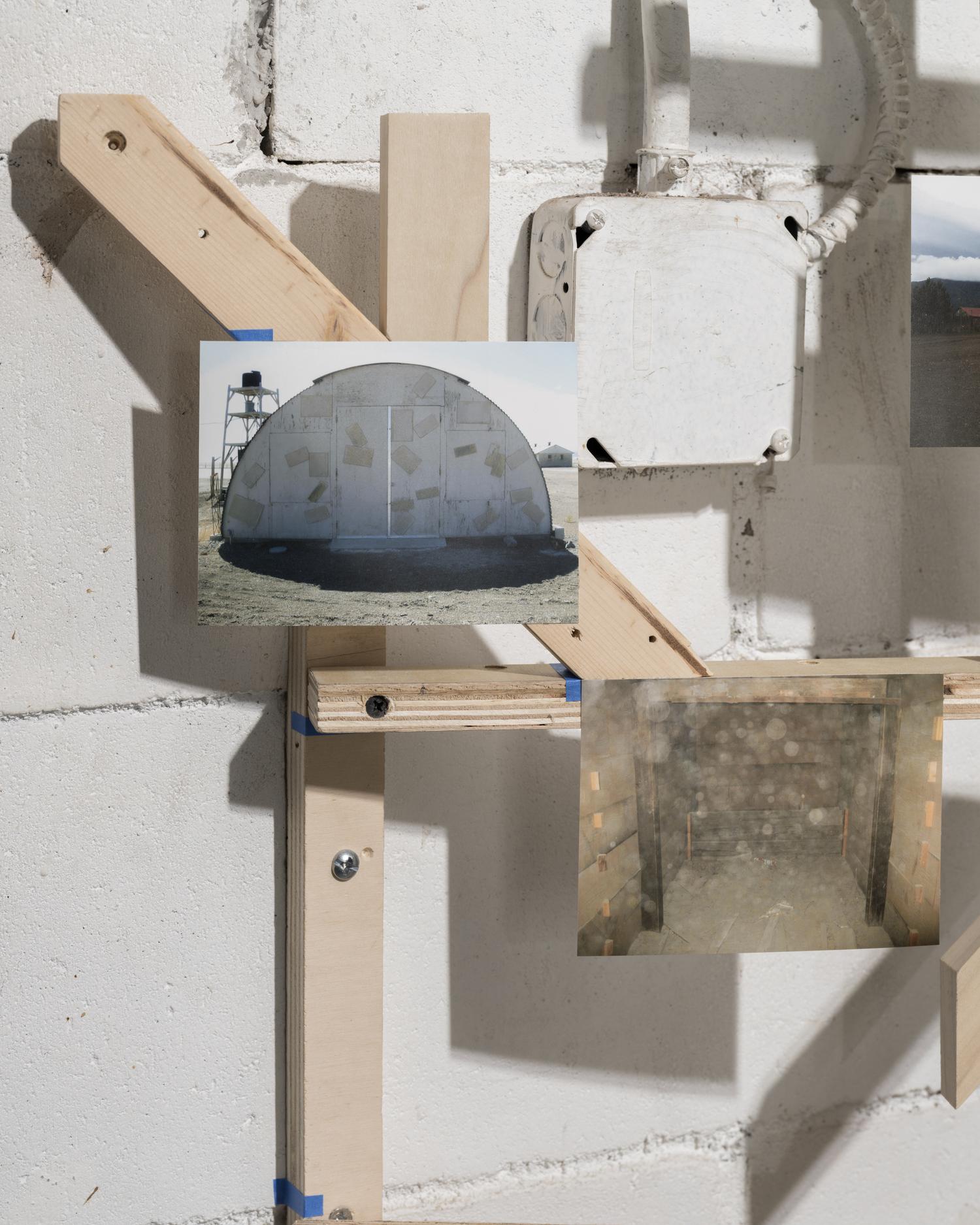
James Warren, Detail shot of Photo Archive Installation (Blue), 2026 DNP photo prints, polar, pine, birch ply, blue tape, aluminum ladder
photo by Farfar studio, courtesy of Site Service
The sign is a landmark that defines a place in relation to what surrounds it. Humanmade signs are crafted in anticipation of the interests and concerns of those who will read them: a clear example of humans reconciling ourselves to place. The sign is a source of guidance, and it also stakes a claim. The juxtaposition of the nature of the Southwest with the objects Warren has crafted furthers this dynamic: we frequently invent meaning not only by observing, but by altering.
Whereas Warren does not discard the sign, he does reinvent its purpose: it offers to teach you about itself and the experience of the person who made it, therefore becoming a destination in its own right.
James Warren, “Half Life of a Sign” Service/Nine, 9 Monroe St, New York, NY, 10002; April 10 – May 6
Aliza Katzman
Aliza Katzman is a painter and writer based in Brooklyn, NY. They received an MFA in Painting and Drawing from Pratt Institute, and a BA in Political Science from the University of California, Berkeley. Their art and writing have been featured in other publications such as Tussle Magazine, With Friends Like These, The Faraway Nearby, and Noise Mag.
view all articles from this author