Whitehot Magazine
October 2026
"The Best Art In The World"
"The Best Art In The World"
October 2026
Speak, Memory: Wang Chuan's Recent Paintings
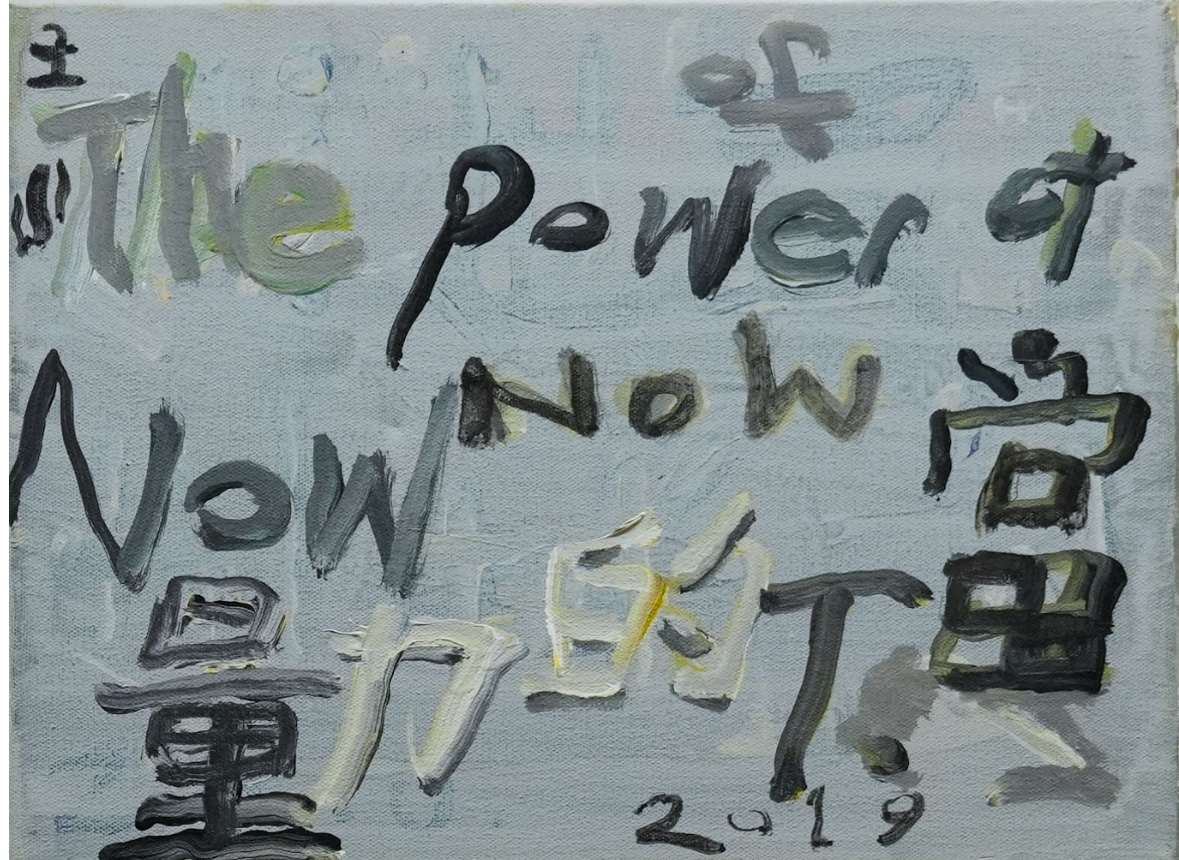 Wang Chuan
Let the Mind Arise without Attachment | 无往则生其心, 2019
Acrylic on canvas
12 x 16 in
30.48 x 40.64 cm
By RICHARD VINE, October 22nd, 2026
All his life, Chinese painter Wang Chuan has sensed that the most profound truths elude any formal system, mental or social. Yet, like us all, he has had to negotiate with conventions—some of them exceptionally severe.
Born 1953 in Chengdu, Sichuan Province, Wang spent a decade of his young life as a railroad laborer during the Cultural Revolution (1966-76). When not laying track, Wang practiced drawing and painting with scavenged materials. Once the universities reopened, he entered the Sichuan Fine Arts Institute in 1978 and graduated four years later at the age of 29.
By then, Wang had already caused a sensation. One of his undergraduate works, Goodbye, Little Path (1980, oil-on-canvas), was widely debated and reproduced, making him a founding member of the Scar Art movement. Refuting the official Socialist Realist aesthetic—workers, soldiers, and peasants portrayed heroically in a "red, bright, and shining" manner—Scar Art acknowledged the physical and psychological damages of the recent past. In Wang's seminal work, a hollow-eyed young woman clutching a canteen looks grimly at the viewer, while a heavily burdened figure trudges up a winding path toward the glowing horizon behind her.
Instead of making a career of such fraught representational work, Wang turned almost immediately in a new direction—prompted equally by Chinese ink painting (with its traditional five shades of black) and the work of Cy Twombly (with its wandering autonomous lines). His experiments with this fusion chimed with the '85 New Wave movement, China's embrace of avant-gardism following Deng Xiaoping's economic reforms and dramatic Great Opening-Up to the outside world. In 1985 Wang helped organize a major symposium, held in the city of Zhuhai, to examine the new artistic developments in China.
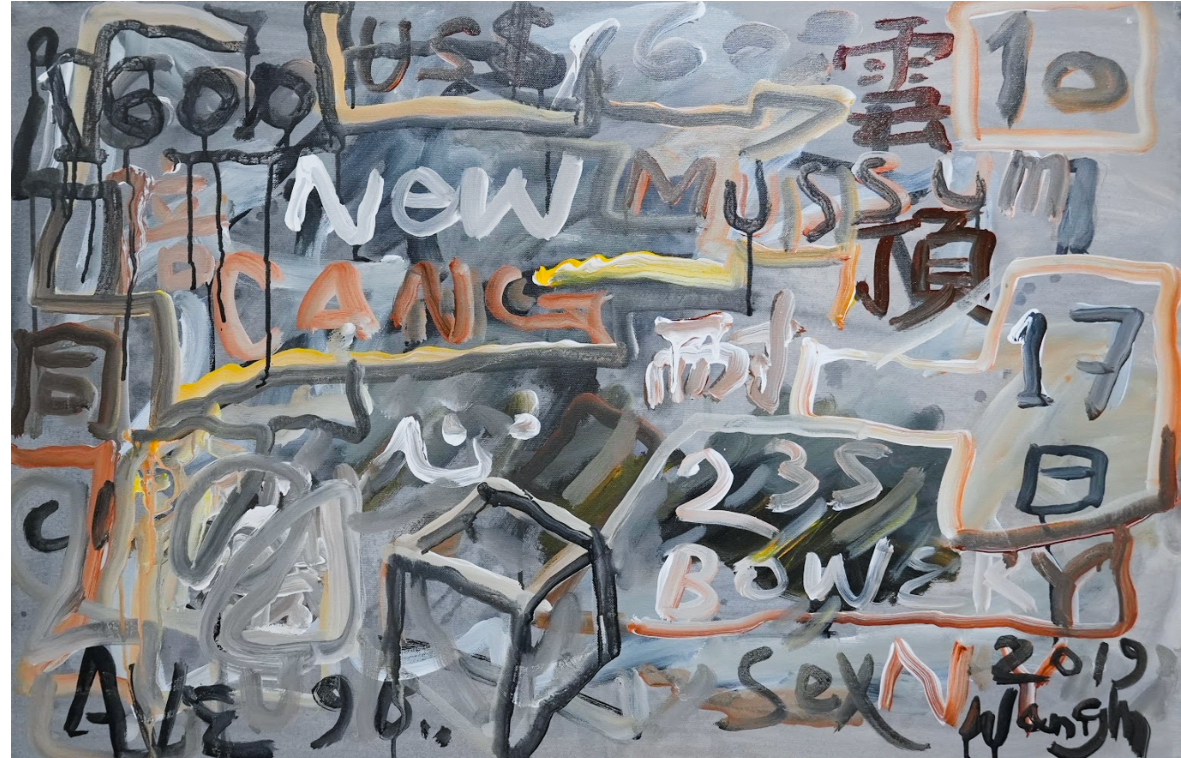 Wang Chuan
Above the Clouds | 云顶, 2019
Acrylic on canvas
24 x 36 in
60.96 x 91.44 cm
Wang's own most striking change in this era was a leap into minimalism. His 1990-91 solo exhibition "Blackness" immersed visitors in an environment of solid-black lines and geometric shapes poised on the white walls, floor, and ceiling of the Shenzhen Museum's nearly 2,000-square-floor Salon space. (Shenzhen, where Wang had taken up residence in 1984, was China's first Special Economic Zone, exploding with modernization and growth thanks to its state-controlled capitalism.)
In 1989 Wang participated in the landmark "China/Avant-Garde" exhibition at the National Art Museum of China in Beijing. The massive show, featuring some 185 unorthodox artists under the motto "No U-Turn" (i.e., no turning back), was closed almost immediately, after one of the participants fired a pistol at her own work. The subsequent clampdown on experimental art is frequently seen as a prelude to the Tiananmen Square incident four months later. Chinese avant-gardism went underground for roughly a decade.
Wang devoted the 1990s to exploring mostly hard-edge and calligraphic abstraction in both ink and oil paint. He relocated to New York in 1997, but his sojourn was sidetracked the next year when he received a diagnosis of Stage 3 gastric cancer. Wang returned to China for stomach surgery and a long course of chemotherapy, during which he kept a Twombly monograph by his bed. The debilitating cancer treatments forced Wang to slow down, while the constant threat of death made him more philosophical—a state-of-being change reflected in his transition to gestural abstraction, perhaps the dreamiest and most emotionally attuned of all painting styles.
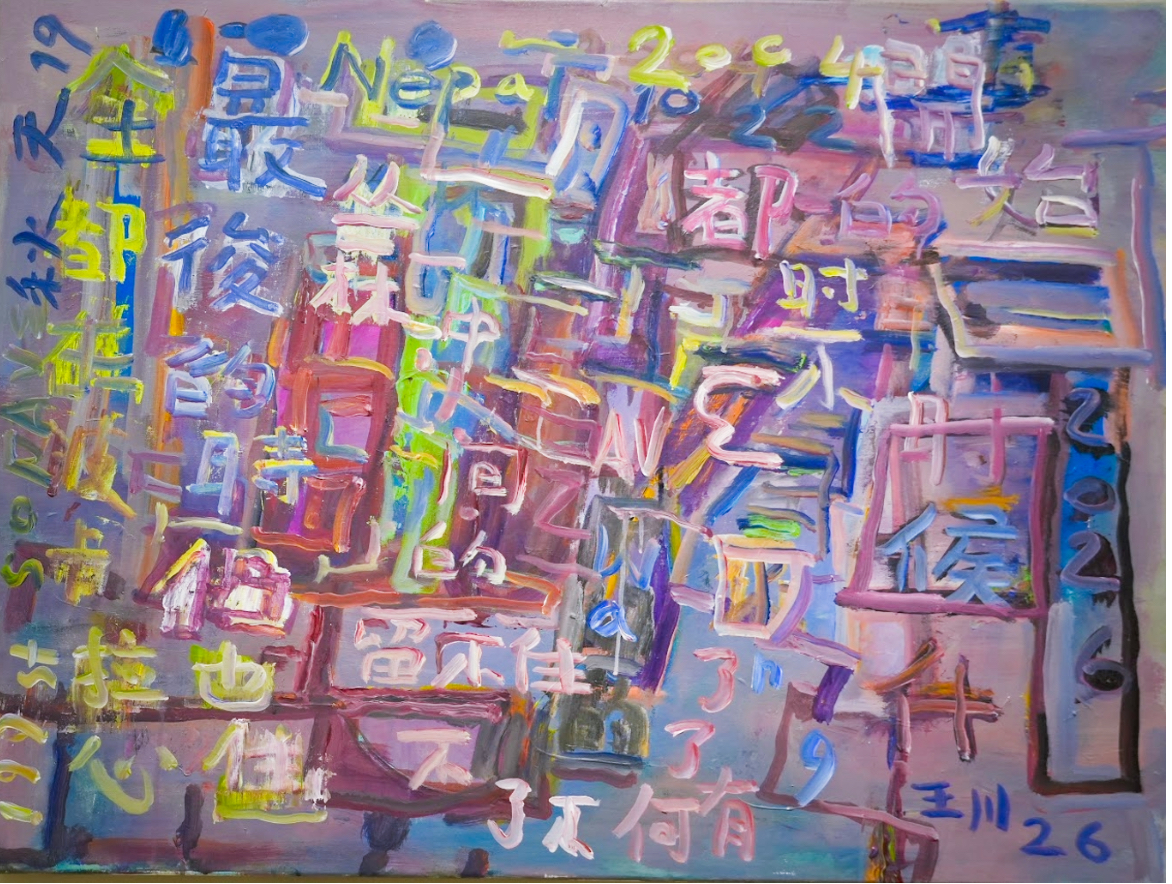 Wang Chuan
Jungle | 丛林, 2026
Acrylic on canvas
30 x 40 in
76.2 x 101.6 cm
From 1999 to 2003, still not certain whether he would live or die, Wang undertook a spiritual quest to India and Nepal, settling for a time in Pokhara, where he was able to read, paint, and meditate under the influence of Buddhist thought. Thus Wang turned inward just as the second wave of post-Mao artists—Xu Bing, Gu Wenda, Cai Guo-Qiang, Zhang Huan, and many others—tuned outward, traveling to the West and prompting a flurry of foreign interest in cutting-edge Chinese practice. Wang speaks of a spiritual awakening during his stay in Nepal, but not in terms of the formal stages of Buddhist enlightenment. Rather, his way was—and remains—eclectic and personal.
Another epiphany was formal. In 2015 Wang was struck by the image of a treasure box in a mural dating from the Tang dynasty (618-907 CE). He associated the depiction with the box-like conceptual frame that envelops every written Chinese character. This insight, while innovative, resonated with the longstanding Chinese ink-art equivalency between writing and image-making—twin aspects of the same symbol-on-paper approach. The painter's marks, like the writer's, seek to convey the innermost essence of things in the world. With this unity in mind, Wang initiated his ongoing series of Boxes, limned sometimes in ink, sometimes in oil or acrylic.
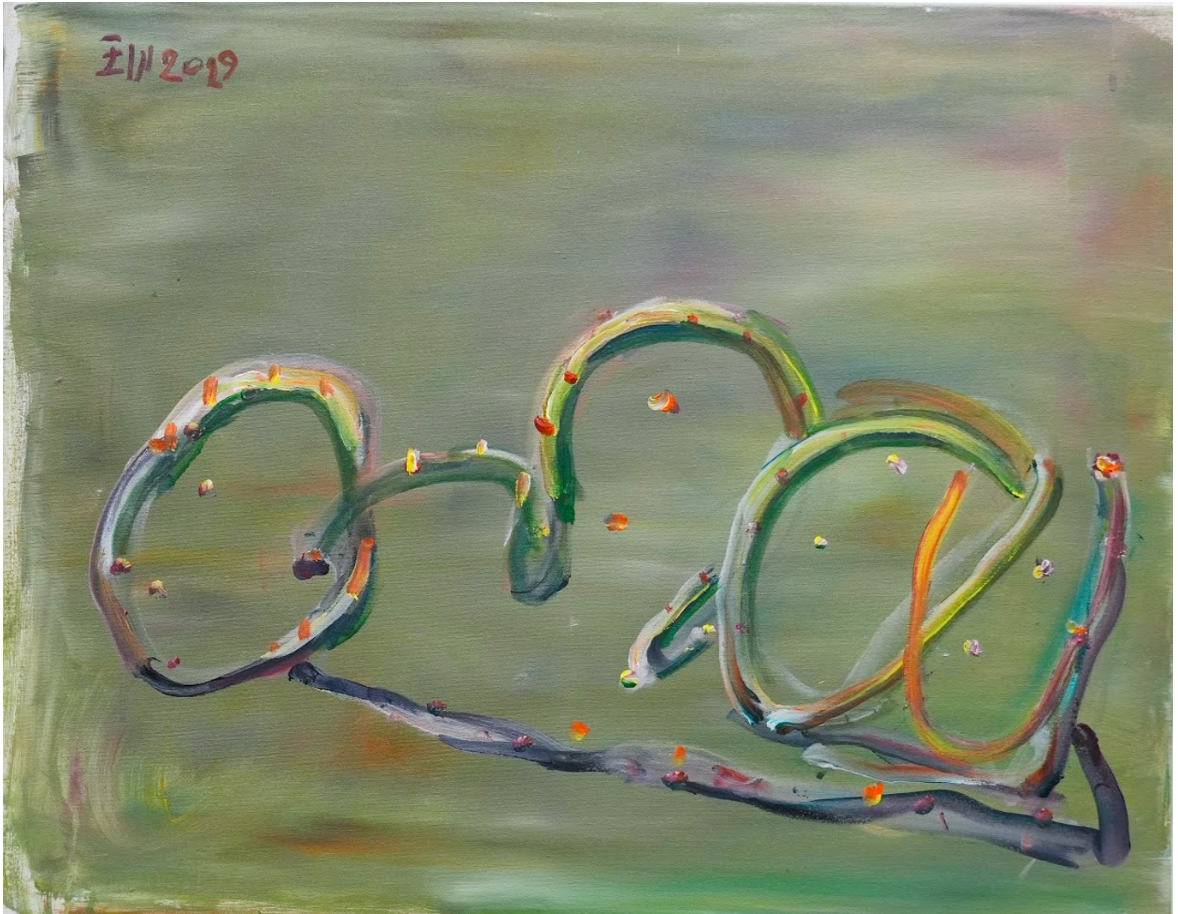 Wang Chuan
A Gray Melody | 灰色的旋律, 2019
Acrylic on canvas
24 x 30 in
60.96 x 76.2 cm
To a Western eye, Wang's funky delineations of box forms have the rudimentary allure of Philip Guston's late renderings of shoes, lightbulbs, heads, and cigarettes. For Wang, who has long been a master of line—playing round strokes off against flat, deep black against shades of gray, graphic speed against deliberation—this is indeed a return to something elemental. What, he seems to ask, does it really mean to draw a line? Two answers quickly emerge. First, linear drawing visualizes how, in art as in life, one course gives way to another, carrying the hand and the soul on an ineluctable journey. (Would we be wrong to see here a distant echo of Wang's adolescent wrangling with railway tracks and their ever-branching network?) Second, it creates structure out of the links among lines. One thing leads to another, and willy-nilly our lives acquire form. Compartmentalized and packed with treasured experiences, our selfhood can also appear paradoxically empty, especially to anyone steeped in Buddhist conundrums regarding the Void.
Over the years, Wang has had many gallery and museum shows in China and abroad. Earlier this year, for example, the Long Museum in Shanghai honored him with a full retrospective. But accolades have not stilled his restive spirit. Here in New York, the artist has recently produced a diaristic stream of paintings: more Boxes, their forms replicating and clustering like crystals or living cells, along with a larger number of abstract memory paintings. These midsize canvases, enlivened with multicolored streaks and taches, bear incidental words and phrases in both English and Chinese. Together the strokes and verbalizations evoke an uncontrollable flux of recollection, summoning up people, feelings, objects, ideas, and events in quick flashes, only to see them swallowed up again into dark oblivion. Among the English locutions are "the face reflects," "Hong Kong 1997" (the year of the turnover from Britain to China), "Nepal," and "let go of attachment." The Chinese inscriptions include snippets from the Heart Sutra and—summing up Wang's artistic and personal credo—the admonition "not to follow what everyone else is doing." It is that inner determination, matched with sheer technical finesse, that has made Wang Chuan one of China's most highly esteemed living artists. WM

Richard Vine
Richard Vine is the former managing editor of Art in America and author of hundreds of critical articles, interviews, and reviews. His eight books include New China, New Art (2008) and Odd Nerdrum: Paintings, Sketches, and Drawings (2001), as well as the artworld crime novel SoHo Sins (2016). He has taught and lectured around the world, and curated exhibitions in Beijing, New Delhi, Hangzhou, Ho Chi Minh City and New York.
view all articles from this author