Whitehot Magazine
May 2026
"The Best Art In The World"
"The Best Art In The World"
May 2026
Scratching the Wall: Graffiti Amidst Systems of Oppression
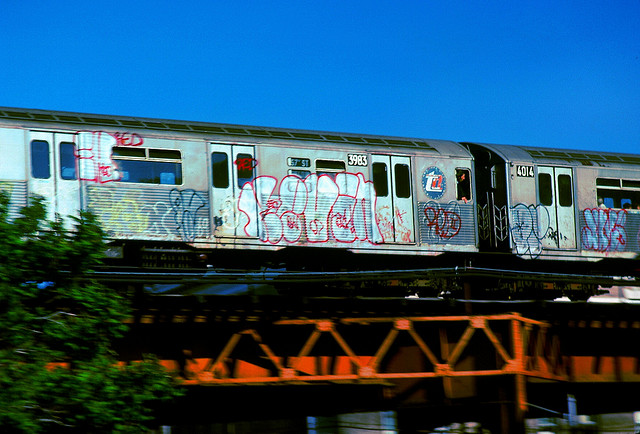
Subway Bomb - An example of subway "bombing," which the NYPTA outlawed in 1985 as part of the Clean Train Movement
By BELLA GREENBACHER May 9th, 2026
Sprawls of graffiti across New York City are ingrained in our structural landscape, yet are often met with aversion, antipathy, or simply visually ignored. Frequently viewed as vandalism or property damage, graffiti as an art form and means of protest carries an extensive history that is essential to the city’s values and historical narrative. The word “graffiti” derives from the Italian word “graffio,” which translates to “a scratch.” This term was coined by archaeologists in the 18th century used to describe written markings declaring love affairs, insulting enemies, and cracking jokes on public-facing walls of ancient societies such as Pompeii. 2000 years later in the late 1950s, graffiti resurfaced in New York City and Philadelphia, taking on a new approach of modern facture and significance.
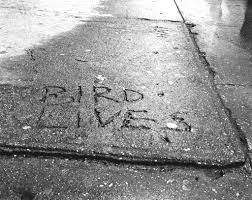
Bird Lives - Ted Joans' renowned graffiti scrawl honoring the late jazz revolutionary Charlie Parker
Ted Joans, an African American artist, poet and musician, is accredited as the pioneer of modern graffiti in New York City. Ignited by the sudden death of Charlie Parker, a jazz revolutionary who redefined the sound of jazz and bebop music, Joans began to graffiti the phrase “Bird Lives” across urban terrain – an homage to Parker’s moniker, “Yardbird.” The “Bird Lives” street art campaign served as a tribute to Parker’s transformation of jazz music and disseminated the idea that his legacy and progress would carry into the future. Ties between graffiti and music emerging from African American communities were vital to the progression of modern graffiti in New York City. The rise of hip-hop culture in 1970s New York City sparked an influx of graffiti as a means of urban identity and cultural pride amongst marginalized populations. Both hip-hop and graffiti inspired each other as creative outlets for expressions of cultural resilience, frustrations, and as a way to amplify their voices amongst a rapidly urbanizing and gentrifying world. Calling themselves “writers,” these artists turned to graffiti with the motivation to place a claim on their environment and amplify their underrepresented voices against the cultural threat of neglect.
With the rise of the 1970s, graffiti artists began leaving their mark not only with the intention of cultural expression and resistance, but oftentimes purely out of curiosity or boredom. The most noteworthy writers from the 1970s, TAKI 183 and Tracy 168, were known to spraypaint their pseudonyms and street addresses on buildings and “bomb” subway cars on their everyday routes. In a 2011 interview with the New York Times, TAKI 183 (a Greek-American man named Demetrius), admitted that he “wasn’t very politically aware” in his youth and simply graffitied because “there was nothing else to do, and it was easy to do it.”
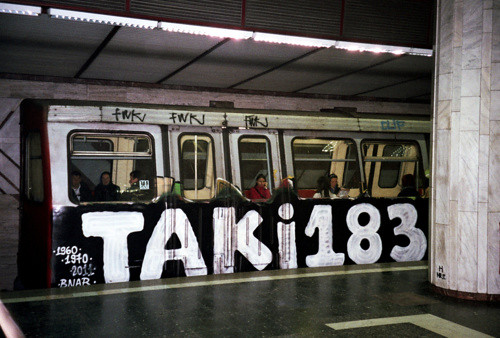 Taki 183 - Noteworthy 1970s writer TAKI 183's signature tag
As a response to the increasing movement of graffiti and street art, New York City Mayor John Lindsay declared the first war on graffiti in 1972, labeling it as an epidemic and initiating a multimillion-dollar campaign to abolish the practice of graffiti. During this process, Mayor Lindsay described the artists as “criminals and vandals,” often profiling them by race and socioeconomic status. Despite this effort, graffiti artists continued to pursue their values of cultural resistance, painting more subway cars in order to spread their artistic messages across the city which eventually inspired British teenagers who visited New York to adopt the tradition in London. Simple tags evolved into elaborate pieces that included cartoons and illustrations, challenging the notion of graffiti as “vandalism” rather than “art.” A divide between artists emerged of those who emphasized expression versus those who emphasized so-called professionalism.
Nearly a decade later, the war on graffiti escalated with David Gunn, the president of the New York City Transit Authority, implementing the Clean Train Movement of 1985. During a span of four years, the entire rolling stock of train cars were either scrubbed clean or entirely replaced, and police presence drastically increased in subway stations. Gunn believed that this movement would improve the aesthetic of New York City and the global reputation of its transit system, prioritizing a “clean aesthetic” that was grounded in the sacrifice and oppression of the practices of marginalized groups. While emphasizing an appearance of sanitation that promoted whiteness and “purity,” the city’s administration continued to neglect sanitary needs of vulnerable populations, disregarding trash pick-ups and public health needs. The Clean Train Movement contributed to a long history of systemic oppression in New York City through the erasure and destruction of visual expression.
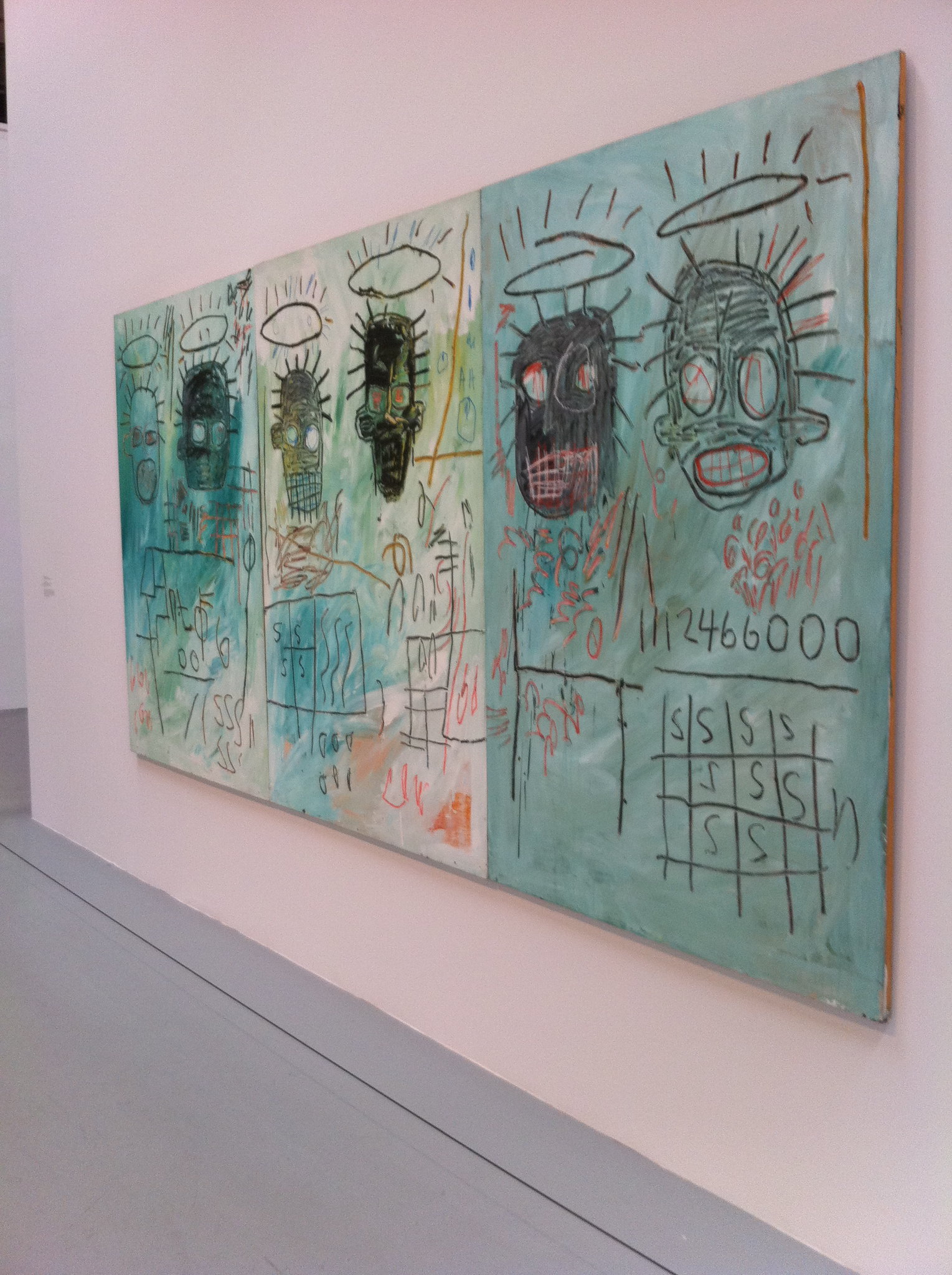 Basquiat - Famous 1980s graffiti artist Jean Michel-Basquiat's work featured in an upscale museum setting
Despite its long history of criminalization and disregard as a valid art form, graffiti is now featured in many high-end artistic institutions across New York City. Artists like Jean Michel-Basquiat and Keith Haring have gained global recognition as graffiti artists while exhibiting shows across the globe. Institutionalized graffiti transplants an art form once revolving around protest and freedom of expression into highly curated museums and galleries that charge viewers to experience it, often glossing over the historical context of sanitation efforts, criminalization, and systemic racism. Artistic institutions often draw a moral divide between graffiti and “street art,” the former as illegal vandalism and the latter as expensive, note-worthy artwork. Works defined as “street art” are often colorful, detailed, and include imagery, consequently requiring planning and preparation without time constraint. Graffiti, on the other hand, traditionally utilizes quick execution as an act of anonymity and rebellion, and focuses more on the process of mark-making rather than the aesthetic of the final product. This classification presents a complicated distinction between two art forms that disregards the validity of graffiti.
Through the process of deeming certain works as “legitimate” and “aesthetic” and others as not, wealthy institutions managed and curated predominantly by white men discredit the history and legacy of graffiti writing. The visual elements that designate museum-worthy artwork ignore the artistic values of expression essential to artistic movements of Black and Brown communities, furthering systemic oppression under the guise of inclusion. Despite this trend of institutionalization, graffiti remains an integral part of New York City’s visual landscape. Graffiti thrives under injustice and in the modern state of the world serves an essential role in freedom of expression, rebellion, protecting the artistic legacies of misrepresented and oppressed populations. In the words of Ted Joans, Bird Lives.

Bella Greenbacher
Bella Greenbacher is a writer, curator, and visual artist based in Brooklyn, NY. She holds a BFA in art history and visual art from Concordia University Montréal. Her work has appeared in The Michigan Daily and Concordia Undergraduate Journal of Art History, as well as curatorial work at the Bushwick Gallery. Through both writing and exhibition-curating, Bella aims to inspire in-depth dialogues surrounding underrepresented voices and topics in the art world.
view all articles from this author