Whitehot Magazine
October 2026
"The Best Art In The World"
"The Best Art In The World"
October 2026
The Pursuit of Happiness: Xu Yang and Victoria Cantons at Kravets Wehby
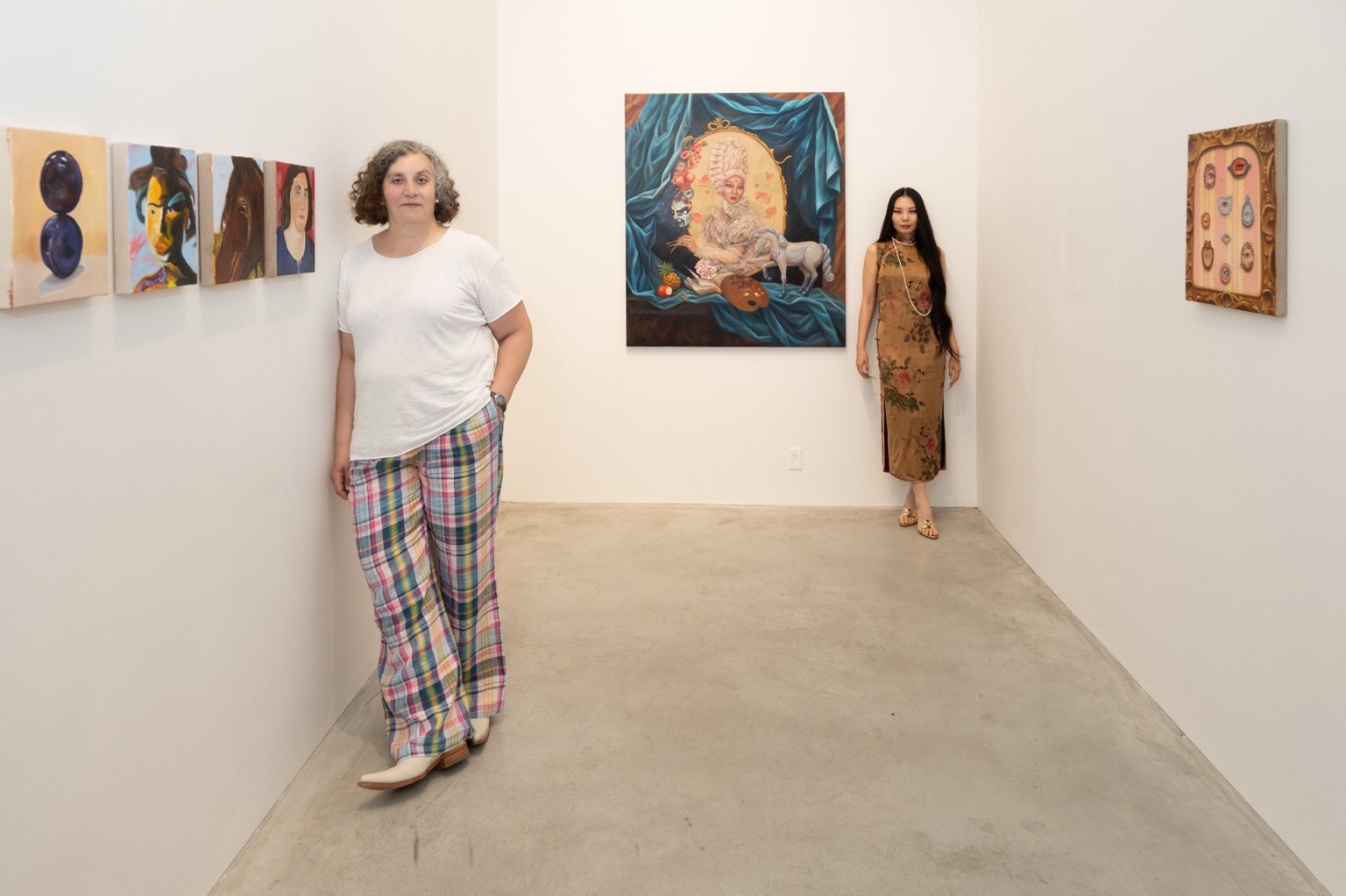 Victoria Cantons (foreground left) and Xu Yang (rear right) at The Pursuit of Happiness, Kravets Wehby Gallery, New York, 2026. Photo: Peter Koloff
By PETER KOLOFF, October 28th, 2026
Walking into Kravets Wehby Gallery in Chelsea, I found myself drawn to Xu Yang's paintings. Their elaborate costumes, theatrical compositions, and sense of fantasy reminded me of fashion editorials, a visual language I've always enjoyed as a photographer.
In one painting, a woman wearing a towering powdered wig and voluminous white gown holds a mask beside her face and an apple in her other hand. Goldfish float around her, while a serpent's tail emerges beneath her skirts. Its companion painting echoes the setting, with red curtains, green columns, and decorative cloud motifs. Here, a crowned figure wears Chinese opera-style face paint beneath European royal regalia, one leg covered in gilded armor and the other ending in a jeweled heel.
Across the gallery, Victoria Cantons' work offered a different experience. A brown horse gallops along a pale beach, its darker, dripping double appearing beneath it. Written across the upper portion of the painting are the words, "Love is like the oar that takes us back to shore."
Nearby, smaller paintings range from portraits and still lifes to a horse's head accompanied by the handwritten words "Towards hope."
The Pursuit of Happiness brings these two artistic worlds into the same gallery. But as I discovered during our conversation, sharing an exhibition doesn't mean sharing an artistic identity.
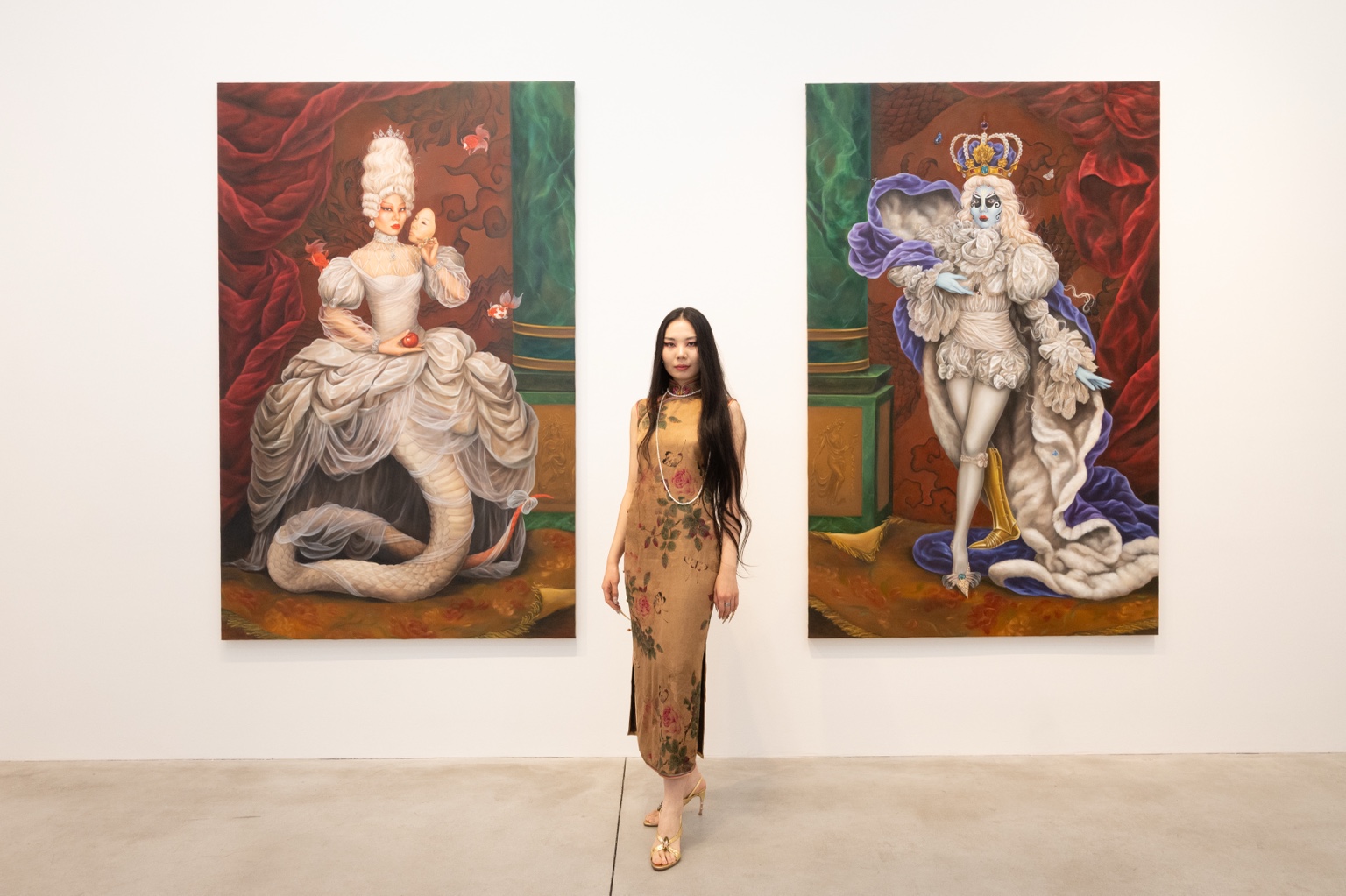 Xu Yang standing between two of her paintings at The Pursuit of Happiness, Kravets Wehby Gallery, New York, 2026. Photo: Peter Koloff.
Beauty and Memory
Xu, who moved from China to London in 2014, traces her fascination with elaborate costumes to childhood.
She remembers reading illustrated stories of princesses and transformation, imagining worlds far removed from her everyday surroundings. Discovering European Rococo painting years later gave those childhood fantasies a visual language.
She also became interested in how women, historically excluded from many positions of power, could express themselves through appearance.
When I asked whether beauty gives women power or can become another form of confinement, Xu pointed to women during the Second World War drawing stocking seams onto their legs when stockings were unavailable.
For her, beauty is an expression of individual choice. She questioned why anyone should be judged by how they choose to present themselves.
During the pandemic, Xu was unable to return to China for three years. What she missed most was her family's cooking, their everyday routines, and simply being together.
She spoke about incorporating those memories into paintings involving wigs, using their elaborate forms to carry personal stories.
When she finally reunited with her family, she recalled crying privately at night because she didn't want them to see her tears.
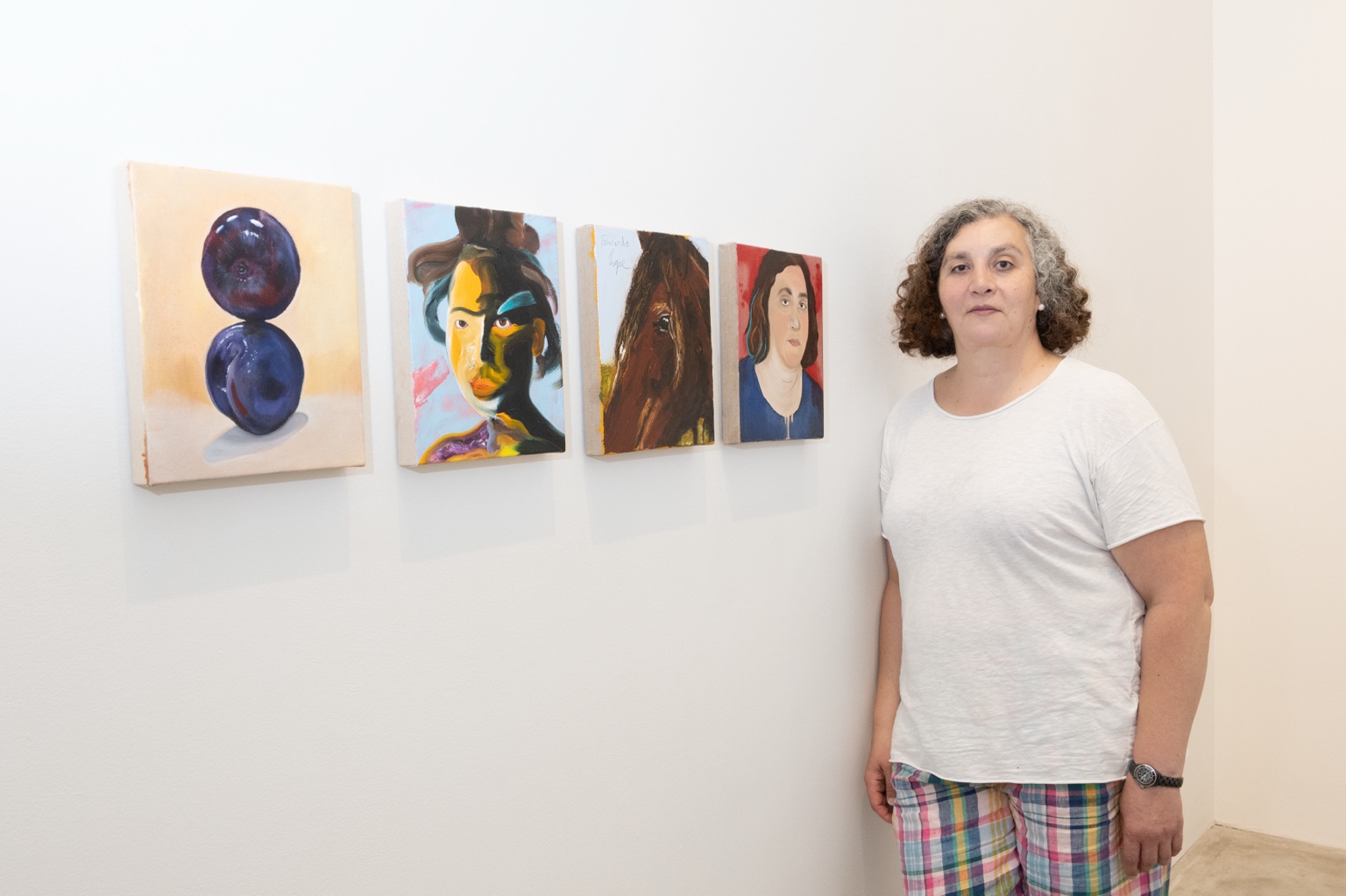 Victoria Cantons with four of her paintings at The Pursuit of Happiness, Kravets Wehby Gallery, New York, 2026. Photo: Peter Koloff.
Happiness Beyond Success
Victoria Cantons offered a direct answer when I asked whether something she once believed would bring happiness had become less important.
"Well, money for one thing."
She explained that she had considerably more money years ago but considers herself much happier today.
For Victoria, happiness is closely connected to being able to live authentically.
She described spending much of her younger life behind masks and protective walls. Letting those defenses fall away brought a freedom that material success had not provided.
When I asked whether heightened artistic awareness made life more difficult to enjoy, she disagreed.
She spoke about the pleasure of gaining even a little understanding of something, then choosing to set it aside and simply run along a beach, like the horses in her recent paintings.
Looking back at her past, Victoria reflected on whether she would erase a painful experience if given the opportunity.
She referenced Tolstoy's War and Peace, explaining that even the most difficult experiences contribute to who we become. Removing one might place us on an entirely different path.
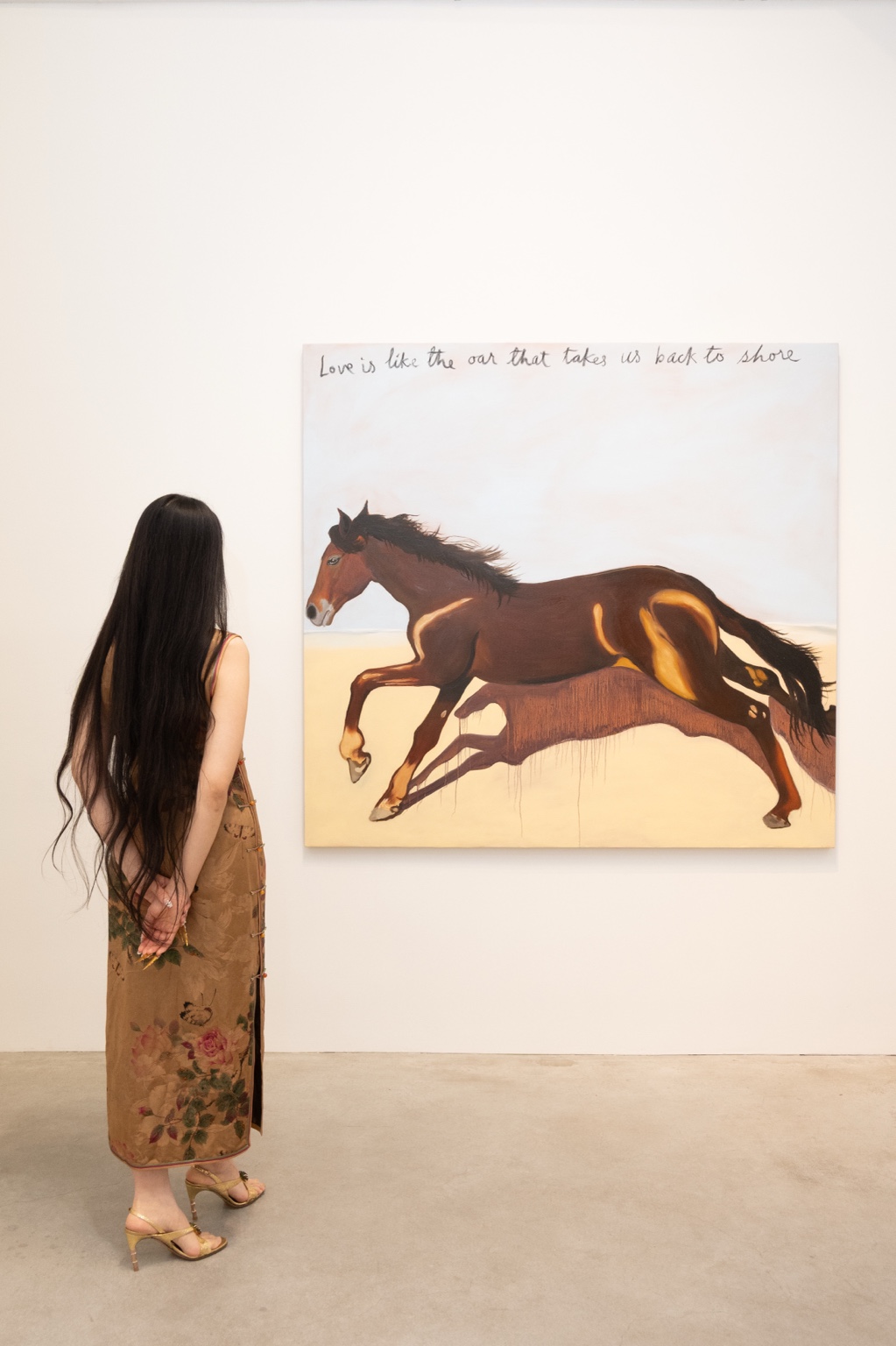 Xu Yang viewing a horse painting by Victoria Cantons at The Pursuit of Happiness, Kravets Wehby Gallery, New York, 2026. Photo: Peter Koloff.
Separate Artists, Shared Space
Xu and Victoria share a life and a studio, but their artistic practices remain independent.
They had previously exhibited together in 2021 and were initially hesitant about another two-person exhibition. Their concern was that audiences might focus on their relationship rather than recognize two distinct artists.
Inside their shared studio, they work approximately eight to ten meters apart, often keeping different schedules.
They describe each other as their most trusted voices when discussing their work, but they have a rule established early in their relationship: neither offers unsolicited criticism.
If one wants the other's opinion, she asks.
The Pursuit Itself
Victoria pointed out that the exhibition's title concerns the pursuit of happiness, not its permanent possession. Happiness comes and goes, and what fulfills one person may hold little meaning for another.
Xu raised a question: When parents tell their children they simply want them to be happy, are they imagining happiness on their children's terms or their own?
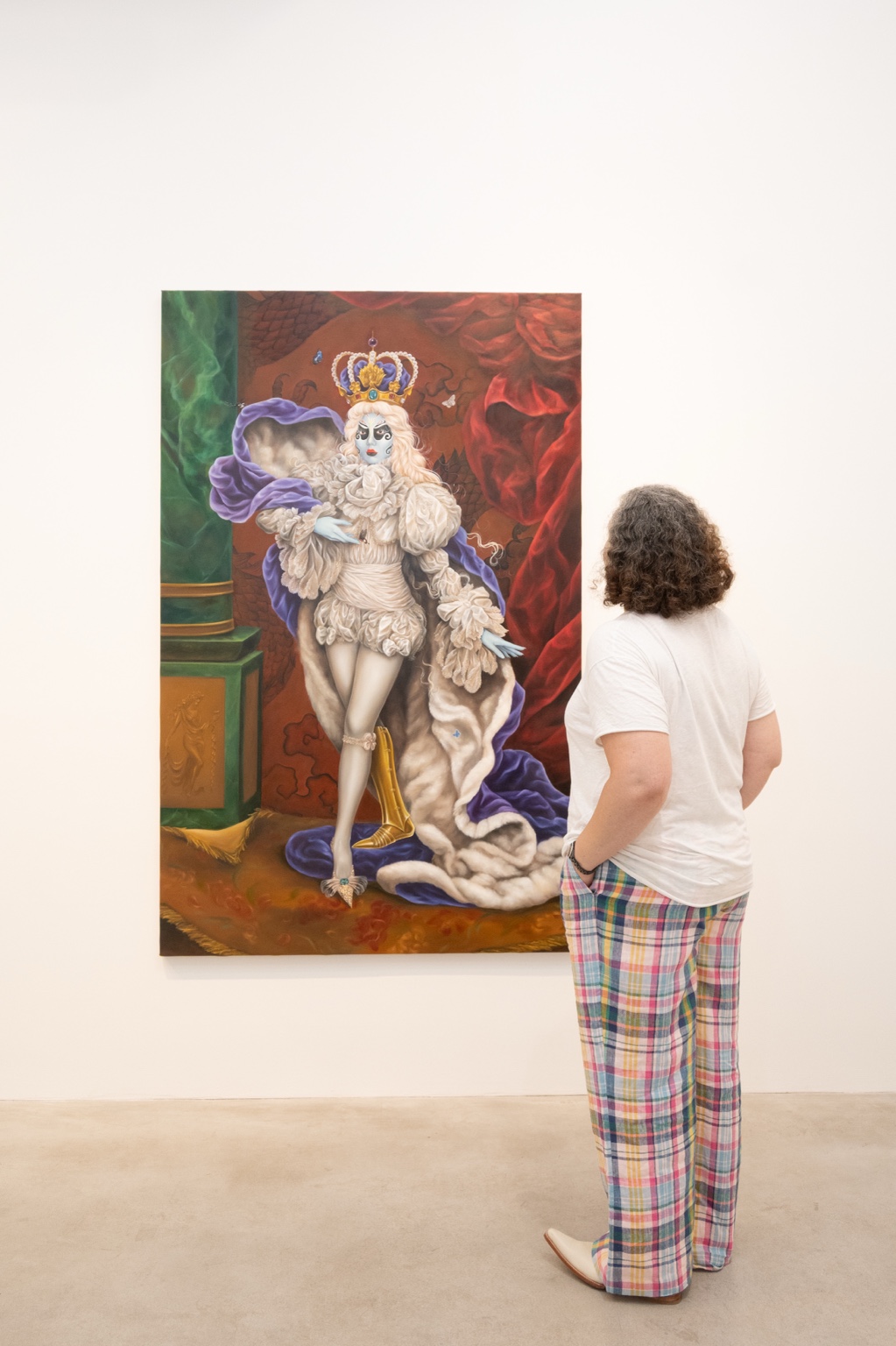 Victoria Cantons viewing a painting by Xu Yang at The Pursuit of Happiness, Kravets Wehby Gallery, New York, 2026. Photo: Peter Koloff.
Before finishing, I asked both artists whether they could still be happy if they stopped creating art tomorrow.
Both answered no, without hesitation.
For Xu, making art has been inseparable from her existence since childhood. Victoria compared the need to create to something as essential as breathing.
The Pursuit of Happiness, featuring Xu Yang and Victoria Cantons, is on view at Kravets Wehby Gallery, 521 West 21st Street, New York, October 15–November 14, 2026.
Peter Koloff
Peter Koloff is a New York-based photographer, filmmaker, and cultural writer documenting the people and experiences shaping contemporary art, fashion, and culture. Combining original photography with firsthand interviews, his work explores the human stories behind creative expression. His editorial coverage spans New York and international cultural events.
view all articles from this author