Whitehot Magazine
November 2026
"The Best Art In The World"
"The Best Art In The World"
November 2026
Alcopley: The Infinite Is Dangerously Far - Shamnoski Gallery, Upper East Side, New York
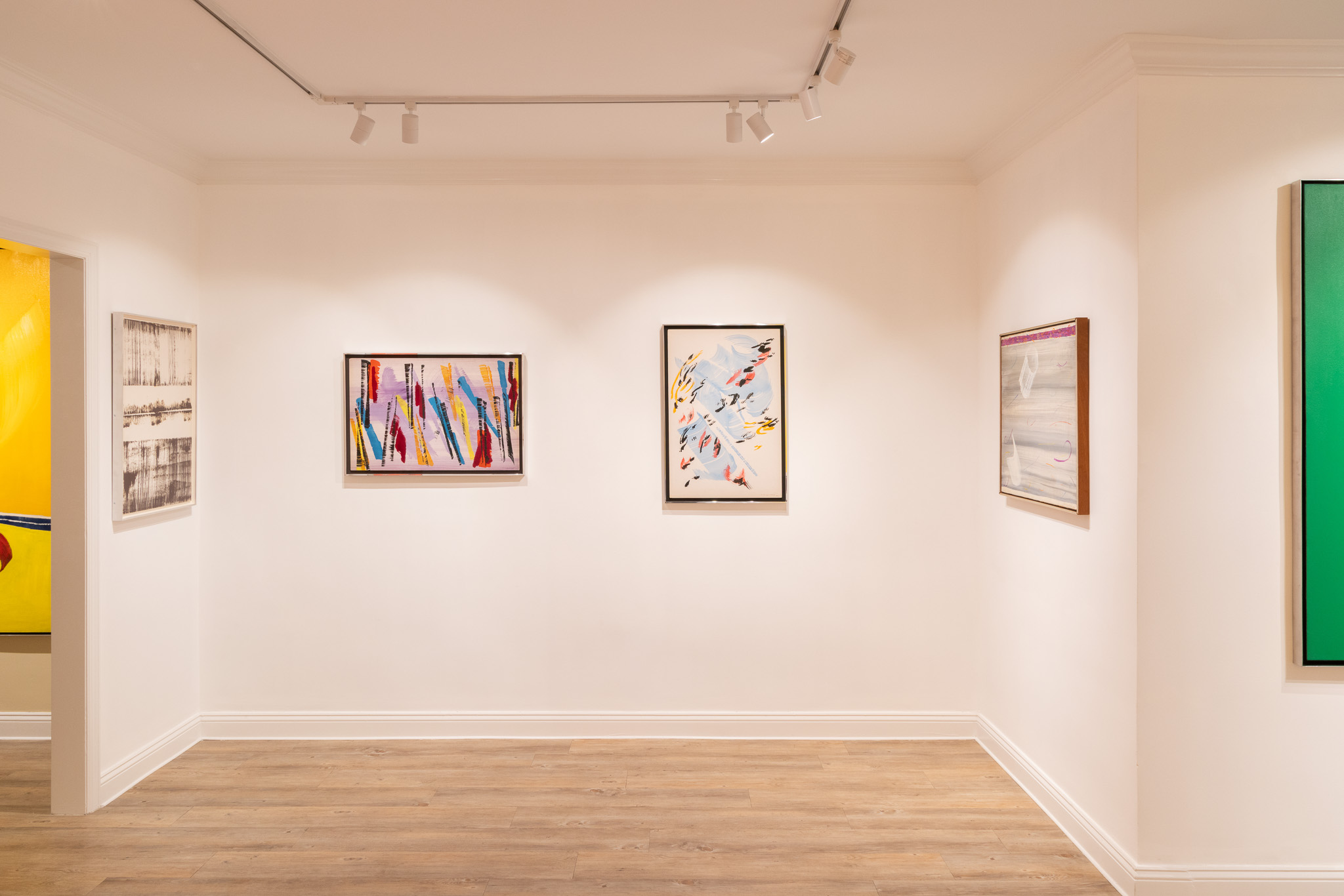 Installation view, 2026, Alcopley: The Infinite Is Dangerously Far - Shamnoski Gallery
By MARCARSON, October 31, 2026
Interview responses by Matthew Shamnoski
At Shamnoski Gallery in New York, Alcopley: The Infinite Is Dangerously Far revisits the work of an artist and scientist whose radical approach to painting remains strikingly contemporary. Bringing together four major late canvases and works from the 1960s, the exhibition explores Alcopley’s pursuit of the essential brushstroke. Gallery director Matthew Shamnoski discusses the artist’s evolution, his scientific mind, and the remarkable freedom of his later paintings.
The exhibition centers on four major late canvases alongside works from the 1960s, tracing Alcopley’s development toward the isolated brushstroke.
What was it about Alcopley's four late paintings that made you want to build an exhibition around them?
I’ve always been familiar with Alcopley’s work, though mostly with the 1950s period. He was an Abstract Expressionist and exhibited in the Ninth Street Show, so that’s what everyone seems to know him for. Working with the artist’s daughter, Una Dora, we first planned to build the show around the 1960s work alone. I had also been somewhat familiar with that work, but as we spent more and more time paging through paintings, it became clear to me that the later work from the 1970s and 1980s, centered on the brushstroke, was what the show should really be about. As I looked further, I found that when you searched “Alcopley” online, none of those paintings came up in the results. The last time they had been the focus of an exhibition was a show at Art in General in 1993. So it felt like the right time to bring them back into the light. They’re fresh and vibrant, and they feel very contemporary.
Looking at his earlier work alongside his later paintings, what changed most about the way he painted?
Alcopley’s earlier works, mostly from the 1950s, are playful and joyous, with many interacting elements. Beginning in 1960, his paintings became reductive. He got down to the essentials that allow the viewer to escape into the work: into its vibrations and sounds, into the energy of a thought or of many thoughts extending, into an element in space, perhaps floating, perhaps not. Into an instant captured and free, and perhaps also extended. Into the possible and the impossible, into a tiny or a gigantic freedom floating in air, into a sigh, a breath, a beautiful and satisfying moment frozen and free-floating in space.
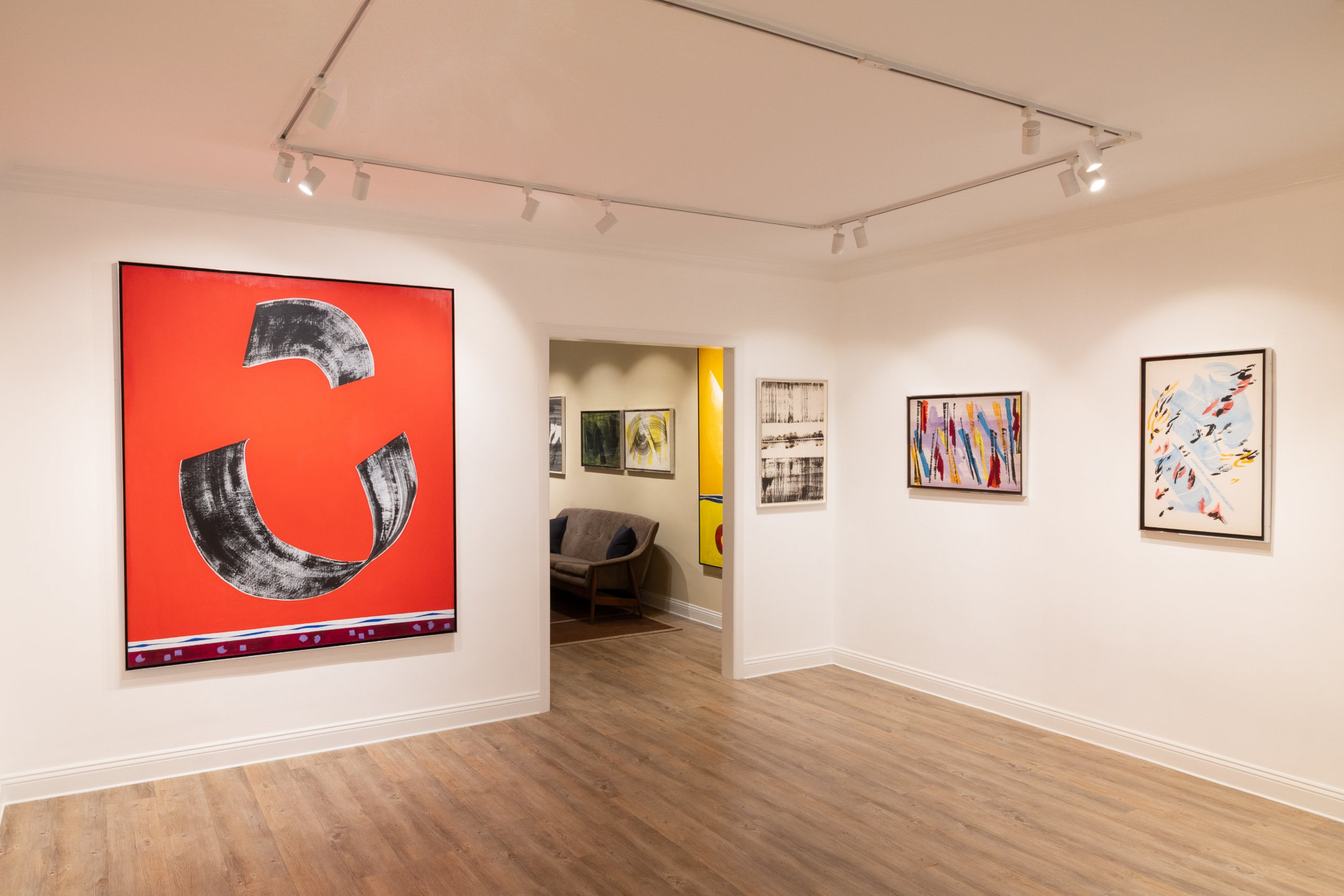 Installation view, 2026, Alcopley: The Infinite Is Dangerously Far - Shamnoski Gallery
His brushstrokes look almost reckless at times. Was Alcopley a perfectionist, or did he enjoy letting things get a little out of hand?
Both! In Alcopley’s paintings, there are marks and strokes that feel fast and could be read as reckless, though they were usually very purposeful. Others feel studied and cautious. They feel deceptively simple and spontaneous, but they were actually done very carefully. It’s something that likely took him years to perfect, both in feeling and in practice. One of Alcopley's closest friends and artistic peers, Herman Cherry, described it best. He wrote of Alcopley's work in 1982 and said, “Danger lurks at the point when his loaded brush touches the canvas. There is a direct confrontation when image and gesture merge.” Alcopley prepared for that moment through constant drawing, filling sketchbooks with a shorthand Cherry called “nerve sensations made visible.” He then painted without preliminary studies, setting a stroke or a brief sequence of strokes against unpainted ground. Of these open areas, Cherry wrote, “It is a felt space.”
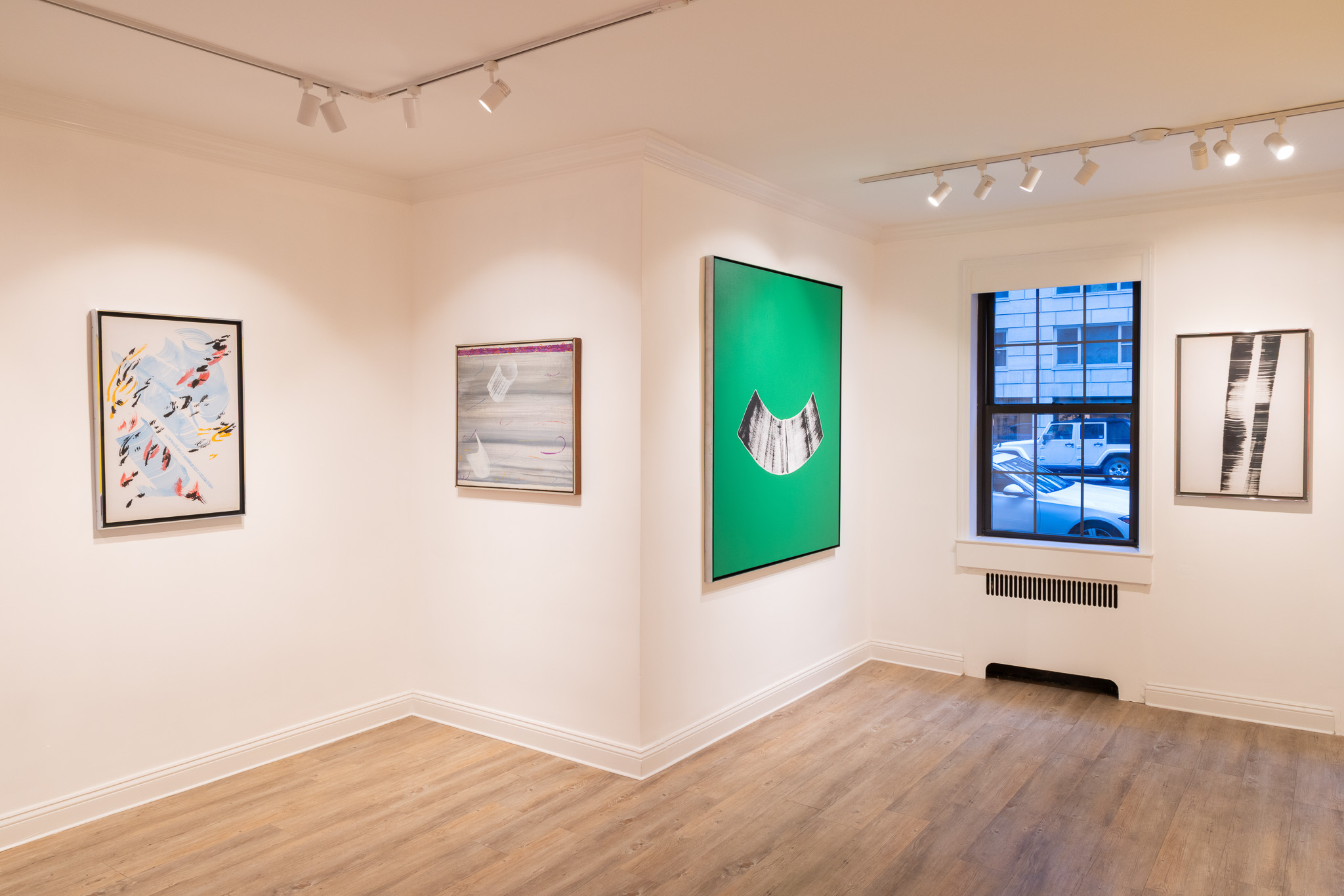 Installation view, 2026, Alcopley: The Infinite Is Dangerously Far - Shamnoski Gallery
Alcopley was also a scientist who studied how things flow. Can you see the scientist in his paintings, or did he leave all that at the laboratory?
Alcopley the scientist and Alcopley the artist were one and the same. He didn’t shift gears or change his way of thinking from one setting to the other. In both fields, he was a maverick. As a scientist, he turned conventional concepts and norms on their heads and looked at things in innovative ways, which older colleagues often protested at first. Eventually, though, his findings proved correct. He was one of the founders of hemorheology, and even coined the term, meaning the study of blood flow, and his work changed the way many vascular illnesses were understood and treated. He brought that same spirit to painting. Especially in these later works, Alcopley purposefully stripped away nonessential elements and dared to ask, “What is art?” and “What can art be?”
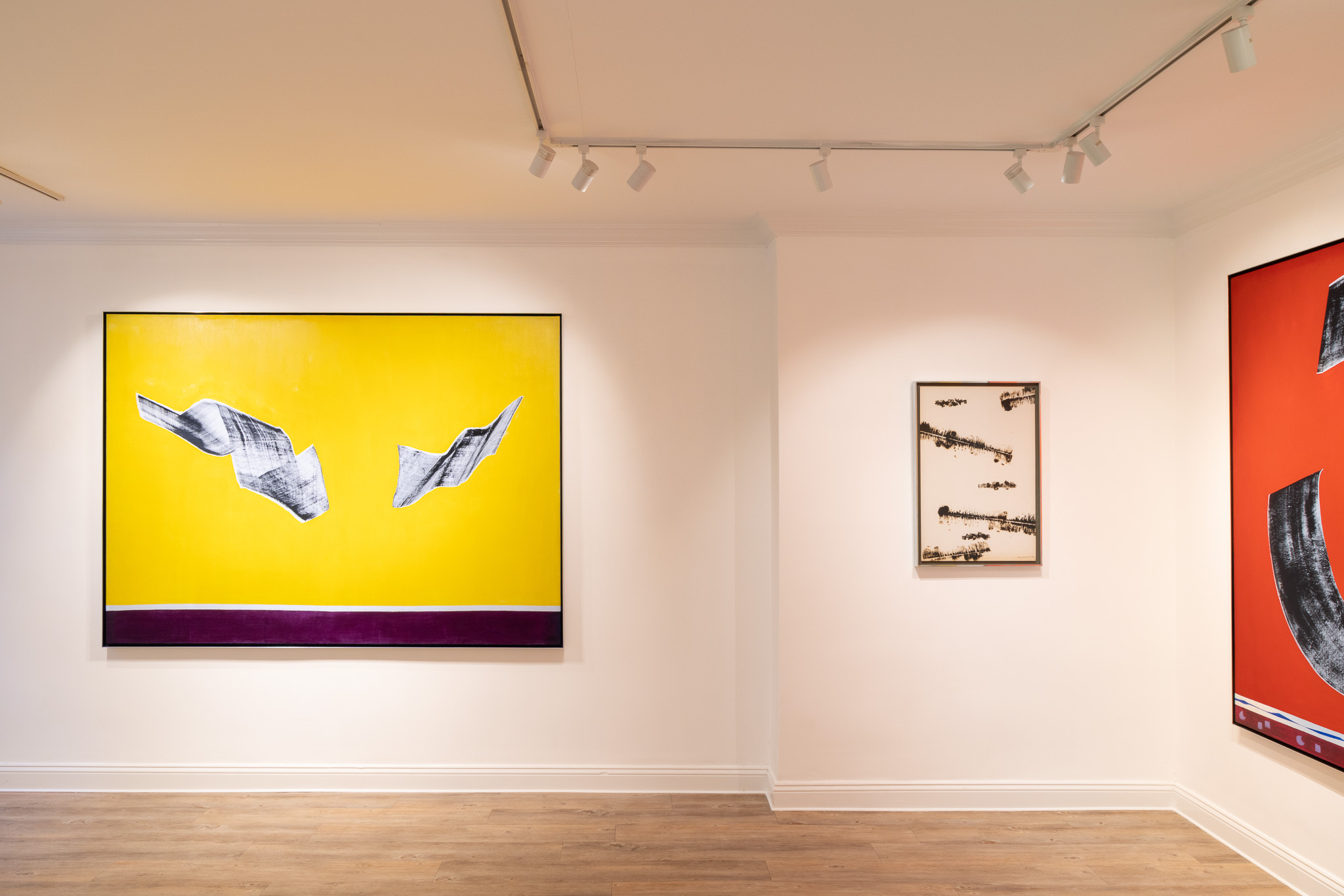 Installation view, 2026, Alcopley: The Infinite Is Dangerously Far - Shamnoski Gallery
If a collector walked into the exhibition knowing absolutely nothing about Alcopley, which painting would you show them first, and why?
I would let them look first, without any outside intervention, and see what they stopped on. Last week a collector came by, looked around the room, and stopped in front of a watercolor. He stared at it intently and said, “This painting, it feels like... air.” I was overjoyed, because I’d had the same reaction when Una Dora and I pulled it out of a drawer while choosing paintings for the exhibition. That feeling of understanding, of really getting an artist’s intention, is like no other. I never want to stand in the way of that process. WM
Shamnoski Gallery, Upper East Side, New York, from October 15 to Nov 15, 2026

Marcarson
Marcarson is the owner of NOT FOR THEM, an art house/concept gallery in New York City.
view all articles from this author