Whitehot Magazine
October 2026
"The Best Art In The World"
"The Best Art In The World"
October 2026
Carol Parkinson is inseparable from one of the most relevant and perhaps one of the rare monuments of underground culture from the 1970s
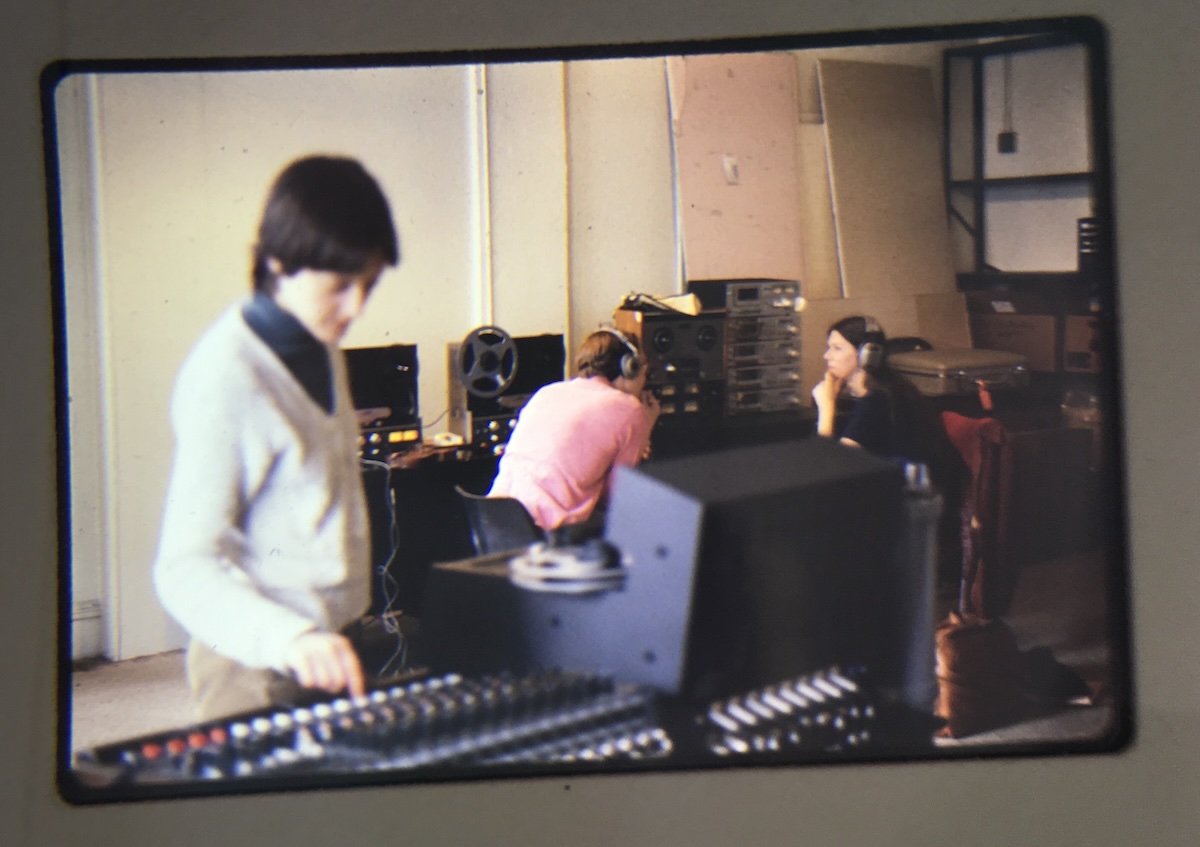 Portrait of Carol Parkinson at Harvestworks Studio A by Rosalie Winard
By LARA PAN April 24th, 2026
The name of Carol Parkinson is inseparable from one of the most relevant and perhaps one of the rare monuments of underground culture from the 1970s, a moment when creativity and artistic freedom still existed outside the gravity of market value. For more than thirty-five years, she has remained at the center of Harvestworks, one of the most important experimental sound institutions in New York, whose mission has long been to support artworks born through the intersection of technology, engineering, art, and music.
What makes her presence so singular is that she has never simply protected a legacy; she has continuously sustained the fragile conditions through which new cultural languages can come into being. Through her vision, the institution became more than a platform for artists; it became a space where experimentation itself could survive. In that sense, her work quietly returns us to a deeper philosophical question: whether culture is ever created by individuals alone, or whether it emerges through invisible constellations of encounters that only later reveal their meaning.
When I think of Harvestworks and of Carol Parkinson, one question continues to return to me, a question that Tony Conrad asked repeatedly from different angles: Who is the author of culture? *
Part of the answer, at least when we speak of underground movements such as No Wave, can perhaps be traced back to the uncompromising spirit of Tellus Audio Cassette Magazine, a publication that understood the cassette not simply as a vessel, but as an artistic form in itself. It emerged at a time when the boundaries between sound, image, performance, and language remained radically open. Alongside visual artist Joseph Nechvatal and curator Claudia Gould, Carol Parkinson helped imagine a space in which distribution itself could become a form of resistance, where sound moved from hand to hand outside institutional structures, carrying with it an alternative map of culture. In much the same way that mail art once reshaped artistic exchange, these gestures helped define new ways for culture to circulate beyond conventional systems.
I realize now that my own encounter with Joseph Nechvatal in my youth in Paris, followed years later by a series of serendipitous meetings with Carol Parkinson and the late Carolee Schneemann, was never accidental in the way I first believed. Only much later did I begin to connect the invisible threads between them, and to understand that I had been moving within a constellation whose origins had long preceded my awareness of it.
Nechvatal and Parkinson had already crossed paths in the mid-1970s, performing with Cid Collins in a performance and minimal dance trio shaped by the post-Cunningham choreographic language of Deborah Hay and by the radical physicality of Carolee Schneemann. They later remained part of the same downtown New York milieu, where sound, movement, and conceptual thought passed fluidly between lives. Seen from a distance, these encounters feel less like biography and more like evidence that culture is rarely built through isolated gestures, but through a continuum of presences that keep reappearing across time.
Now Carol Parkinson has chosen to step away from what has become the almost mythical Harvestworks, leaving behind an extraordinary legacy for a younger generation of artists while passing the flame to Ivana Dama. I feel both humbled and deeply privileged to ask Carol a few questions not only about those earlier years and her own artistic path, but also about what the future of Harvestworks might become in the hands of those who will carry it forward. ref: Tony Conrad, Writing (from the introduction by Constance DeJong and Andrew Lampert).
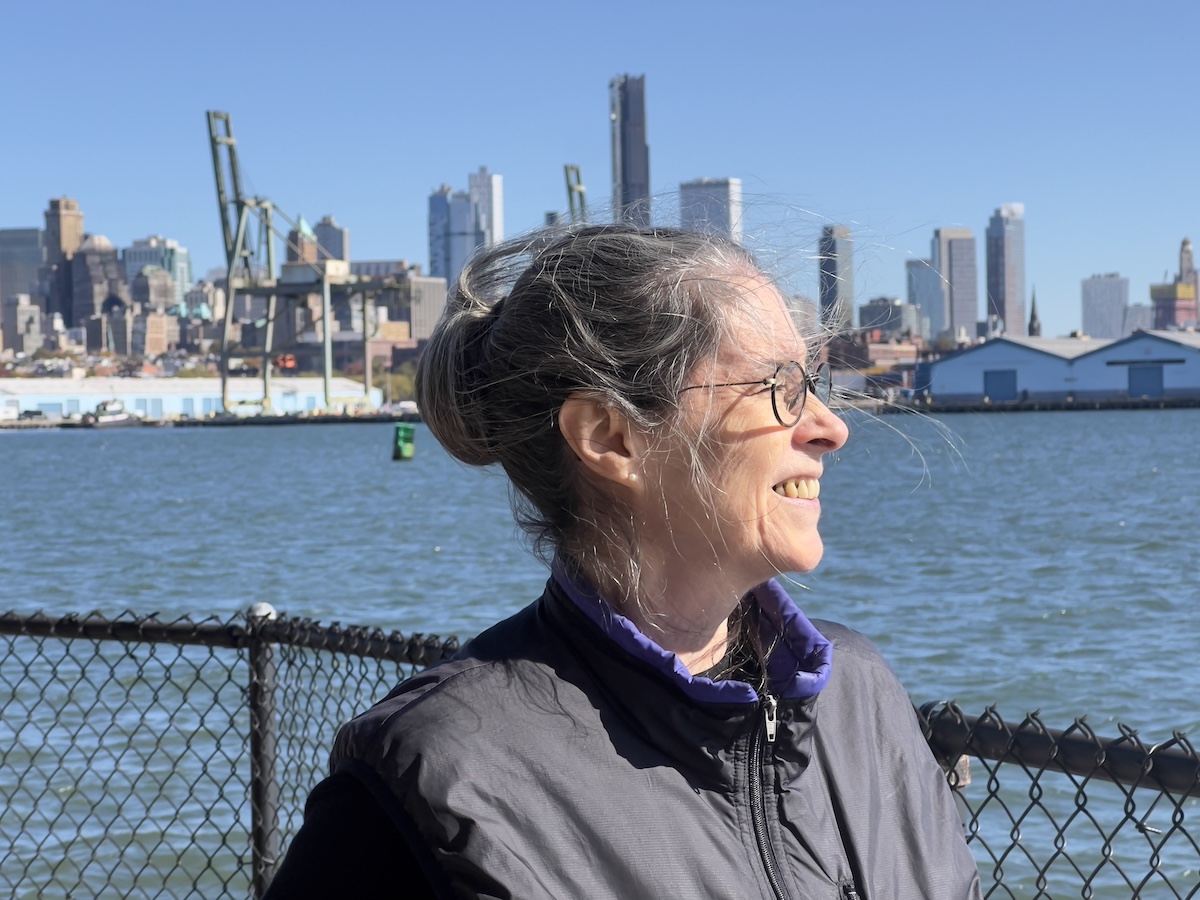 Carol Parkinson photo by Eva Davidova
LP: Many people know Carol Parkinson through the artists she supported, but could you tell me about the artist within Carol Parkinson, and how your own creative practice shaped the way you moved through those years?
CP: As an artist, recognizing and experiencing creativity at its roots has always been my quest. I am consistently adventurous, working between the visual arts and the performing arts. I have surrounded myself with creative people — the Whitney Independent Study Program, 112 Workshop, La Monte Young and Marian Zazeela, TELLUS the Audio Cassette Magazine, and Harvestworks.
As a young artist in the early 1980s, it was hard to make a living wage within the arts. In 1987, following an internship at Harvestworks, I became the Executive Director. Through my relationship with Harvestworks, I could maintain my close connections to the arts community, raise funds, and craft programs supporting experimental artworks that used sound and visual technology.
Listening to the Harvestworks staff and community, who are grassroots working artists with great ingenuity and need, provided me with those moments when “the light bulb went on” and I could sense a new focus. When that shift happened, the joy of it propelled me to take risks, to envision the future, and to work harder.
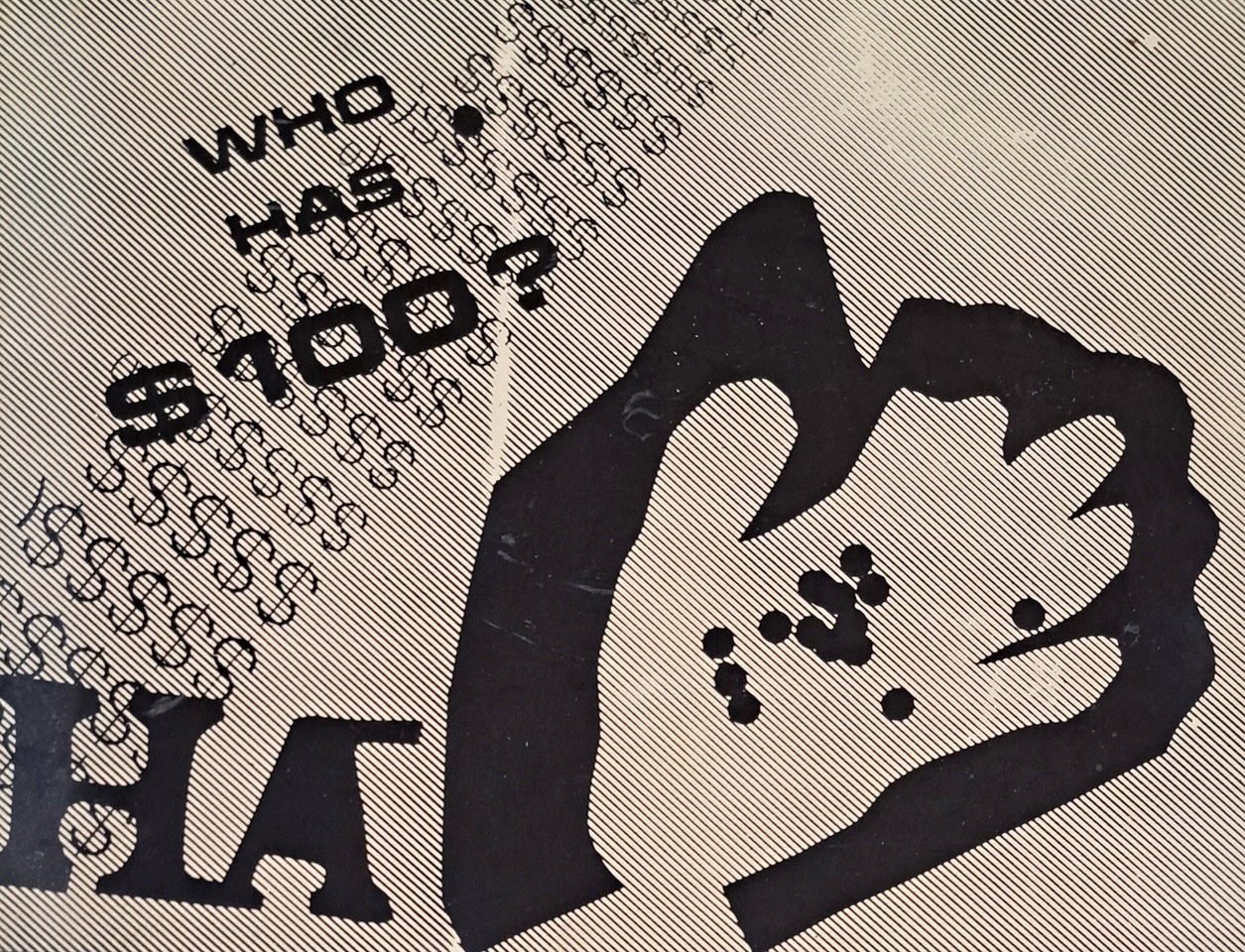 Carol Parkinson, Who Has $100, Print, 1982
LP: When Tellus Audio Cassette Magazine began, did you already understand that the cassette itself could function as an artwork, or did that realization emerge through the process of making it?
CP: You have already picked up on the thinking behind TELLUS the Audio Cassette Magazine. Artists against the establishment was in the air. Members of Colab (Collaborative Projects Inc.) were disrupting the art galleries with independent shows like The Real Estate Show, The Times Square Show, and No Rio.
We were part of that community but also interested in the tools for making sound art, recognizing the potential for recordings to stand alone as individual artworks. It was different, but as a piece of artistic expression that was generated at a specific time and place, it had a relationship to traditional mediums. As something different, we would not have to be concerned with radio or record labels and how or who they decided was good or bad. We wanted to be seen and heard above and beyond the restraining bars of existing distribution systems.
To me, Studio PASS, aka the Public Access Synthesizer Studio, was heaven. Jerry Lindahl, the Director, stocked plain white cassette tapes that cried out for artistic intervention, synthesizers were accessible for $5 per hour, and you could press a button to record the sounds on a cassette recorder. For me, coming from a visual art background, the new language of audio was intriguing, and the sounds were awesome.
As an artist in Lower Manhattan in the late 1970s and early 1980s, there was a tremendous lack of money, affordable space, and materials. The ephemeral nature, the low cost of packaging, and access to Harvestworks Studio PASS, which made equipment accessible to the artist community, contributed greatly to the success of the project.
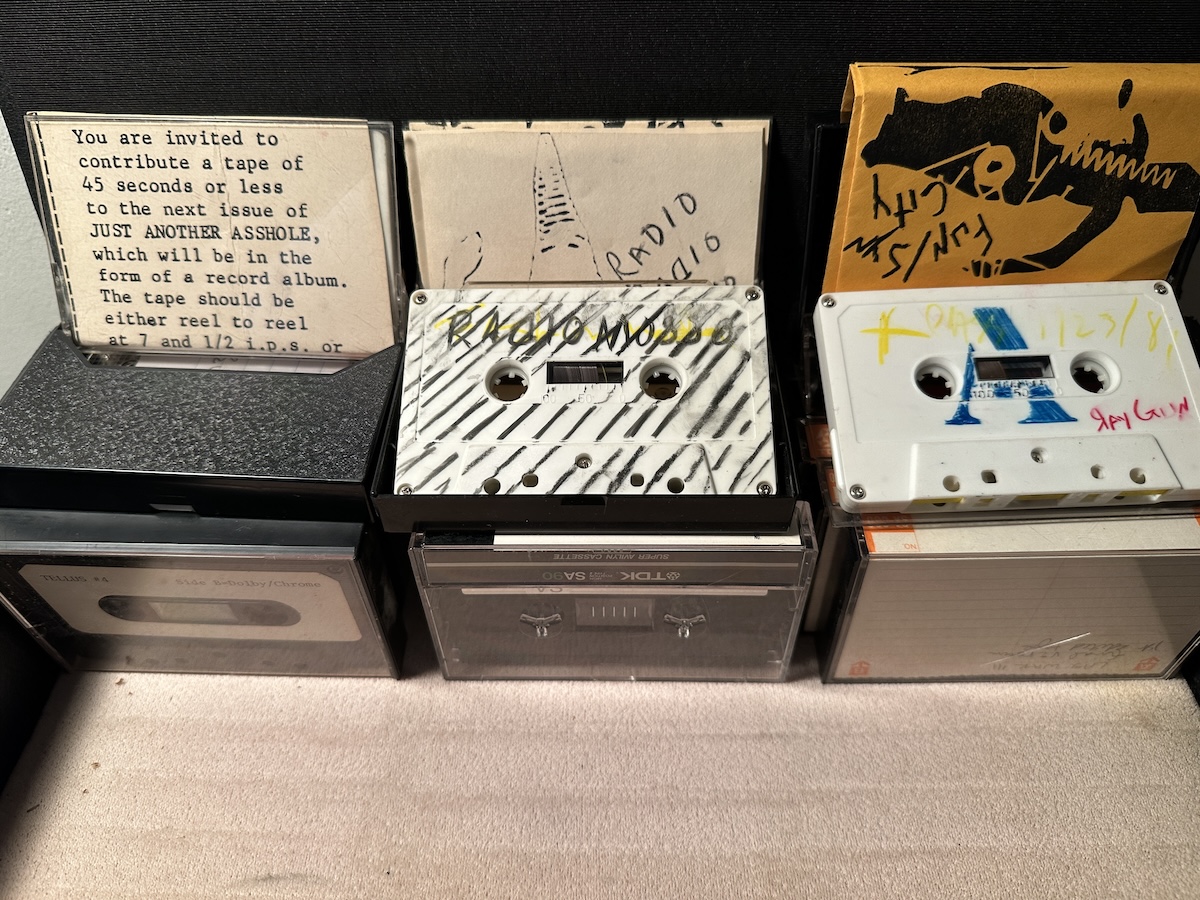 Cassette Library, photo by Carol_Parkinson
LP: Looking back now, do you see Tellus Audio Cassette Magazine as a document of its time, or as a gesture that still speaks to how artists might circulate work outside traditional systems today?
CP: TELLUS, the Audio Cassette Magazine is a document of its time, but the components of the project can function as a model for artists in the future who want to work outside traditional systems. Those components are:
- an intense desire to be heard,
- new technology that is cheap and accessible, and
- a community or group.
It is a well-known solution for breaking a restrictive system that dampens artistic expression. Starting such a collective movement is not easy; the timing has to be right for it to work.
LP: Over the years, many artists passed through Harvestworks at different stages of their development. Were there moments when you immediately recognized that an artist’s work would leave a lasting mark on the evolution of sound art?
CP: Sound art was already in development with John Cage, Maryanne Amacher, and David Tudor. Harvestworks was there to encourage continued experimentation and development within our capabilities and programs. It was called “getting inside the electronics.” In a community of artists, it is hard to pinpoint a single artist, since there were so many working on different aspects of sound. It was more about the atmosphere of discovery that was shared within the community. A few technical moments and artists stand out to me:
Morton Subotnick says compositions that have been created specifically for the recorded medium constitute a present-day form of chamber music.
Sampling — Brenda Hutchinson’s composition Wordplay is featured in the cult classic film Liquid Sky.
Sound installation — Kiki Smith’s sound-image installation at The Kitchen in 1983.
Transducers and feedback — Composers Inside Electronics present David Tudor’s Rainforest IV, which uses transducers to turn objects into speakers.
Gestural controllers — development of specialized sensors for musical expression, including the Lady’s Glove by Laetitia Sonami and Atau Tanaka’s BioMuse sensor band.
Digital tracking with the use of computer vision, motion, and face tracking in the work of Matthew Ostrowski.
Nicolas Collins, who wrote the book on hardware hacking.
LP: Because you worked so closely with artists across generations, do you feel that Harvestworks became not just an institution, but a kind of living archive of artistic risk?
CP: It was important to me that our activities supported artistic risk and that we were an artist-run space. Our community was working in uncharted and untested territory and needed a space like Harvestworks to explore the transition from analog to digital technology with art-making tools. It is interesting because through our archive, the artistic thought processes behind this evolution are documented through texts, project applications and artists’ statements, audio and video software and hardware, and final projects.
LP: Having worked with so many artists through Harvestworks, were there certain encounters where you felt you were witnessing a new direction in sound before the wider art world could fully see it?
CP: As a production and research center where the artists worked closely with their engineers in the residency program, we had to host symposiums, exhibitions, and performances to see what they were doing. In 2004, for example, we presented Mixing It Up, a Symposium about Responsive Environments and New Technologies in Contemporary Sound and Visual Art, where R. Luke DuBois and other panelists explained their use of algorithms and how they shaped data to make their compositions.
In 2006, the Who’s in Control? symposium featured Toni Dove with Sally, her text- and image-based character that was programmed with a custom-designed database and could function as the moderator for the event.
In 2013, the Harvestworks Creativity + Technology = Enterprise (C+T=E) supported violinist Mari Kimura in the design and prototype for the Mugic® motion sensor. The C+T=E project was designed to create a bridge between new technological tools and products being created by artists at Harvestworks and a commercial tech marketplace looking for novel links to digital media, video, and music.
LP: After everything you have built over the years, what do you imagine as the ideal future for Harvestworks, and what would you most hope the next generation protects as it moves forward?
CP: I see Harvestworks continuing in its spirit of experimentation, accessibility, sharing, discovery, and research into the future. There is a technological sea change going on now, but the values of the organization remain deeply committed to individual expression. Artists need access to these emerging tools to integrate them into artworks and, ultimately, share those works with broader audiences.

Lara Pan
Lara Pan is an independent curator,writer and researcher based in New York. Her research focuses on the intersection between art, science, technology and paranormal phenomena.
view all articles from this author