Whitehot Magazine
November 2026
"The Best Art In The World"
"The Best Art In The World"
November 2026
Seoul’s Frieze and Kiaf art fairs brought together more than 300 galleries
By ZAC VOLKERT, November 11, 2026
For its fifth anniversary, Seoul’s Frieze and Kiaf art fairs brought together more than 300 galleries and thousands of artworks this September. While local and regional exhibitors formed the core, galleries from every continent contributed to a wide-ranging presentation that made it clear why the South Korean capital has become one of the world’s hotspots for contemporary art. Below are Whitehot’s picks for 10 standout works.
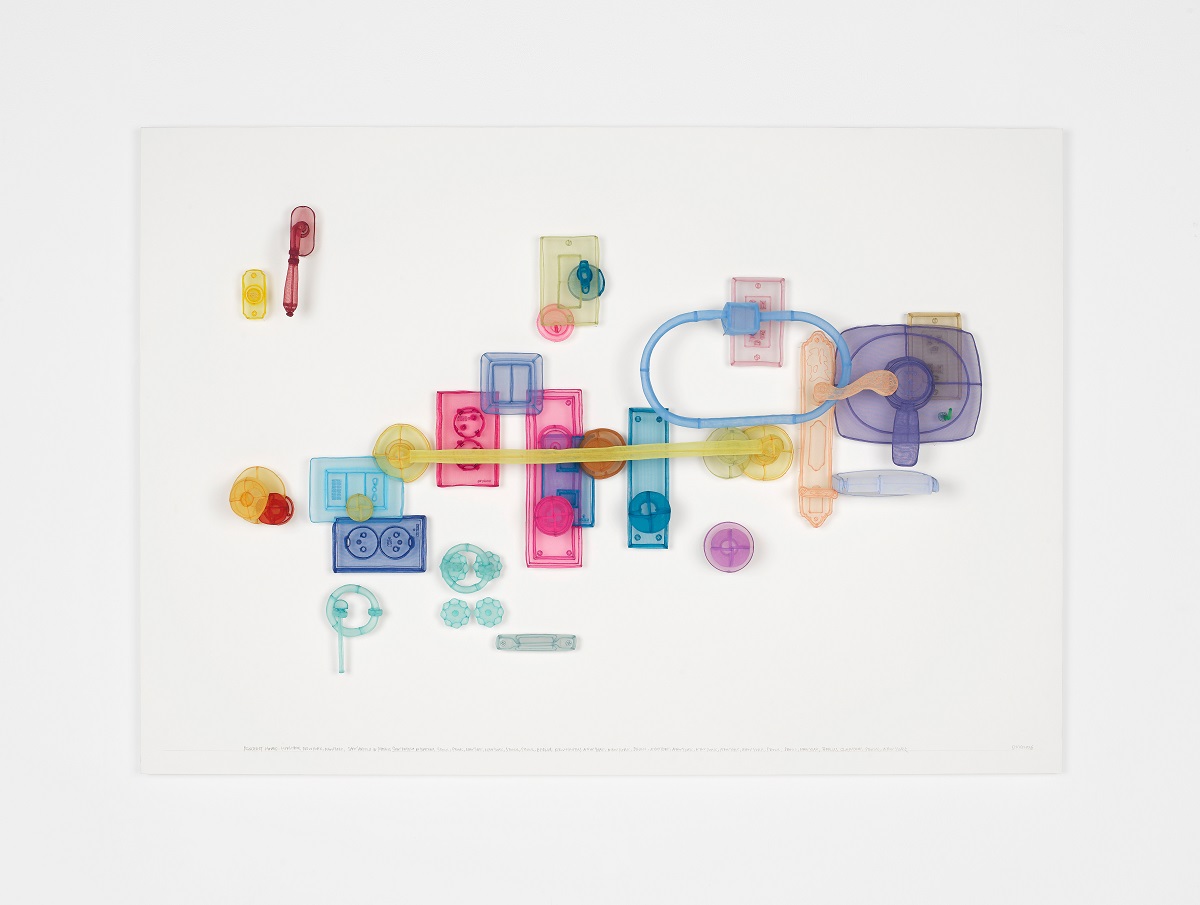 Do Ho Suh, courtesy of Lehmann Maupin
1. Do Ho Suh // Lehmann Maupin, Seoul
There was no lack of Do Ho Suh on display, with Lehmann Maupin featuring his vibrant 3D tapestries of everyday objects as well as his technicolor embroidery-on-canvas work. Outside of the fair, the National Museum of Modern and Contemporary Art (MMCA) Seoul has also put on a retrospective that includes over 500 works, including several of the large-scale installations that have made him a global name. You can catch that show until February 9, 2027.
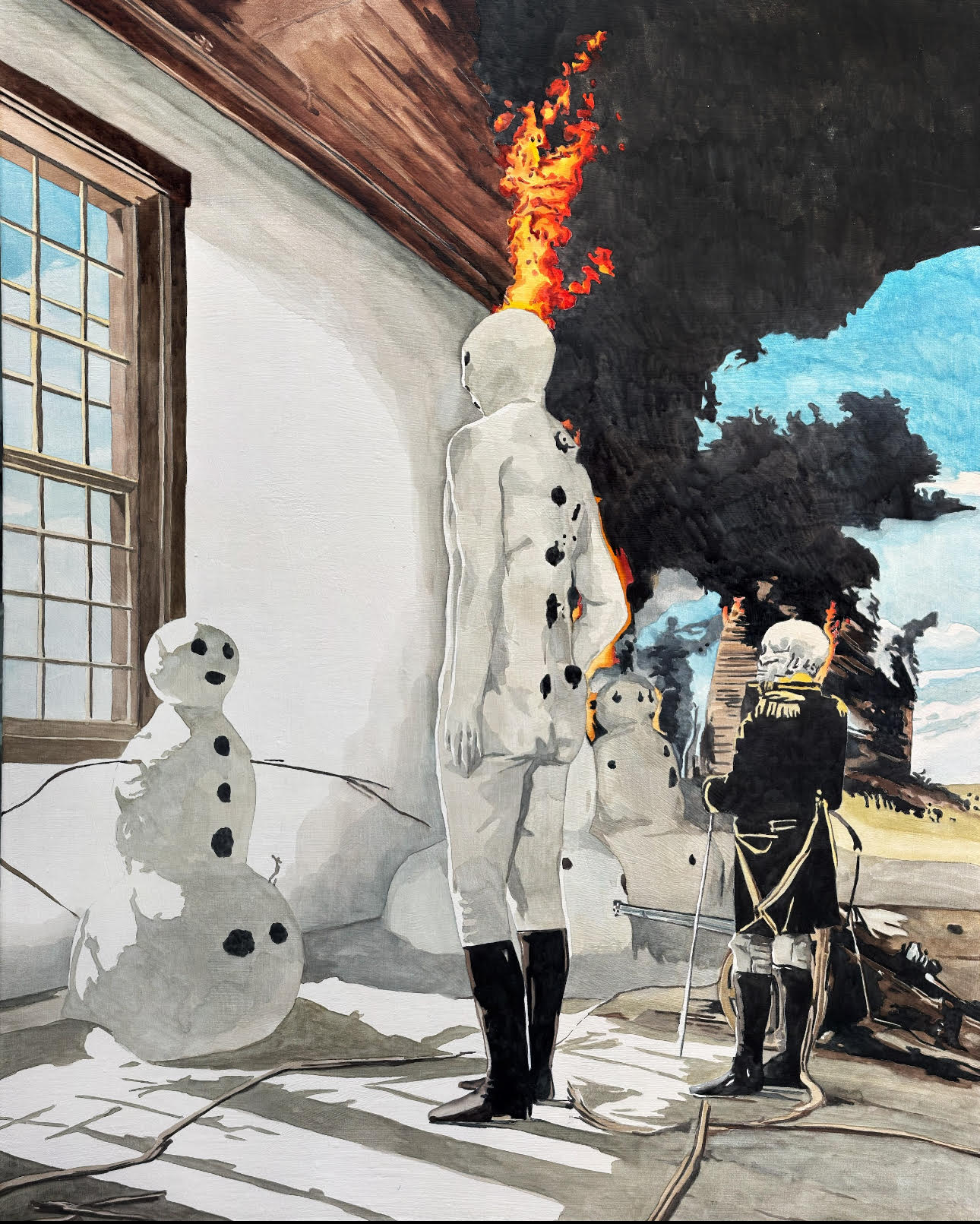 Noh Sangho, HOLY, 2026, Watercolor on canvas, 90.9 x 72.7 cm. Courtesy the artist and Arario Gallery.
2. Noh Sangho // Arario Gallery, Seoul
With large booths at both Frieze and Kiaf, Arario Gallery lived up to its reputation as one of Seoul’s best places to see exciting work. One of the highlighted artists was Noh Sangho, whose paintings are the result of AI hallucinations transferred to the canvas through airbrushing.
“We perceive a miracle when we momentarily encounter an environment governed by physical laws different from those of the world we inhabit: water turning into wine, or the dead returning to life. Such moments evoke a sense of the sacred because, through the miracle, we feel that we have come into contact with a world other than our own,” said Sangho. “A fleeting encounter with a digital glitch image becomes a moment in which we perceive the physical laws of the analogue within the digital environment or, conversely, those of the digital within the analogue. By exposing and making visible this gap, my work offers a metaphor for the contemporary condition, which now drifts between digital and analogue environments.”
3. Niam Mawronkanong // Joyman Gallery, Bangkok
Both myriad and lone milky cats adrift in cerulean skyscapes are the subject of Thai painter Niam Mawronkanong’s work on display for Bangkok’s Joyman Gallery.
“[He] chose the cat as a subject simply because it was an animal that suited the subject matter and visual language he wanted to explore. The cat itself is not meant to refer specifically to cats. Rather, it functions as a symbolic representation—a neutral signifier for living beings, including us as human beings.”
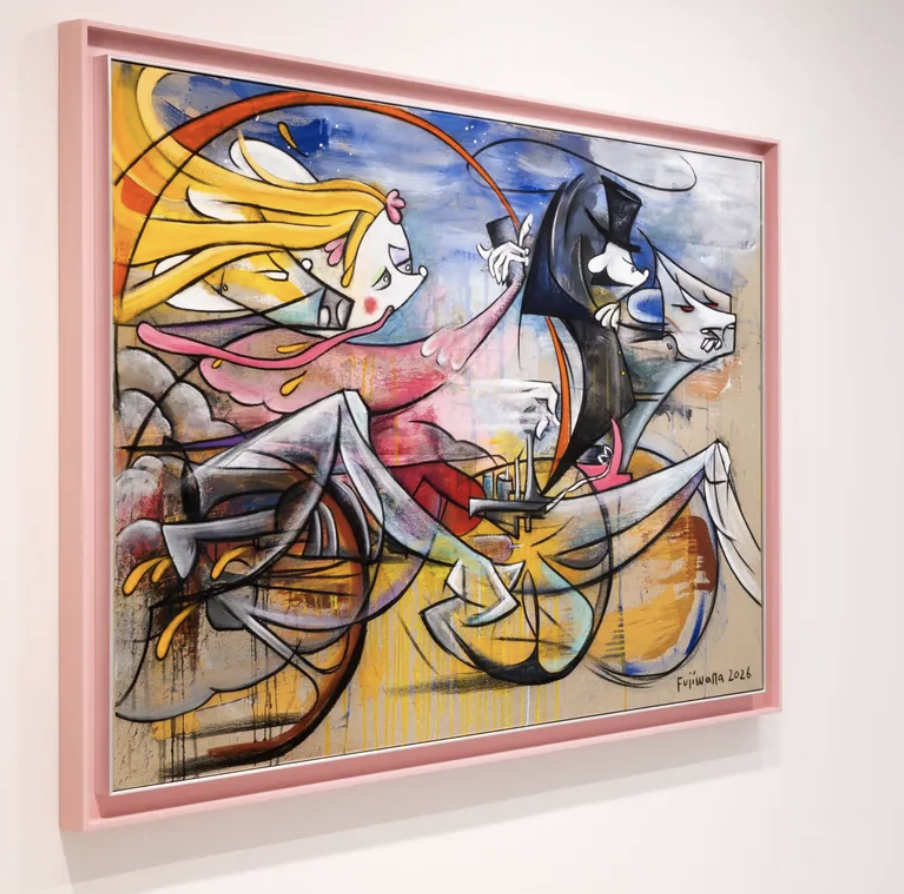 Simon Fujiwara, Who Feels like a Princess in a Race against the Clock?, 2026, acrylic, charcoal and pastel on canvas, 120 × 160.1 cm (47¼ × 63⅛ in). Courtesy the artist and Esther Schipper, Berlin/Paris/Seoul.
4. Simon Fujiwara // Esther Schipper, Seoul
British-Japanese artist Simon Fujiwara’s latest paints a modern comic fairy tale, one where the protagonist is his character Who the Bær—a genderless, raceless creature who reflects back modern-day anxieties about the intersection between technology and identity. On display at Frieze was “Who is Little Red Riding Hood and Who is the Big Bad Wolf?”
It’s also worth checking out the rest of the series Who Lives Happily Ever After?. The full show is available for viewing at Esther Schipper’s Seoul gallery until October 31.
5. Seong Ryul // Gallery Joeun, Seoul
Summer holiday nostalgia is the theme of Seong Ryul’s tender scenes of carefree youth in rural Korea, a fleeting sense of joy that Ryul says inspires his work.
“There are moments that quietly lift my spirits: when the breeze of early spring arrives at the very end of winter, when I take a deep breath of the crisp morning air, or when the distant sound of an airplane cuts across the blue sky. In such moments, I feel as though a gentle warmth begins to radiate from somewhere deep within me, spreading throughout my entire body.”
The painting on display at Frieze was part of a larger exhibit at Gallery Joeun that closed on September 19. Every work featured was sold out just days after opening. Oscar-winning director Bong Joon Ho provided an introduction to the show that explains why Ryul has become so popular at home and abroad.
“How different it is to paint a cloud than to paint a mountain, a tree, or a rock. A cloud is something that drifts, dissolves, and disappears with astonishing speed. Perhaps that is why the white clouds that have become the signature of Seong Ryul’s work appear all the more melancholic … It is as if they are held to the canvas only by the slightest thread, on the verge of slipping away at any moment.”
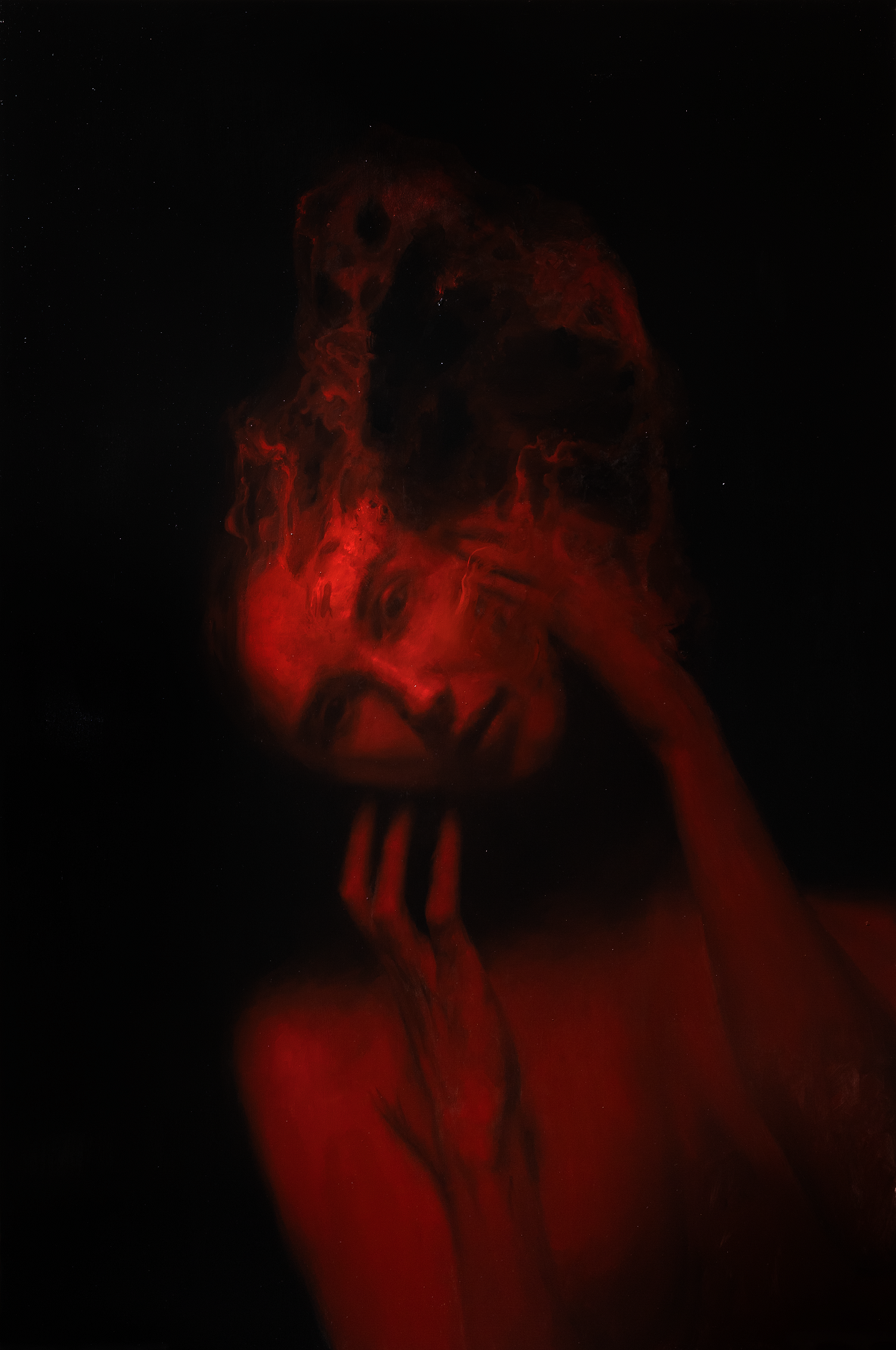 Henrik Uldalen, Fermata, 2026, Oil on wood, 59 x 39 3/8 in (150 x 100 cm). Courtesy the artist and JD Malat Gallery.
6. Henrik Uldalen // JD Malat Gallery, Dubai
Among eye-popping bright colors and busy canvases elsewhere at the fair, Korean-Norwegian painter Henrik Uldalen’s work stood out for its relative restraint: a series of paintings using only black and red to depict humans that seem to be lost in a state somewhere between agony, ecstasy, and slumber.
“Uldalen’s expressive figuration heightens this sense of psychological intensity,” his gallery writes. “His figures emerge from deep, atmospheric darkness through vigorous impasto and gestural marks, balancing classical representation with abstraction. The recurring presence of obscured or closed eyes turns the body inward, transforming his subjects into vessels for emotions that remain difficult to articulate.”
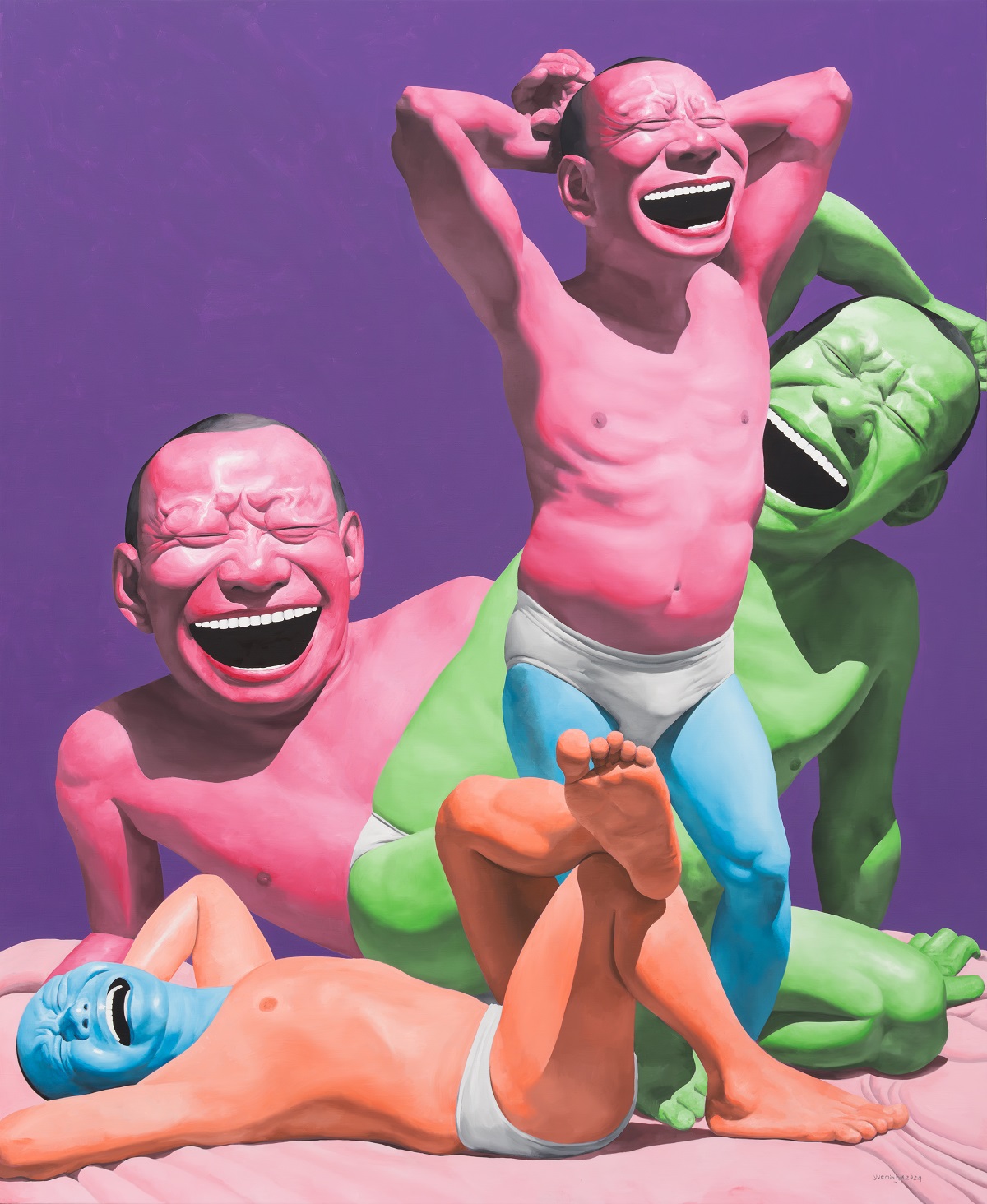 Yue Minjun, Float (浮坐), 2025, oil on canvas, 250 × 200 cm. Courtesy the artist and Tang Contemporary Art Gallery.
7. Yue Minjun // Tang Contemporary Art Gallery, Shanghai
Yue Minjun’s impossibly wide grin dominates his series of maniacally happy self-portraits. White briefs and pearly teeth are the only surfaces in the paintings that don’t seem to have been doused in melted crayons, tones that reflect the unnerving joy that the work transmits.
8. Huang Yi-Sheng // Liang Gallery, Taipei
Taiwanese painter Huang Yi-Sheng uses animals to talk about power, pairing finely rendered fur and feathers with scenes of quiet menace. At Liang Gallery’s booth, the subject was a white tiger, a figure of power.
“The tiger can be seen as one of the powerful figures in our society who has the means to bring this vision to life. Its expression is serene as it contemplates this future, while a crown emerges in its shadow: a fantasy of life as a sovereign.”
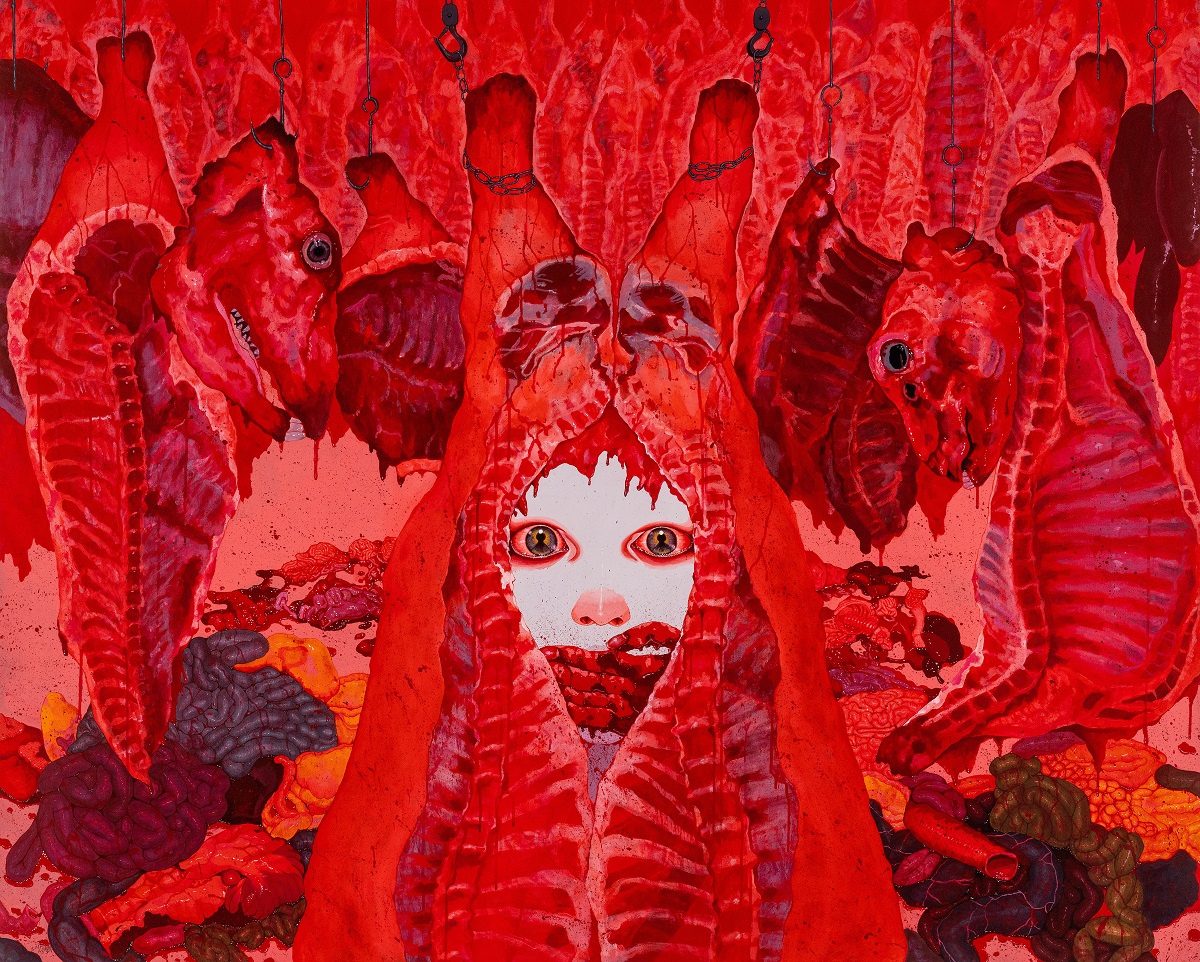 Byunghee Sung, Confinement, 2026, acrylic on canvas. Courtesy the artist and Gallery Collast, Seoul.
9. Byunghee Sung // Gallery Collast, Seoul
Byunghee Sung’s paintings are violent, bloody affairs. The red-eyed schoolgirls who battle it out with demonic animals seem to be victims of a world gone mad.
“The works stand as an archival anatomical chart documenting a cyclical battle, navigating nocturnal nightmares of anxiety,” says his artist statement. “Enduring the collision of primal impulse and rational control, and arriving exhausted at the promise of a quiet, blue dawn.”
10. Tania Marmolejo // Gallery Eligere, Seoul
Aside from all the dazzling Asian work on display, it’s worth remembering that Seoul also hosts shows from artists all around the world year-round. Gallery Eligere presented a strong showing of Latin American artists, including an eye-catching big-eyed nude from Dominican-Swedish artist Tania Marmolejo.
Zac Volkert
Zac Volkert is a U.S.-born freelance reporter who has spent much of his adult life between Latin America and Asia. He currently resides in Beijing, attempting to make sense of China's ancient traditions and dizzying changes one Mandarin character at a time. Occasionally, he comes up for air to track down eye candy at galleries in Seoul, Bangkok, Tokyo, and beyond.
view all articles from this author