Whitehot Magazine
October 2026
"The Best Art In The World"
"The Best Art In The World"
October 2026
Exhibition Review: “Martin Wong - Popeye” at P.P.O.W., Tribeca (on view through May 30, 2026)
By LIAM OTERO May 5th, 2026
When I was away in Miami this past December for the art fairs, one of my biggest regrets was missing the unveiling of a 12-foot wide mural by Martin Wong that remained unseen for close to 40 years. His Tai Ping Tien Kuo (1982) was shown at P.P.O.W.‘s Art Basel Miami booth, to which the gallery stewards Wong’s estate. Though I was devastated to miss this rare showing, I was elated to learn about P.P.O.W.’s current exhibition on a different side of his oeuvre that also has been seldom touched upon: Wong’s Popeye series (1989 - 1997).
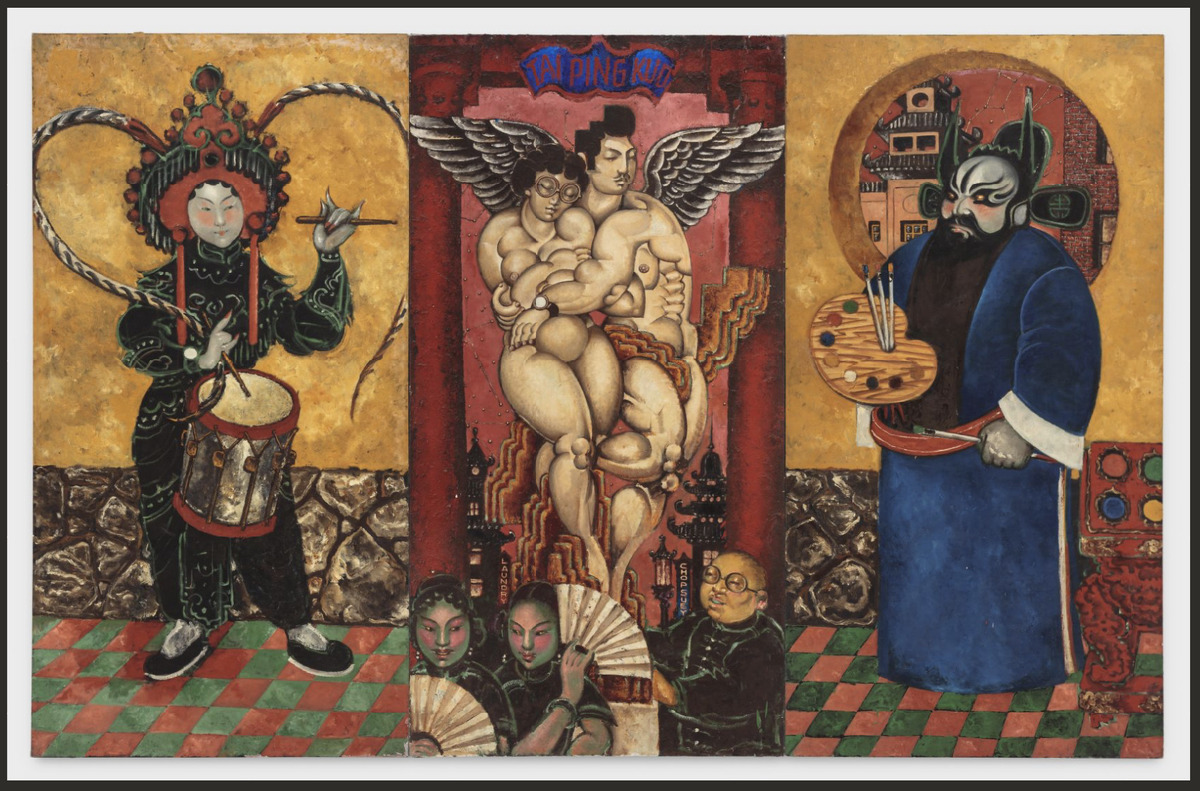 Martin Wong (American, 1946 - 1999), Tai Ping Tien Kuo (Tai Ping Kuo), 1982, acrylic on canvas. 92 x 144 inches / 233.7 x 365.8 cm. Image from the online Martin Wong Catalogue Raisonné.
The curators behind this exhibition were an appropriate match: Mark Dean Johnson and Anneliis Beadnell, both of whom are responsible for the digital Martin Wong Catalogue Raisonné on Stanford University’s website. Beadnell is an art historian and Director of P.P.O.W. and Johnson is a Professor of Art at San Francisco State University of Art; it should be noted that Johnson himself personally knew Wong during the artist’s final years and was witness even earlier to Wong’s scenic designs for the Angels of Light Free Theater in the 1970s.
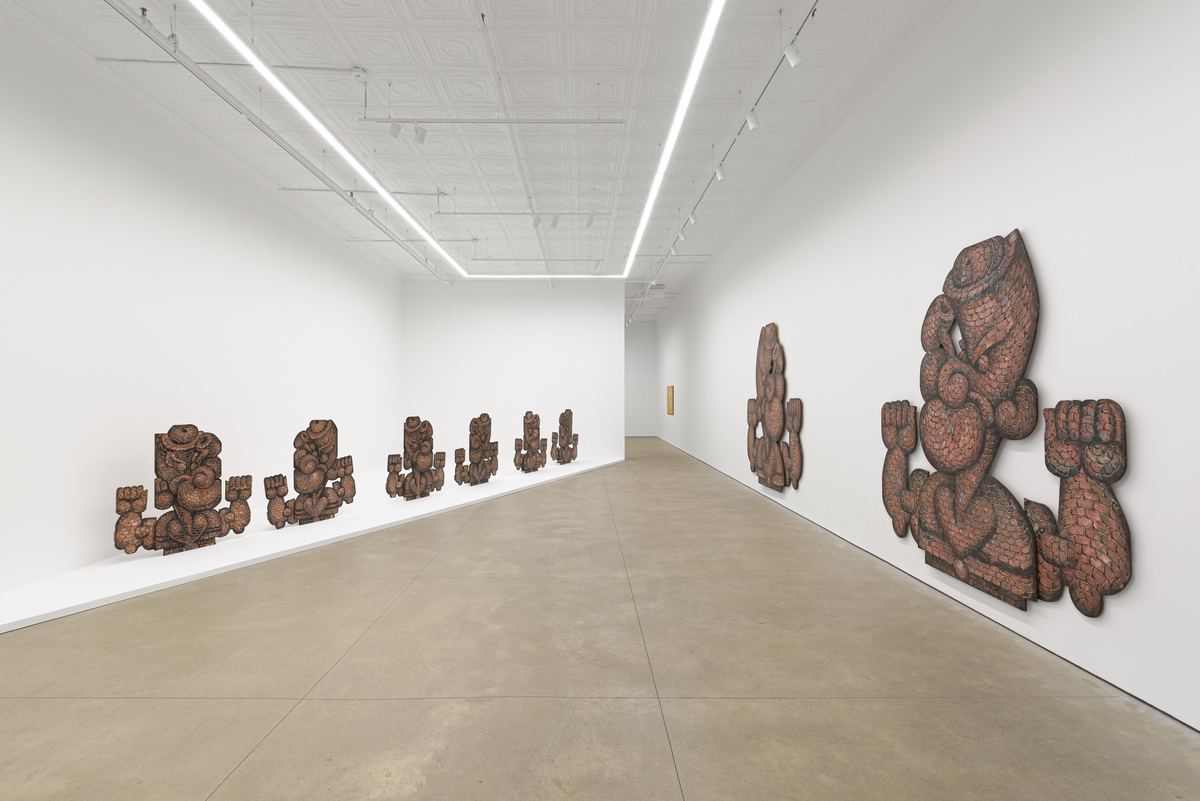 Installation view of Martin Wong: Popeye at P.P.O.W. Image courtesy of the gallery.
Similar to Warhol or Rosenquist, Wong absorbed culture with an egalitarian attitude in which conventionally perceived “high” and “low” culture is put on equal footing. Because of his prodigious and perpetually active imagination, even a single body of work like the Popeye series is chock full of medley cultural references, the sorts of things one would never expect to coexist in the same sentence: Renaissance portraiture (possibly à la Arcimboldo), tattoo designs, comic book illustrations, cartoons, Tibetan Citipati, Op Art, and scores of other overt and covert cultural references.
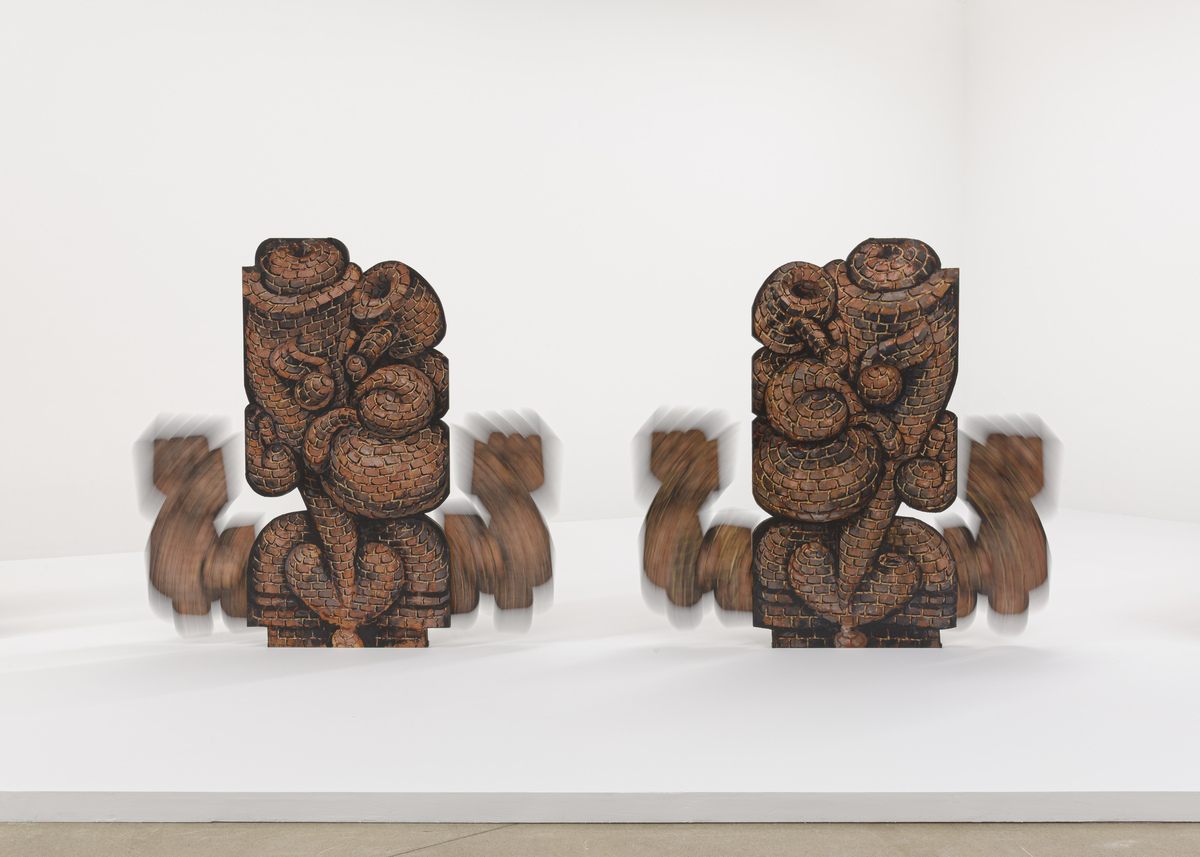 Installation view of Martin Wong: Popeye at P.P.O.W. Image courtesy of the gallery.
Each of the Popeyes are acrylic on plywood paintings depicting the iconic American cartoon character with his signature scrunched face, sailor clothing, pipe, and muscular arms - but the twist here is that his entire form is rendered with a brick aesthetic. Even better, six of these smaller Popeyes are motorized in that their arms motion up and down in unison. One will hear the low mechanical whirring of the arms as they ascend the gallery’s entry ramp to the main room where these are displayed in a diagonal line. This regimented placement of the active Popeyes evokes a fairground shooting gallery, which has a certain humor attached to its name given that a kind of “shooting” occurs in the context of art galleries where viewers “shoot” photos of their favorite artworks (and for someone like Wong, how could you not be compelled?).
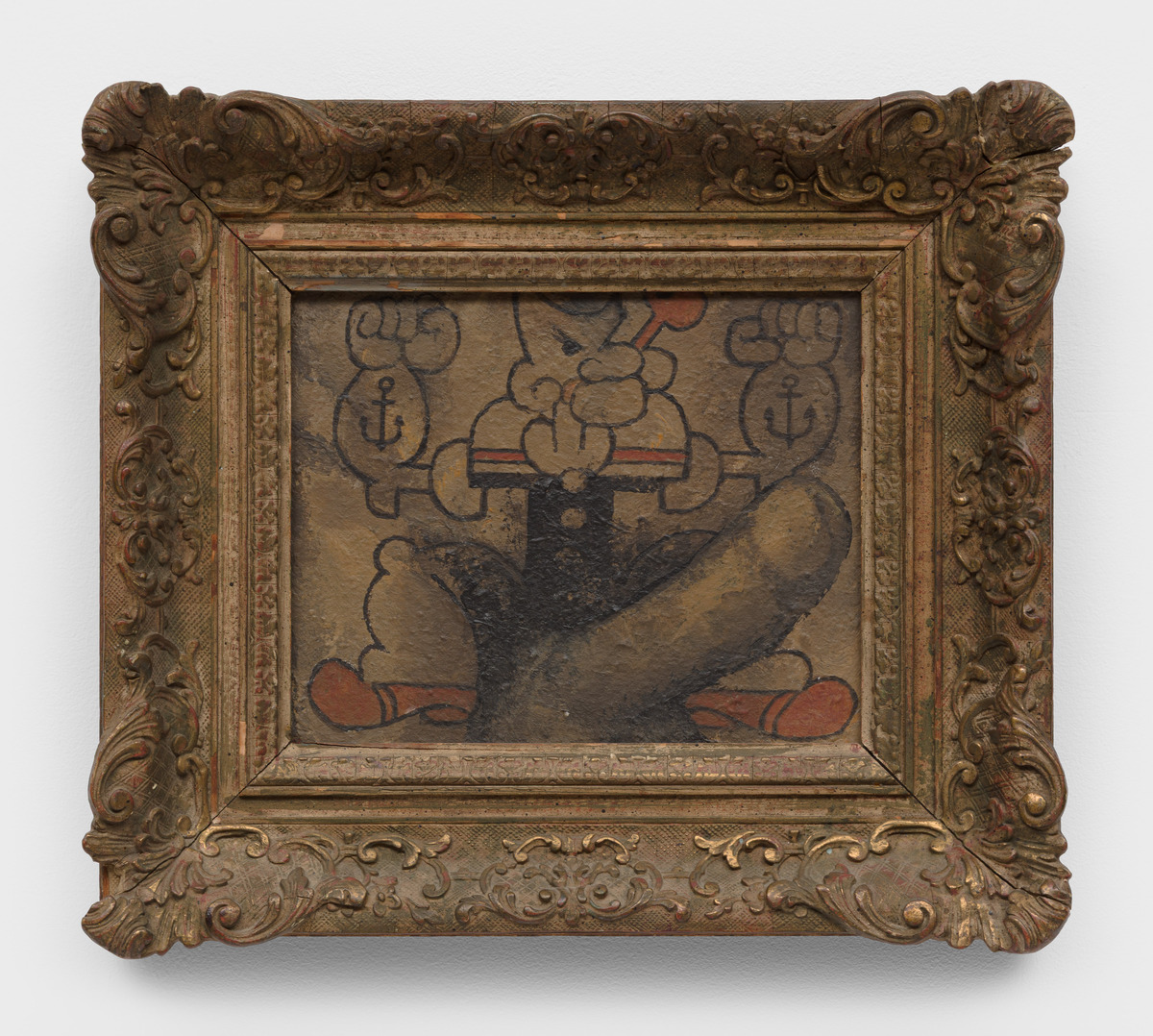 Martin Wong (American, 1946 - 1999), Untitled (Pop-Eye), c. 1984, acrylic on canvas.
Because P.P.O.W. is responsible for upholding Wong’s legacy, the mechanization here is a fulfillment of how the artist originally wanted the works to be exhibited, but had never come to fruition in his lifetime. Two even larger versions of the Popeye hang on the wall directly in front of the mechanized versions, with their frozen appearance evocative of marionettes. Popeye reappears in other contexts in the exhibition, including a 1980s painting of the character with an enormously erect penis and another painting of the character’s brick-patterned head that gradually reveals a visual subversion of the Popeye's recognizability.
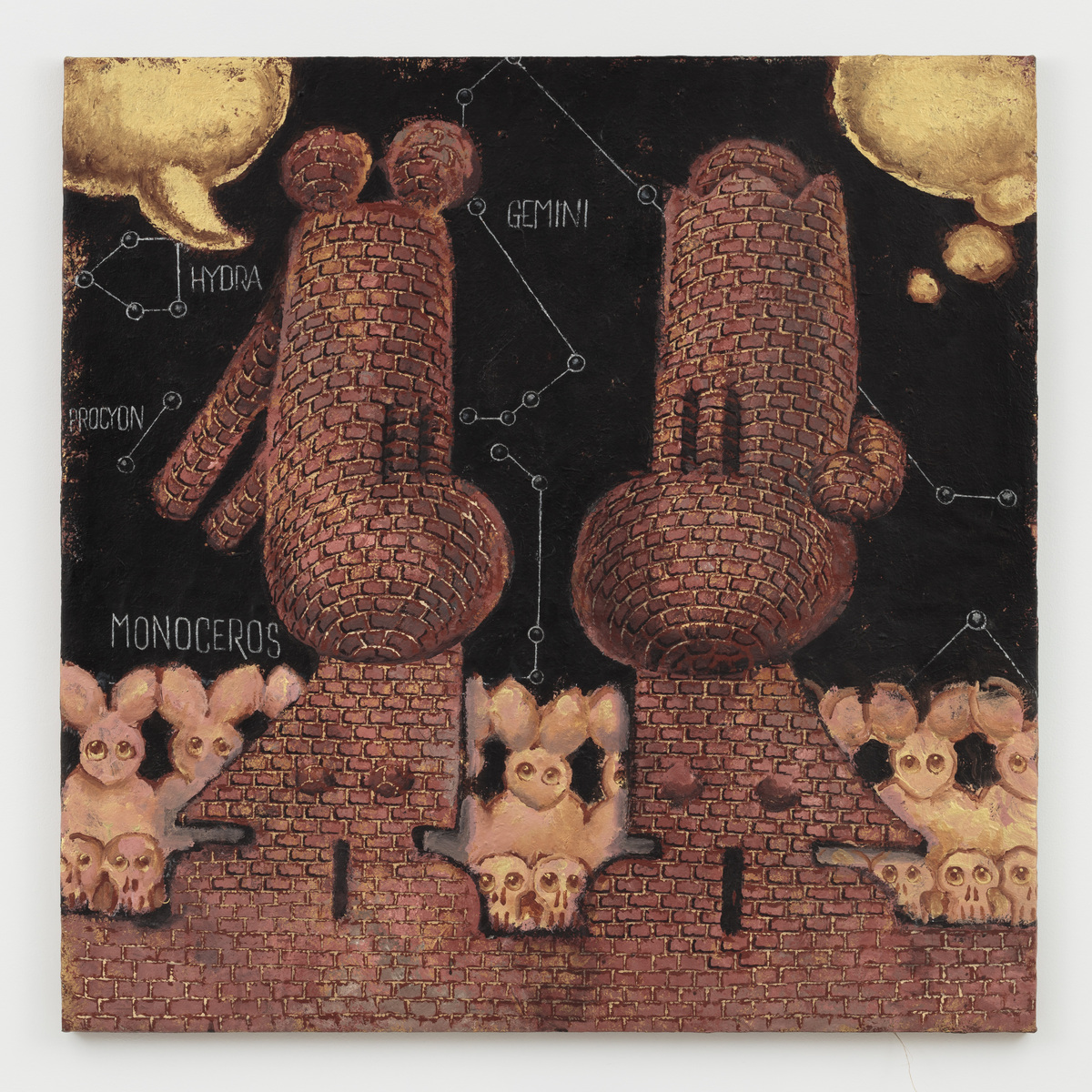 Martin Wong (Chinese-American, 1946 - 1999), Untitled (Little Lulu and Tubby), c. 1989, acrylic on canvas. 47 1/2 x 47 1/2 inches. 120.7 x 120.7 cm. Image courtesy of the gallery.
Though the Popeye series is the focus, Johnson and Beadnell deftly brought into conversation Wong’s fixation with brick aesthetics. This recurrent stylization comes through in other cartoon-rooted works included in this show such as the Untitled (Little Lulu and Tubby) (c. 1989) whose architecturalized subjects face one another under a night sky with empty speech bubbles more operative as clouds than dialogue. And the longer one looks at a painting like this, the more apparent it becomes that Italian Renaissance portraitist Pierro Della Francesca may have been an important influence.
Johnson and Beadnell have done right by Wong’s legacy in bringing to life his rare Popeye series while actively pondering the nuance he infused into his appropriated aesthetics from practically all corners of high and low culture. There is so much to glean from this selection of work among an impressive, multi-decade oeuvre: queerness and masculinity, cartoons as social signposts, East meets West Art History, etc.
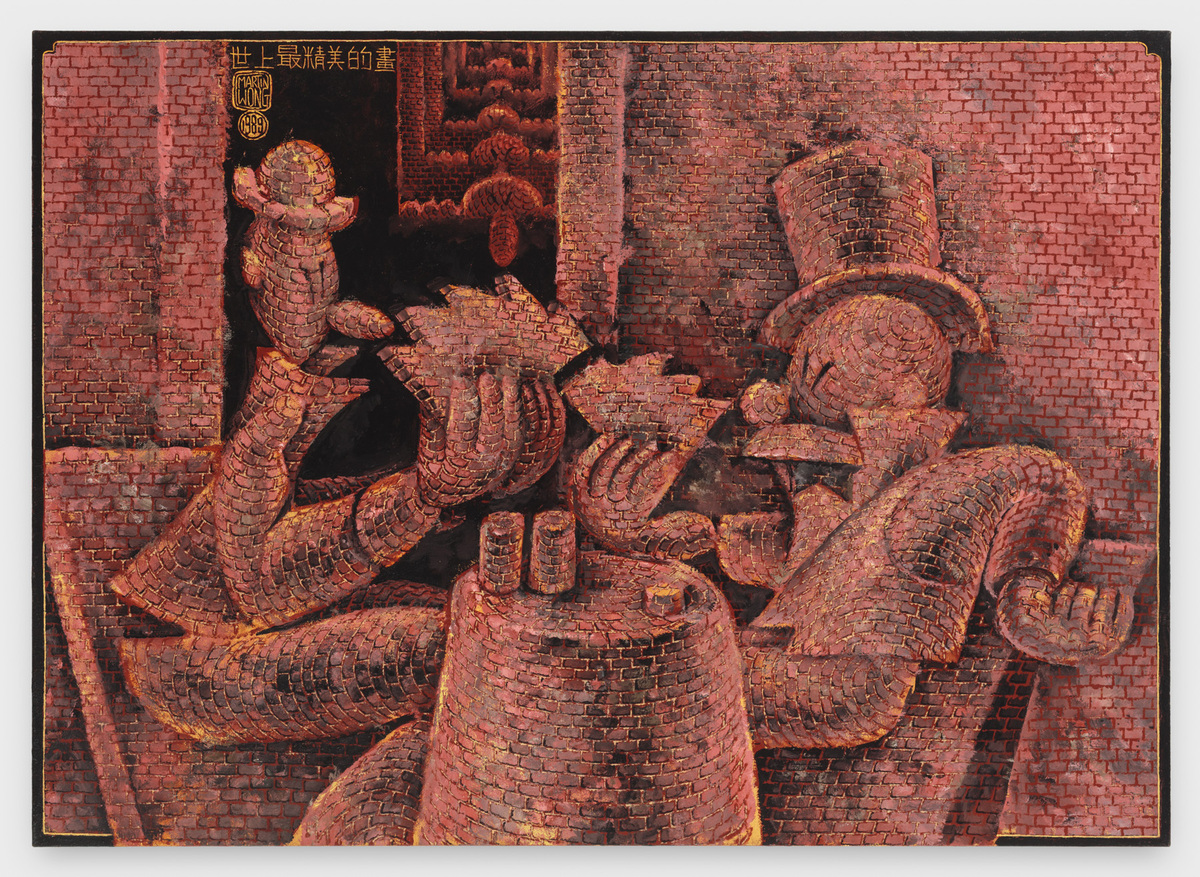 Martin Wong (Chinese-American, 1946 - 1999), The Most Beautiful Painting in the World, 1989, acrylic on canvas. 60 x 84 inches / 152.4 x 213.4 cm. Image courtesy of the gallery.
The timing of this exhibition is also important to underscore for two additional reasons: 2026 would have been the artist’s 80th birthday and there is also a major museum solo show at Wrightwood 659 in Chicago, Martin Wong: Chinatown USA (on view through July 18, 2026). WM

Liam Otero
Liam Otero is a freelance art writer in NYC. He was recently named New York Editor of Whitehot Magazine.
view all articles from this author