Whitehot Magazine
October 2026
"The Best Art In The World"
"The Best Art In The World"
October 2026
Exhibition Review: “Hugo Winder-Lind: Clouds of Limitless and Expanding Joy” at Isabel Sullivan, Tribeca (on view through April 18, 2026)
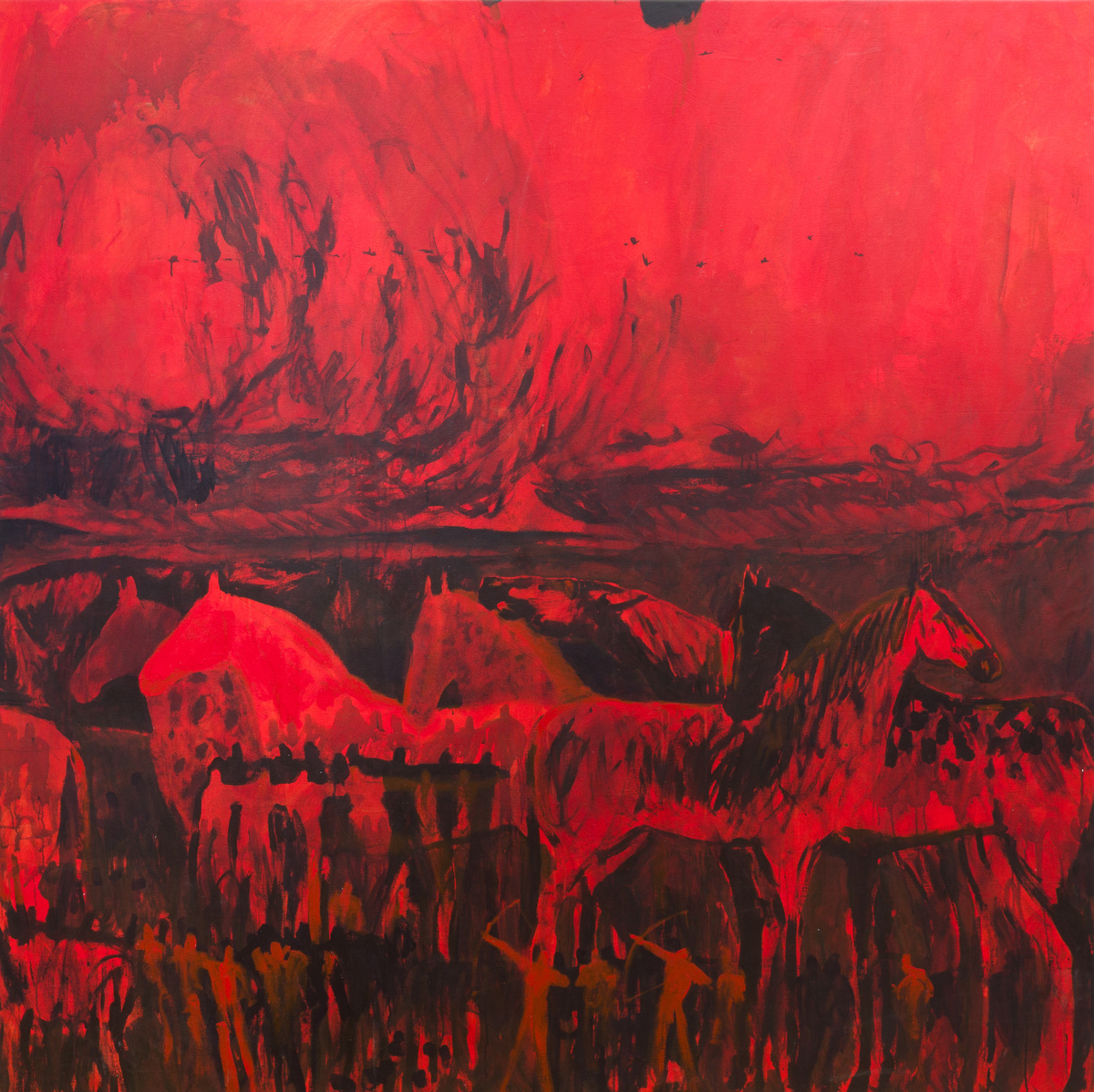 Hugo Winder-Lind (British, b. 1992), The Landscape of My Belly, 2026, oil on canvas. 90 x 90 inches / 228.5 x 228.5 cm. Image courtesy of Isabel Sullivan Gallery. Photograph by Yann Chashanovski
By LIAM OTERO April 16, 2026
It’s not incumbent for all, but it is true that many English artists are profoundly affected by the landscape of the British Isles. Pastoral farmland, rugged mountains, and sprawling woodland are among some of the most prevalent scenic archetypes that have been of tremendous significance to the English artist, especially when looking at the trajectory of British art since the 18th Century. Hugo Winder-Lind (English, b. 1992) is a mighty example of how British artists of the 21st Century continue to cull meaning from the landscape. His current debut solo exhibition in the United States, Clouds of Limitless and Expanding Joy at Isabel Sullivan Gallery in Tribeca, takes the landscape into a sweeping drama of philosophical magnitude and environmental ethics.
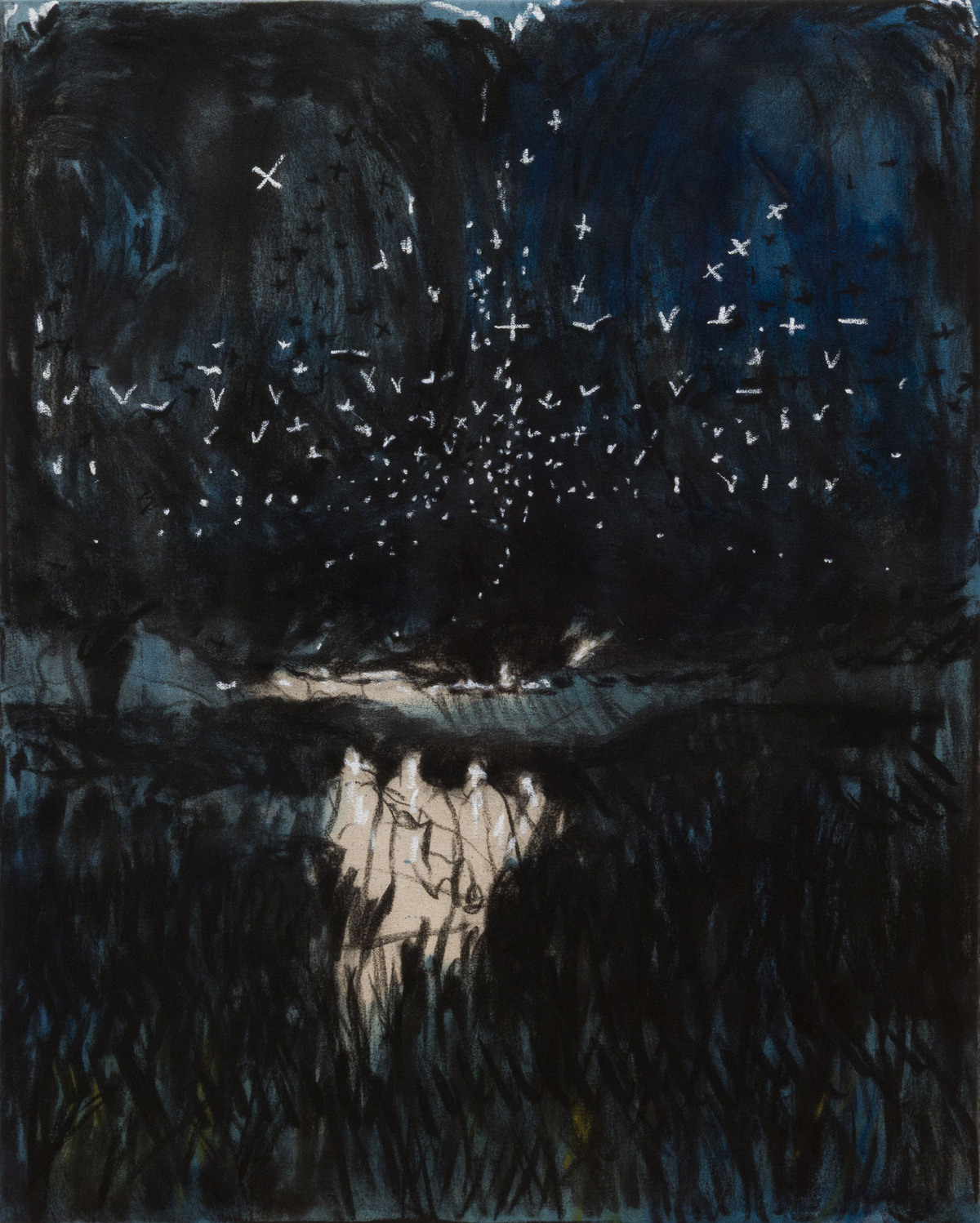 Hugo Winder-Lind (British, b. 1992), And As Senseless Black Velvet Thunder (Shaman Drum), 2026, charcoal, oil, and pastel on canvas. 39.5 x 31.5 inches / 100.5 x 80 cm. Image courtesy of Isabel Sullivan Gallery. Photograph by Yann Chashanovski
There is a consistency to Winder-Lind’s palette as this body of paintings adheres to a structured color scheme of muted blues, fiery reds & oranges, subudued greens, soft grays, and charcoal blacks. His color is the first thing that springs forth, immediately followed by the stark imagery comprising his subject matter. Horses and sheep being the most noticeable and recurring figures, often depicted in repetitive patterns, side-by-side and stacked, as if stamped directly onto the canvas. These livestock are synonymous with the British countryside, occasionally one hears the half-humorous observation of traveling through a place like Cumbria or Dorset while remarking that all they see are sheep and horses every which way.
But it is so clear in Winder-Lind’s paintings these animals are not merely afterthoughts or pictorial stand-ins, for they are among his most important characters. Concurrent with the rising popularity of landscape painting in the 18th Century, the breeding and ownership of horses and sheep also became an important factor in social, political, and economic developments pre-Industrial Revolution. Horses were signs of wealth for the landed gentry and were prized for their ability to partake in competitive equine sporting. Meanwhile, sheep satisfied a plenitude of economic means as sources of material and dietary consumption. In Clouds of Limitless and Expanding Joy, these animals instead are afforded a heroic and heavenly status.
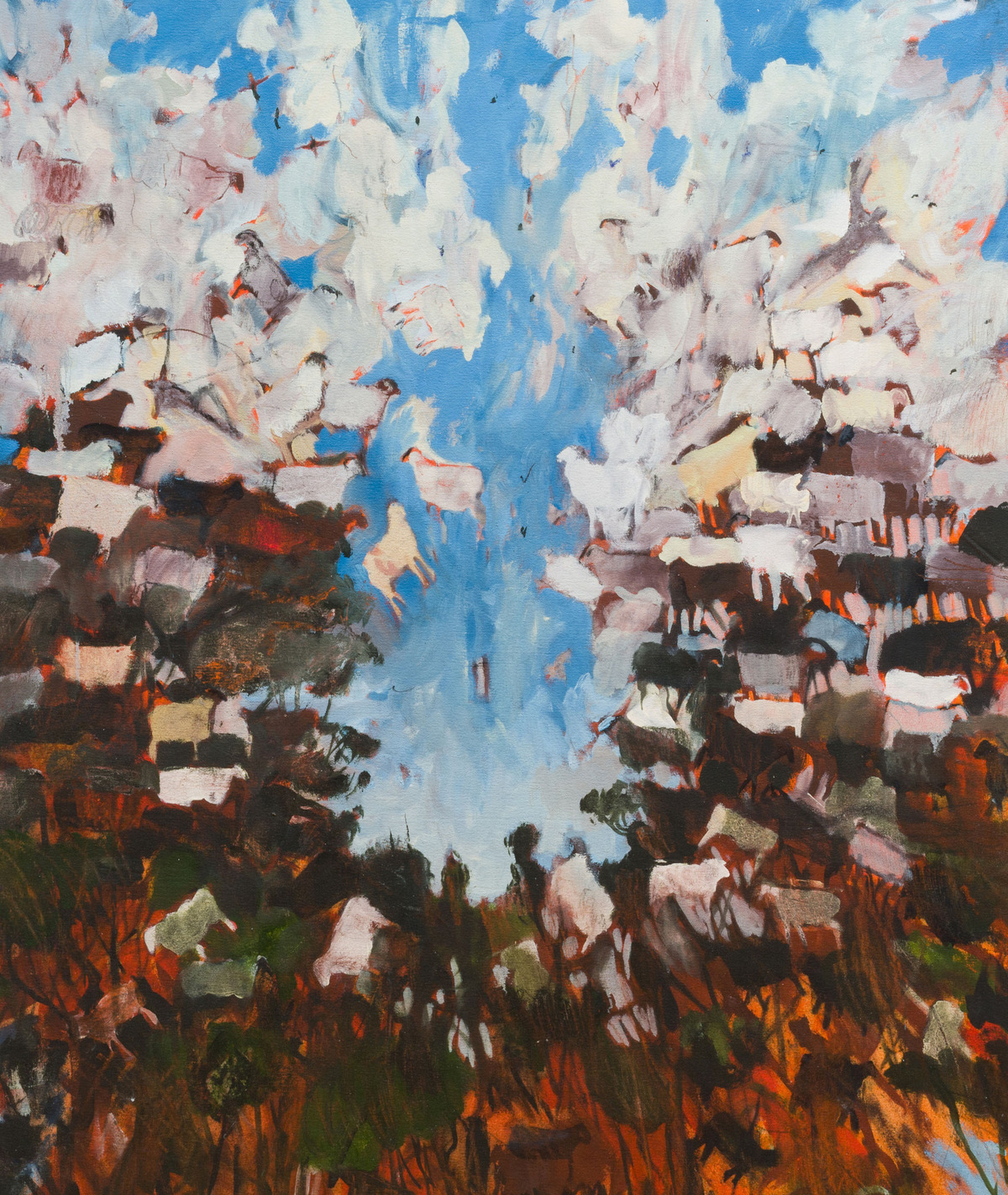 Hugo Winder-Lind (British, b. 1992), And We Travel Endlessly Through That Bright Horizon, 2026, charcoal, oil, raw pigment, liquin acrylic, and acrylic gesso on canvas. 51 x 43 inches / 129.5 x 109 cm. Photograph by Yann Chashanovski
And We Travel Endlessly Through That Bright Horizon (2026) is the zoomorphic equivalent of a glorious Italianate Baroque ceiling painting, except instead of people and angels floating amidst a pure blue sky, its herds of sheep. Another beautifully titled painting, Charging Out As the Gallop in the Horse’s Heart (2026), focuses our attention on not a herd, but a pair of horses shown in profile. One is more illuminated than the other, but both have a commanding authority to their erect heads as they appear to trot through tall grasses undaunted by whatever lays ahead beyond the frame.
Winder-Lind’s paintings led to an interesting recall on my part of an article I read some years ago in the nature section of The Guardian about how centuries-old churchyards throughout the British Isles are some of the best preserved ecosystems for local plant, animal, and insect species. Seeing the horses and sheep in Winder-Lind’s work brought to mind an unexpected reflection from my memory of the necessary cherishment deserving of these creatures of the land.
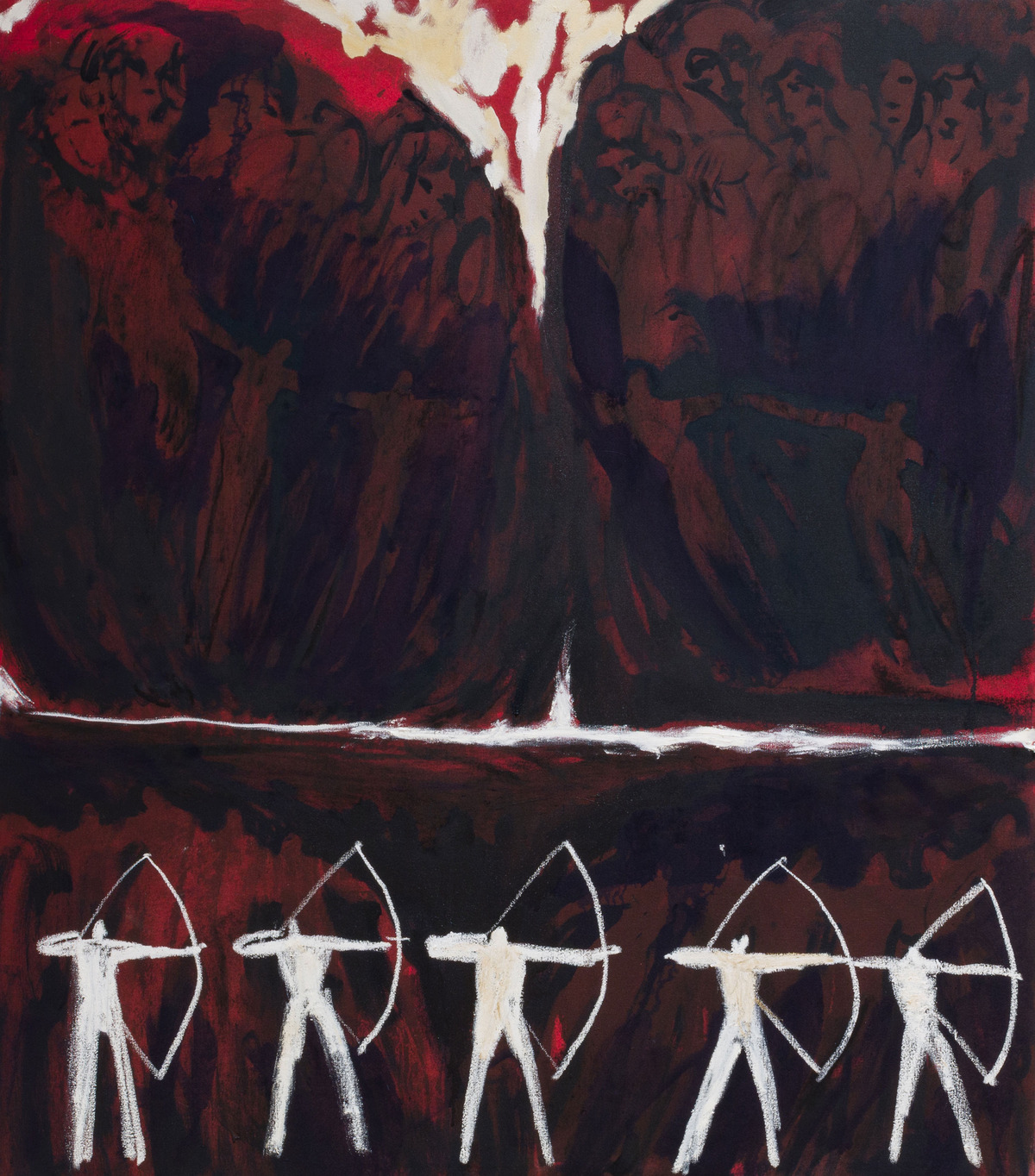 Hugo Winder-Lind, From Knowing What I Am Not, I Become What I Am, 2026, charcoal, oil, raw pigment, pastel, liquin acrylic, and acrylic gesso on canvas. 45 x 40 inches / 114.5 x 101.5 cm. Image courtesy of Isabel Sullivan Gallery. Photograph by Yann Chashanovski
Animals are not the only subjects in these paintings, as people are given a similar treatment in other works. Mostly represented as monochromatic silhouettes, these semi-abstracted figures act in unison like their own non-animalistic herds. In one instance, they are divided up into elongated columns that recall angelic choirs of Northern Renaissance altarpiece panel paintings, while others seem to be driven by a Medieval Norman sensibility with flattened, repetitive figures caught in frenzied action. While writing this review, I showed a great painter friend of mine, Reuben Gordon, Winder-Lind’s paintings and he made an excellent observation about the abstracted people recalling American modernist Bob Thompson’s religious paintings of the 1960s (I also thought about Matisse, too).
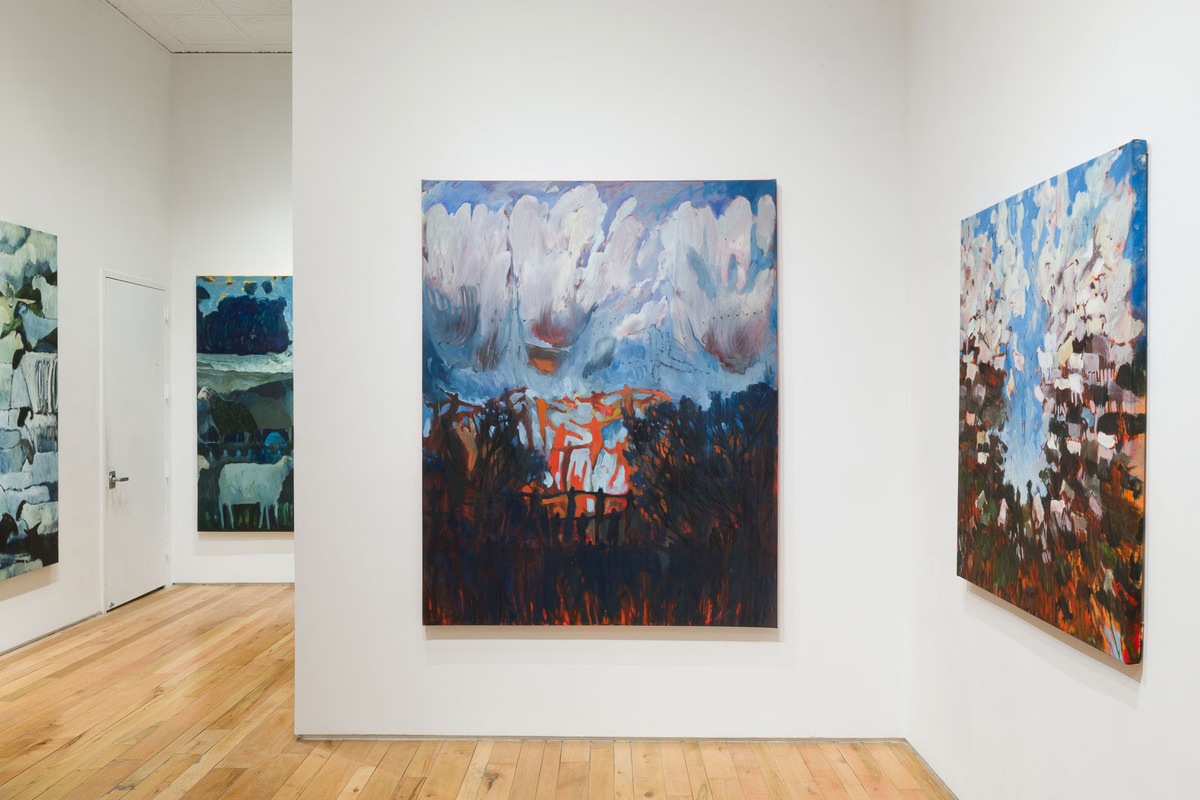 Installation view of Hugo Winder-Lind: Clouds of Limitless and Expanding Joy at Isabel Sullivan Gallery. Image courtesy of Isabel Sullivan Gallery. Photograph by Yann Chashanovski
The general mood that permeates Winder-Lind’s latest series of paintings is one of a gothic melancholy and haunting charm. His ethereal landscapes and exaggerated accumulation of figures was one of those characteristics that I also found particularly endearing as it reminded me of the quiet, lower-case “s”, surrealist energy found in early British Modernist John Nash’s pastoral scenes that are at once realistic but also somewhat fictive. Unlike Nash, Winder-Lind’s work feels so charged with a supernaturalness where nature seems tied into a greater spiritual force overseeing land and sky.
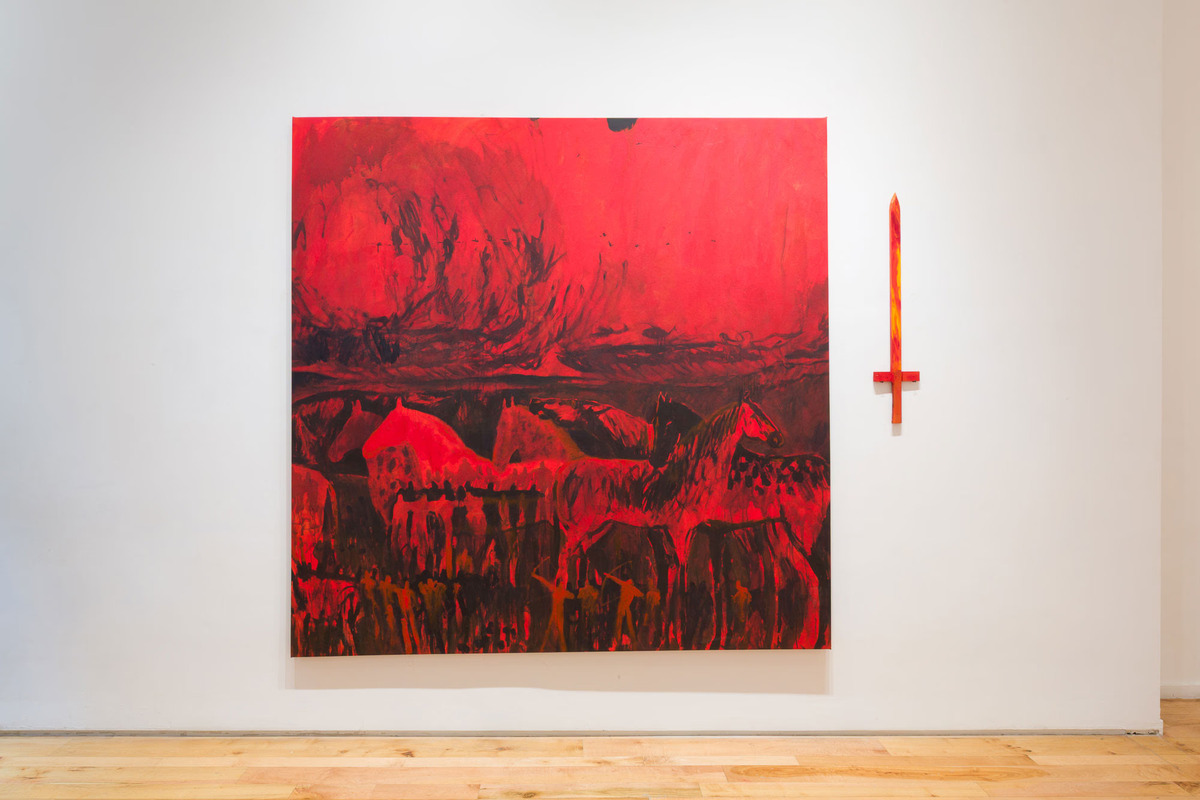 Installation view of Hugo Winder-Lind: Clouds of Limitless and Expanding Joy at Isabel Sullivan Gallery. Image courtesy of Isabel Sullivan Gallery. Photograph by Yann Chashanovski
Winder-Lind’s Clouds of Limitless and Expanding Joy is probably one of the most original ways I have seen a recent contemporary artist think about what the landscape means to them without falling into old hat archetypes of either picturesque views or sublime scenes. He really is thinking about the “who” and the “what” of the landscape, what these convey, and how they are bound together in the awesomeness of the land, which does not have to be British but could be of any national stock. WM

Liam Otero
Liam Otero is a freelance art writer in NYC. He was recently named New York Editor of Whitehot Magazine.
view all articles from this author