Whitehot Magazine
October 2026
"The Best Art In The World"
"The Best Art In The World"
October 2026
Exhibition Review: “Melissa Stern: The Talking Cure” at A Hug from the Art World, Chelsea (on view through April 18, 2026)
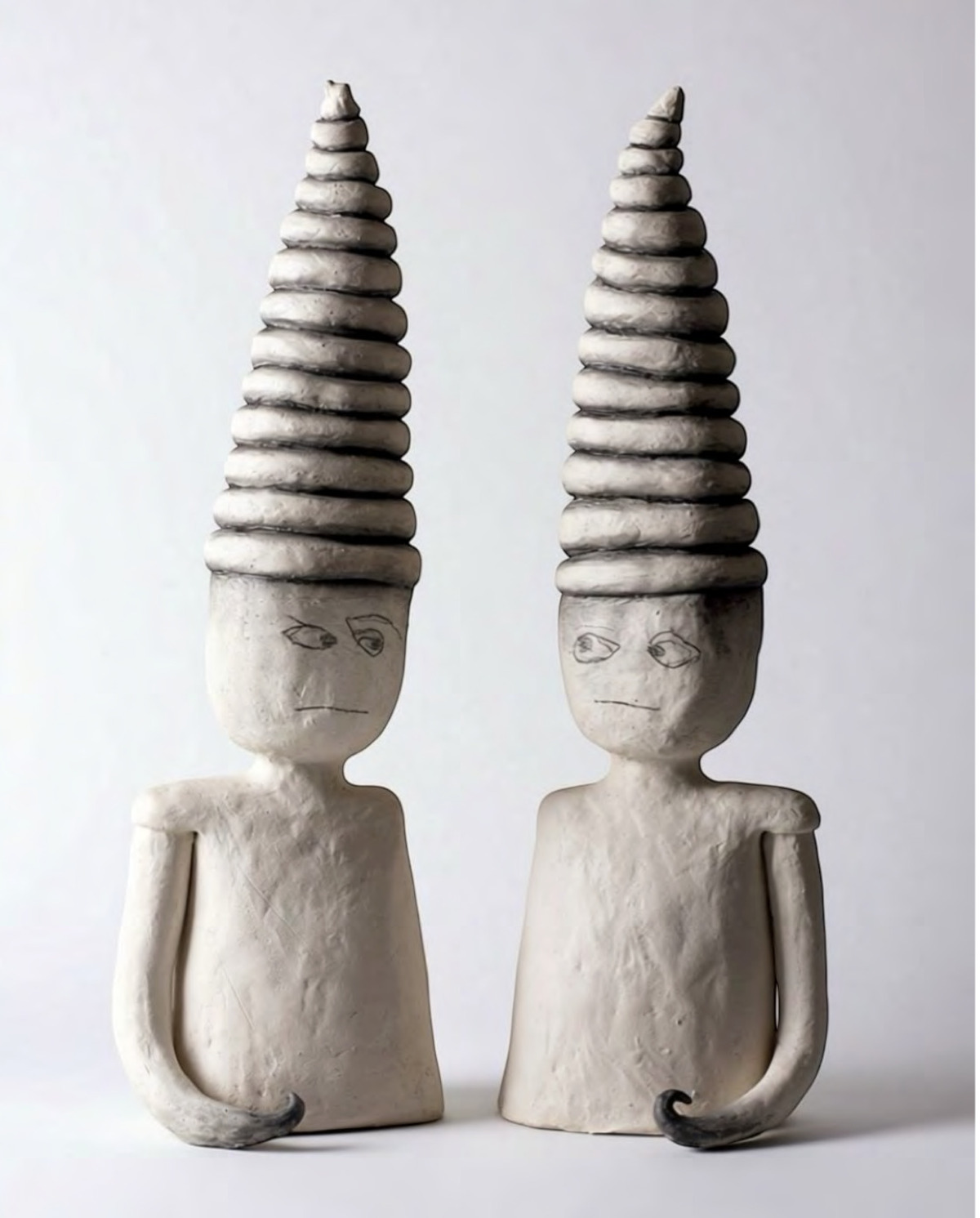 Melissa Stern, Conversation, 2012, clay and graphite. 28 x 7 1/2 x 7 1/2 inches / 71.12 x 19.05. x 19.05 cm. Image courtesy of A Hug from the Art World.
By LIAM OTERO April 18th, 2026
Few artists can say that they have had the same series of work exhibited on a near consistent basis over the course of 15 years. New York artist and art writer Melissa Stern’s sculptural series The Talking Cure has been a conversation starter for many wherever they’ve been exhibited, which has ranged from the Akron Museum of Art in Ohio to the Weisman Art Museum in Minneapolis, Minnesota. Stern’s outlandish humanoid figures have resonated with diverse audiences, from piquing the curiosity of schoolchildren to inspiring theological discourse on death in a Jewish context. What distinguishes this iteration of The Talking Cure from all previous exhibitions is that this one at A Hug from the Art World is the official swansong before this series is retired from its countrywide, 15-year tour.
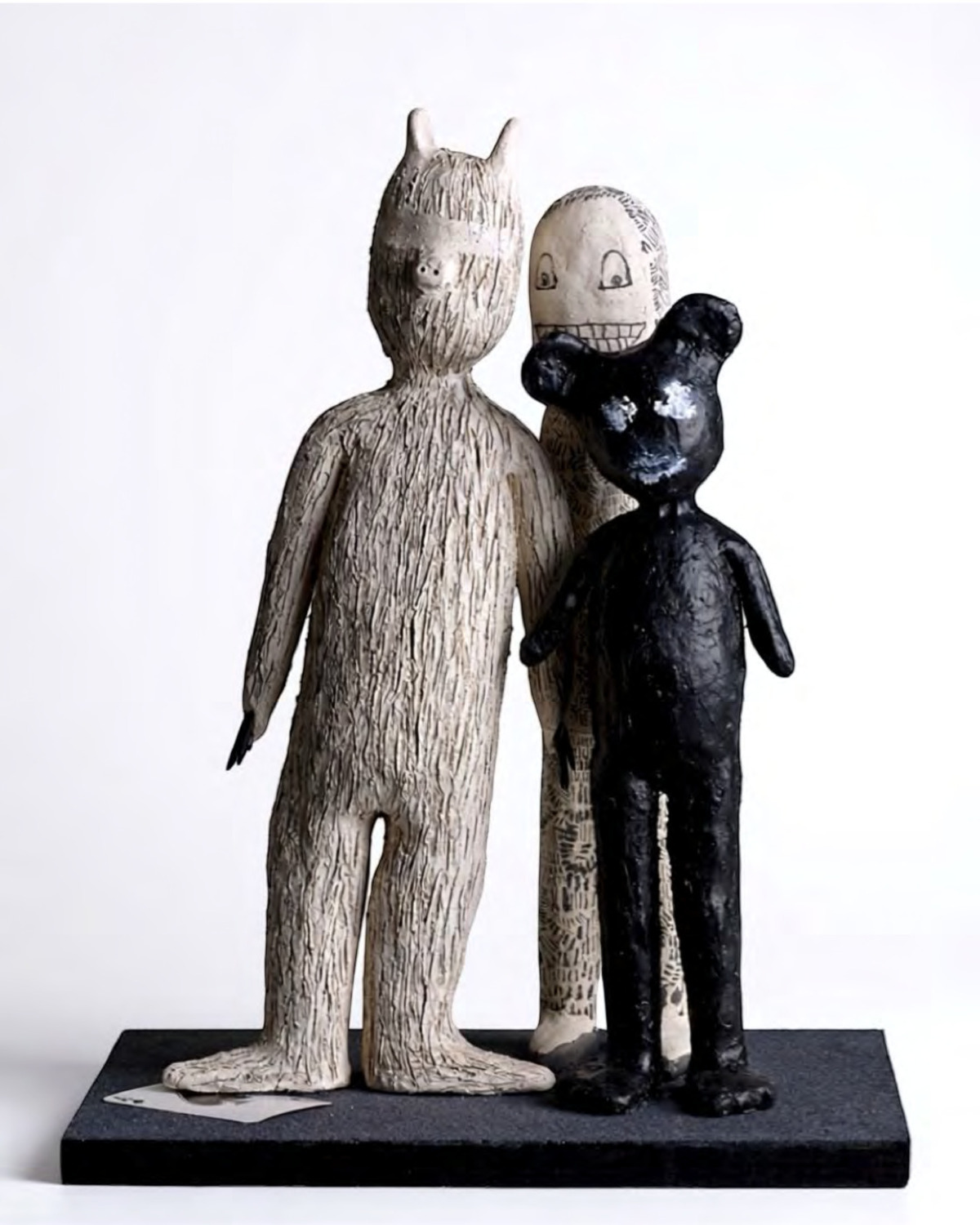 Melissa Stern, Friends, 2012, clay, graphite, paint, rubber, ink, and flocking. 18 1/2 x 14 x 10 inches / 46.99 x 35.56 x 25.4 cm. Image courtesy of A Hug from the Art World.
These strange figures with their pared down physiognomy and cartoonish expressions possess some kind of magic or energy that seizes you, really hooking you in to not only observe but also to “listen” to what they have to say. Yes, these works really do come “alive” as they each have their own monologues. 15 years ago, Stern invited 12 different writers to visit her studio and to individually pick a sculpture before writing a monologue for their chosen artwork, which was then read aloud by an actor assigned to that sculpture. The writers had carte blanche in what to write about as it boiled down to their subjective experiences with these works, nevermind the reality that these writers were of varying backgrounds: playwrights, novelists & short story writers, poets, and screenwriters. The actors read from the monologues, but it is fair to say that even they have a certain subjectivity or authorial agency based on how they presume the sculpture would “sound” if given a voice.
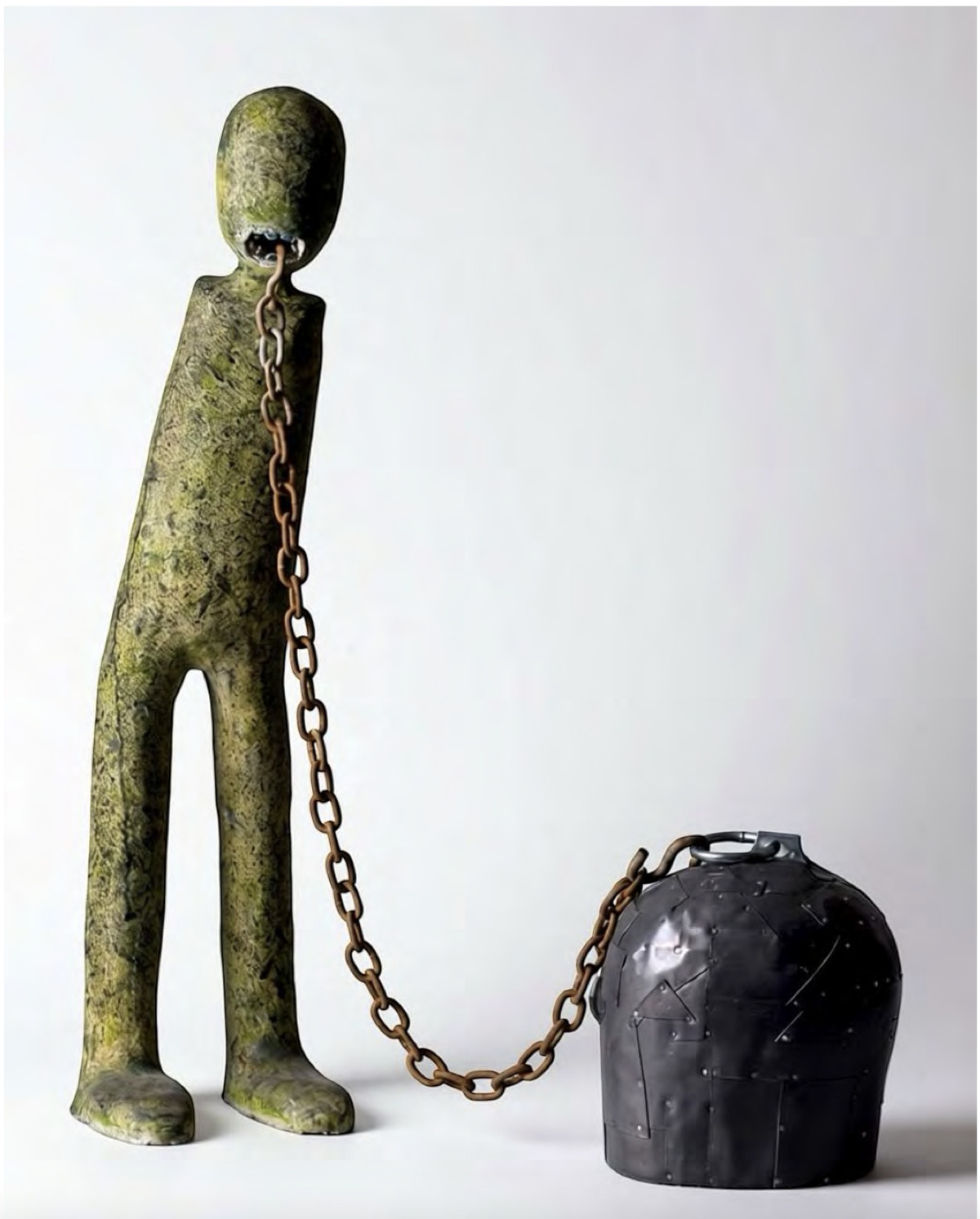 Melissa Stern, Tongue Tied, 2012, clay, paint, oil stick, steel and lead. 31 x 7 x 36 inches / 78.74 x 17.78 x 91.44 cm. Image courtesy of A Hug from the Art World.
These monologues are easily accessible as there are accompanying QR codes situated near their respective sculptures. Each of them are quite short (about an average of 1 to 2 ½ minutes in length), but the substance of their storytelling and emotions are enough to leave one invested and hungering for an immediate follow-up. Some of these are quite humorous in tone, others tragic, and some even leaning into a suspenseful tension. As I listened to each of them with my phone placed to my ear and perambulated the sculptures, my attention was singularly focused on the art and its monologue, with no modicum of awareness of the sounds of other visitors coming into the gallery or the street-level traffic outside.
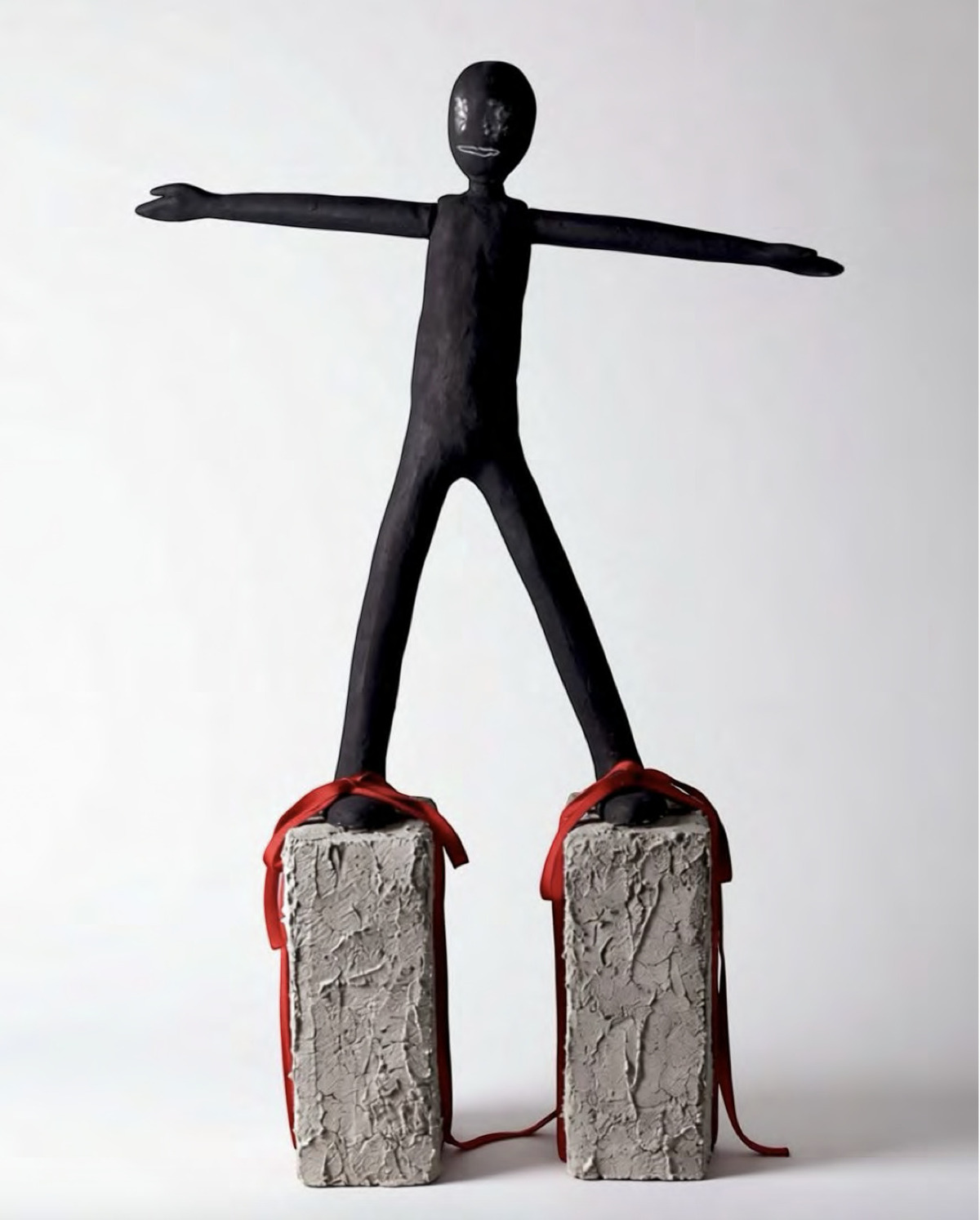 Melissa Stern, Dance, 2012, clay, paint, fabric, and plaster. 39 1/2 x 25 x 8 inches / 100.33 x 63.5 x 20.32 cm. Image courtesy of A Hug from the Art World.
The sculptures are rather short in stature, which means that the average visitor will easily tower over them. But that smallness in size does not make them diminutive or insignificant in any way, but rather makes for an invitation to lean in and get to a more intimate level. Most of these sculptures are nude and have rather genderless appearances, all the more universalizing in their appeal to the human condition. However, these characters are not just there in the gallery, but are each engrossed in their own acts: one holds a worn shoe, another is caught in a careful balancing act as it steadies itself while their feet are tied down by heavy blocks, or a pair who are physically tied together back-to-back.
In addition to the sculptures, Stern is exhibiting a series of works on paper that further these themes in two-dimensional form, with the subjects bearing striking resemblances to the sculptures. There are no monologues attached to these, but one can readily glean the suggestiveness of dialogue and a need to listen based on the actions taking place within them along with Stern’s decisive use of text throughout.
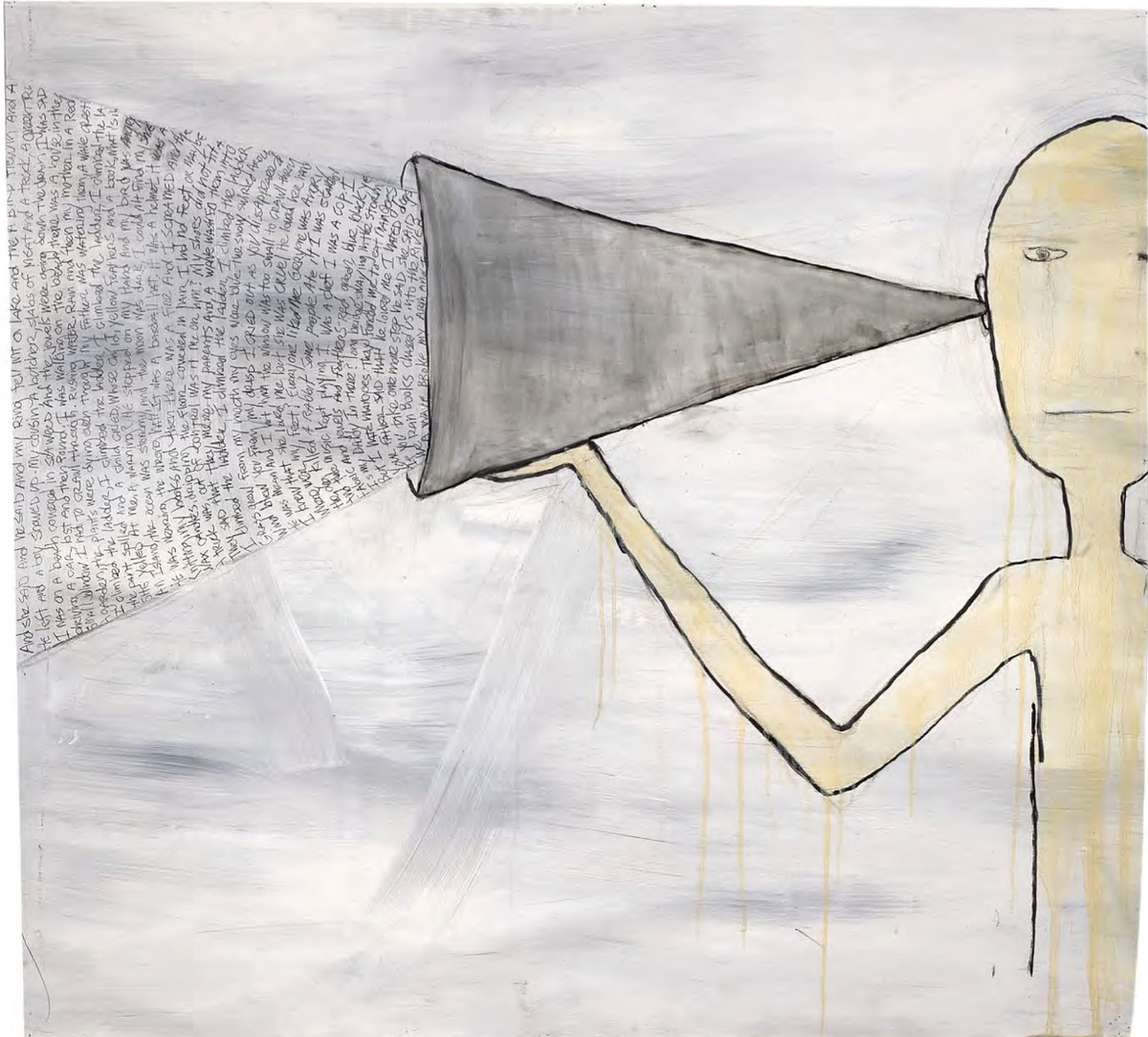 Melissa Stern, Hear, 2012, oil paint and graphite. 36 x 39 inches / 91.44 x 99.06 cm. Image courtesy of A Hug from the Art World.
It really is amazing how many levels of authorship are at stake in The Talking Cure - Melissa Stern with her flourishing artistic imagination; the writers with their literary voices; the actors with their performative interpretations; and even the father of psychoanalysis himself, Sigmund Freud, as the title of this show is specifically derived from his description of psychoanalysis. The term “monologue” automatically evokes a dramatic performance in a play, but our lives are enriched by monologues, an inner voice that is forever sutured in our consciousness. Stern’s Talking Cure sculptures and monologues are not only the characters of a 15-year performance, but also a mirror to our humanity.
Mention must be made that similar sculptures are currently being exhibited outside New York at the Metro Art Studios in Bridgeport, Connecticut in the group exhibition, Twist and Shout (on view through April 25, 2026), which was curated by Ellen Hawley. Though the context of that show is different from the one in Chelsea, there are parallels between Stern’s works in each as Hawley's exhibition contains more of these unusual sculpted characters who each express their own psychological states (often, one that is informed by a certain dark humor). WM

Liam Otero
Liam Otero is a freelance art writer in NYC. He was recently named New York Editor of Whitehot Magazine.
view all articles from this author