Whitehot Magazine
November 2026
"The Best Art In The World"
"The Best Art In The World"
November 2026
Ought to Be: Noah Pesante’s NEVERLAND: Before We Name Things at Kunstraum Member Space
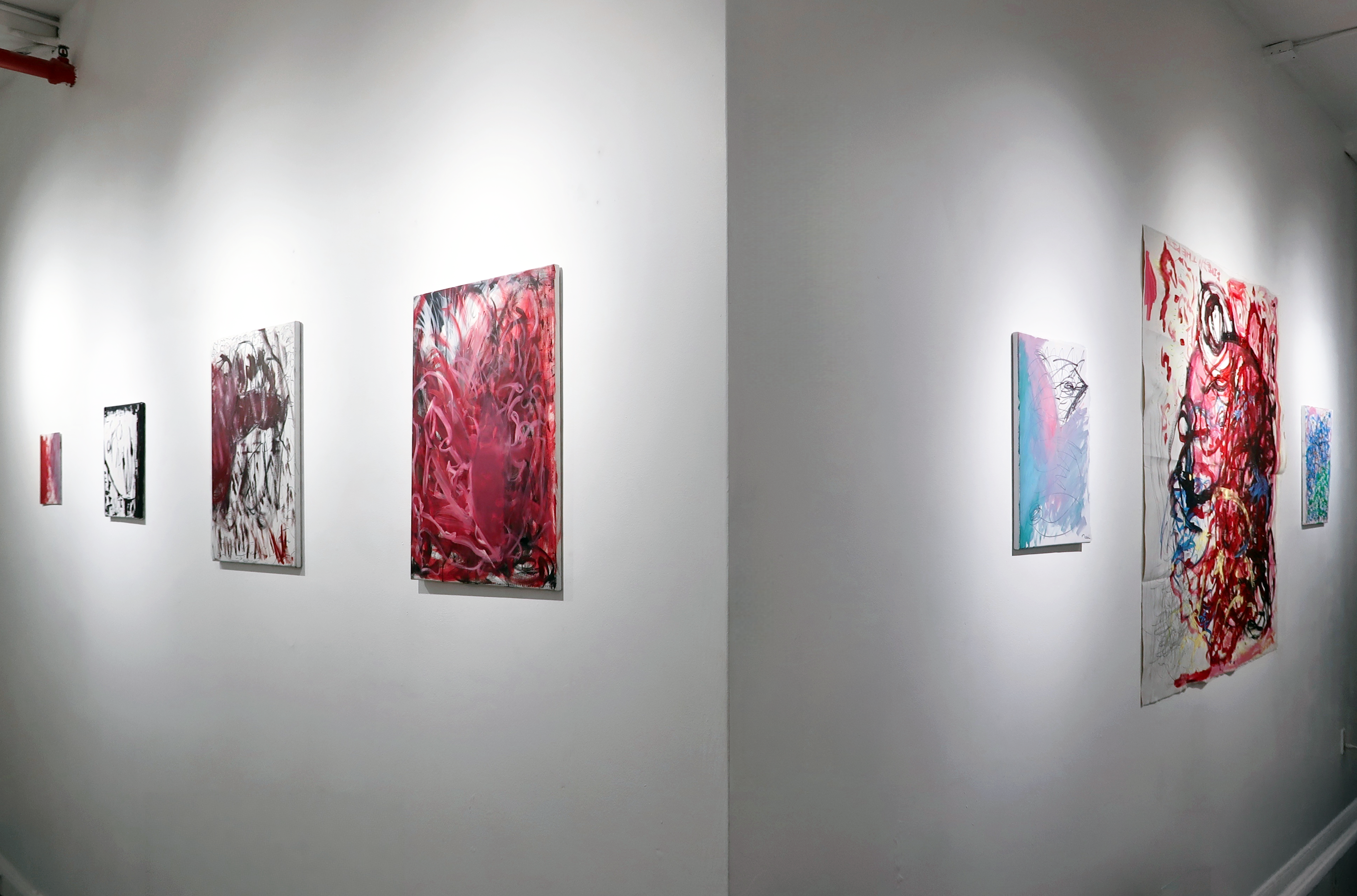
Installation View of "NEVERLAND: Before We Name Things".
Courtesy of LUMO and Noah Pesante.
By Xumeng Zhang, November 24, 2026
“I could paint that.” Even the most celebrated abstract paintings can draw this response when they go on display. Yet it may take an artist years of practice to decide where to place a mark on a blank canvas and what kind of scene to build around it. By the time those marks look as though they were dashed off, the judgment behind them is hard to see in any single stroke. In NEVERLAND: Before We Name Things, Noah Pesante’s solo exhibition presented by LUMO at New York’s Kunstraum Member Space, childlike spontaneity coexists with a sense of order.
Curator Eliza Xinping Tan turns to Neverland, the imaginary realm of Peter Pan, to evoke a freedom associated with childhood, when curiosity can lead the way and other people’s judgments can wait. She draws on Nietzsche’s “three metamorphoses” to consider how an adult might recover that freedom. The spirit takes on the burdens of social rules and expectations like a camel. As it questions and resists those rules, it becomes a lion, shaking off the teachings it once accepted. Finally, it takes the form of a child, able to begin again.
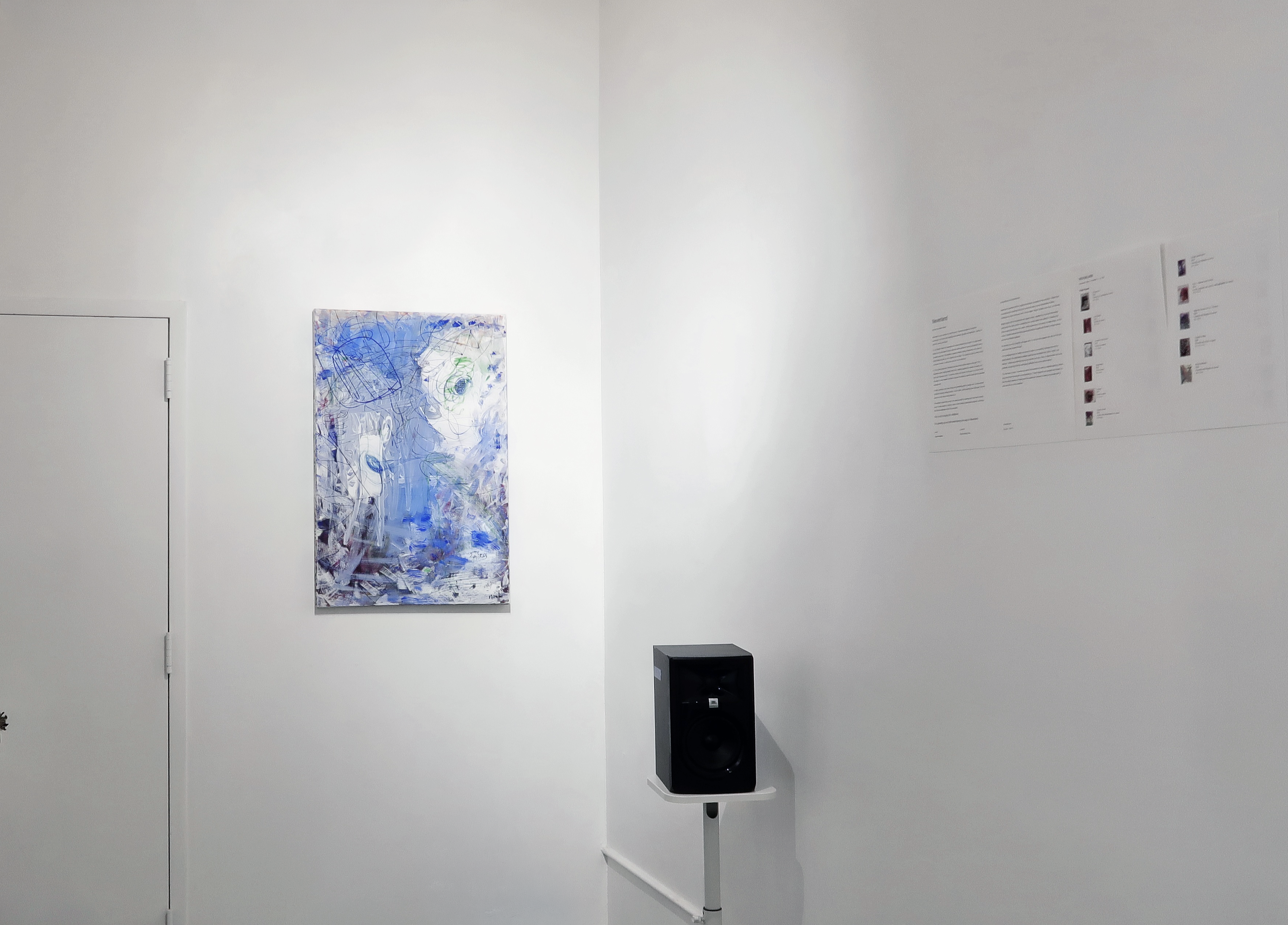
Installation View of "NEVERLAND: Before We Name Things".
Courtesy of LUMO and Noah Pesante.
Pesante gives this idea of Neverland a visible form through abstraction. His paintings take memory and the self as their starting points. Saturated colors overlap, while different painting media collide, producing varied textures and a loose rhythm. The scattered marks hold the composition together. In Gimme Gimme More, a broad, unruly patch of cobalt blue and a knot of black lines catch the eye at the center of the canvas. There is something faintly unsettling about this burst of disorder. Look a little longer and the interwoven colors and lines begin to suggest the bridge of a nose and a left eye. Follow those lines and the whole face comes into view. The surprise of finding order in that initial confusion is the first that NEVERLAND has to offer.
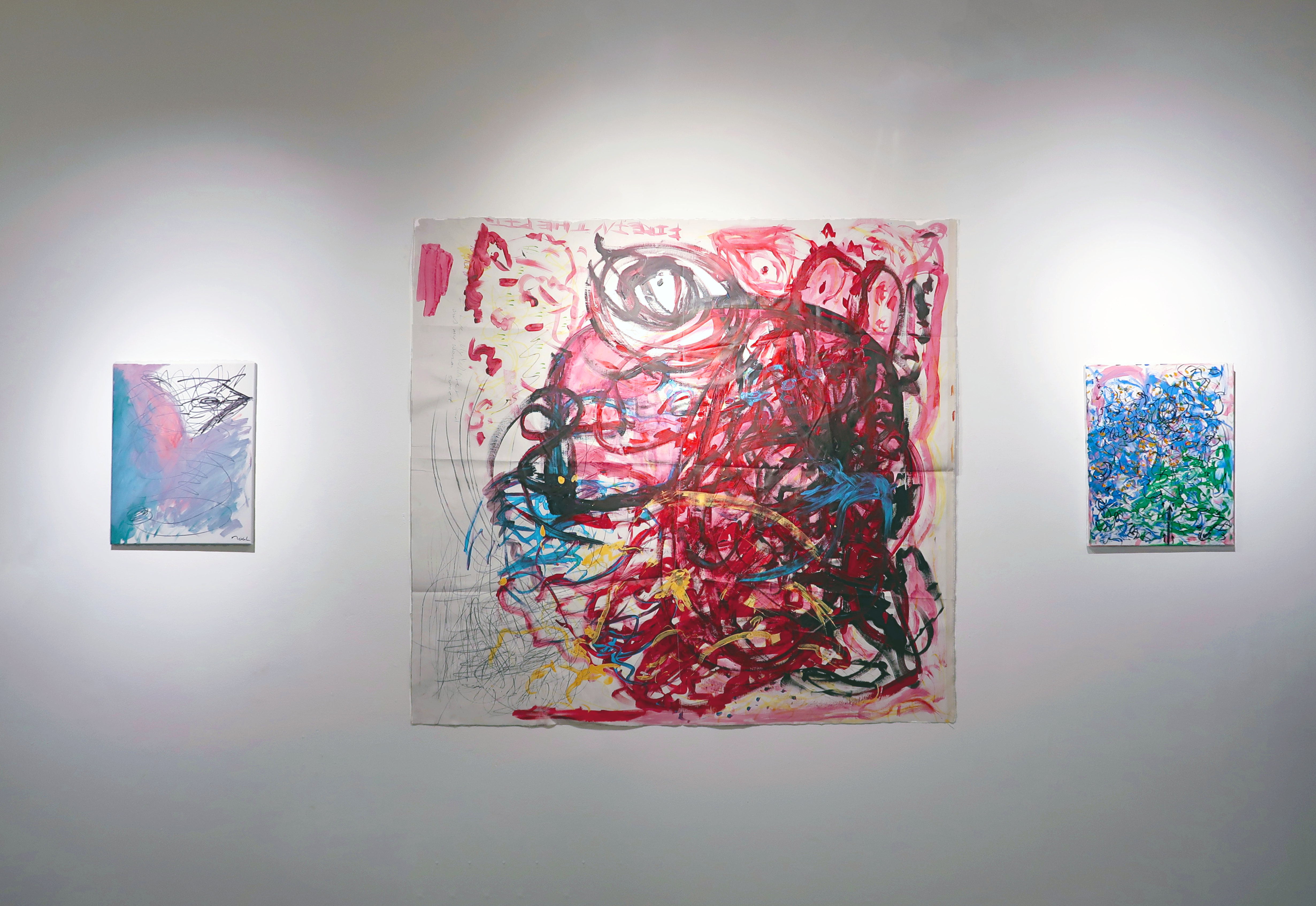
Installation View of "NEVERLAND: Before We Name Things".
Courtesy of LUMO and Noah Pesante.
In Tan’s Neverland, even a familiar set of rules leaves room for an unexpected move. In Fool — Abstract Self Portrait, the largest work in the exhibition, a single, clearly defined eye makes the image immediately recognizable as a portrait. The gaze follows the lines around the eye downward, looking for the rest of the face. Where the lower half of the face ought to be, intersecting lines and exuberant patches of color take over. A similar shift can be heard in Return to Wonder, a looping soundscape developed by Ivy Jin and Xin Yi. The bass and drums establish a steady pulse. Just as listeners grow accustomed to where the accents fall, phrases from the wind instruments and keyboards enter a little ahead of the expected beat. The slight misalignment between rhythm and melody creates a sense of dissonance and unease. As the drums recede, attention shifts to the guitar and electric piano, and the spaces between their phrases become easier to hear.
A phrase that enters just ahead of the beat makes listeners aware of a rhythm they have already learned to anticipate. The expectation that a portrait will yield a complete face takes longer to acquire. It develops through repeated encounters with images that teach viewers what a face should look like and what counts as a finished likeness. Once they recognize a portrait, they readily read certain marks as facial features and pass over the surrounding colors and lines as background. That is where Pesante’s rebellion begins. He lets the contour break apart, drawing attention to parts of the painting that otherwise go unnoticed. NEVERLAND: Before We Name Things points to an interval in which recognition has already begun and the habits that guide it can still be called into question. Pesante’s work recovers a sense of spontaneity. The apparent ease of strokes that seem to have been swept across the canvas in passing comes from years of practice. That fluency gives him room for the unexpected even as a composition takes shape.
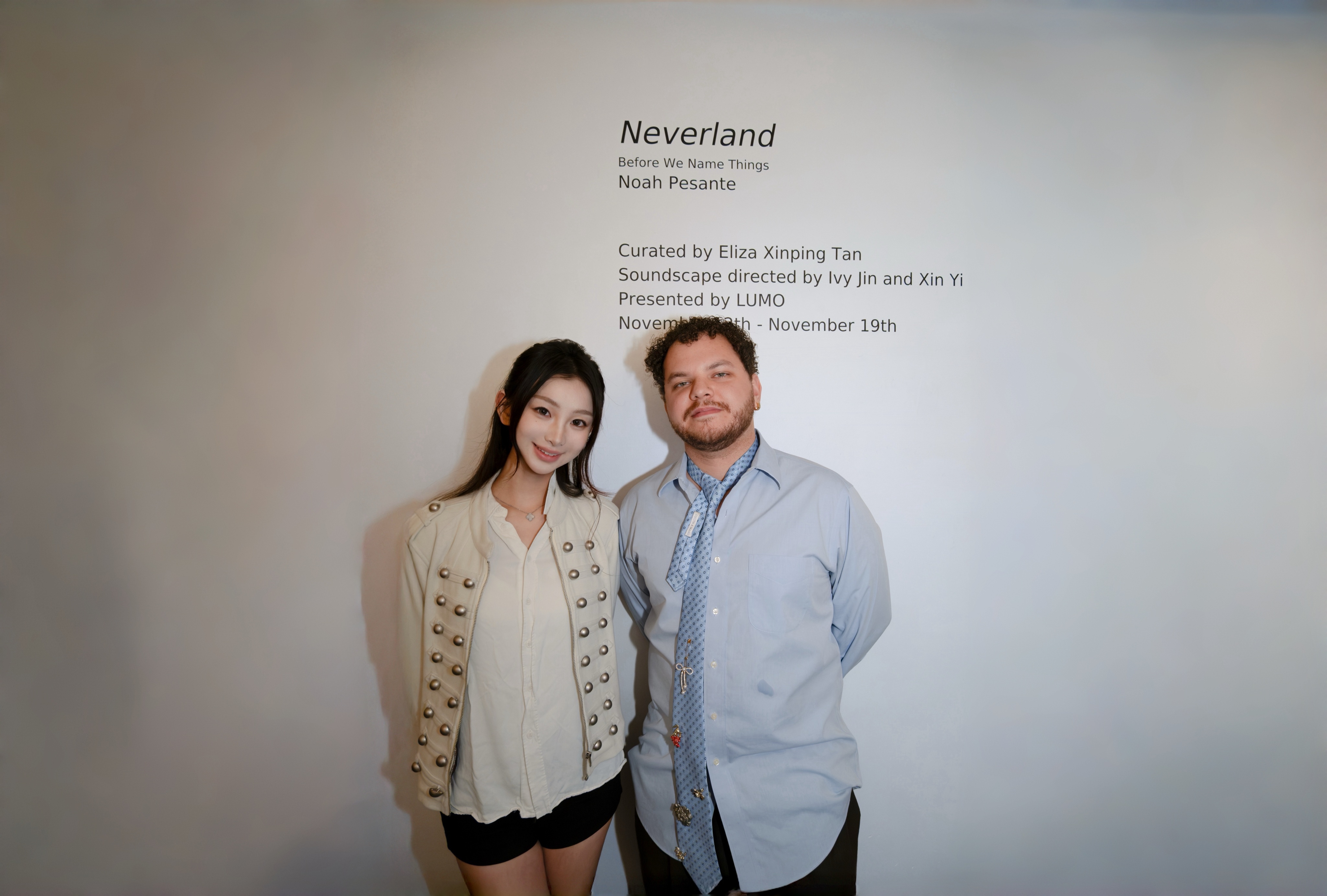
Curator Eliza Xinping Tan(Left) with Artist Noah Pesante(Right).
Courtesy of Eliza Xinping Tan and Noah Pesante.
Xumeng Zhang
Xumeng Zhang (b. 2001) is a curator based in New York and Beijing. Her practice focuses on the intersection of contemporary art, mental health, and community-based collaboration.
view all articles from this author