Whitehot Magazine
October 2026
"The Best Art In The World"
"The Best Art In The World"
October 2026
Austin Lee Tells Marcarson About His Art
 Austin Lee, Punch and the Blue
By MARCARSON May 28, 2025
NYC based artist Austin Lee joins us to talk about his work with WM advising editor and artist Marcarson...
MARCARSON: If your sculptures could talk, which one would be the sassiest, and what would it say about your studio habits?
AUSTIN LEE: There are a lot of stray cats in my backyard and a bunch of sculptures too. They have the same energy, we are all just minding our own business in the same space. I’m curious about them, but I don’t always know what they’re thinking.
MC: Many of your figures seem to hover between innocence and eeriness—how do you decide what emotional tone a piece will carry?
AL: I try not to force anything. The tone happens naturally when I let the figure evolve without pushing a narrative. I want the emotion to be felt.
MC: Your pieces blend digital and traditional mediums. What drew you to that intersection, and what keeps it exciting for you?
AL: Digital tools give me the freedom to sketch wildly and experiment. Traditional materials ground those ideas in physical reality. The mix is where things get interesting.
 Austin Lee, Horse Dream
MC: Imagine you’re curating an art show in virtual reality. What’s the dress code for attendees’ avatars?
AL: No dress code!
MC: Your characters feel playful and surreal—are they based on anyone or anything from real life, or do they just appear in your mind fully formed?
AL: They’re hybrids of memory, observation, and imagination. Often they begin as 3D scans of older sculptures, objects, or works from art history that I modify to create new meaning. No matter where they start, I want them to have their own presence. I want the artwork to be encountered first, not as a reference to something else. If that connection comes later, great, but the order matters.
MC: Your use of color feels intuitive and bold. Do you ever think about color emotionally, like assigning feelings or moods to specific shades?
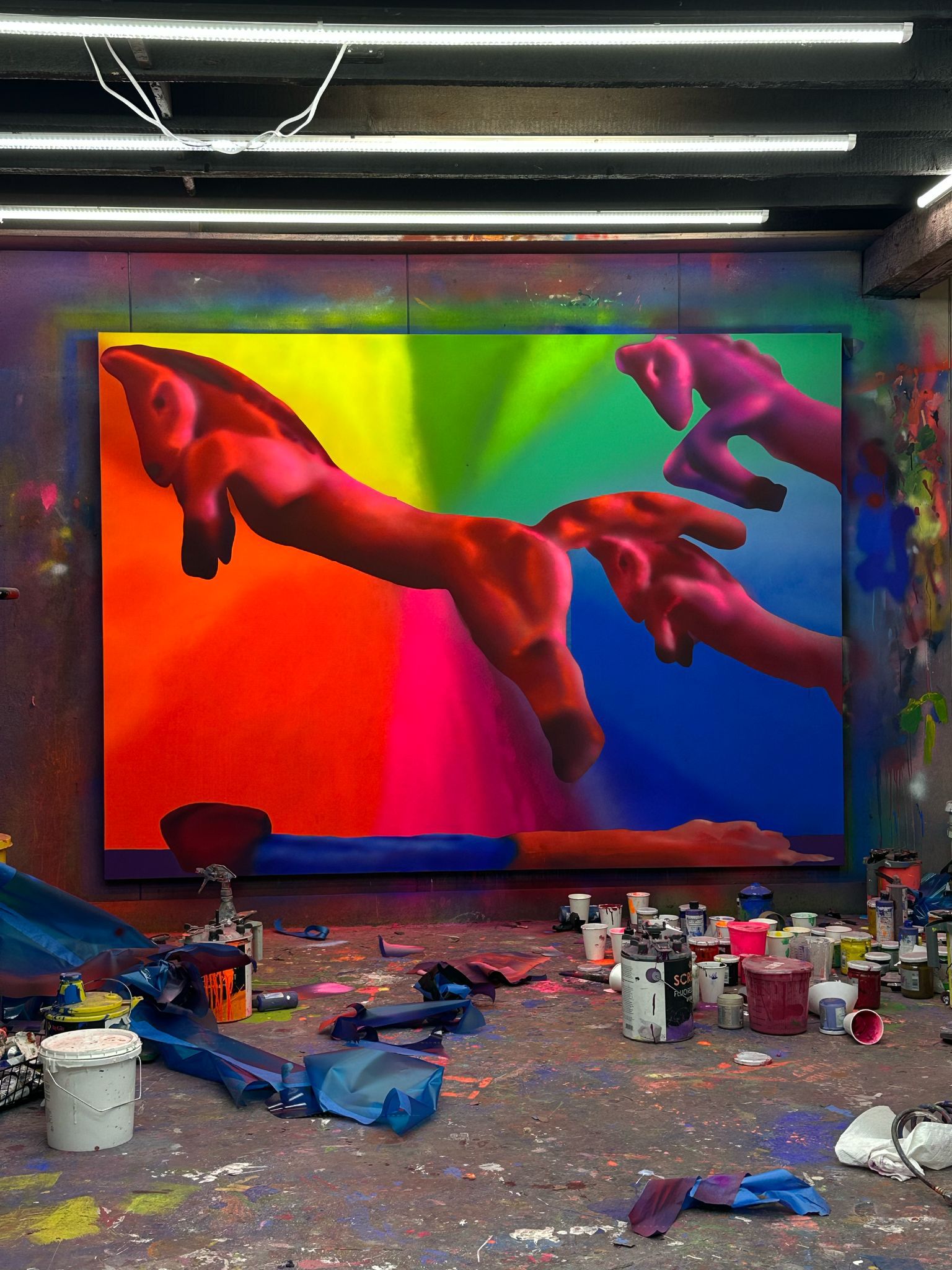 Austin Lee, Horse Dream (in the studio)
AL: Color is so specific to its surroundings. Your perception shifts depending on what it’s near. I move colors around until it feels right. I don’t follow rules, but I know when it works.
MC: Do you see your work as a reaction to digital culture, a celebration of it, or something else entirely?
AL: Definitely both. I believe in the hopefulness of technology, but I also see its risks. A knife can cut bread or hurt someone. It’s all in how we use it.
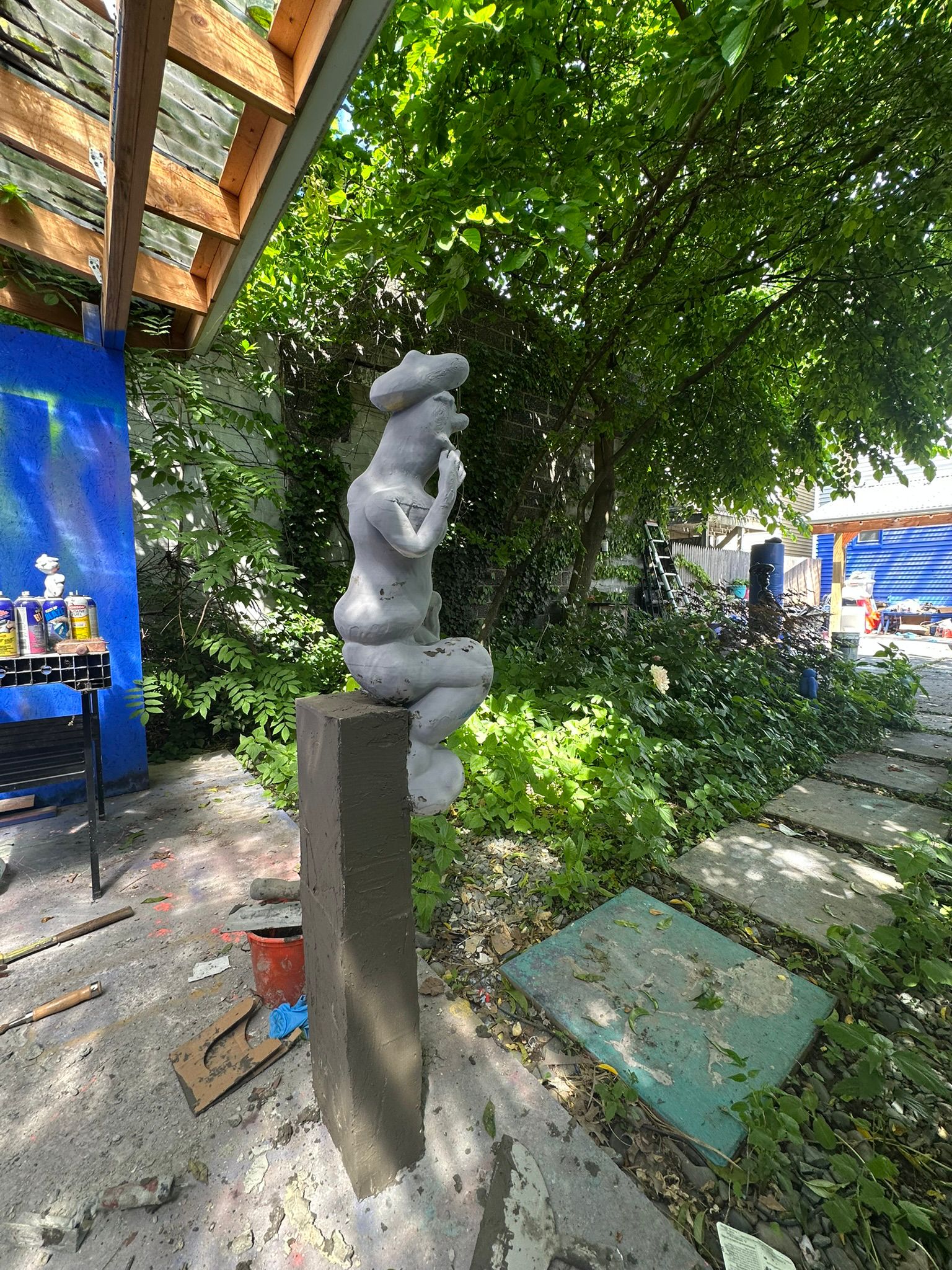 Thinking, sculpture in Austin Lee's studio
MC: Your sculptures often seem like they’re caught mid-expression or mid-thought—how do you know when a piece is “finished”?
AL: An artwork is finished when it stops asking for changes. That’s true whether it’s a success or a failure. When it’s a success, you’re happy with it. You can appreciate it and stop editing. When it’s a failure, you realize there’s nothing more you can do. You either start over or destroy it. Either way, there’s a finality to how it makes you feel.
MC: You’ve used VR in your creative process. Do you see technology as a tool to get closer to emotion, or as a way to distance yourself from the physical?
AL: I use it as a practical tool to create 3D objects in space. It feels as natural as drawing a line on paper.
MC: If your art had a secret ingredient, like a chef’s special spice, what would it be called—and how would it taste?
AL: Every artwork starts from scratch. There are no secret ingredients, just trying everything. I don’t know what it’s going to taste like either. That’s kind of the point. I’m looking for the unknown. WM

Marcarson
Marcarson is the owner of NOT FOR THEM, an art house/concept gallery in New York City.
view all articles from this author