Whitehot Magazine
February 2026
"The Best Art In The World"
"The Best Art In The World"
February 2026
Sally Davies Talks Photography with Bruce Silverstein
 Top NYC photography dealer Bruce Silverstein with print by Aaron Siskind, Martha’s Vineyard (1954)
By SALLY DAVIES June 12, 2025
Today I have the pleasure of talking to Bruce Silverstein who is the founder and director of the Bruce Silverstein Gallery in New York City. For over two decades, his gallery has been a prominent force in the world of fine art photography, representing some of the most influential photographers of the 20th and 21st centuries.
Sal
Your father is the amazing photographer Larry Silver. Having a creative singular parent can help us find our way or it can cripple us. How did the man and the work influence you as a young person?
Bruce
I grew up in Westport Connecticut and a lot of my friend's parents worked in corporate or advertising. So yeah, by that standard, my parents were considered cool. My father was the photographer and my mother always worked with him. I grew up understanding that there was a value placed on creativity.
Sal
So in other words, it was the family business.
Bruce
Yes, it was the family business. I have fond memories of him waking me up early on a Sunday morning and saying, “it's a perfect day for shooting, let's go.” We would drive around hunting for pictures, which is what they did back then. It was like Cartier Bresson, waiting and looking. I got so much out of that. I liked being there. Being part of that process normalized creativity. We would go to museums and tag sales and flea markets. It was a hybrid of looking at art, looking at antiques, and once in a while they could afford to buy a little something at a flea market, and there would be an excitement about the discovery. So I think all of it was art.
Sal
Don't people hunt for pictures anymore?
Bruce
For a while it was not considered fashionable. It was more like, you should have a preconceived plan.
Sal
Did your dad do a lot of commercial work?
Bruce
Yeah. He became a commercial photographer after he graduated college. He continued to do commercial work until maybe twenty years ago. I have memories of them letting me skip school to come with them to the city, and I would hang out in the studio.
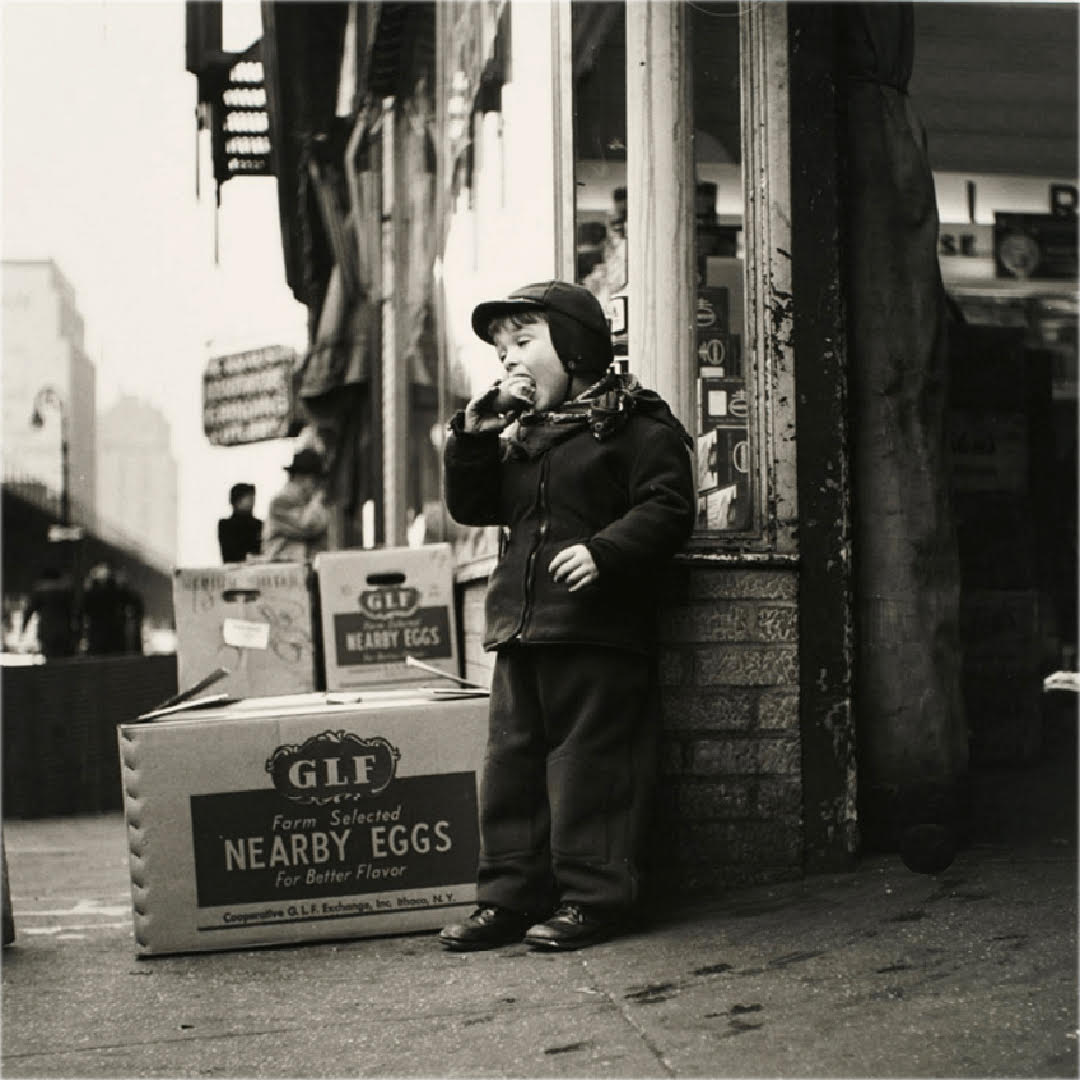 Larry Silver, Print, Nearby Eggs 1952
Sal
Come on! How many kids get to do that?
Bruce
I know, but I was envious of the kids whose parents were taking them on vacation. It was a very unique upbringing.
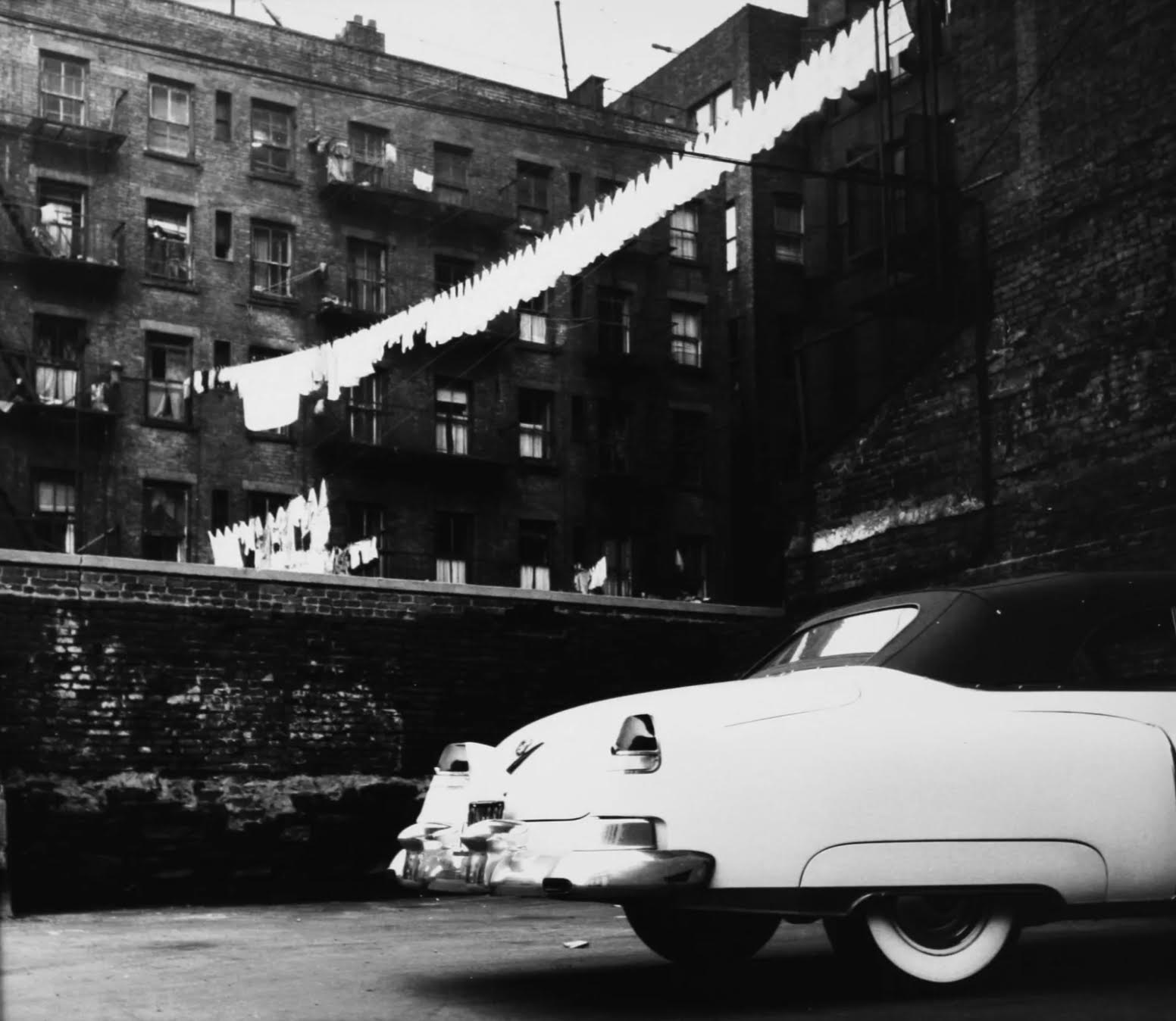 Larry Silver, Print, Manhattan Backyard 1952
Sal
But in hindsight, you wouldn't have that any other way, would you?
Bruce
I think the combination overall was good, but it was not easy. Financially it was not easy, especially living in a town where other people had so much money. Our family revolved around my father and his work, so it was a mixed bag. But I learned about art - not just the factual points, but actually feeling and seeing and analyzing it. It became second nature. I see people in the gallery who have never bought art before, struggling with what they are supposed to feel. And I think that's what happens when you're not really exposed to it.
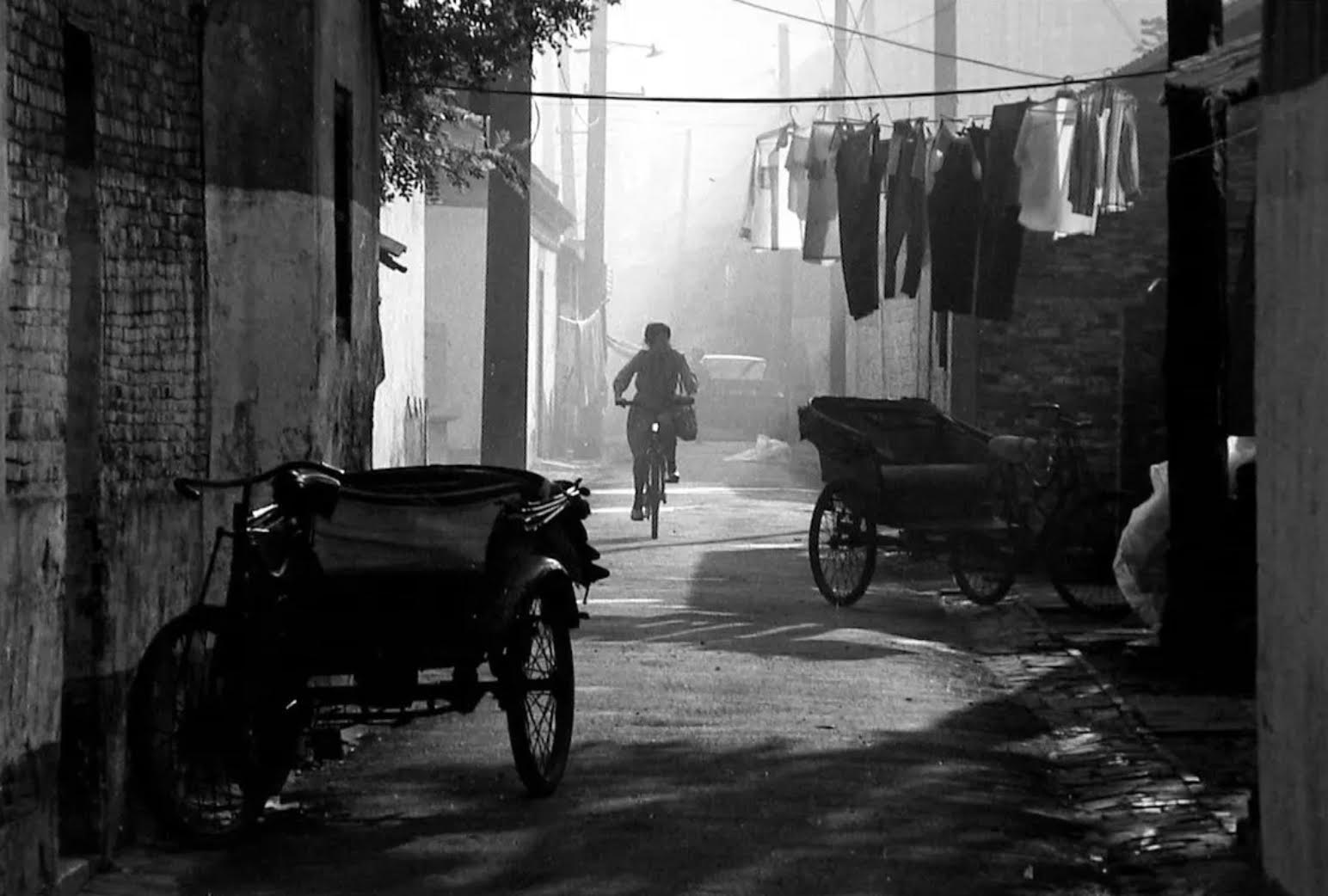 Larry Silver, Print, Early Morning Commuter 1996 (China)
Sal
So do you think the ability to find your magic comes only after a long time of understanding your relationship to art? Or do you think some people just get up one day and go, oh boy, I love this. Or is there no one thing?
Bruce
Listen, some people come in who have a new house and there's nothing on the walls. But you know something? I get a lot of pleasure out of that - getting them started. I enjoy talking about what I love about a particular piece. I think I reduce the conversation to a very basic intuitive level.
Sal
Your road to gallerist is a bit offbeat. You got started in finance, not art.
Bruce
Yeah. I was an economics math major. First, I was actually pre med. But I did not finish that…as I studied, I just could not get the courses. It was not clicking.
Sal
So you changed it up and took finance. You got out of college and you started a business right away?
Bruce
I tried a few different things and ended up in a few different financial markets. My older brother was a very successful trader and just by knowing him, I had an awareness of a world out there, of people doing these things. I fell into natural gas. I went on to start a division for one of the largest brokerage firms - their energy division. What I enjoyed was building, creating, and coming up with new products and I like closing deals. With that, I was able to make some money and I could also help my parents. The operation grew to a hundred people worldwide. Ultimately it became clear to me that I had built this wonderful thing for this other company and that I was expendable. I didn't want to keep building for them.
Sal
How many years did you do that?
Bruce
I left right around my thirtieth birthday.
Sal
So all of this happened before you were 30? That's pretty amazing.
Bruce
It went by so fast. It was the right place, right time, right person. I learned recently that I'm ADHD. Everyone around me was like “no shit!” In that business there is an adrenaline and dopamine rush that comes with doing these deals. I had to be laser focused, and the ADHD just might have been my superpower.
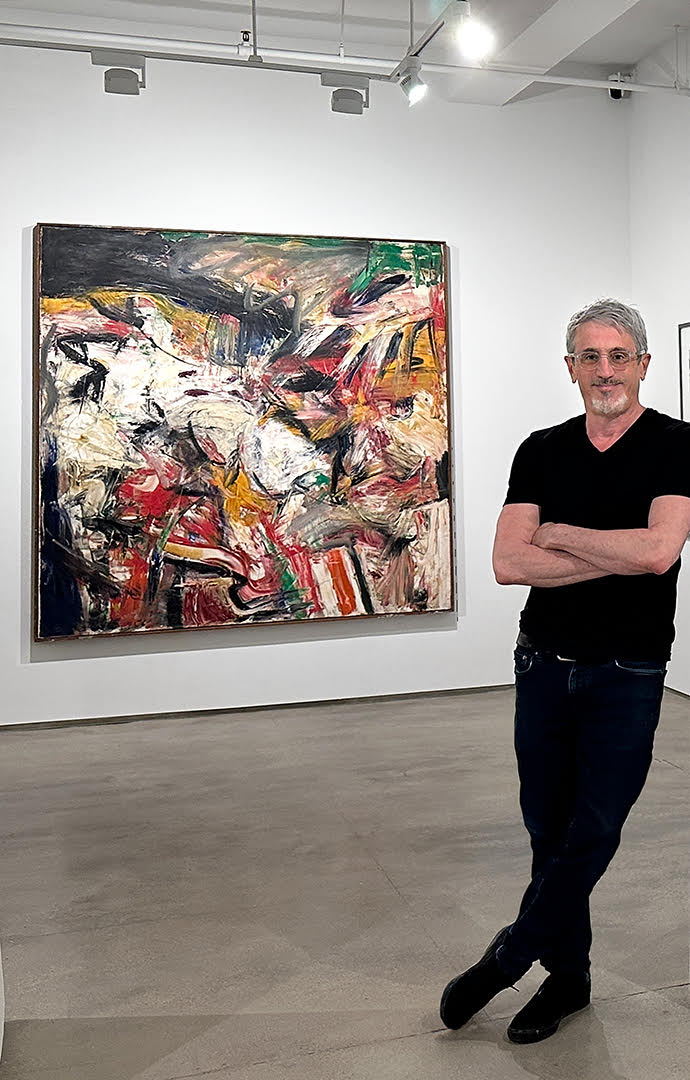 Bruce Silverstein at gallery June 5, 2025
Sal
So you quit there when you were 30, and then what? Did you go right into the art thing?
Bruce
I had been collecting photographs since I was 23 - when I first started making a little money, but I was also interested in other art forms. I studied art in Venice for a semester and photography seemed like a really open area, where one could buy incredible things for a relatively affordable price. By the time I left (finance), I was buying some very significant work. I left finance thinking “okay, I’ve got enough money now that if I end up eating pizza for the rest of my life, I'm good.” I didn't have a supportive person advising me to just take a few months off first, so my finance departure was not ideal. It wasn't a thoughtful decision, or planned. It was an emotional decision. And because I had achieved success at a such a young age, things got a little bit warped. I thought that type of success was normal, and I expected to have that same level of success again. So I took some time to decompress and become human again, and then at a certain point, I had to make a decision. I had the epiphany; I was obsessed with photography - hunting for it and collecting it, so opening a gallery seemed right. People in the gallery world said “don't do it. It's going to kill your passion,” but I went ahead. In 2001 I opened the gallery.
At almost the same time, actually just days before the gallery opened, I received a job offer back in finance. It felt like what I had wanted originally. I found myself in a predicament because I’d been out of the market for a few years, but I went and interviewed anyways- and it turned out to be a very lucrative opportunity. I did miss eating out at restaurants and I did miss traveling and all that good stuff, but I had already made the gallery decision. I knew I needed to try this, to really do this. It was February 2001. Seven months later, on September 11 everyone I had interviewed with died in the World Trade Tower. It was Canter Fitzgerald. Had I have taken the job, I certainly would've been there. I lost a lot of friends.
Sal
Gee Bruce, I am so sorry. No words for that story.
Bruce
What I'm doing now is infinitely more complicated and interesting than what I was doing then. I would have been bored and burnt out and very much measuring my success by my bank account.
Sal
Has your art mission statement changed over the years?
Bruce
When I first opened I was focused on photography, mostly on the things that I was collecting, which were predominantly mid to early twentieth century, maybe 1960’s and before. It was a confidence issue as well. Over time I began to represent living artists. My gallery was so small that it was hard to show larger works, which at that time were very much in vogue. Back then I was representing photographers who were also working in other mediums, and it didn't make sense not to show those other things, so I moved to a larger space. But showing the other things was a problem in the photography world. If you were known as a photographer and you also painted, no one had interest in the paintings.
From the current exhibition, Photographer as Sculptor / Sculptor as Photographer
Sal
Yes indeed. I paint as well as take photographs. It took me years to bring people to my photography. I don't think there's any resolution to this dilemma. People have a problem with it. I recently heard a music biz person say that categorization is the tyranny of the music business. I think that might be true in the art business also.
Bruce
Yeah. I think it's kind of improved. But it's the slotting of everything that people like. They're comfortable with that.
Sal
They feel it helps them make choices, but I think they are missing out, that they are shortchanging their experience.
Bruce
There's issues with the way the photography gallery system developed. At first they were really needed because galleries were not showing enough photography. Then it became an isolated thing - you were a photo gallery, and your version of history was this photographer was influenced by this photographer who was influenced by that photographer. Well, that's just not the way it works. You know? Photographers are influenced by other artists, by dance, by music, etc. An artificial narrative developed that was limiting people’s understanding of the artists. It also alienated people outside of photography, who might be more interested in the photographers if they understood their other influences. It's important to integrate, to do shows that illustrate how photographers were not just equals, but often leaders in movements. I was doing this at my old space - I did a Louise Nevelson and Aaron Siskin show. I did a Lisette Model with a German expressionist painting show. We need more. It's important because, look, there's a world of abstract expressionist collectors who don't buy photography, and they should. And those are people who can afford to buy it. We need more of these types of exhibitions to teach and to illustrate, for people to see how this fits. So when you talk about evolving, that's where I am now.
Sal
As is beautifully expressed in your current exhibition, Photographer as Sculptor / Sculptor as Photographer
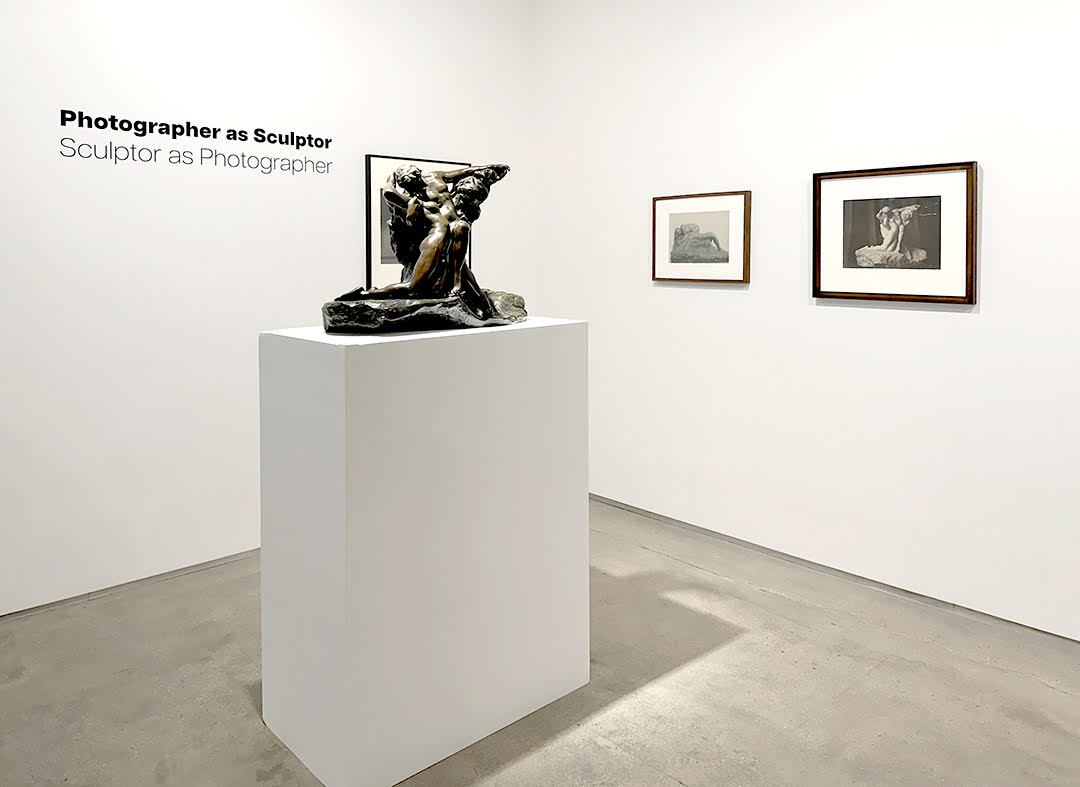 Auguste Rodin Bronze, L'Éternel Printemps (Eternal Spring), 2nd reduction, 1884
Auguste Rodin Carbon Print, The Death of Adonis, c.1906
Auguste Rodin Silver Print, Eternal Springtime, 1900
Sal
Do you think it's changed a bit for the better? Are more galleries showing photography?
Bruce
The economics of it create a division. If you're a salesperson at a gallery you make your commission based on the profits, so your incentive is to sell more expensive art. So while I agree there are more galleries showing photography, they are not positioning photography equally because of the economics.
Sal
I was taking pictures long before we had phones with cameras, and let me just say it here…iphones changed the world. In a way they made photography even more important than it ever was, but it's different. It's a language now, not just a commodity like a silver print used to be. Do you know what I mean?
Bruce
Yeah. I agree. In terms of art forms, photography is the most adapted, and used art form in the history of the world, and people are not just taking pictures. They are thinking about a process; editing, cropping, lighting etc. That is amazing. It's become so integrated that we forget that the people I represent, people like André Kertész and Cartier Bresson, are the ones that defined that very language.
Sal
Time has to pass before we know if a piece of art is going to survive and still be relevant. Right? If good art is always of its time, and I believe it is, do we know what makes an image timeless? Can you as a dealer, or as an art collector, look at a photo and know that something here is going to last?
Bruce
I certainly can feel if an image has a sense of timelessness. But you know, what is my sense of time as a human being? Forty years, fifty years? And I haven't lived through enough cycles to understand how society can completely shift gears. We're all seeing things now that we've never seen before; economics, politics, environmental things. Tastes and interests change. Would I have ever guessed that people would rather have furniture made of plastic rather than wood? Go figure. While I do know when I like something, I also know that it's colored by my perception of what I see, and it’s very generational. That said, sometimes these younger people come in here and listen and look at some of the things that I love.
Sal
Thats a good segue into my next question. I look at kids now, and I think they don't know or maybe they don’t care who came before them. Whose shoulders are they standing on? Maybe they might know who Eggleston is…maybe. Is that just how it goes, how the baton is passed? Is that how life moves along, leaving bits of history in the dust?
Bruce
When I lose faith in that, something inevitably surprises me. I remember about 5-7 years ago I had visited a contemporary artist, and they said that their influence was Paul Outerbridge. and I thought, oh my God, I've done a show on Paul Outerbridge!
Sal
I might go see the Arbus show tomorrow at the Armory. Are you a fan?
Bruce
I appreciate the work.
Sal
I like some of her work more than others, but her photo of the Sword Swallower remains one of the first images that gave me permission to shoot whatever I wanted. I understood in that photo what photography could be.
Sal
How has the photography market changed in the past decade?
Bruce
There are more people than ever before buying photography. However, what's changed is that the photo collector is becoming more and more rare. If you speak to the auction houses, they'll say 50% of photo buyers are new buyers. More experienced buyers are aging out or moving on. We're reverting back to where things were in the 1980’s. People want Ansel Adams, Cartier Bresson - they want the name and the iconic image. So all of these artists that museums and curators spent decades promoting, bringing out and finally showing, are sort of back to square one. So that's changed.
Sal
These new kids that are going to auction houses and buying, is this just their first step into the art world?
Bruce
I think some of them have never bought a piece of art before, but this kind of initial transaction can be a bridge to other things. At the same time extraordinarily rich people are now buying photography, which we didn’t see before. There were two photographs in the last five years that sold for $12,000,000 - Man Ray and Steichen. In terms of classic photography, that's significant.
Sal
How do you feel about screens? How do you feel about backlit images? This should be a stupid question, but it isn’t.
Bruce
You mean like looking at other people's art?
Sal
Yes. So much of our lives are spent on screens, processing images, showing the work to people on screens etc. I have people who actually buy prints from me who have only seen them on a screen. A couple of years ago I went to see an exhibition - it might have been at Zwirner. I don't remember, but I was disappointed with the prints. They were muddy and too dark. I was squinting to see things that were very visible in other versions that I had seen in the past.
Bruce
Yeah, we looked at prints and might have said I've seen better prints. Maybe it was too dark or not bright enough. That doesn't exist now for people that are transacting online. They're very focused on an image, as opposed to the experience of the print.
Sal
I know that time marches on and things change, but I feel they are missing out on so much that could influence their choice.
Sal
Your thoughts on social media? It doesn't matter if you're a tap dancer or a photographer. You have to have your hundred thousand followers these days, otherwise reps don’t want to talk to you, At the same time they get a bit nervous that the whole world has seen everything you’ve ever made. It's sort of a catch 22.
Bruce
My thoughts from the perspective of a dealer?
Sal
Sure, as a dealer, but also as a person.
Bruce
I spend way too much time on there, and frankly it's sickening. I feel bad that we've all come to this, but it’s efficient. Artists will say, “can I come in and show you my work?” No, because it's a time commitment. I mean, If I were to look at every artist’s work that reached out, I wouldn't have a life. I might have a different experience if I see the work in person but online is the first hurdle. So yeah, I think it's an important tool.
Sal
With all of our work on Instagram, I sometimes question the need to maintain a website these days.
Bruce
Don't close your website down. I think it's important, at least from my perspective, because it enables me to see the breadth of work, the evolution. You know, it's like another portfolio.
Sal
Bruce, thank you for taking the time to talk to me today - Its been fantastic. The world needs your gallery. WM

Sally Davies
Sally Davies lives in NYC, take photographs pretty much everywhere and paints too. She has 2 books - New Yorkers and California Dreamers, and has lots of work in the permanent collection at the Museum of the City of New York.
view all articles from this author