Whitehot Magazine
September 2026
"The Best Art In The World"
"The Best Art In The World"
September 2026
Cultivating the Sublime: Oscar Oiwa’s The Supplemental Sublime at GOCA Gallery
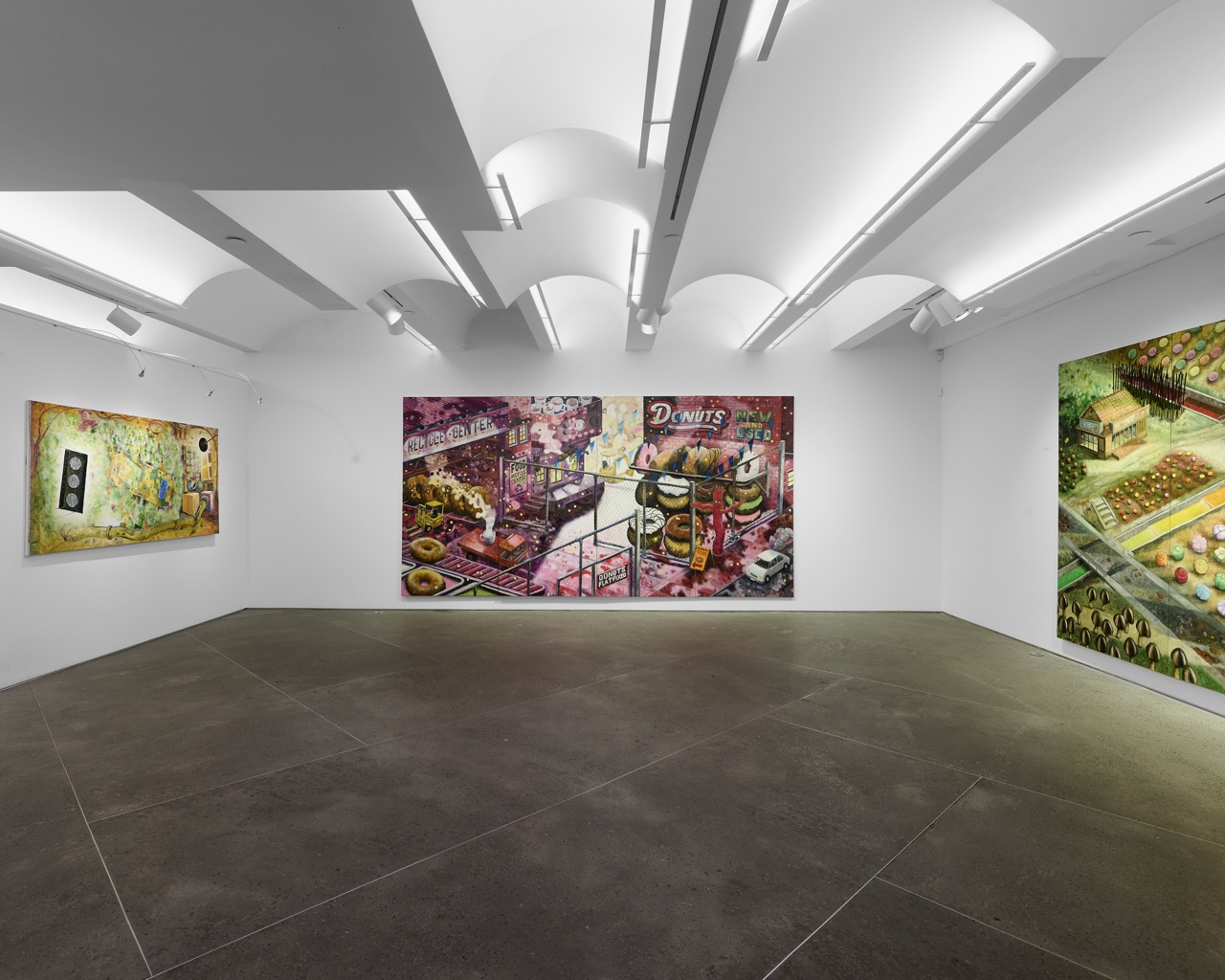 Installation view, 2026, Oscar Oiwa, GOCA Gallery, New York, NY, photo by Arturo Aanchez
By NATSUMI GOLDSFISH September 23rd, 2026 at 10:29am
During one of the busiest weeks of the art-world calendar in New York City, this is an exhibition worth seeking out if you want to experience what it means to look at art today through the eyes of an artist who has lived and worked across multiple places, including São Paulo, Tokyo, and New York City. Oiwa brings these experiences into his work, creating images that feel simultaneously familiar and otherworldly.
The Supplemental Sublime focuses on Oiwa’s thirty-year engagement with a single subject: food. The exhibition brings together new large-scale paintings with works reaching back to 1996, allowing viewers to trace the development of this sustained inquiry across decades.
Walking into the exhibition can feel almost like entering a virtual reality environment or a role-playing game in which you become the character. The paintings are large enough to occupy your field of vision, creating a world that the artist has constructed for you to enter. Yet the world is not entirely fictional. Oiwa builds his images from the real world while embedding them with discoveries, observations, social commentary, and questions about how we live and see.
When I first encountered his latest large-scale paintings, completed in 2026, they reminded me of Nintendo’s Animal Crossing: New Horizons, one of the most beloved games to come out of Japan. Oiwa’s educational background in architecture is evident in his ability to construct expansive urban landscapes and complex environments.
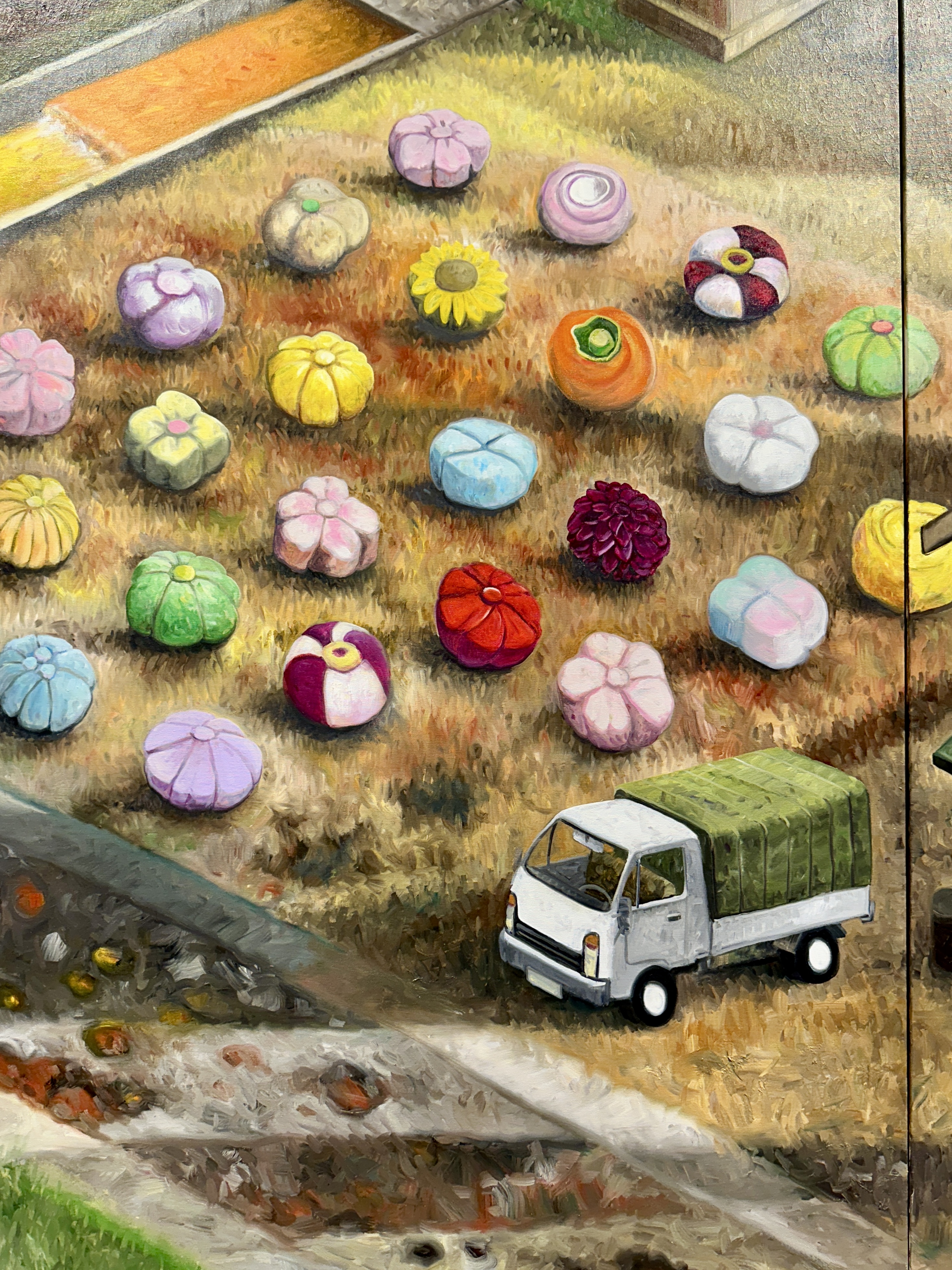 Candy Farm (detail), photo by Natsumi Goldfish
Two paintings in the exhibition, Wagashi Hatake (2026) and Candy Farm (2026), offer particularly compelling examples of this imaginative world. In both works, Japanese sweets and pastries—foods we normally associate with factories, commercial production, or painstaking craftsmanship by hand—appear to be cultivated directly on local farms. Rather than being manufactured or prepared, they are planted in the earth and allowed to grow like crops. This playful transformation collapses the boundaries between agriculture, food production, and imagination, creating a world in which even the most distinctly human-made treats seem to emerge directly from the landscape.
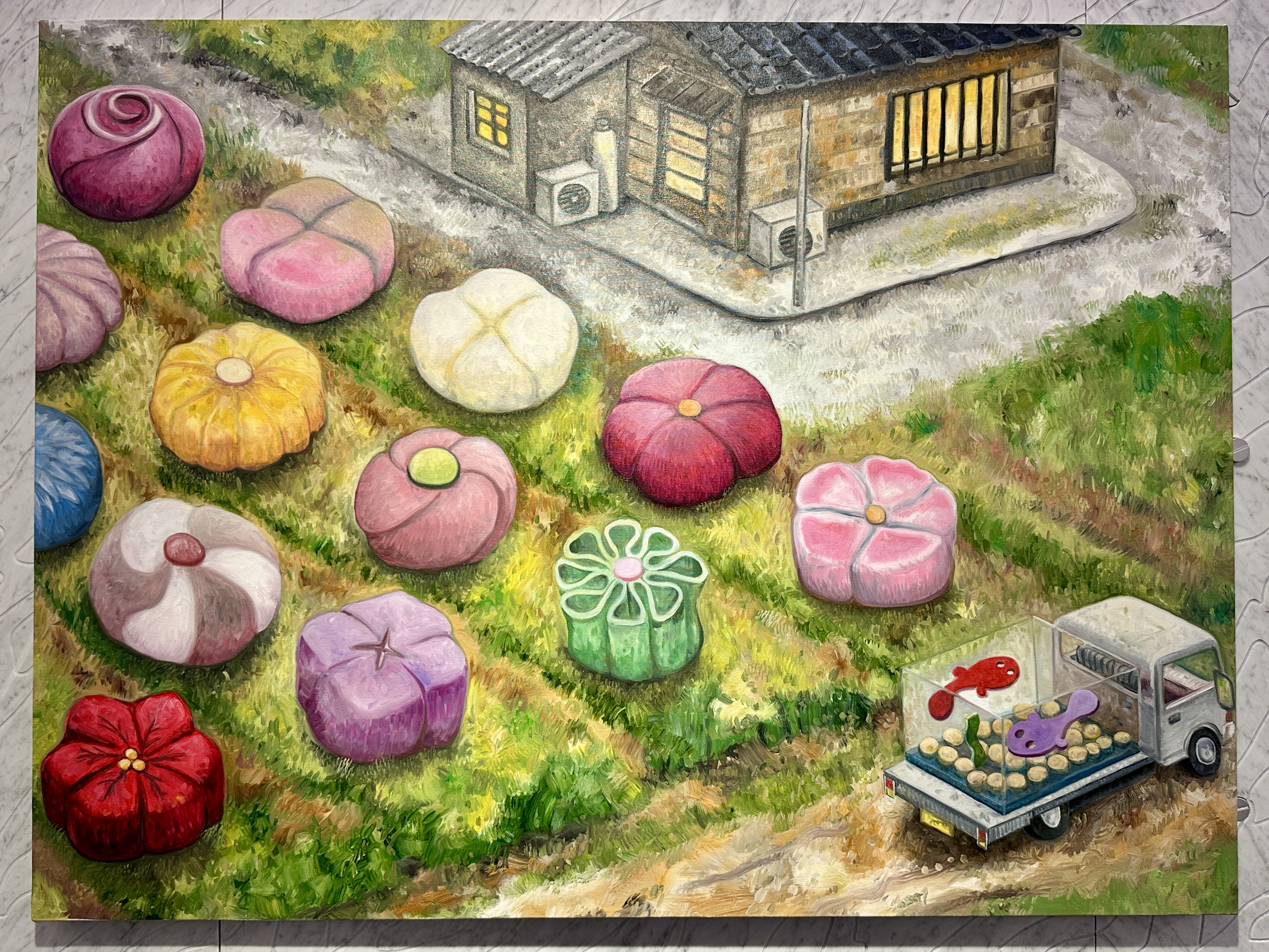 Wagashi Hatake (detail), photo by Natsumi Goldfish
Whether or not Oiwa engages directly with video games, there is something particularly interesting about viewing his paintings through the lens of Animal Crossing. The game is known for its “slow-life” approach. Unlike classic role-playing games, which often give players a clearly defined goal such as saving the world, Animal Crossing allows players to inhabit a world, observe it, arrange it, and gradually discover its possibilities.
For me, this is also part of the experience of looking at Oiwa’s paintings.
His bird’s-eye perspectives invite viewers to look at the same city or environment from a position that is impossible in ordinary life. From this elevated viewpoint, individual details become discoveries. The longer you look, the more elements emerge. Each viewer can find something different within the same image, depending on what they bring to it.
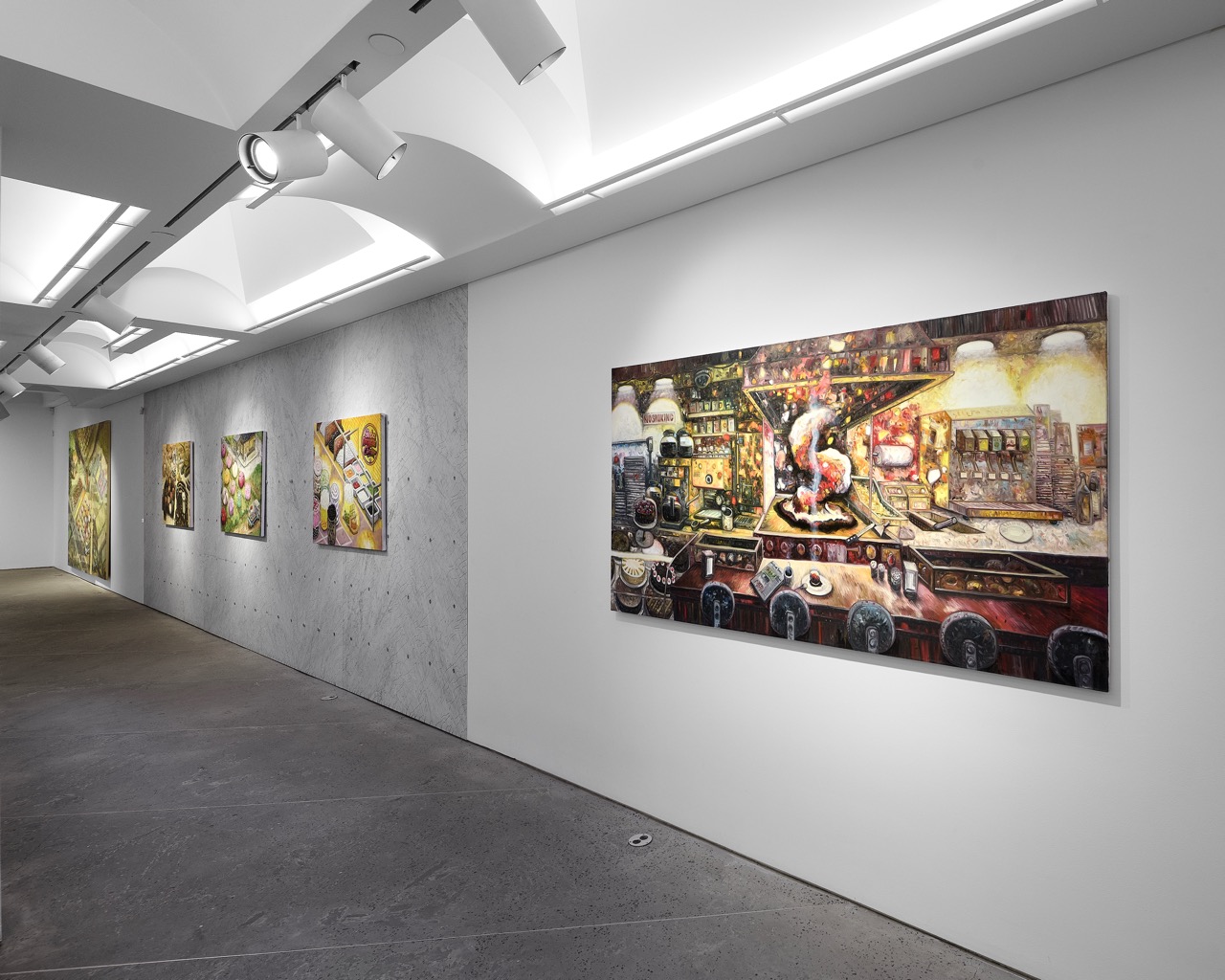 Installation view, 2026, Oscar Oiwa, GOCA Gallery, New York, NY, photo by Arturo Aanchez
There is also an energy that can only emerge from a large-scale canvas. Oiwa’s expansive compositions and bird’s-eye viewpoints create a physical relationship between the viewer and the painted world. His references to ukiyo-e, comic books, architecture, and contemporary life come together as part of a larger visual language.
And then there is food.
Through economic shifts, globalization, wars, changing relationships between countries, transformations in local living environments, and our ever-changing relationship with the natural world, food has remained a constant. To sustain ourselves, to harvest, to gather, to trade, to celebrate, and simply to exist as individual living beings, we cannot escape food and eating. Food connects us not only to one another, but also to the land, the oceans, animals, seasons, and the larger natural systems that sustain human life.
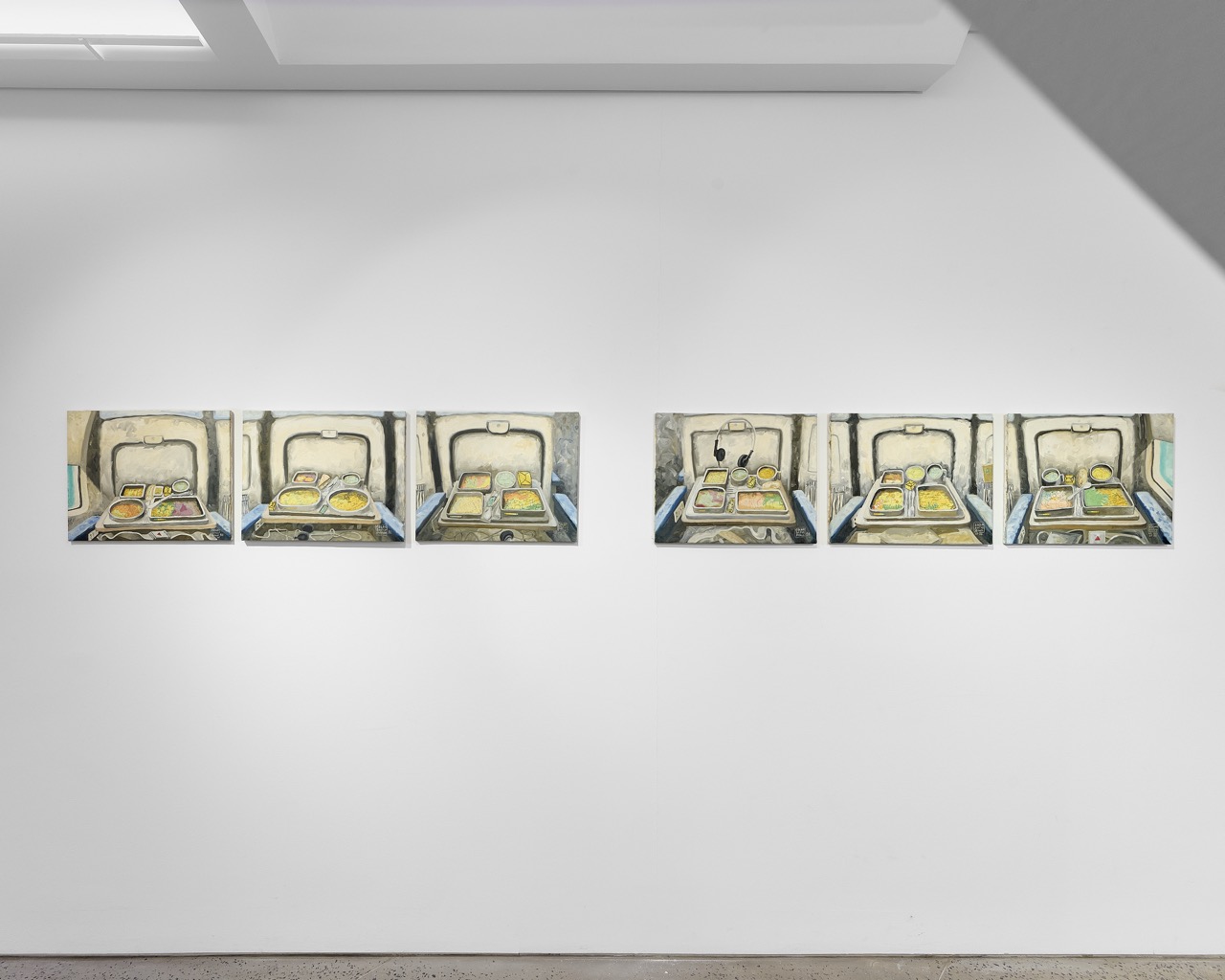 Installation view, 2026, Oscar Oiwa, GOCA Gallery, New York, NY, photo by Arturo Aanchez
It is often said that whoever controls food controls the world. Numerous books have examined the food industry as a way of understanding global movements and anticipating possible futures. Oiwa approaches this enormous subject differently. Rather than explaining food through economics or political analysis, he makes it visible.
That may be one of the most compelling aspects of The Supplemental Sublime. Food becomes a lens through which we can look at cities, societies, relationships, and ourselves. Oiwa does not give the viewer a single answer. Instead, he constructs a world large enough for us to enter, wander through, and interpret for ourselves.
Oscar Oiwa
The Supplemental Sublime
September 3 - October 3, 2026
GOCA Gallery, New York, NY
Natsumi Goldfish
Natsumi Goldfish is a visual artist and writer based in New York City. Since 2014, she has been writing about the world around art and artists, mainly from an artist's perspective. She has a deep interest in the question “What makes us human?”, and it is her passion to keep examining and discussing people and society through the lense of art.
view all articles from this author