Whitehot Magazine
October 2026
"The Best Art In The World"
"The Best Art In The World"
October 2026
“Stealing into the Night” — On Osmosis
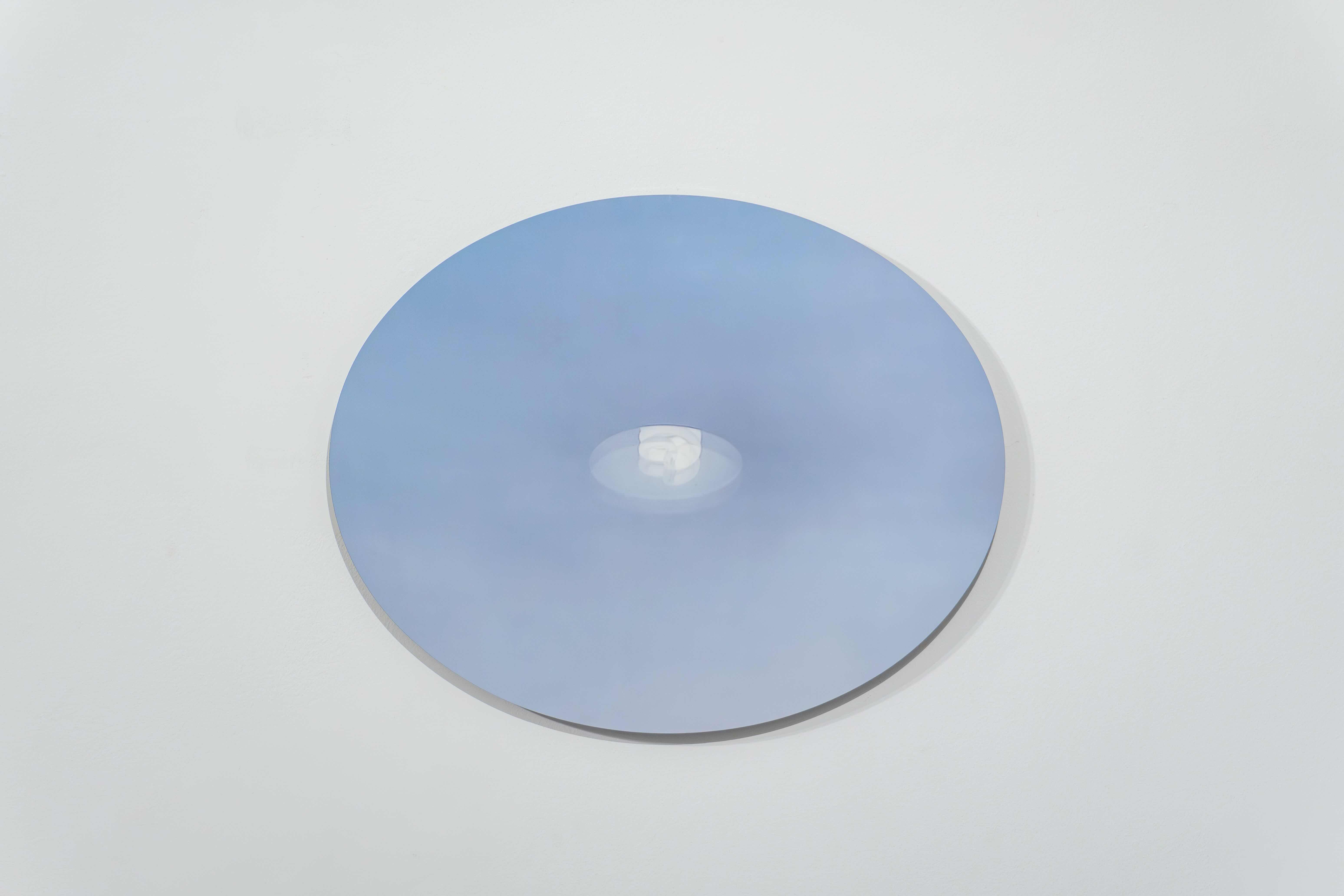
Installation view of Osmosis. Photo by Echo Xu. Courtesy of the artist and Symora Art.
By APRIL LIU May 6, 2026
“With wind it steals in night;
Mute, it moistens each thing.”
Osmosis, curated by Jinyi Freya Xu and Luman Jiang, is now on view at Flohaus Gallery. Quiet and powerful, an energy flows through the gallery space. Inhaling and exhaling, one senses particles carrying the artists’ poetic sparks settling softly in the lungs. It feels like a drizzle in April: the muted palette and organic compositions touch sensation gently, gradually altering it through their miniature presence. This seems to be the curators’ quiet magic. The narrative points toward a self-generating field of invisible energy: osmosis.
The works are displayed with disarming gentleness, giving no warning as viewers approach. Caution still feels necessary, since this is exactly what the curators intend. The hidden force is already in the room. These works sing a siren’s song and awaken the vulnerability people try to escape.
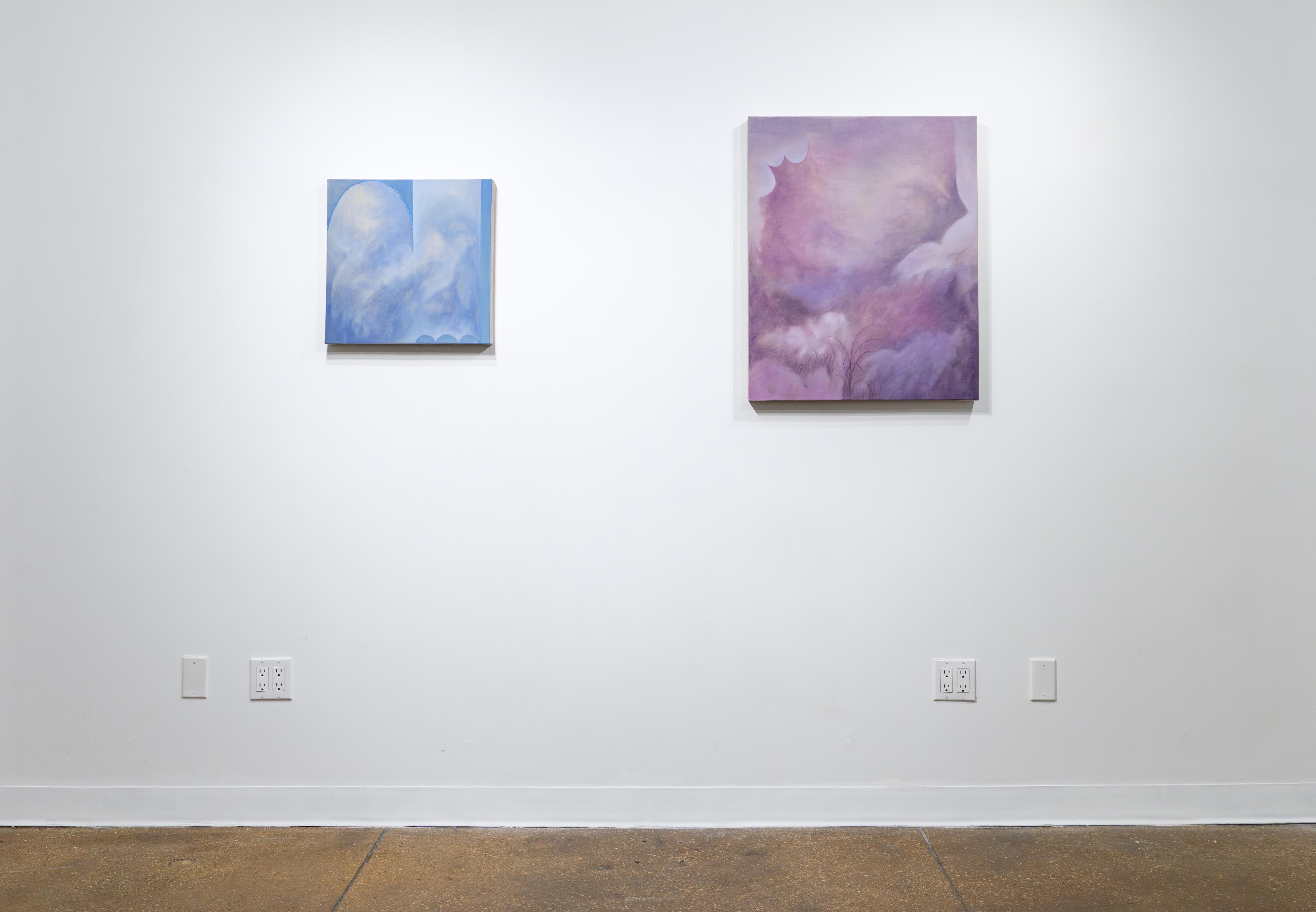
Installation view of Osmosis. Photo by Echo Xu. Courtesy of the artist and Symora Art.
Kyung Kim captures the moment on her canvas. Everything flowing in the air turns into shapes and colors on her paintings. Her abstract works carry a figurative quality through sensation and memory. Winter Haze feels cold and blurred. Blooming Desert is full of fantasy. They invite resonance. Viewers are drawn into them and brought back to inner memory and imagination. These paintings are never fixed. They depend on context and individual experience, like something seen before and never fully identified.
In a similar way, Bingyi Zhang’s Whisper of Water also captures a moment on canvas, triggering deep memory and rippling through emotion. Seen from afar, the photorealistic painting speaks to Monet in the age of digital simulation. Zhang plays with perception. From up close, the image becomes swamp-like, seemingly decaying and swallowing life. Everything depends on the way the eye meets it. The piece becomes a visual illusion that searches for a blind spot, allowing meaning and loss to form on the canvas, then slip away without notice.
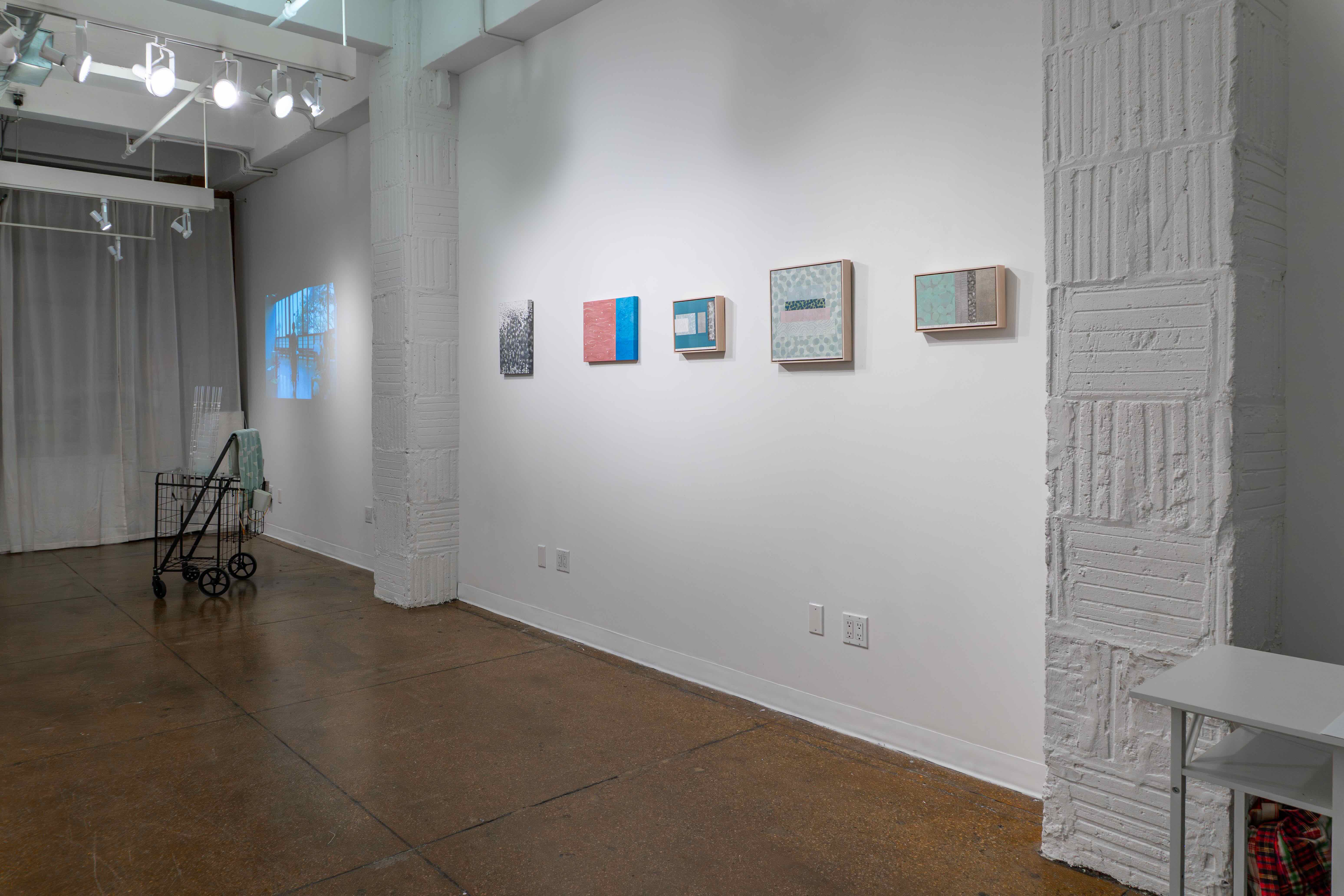
Installation view of Osmosis. Photo by Echo Xu. Courtesy of the artist and Symora Art.
Xingze Li’s work is a reclamation of a quotidian and common object: the wall, a surface so often ignored. Through dye sublimation, a process frequently associated with commercial production, the wall is reprinted onto an aluminum panel. Aluminum itself is also a common material in daily life. Their combination becomes experimental, turning ordinary things into a Dansaekhwa-like artwork on the gallery wall, admired by others. The process can “fool” the eye and draw attention to both the wall itself and the printed aluminum panel. The story of the wall tells itself silently, with a quiet force intensified by material and process.
Joy Li’s installation, created through domestic objects, appears innocent and non-dangerous at first. These collected materials can be found everywhere. Joy uses domestic objects, including a rack, plants, and kitchen utensils, to shape a landscape. The installation can be read like Han Kang’s The Vegetarian: a woman’s unsettling transformation toward vegetal life. Obedience, resilience, revenge — the seed-like presence embedded in the bubble made by the artist on site is planted in the audience’s heart.
Guo Tongtong moves toward the romantic side of human feeling. Echoing the Chinese literati aesthetic of “painting in poetry and poetry in painting,” Guo hides three-line poems inside her works. They feel like a lover’s secret: words wanting to be spoken aloud, held back by shyness. Thick emotions gather in layered compositions made with multiple media, including printing and freehand strokes. It is hard to guess how to peel them to the core. They remain there, narrating soft, determined feelings.
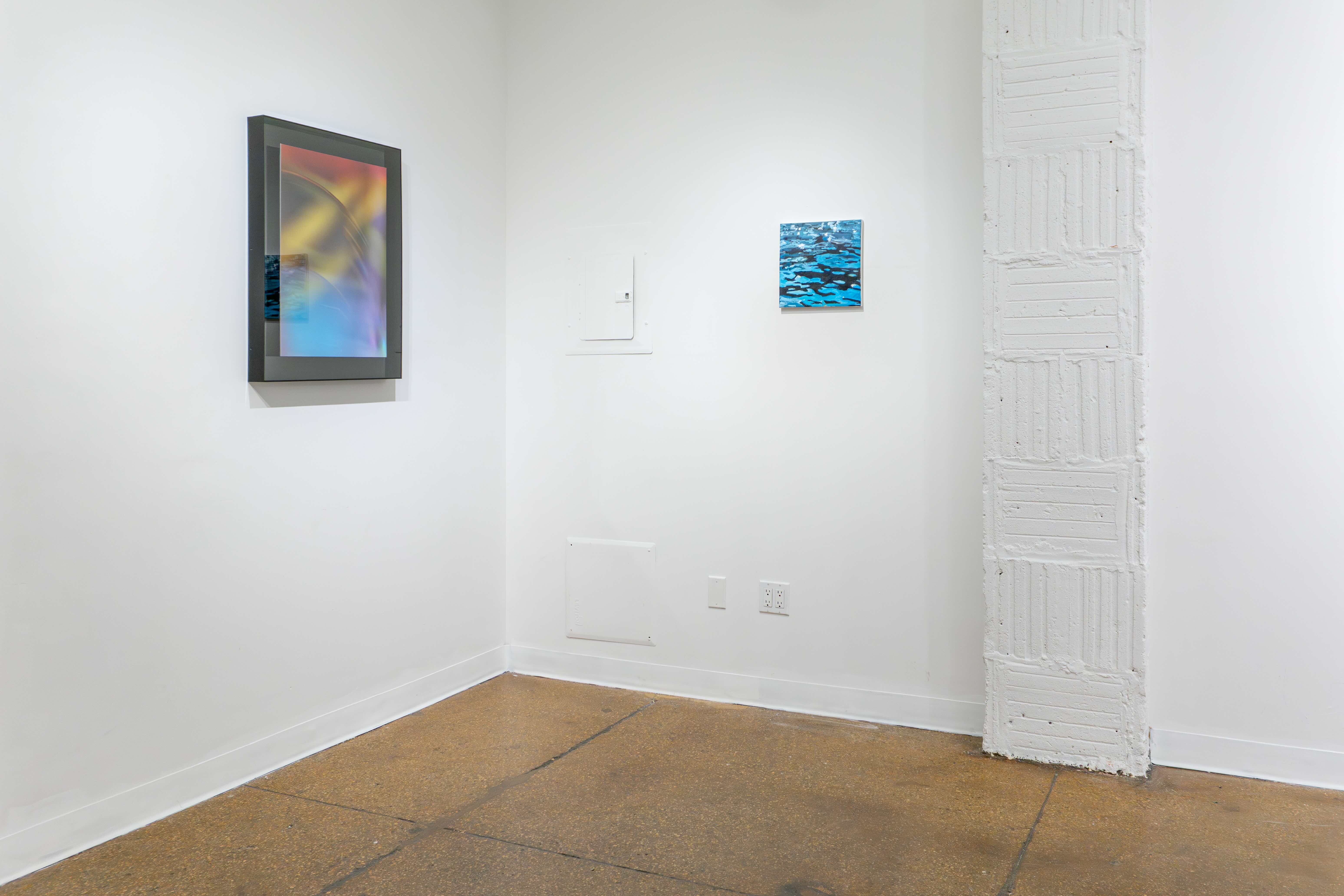
Installation view of Osmosis. Photo by Echo Xu. Courtesy of the artist and Symora Art.
Take a Nap in Bubble – No. 18 by Yu Ruo-Jie forms a beautiful ending line for the show. Wandering through the gallery feels like touching the bubbles of others and receiving the touch of others on one’s own bubble. The contact is gentle, careful enough to keep the bubble intact, and determined enough to leave a trace. Looking back at the experience, colorful and illusionary lights reflect and refract on the bubble’s surface, as the world should be.
Osmosis, like its title, allows consciousness to arrive late, with presence right on time. The weather in April changes constantly. The drizzle sneaks into the night and enters the texture of nature. The blossom testifies to its arrival.
April Liu
April Liu is an independent curator and writer working between Providence and New York. She is especially drawn to emerging artists and the fresh perspectives they bring to contemporary art.
view all articles from this author