Whitehot Magazine
November 2026
"The Best Art In The World"
"The Best Art In The World"
November 2026
Kyle Staver: in Pursuit of Shared Humanity
By BELLA GREENBACHER, November 13, 2026
Growing up, artist Kyle Staver did not feel like she was princess material. She adored the whimsicality and fantasy of fairy tales and magical illustrations as a child, but felt anxious that she didn’t reflect the ideals of royal perfection that storybook characters exuded. Over 50 years later, with an attitude of profound wisdom and sincerity, Kyle’s creative process serves as a catalyst for introducing new roles for women, figures that defy the enduring tropes of fabricated flawlessness. “I love the idea that a woman could have broccoli in her teeth, or her zipper down,” she says, “and would still be a goddess.”
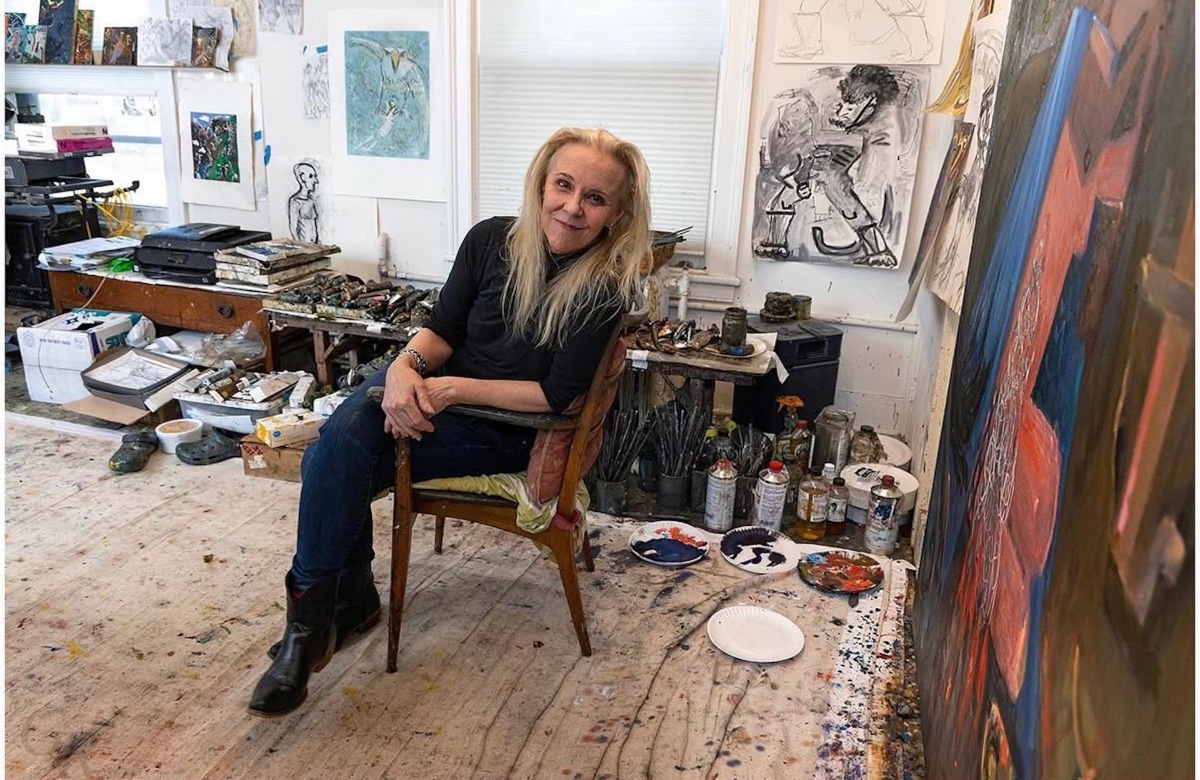 Portrait of Kyle Staver by Grace Roselli
Kyle recounts a lesson from the history teacher at her all-girls boarding school, Mrs. Moses, that acted as a milestone in her change of perspective towards art. Her teacher had observed Kyle’s nervous tic of obsessively drawing little characters and told her, endearingly, “I know what is wrong with you.” Living up to her prophetic surname, Mrs. Moses exposed Kyle to the idea that people have dedicated their lives to creating art throughout history: “You’re an artist,” she told Kyle, “and that’s okay because there is a whole rich world of art.” On a school field trip, Kyle visited The Art Institute of Chicago and encountered Renoir’s paintings for the first time. She enjoyed being in the museum, but struggled to interact with the artwork in a way that felt meaningful to her. “It wasn’t an easy bridge,” says Kyle, “I remember standing in front of a Cézanne still life and thinking: I don’t get it. I don’t get it.” It was not until she taught herself to simply look at art without self-judgement and wait to see if something happened internally that she began to trust her experience.
“Before I go to an exhibition or a play or a movie, I won’t read what other people have previously written about it, because that prepares me for some kind of expectation. And the whole fun, marvelous thing for me about looking at art is that experience: I’m standing in front of it and seeing what happens to me. I don’t want anything tinkering with my firsthand experience.”
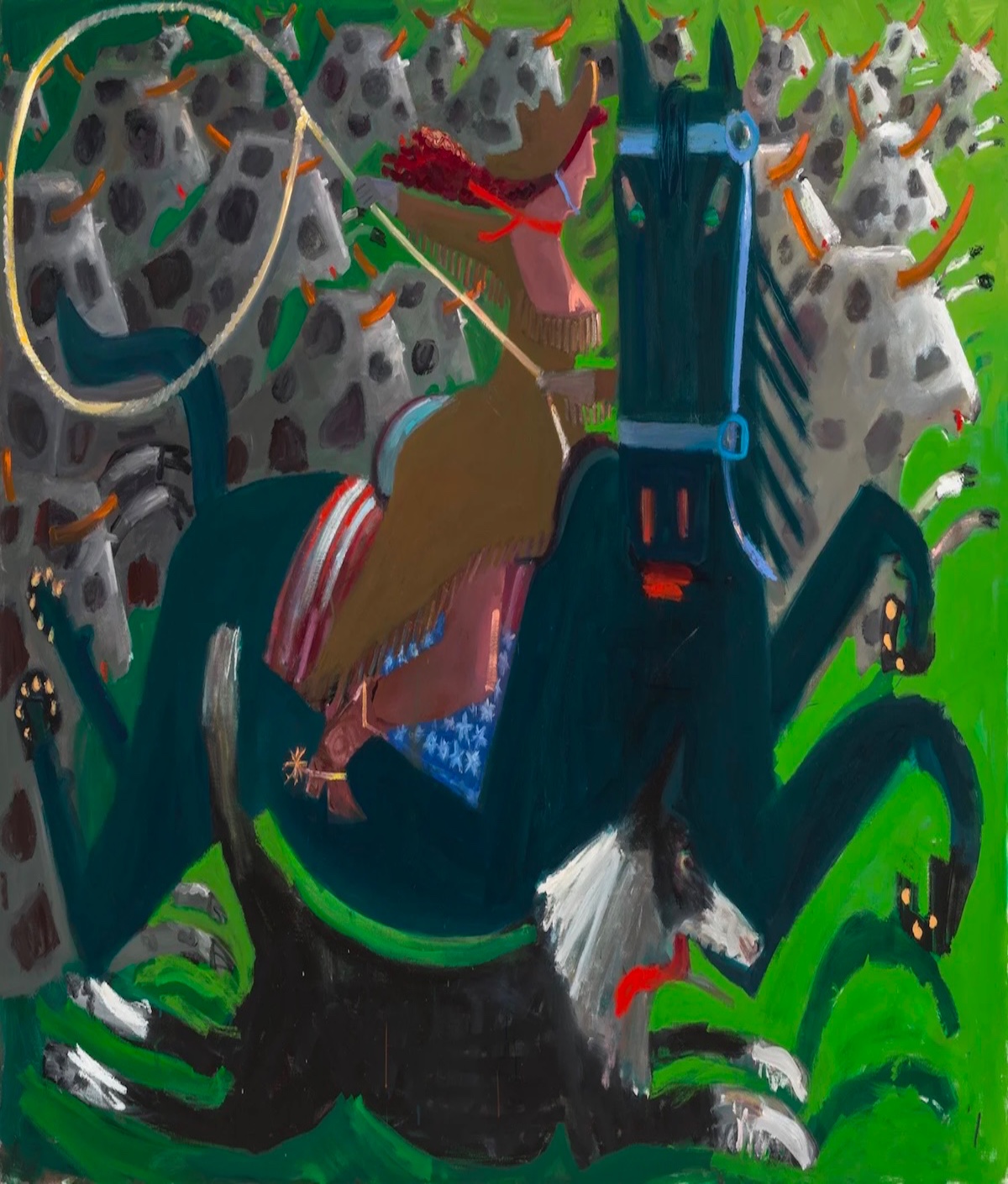 Annie Oakley 54"x70" oil on linen 2025 by Kyle Staver
An artist and a teacher, Kyle uses this philosophy when introducing her students to art. She brings them to museums and tells them not to say anything for the first 20 minutes, but to just simply observe. “When you’re an art student, you really feel like you’re supposed to get it, like passing a test,” Kyle says, “but if you take away that burden, something amazing happens.”
The same manifesto of normalizing imperfection and individual experience plays into the subject matter of Kyle’s work. Her paintings and sculptures often feature a prominent female figure that draws inspiration from classic fairy tales: Beauty and the Beast, Goldilocks, Little Red Riding Hood, Sleeping Beauty. However, rather than depicting women as passive, idealized figures, Kyle’s renderings pay homage to the beauty and humanity in exaggeration and awkwardness. Powerful women like the biblical Eve, the goddess Artemis, and Miss Minnesota pageant queens command space and attention within the frames, smiling confidently with warped bodies and shameless neon pink nipples. “I try to give better roles to women through slight tweaks, like changing the light or proportions,” Kyle explains, “I use humor as a kind of humaneness. It’s not mocking or making fun of the characters. It’s just reminding us of how silly we all are, and I love that. They’re not mannequins, they’re thoughtful participants. And they often have cowboy boots.”
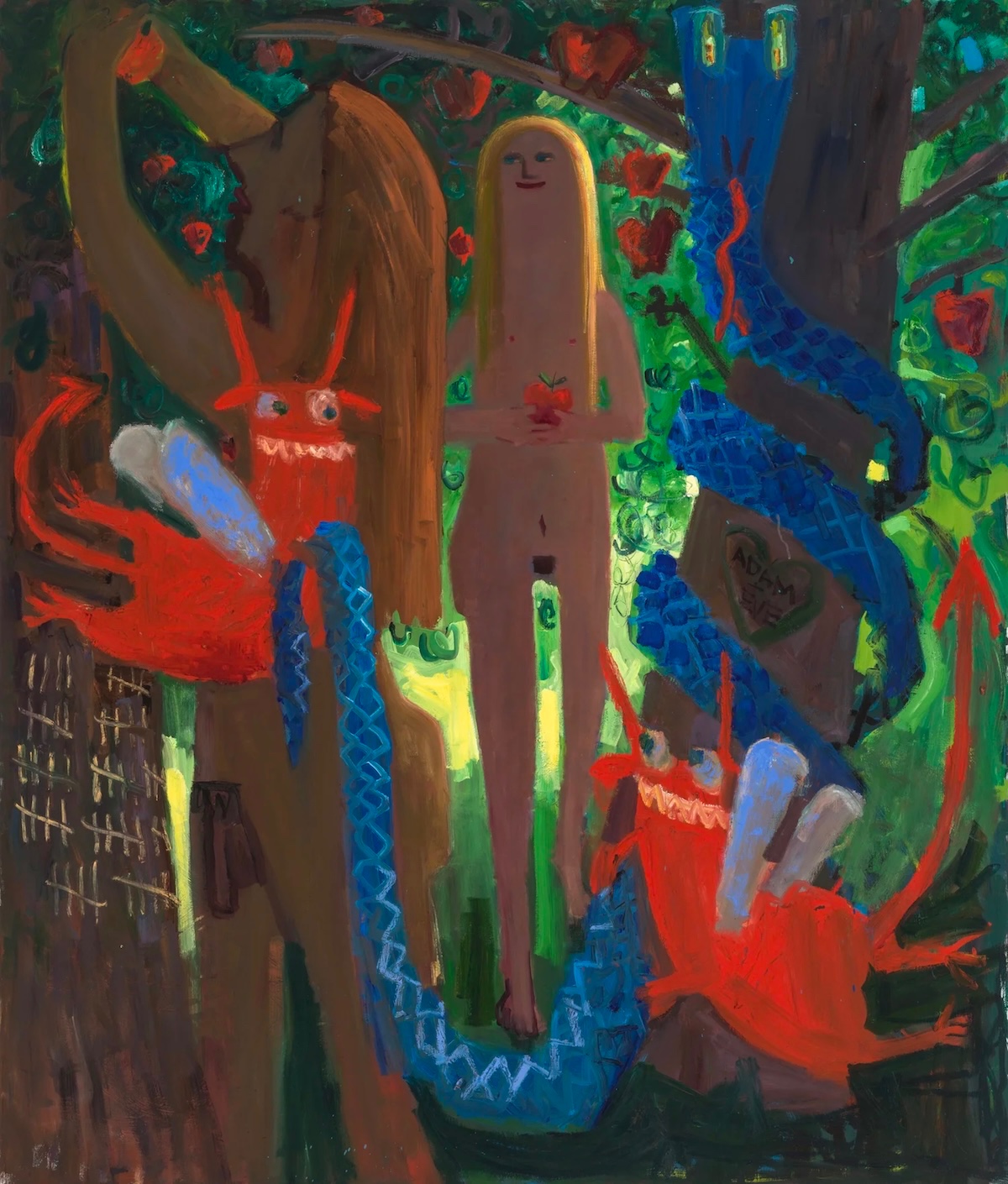 Adam and Eve 68"x58 oil on linen 2020 by Kyle Staver
Kyle’s artworks juxtapose the archetypal depictions of graceful, perfect women by, as she puts it, “white guy painters,” though she appreciates their work too. Kyle explains that she used to compare herself to successful male artists and worry that she did not equate as a woman. Now planted at a confident place in her field, she laughs about how she often drinks beer with middle-aged male painters and would even love to meet up with Rembrandt and buy him a drink. “I’m not afraid of him,” she says, “I feel like we have so much in common. It would be wonderful to talk. He’s one of my biggest inspirations. His work is open to everyone and needs no explaining. I love that sense of generosity.”
When I first met Kyle, she was adamant not to use the word “practice” to describe her process of creating art. She doesn’t like this word. “I think it was invented by art schools who charge too much. Parents think that spending all this money is going to get their children an art practice like a law practice, or a dental practice,” she explains. But for her, creation itself is not a profession. It’s a calling. “It’s an endlessly stupidly romantic thing I have with being an artist,” she says, “I paint to look for myself, to recognize myself.” Kyle does not try to paint things that may interest other people or institutions, but rather to say something that she needs to say: to follow her individual path in life.
“This is going to sound stupid, okay?” Kyle prepares me, “But I want us to hold hands and look at art and say ‘oh, I get it.’ That way we don’t feel so alone. That way we don’t feel so wretchedly disconnected.”
Kyle Staver's solo exhibition, Nonetheless, opens November 18 at JJ Murphy Gallery.
Bella Greenbacher
Bella Greenbacher is a writer, curator, and visual artist based in Brooklyn, NY. She holds a BFA in art history and visual art from Concordia University Montréal. Her work has appeared in The Michigan Daily and Concordia Undergraduate Journal of Art History, as well as curatorial work at the Bushwick Gallery. Through both writing and exhibition-curating, Bella aims to inspire in-depth dialogues surrounding underrepresented voices and topics in the art world.
view all articles from this author