Whitehot Magazine
October 2026
"The Best Art In The World"
"The Best Art In The World"
October 2026
Week in Reviews: Robert Rauschenberg at Gladstone, Process-Driven Abstraction at Elza Kayal, A-Vent-Space at Greenpoint Gallery, and more
By LIAM OTERO May 11, 2025
Art + Fashion Show by A-Vent-Space at Greenpoint Gallery, Greenpoint, Brooklyn (May 3)
 Installation view of the Art Show curated by A-Vent-Space at Greenpoint Gallery, Greenpoint, Brooklyn on Saturday, May 3, 2025.
Greenpoint Gallery, a hub for fostering emerging creatives across disciplines, held a one-night only art & fashion show on Saturday, May 3. This specific event was curated by A-Vent-Space, an independent coterie of artists and fashion designers who regularly organize hip, ground-breaking, DIY shows.
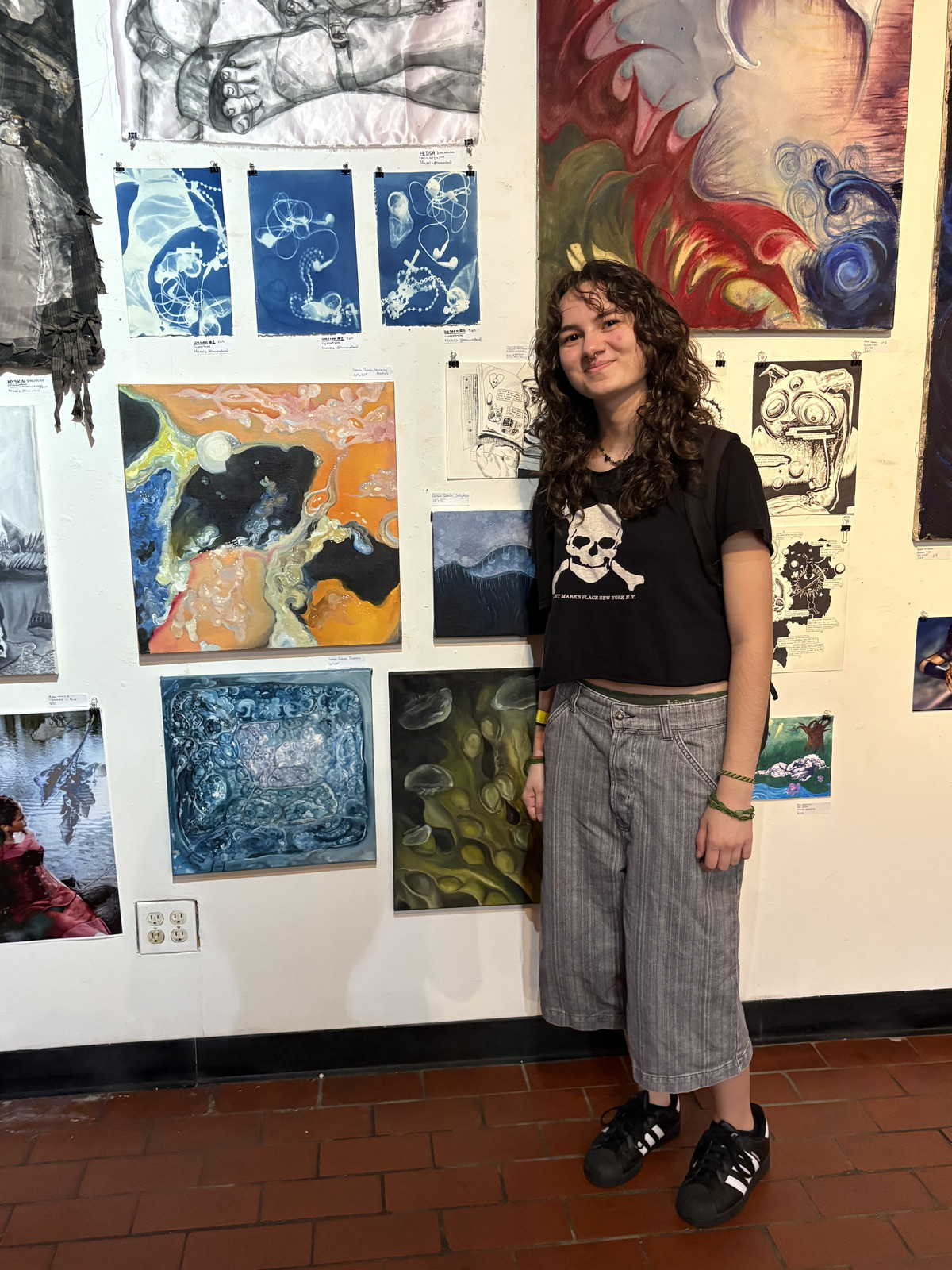 Lucine Sokola with her four paintings (Left to Right counterclockwise: Washing Machine; Bubbles; Jellyfish; and Seaweed).
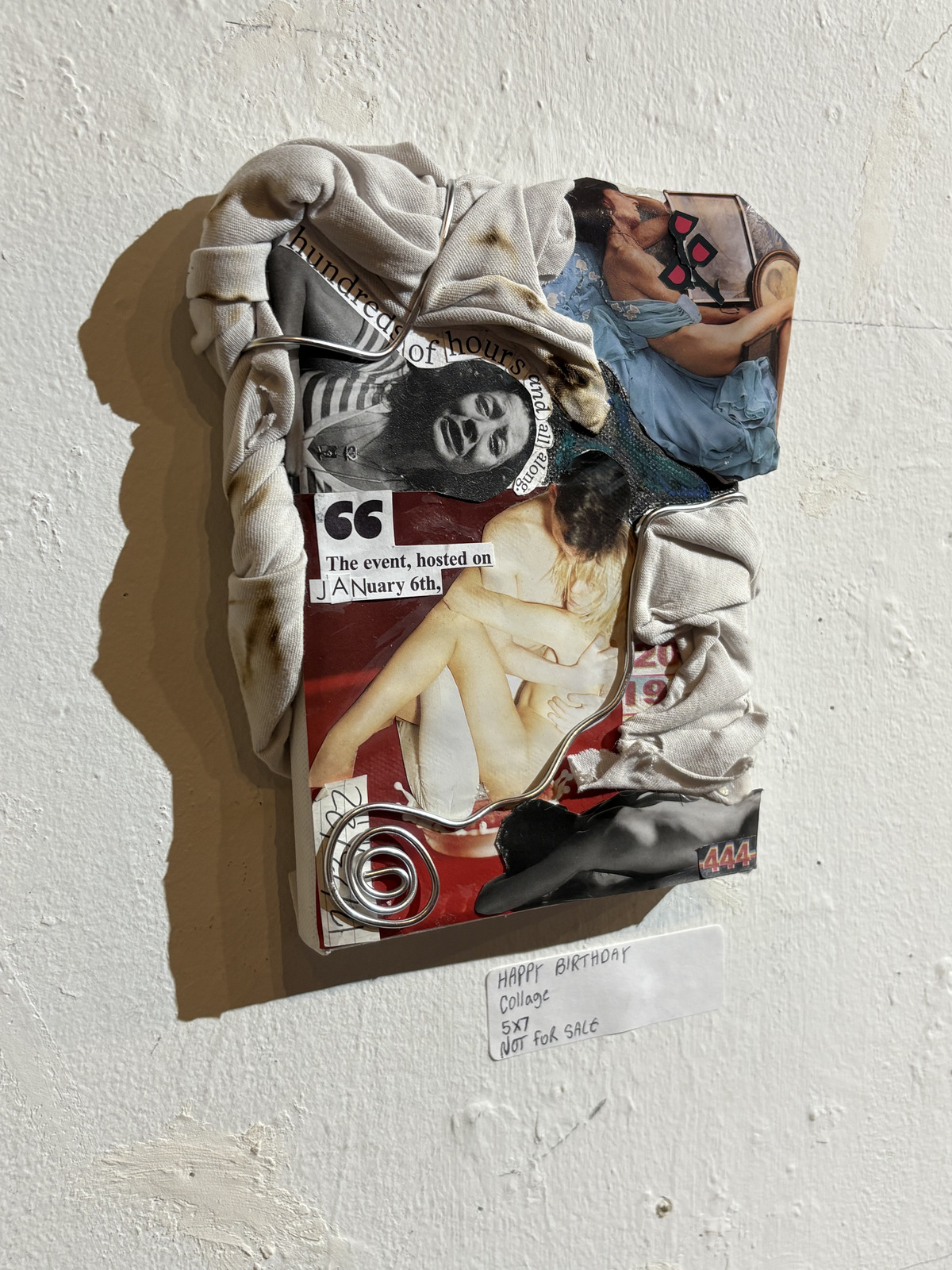 Avery Arnz, Happy Birthday, Collage.
When the doors opened at 6pm, I was greeted by a salon-style arrangement of art reflective of the exciting undercurrents of what beholds the future of Contemporary Art: spectral cyanotype still life studies; nightmarish body horror paintings; surface-rich textile and cut-out collages; alluring fashion photography; surrealist sculpture; experimental fashion designs, and much, much more. The majority of the artworks were curated along two walls, but there were additional works (large-scale paintings especially) that were on view elsewhere on the spacious second-level of Greenpoint Gallery. I kept clambering back and forth between sections of the exhibition because there was so much to take in, all of the artworks were quite enticing, seductive to the eye, really. I was not alone in thinking this way as the event was jam-packed with at least 100 people who came in and out to observe the works by the youthful vanguard. An adjoining room also had a mini-flea market going on in which home-made zines, custom-designed jewelry & clothes, and small-scale artworks were on sale (I picked up a white t-shirt with a red-emblazoned kawaii figure designed by a student from the Fashion Institute of Technology).
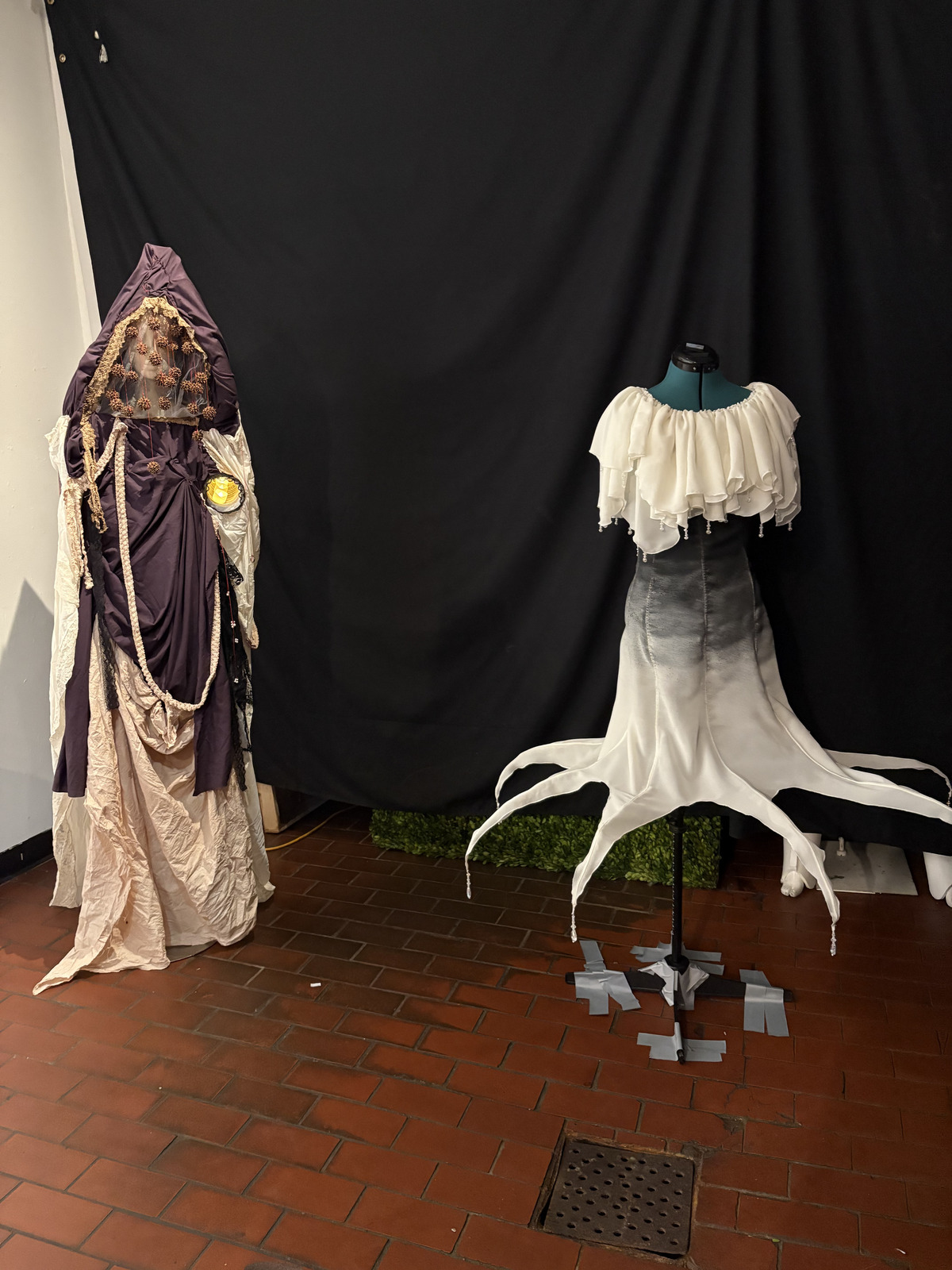 Designs by Tamara Rosentgberg (left) and Chavely Gomez (right)
By 7:30pm, the fashion show commenced. The runway was an L-shaped route in which the 6 or so models strutted from a backroom, worked their way into the middle of the exhibition space, struck a pose, and then went back. Oversized hoodies and baggy sweatpants, Neo-Victorian Steampunk high-shouldered & high-collared dresses, Neo-Grecian/Amazonian, and denim set-up attire were a few highlights that coveted much oohs & ahhs and iPhone photo-ops amongst the crowds. It isn’t every day that you get to witness a sophisticatedly avant-garde fashion show right smack in the middle of an art exhibition. It was literally heaven to have my love of art and fashion converge in the most awesome ways possible.
This was more than just an art exhibition, A-Vent-Space’s entire event was a proper happening totally in the spirit of Allan Kaprow, Joseph Beuys, or Yayoi Kusama along with fulfilling the definition of gesamtkunstwerk (“total work of art”) for its multimedia, participatory, all-encompassing immersive atmosphere. You just had to be there to fully appreciate the coolness of the whole spectacle.
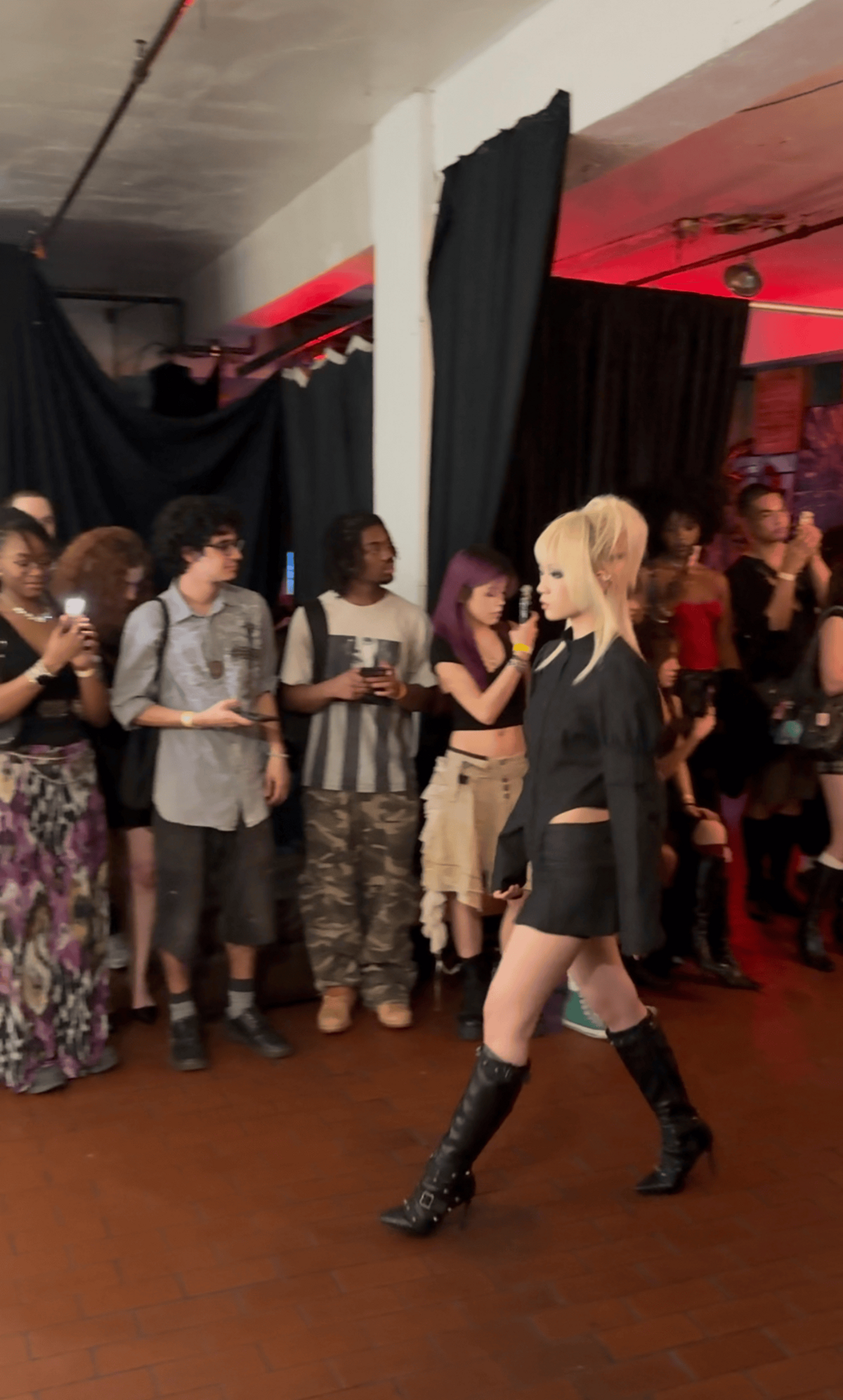 Model Khi Chen struts during the Fashion Show with clothing designed by Ji-Ho Hong.
Squares, Splash, Dots and Wax at Elza Kayal Gallery, Tribeca (on view through May 17)
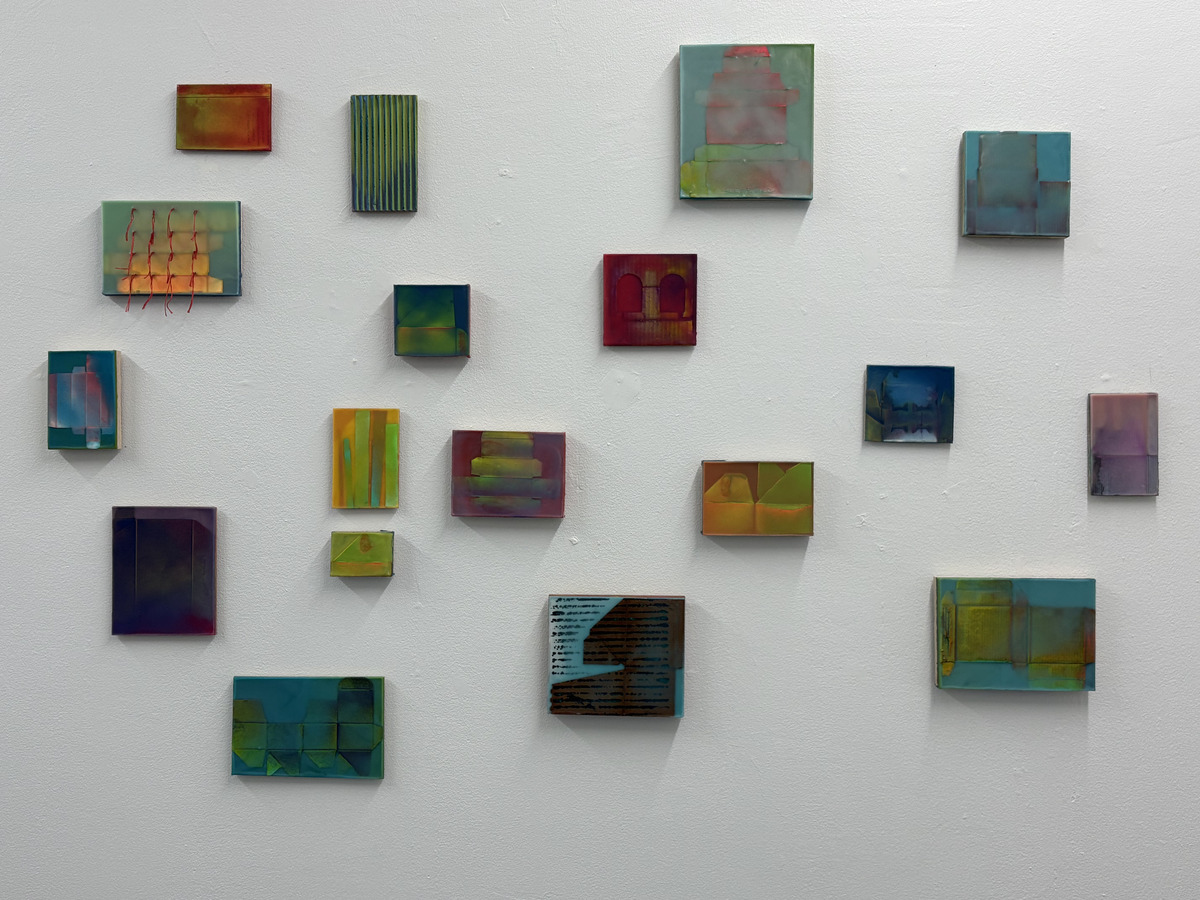 An assortment of Joanne Ungar's painterly mixed media collages.
Four contemporary artists each contribute a fresh perspective on abstract art in 2025, a common denominator amongst this group is that their engagement with abstraction is via process-driven methods, a technique in which the creative process is also an integral facet of the artwork.
Consumerist critique is typically a theme engaged by artists working in the realm of figuration, yet Joanne Ungar proves that such a concept can be probed just as effectively through abstraction. Ungar’s mixed media pieces initially look like a blend of Color Field and Geometric Abstraction, but a closer inspection reveals that discarded commercial packaging is the material bedrock that is covered over in a transparent veil of acid-wash paints and wax, the latter yields a glossy finish. Ungar describes these as “time-capsule” objects in which commercial waste is given a second life by way of transforming into an artwork that is aesthetically gratifying and sustainably prescriptive.
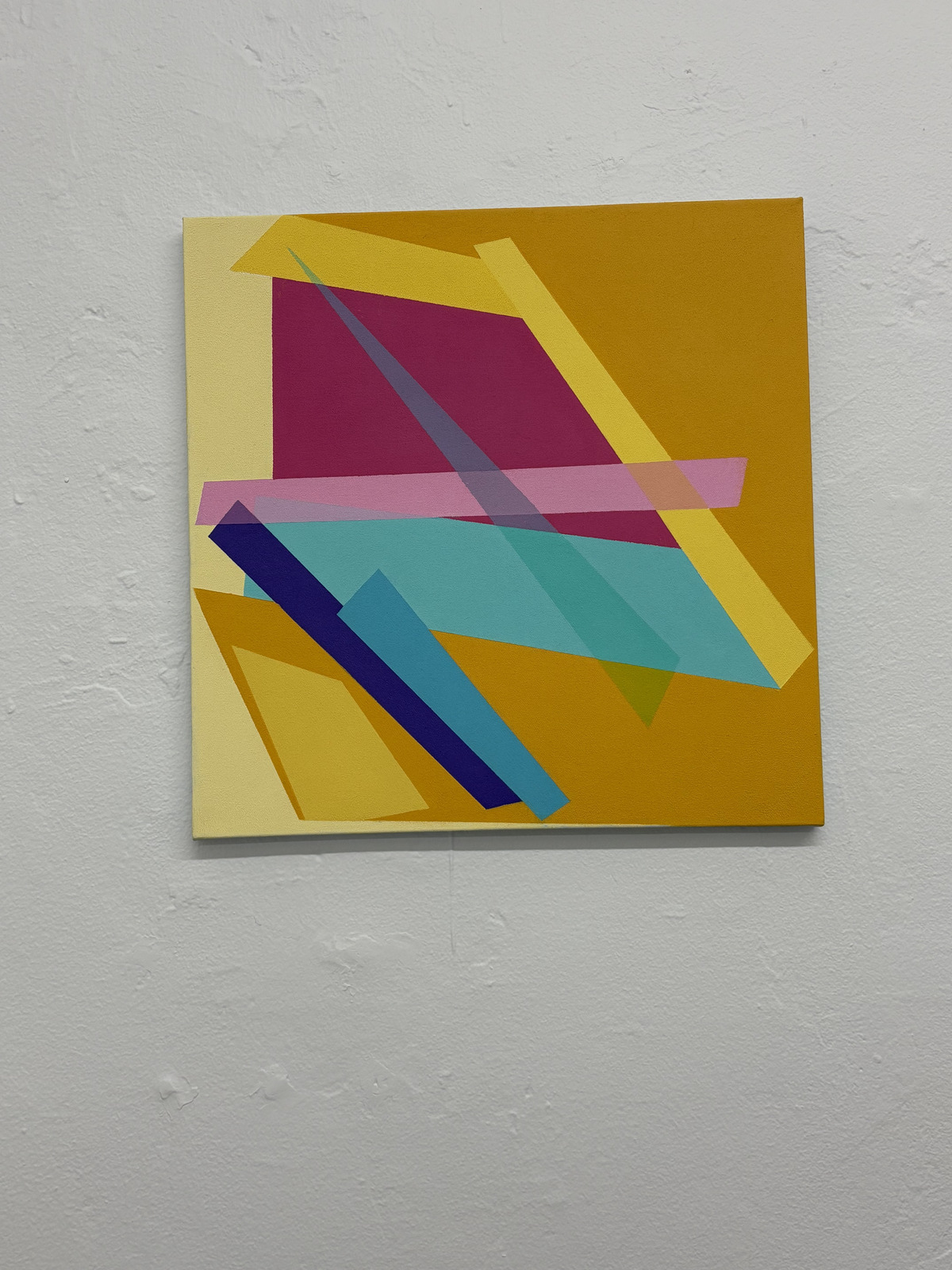
Kati Vilim (Hungarian), New Time Zone, 2025, oil on canvas.
Kati Vilim, a Hungarian artist based in New York, produces hard-edge geometric abstract paintings that convey a sharply prismatic, glassy quality seen in the overlapping planes that converge and bisect - much like Malevich’s Suprematist interventions, but with more colorful and spatial dynamism. Within these crystalline configurations, there is a clever system in which the intricate placement of shapes result in a multiplicity of forms that coexist - a golden cube that also is a series of parallelograms; muted trapezoidal and triangular masses that resemble indexical signs; or an isosceles triangle that looks as though it is both piercing through and reclining on top of an oblique pink rectangle.
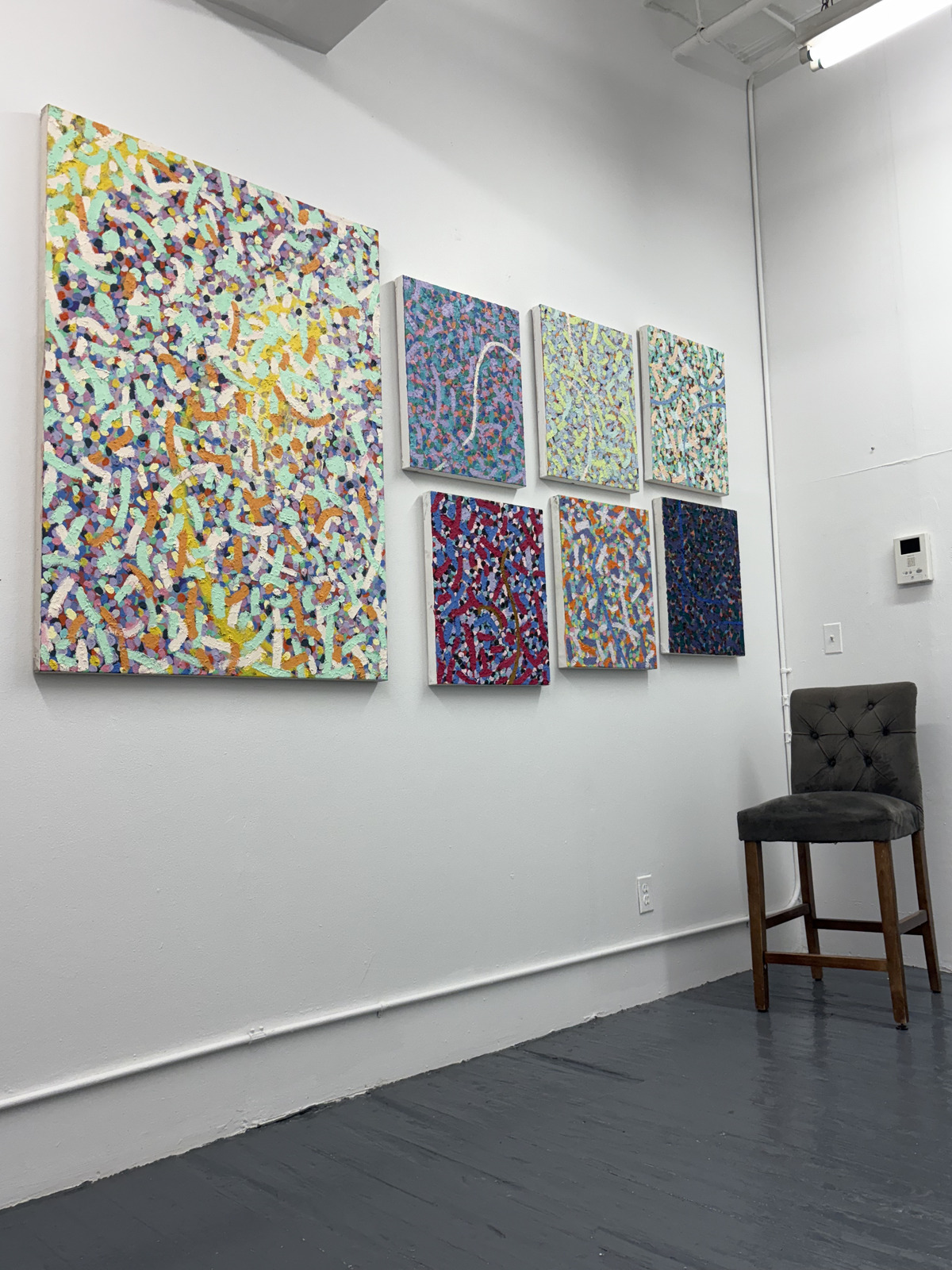 Installation view of Rodrigo Tafur's paintings
The Peruvian-born, Brooklyn-based Rodrigo Tafur’s Abstract Pointilist-inspired paintings are moving visualizations of the artist’s mental health journey. Having dealt with anxiety and obsession, painting became an integral outlet for Tafur to channel his innermost feelings and put them onto canvas as a productive means in overcoming emotional challenges. Swarms of dots, curls, and laces inundate the canvases with color coordinations varying between lushly tropical to a cool darkness. The repeated application of like-shapes and colors surely must have contributed a calming effect for Tafur as he worked, but seeing these paintings as a viewer also initiates a soothing effect in which you are invited to visually lose yourself in the sea of forms.
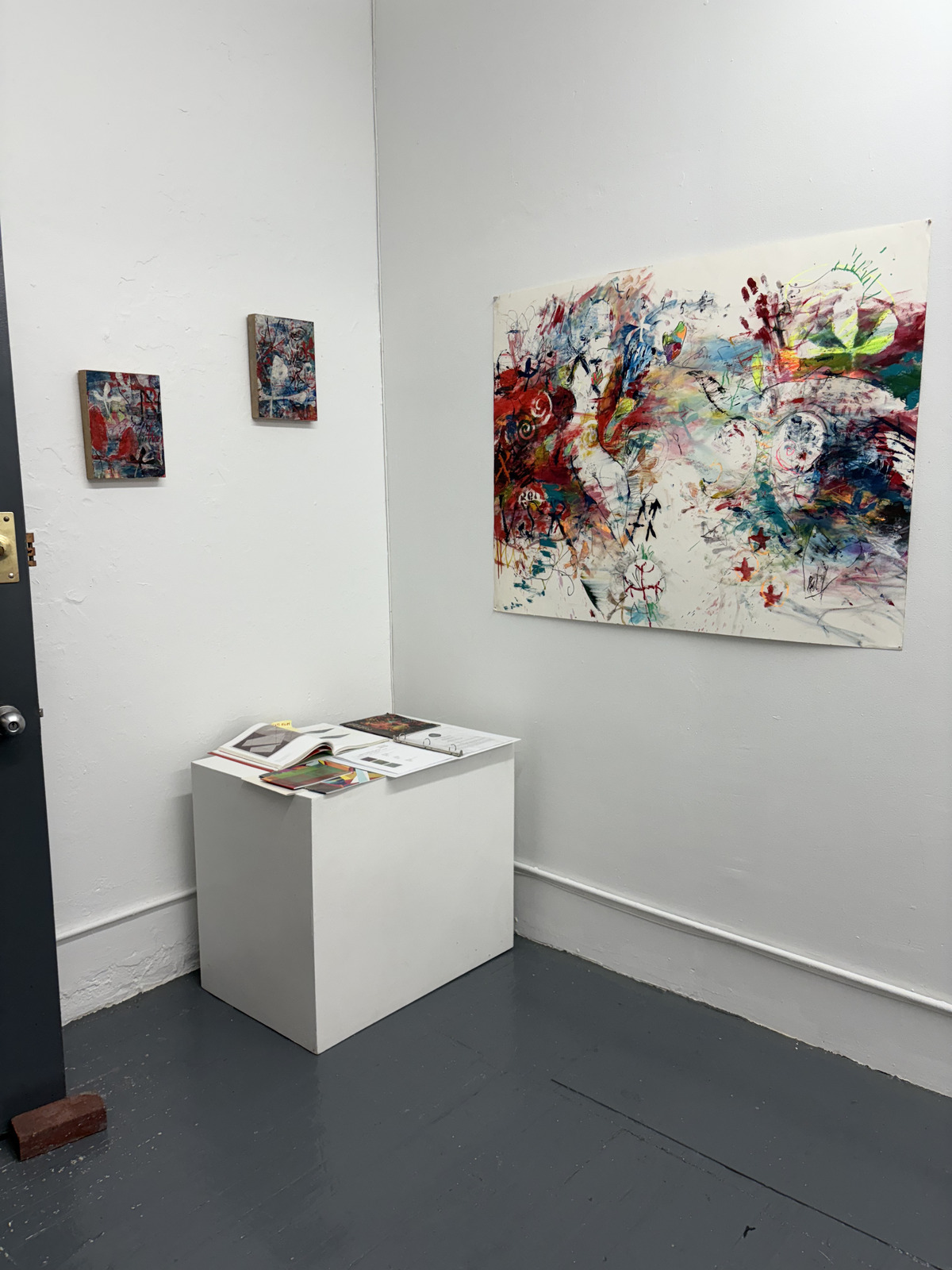 Installation view of Ford Crull's paintings.
Ford Crull brings physical intensity to his paintings in which he rapidly applies a torrent of not only shapes and colors, but also letters, numbers, and symbols that are then cut and scratched with a palette knife. He even brings his hands onto the surface of the works as there are quite a few instances in which hand or finger markings can be discerned - a literal manifestation of the artist putting himself into his art. All of these artistic mediations render the work as being far richer in its sense of depth, which makes me ponder if Crull is a reincarnated Abstract Expressionist?
Paul G. Oxborough: New Works at Cavalier Galleries, Chelsea (on view through June 7)
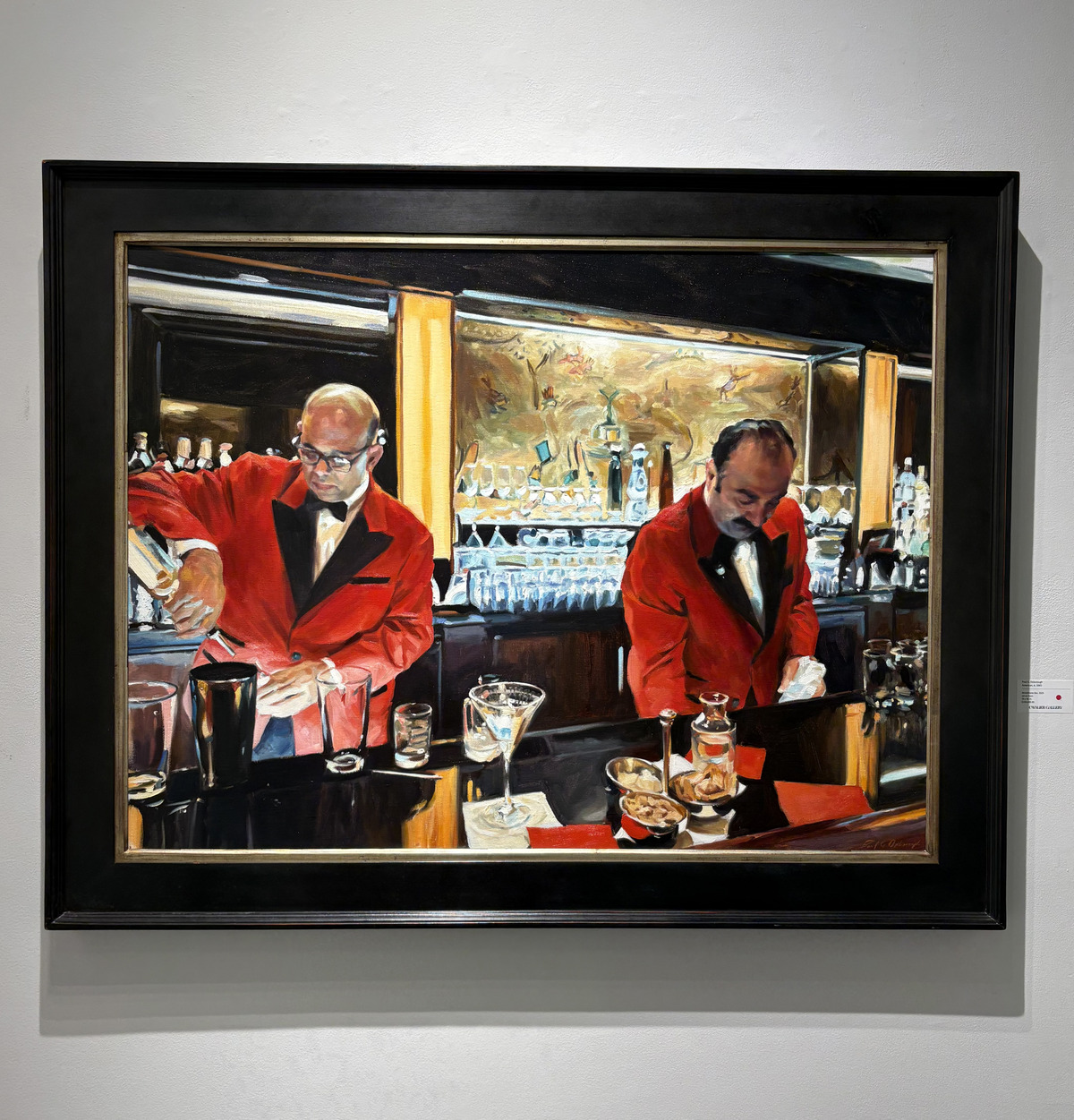 Paul G. Oxborough (American, b. 1965), Bememelmans Bar, 2025, oil on linen.
I have an art historical equation for you: Impressionism + Photorealism + Baroque = what? Answer: Paul G. Oxborough. A stalwart practitioner of light diffused painterliness, the academically-trained Oxborough returns to Cavalier Galleries to present his newest iteration of paintings since his late-2023 show, Recent Works. Over 25 paintings line the walls that are each enclosed within fashionable black frames that ultimately draw out the light in their compositions.
Oxborough’s brushwork masterfully blends the immediacy of Impressionism with the light-dark tonal contrasts of Baroque with the finely detailed, surface finesse of Photorealism. Genre scenes - images of everyday life - form the crux of his work, both within and outside this exhibition. The majority of the paintings here are set in luxuriously sumptuous restaurants, cafes, bars, and hotels along with a few others in domestic and street settings.
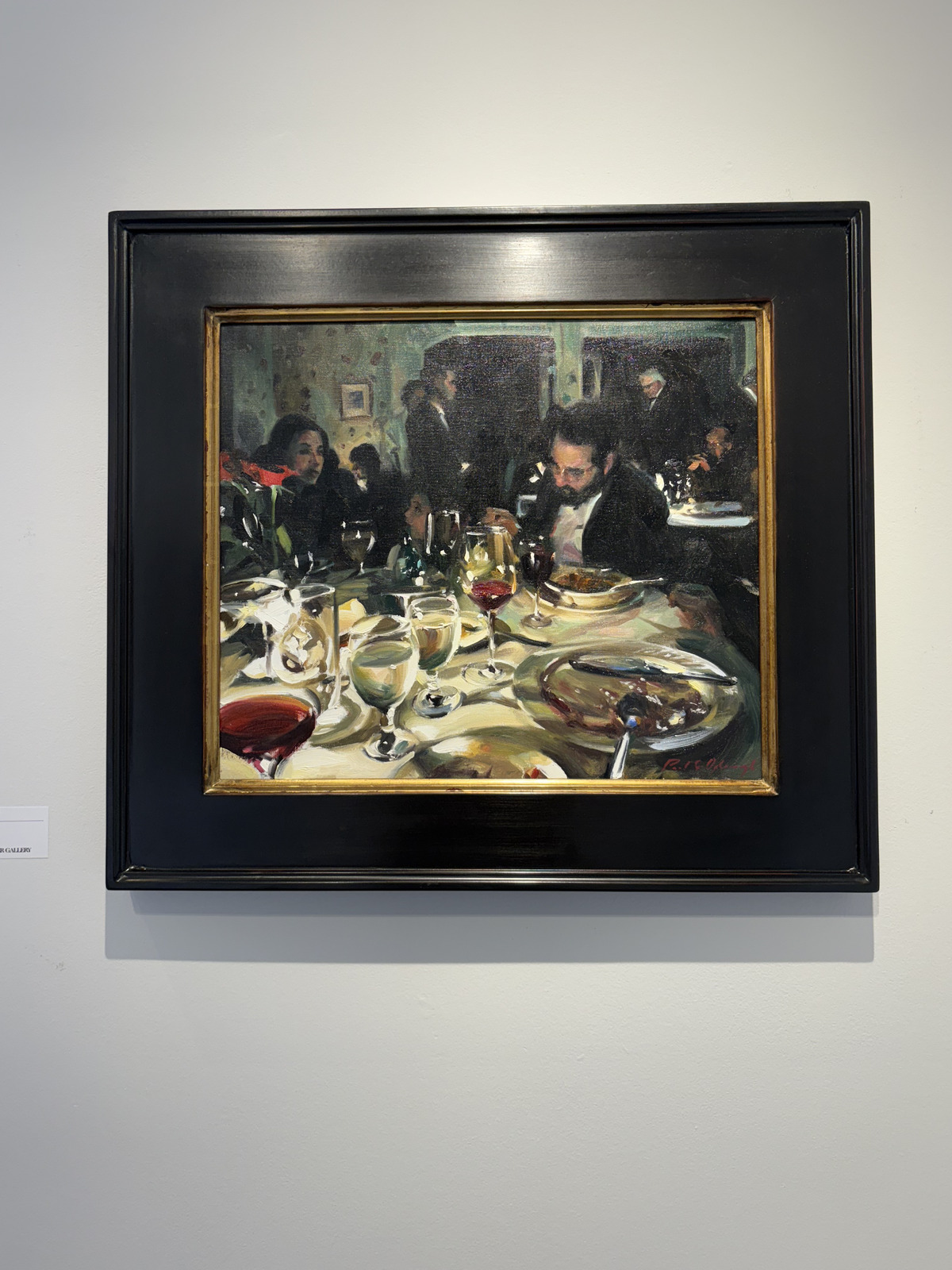 Paul G. Oxborough (American, b. 1965), Il Mulino, 2025, oil on linen.
These eye-level compositions feel ever-present and tangible to the point where you could almost hear the clinking of wine glasses, smell a succulent meal, or taste a medium-rare sirloin steak. The truthfulness of these scenes makes them the 21st Century spiritual successor to 17th Century Dutch & Flemish tavern and market paintings or French Impressionist Édouard Manet’s masterpiece, A Bar at the Folies-Bergère.
Something else that Oxborough achieves that I find does not get acknowledged enough among the works of great painters is his ability to evoke the environment that lies beyond the frame. These images are so sensorially enticing that they left me hungering to see the rest of Oxborough’s world according to each respective canvas - foyers, coat checks, elevators, or the exteriors of haute cuisine establishments. Oxborough possesses an impressive knack for infusing a scene with an abundance of visual flavor that is as appetizing as the fine food and drinks depicted in his dimly lit, suave restaurant and bar settings. Moreover, evocations of pleasure, relaxation, and coziness also naturally exude in the hotel and bedroom scenes.
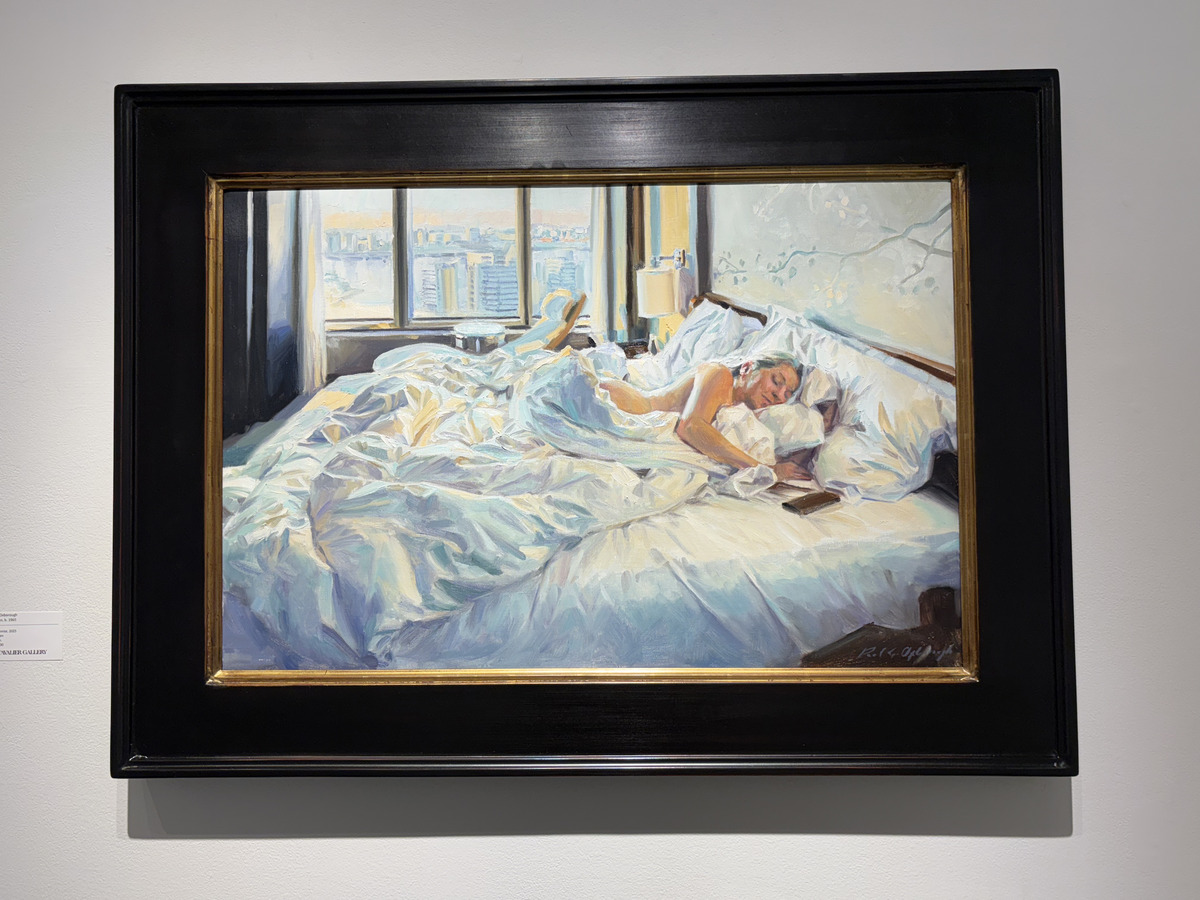
Paul G. Oxborough (American, b. 1965), Tokyo Sunrise, 2025, oil on linen.
His 2023 exhibition hooked me in and now, having seen his latest series, I am even more engrossed by the elegantly impressionistic brushwork of Paul G. Oxborough. When I spoke with Bill Burns, Director of Sales at Cavalier Galleries, he described Oxborough as an example of “world-class talent” in contemporary art, a sentiment with which I completely agree.
East <—> West at Hunter Dunbar Projects, Chelsea (on view through June 7)
Hunter Dunbar Projects website
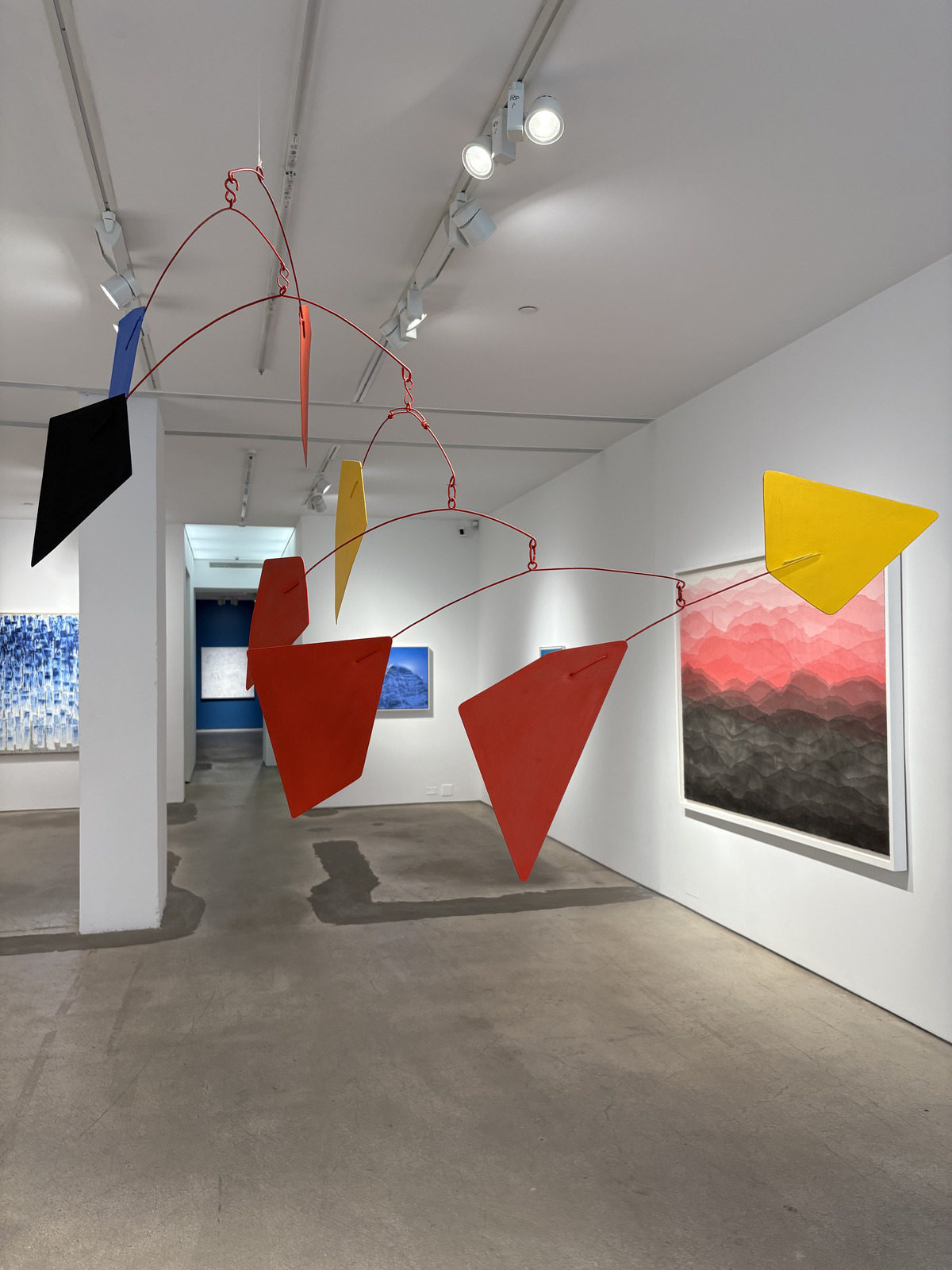 Alexander Calder (American, 1898 - 1976), Eight Polygons, 1973, sheet metal, wire, and paint.
The simplicity of Hunter Dunbar’s current exhibition title, East <—> West, carries tremendous conceptual weight in how much it conveys - Minimalist art and its parallels between Asia and the Americas. An exciting grouping of 20 major Modern & Contemporary artists gives a most convincing presentation of the simultaneity of Minimalism in vastly divergent global contexts, featuring works by Alexander Calder, Yayoi Kusama, Frank Stella, Minjung Kim, Jesús Rafael Soto, Ed Ruscha, Hiroko Takeda, Josef Albers, et al.
Hats off to Hayden Dunbar and Benjamin R. Hunter for the curatorial direction they employed as the interspersing of Asian, North American, and Latin American artists automatically produces a more level framework in which no one culture is privileged over another. As the press release makes clear in its summation, the theoretical ideas of Minimalism held sway in art starting around the 1960s before proceeding in new directions in subsequent decades. Western Minimalists found the formal density of Abstract Expressionism too hegemonic, while Asian Minimalists leaned in to an already extant cultural belief in the primacy of simplistic, pared down forms. In my studies of abstract art, too often would Western and Eastern artists be discussed on completely separate terms, as if to say that any discourse on Minimalism’s inherently international dimensions was irrelevant. Miraculously, Hunter Dunbar Projects achieves a more global approach that aptly reflects this more heterogeneous narrative.
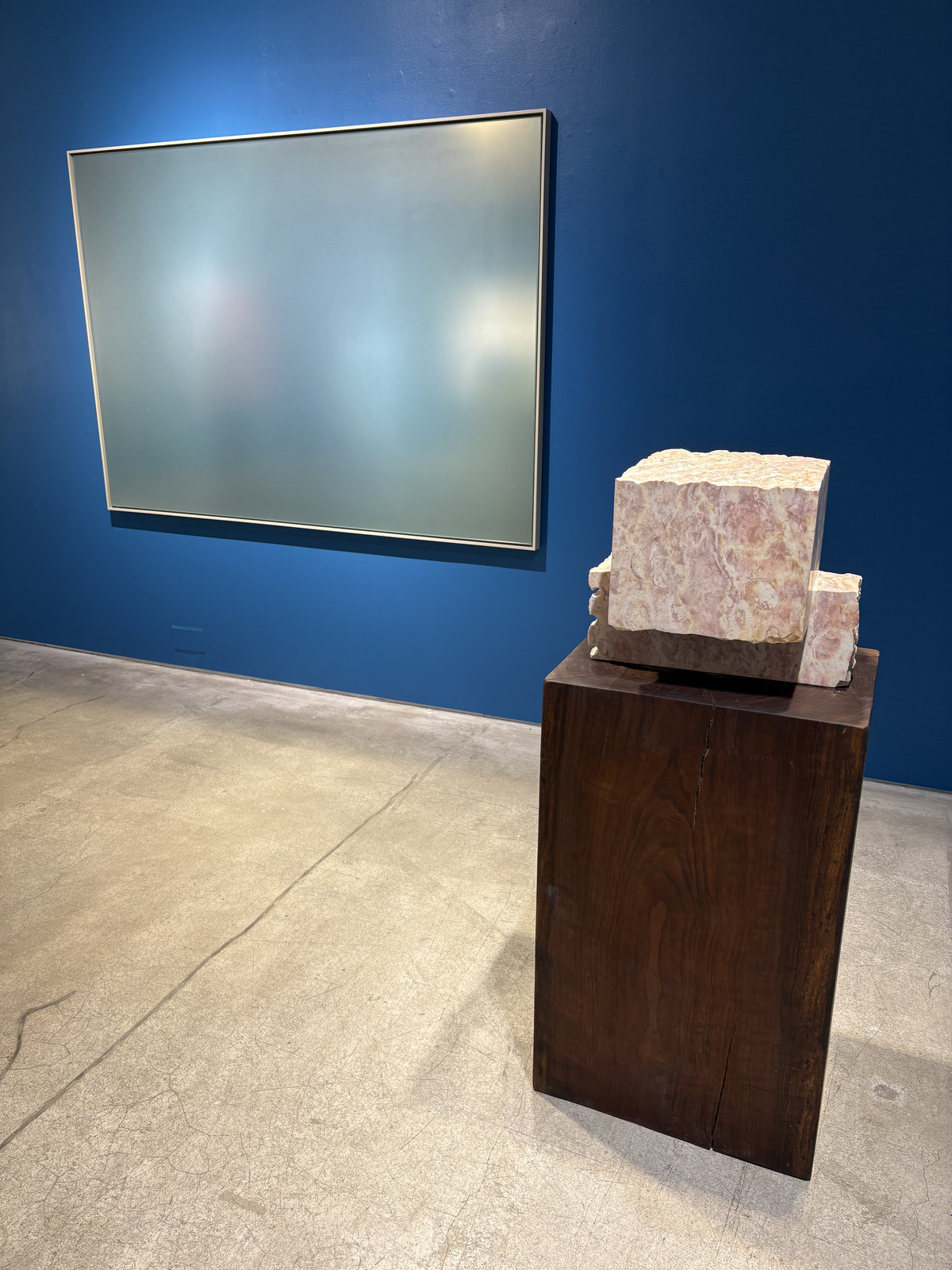 Left: Scott Lyall (Canadian, b. 1964), Talent 46, 2023, UV-curved inkjet on glass, mirror, acrylic gel medium, and gold nano particles. Right: Minoru Niizuma (Japanese, 1930 - 1998), Untitled, c. 1986, pale pink marble.
Sam Francis’s Study for Moby Dick (1958) is almost adjacent to Ha Chong-Hyun’s Conjunction 21-67 (2021). Francis, a core member of West Coast Minimalism, presents a diagonal branch of warm hues that are in physical tension with the swaths of whitened negative space surrounding it. Chong-Hyun, who was closely affiliated with South Korea’s Dansaekhwa abstract movement, similarly showcases a formal tensity in which the topmost layers of deep blue rectangular strokes gradually peter out in color to a bottom register of white with faint suggestions of blue paint. Elsewhere, one can immediately ascertain a striking commonality between Josef Albers and Young-Il Ahn, for both artists were rigorously preoccupied with squares and rectangles. Sculpture, too, is given its due in the East <—> West Minimalist discourse. The structural stasis and nature-toned mass of Minoru Niizuma’s sculptural plinth, Unknown (c. 1986), is a fascinating contrast to the kinetic, tonally-rich Eight Polygons (1973) by Alexander Calder that is suspended from the ceiling. Though these two sculptures have many physical differences, a key commonality to underscore is their spatial engagement with their environments: the earth for Niizuma’s Unknown and the air for Calder’s Eight Polygons.
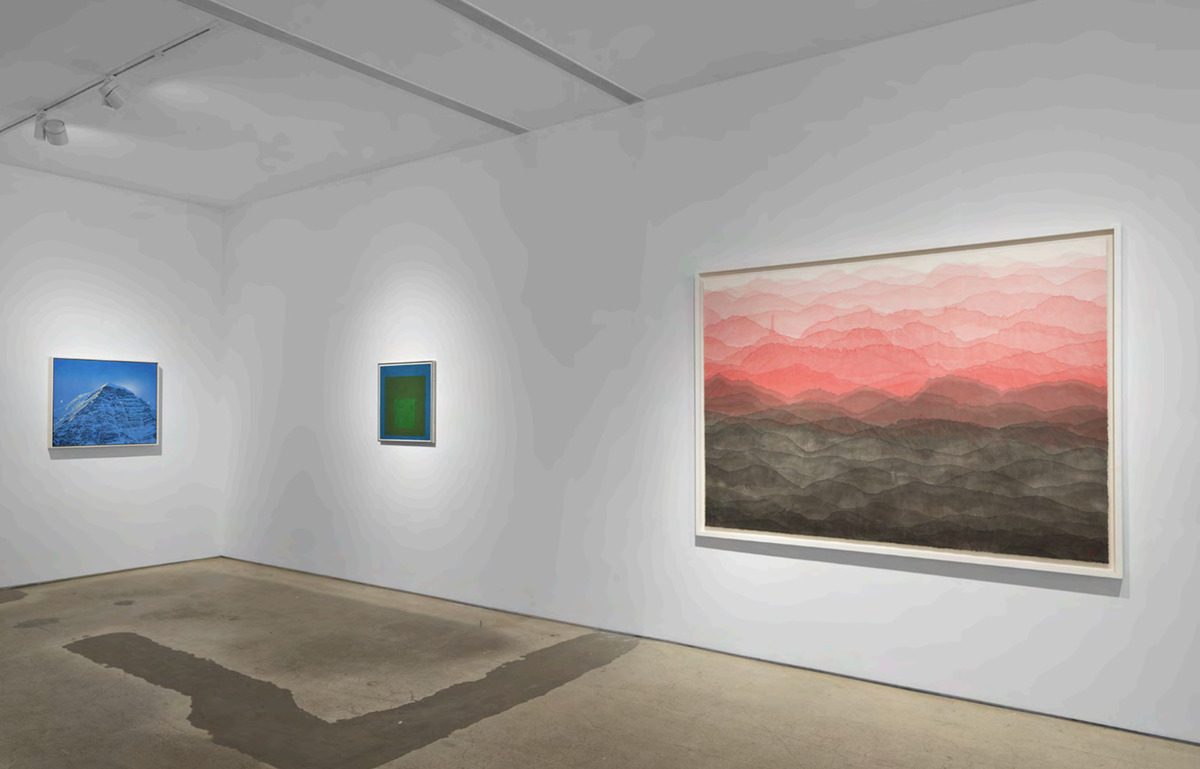 Installation view of East <--> West at Hunter Dunbar Projects, Chelsea.
Just in this handful of examples here, it should be apparent that Hunter Dunbar has done much in reframing one’s understanding of Minimalism as being not an “either / or” binary, but more so a “here and there” global art movement.
Robert Rauschenberg: Sympathy for Abandoned Objects at Gladstone Gallery, Chelsea (on view through June 14)
Robert Rauschenberg Foundation website
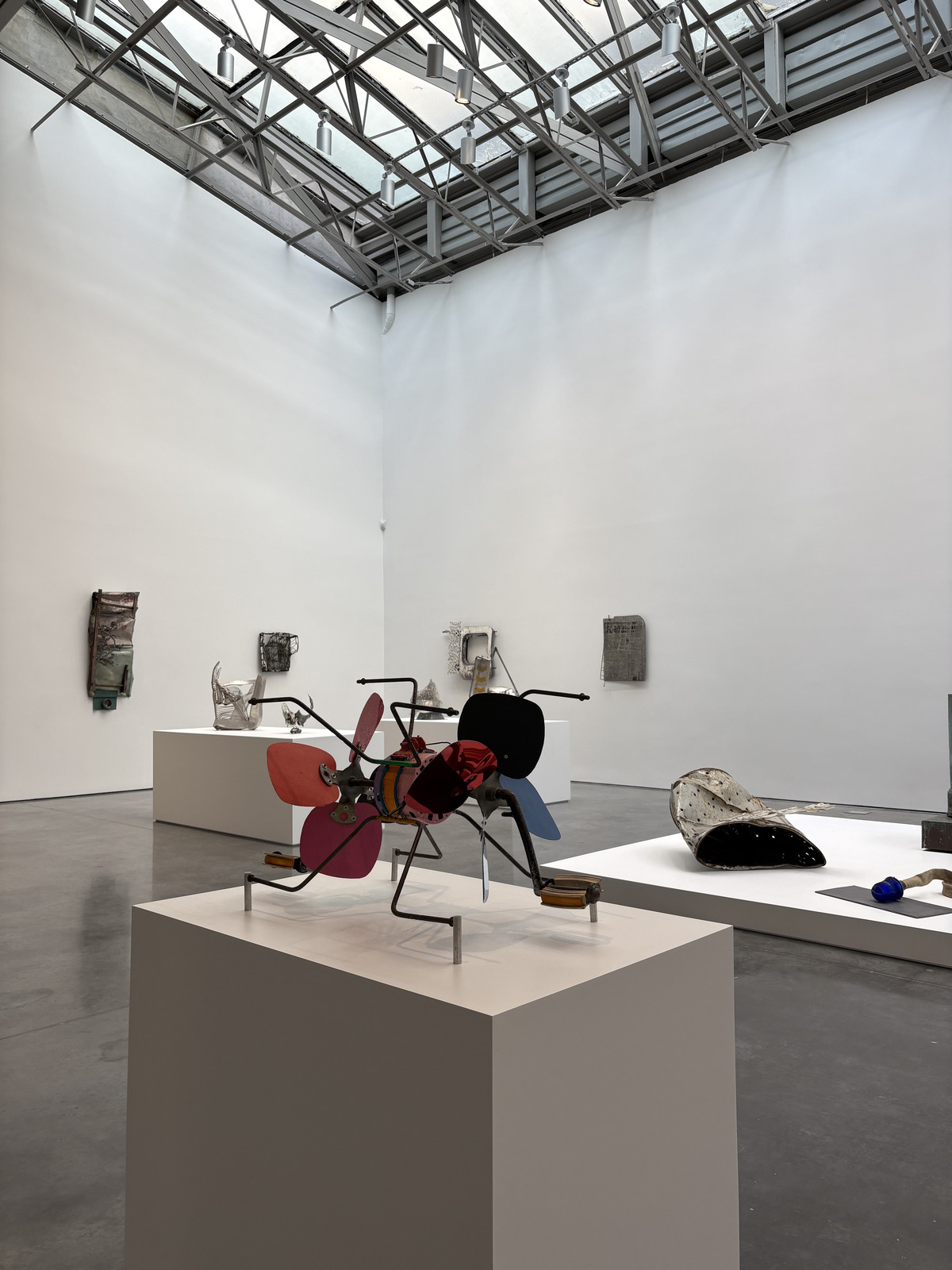 Installation view of Robert Rauschenberg: Sympathy for Abandoned Objects at Gladstone Gallery, Chelsea.
2025 is a milestone year because this is the centenary of Robert Rauschenberg’s birth. As such, museums and galleries all over the world are staging exhibitions honoring the life and legacy of one of the pillars of Modern & Contemporary Art, to which Gladstone Gallery’s 21st Street location has now joined this prestigious roster. In collaboration with the Robert Rauschenberg Foundation, Gladstone Gallery’s newest exhibition is a focused survey on Rauschenberg’s work in sculpture, the first such show in over 30 years.
Concomitant with his painting and photography, Rauschenberg devoted decades to working in three-dimensions. With sculptures spanning the 1950s to the 1990s, Gladstone features an assortment of sculptural assemblages that Rauschenberg completed for different series or as standalone projects, including Scatole Personali (1952 - 1953), Combines (1954 - 1964), Kabal American Zephyrs (1981 - 1983, 1985, 1987 - 1988), and the Rauschenberg Overseas Culture Interchange (ROCI) (1984 - 1991). Though he expressed a keen interest in experimenting with the formal parameters of sculpture through his use of found objects and other unconventional materials, Rauschenberg was also a committed environmentalist who was cognizant of the dangers of commercial and industrial waste (especially noteworthy in his Gluts series of the 1980s & 1990s). “One man’s trash, is another man’s treasure” should be the tagline for this exhibition as Rauschenberg collected innumerable discarded items that he deemed “treasures” suitable for a new lease on life in sculptural form. Gladstone makes this overarching point perfectly legible in their up-close and personal presentation of these objects on modestly sized plinths and bases that are intended to recall the scale of a human body - from infancy up through adulthood according to my discernment.
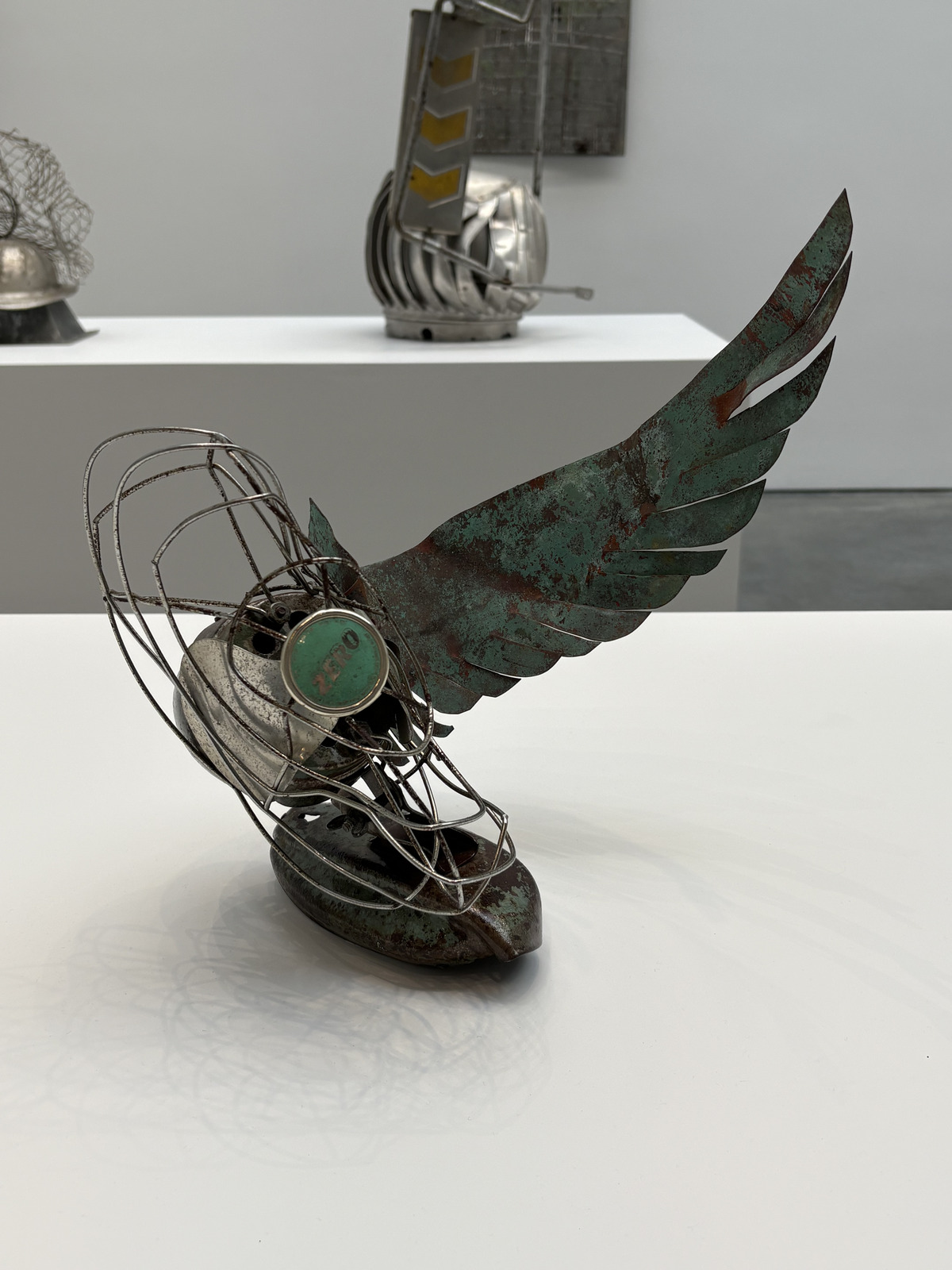 Robert Rauschenberg (American, 1925 - 2008), Mercury Zero Summer Glut, 1987, assembled metal.
Over 30 Rauschenberg sculptures are brought to the fore - most out in the open, while a few smaller works are in glass displays. The use of “sympathy” in the title rings true when viewing each object for one can tell that Rauschenberg fused his found materials under the gentlest conditions: an already dented can with a metallic decorative flower placed atop, a rusted toolbox filled with clay, or a lawn ornament positioned at the edge of an old gardening spade. Moreover, the material identity of the objects - be they desk fans, electric lights, wooden chairs, or fire hoses - are largely kept as they are, with little physical manipulation. Instead, these “abandoned objects” have been recontextualized to fulfill more creative ends for Rauschenberg in which they are given purpose and protection, much as a loving foster parent would graciously adopt an orphan and shower them with unconditional love.
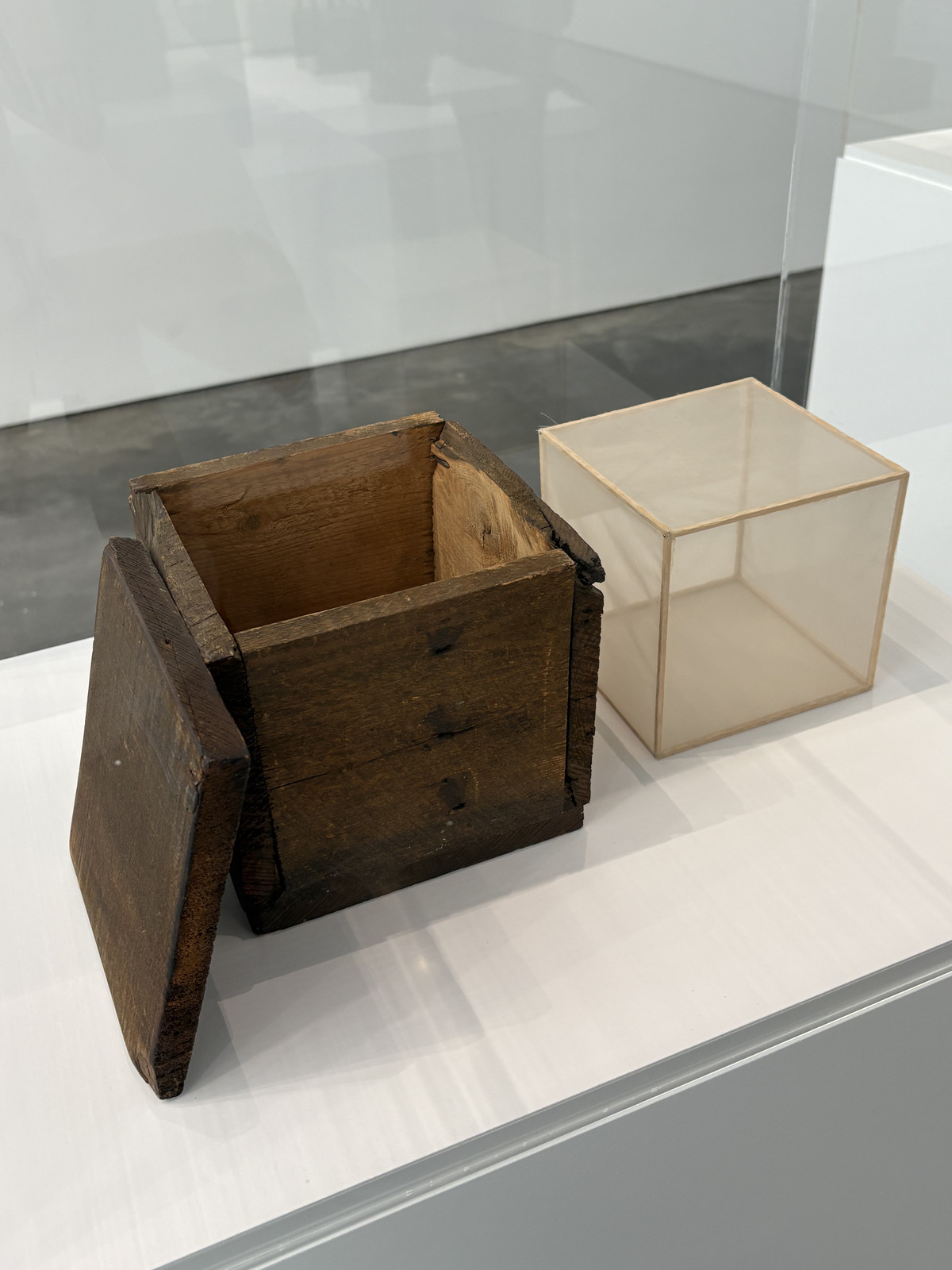 Robert Rauschenberg (American, 1925 - 2008), Untitled, c. 1953, wood box with lid and removable balsa wood-and-fabric cube.
This is an incredible opportunity to not only see Rauschenberg’s sculptures, but to trace the longevity of Rauschenberg’s sense of kinship with the neglected and discarded items that society deemed to be of no value and the reinvigoration he brings forth in these formerly “abandoned objects” that are now the focal points of a major gallery exhibition. WM

Liam Otero
Liam Otero is a freelance art writer in NYC. He was recently named New York Editor of Whitehot Magazine.
view all articles from this author