Whitehot Magazine
October 2026
"The Best Art In The World"
"The Best Art In The World"
October 2026
Exhibition Review: False Connections - Vivi Zhu’s solo exhibition (Un)Trustworthy Hearts
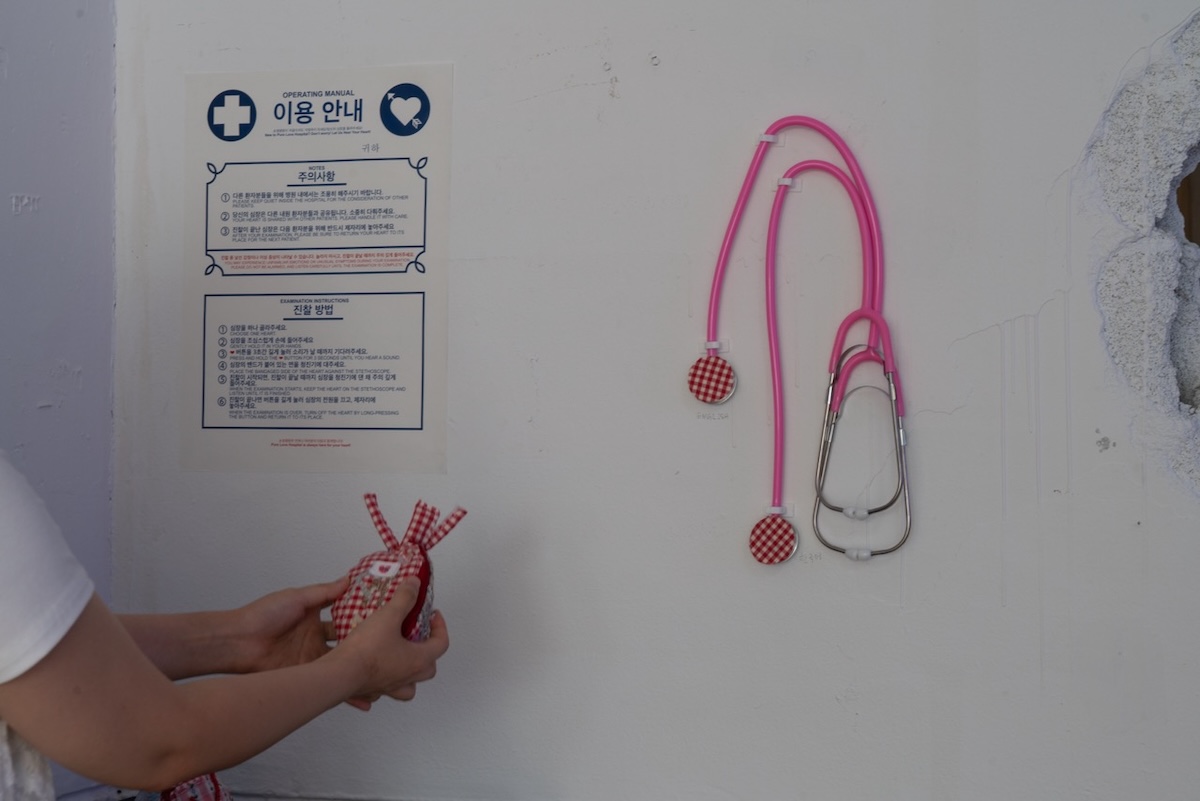 "(Un)Trustworthy Hearts" installation shot. Image courtesy of Alternative Space LOOP.
By COLLEEN DALUSONG September 4th, 2026
Sometimes when I’m drafting in a coffee shop or sitting on a park bench, I like to eavesdrop on the nearby couples who are clearly stumbling through a very awkward first date. The truly fascinating aspect is that they all seem to follow the same script, not unlike a dating simulator where the characters only have two or three dialogue options. Their questions unfailingly approach the topics of college majors, their jobs, MBTI types, the music they listen to, or where their family is from, with very little variation.
After a few minutes of eavesdropping, I end up wondering if this is a first date or a job interview, or perhaps even a psychiatric evaluation. The impulse to easily categorize each other springs up regularly among younger people, particularly when it comes to navigating romance. People attempt to situate themselves using the faulty compass of astrological compatibility, the six love languages, the pseudoscientific reasoning of MBTI types, or the arbitrary labels of secure versus avoidant attachment styles.
The dramaturgical setting of Vivi Zhu’s solo exhibition (Un)Trustworthy Hearts, which takes place in the Pure Love Hospital, taps into these anxieties by operating on the assumption that a phenomenon as complex as “love” can be treated or diagnosed as simply as a common cold or a kidney infection.
Settings such as hospitals, schools, and prisons function as sites that produce “docile bodies,” according to French philosopher Michel Foucault’s theory of biopower. Zhu’s Pure Love Hospital satirizes these institutions in which disciplinary power is wielded in order for bodies to become subjected, used, transformed, and improved in accordance with a nation state’s agenda.
Those whom the state deems as “useful” are protected and even invested in; within the context of South Korea’s rapidly declining birth rate and increasingly elderly population, both the government and private employers offer financial support to couples for every child they bear, investing in the creation of social structures that are designed to encourage reproduction while neglecting the high costs of living, housing, and education that continues to more broadly affect the country’s populace as a whole.
According to Foucault, the benefits of political control over broader sexuality would be derived from the fuller control over an individual’s libidinal energies for production processes. In other words, the forces of capitalism have managed to harness natural human impulses such as love and sex in order to make these emotions more “useful” in the eyes of the state.
This manifests not only in the formation of the nuclear family unit, which atomizes individuals and ultimately produces future laborers, but also in the fabric of the entire social order. Repression requires individuals to internalize controls that neutralize any potentially revolutionary energies; therefore individuals are no longer simply subjected to power, but also act as vehicles that produce and channel power upon one another. This is the phenomenon that leads to coffee dates that sound more like psychiatric evaluations, relationships that must adhere to strict codes of conduct (i.e., “my boyfriend is not allowed to have female friends or like other girls’ posts on Instagram”), and the expectation of increasingly ostentatious displays of affection in order to affirm a couple’s love in the eyes of their family, friends, and social media followers.
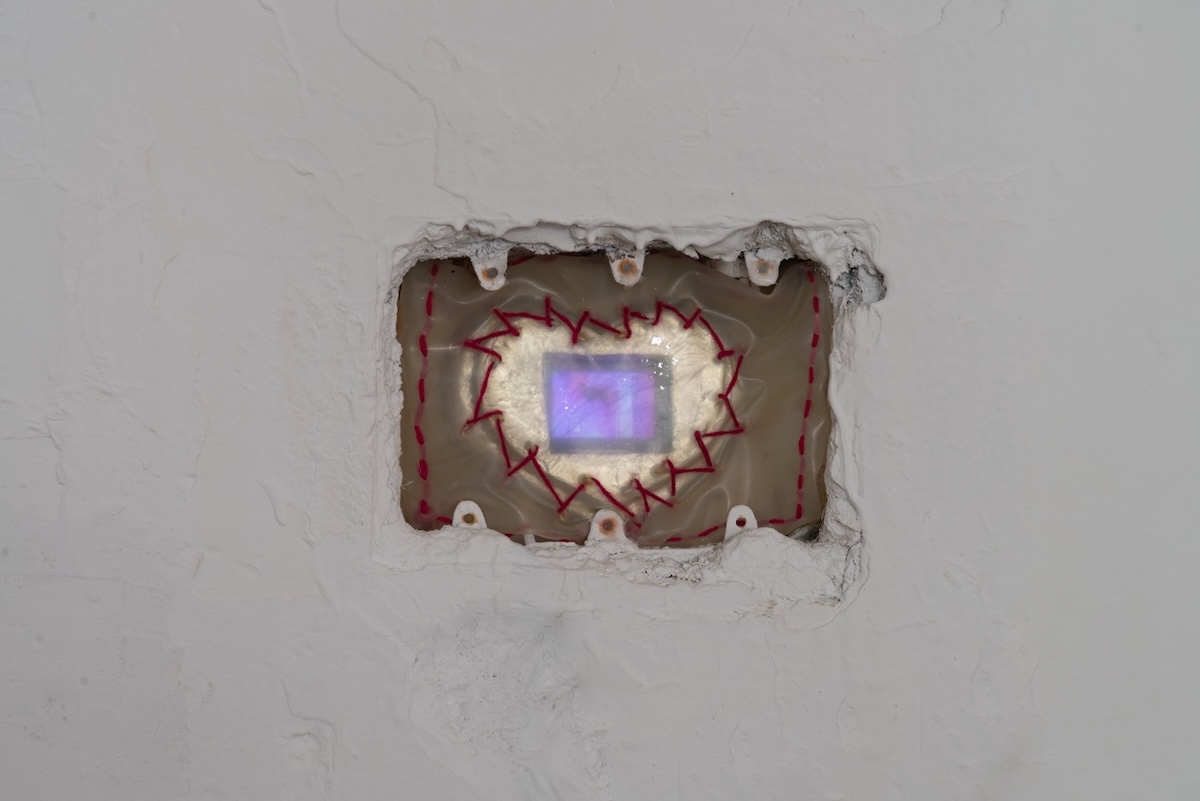 Vivi Zhu. "Still Life (Nothing Here to See)," 2026. Video installation (stone clay, monitor, silver, metal, latex), dimensions variable. Image courtesy of Alternative Space LOOP.
The natural impulse would be to remove oneself from the situation altogether, away from the pageantry and ritualism of the modern dating scene. This reaction is exemplified in Still Life (Nothing Here to See) (2026), a series of sculptural video installations that take the form of Tamagotchi devices stuffed into the cracks and crevices of the gallery space. When visitors walk past, the blank screen whirs to life to reveal a solitary and shadowy figure, rather than the cute digital pets that some visitors may remember from their childhood Tamagotchis.
The figure is a stagehand, or kuroko, from traditional Japanese theatre, whose obscured face and all-black clothing were designed to render its wearer invisible or easily overlooked by audiences. Zhu draws a parallel between the roles of kuroko and women in the sense that both parties are expected to devote themselves into laboring for the sake of another: the kuroko is in service of the actors, and a woman is in the service of her parents, husband, or children. In both instances, the one performing this labor finds their personhood erased by the constant stream of tasks.
Yet in Still Life, the kuroko’s black outfit stands in stark contrast to the bright pink and purple world it inhabits inside the screen. It is no longer invisible, nor is it expected to perform the labor of moving props and scenery onstage. Instead it enjoys its state of solitude, nestled in a hidden alcove away from society and all of its rules and expectations. However, I find this self-imposed isolation to be a problematic response. It is understandable to wish to be alone from time to time, but the decision to completely remove oneself from society is quite irresponsible, no matter how flawed the society may be. The kuroko is safe because it lacks courage. Retreating into solitude certainly minimizes any risk of encountering pain, but it simultaneously eliminates any chances of possibly forming a meaningful connection with others.
The question of genuine versus false connection is challenged in My Heart (On) Unlock (2025), a short film delving into the culture of “one-day boyfriend” rentals prevalent among Chinese fan communities. Zhu documents female fans of the dating simulator Love and Deepspace as they commission other women who cosplay as male characters from the game to go on dates with them. One of the cosplayers explains the psychology behind the one-day boyfriend rentals, saying that this is a way to make someone’s dream come true by allowing her to meet an idealized lover whom she can’t meet in real life.
Within the broader context of society, it is quite difficult for young women to encounter the love that they would ideally receive. Instead, this ideal love is usually encountered in the form of fictional sources such as literature, TV dramas, or video games such as Love and Deepspace. The average young woman is likelier to find an ideal love in the form of familial or platonic relationships rather than in the form of a romantic relationship. The cosplayer mentions her efforts to imitate the male character’s style, actions, and mannerisms in order to convince the commissioner that she truly is experiencing a date with her favorite character, distilling the overall experience into one sentence: “Creating a dream is something both sides need to invest in.”
Zhu’s camera follows these temporary couples, capturing them in moments of quiet intimacy: waiting at a crosswalk, holding hands in a taxi, or one girl cradling the cosplayer’s face as she helps apply the makeup. The two women talk about how well they know each other’s habits and personalities, and the amount of time they spend together, but the illusion is shattered when one of them clarifies, “We’re not actually a couple, [so] a real kiss wouldn’t be appropriate.” At the end of the day, the commission is only a temporary solution to the larger issue of loneliness and the pursuit of true connection.
Perhaps the fans involved could one day form a stronger and deeper emotional connection one day, but in order to do so they must first let go of the crutch that is the video game’s framework. In the same sense, many people would have a better chance of finding love once they relinquish the expectations that society has instilled in them since birth.
One could argue that the cosplayers are mindlessly following a script—whether it is the script of the male character’s in-game dialogue options, or the parameters set by the fan who commissioned them—but so are the majority of people in the contemporary dating scene who pantomime the act of being in dialogue, without actually getting to know each other beyond easy categorizations and labels. Moreover, there is an ironic element in the situation of two women wishing to escape the disappointing reality of the heterosexual dating scene, while simultaneously reenacting those same dynamics in what is supposed to be an escapist fantasy. The one-day boyfriend rental is described as a shared dream, but in reality it is a scripted performance based on heterosexual norms, recalling Foucault’s idea of individuals internalizing the repressive power inflicted upon them and channeling that same power in their own interpersonal relationships.
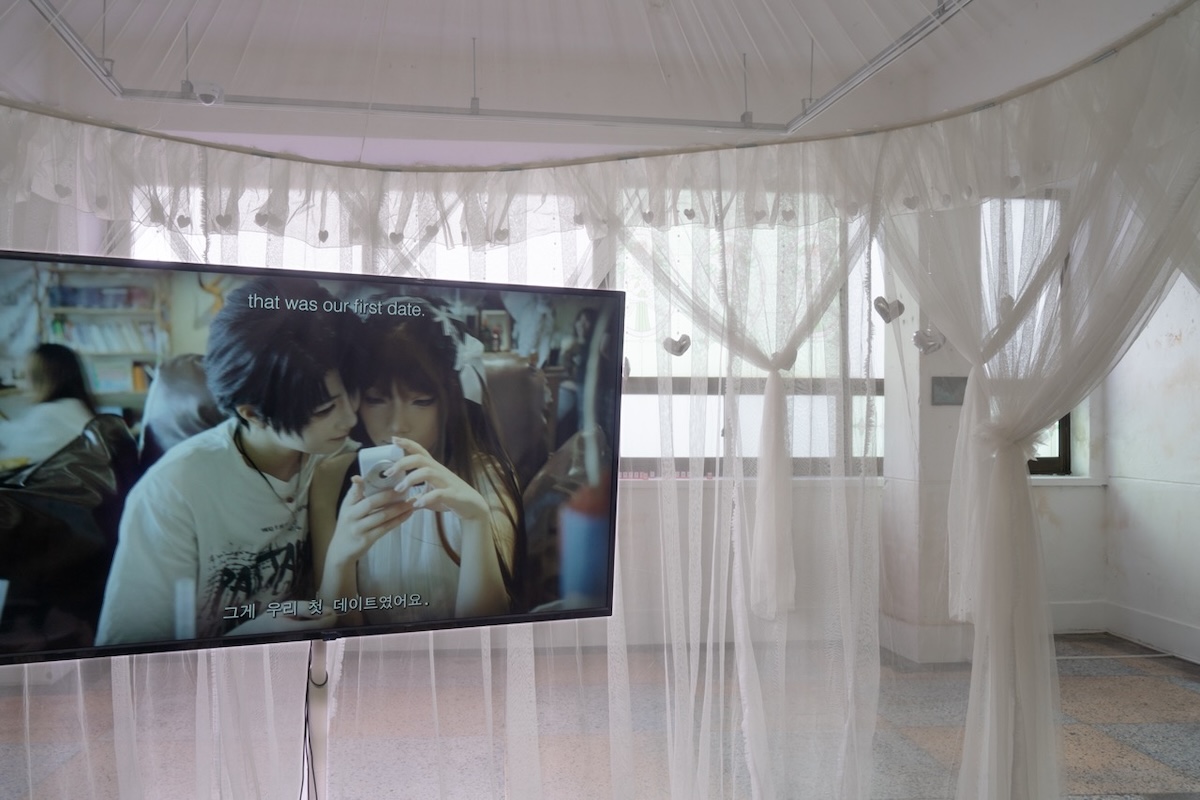 Vivi Zhu. "My Heart (On)Unlock," 2025. Video installation (curtain, hoop, fishing line, wire, TV, headphones, TV stand), 15min 50sec. Image courtesy of Alternative Space LOOP.
However, that is not to say that there is a lack of genuine connection to be found among the cases presented in (Un)Trustworthy Hearts. The most potent example of this is seen in A knot can be untied if the loop is broken (2024), a documentary following the members of a Huai opera troupe who are being forced by the local government and redevelopers to evacuate the home they share in Shanghai. The troupe is made up primarily of migrants from other regions of China who find themselves systematically and culturally excluded from the rest of the city, placing them in the category of those who are not deemed worthy or “useful” enough to invest in according to Foucault’s theory of biopower.
Although the troupe members are not a traditional nuclear family unit, it is easy to see that the bonds they share transcend those of a mere blood relation. One couple in their 70s had met and fallen in love during their teenage years, moved away, married other people, started their own families, and now live together in the opera house, squabbling over cooked meals and household tasks.
Two other residents, Zhou and Grandmother Han, have a relationship similar to that of a mother and daughter despite not actually being related. Zhou is clearly protective of Grandmother Han, and the camera catches her scolding other residents for accidentally mentioning topics that could make the older woman feel sad. Interestingly, both Zhou and Grandmother Han have families of their own who are willing to take them in once the opera house has been demolished, but it is clear that both women are devastated at the thought of no longer being able to continue their lives together.
The troupe members may not be a traditional family, but they are certainly each other’s chosen family. What use is a shared DNA sequence in comparison to the person who actually takes care of you, who knows your sleeping habits and what brings you to tears, who takes the time to play mahjong with you everyday? Theirs is a love and connection that cannot easily be synthesized into a simple label.
As an exhibition, (Un)Trustworthy Hearts does not offer a definitive answer on what constitutes a genuine versus an artificial connection, but perhaps that is the point. The Pure Love Hospital’s failure to utilize the language of diagnoses to fully encompass an emotion as vast and nuanced as love is meant to illustrate the pitfalls of the juridical system.
As society has progressed and non-heteronormative forms of love have become more visible and widely accepted, the definition of “love” remains ever more vague in order to accommodate these different modes of being. The Pure Love Hospital gestures towards our still-incomplete understanding of love, and the flaws in our conceptualization of what an “ideal” love could be.
It accomplishes this by presenting us with different situations with varying degrees of severity in terms of loneliness that could be rehabilitated into something useful: there is the worst-case scenario of the kurokos who completely isolate themselves, there is the temporary relief of the one-day boyfriend rentals that indulge in escapist fantasies without actually addressing the root of the problem, and finally there is the possible cure that is best exemplified by the troupe members who immerse themselves in a community that shares both pain and laughter.
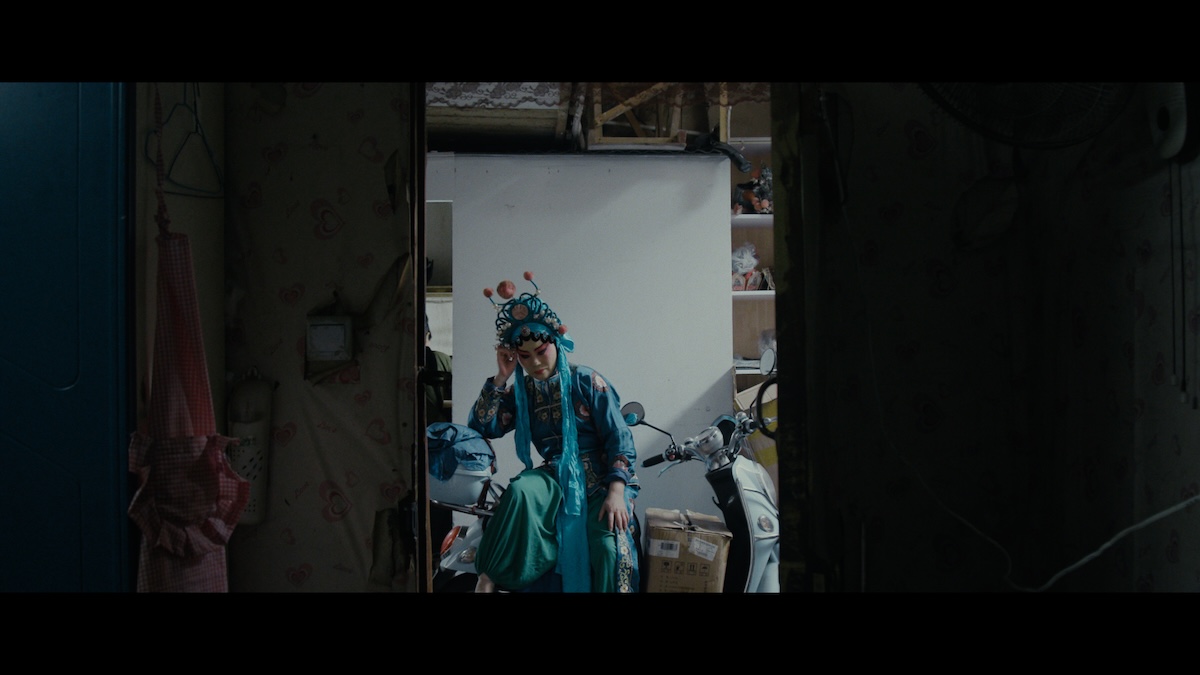 Vivi Zhu. "A knot can be untied if the loop is broken," 2024. Single channel video, 32min 35sec. Image courtesy of Alternative Space LOOP.
The best way to fix a lack of connection is not to rush into meaningless relationships that rely on a preexisting script, but to open oneself to the possibility of genuine dialogue with others. To quote Paulo Freire, “Dialogue cannot exist in the absence of a profound love for the world and its people [...] Love is at the same time the foundation of dialogue and dialogue itself… Love is an act of courage, not of fear, love is commitment to others.
No matter where the oppressed are found, the act of love is commitment to their cause—the cause of liberation. And this commitment, because it is loving, is dialogical.” It is for this reason that the kuroko's self-isolation ultimately accomplishes nothing and the cosplayers are unable to pierce through the layer of artifice that prevents a true connection from forming, whereas the opera troupe is able to experience a degree of love so powerful that they would rather remain in a dilapidated house with peeling wallpaper and a leaking air conditioner than be separated from one another.
In short, the experience of seeing (Un)Trustworthy Hearts is not unlike seeing the doctor for a check-up. The doctor can tell you what they believe is wrong and what you could do to remedy it, but ultimately it is your decision to either trust your own gut or take the doctor’s advice to heart.
Vivi Zhu's exhibition (Un)Trustworthy Hearts curated by Sun Kim is on view through September 12, 2026 at Alternative Space LOOP, 3rd floor, 172-1 Cheonggyecheon-ro, Jung-gu, Seoul.

Colleen Dalusong
Colleen Dalusong is a curator and writer based in New York City. She is the co-founder of Fruitality Magazine, and has curated exhibits at Think!Chinatown. She has previously been published in Cultbytes and Mercer Street.
view all articles from this author