Whitehot Magazine
October 2026
"The Best Art In The World"
"The Best Art In The World"
October 2026
Andrew Luk & Lite Zhang: "Anything I can throw weighs one pound" at ACCENT SISTERS, curated by Jenny Wang
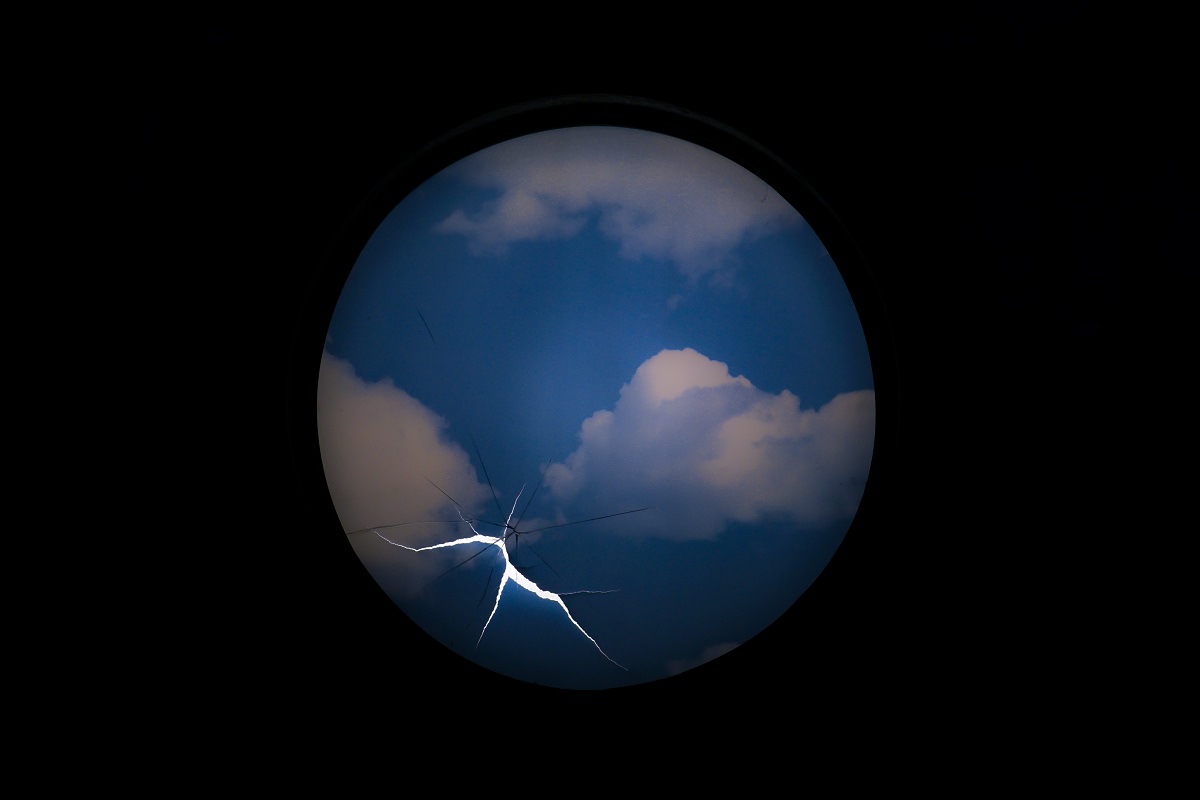 Lite Zhang, Obey, 2023,(detail)
By CHLOE ALTO May 5th, 2026
In between debris and concrete jungle, a walk down a New York City sidewalk inevitably yields the discovery of odd art-objects. A single block may be better measured by its encounters: cylindrical orange-and-white tubes effacing steam, a decaying fridge, an abandoned mirror, a strange looking dog.
At ACCENT SISTERS, the dual show Anything I can throw weighs one pound carries the contours of a sidewalk. A traffic light hangs from the ceiling, the fridge door now hangs against white walls. Curated by Jenny Wang, Andrew Luk and Lite Zhang’s sculptures read both detectable and foreign.The hanging traffic light is titled Obey (2023), projecting the sky in place of yellow and green. In this room, there is no place to ‘Go.’ Zhang's objecthood becomes a conduit to the absurdity of the banal; the glass of the third-most light fractures in its uselessness.
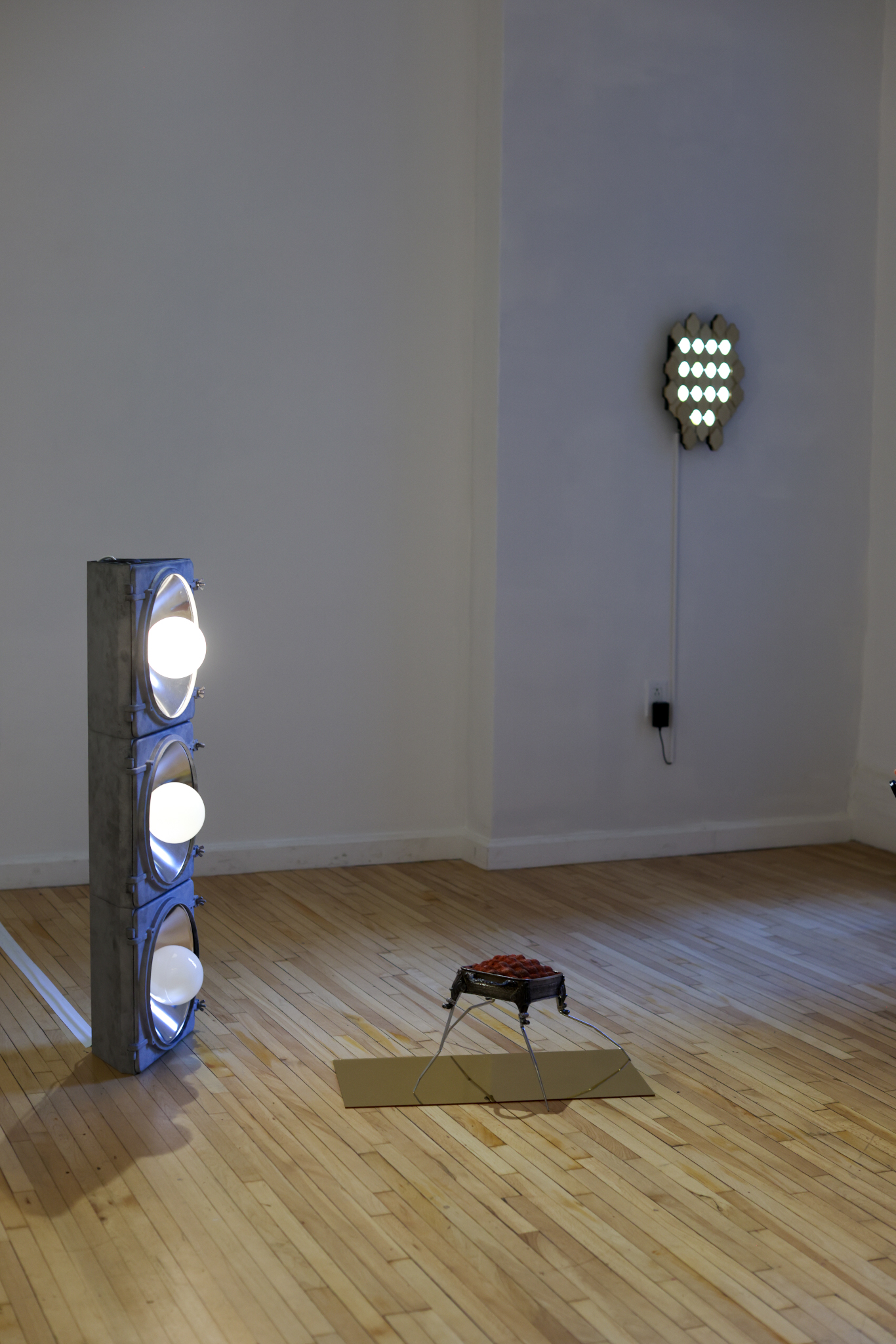 Installation view, 2026, Anything I can throw weighs one pound: curated by Jenny Wang
What looks like a fridge door never reaches concrete resolution; its title neutralizes the object’s existence to peach-colored fading– what Zhang calls SunBurn (2025). Across, the pell-mell of a GE radio, speaker, and powerbank cause visual agnosia, their corroded wires and varying protrusions of steel geometries labelled a Foreign Signal (2025). Sitting on the floor, Zhang’s other three-tiered light fixture, I might guide somewhere (2024), guides light into a lateral mirror, a part of Luk’s Rocinate (2026). Stainless steel chopstick legs splay as if Rocinate is the name of a newborn lamb. In another wall hanging by Luk, Ritual is Reliability (2026) repurposes soundproofing and memory foam, their technical patterns transformed into aesthetic. A dish now acts as a frame, an espresso machine pure geometry.
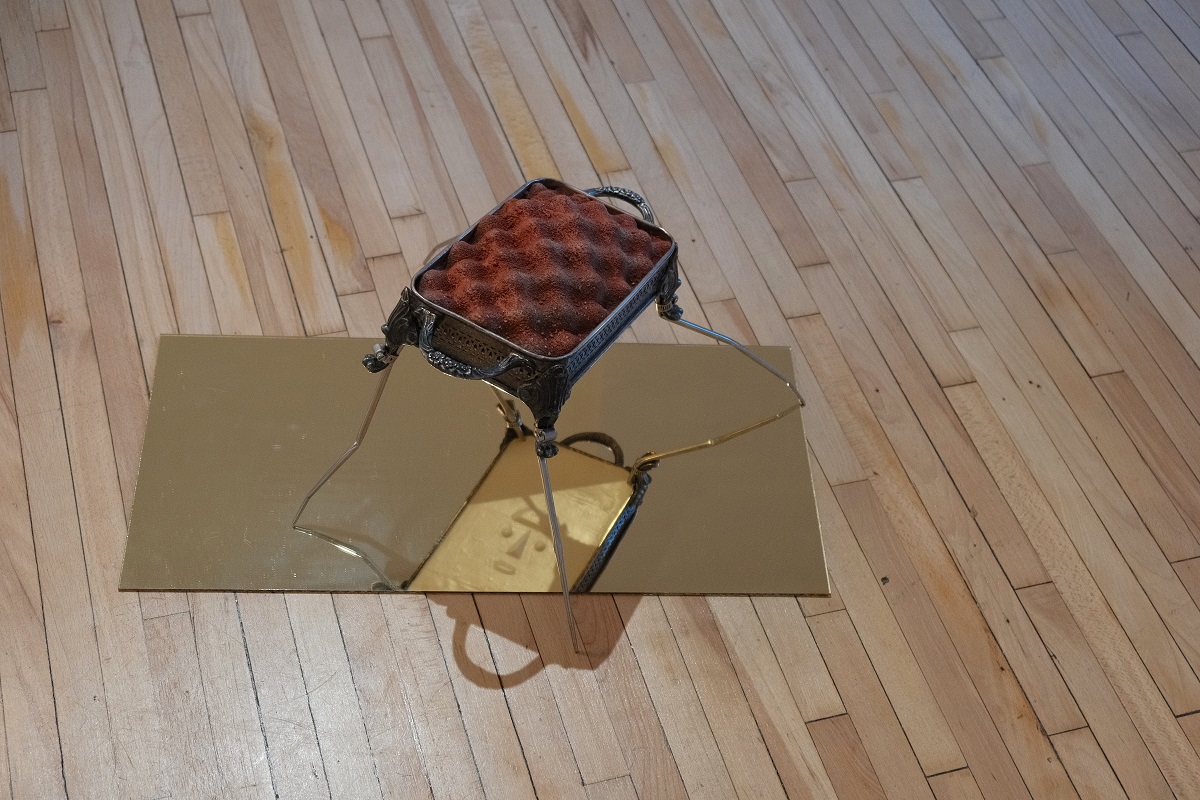 Andrew, Luk Rocinate
Across the show objects perform a persistent gap between form and function, between their original label and its material and aesthetic purposes. Industrial and found materials of cyclical labor carry their repetitive structures in sinuous configurations ranging from memory foam to sauce packets. Even as function is altered, falters or renders completely null, a traffic light surrounded by white walls asks if you will still obey.
Yet the question does not weigh in discomfort; it is quite humorous. Foreign Signal (2025) does not take the radio, speaker, the powerbank, and propose them outdated; their thin wires do not emphasize precarity. Rather its size is akin to a household switchboard, hovering at eye level. The compactness and rectangularity read tangible, and a dangling cord becomes a playful three-dimensional line. Materials in the show are not attempting to procure negative fears of this historical moment, the anthropocene, or otherwise. Instead the show hinges on the current moment and any potential futures with amusement, if not satirically then perhaps with a slight glimmer of genuine hope.
The phrase "Anything I can throw weighs one pound" borrowed from What If? by Randall Munroe operates in a similar register, a knowingly imprecise statement about a hypothetical future. Don't overthink its ridiculous premise. Instead allow a system of thinking to proceed. Rocinate desires space exploration, dusted with Mars Global (MGS-1) High-Fidelity Martian Regolith Simulant, and teeters on chopstick legs. Napalm in Emissary (2026) and Duck sauce (Imbricated) serve equal material for light fixtures. In the show, traffic lights, fridge doors, and mass-produced fragments retain memories of, or the recognition of their preceding purposes even as those purposes collapse or stall. In other works, objects project roles they cannot fully support (rituals, space exploration, guidance) so that function is not only remembered but imagined forward onto unstable matter. In approaching artistic expression like a back-of-the-envelope calculation, Luk and Zhang’s sculptures render meaning provisional and approximate. If systems of communication rely on clarity, repetition, and agreement, Anything I can throw weighs one pound lingers in the moment that immediately follows the implosion of said conditions.
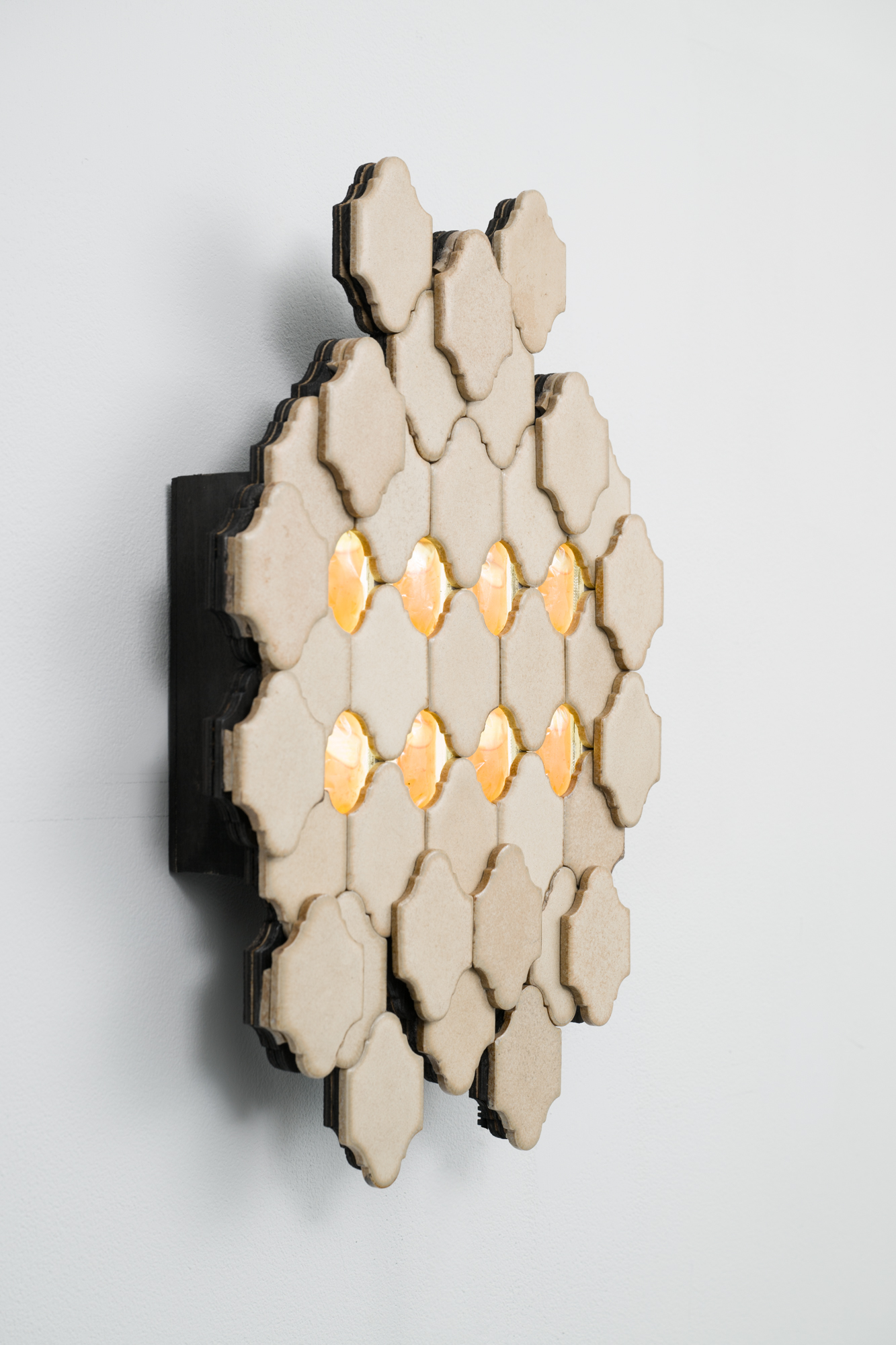 Duck sauce (Imbricated)
The show might also be summarized as a series of devices which procure, register, or reflect light; or remain unplugged. These lights diffuse– the sunset cadmium Stop of the traffic light blending into the glow of napalm, coalescing with lava-lamp-like duck sauce packets. Where there could be harshness, there is ambience. Where there might be fear, there is something like humor. Reflected in a mirror’s angle, the underbelly of Rocinate, fashioned out of a silver plated dish, displays a cartoonish face; one cannot help but smile back.
Anything I can throw weighs one pound was on view at Accent Sisters through April 25th.

Chloe Alto
Chloe Alto is a New York based writer and founder of CRITCLUB, an organization holding formal studio critiques for young artists with the goal of fostering dialogue around developing practices. Her writing centers contemporary art discourse, with a focus on Asian and Asian American artists. She has worked with galleries including SAPAR Contemporary and Eli Klein and was the curator for Silk in collaboration with the Asian American Alliance at Columbia University. She continues to engage in critical writing and exhibition-making, and in advancing spaces for rigorous discourse in emerging New York artist communities.
view all articles from this author