Whitehot Magazine
October 2026
"The Best Art In The World"
"The Best Art In The World"
October 2026
Time Spiral and Edible Memory in Siqi Fan’s Performative Kitchen
By YEZI LOU May 07, 2026
In the spring of 2022, Shanghai, a city of more than 25 million people, entered a citywide lockdown under China’s zero-COVID policy, abruptly severing residents from their usual access to life resources. With markets closed and delivery systems stalled, the circulation of everyday groceries was replaced by a centralized distribution model. Households became dependent on supply packages distributed by the government.
These packages were often repetitive, typically consisting of cabbage, potatoes, and an overabundance of carrots. Protein was sporadic but often absent. Distribution occurred irregularly, and at times the gaps became so long that residents had to rely on spoiled or severely limited produce. Gradually, neighbors began to exchange food, bartering vegetables for rice or other necessities. During this period, meals were simplified and stretched. What had once been a matter of choice became a negotiation with scarcity, shaped by timing, logistics, and systems of control.
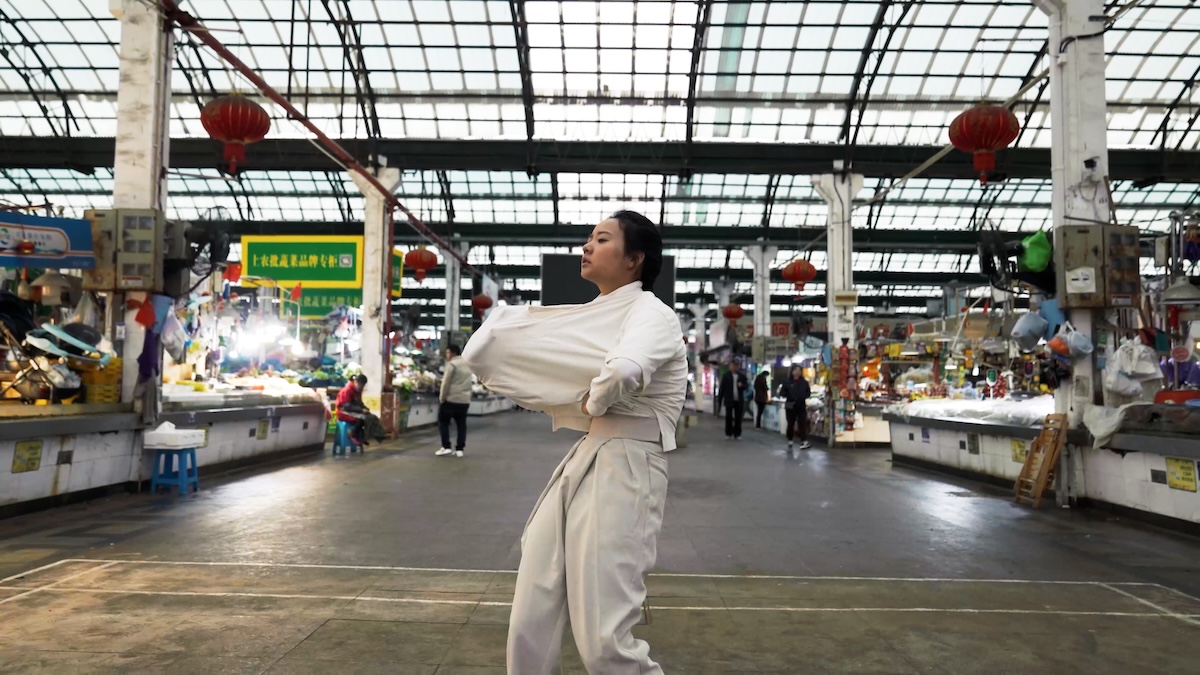 Siqi Fan, Match Made in Heaven, 3:12, Video, 2022. Courtesy of the artist.
These distributions introduced a new temporality into everyday life. Over time, these ingredients accumulated a distinct emotional and temporal weight. Food, in this context, became both a record of constraint and a material through which experience was quietly processed. It is within this context that Siqi Fan’s practice emerges. drawing not only on memory as history, but on the textures and meanings of food and the kitchen, a space so often taken for granted in contemporary life.
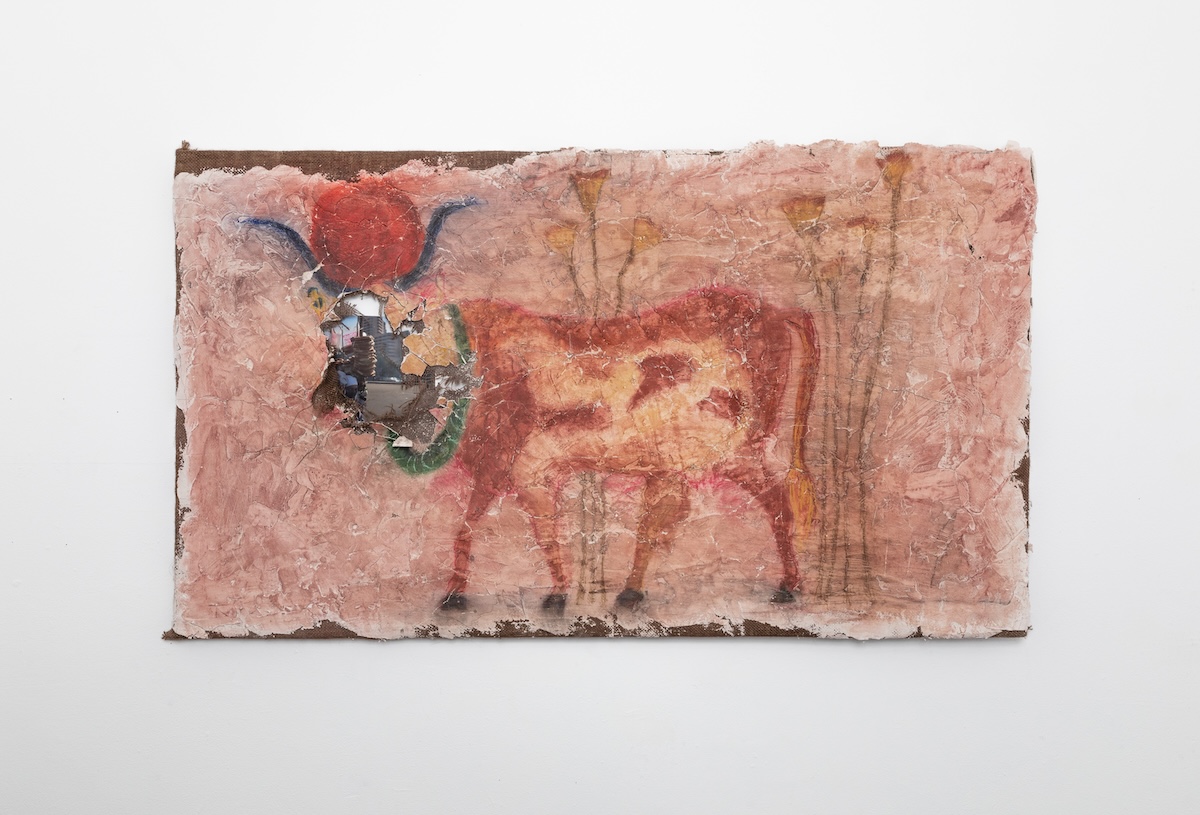 Siqi Fan, Hesat - Goddess of Nourishment, Milk, and Motherhood, Burlap, Plaster of Paris, Wood Frame, Pastel, 27.5 x 48.25 inches, 2024. Courtesy of the artist.
Fan’s interest in integrating culinary practice with art is deeply rooted in her personal history. Growing up in both commercial and domestic kitchens due to her parents’ careers as chefs, she became familiar with kitchen labor from a young age. This early exposure formed a natural bond that continues to inform her artistic practice.
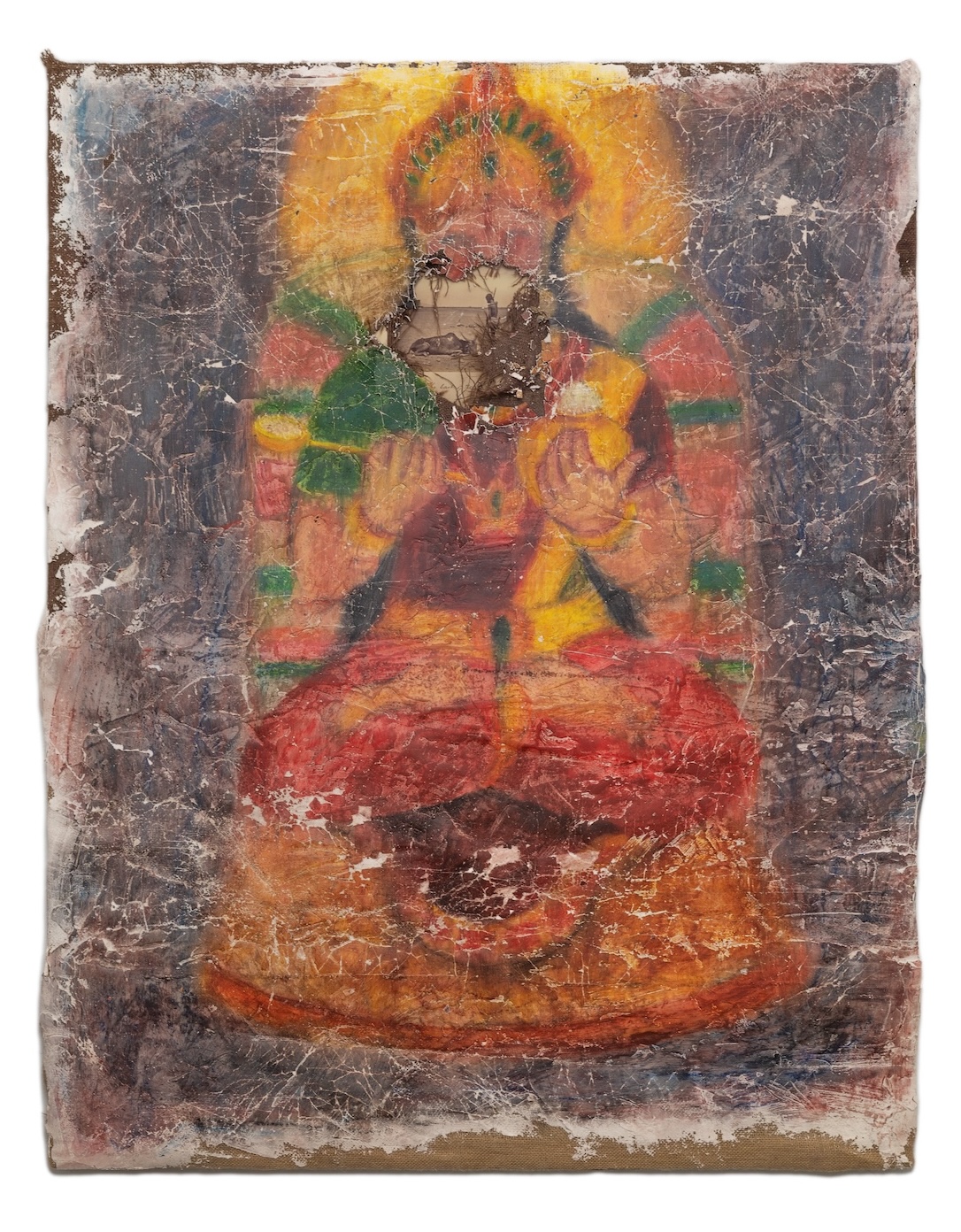 Siqi Fan, Annapurna - Goddess of Food and Kitechem, Burlap, Plaster of Paris, Wood Frame, Pastel, 51 x 40 inches, 2024. Courtesy of the artist.
On February 28, 2026, Fan presented Lotus Eater at the Reef during Frieze Art Week. The live performance unfolded as a cooking ritual, in which a household kitchen was staged within the exhibition space. Fan prepared and served jujube goat cheese bites, a transformed carrot dish, and pork floss congee. Each dish functioned as a memory device, recalling the conditions of the Shanghai lockdown when rice was stretched into porridge, sometimes accompanied by pork floss, and vegetables often meant an overwhelming repetition of carrots. Through this reconstruction, Fan reproduced that period, reflecting a time when survival, routine, and collective uncertainty were embedded in everyday food.
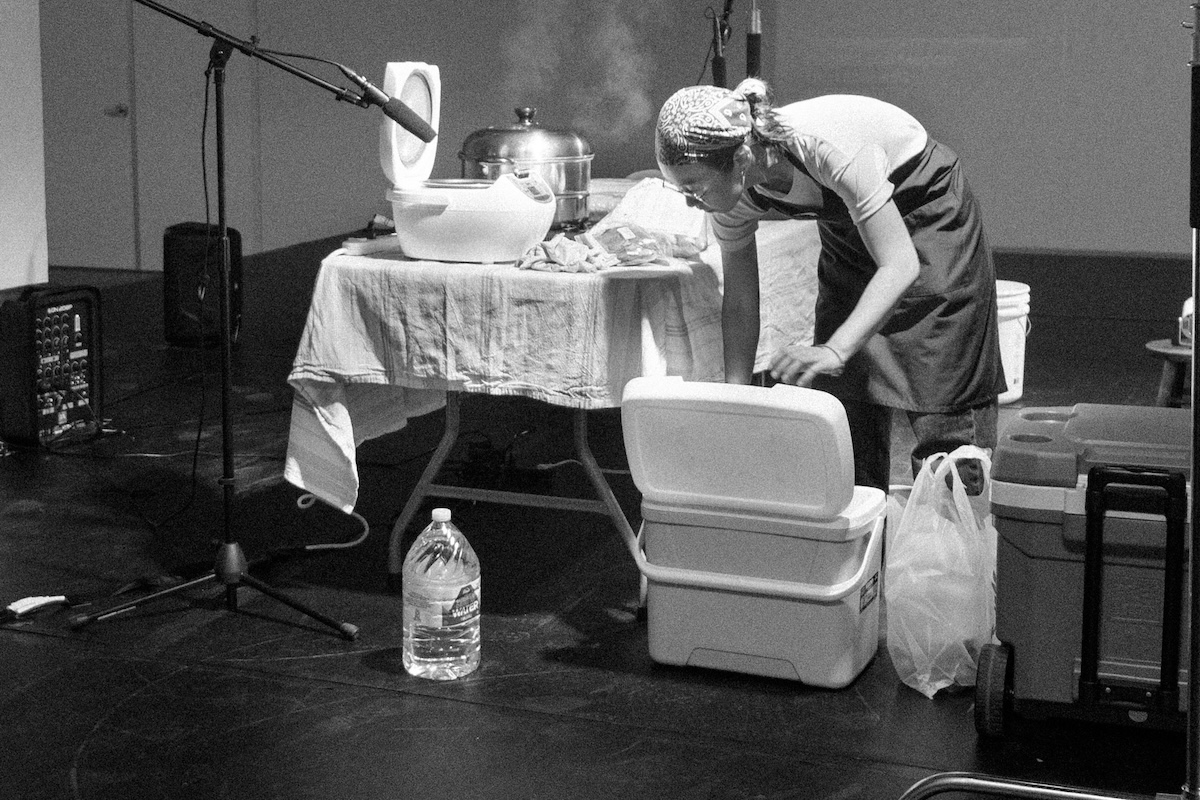 Siqi Fan, Lotus Eater. Performance view at the Reef, Los Angeles, 2026. Courtesy of the artist and the Reef. Photography by Jonathan Jin.
The experience of the lockdown reshaped Fan’s understanding of food, as well as the social structures in which she once placed trust. She began to recognize how food operates as a visible structure of governance, where access, quantity, and type are determined by larger systems rather than individual needs. Cooking, in her work, becomes a mechanism for reactivating both personal and collective memory. The color, smell, and taste of certain foods now act as sensory triggers, accessing psychological states that are often more immediate and reliable than narrative recollection. In this way, cooking extends a bridge between memory and time, where duration unfolds through sustained labor and repetitive gestures.
Within the performance, cooking, serving, and interacting with the audience occur simultaneously, producing a layered temporality in which multiple rhythms coexist. Time is no longer singular or linear, but accumulative built through repetition and experience.
Fan’s practice moves fluidly across mediums, yet remains grounded in her sustained attention to food culture and its shifting geographies. Based in Los Angeles, Fan has presented her work in recent years across a range of exhibition contexts, including a solo exhibition at Canyon Country Community Center and presentations at venues such as A60 Contemporary Art Space in Milan. Her professional activity has also extended through collaborations with brands and platforms including Larry’s List, Architectural Digest, Mini Bazaar, To Summer, and Illamasqua. It was within this broader professional context that Fan began to engage more closely with her new environment.
After moving to Los Angeles in 2023, a city shaped by complex systems of migration, she began to explore the origins of food and agricultural histories through the lens of cultural hybridity. In this context, she incorporated elements such as fried wonton strips into congee—an ingredient associated with Chinese-American cuisine, often used as a crispy, supplemental texture. She also introduced pickled vegetables, commonly served as appetizers in Chinese restaurants, where preservation functions both as necessity and as a standardized gesture of hospitality. These additions introduce layers of translation, as food adapts across geographies and histories of migration, commercialization, and reinterpretation.
The practices of roasting meat over fire and fermenting fruits and grains speak to a human affinity for complexity and metaphor. They offer more than immediate sensory information, allowing perception to extend beyond the present moment. Today, as we grow increasingly distanced from the transformation of raw materials into food, our understanding of what food is has become abstracted. It becomes difficult to recognize its connection to nature, labor, or imagination. Fan engages this disconnection by deconstructing domestic labor, linking it to broader conditions of fragmented perception and contemporary information systems.
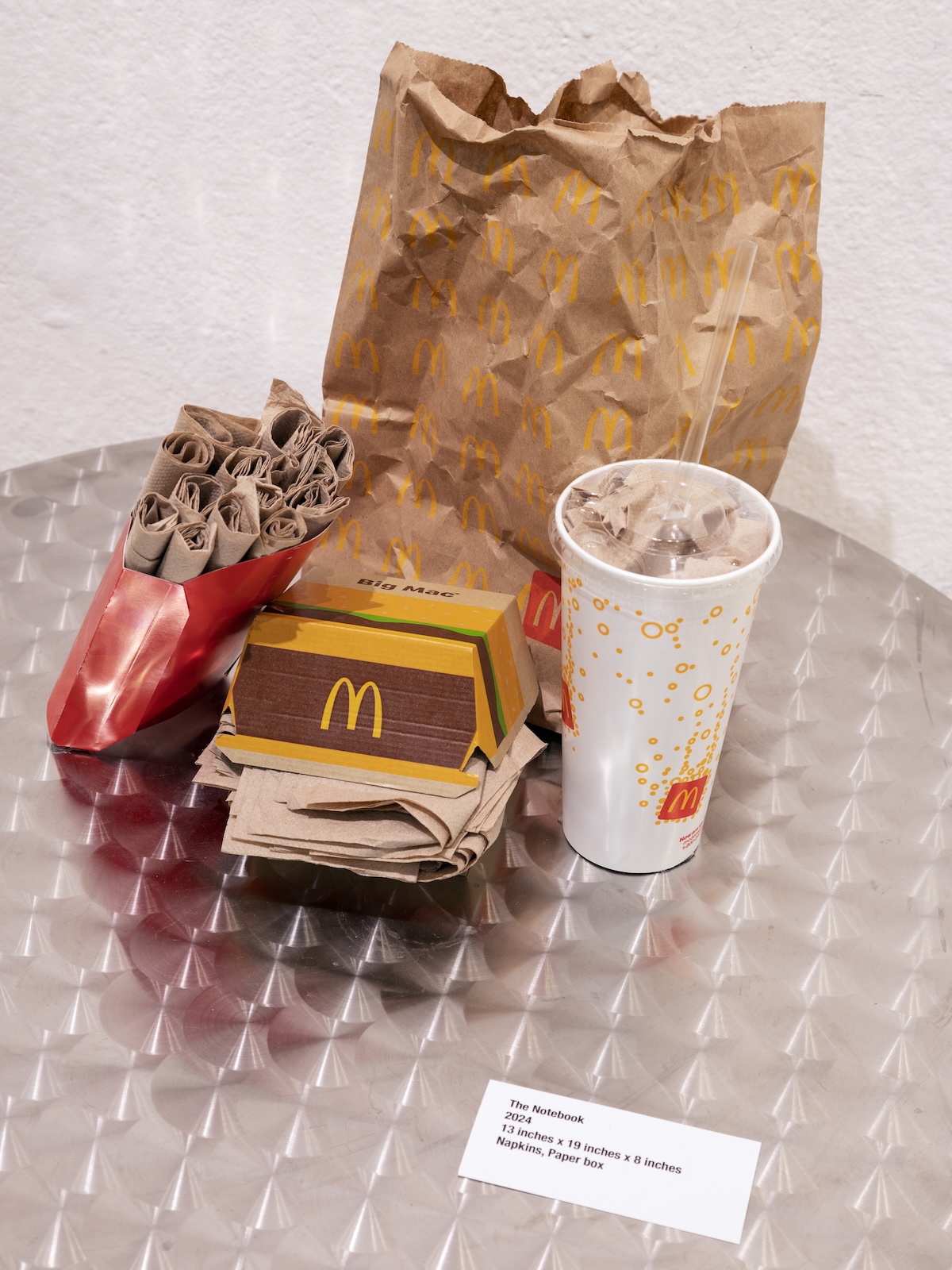 Siqi Fan, The Notebook, 13x19x8 inches, napkins, paperbox, 2024. Courtesy of the artist.
The title Lotus Eater is inspired by The Odyssey. Throughout the performance, Fan included readings from selected passages as a fragmented auditory narrative. Rather than centering a singular heroic journey, she is drawn to the multiplicity of characters and shifting perspectives within the text. Figures such as Penelope, Circe, and Calypso embody distinct temporalities like waiting, repetition, and suspension. By placing this layered narrative within a cooking performance, Fan collapses the distance between myth and daily life, relocating the sacred into the intimacy of the kitchen. Here, movement, delay, and control are enacted through material gestures, where power becomes localized and decisions handled in real time.
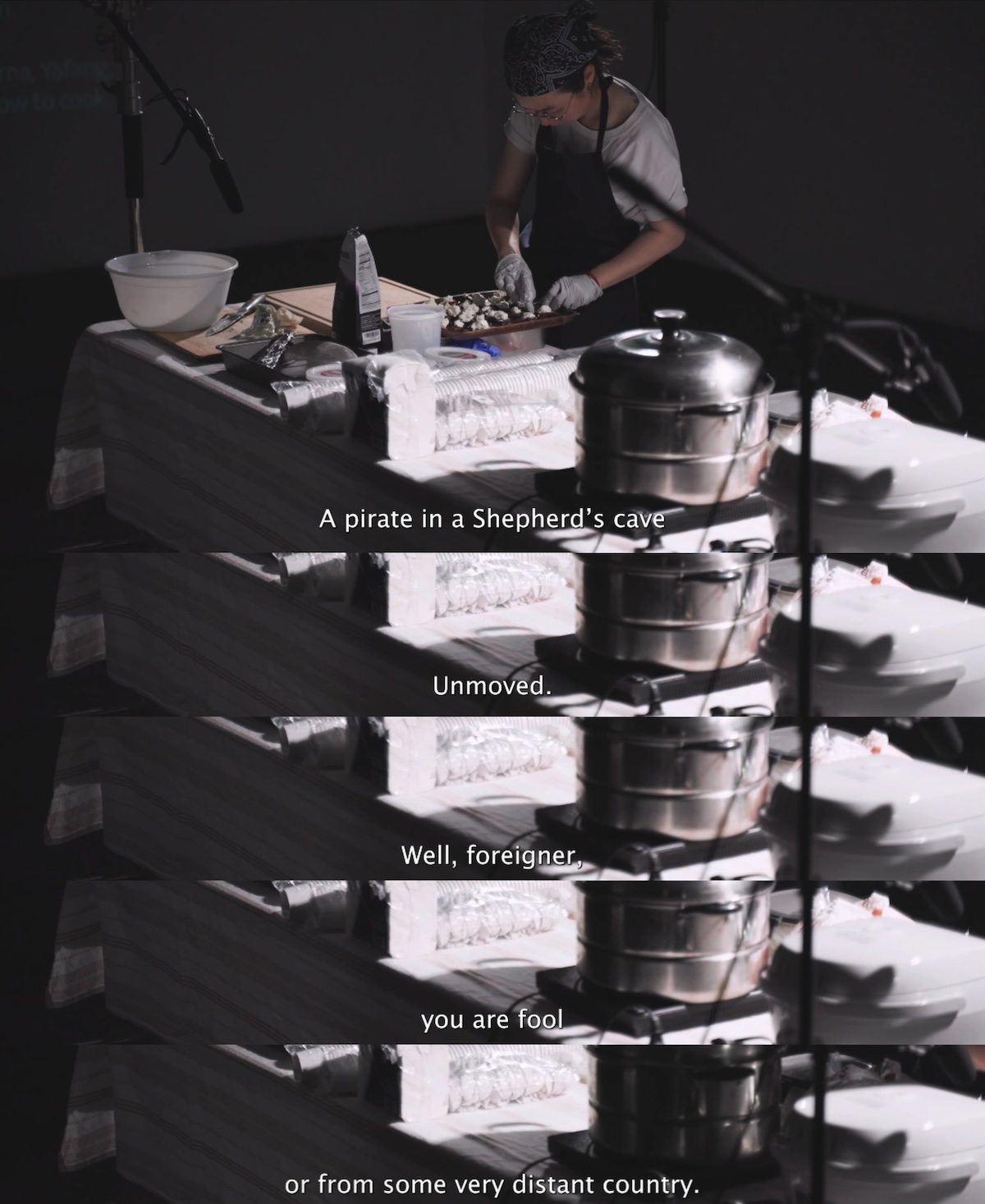 Siqi Fan, Lotus Eater. Performance view at the Reef, Los Angeles, 2026. Courtesy of the artist and the Reef. Photography by Miles Gabriel.
Fan resonates with The Odyssey as a continuous state of movement. Born and raised in China and later relocating to the United States, she navigates complex cultural, political, and identity-based tensions. This condition of in-betweenness informs her sense of instability, where belonging is never fixed but constantly negotiated. The nomadic structure of the epic parallels her lived experience, where position and identity remain in flux.
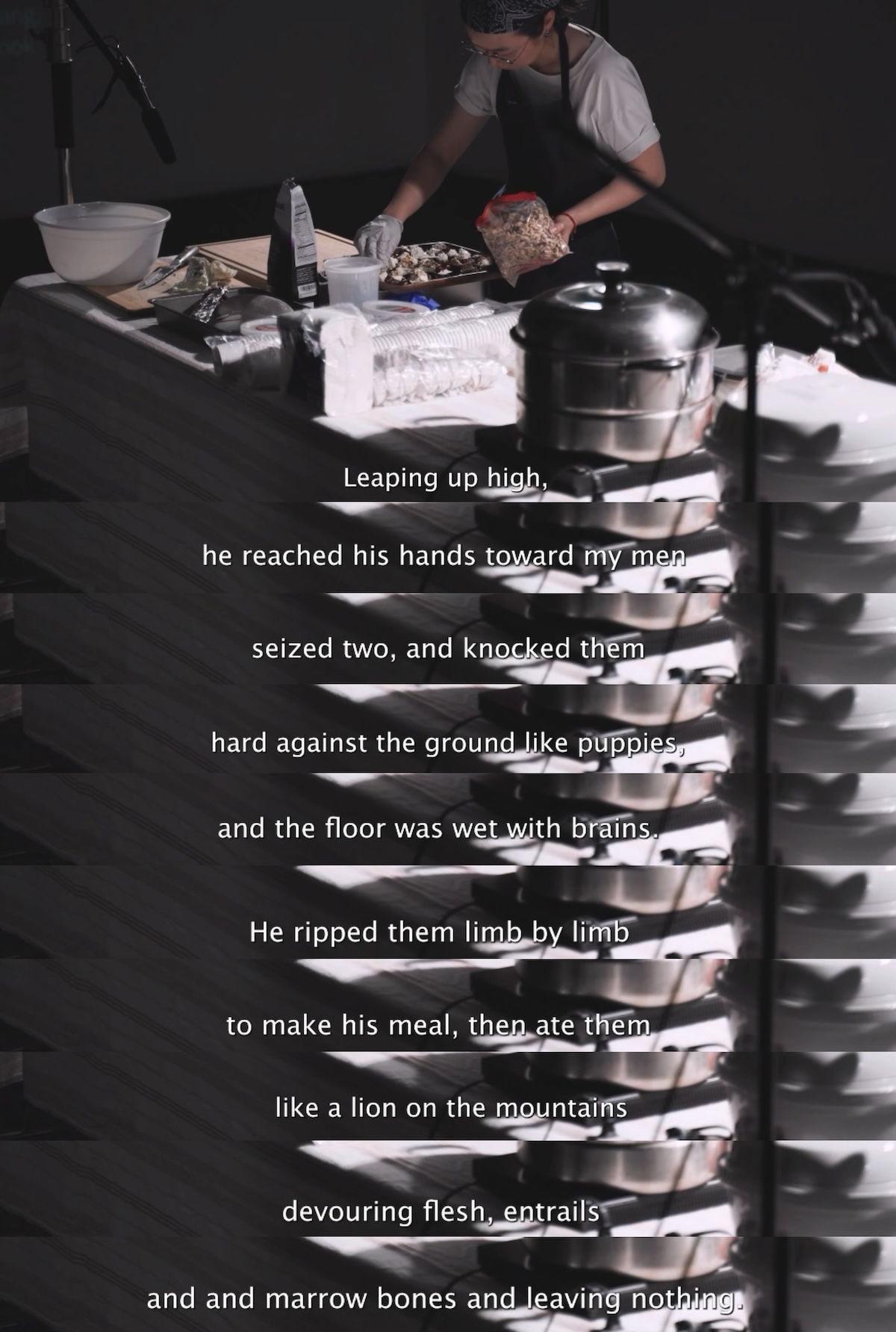 Siqi Fan, Lotus Eater. Performance view at the Reef, Los Angeles, 2026. Courtesy of the artist and the Reef. Photography by Miles Gabriel.
On December 5, 2025, Fan presented Floating Puff at Cevera Yoon Gallery. In this one-hour performance, she cooked and served lotus root to passing audiences without verbal interaction. Each portion was served immediately after preparation; sometimes shared among small, temporary crowds, and sometimes handed directly to an individual passerby. The act of cooking transformed not only the lotus root, but also the audience, shifting them from passive consumers into attentive observers. The experience demanded patience and presence, producing an unexpected sense of fulfillment.
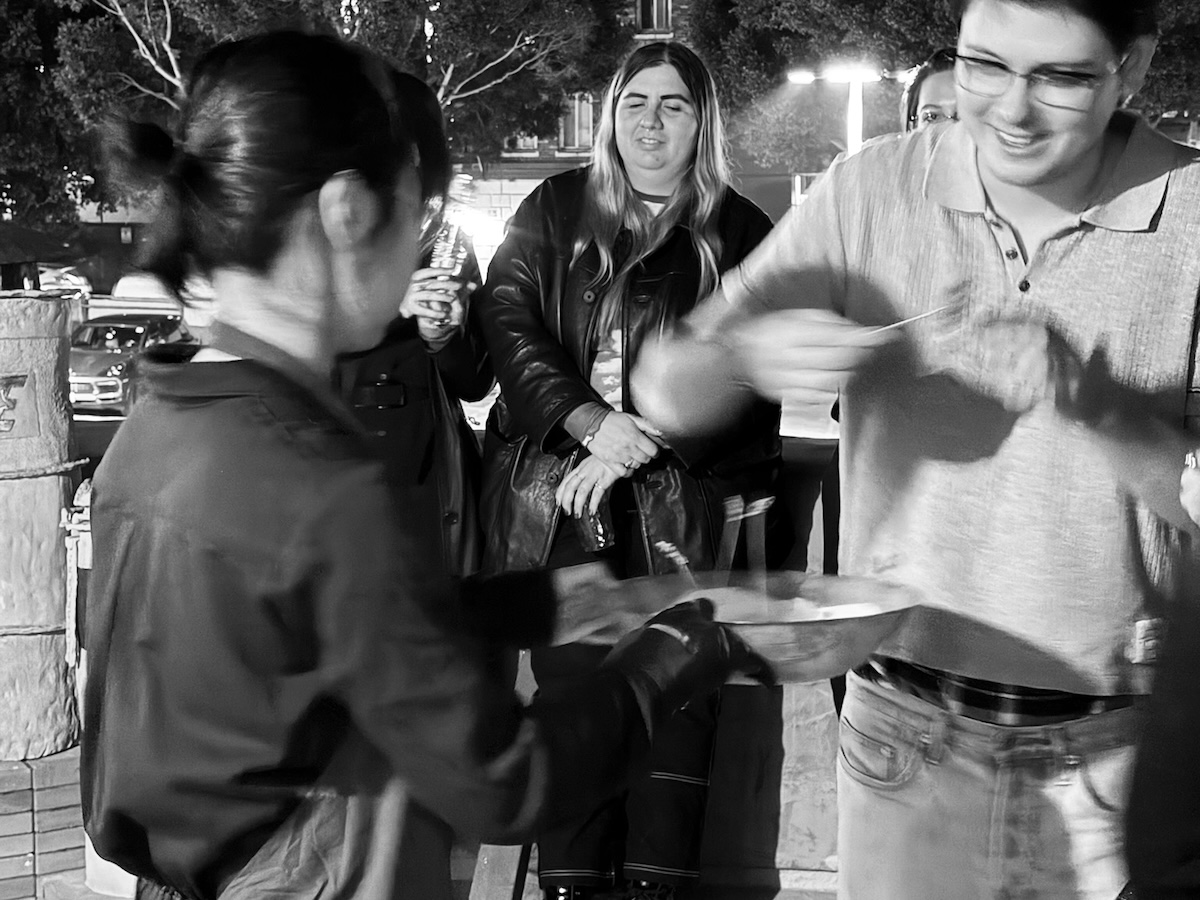 Siqi Fan, Lotus Eater. Performance view at Cevera Yoon Gallery, Los Angeles, 2025. Courtesy of the artist and Cevera Yoon Gallery. Photography by Jason Chai.
Through her practice, Fan has encountered the challenges of constructing a fully functional kitchen within gallery or institutional settings. Audience responses often carry uncertainty, questioning how domestic labor can be framed as art. Yet, in Fan’s words, cooking has never belonged to a fixed space. From prehistoric uses of fire to fishermen preparing ceviche on boats, cooking emerges from conditions of survival rather than idealized environments. It is within this overlap between care and survival that Fan’s work operates. Cooking is often understood as an act of care, yet it is always shaped by social and structural conditions. In her performances, preparing and serving food embodies both intimacy and systemic reflection.
Four years after the Shanghai lockdown, the urgency of that moment may appear to have diminished, yet its structures continue to linger, quietly embedded in habits, perceptions, and collective memory. Fan’s practice insists on returning to this history not as documentation, but as a lived condition that still unfolds in the present. By working with ingredients that once signified restriction and survival, she resists the tendency to smooth over or prematurely historicize the experience. Instead, she reactivates it through the body. In this sense, her work matters precisely because it refuses distance. It asks what it means to remember a time that was unevenly shared yet collectively endured, and how such memory continues to shape our understanding of agency, care, and control.

Yezi Lou
Yezi Lou (b. 1997) is an artist and independent writer based in Los Angeles. Her research centers on material culture, social phenomena, and syncretic spiritual practices in East Asia. She earned her MFA in Painting and Drawing at UCLA.
view all articles from this author